
Reviewed · SICILIAN COOKING CLASSES
Sicilian Cooking Class with Greek Theatre View
Cooking in Syracuse with that view sounds like a dream.
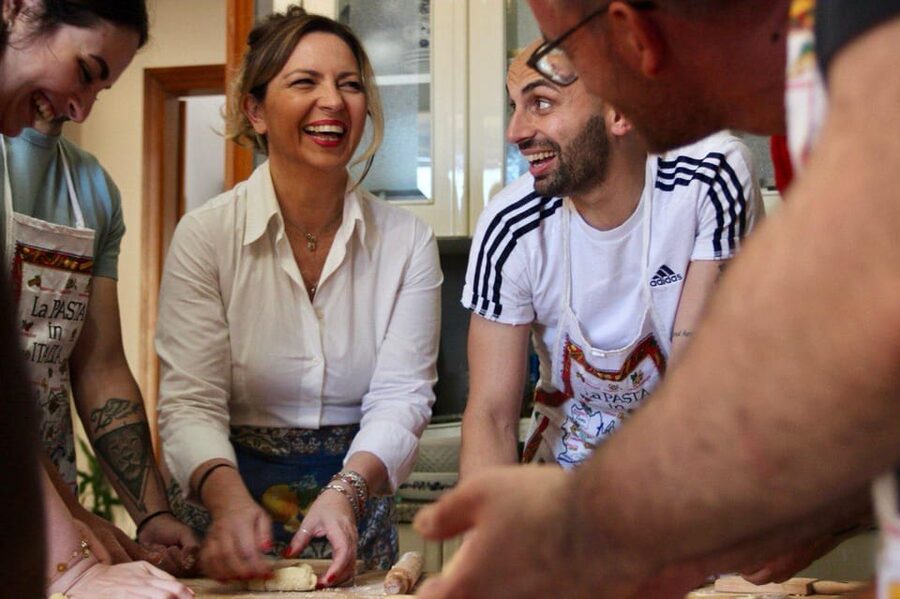
This Sicilian cooking class is built around hands-on lessons at a local home, then a meal in an elegant dining room looking straight toward the ancient Greek Theatre of Syracuse. I also love that you make a full meal (3 courses plus a traditional dessert), not just snack and watch. The small group size (max 10) keeps things personal, and you get real technique, not a rushed demo.
If I had to flag one thing, it’s that this is a 3-hour kitchen session, so you’ll want to be comfortable standing, chopping, and learning by doing. Also, because it’s in a residence, you may need to use the building’s bell/entry system to get let in—easy, just different from a hotel or restaurant.
In This Review
- Key things to know before you book
- Why this Syracusan kitchen has such a famous view
- The 3 courses and dessert: what you’ll actually cook
- Course flow you can expect
- Why this menu structure is great for learning
- Mediterranean recipes with seasonal ingredients (and real Sicilian technique)
- Dietary needs: gluten-free, vegan, vegetarian, lactose-free—handled carefully
- The practical takeaway for you
- Maria Rita and Pepe: small group energy and teaching that sticks
- Small group (max 10) is not just a number
- Lunch, wine, and what to drink with your own cooking
- Timing and getting there from Ortigia and around Syracuse
- Plan your day like this
- Price and value: is $113.29 worth it?
- Should you book this class in Syracuse?
- FAQ
- How long is the cooking class?
- What’s included in the price?
- Is wine included?
- Do you cook a full menu or just one dish?
- Can the menu be adapted for gluten-free needs?
- Are vegan and vegetarian options available?
- Is lactose-free accommodated?
- How large is the group?
- What languages are offered?
- Is there free cancellation?
- Is there a reserve-and-pay-later option?
Key things to know before you book
- Greek Theatre views with your meal: you dine with ruins in sight, plus a balcony/terrace vibe that makes the whole experience feel special
- A full menu, not a tasting: you’ll cook 3 courses and a traditional dessert
- Dietary options that actually get worked into the menu: gluten-free, vegan, vegetarian, and lactose-free can be accommodated
- Small group teaching: limited to 10 participants, so questions don’t get lost
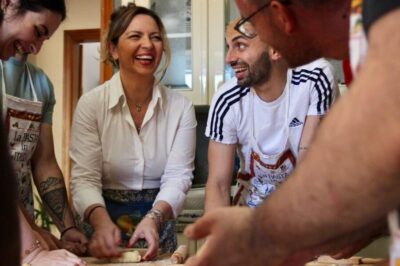
- Local hosts and family-home energy: you’re welcomed like you’re part of the household, led by Maria Rita and helped by her husband Pepe (also seen as Giuseppe)
- Wine with lunch: you eat what you make with a beverage, often described as Sicilian wine
Hands in the flour, Syracuse style
- Syracuse: Traditional Cooking Class & Ancient Market Visit
★ 4.9 · 72 reviews - Sicilian cooking course and more
★ 5.0 · 39 reviews - Syracuse: Sicilian Street Food Hands-On Cooking Class
★ 4.9 · 38 reviews - Cooking class at a Cesarina’s home with tasting in Siracusa
★ 5.0 · 27 reviews
Why this Syracusan kitchen has such a famous view
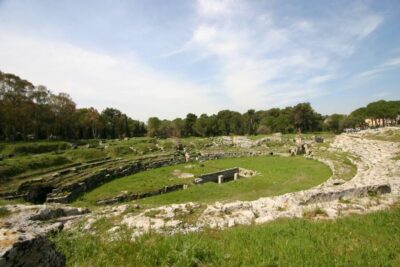
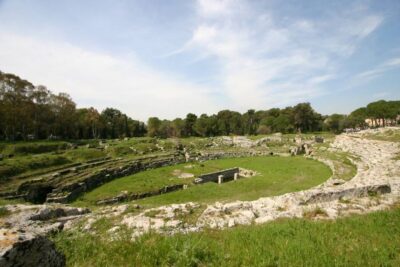
Siracusa (Syracuse) has a way of making you feel like you’re eating inside an archaeological postcard. What makes this class different is that you don’t just sightsee the ancient Greek Theatre from afar. You cook, then settle in for lunch in a dining space where the view is part of the meal.
The setting is an elegant dining room, and multiple people mention the view from the balcony/terrace and even from the table itself. That matters more than you’d think. Food classes can become “nice but forgettable” when the environment is generic. Here, the atmosphere does half the work for you: ruins in the distance, Mediterranean scents in the air, and the day slowing down long enough for real conversation.
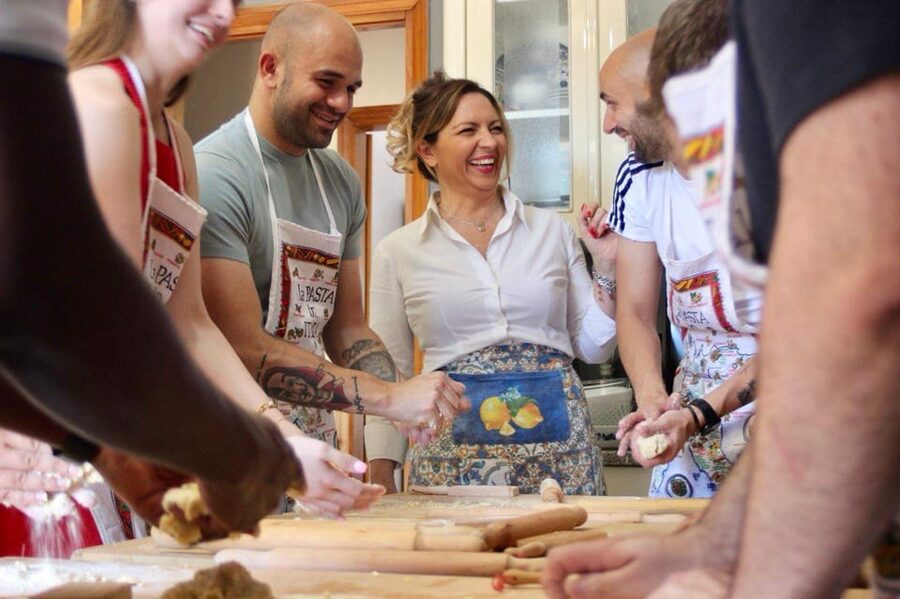
The other big win is the home-hosted feel. Maria Rita (often paired with her husband Pepe/ Giuseppe) runs the class with that warm, practical hospitality that makes a cooking lesson easier. You’re not stuck in a classroom. You’re working in a real kitchen, learning techniques the way they’re used at home.
The 3 courses and dessert: what you’ll actually cook
The promise is straightforward: you prepare a menu of 3 courses plus a traditional Sicilian dessert. The exact dishes can vary based on preferences and what’s best with seasonal ingredients, but the examples from the experience paint a clear picture of the style.
Course flow you can expect
You’ll follow Mediterranean recipes and seasonal ingredients, typically building the meal in stages:
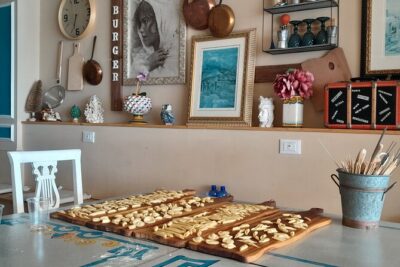
- First course / pasta course: several descriptions mention making pasta from scratch by hand (no machine) and dishes like pasta alla Norma and Sicilian pesto pasta. You may also see choices like caponata depending on what your group sets as preferences.
- Second course / main: you might work on a Sicilian-style meat or seafood dish. Swordfish shows up in the descriptions, sometimes as thinly sliced rolls stuffed and breaded, paired with sides like baked artichokes. Other Sicilian classics like pasta with eggplant preparations (parmigiana) also appear.
- Third course / finishing course: descriptions include more Sicilian family-style items such as arancini (rice balls) or additional pasta-based components like Parmigiana Melanzane.
- Dessert: traditional options named in the experience include cannoli and tiramisu, plus almond cookies in at least one version.
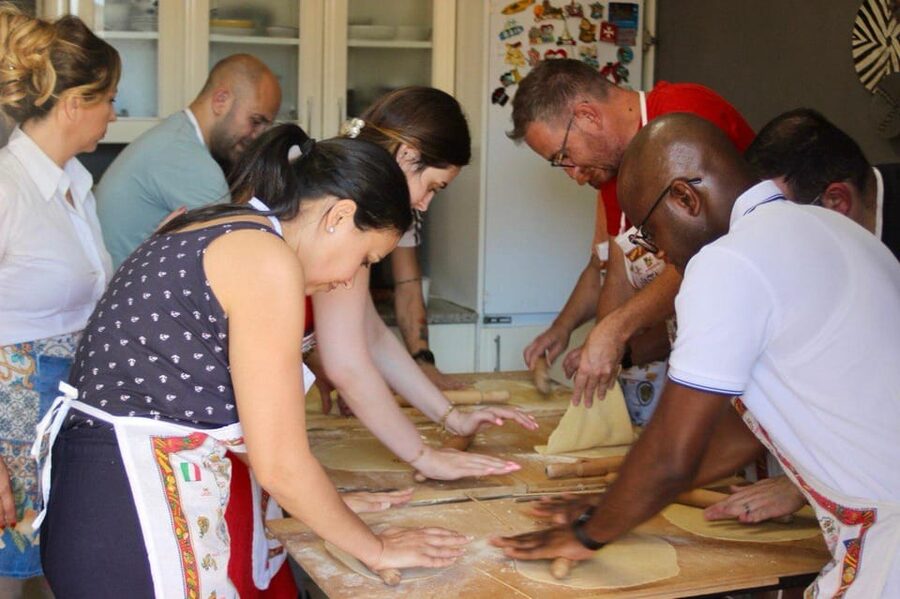
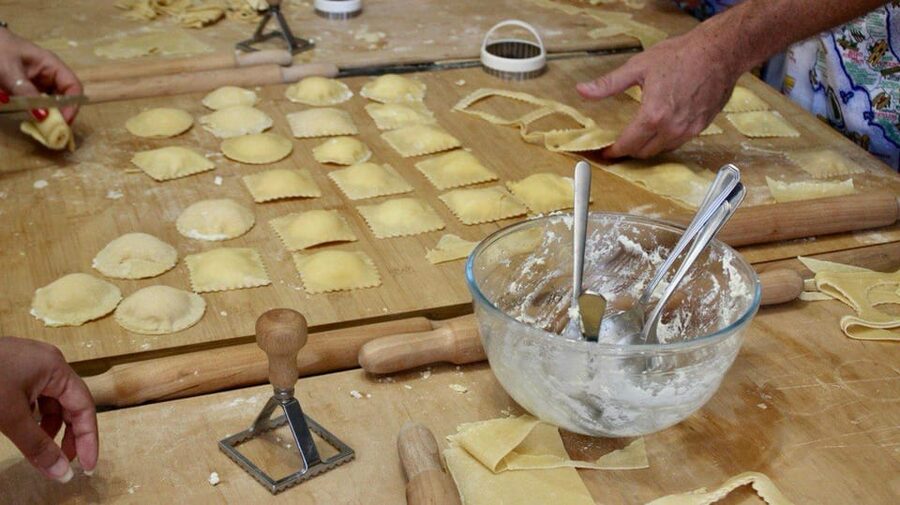
One practical point: this isn’t a “watch someone else cook” class. People describe rolling pasta, breading, assembling, and then eating what you made. The best part is that even if you’re not confident in the kitchen, the pace and teaching make it doable.
Why this menu structure is great for learning
A lot of cooking classes focus on one dish. This one forces you to learn how Sicilian meals are built: starch (often pasta), a hearty savory component (seafood or meat, frequently with vegetables), and a dessert that isn’t just sweet—it’s part of the region’s everyday rhythm.
And because it’s 3 hours, the menu has enough variety to be memorable, without becoming an all-day food marathon.
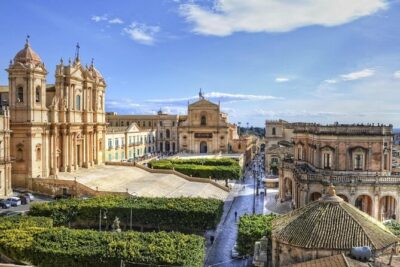
An evening at the theatre in Syracuse
Mediterranean recipes with seasonal ingredients (and real Sicilian technique)
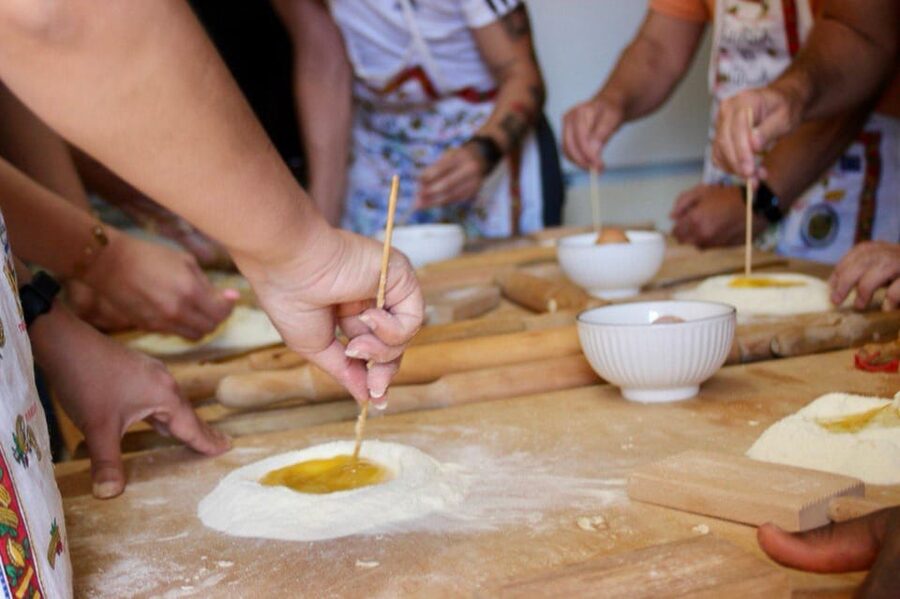
The class emphasizes fresh, seasonal ingredients and Mediterranean recipes passed down through generations. That phrase gets used everywhere, but here you can see what it means in practice: people repeatedly mention pasta made from scratch, pesto-style sauces, and traditional Sicilian combinations like eggplant with other ingredients.
You’ll also pick up technique you can actually reuse:
- Handmade pasta methods (including rolling/pulling dough without a machine)
- Sauce basics tied to Sicilian flavors (pesto variations show up often)
- Assembling and shaping for dishes like arancini
- Breading and stuffing techniques in seafood and meat courses
If you care about eating locally but want to understand the “why” behind flavors, this type of instruction is worth it. You’re not just getting a recipe; you’re learning how the ingredients behave together.
And yes, multiple descriptions mention that hosts provide recipes so you can try again later at home. For anyone tired of taking a photo of a dish and forgetting how it was made, that’s a real value add.
Dietary needs: gluten-free, vegan, vegetarian, lactose-free—handled carefully
This is one of the strongest reasons to choose this class. The experience clearly supports gluten-free, vegan, vegetarian, and lactose-free needs, with customization done before you arrive.
The gluten-free support deserves special attention. Several descriptions mention celiac disease accommodations and careful cross-contamination awareness, not just “we’ll swap one ingredient.” People also report that gluten-free pasta was still delicious and included in every course.
For lactose intolerance, substitutes are mentioned even for dessert components. For vegans and vegetarians, hosts reportedly select traditional Sicilian dishes that work naturally, and then tailor the menu accordingly.
The practical takeaway for you
If you have a food restriction, do two things:
- Mention it clearly when you book (gluten-free, lactose-free, vegan, or vegetarian).
- Expect a tailored menu, not a side salad situation.
This class seems designed for inclusion. It’s the difference between “they can accommodate” and “you’ll actually participate.”
Maria Rita and Pepe: small group energy and teaching that sticks
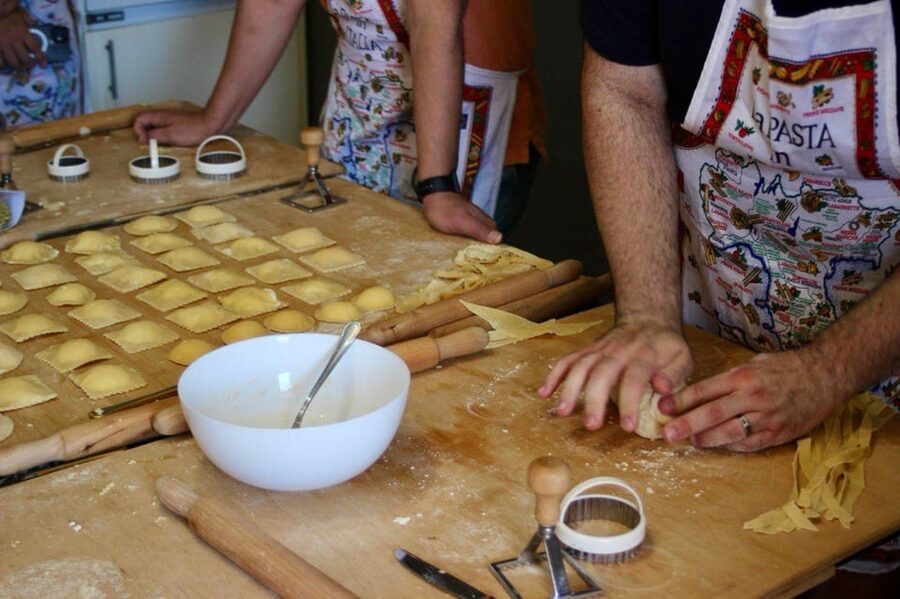
A cooking class lives or dies on the host, and here the hosting is consistently described as welcoming, warm, and interactive.
Maria Rita is the name that comes up again and again as the chef/instructor. Her husband Pepe (also referred to as Giuseppe in some descriptions) is part of the experience. The teaching style is practical and patient, with lots of guidance during hands-on steps like pasta shaping and assembly.
People also mention humor and a relaxed pace, which matters because cooking requires focus. When the environment is friendly, you learn faster. When it’s tense, you rush—and mistakes happen.
Small group (max 10) is not just a number
With a class limited to 10, you’re more likely to get:
- personalized help when your dough is sticking or your shaping looks off
- quick answers to questions
- a better chance to actually cook every part of the menu
If you’ve done big group tours before, you already know what happens. One person asks a question, the rest watch, and you lose your turn. Here, it’s built to avoid that.
Lunch, wine, and what to drink with your own cooking
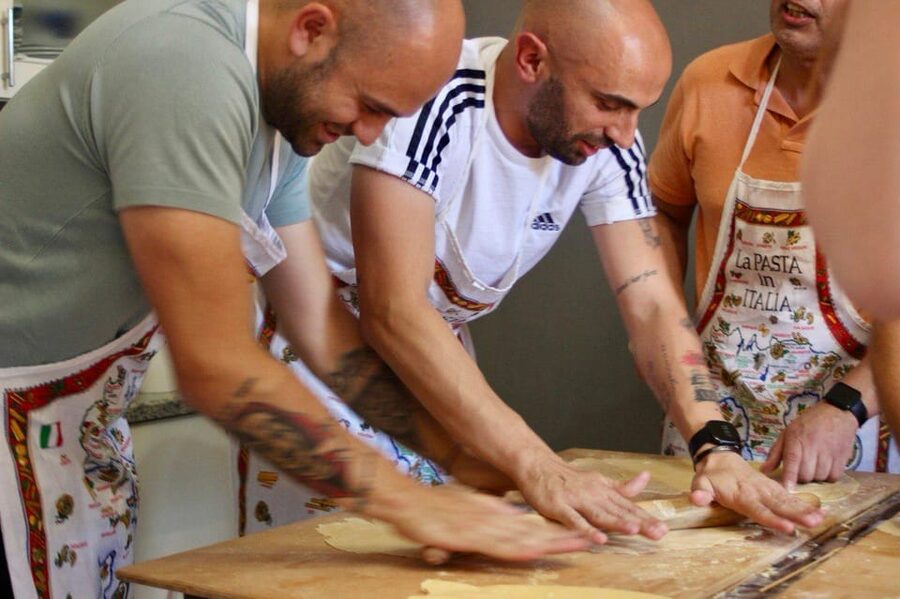
You’ll eat the dishes you’ve prepared at the end of the class, and beverages are included. Many descriptions specifically mention pairing with local wine—often described as Sicilian wine—served with the meal.
This is a small but meaningful detail. When you cook and then drink something local, the experience becomes more than “a class.” It turns into a meal you remember.
Practical advice: Pace yourself. You’ll be doing physical work for most of the 3 hours, and wine + a full lunch can hit faster than you expect.
Timing and getting there from Ortigia and around Syracuse
The duration is 3 hours, and starting times vary, so check availability for the specific slot you want.
In terms of location, multiple descriptions say the class is easy to access if you’re staying in Ortigia, with a nearby bus stop. That’s helpful because Ortigia can be a bit of a bottleneck for walking long distances in the heat, and Syracuse isn’t always the most straightforward to navigate without local knowledge.
Plan your day like this
- Book this as your “food anchor” for the day.
- Build in a little buffer for getting to a residence setting (entry is not the same as a restaurant).
- If you have other sights planned, avoid scheduling a tight back-to-back block right after class. You’ll want a little time to digest and reset.
Price and value: is $113.29 worth it?
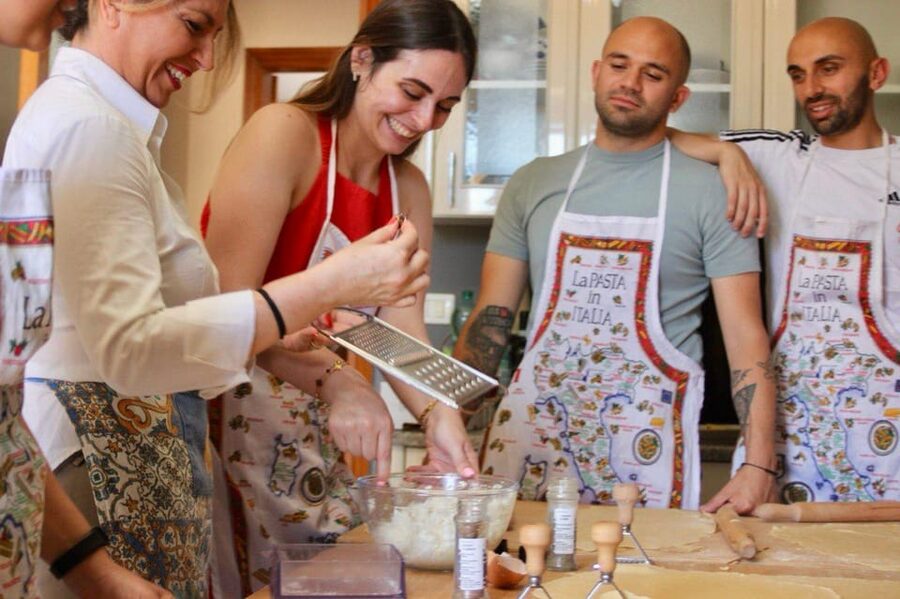
At $113.29 per person for a 3-hour, small group class, the real question is what you’re getting beyond the cooking lesson.
You get:
- the cooking class itself
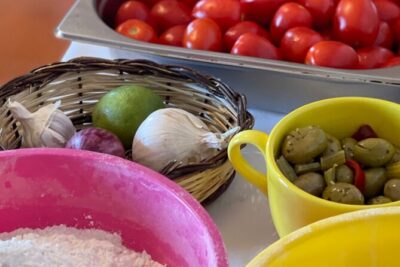
- fresh, seasonal ingredients
- lunch
- a beverage (often described alongside local Sicilian wine)
- a full 3-course menu plus dessert
- customization for gluten-free, vegan, vegetarian, and lactose-free needs
When you compare that to paying separately for a cooking workshop (instruction + ingredients) and then eating lunch plus drinks afterward, the math starts to make sense. You’re essentially paying for an experience that packages shopping, teaching, and dining into one go.
Also, the small group (max 10) adds value because it affects how much help you get. In cooking classes, that’s where “cheap” can fail. If you’re constantly waiting for instructions, you don’t learn. Here, it’s set up to keep you moving.
So yes: for most people, this price feels fair because you leave with a full meal, recipes, technique, and a view you can’t replicate at home.
Should you book this class in Syracuse?
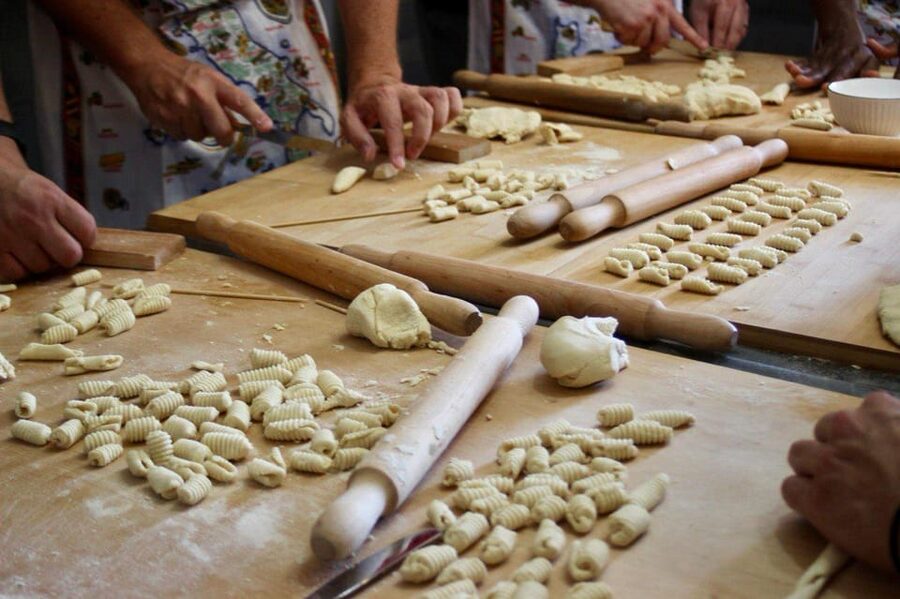
Book it if you want an authentic Sicilian food experience with:
- a hands-on cooking structure (not just tasting)
- a meal that includes 3 courses and dessert
- serious support for dietary needs, including gluten-free and lactose-free
- a small group setting where you can actually learn
- a dinner-table view of the ancient Greek Theatre ruins
You might skip it if:
- you dislike residential locations and entry systems like ringing a bell
- you hate standing and chopping for a few hours
- you want a quick “see-and-go” activity rather than a full meal experience
If your trip plan includes time in or near Ortigia, this fits well as a memorable anchor. It’s one of those activities that mixes culture, food, and atmosphere in a way you can’t mimic by simply eating at a restaurant.
FAQ
How long is the cooking class?
The class lasts 3 hours.
What’s included in the price?
The experience includes the cooking class, fresh seasonal ingredients, lunch, and a beverage.
Is wine included?
A Sicilian wine pairing is mentioned with the meal in the experience descriptions.
Do you cook a full menu or just one dish?
You’ll prepare a menu of 3 courses plus a traditional Sicilian dessert.
Can the menu be adapted for gluten-free needs?
Yes. You can request gluten-free options, and the menu can be customized for your dietary needs.
Are vegan and vegetarian options available?
Yes. Vegan and vegetarian options are available, and you can provide preferences when booking.
Is lactose-free accommodated?
Yes. Lactose-free options are available.
How large is the group?
The group is small, limited to 10 participants.
What languages are offered?
The host or greeter communicates in English, Italian, and Spanish.
Is there free cancellation?
Yes. You can cancel up to 24 hours in advance for a full refund.
Is there a reserve-and-pay-later option?
Yes. You can reserve now and pay later, keeping travel plans flexible (pay nothing today).
More Tour Reviews in Syracuse

More Opera and Live Performances
More Cooking Classes to Book
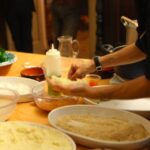
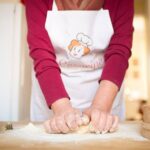
Just added: the newest Syracuse tours in our notebook
- Tour of Syracuse by Ape Calessino★ 3.0 · 3 reviews
- Syracuse Showdown Scavenger Hunt★ 5.0 · 3 reviews
- Sicily Boats Avola: Plemmirio boat tour 4 people 4 hours★ 5.0 · 3 reviews
- Groovy Geneva Scavenger Hunt★ 5.0 · 3 reviews
- Syracuse: Ortigia & Sea Caves Boat Tour with Local Skipper★ 5.0 · 3 reviews
- Siracusa: Neapolis’s Archaeological Park small group tour★ 5.0 · 3 reviews
Sicilian Cooking Classes, compared.
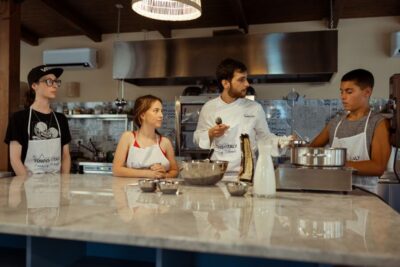 ★ 4.9Palermo: Pizza and Gelato Cooking Class with Dinner and WineFrom $71951 reviews
 ★ 5.0Seaview Cooking Class & Taormina local flavors with Chef MimmoFrom $157665 reviews
 ★ 5.0COOKING CLASS in Taormina at Chef Massimo HOUSE!!From $185543 reviews
 ★ 5.0Palermo’s Delight: Unleash the Secrets of Pizza and Gelato MakingFrom $60497 reviews
Palermo: Pasta & Tiramisu Cooking Class with Flowing WineFrom $56405 reviews
★ 5.0Palermo’s Delight: Unleash the Secrets of Pizza and Gelato MakingFrom $60497 reviews
Palermo: Pasta & Tiramisu Cooking Class with Flowing WineFrom $56405 reviews
 ★ 4.8Taormina: Half-Day Pizza Making ClassFrom $88353 reviews
 ★ 5.0Palermo: Pasta and Tiramisu Small Group Cooking Class with WineFrom $83348 reviews
 ★ 5.0Sicilian Cooking ClassFrom $118289 reviews
Browse the lists this tour appears in