
Reviewed · SYRACUSE & ORTIGIA
Syracuse: Greek Theater and Neapolis sunset tour
Syracuse at sunset has a way of grabbing you fast. This Neapolis evening tour turns ancient stone into a living story, with orange-and-gold light across the quarries, caves, and theaters. I love how the timing makes every stop feel cinematic, and I love that the guide’s explanations connect myths to the actual places you’re standing in.
The big thing to know is the pace: it’s about 2 hours total, with roughly 20 minutes per main site, so plan to take photos quickly and listen closely. If you like to linger for long, slow wandering, this tour may feel a touch scheduled.
In This Review
- Key highlights you’ll actually care about
- Neapolis at dusk: why the light changes the whole experience
- Meeting at the Neapolis entrance: quick entry and a smooth start
- Latomie del Paradiso: the quarry-garden that feels like a secret
- The Ear of Dionysius: acoustics made myth-friendly
- Greek Theater Syracuse: harbor panoramas and the Nymphaeum Fountain
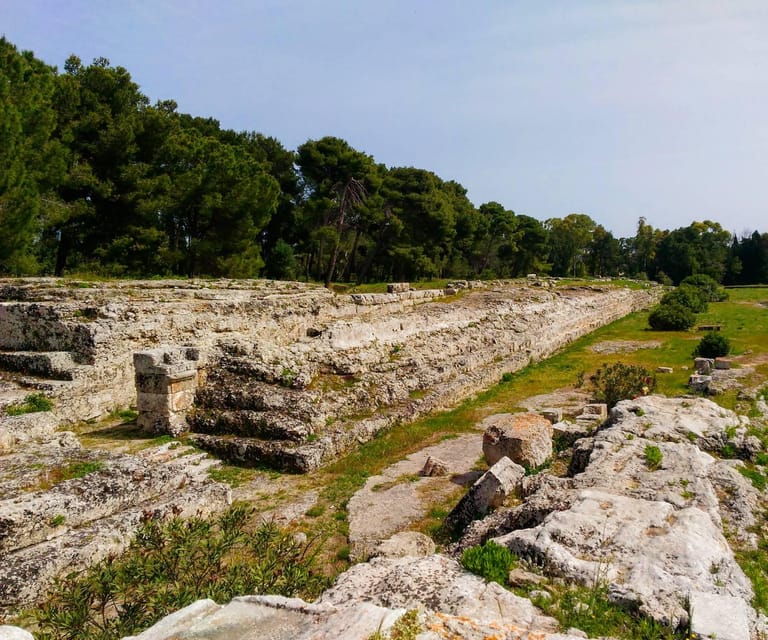
- Altar of Hieron II: the meaning behind the view
- Roman Amphitheater and gladiator stories: from Greek myth to Roman show
- Price and value: is $46 worth 2 hours of Neapolis?
- Who this tour suits best (and who might prefer a different plan)
- Practical tips so you get the most from the evening
- Should you book this Syracuse Greek Theater and Neapolis sunset tour?
Key highlights you’ll actually care about
- Latomie del Paradiso: old stone quarries turned haunting gardens
- Ear of Dionysus: the legendary cave with famous acoustics
- Greek Theater views: golden panoramas toward the harbor
- Nymphaeum Fountain: a standout detail you’ll be pointed out as you go
- Roman Amphitheater: gladiatorial-game context under Roman rule
- Francisco-style storytelling: lots of monument-by-monument details on the ground
Deeper into Ortigia and old Syracuse
- Syracuse: Boat Tour with Captain Mirko, Snorkeling & Caves
★ 4.7 · 746 reviews - Siracusa: Ortigia Boat Tour with Marine Grotto & Snorkeling
★ 4.7 · 726 reviews - Siracusa: Ortigia & Sea Caves Boat Tour w/ Prosecco & Fruit
★ 4.8 · 723 reviews - Syracuse: Ortigia Island & Sea Cave Boat Tour with Prosecco
★ 4.7 · 418 reviews
Neapolis at dusk: why the light changes the whole experience
Neapolis is the historic heart of Syracuse, and at sunset it stops feeling like a list of ruins. The warm sky colors don’t just make photos prettier; they help you understand why people built these spaces here in the first place—visibility, drama, and that sense of scale when the day cools down.
You’ll move through a concentrated circuit: quarries and caves, then theaters, then the Roman Amphitheater. Doing it as a guided walk matters because the sites are layered—Greek legends, tyrant intrigue, and Roman spectacle all overlap in the same area. When a good guide ties those threads together, it clicks fast.
Meeting at the Neapolis entrance: quick entry and a smooth start
You meet the guide in front of the Neapolis entrance gate on the Via Romagnoli/Viale Augusto side. The guide provides your entrance ticket directly at the meeting point, so you’re not wasting time figuring out ticket lines before you’ve even started your evening.
Arrive 20 minutes early. That buffer helps you get oriented, find the right group, and settle before the walk begins—especially helpful when the sky is starting to change and you want to be ready at the first viewpoint.
The tour runs with a live guide in English and Italian, and it can operate at the same time in both languages. That’s good if you’re worried about timing or group flow, because you won’t be delayed just because of language.
Latomie del Paradiso: the quarry-garden that feels like a secret
Your tour begins at the Neapolis Archaeological Park area and then heads into the famous stone quarries known as the Latomie del Paradiso. This is where Syracuse’s dramatic engineering shows up: areas carved out with “titanic” effort, later transformed into something closer to a natural garden.
What makes this stop work at sunset is the contrast. You’re looking into spaces that once had a darker purpose, and now they read as both wild and controlled—stone walls, open pockets of light, and shadows that stretch as the sun lowers. Even if you don’t memorize every detail, the mood does the teaching.
A small practical note: you’ll have around 20 minutes here. That’s enough time to understand what you’re seeing and get your bearings, but not enough to wander off on your own for an hour. Keep your attention on the guide’s points so you leave with meaning, not just images.
The Ear of Dionysius: acoustics made myth-friendly
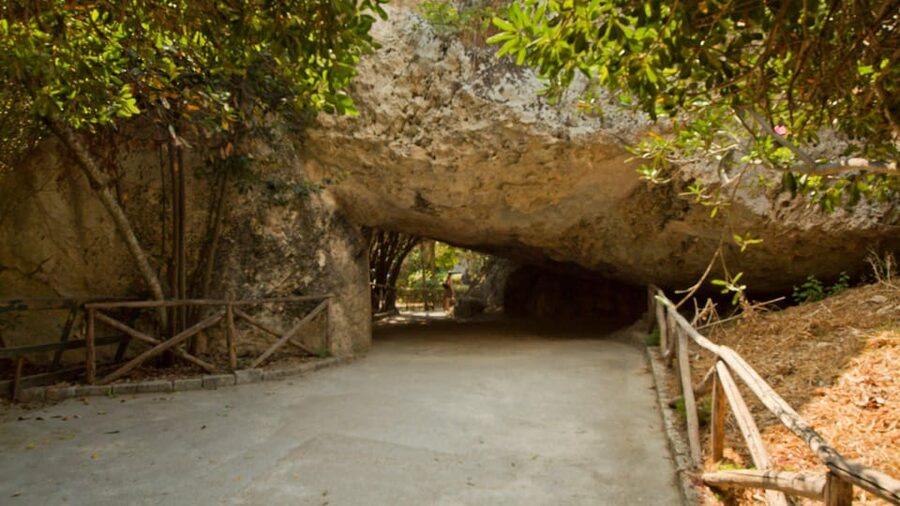
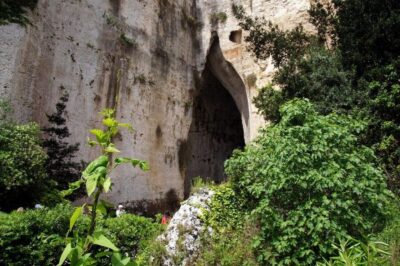
Next up is the Ear of Dionysius, a cave often linked to the tyrant Dionysus and the legends around his intrigues. The story is part of why this place is famous, but the real value is how the guide uses the myth to explain the setting—why sound, concealment, and control belong together here.
The cave is described as having mysterious acoustics. You don’t need technical knowledge to appreciate it; the point is that Syracuse didn’t just build for beauty. It built for effect—audience, power, and atmosphere, all in one compact space.
Because you’re visiting this near sunset, the lighting feels softer and more theatrical than midday would. That matters here. A cave can feel like a “cool spot to see,” but with dusk light and a strong narrative, it becomes a chapter in a larger story.
An evening at the theatre in Syracuse


Greek Theater Syracuse: harbor panoramas and the Nymphaeum Fountain
Then you move into the Greek Theater area, where the experience shifts from quarry drama to performance space. Here you can admire the Nymphaeum Fountain and enjoy a panorama toward the great harbor, framed by the golden light of the setting sun.
This is one of those moments where the timing is the whole deal. At sunset, you can actually see the environment the ancients planned around—how the theater relates to the surrounding city and how the harbor would have added scale to any event held in these seats.
I like that the guide doesn’t treat the theater like a stand-alone sight. You get the sense of it as part of the Neapolis complex, not just a photo stop. That’s the payoff of a guided evening: you start reading the site like a map, not like a random sequence of walls.
Altar of Hieron II: the meaning behind the view
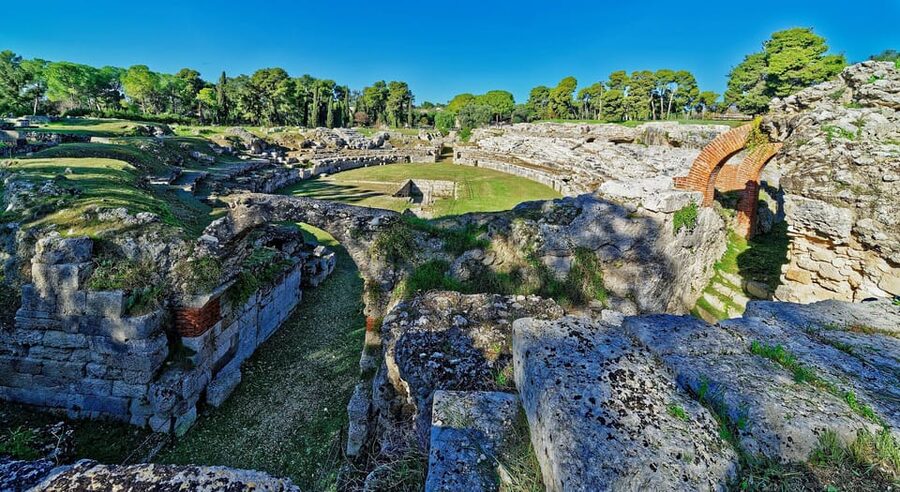
You’ll also encounter the Altar of Hieron II, described as a majestic witness to Syracuse’s glorious past. The important thing isn’t only that it’s old—it’s that it helps you understand how power and public ceremony fit together in this region.
At dusk, the sky color changes the way stone details appear. As the light fades, the altar can feel more solemn, less like scenery, more like an object with weight. This stop gives you a mental reset before the final shift into Roman spectacle.
Roman Amphitheater and gladiator stories: from Greek myth to Roman show
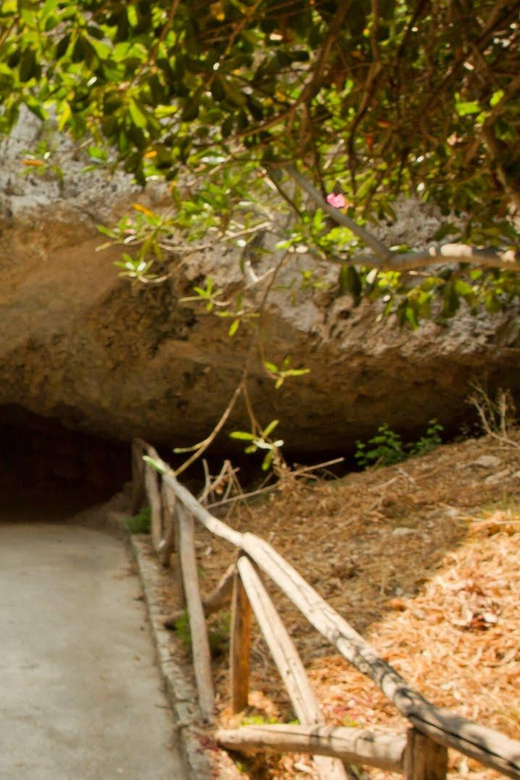
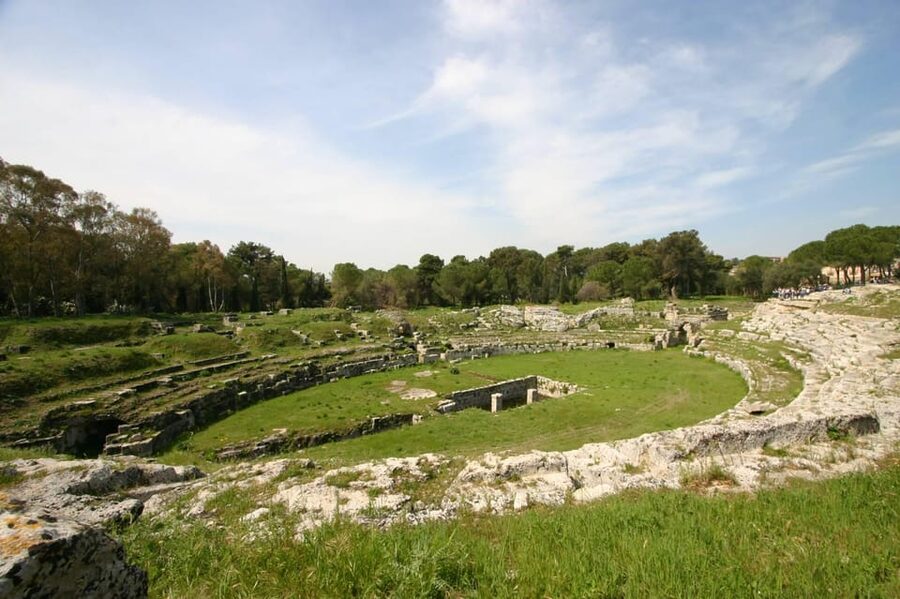
The last major stop is the Syracuse Roman Amphitheater. This is where the tour leans into the adrenaline side of history: the guide reveals secrets of the gladiatorial games and explains the nuances of Syracuse under Roman rule.
This section works especially well because it’s not just “here’s an amphitheater.” You’re guided to understand what Roman entertainment would have meant in a place already steeped in Greek legend and local identity. The story helps you connect the dots between centuries rather than treating Greek and Roman eras like separate museums.
The sunset-to-shadow effect can be striking in an open-air space like this. Even without dramatic special effects, the real stage design shows up through natural lighting—bright where the sun hits, darker where the structure blocks it. It’s a simple trick, and it makes the amphitheater feel more alive.
Price and value: is $46 worth 2 hours of Neapolis?
At $46 per person for about 2 hours, you’re paying for a guided walk plus a key cost saver: the entrance ticket to the Neapolis Archaeological Park is included, and the tour is set up to skip the ticket line. That combination matters. In many places, “cheap tour” can mean you later pay for entry anyway. Here, your main entry ticket is bundled.
So what are you really buying? Time with a guide who connects each stop to the story you’re actually passing through—quarries, cave myths, theaters, and gladiator context. Multiple monuments in one compact evening is the practical win, because you don’t need to plan a full-day routing just to see the highlights of Neapolis in one go.
That said, the tour is still a 2-hour circuit. If your idea of a great evening is slow, independent wandering and long stops for every photo, you might find this format a bit structured.
Who this tour suits best (and who might prefer a different plan)
This tour is a strong match if you:
- want to see Neapolis without building a complicated itinerary
- like guided storytelling tied to specific places
- enjoy sunset views and want the “golden light” timing without stressing about scheduling
It may be less ideal if you:
- hate short time blocks and prefer to linger
- want a full-day excavation-level pace (this is more “guided evening highlights” than “all-day study”)
Practical tips so you get the most from the evening
- Wear comfortable shoes. You’re moving between multiple sites, and the tour is tight enough that a slow pace can throw off the experience.
- Bring a light layer. Sunset in Sicily can be pleasant, but it can also cool down as the evening progresses.
- If you’re photo-focused, prepare your angles quickly. Each major stop is about 20 minutes, so the best strategy is to listen first, then shoot what the guide pointed out.
A small detail I appreciate: the guide gives the entrance ticket right at the start. That keeps you from losing time right when you want to be moving.
Should you book this Syracuse Greek Theater and Neapolis sunset tour?
Yes, if you want a guided, story-driven way to experience Syracuse’s core ancient sites in just 2 hours, this is a smart pick. The included Neapolis Archaeological Park ticket plus ticket-line skip makes the value easier to justify, and the sunset timing adds real atmosphere to stops like the Greek Theater and Roman Amphitheater.
I’d book it especially if you like when a guide names what you’re seeing and explains why it mattered—like the kind of detailed monument-by-monument storytelling associated with Francisco. If you’re the kind of traveler who always needs more time at each stop, then consider pairing a separate self-paced visit with this tour.
More Tour Reviews in Syracuse




More Opera and Live Performances
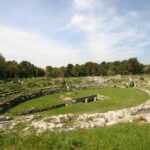

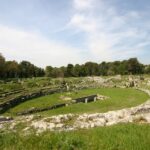

More of Syracuse and Ortigia
Just added: the newest Syracuse tours in our notebook
- Tour of Syracuse by Ape Calessino★ 3.0 · 3 reviews
- Syracuse Showdown Scavenger Hunt★ 5.0 · 3 reviews
- Sicily Boats Avola: Plemmirio boat tour 4 people 4 hours★ 5.0 · 3 reviews
- Groovy Geneva Scavenger Hunt★ 5.0 · 3 reviews
- Syracuse: Ortigia & Sea Caves Boat Tour with Local Skipper★ 5.0 · 3 reviews
- Siracusa: Neapolis’s Archaeological Park small group tour★ 5.0 · 3 reviews
Syracuse & Ortigia, compared.
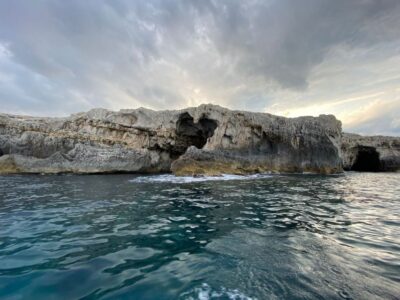 ★ 4.7Syracuse: Tour of Ortigia Island & Caves with Local SkipperFrom $231,060 reviews
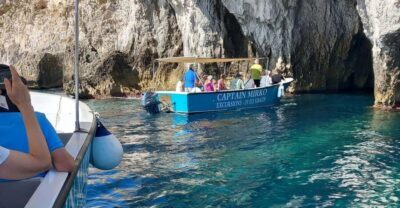 ★ 4.7Syracuse: Boat Tour with Captain Mirko, Snorkeling & CavesFrom $35746 reviews
 ★ 4.7Siracusa: Ortigia Boat Tour with Marine Grotto & SnorkelingFrom $47726 reviews
 ★ 4.8Siracusa: Ortigia & Sea Caves Boat Tour w/ Prosecco & FruitFrom $35723 reviews
 ★ 5.0Tour of the island of Ortigia and exploration of sea caves with baths.From $24668 reviews
 ★ 4.7Syracuse: Ortigia Island & Sea Cave Boat Tour with ProseccoFrom $23418 reviews
 ★ 5.0Boat tour of Ortigia Island and sea cavesFrom $24407 reviews
 ★ 4.6Catania: Syracuse, Ortigia, and Noto Tour with BrunchFrom $112404 reviews
Browse the lists this tour appears in