
Reviewed · SYRACUSE & ORTIGIA
Syracuse: Greek Theater and Neapolis Guided Private Tour
Syracuse packs big ancient drama into a short visit. This private Neapolis guided tour lets you connect the dots from stone quarries to myth, from a Greek theater to a Roman amphitheater. I love how the route is built around the places you can actually stand in, not just read about.
Two standout wins for me: the Latomie (old quarries turned green by time) and the chance to hear the story behind the Ear of Dionysus, including the tyrant Dionysius and the legend tied to the cave. One thing to factor in: the timing is tight. With only about two hours, you’ll move at a steady pace and won’t linger long enough for a full independent wander.
If you’re booking for a small circle, it helps that guides are certified and multilingual. Past tour experiences highlight guides such as Rita and Cristina for sharp history and clear explanations, so the “why” behind each stop lands fast.
In This Review
- Quick takeaways before you go
- Why Neapolis in Syracuse is worth your two hours
- Meeting your guide at Neapolis and getting oriented fast
- The Latomie: old quarries, forced labor, and the greenery effect
- Ear of Dionysus: acoustics plus the legend of Dionysius
- Grotta dei Cordari to the Greek Theater: moving from myth to spectacle
- Altar of Hieron II: a big Greek statement before the Roman reset
- Roman Amphitheater: how Syracuse changed the script
- Price and value for a private group up to 15 people
- What to pack and how to pace your visit
- Who this tour is best for
- Should you book Syracuse Greek Theater and Neapolis guided private tour?
- FAQ
- How long is the Syracuse Greek Theater and Neapolis guided private tour?
- Is this tour private?
- Where do you meet the guide?
- What’s included in the tour price?
- What languages are available?
- Is the Il mito di Aretusa show included?
- What if the weather is bad?
Quick takeaways before you go
- Neapolis Archaeological Park in 2 hours: a focused sweep of the main monuments without feeling rushed-un-rushed
- Latomie + Ear of Dionysus: quarries and cave myth are linked into one story arc
- Greek Theater viewpoints: you’ll also get the panorama over the harbor area from the upper terraces
- Cordari Cave route: you move through the park’s key “in-between” stops, not only the headline sites
- Altar of Hieron II + Roman Amphitheater: you see how Syracuse shifts from Greek to Roman eras
- Private group format: your guide stays with your group through the full route (up to 15 people)
Deeper into Ortigia and old Syracuse
- Syracuse: Boat Tour with Captain Mirko, Snorkeling & Caves
★ 4.7 · 746 reviews - Siracusa: Ortigia Boat Tour with Marine Grotto & Snorkeling
★ 4.7 · 726 reviews - Siracusa: Ortigia & Sea Caves Boat Tour w/ Prosecco & Fruit
★ 4.8 · 723 reviews - Syracuse: Ortigia Island & Sea Cave Boat Tour with Prosecco
★ 4.7 · 418 reviews
Why Neapolis in Syracuse is worth your two hours
Neapolis isn’t just a collection of ruins. It’s the part of Syracuse where you can feel the city planning, the power, and the storytelling in the same place. In a compact tour window, you’ll cover Greek-era public life, myth and legend, and the Roman layer that came later.
For you, the value is in the order. The tour doesn’t start with the most famous single photo spot and stop there. It begins with how the city was built and powered—right down to the stone extracted in the Latomie—then moves into the myth-making world of the Ear of Dionysus and the working realities of a quarry landscape.
And because this is a guided private format, you’re not stuck translating everything alone while trying to follow signage. A good guide helps you read the ruins like a map: which parts were Greek, which were Roman, and why the same terrain supported different kinds of spectacle over centuries.
Meeting your guide at Neapolis and getting oriented fast
You’ll reach the entrance of Neapolis in Syracuse and meet your guide there. You’ll get a short briefing first, focused on the origins of Syracuse and the basic storyline of how this polis (city-state) developed. This is a smart warm-up because it makes later details click.
Then you enter the archaeological park and follow a route that flows between monuments. Expect the guide to keep giving context, not just names. That matters at Neapolis, because the sights are close enough together that it’s easy to blur them into one big “ancient zone” if nobody explains what each place was for.
Language options also help. The tour is available in English, German, Italian, Spanish, and French, and you’ll get the same structure either way. If you’re taking the Italian version, you may also have the chance to attend the show Il mito di Aretusa (availability depends on the option you book).
The Latomie: old quarries, forced labor, and the greenery effect
One of the first stops is the Latomie, ancient stone quarries that supplied building material for Syracuse for centuries. What makes them more than a background stop is the contrast: they were heavy-work and imprisonment spaces in the past, but today they’re visibly shaped by nature. Green has grown over what was once brutal labor and confinement.
I like how this changes the vibe of your walk. Instead of treating ruins as dead stone, the Latomie show you how landscapes evolve while keeping their historical footprint. The guide’s job is to connect the dots: who worked here, what the stone extraction meant for city-building, and why these spaces carry a lasting shadow in the story of Syracuse.
A practical note for you: the park can feel like a sequence of “important spots” with paths between them, so wear shoes you’re comfortable walking in and take your time reading details when the guide slows down. With only about two hours total, it’s worth being ready to move promptly.
Ear of Dionysus: acoustics plus the legend of Dionysius
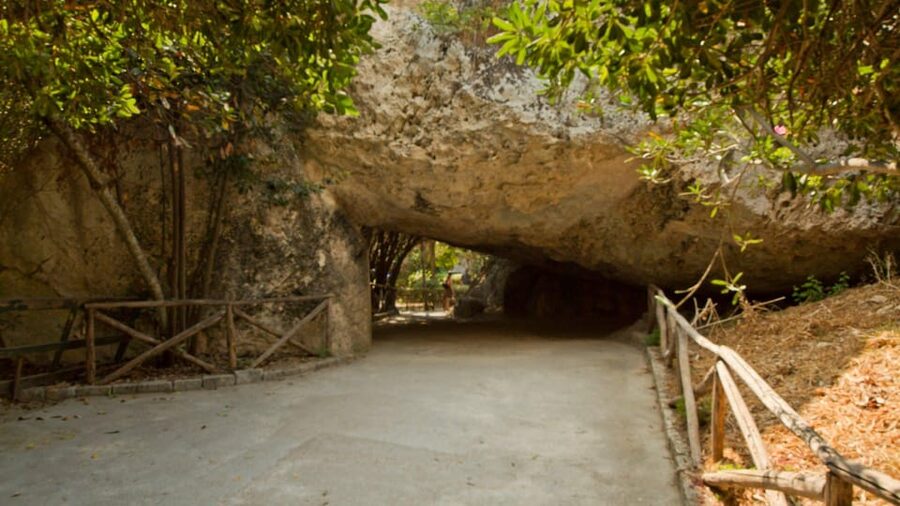
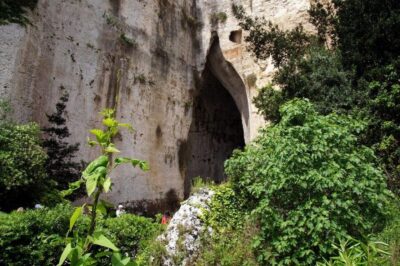
Next you’ll meet the Ear of Dionysius, one of the most recognizable features in the Neapolis area—both for its shape and for its reputation for acoustics. The guide connects that physical feature to story and power: you’ll hear about the tyrant Dionysius and the legend associated with the cave.
This is where the tour gets fun if you like myth. The guide isn’t treating legends as trivia; the legend becomes a lens for understanding how people in different eras used spaces to control, observe, or perform. The cave’s fame for acoustics gives you a concrete hook for the storytelling.
Also, because this is a guided experience, you’ll get the version of the story that ties to the broader narrative of Syracuse. That’s the difference between seeing a cave and understanding why it became famous in the first place.
If you’re the type who likes to capture photos, aim for a couple of quick shots and then listen. The acoustics angle is the kind of detail that’s hard to “get” without the explanation, and it’ll shape how you experience the space after the fact.
An evening at the theatre in Syracuse


Grotta dei Cordari to the Greek Theater: moving from myth to spectacle
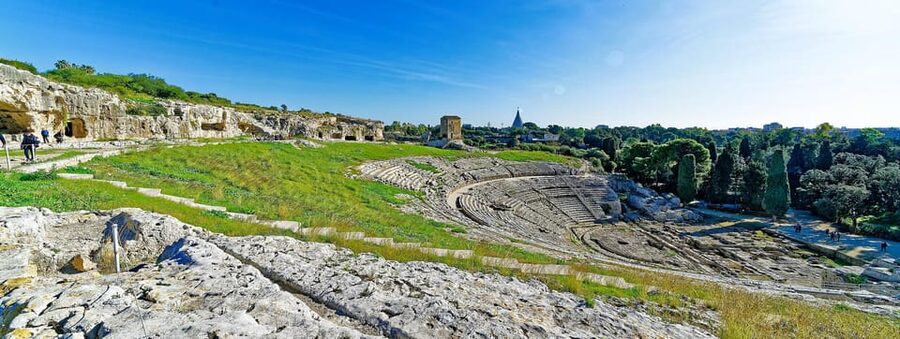
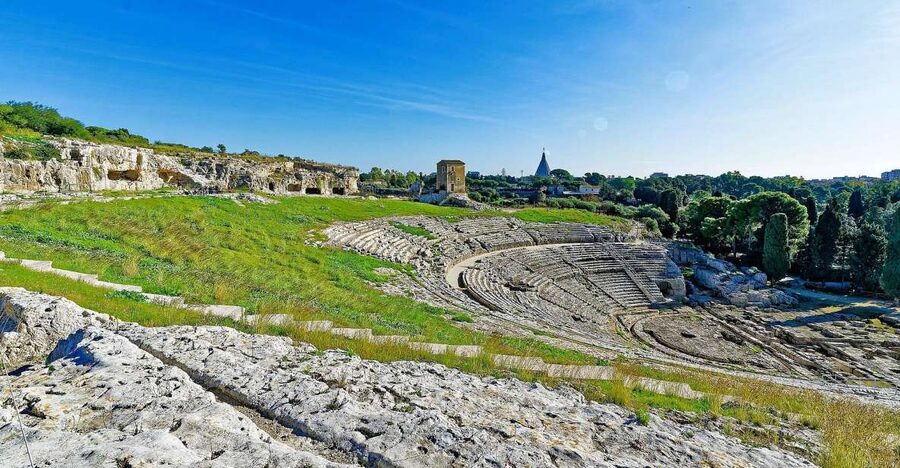
After the Ear of Dionysus, you’ll continue toward Grotta dei Cordari and then reach the Greek Theater. This section matters because it’s a transition from myth-linked cave spaces to a public arena designed for listening, watching, and communal experience.
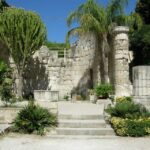
From the upper terrace near the theater area, you’ll also get views toward the Fountain of the Nymphaeum and the panorama overlooking the large port. Even if you’re not a “views person,” this stop helps you understand the theater’s placement. In Greek cities, sightlines and setting weren’t optional. The setting was part of the show.
When you arrive at the Greek Theater, the guide’s historical framing helps you see it as more than a backdrop. You’re learning how the polis used architecture and space for civic life and cultural performance. It’s also a good moment to slow down for a minute and absorb scale. A theater like this isn’t designed for close inspection at arm’s length; it’s designed for audiences and movement through tiers.
Altar of Hieron II: a big Greek statement before the Roman reset
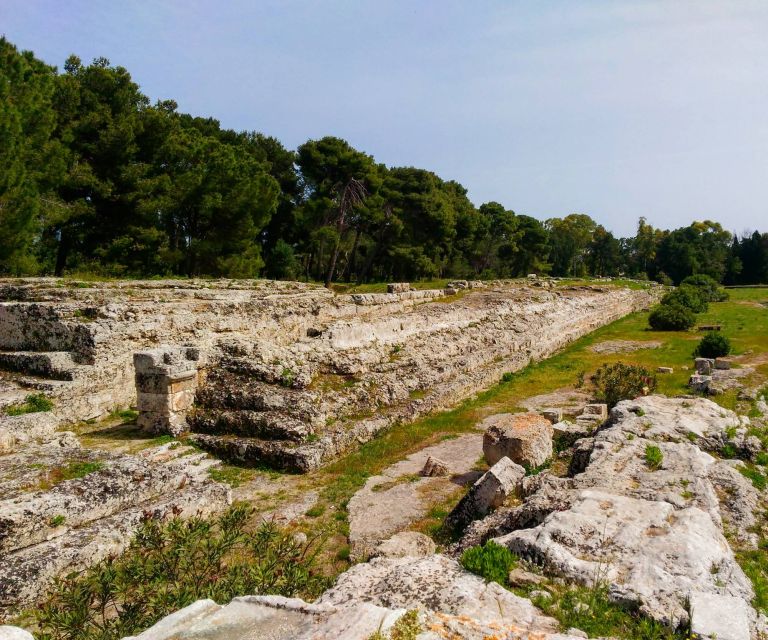
After leaving the Greek Theater, the tour moves to the Altar of Hieron II, described as the largest stone altar built in the Greek world. This is the point where you can feel the religious and political side of the city—an altar is not just a monument, it’s an announcement about who mattered and what rituals meant.
What I enjoy here is how the guide uses the altar to connect earlier stops. You’ve already been in quarry ground and caves tied to power and myth. The altar shifts the theme toward formal ceremony and state identity. It helps the whole tour feel like one coherent story rather than separate “checkpoints.”
And then the tour does something useful: it doesn’t end with the Greek phase. It deliberately sets you up for the Roman layer you’ll see next.
Roman Amphitheater: how Syracuse changed the script
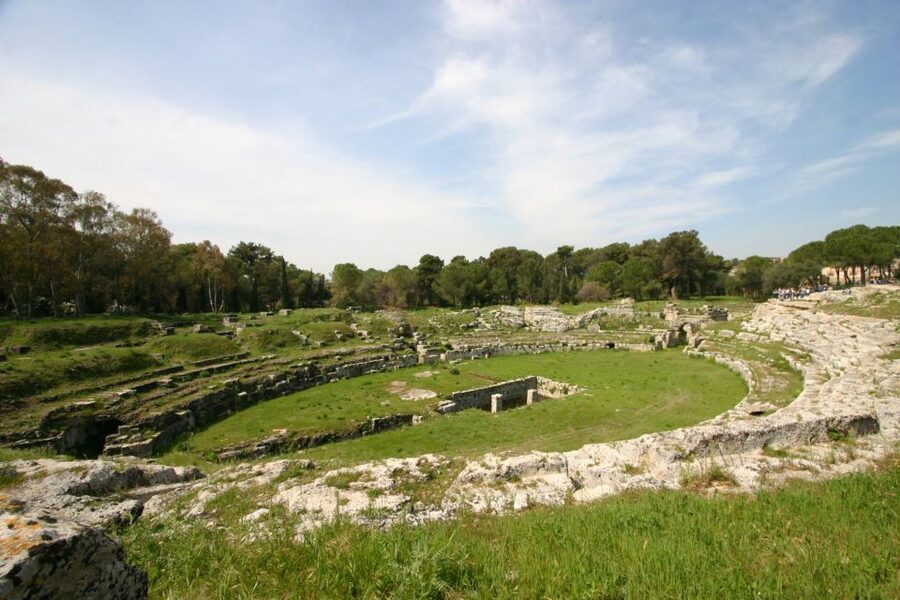
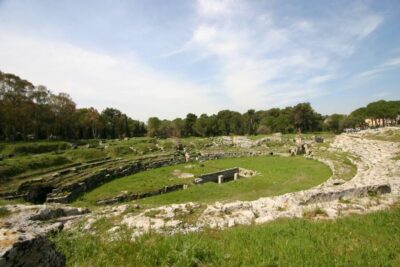
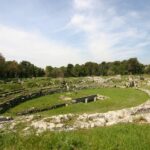
The last monument in the Neapolis sequence is the Roman Amphitheater. Here, the guide shows you the Roman phase of the city, explains characteristics of the building, and highlights the particularities of gladiatorial games.
This is a smart finish because it gives you a “before-and-after” feeling. Greek Syracuse had its forms of spectacle and civic structure. Roman rule brought different entertainment styles and architectural priorities. You’ll likely walk away with a clearer mental timeline: Greek foundations, then Roman transformation.
If you’re trying to decide what to prioritize on your own in Syracuse, this guided ending is a good clue. You don’t need to memorize dates to get value from Neapolis. You need to see how functions changed—what the city did for its people, and how spectacle evolved.
Price and value for a private group up to 15 people
The price is $283.21 per group for up to 15 people, for a 2-hour guided experience. On its face, that sounds like a group deal, not a solo bargain. But in practice, private guiding can be very good value here because Neapolis is a place where explanations matter.
Why? Because the sites are close enough that you’d otherwise spend time reading and guessing your way through what you’re seeing. With a certified guide, you get the connections: quarry history at the Latomie, the Ear of Dionysus legend tied to Dionysius, the Nymphaeum and harbor panorama from the terraces, and then the shift to the Altar of Hieron II and the Roman Amphitheater with gladiatorial context.
So, the value is best if:
- you’re traveling in a group and want one guide for the whole circle
- you prefer guided storytelling over self-guided signage
- you want a short, efficient hit of Neapolis without planning a full route yourself
If you’re traveling solo and you’re price-sensitive, it may or may not be your best use of money compared with a cheaper self-guided visit. But if you care about interpretation, this is the kind of site where paying for the “glue” can be worth it.
What to pack and how to pace your visit
This is a walking-focused park tour across multiple monuments, and the schedule is tight. Pack like you’re spending the day outdoors, even if the tour is only two hours.
A few practical tips:
- Wear comfortable shoes with good grip, since you’ll be moving between terraces and park paths.
- Bring sun protection. Sicily sun can be intense, and the tour stops include open viewpoints.
- If you want photos, do it in short bursts after each explanation, not while you’re trying to listen.
- If you’re taking the Italian option, plan around the possibility of Il mito di Aretusa (the tour notes that you can attend if you choose the Italian tour).
Also, the park experience is sensitive to conditions. If weather turns bad, your reservation could be modified or canceled, so it’s smart to keep a flexible mindset.
Who this tour is best for
This tour is a great fit if you:
- like guided history with concrete stories tied to the exact sites
- want to see Neapolis highlights in a short time
- are traveling with friends or family and want a private, controlled experience
It’s also a good match if you’re excited by the mix of nature and ancient structure—like the Latomie’s shift from work and confinement to greenery—plus the myth-and-power theme of the Ear of Dionysius.
If you’re a hardcore archaeology person who wants slow, deep independent exploration, two hours may feel short. But for most people, this is a smart “greatest hits with context” format.
Should you book Syracuse Greek Theater and Neapolis guided private tour?
I’d book it if you want a guided route that makes Neapolis feel like one story: quarry labor and stone supply, cave myth tied to Dionysius, Greek performance space, and a Roman entertainment finale. The route is built around the parts that matter, and the private guide format is exactly what turns ruins into understanding.
I would not prioritize it if you’re aiming for an unhurried personal wander where you pick your own tempo and don’t need interpretation. In that case, a self-guided option might suit you better.
If you’re leaning toward booking, one extra tip: check the language option you need. If you want Italian context and you’re interested in the show Il mito di Aretusa, picking the Italian tour is the easiest way to align your day with that extra cultural moment.
FAQ
How long is the Syracuse Greek Theater and Neapolis guided private tour?
It lasts about 2 hours.
Is this tour private?
Yes, it’s a private group experience.
Where do you meet the guide?
The meeting point may vary depending on the option booked, and you’ll end back at the meeting point.
What’s included in the tour price?
A certified live tour guide is included.
What languages are available?
You can book in English, German, Italian, Spanish, or French.
Is the Il mito di Aretusa show included?
If you choose a tour in Italian, the information notes you can attend the show Il mito di Aretusa. The details of whether it’s included in your cost aren’t specified, so it’s best to confirm with the booking option you select.
What if the weather is bad?
If conditions are unfavorable, your reservation could be modified or canceled.
More Tour Reviews in Syracuse

More Opera and Live Performances


More of Syracuse and Ortigia
Just added: the newest Syracuse tours in our notebook
- Tour of Syracuse by Ape Calessino★ 3.0 · 3 reviews
- Syracuse Showdown Scavenger Hunt★ 5.0 · 3 reviews
- Sicily Boats Avola: Plemmirio boat tour 4 people 4 hours★ 5.0 · 3 reviews
- Groovy Geneva Scavenger Hunt★ 5.0 · 3 reviews
- Syracuse: Ortigia & Sea Caves Boat Tour with Local Skipper★ 5.0 · 3 reviews
- Siracusa: Neapolis’s Archaeological Park small group tour★ 5.0 · 3 reviews
Syracuse & Ortigia, compared.
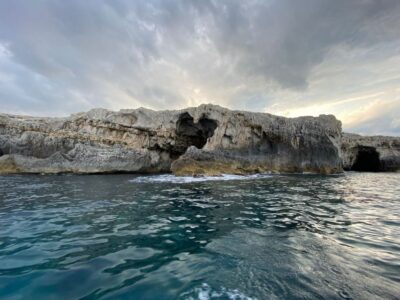 ★ 4.7Syracuse: Tour of Ortigia Island & Caves with Local SkipperFrom $231,060 reviews
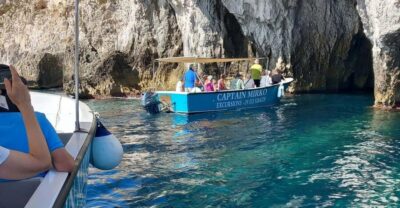 ★ 4.7Syracuse: Boat Tour with Captain Mirko, Snorkeling & CavesFrom $35746 reviews
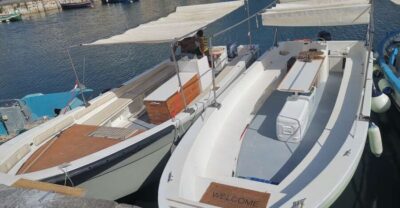 ★ 4.7Siracusa: Ortigia Boat Tour with Marine Grotto & SnorkelingFrom $47726 reviews
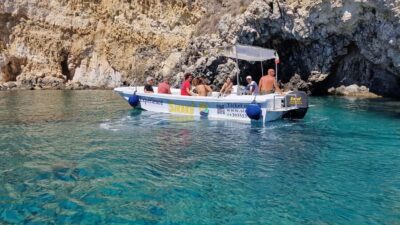 ★ 4.8Siracusa: Ortigia & Sea Caves Boat Tour w/ Prosecco & FruitFrom $35723 reviews
 ★ 5.0Tour of the island of Ortigia and exploration of sea caves with baths.From $24668 reviews
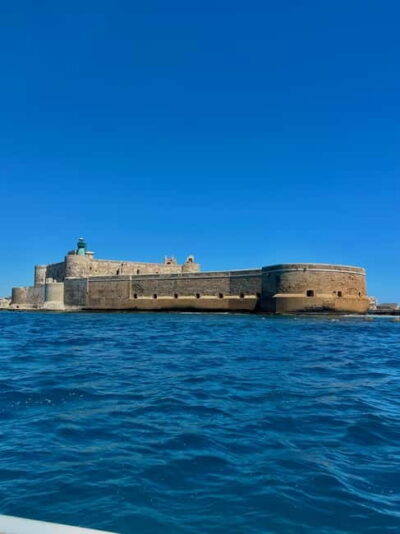 ★ 4.7Syracuse: Ortigia Island & Sea Cave Boat Tour with ProseccoFrom $23418 reviews
 ★ 5.0Boat tour of Ortigia Island and sea cavesFrom $24407 reviews
 ★ 4.6Catania: Syracuse, Ortigia, and Noto Tour with BrunchFrom $112404 reviews
Browse the lists this tour appears in