
Reviewed · SYRACUSE & ORTIGIA
Syracuse: Neapolis and Greek Theater guided tour
Neapolis turns Syracuse into a living story. In a tight 2 hours, you get the big names of the Neapolis area, plus the myths and politics that explain why these stones mattered. It’s the kind of guided walk that helps you stop seeing ruins as random rocks.
I love the route shape. You move from the quarry-caves of the Latomie to the famous sound trap of the Ear of Dionysius, then up to the Greek Theater viewpoint. I also like that the story stays readable even on-site, with guides such as Giuseppe and Laura called out for answering questions without rushing.
One thing to plan for: if your group has both Italian and English at once, you may spend a bit longer at each stop. And on the Greek Theater, you might not get down to the very bottom seating area.
In This Review
- Key Things That Make This Neapolis Tour Worth Your Time
- Entering Neapolis Fast: Where You Meet and How the Tour Starts
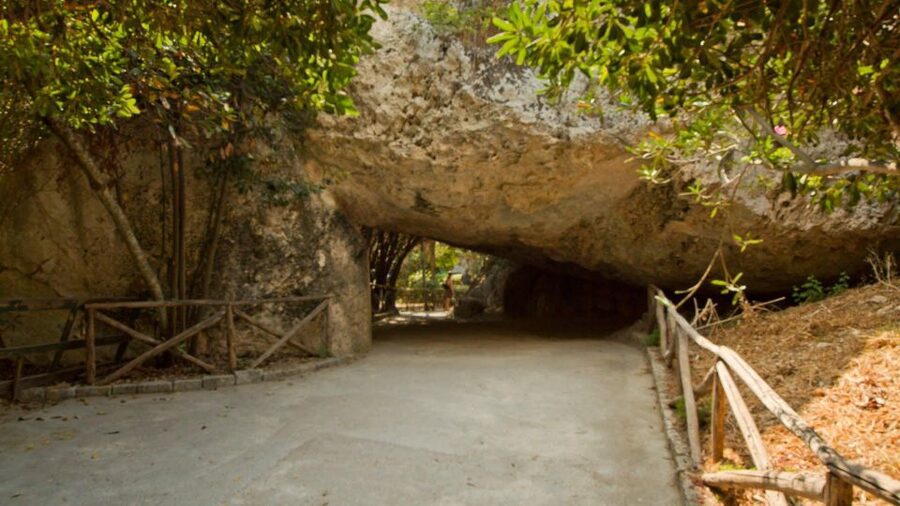
- Latomie del Paradiso: Quarry Caves Turned into Garden Shadows
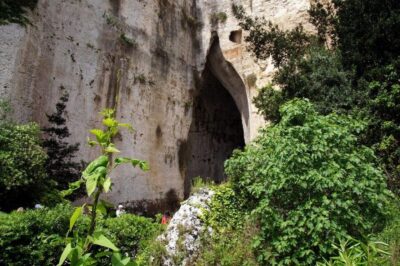
- Ear of Dionysius: The Cave That Makes Sound Feel Like a Myth
- Greek Theater Syracuse: Nymphaeum Fountain, Harbor Views, and a Smart Pause
- Altar of Hieron II: Where Symbolic Power Sits in Plain Sight
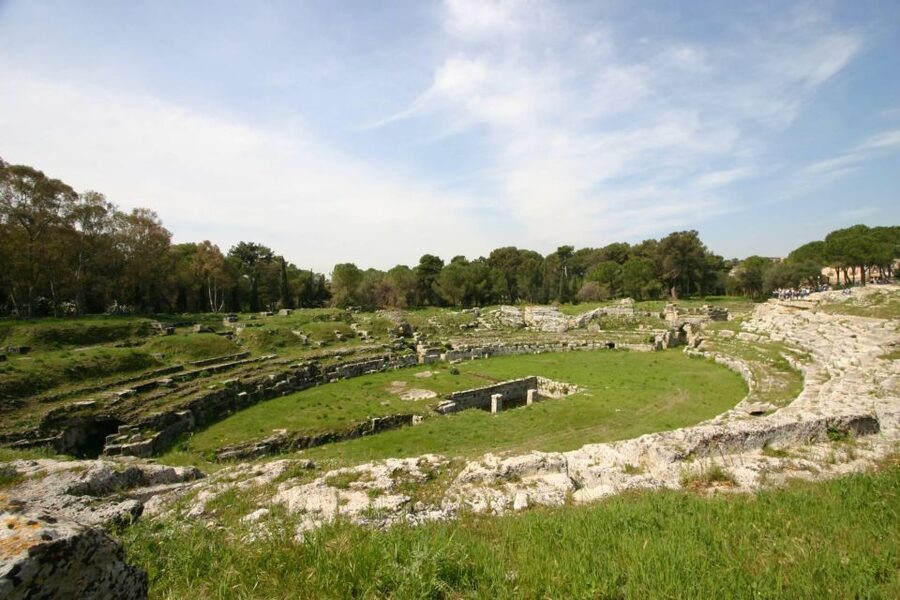
- Roman Amphitheater: Gladiatorial Games and the Shift to Roman Rule
- How Long Is 2 Hours, and When It Works Best
- Price and Value: What $51 Covers at Neapolis
- Who Should Book This Syracuse Neapolis Tour
- Should You Book This Syracuse Neapolis Tour?
- FAQ
- FAQ
- How long is the Syracuse Neapolis and Greek Theater guided tour?
- How much does the tour cost?
- Where can the tour start?
- Do I need to buy an entrance ticket separately?
- Is there skip-the-line access?
- What sites are included in the tour?
- What languages are offered during the tour?
- When should I arrive at the meeting point?
- Is free cancellation available?
- Can I reserve now and pay later?
- What is the cancellation and duration rule in simple terms?
Key Things That Make This Neapolis Tour Worth Your Time
- Skip-the-line entry into the Neapolis Archaeological Park via a separate entrance
- Latomie del Paradiso quarry-caves, described as natural gardens shaped by huge ancient work
- Ear of Dionysius and its eerie, legend-driven acoustics tied to tyrant Dionysius
- Greek Theater viewpoints that include the Grand Harbor and the Nymphaeum Fountain
- Roman Amphitheater context for how games and power looked under Roman rule
- Italian and English live guiding with the same tour running in both languages
Deeper into Ortigia and old Syracuse
- Syracuse: Boat Tour with Captain Mirko, Snorkeling & Caves
★ 4.7 · 746 reviews - Siracusa: Ortigia Boat Tour with Marine Grotto & Snorkeling
★ 4.7 · 726 reviews - Siracusa: Ortigia & Sea Caves Boat Tour w/ Prosecco & Fruit
★ 4.8 · 723 reviews - Syracuse: Ortigia Island & Sea Cave Boat Tour with Prosecco
★ 4.7 · 418 reviews
Entering Neapolis Fast: Where You Meet and How the Tour Starts
This is a 2-hour guided walk inside the Neapolis Archaeological Park of Syracuse, and the logistics are meant to keep you moving. You start from one of two meeting points: Biglietteria Parco Archeologico Neapolis or MOMENTO Ristorante. Since the exact meeting point can change by option, I’d treat that as your first check before you head out.
The practical win here is that your guide provides the entrance ticket at the meeting point. That matters because it reduces your time spent hunting for ticket counters once you arrive. You also get skip-the-line access through a separate entrance, which is a big deal at popular archaeological sites where lines can eat up your vacation.
Plan to arrive about 20 minutes early. It’s not just for timing. It gives you a buffer to find your guide, get your bearings fast, and settle into the group pace before you start walking.
Latomie del Paradiso: Quarry Caves Turned into Garden Shadows
The Latomie del Paradiso stop is one of the reasons this tour feels more like a story tour than a checklist. These are ancient stone quarries that were later transformed into natural-looking areas. The guide’s job is to connect that physical change to human use: huge work projects, then darker chapters that people associate with the space.
You’ll spend around 20 minutes here with guided time built in. That’s enough to understand why the Latomie are so memorable: the setting feels enclosed, the path feels like you’re moving through a sculpted space, and the “garden” idea only makes sense once you’re actually standing inside it.
A practical note for comfort: quarries and caves can feel cooler than the street, but they can also be damp or uneven. Wear shoes that grip. If it’s hot and sunny when you visit Sicily, you’ll likely appreciate that the cave environment gives you a break from direct heat, while still keeping your attention on the details your guide points out.
Ear of Dionysius: The Cave That Makes Sound Feel Like a Myth
The Ear of Dionysius is famous for more than one reason, and the guide’s interpretation is what turns it from a photo stop into a real experience. The tour frames it as a cave tied to legend and to the tyrant Dionysius, with special attention to how acoustics shaped the story.
You’ll get about 20 minutes at this stop. You’re not just looking at a chamber in stone. You’re learning why people attached strange meaning to what you could hear and how it behaved inside the cave. That’s the value of a live guide here: they help you connect the myth to the physical space, so the site makes sense beyond the famous nickname.
There’s also a memorable moment that shows up in guide behavior: Laura, for example, has been noted for singing inside the cave during a tour. Even if you don’t get the exact same moment on your day, it’s a hint of what your guide might do to make the acoustics feel real rather than theoretical.
Greek Theater Syracuse: Nymphaeum Fountain, Harbor Views, and a Smart Pause
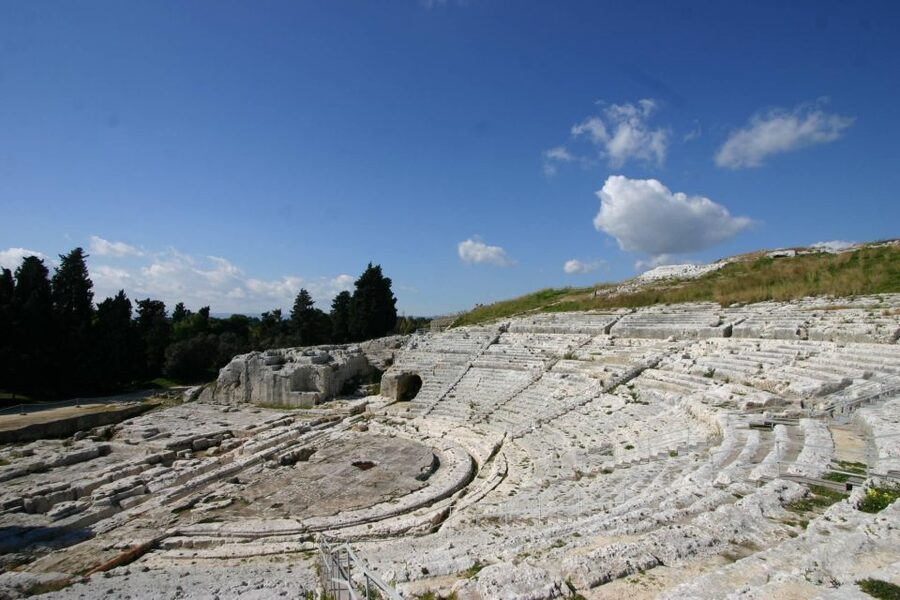
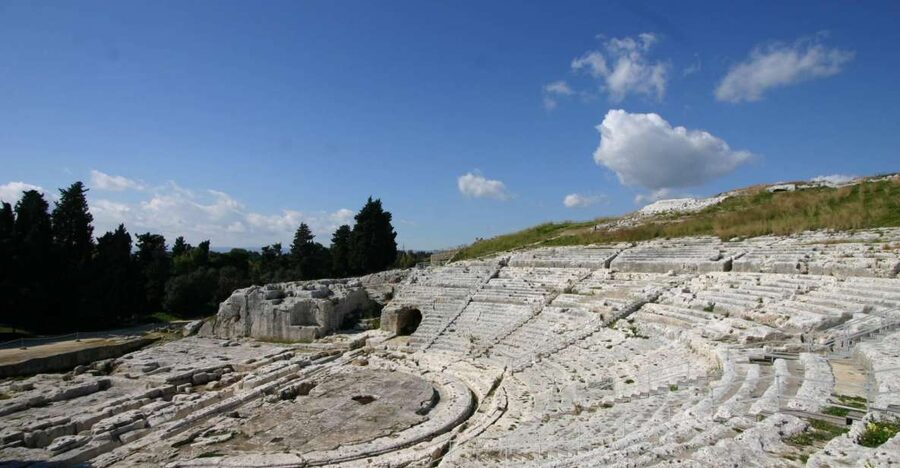
The Greek Theater section is where you go from enclosed cave spaces back into big open-air views. This stop is about 20 minutes, and it’s designed to give you both architecture and scenery.
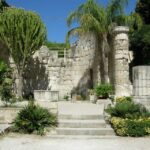
A standout detail you’ll be guided to notice is the Nymphaeum Fountain and the view sweeping to the Grand Harbor. That combination matters. The Greek world didn’t build in isolation. The “stage” in a theater like this isn’t just the seating and stonework; it’s also the city and sea beyond it. When the guide explains that connection, your photos start to include meaning, not just angles.
There’s also context about Greater Greece art and architecture, since this theater is part of a wider cultural story. Your guide helps you connect the visible structure to what Syracusans wanted from performances: civic identity, public emotion, and power expressed through public space.
One consideration from real on-site experience: you might not be taken all the way down to the very bottom seating. That can happen for time, safety, or the way the route is managed. If you care most about the closest views from the lowest levels, you may want to ask your guide on arrival what access looks like that day.
An evening at the theatre in Syracuse


Altar of Hieron II: Where Symbolic Power Sits in Plain Sight
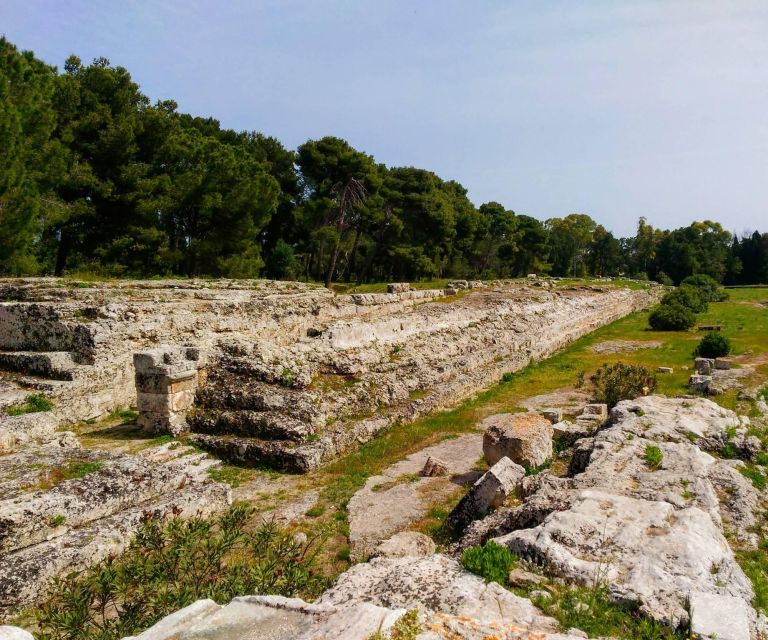
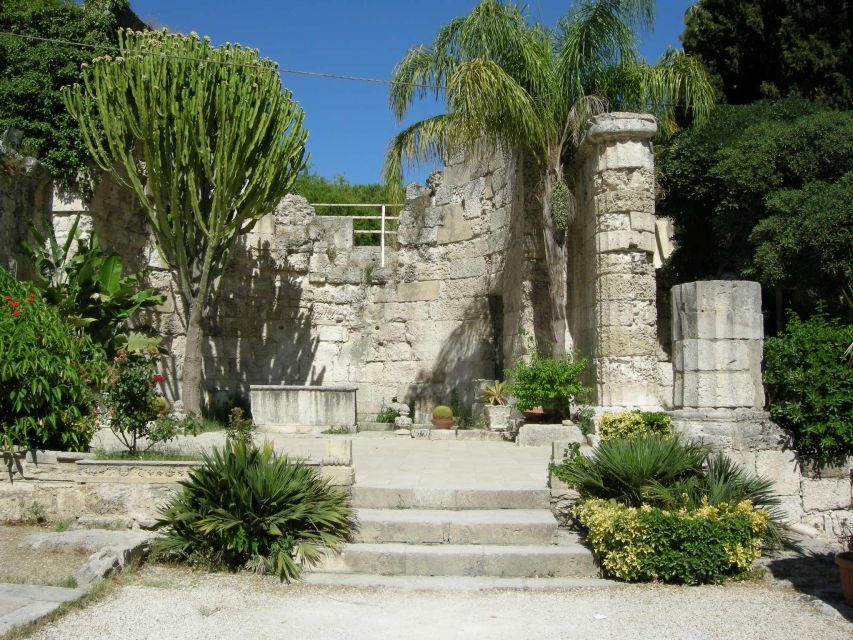
Even though it isn’t always the first thing people photograph, the Altar of Hieron II is worth your attention because it keeps the tour anchored in Syracuse’s political story. In the tour description, it’s presented as a majestic testimony to Syracuse’s glorious past, and that framing isn’t fluff. On-site, altars like this help you understand that Greek religion and civic life were not separate from governance.
Your guide’s job here is to connect the altar’s presence to what the theater and public spaces were doing for the city. It’s about power made visible in stone, and it helps explain why the Neapolis complex feels like one connected world rather than unrelated monuments.
Roman Amphitheater: Gladiatorial Games and the Shift to Roman Rule
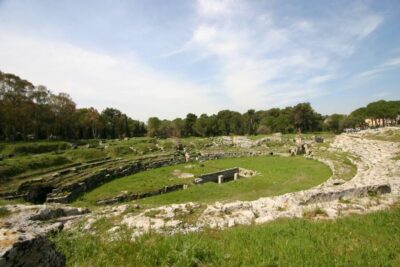
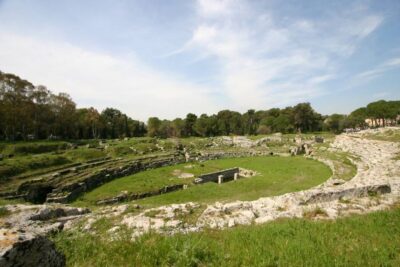
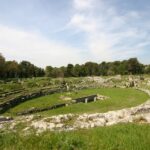
After the Greek Theater, the tour finishes with the Roman Amphitheater, another 20-minute guided stop. This is where the story widens from Greek Syracuse to the changes brought under Roman control.
The key promise here is interpretation: your guide reveals the secrets of gladiatorial games and the nuances of Syracuse under Roman rule. Even if you already know the broad Roman story, the value is in seeing how the setting itself can shift what you expect. The amphitheater becomes a lens for power, spectacle, and social order, not just a different type of seating.
If you like when ruins explain the people who lived around them, this is a strong ending. You end with a place that looks built for performance, then a guide ties that to what performances meant under Rome.
How Long Is 2 Hours, and When It Works Best
Two hours sounds short, but it’s a well-chosen length for Neapolis. This tour keeps the stops fairly tight—about 20 minutes each at the major points, plus walking time inside the park.
That time design is helpful for two reasons. First, you avoid the common problem of half-day ruin visits that turn into blur by mid-afternoon. Second, you get enough guided time at each site to understand what you’re seeing before the next stop moves you along.
The bigger timing variable is language mixing. Since the tour can be conducted simultaneously in Italian and English, you might spend extra time waiting for group alignment at each location. If you’re sensitive to delays, show up early and stand where it’s easiest to hear your guide.
Weather also plays a role in how the experience feels. One guide named Luca was praised for finding shaded places to talk on hot, sunny days, so on warmer Sicily afternoons, the right guide pacing can make the tour feel comfortable rather than exhausting.
Price and Value: What $51 Covers at Neapolis
At $51 per person for a 2-hour guided experience, the value mostly comes from two items you’re getting together: entrance access and a live guide.
Included is the entrance ticket to the Neapolis Archaeological Park and the guided tour of the park. That means you’re not paying extra on top for entry on the day, and you’re not losing time trying to match your own timing to ticket lines.
The second value piece is context. Sites like the Latomie, the Ear of Dionysius, and the Greek Theater are visually impressive, but they also reward interpretation. Paying for a guide is often the difference between walking past details and understanding what those details are saying about Syracuse: power, myth, engineering, and everyday civic life.
If you’re the kind of visitor who wants a guided route with clear story beats, this price lands in a sensible range for what you get.
Who Should Book This Syracuse Neapolis Tour
This tour is a strong match for you if:
- You’re visiting Syracuse for the first time and want the main Neapolis highlights without planning a route yourself.
- You like classic sites explained in plain language, with room for questions.
- You care about how myths connect to real buildings and spaces.
It also works well if you have an academic interest. One guest who studies Classics highlighted that the tour added details they were not taught in lectures. Even if you’re not studying anything formally, you’ll probably appreciate that the guide ties the visible parts to the bigger meaning.
Where you should be careful:
- If you struggle with hearing in groups, choose your position carefully. One shared concern was that the guide could be hard to hear for a larger group. Standing closer and staying attentive to the guide’s spot can help.
- If you want access to every lower seating area in the Greek Theater, you might be limited by the day’s route management.
Should You Book This Syracuse Neapolis Tour?
I’d book this tour if you want the Neapolis highlights to make sense fast. The combination of skip-the-line entry, live guidance in Italian and English, and a route that moves from Latomie to Ear of Dionysius to Greek Theater to the Roman Amphitheater is a practical way to see Syracuse without it turning into random ruins.
Skip it or consider an alternative only if you know you’re very sensitive to hearing issues in groups or you’re expecting full access to every corner of the Greek Theater seating. Otherwise, this is a solid, story-led introduction to one of Sicily’s most rewarding ancient areas.
FAQ
FAQ
How long is the Syracuse Neapolis and Greek Theater guided tour?
It lasts 2 hours.
How much does the tour cost?
The price is $51 per person.
Where can the tour start?
The meeting point can vary by option. It’s either at Biglietteria Parco Archeologico Neapolis or at MOMENTO Ristorante.
Do I need to buy an entrance ticket separately?
No. The entrance ticket to the Neapolis Archaeological Park will be provided by the guide at the meeting point.
Is there skip-the-line access?
Yes. You enter through a separate entrance to skip the line.
What sites are included in the tour?
You’ll visit the Neapolis Archaeological Park, Latomie del Paradiso, the Ear of Dionysius, the Greek Theater, and the Syracuse Roman Amphitheater.
What languages are offered during the tour?
The live tour guide works in Italian and English.
When should I arrive at the meeting point?
Arrive 20 minutes before the start of the activity.
Is free cancellation available?
Yes. You can cancel up to 24 hours in advance for a full refund.
Can I reserve now and pay later?
Yes. The option is listed as reserve now & pay later.
What is the cancellation and duration rule in simple terms?
Free cancellation is available up to 24 hours before the tour, and the tour runs for 2 hours (depending on starting times shown for availability).
More Tour Reviews in Syracuse


More Opera and Live Performances


More of Syracuse and Ortigia
Just added: the newest Syracuse tours in our notebook
- Tour of Syracuse by Ape Calessino★ 3.0 · 3 reviews
- Syracuse Showdown Scavenger Hunt★ 5.0 · 3 reviews
- Sicily Boats Avola: Plemmirio boat tour 4 people 4 hours★ 5.0 · 3 reviews
- Groovy Geneva Scavenger Hunt★ 5.0 · 3 reviews
- Syracuse: Ortigia & Sea Caves Boat Tour with Local Skipper★ 5.0 · 3 reviews
- Siracusa: Neapolis’s Archaeological Park small group tour★ 5.0 · 3 reviews
Syracuse & Ortigia, compared.
 ★ 4.7Syracuse: Tour of Ortigia Island & Caves with Local SkipperFrom $231,060 reviews
 ★ 4.7Syracuse: Boat Tour with Captain Mirko, Snorkeling & CavesFrom $35746 reviews
 ★ 4.7Siracusa: Ortigia Boat Tour with Marine Grotto & SnorkelingFrom $47726 reviews
 ★ 4.8Siracusa: Ortigia & Sea Caves Boat Tour w/ Prosecco & FruitFrom $35723 reviews
 ★ 5.0Tour of the island of Ortigia and exploration of sea caves with baths.From $24668 reviews
 ★ 4.7Syracuse: Ortigia Island & Sea Cave Boat Tour with ProseccoFrom $23418 reviews
 ★ 5.0Boat tour of Ortigia Island and sea cavesFrom $24407 reviews
 ★ 4.6Catania: Syracuse, Ortigia, and Noto Tour with BrunchFrom $112404 reviews
Browse the lists this tour appears in