
Reviewed · GUIDED
Guided Geological Excursion to Ustica
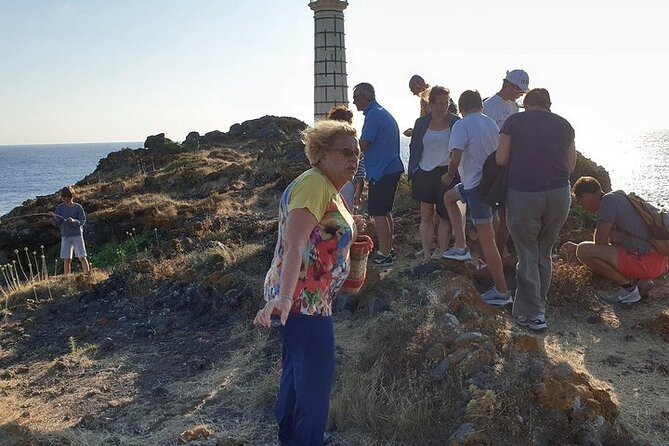
Compasses go haywire on Ustica. This 2-hour guided geology outing centers on the Punta Cavazzi lighthouse area, where you’ll hear why certain rocks called dazzling can scramble a compass—and how Ustica’s sea cliffs were shaped by ancient lava. You’ll also end with a classic sunset over the sea moment that makes the science feel real.
I love how Vittorio turns complicated geology into something you can actually picture. I also love the mix of stops: magnetic rock behavior, a cave that connects to the sea, and basalt formations that look almost engineered. Everything is paced for a short evening, so you leave feeling you saw the island’s big geological story—not just a few pretty views.
One possible drawback: this experience depends on good weather, so if conditions are poor, it can be rescheduled or refunded. Also, with a max group size of 150, your question time may be more limited than on smaller hikes.
In This Review
- Key things you’ll notice on this Ustica geology walk
- Why Punta Cavazzi geology hits different on a small island
- The 2-hour evening format: what your timing should look like
- Magnetic dazzling rocks: the compass-ruining moment
- The cave-to-sea connection and how water writes geology
- Basaltic colonnades and the lava-era “architecture”
- “Science fiction” illuminated rocks: what you’re actually seeing
- The highly studied fault: why experts still care about Ustica
- Price and value: is $17.79 worth it?
- Who should book this Ustica geology excursion
- Should you book? My practical take
- FAQ
- What is the meeting point for the guided geology excursion in Ustica?
- What time does the tour start?
- How long is the excursion?
- Is pickup available?
- Do I need a physical ticket?
- What happens if the weather is bad?
- Can I cancel for free?
Key things you’ll notice on this Ustica geology walk
- Magnetic dazzling rocks that make compasses behave badly
- Punta Cavazzi lighthouse as the main stage for the island’s origin story
- A terrestrial cave that leads to the sea, showing how land and water shape each other
- Basaltic colonnades you can spot where lava-era rock meets the shore
- Rocks described as having a science-fiction style glow/illumination effect
- A fault that has drawn geologists from around the world to study Ustica
A few we would gladly point a friend toward in Sicily
- Etna – Trekking to the summit craters (only guide service) experienced hikers
★ 5.0 · 286 reviews - 1 1/2 – 2 Hours Guided Excursion of Etna by Quad
★ 5.0 · 233 reviews - Guided tour of the salt pans of Trapani and the Salt Museum
★ 5.0 · 188 reviews - Etna Tour – HalfDay Small Group & licensed Tour Guide
★ 5.0 · 185 reviews
Why Punta Cavazzi geology hits different on a small island
Ustica is small enough that geology doesn’t hide behind museums. On this outing, you’re basically reading the island like a giant outdoor textbook, with the sea doing the editing in real time. The center of the story is the Punta Cavazzi lighthouse area, and the vibe is part science lesson, part coastal storytelling.
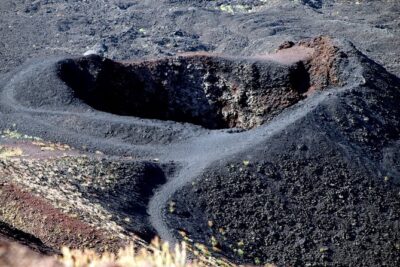
What makes it work is the way the guide frames cause and effect. You’re not only looking at rock. You’re learning why that rock acts the way it does. Magnetic behavior. Lava shaping the cliffs. Erosion carving paths. And—because it’s Ustica—everything happens with black rock cliffs and open water as your backdrop.
And yes, the compass bit is the hook. When you hear that magnetic rocks called dazzling can make compasses go crazy, it stops being theoretical. It becomes a tiny, practical experiment in front of you.
The 2-hour evening format: what your timing should look like
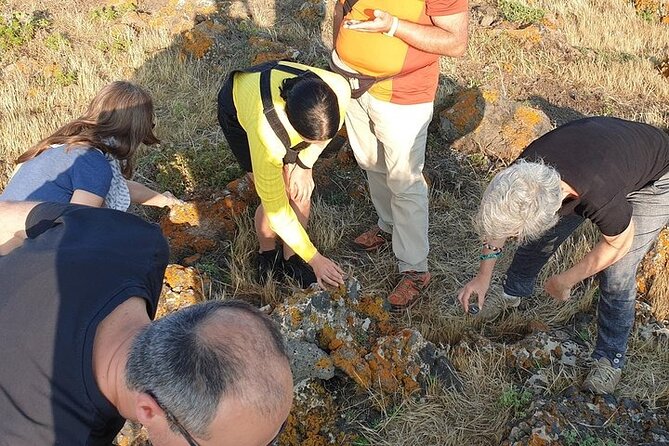
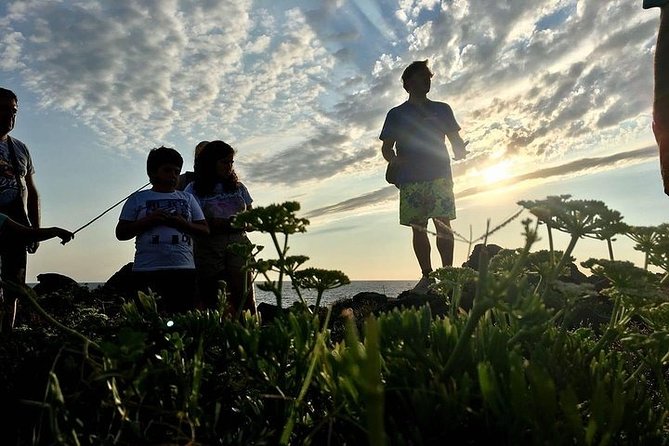
This tour runs about 2 hours and starts at 6:00 pm. That timing matters. Evening light helps you see the coastline more clearly, and it gives the guide a clean runway to end with sunset over the sea.
Because the tour is short, you should think of it as a focused sampler of Ustica’s geological identity. You won’t be doing a full-day trek or a multi-neighborhood marathon. You’ll concentrate on a particular set of sites where the story is strongest—especially around the Punta Cavazzi area.
The tour also offers pickup, which can make the logistics feel painless on an island trip. If you’re juggling dinner plans, the early evening start is usually easier than a later start—just be sure you keep your evening flexible enough for the full duration.
Magnetic dazzling rocks: the compass-ruining moment
The most memorable concept here is the magnetic one: rocks called dazzling that make compasses go crazy. That’s a fun detail, but it’s also a real scientific clue. It points to specific mineral properties and to how volcanic processes can leave an imprint that still shows up in modern tools.
What you’ll get, in plain terms, is an explanation that links the weirdness you observe with the island’s volcanic past. Instead of asking you to trust a diagram, the guide sets you up to notice behavior—then explains what’s likely behind it.
This is also why the tour feels good for mixed groups. Some people love facts. Some people just want the wow factor. Magnetic rocks give you both. You’ll be paying attention without realizing you’re learning.
One small thing to keep in mind: a compass won’t necessarily behave the same way everywhere. But on this tour, the whole point is that you’re being shown the spots where the effect is part of the story.
The cave-to-sea connection and how water writes geology
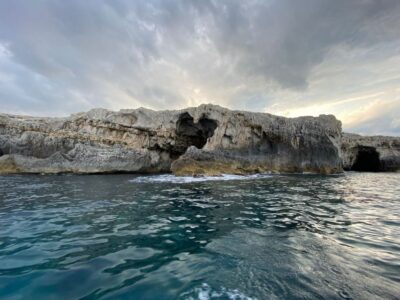
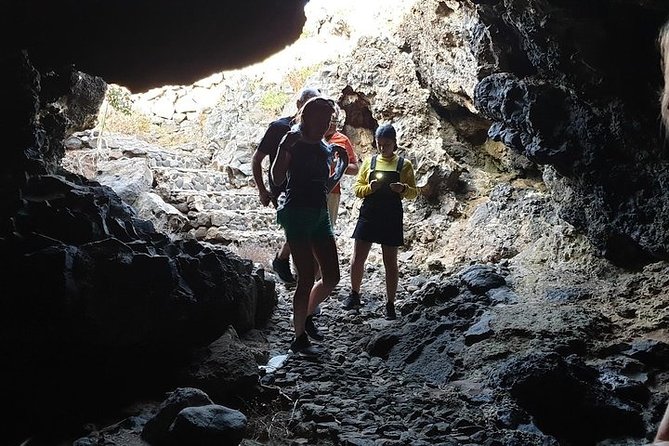
Another standout stop is a terrestrial cave that leads to the sea. That’s the kind of phrase that sounds like a movie set, but geologically it’s a serious clue.
A cave connecting land to water shows you how ocean action can work from the outside in—eroding rock, exploiting weaknesses, and creating pathways that persist. At Ustica, the contrast is striking: black volcanic rock, steady waves, and a cave opening that makes you imagine what it felt like during earlier stages of the island’s formation.
In a short 2-hour window, you’re not trying to map the whole system. You’re learning the basic idea: rock isn’t static. It gets re-shaped over time by moving water, gravity, and changes at the coast.
If you like nature stories that have a beginning, middle, and outcome, this cave stop is one of those chapters.
Basaltic colonnades and the lava-era “architecture”
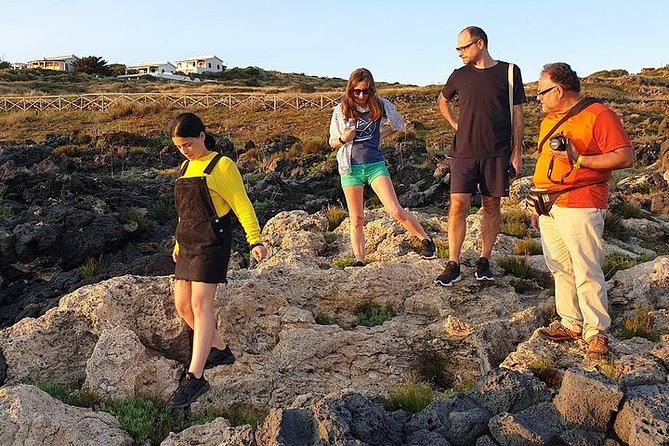
Then come the basaltic colonnades—described as fascinating rock columns inserted in a beach where something “re-emerged.” Basalt columns can look almost human-made, like a set of stone pillars placed with care.
On this tour, the point isn’t just that the columns look cool. It’s that they’re physical evidence of how lava cooled. Cooling patterns can create repeating structures, and those structures become readable markers long after the eruption is over.
You’ll also appreciate the coastline context. Instead of columns in isolation, you’re seeing them against sea background and cliff edges. It’s a reminder that geology isn’t parked in one place. It’s layered into the shore, the beach, and the cliffs that you walk beside.
This is one of the best parts for photography, too—because the black rock and the bright sea create strong contrast.
“Science fiction” illuminated rocks: what you’re actually seeing
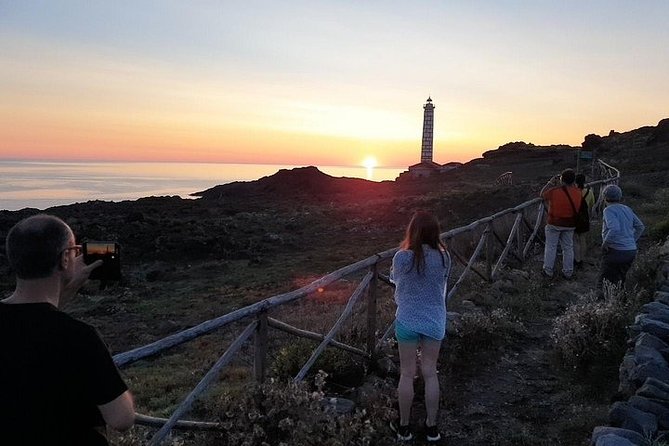
One of the descriptions in the tour narrative talks about rocks with a science fiction feel and a characteristic of illuminating. I’d treat this as an invitation to pay attention to how light hits the rock, not a promise of a special effect.
The practical takeaway for you: the guide is trying to show that the island’s materials interact with light in noticeable ways. That interaction can make the same rock look different depending on the time of day and viewing angle.
Even if you’re not a geology person, this stop helps you understand something important: rocks are not just dull, gray background. They can change how the landscape reads.
And paired with the magnetic and volcanic stops, it rounds out the experience nicely. You’re seeing properties you can observe directly—how minerals behave, how structures formed, and how surfaces reflect or react under the coastal light.
The highly studied fault: why experts still care about Ustica
The tour also covers a fault studied by geologists from all over the world. This is where the island shifts from “cool rocks” to “serious Earth science.”
A fault is a weakness in the crust where motion happened and where pressure and stress built up and released. When a location has a fault that draws international attention, it means the site offers clues about how the region’s tectonic story is told.
What you should aim to get from this part: a simple understanding of faulting as a process, and why Ustica’s geology is more than a one-off volcanic island story. Ustica belongs to a bigger puzzle, and this fault is one of the pieces specialists keep returning to.
Price and value: is $17.79 worth it?
At $17.79 per person for about 2 hours, the value depends on what you want from your Ustica evening.
If you’re the type who enjoys a guided story—someone pointing out what matters and explaining it clearly—this price is a sweet spot. You’re paying for more than movement around the island. You’re paying for interpretation of multiple geological features in a compact time window: magnetic behavior, volcanic rock structures, a sea-linked cave, and fault geology.
Also, the guide style seems to be a big part of the value. Reviews-style feedback about Vittorio emphasizes his ability to make complex concepts simple and fun, and that kind of skill is exactly what makes short excursions worth it. Without a strong guide, geology can feel like random rocks. With one, it becomes a coherent narrative.
The main reason you might feel it’s not worth it is if you’re looking for a long, multi-stop nature day or something heavily hands-on like a lab-style activity. This is a guided walk-and-explain experience. If that’s your match, the price is fair.
Who should book this Ustica geology excursion
This tour fits especially well if you:
- Enjoy learning science through real outdoor examples, not slides
- Want a short evening plan that ends with sunset over the sea
- Prefer a guide who can keep things understandable and lively
- Are traveling with kids old enough to sit through explanations and still enjoy the “wow” moments (the magnetic rocks and the cave help here)
It may feel less ideal if you:
- Need a strictly quiet, minimalist walk with no storytelling
- Are sensitive to changes in weather, since the experience requires good conditions
- Want maximum small-group intimacy, since the tour listing allows up to 150 people
Should you book? My practical take
I think you should book this if you want your Ustica trip to have a strong sense of place. The island’s geology is the star, and this outing is built around the big signals: magnetic rocks, lava-shaped cliff features, sea-linked caves, and fault science.
It’s also a smart choice for an early evening slot. You get a focused lesson, you get sea views, and you finish with sunset energy without burning your whole day.
If you’re on the fence, here’s the decision rule I’d use: if you’d enjoy seeing multiple geological phenomena explained clearly by Vittorio in a single 2-hour session, this is a yes. If you want a full-day itinerary or a different kind of activity, you might want to pick a longer or more specialized option instead.
FAQ
What is the meeting point for the guided geology excursion in Ustica?
The meeting point is Comune di Ustica, Via Petriera, snc, 90051 Ustica PA, Italy.
What time does the tour start?
The start time is 6:00 pm.
How long is the excursion?
The duration is approximately 2 hours.
Is pickup available?
Yes, pickup is offered.
Do I need a physical ticket?
No, the tour uses a mobile ticket.
What happens if the weather is bad?
This experience requires good weather. If it’s canceled due to poor weather, you’ll be offered a different date or a full refund.
Can I cancel for free?
Yes. You can cancel for free up to 24 hours in advance for a full refund.
More Guided in Sicily


More Tours in Sicily



More Tour Reviews in Sicily
Just added: the newest Sicily tours in our notebook
- Etna / Taormina★ 5.0 · 3 reviews
- Bikes★ 5.0 · 3 reviews
- Taormina shore tour – for small group cruise passengers★ 5.0 · 3 reviews
- Vegan Cooking Class in Catania with Lunch and Dinner★ 5.0 · 3 reviews
- Make & Taste Sicilian Desserts in Palermo – Learn Cannoli & More★ 5.0 · 3 reviews
- Sicilian Villages & Ricotta Tasting – including Lunch from Cefalu★ 4.0 · 3 reviews
Guided, compared.
 ★ 4.5Taormina: Ancient Theater Skip-the-Line Ticket & Audio GuideFrom $282,412 reviews
 ★ 4.7Etna: summit craters trekking with volcano guide 3350mtFrom $771,712 reviews
 ★ 4.5Palermo: Teatro Massimo Opera House Guided TourFrom $141,573 reviews
 ★ 4.8Mount Etna: Guided Trek 3,000 Meters to the SummitFrom $1131,407 reviews
 ★ 4.6Catania: Heart of the City Guided Walking TourFrom $23708 reviews
 ★ 4.7Palermo: Private Custom Walking Tour with Local GuideFrom $53661 reviews
 ★ 4.9Palermo: Street Food Walking Tour with Local Guide & TastingFrom $52632 reviews
 ★ 4.8Palermo: UNESCO World Heritage Sites Guided Walking TourFrom $41548 reviews