

Reviewed · TRAPANI & SALT PANS
Guided tour of the salt pans of Trapani and the Salt Museum
The white salt flats around Trapani feel like another world. This guided visit shows how sea water turns into the salt you use at home, with a museum stop that adds the human story behind the process.
I really like that the first half is a walk along working salt pans in the Riserva Naturale Saline di Trapani e Paceco, where you see the colors shift from sea to clay to salt. I also like that the experience is hands-on and step-by-step, including collecting salt and following the transformation process.
One thing to consider: the meeting area is in Paceco, and public transport from central Trapani may be limited. If you don’t have a car, plan your ride early so you don’t waste time (or money) on last-minute logistics.
In This Review
- Key highlights worth penciling in
- Entering the Riserva Saline di Trapani e Paceco
- Stop 1: The salt-pan walk—light, borders, and salt harvesting
- Stop 2: Museo del Sale in an ancient baglio
- How the system works: from sea water to salt
- Timing the visit: weather, sunset light, and short duration
- Price and value: what $21.77 gets you
- Getting there from Trapani: the Paceco reality check
- Who should book this salt pans and museum tour?
- Should you book this Trapani salt pans experience?
- FAQ
- How long is the tour?
- Where does the tour start and end?
- Is the tour guided in English?
- What’s included in the price?
- How many stops are there?
- Is it suitable for families or mixed ages?
- Do I need good weather?
- Is this a private tour?
- Are service animals allowed?
- What’s the cancellation policy?
Key highlights worth penciling in
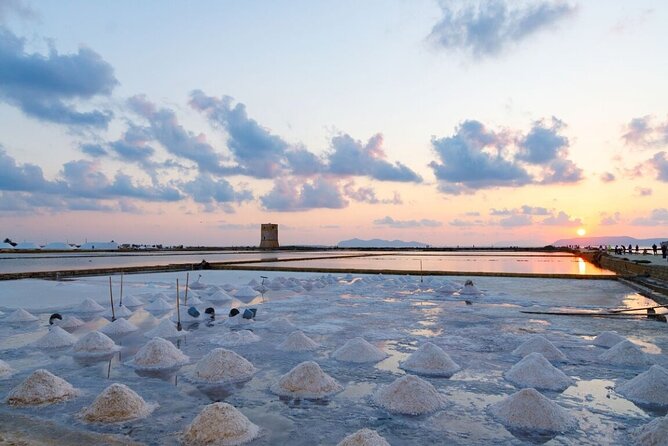
- Riserva Naturale Saline di Trapani e Paceco: a protected setting with salt production happening in real time
- Perimeter walk with mirror views: water reflecting sky as you follow the edges of the pans
- Salt-making shown from sea water to harvest: you’ll understand the logic behind each stage
- Museo del Sale inside a baglio: plus tools and a guided story of salt farming families
- Small tasting: a quick way to connect the product to the place
- English-guided options: offered in English, but check availability when booking
Out to the Trapani salt flats
- SALT TOUR-all inclusive: salt tour: Trapani, Paceco, Nubia
★ 5.0 · 589 reviews - Trapani: Salt Pans Sunset Tour and Flamingo Way
★ 4.4 · 252 reviews - Egadi Islands Tour Favignana Levanzo by Boat with Lunch from Trapani
★ 5.0 · 246 reviews - Egadi Sail Boat Tour to Favignana and Levanzo from Trapani
★ 5.0 · 194 reviews
Entering the Riserva Saline di Trapani e Paceco
This tour centers on the Culcasi salt pans in the WWF reserve, in the broader Riserva Naturale Saline di Trapani e Paceco. You’re not just looking at scenery. You’re stepping into a working system that’s shaped by the same forces—sun, wind, and water flow—that have driven salt production here for generations.
I like how the setting makes the science feel simple. As you move through the reserve’s routes, the colors tell the story: the salt whites, the blue of the sea, and the different tones of the clay and tanks around you. It’s the kind of environment where your brain finally clicks on why “salt pans” look the way they do.
And yes, it’s suitable for a wide range of ages. The pacing is meant for families, too, so you’re not stuck in a long, exhausting hike.
Stop 1: The salt-pan walk—light, borders, and salt harvesting
The tour’s first major segment is a relaxing guided walk through the salt pans, estimated around 50 minutes, with an admission ticket included. The route follows the perimeter of the working salt pan area. That detail matters, because it gives you a natural viewpoint—like being able to see the system’s layout instead of only seeing one corner.
Expect to:
- Follow the perimeter until you reach the banks where the water reflects the sky like a mirror
- Hear how salt production works in stages and how water moves through different tanks
- See the pans in multiple phases—so the process feels chronological, not random
A cool part is the emphasis on wildlife and protected surroundings. You’ll be in a WWF reserve context, so you may spot protected birds and see salt-production happening alongside conservation.
The other “make it real” moment is collecting salt with your hands. That’s not a gimmick. It’s how you connect the finished product to the hands-on work that creates it. When you can feel the texture, the whole process stops being abstract.
What might slow you down (or help you enjoy it more): this is weather-dependent. Good conditions make the walking part enjoyable, and salt pans are best viewed when the light cooperates.
Stop 2: Museo del Sale in an ancient baglio
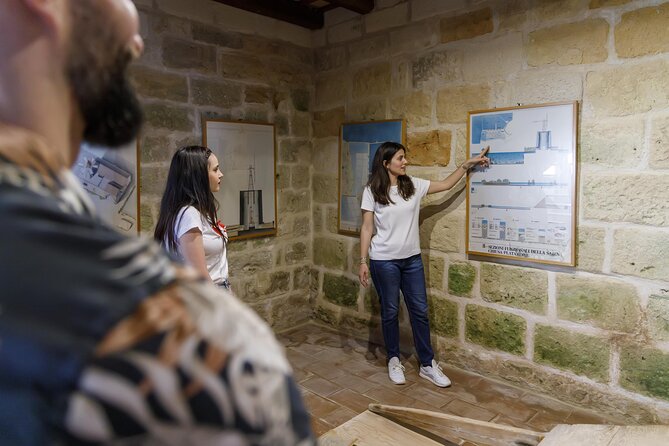
After the walk, you shift from outdoor process to indoor history. The second part is about 25 minutes, again with an admission ticket included, at the Museo del Sale.
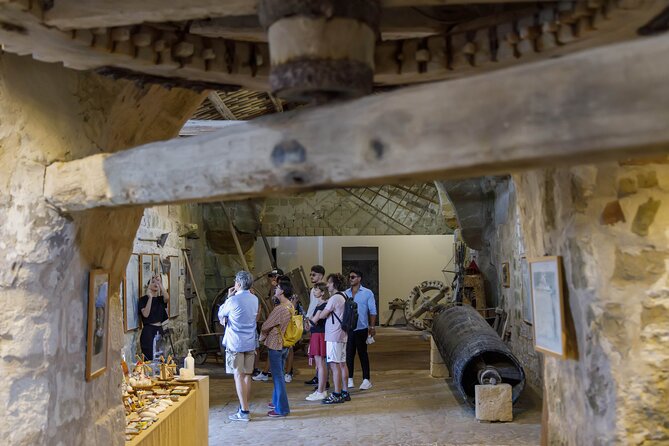
The museum is set inside an ancient baglio, which gives the visit a sense of place right away. Salt production here wasn’t just a technical operation—it was also family work, managed across generations. The guide focuses on both:
- the tiring labor and workflow of the salt pan
- the family history of the people who ran the operation over time
Even if you know nothing about salt production, you’ll likely leave with a clearer picture of why these tools and buildings mattered. The museum preserves old equipment (including items used for producing salt), so you’re not just hearing about the past—you’re seeing it.
This stop also includes a small tasting. I find tastings are at their best when they’re short and tied to the story you just heard. Here, that’s exactly the feeling: you understand how the salt gets made, then you taste something that comes directly from that environment.
One practical note: the museum portion can involve more people in a shared space, and sound can be tricky if you’re not near the front. If you’re sensitive to that, try to position yourself so you can hear clearly during the guide’s explanation.
How the system works: from sea water to salt
One of the most praised parts of this experience is that the tour doesn’t treat salt like magic. It treats it like a process.
You’ll follow how sea water gradually becomes salt through stages set up in the pans. The guides explain the logic behind the layout and what each part of the system is for. In particular, you may hear about the Archimedes screw, a device connected to moving water within the system. That’s the kind of detail that makes the visit click: it’s not just a bunch of basins. It’s an engineered workflow tuned to local conditions.
If you’re the type who likes “why” more than “what,” this is a good fit. The explanations tend to stay clear and connected, so it feels like you’re learning something real—not just collecting facts.
And if you’re here for photography: the process gives you plenty to shoot. The salt surfaces, the tanks, and the reflective areas create lots of visual variety in a short timeframe.
A few we would gladly point a friend toward in Sicily

Timing the visit: weather, sunset light, and short duration
The entire tour runs about 1 hour 15 minutes (approx.). That’s a big plus if you’re trying to fit it into a day around Trapani without burning half your afternoon.
It’s also why timing matters. In this area, the light can change the mood fast. One of the most repeated tips from people who enjoyed it is to consider going near sunset hours. Even without getting overly technical, the colors on the pans can look extra dramatic when the sun sits lower.
Just keep it practical: the experience requires good weather. If conditions are poor, you’ll be offered a different date or a full refund, so don’t plan it as your only outdoor activity if you’re visiting with a packed schedule.
Also, build a small buffer. Some tours may run a bit longer than the printed timeframe, so don’t schedule your next big thing immediately afterward.
Price and value: what $21.77 gets you
At about $21.77 per person, this tour is positioned as good value because two things are included:
- admission for the salt pan reserve portion
- admission for the salt museum
The guided element is the main product, but the fact that tickets are rolled in helps keep it from feeling like you’re buying “just the walk” and then paying separately for everything else.
When I’m deciding if a short tour like this is worth it, I look at whether it teaches you something beyond a quick photo stop. Here, you do get that: you learn the stages of salt production, you see the system up close, and you get historical context inside the museum in a real building tied to the work.
Is it the cheapest thing you can do in the area? Probably not. But for the combination of outdoor process + museum storytelling, it’s priced like an experience that wants to educate, not just entertain.
Getting there from Trapani: the Paceco reality check
The meeting point is at Via Salina Chiusa, 1, 91027 Paceco TP, Italy, and the tour ends back at the same meeting point. The ticket redemption point is listed as VIA CHIUSA – NUBIA, 91027 Paceco TP, Italy.
Here’s the practical truth: Paceco isn’t in the center of Trapani. If you’re staying in Trapani city and you’re relying on public transport, you may find it hard. One reviewer specifically warned that there’s no straightforward public transportation option and recommended having a car or arranging a taxi.
So my advice is simple:
- If you can, rent a small car
- If not, plan a taxi time window (don’t treat it like something you can solve spontaneously)
Because the tour is short, you don’t want to arrive stressed or late. Getting there smoothly is what keeps your experience relaxed.
Who should book this salt pans and museum tour?

This is the kind of trip that works well if you:
- like practical, hands-on learning
- want an unusual Sicilian experience that’s not another church-and-cathedral loop
- appreciate nature settings tied to real work and local tradition
- travel with kids and want something visually interesting without being overly long
It’s also a good choice if you’re a history curious type. The museum doesn’t feel detached from the outdoor world; it’s tied to the families and the tools behind the production.
If you’re extremely sensitive to group noise in indoor spaces, you’ll want to choose your spot carefully inside the museum so you can hear the second guide clearly.
Should you book this Trapani salt pans experience?
I think you should book if you want a guided, efficient way to understand how salt is made—and you like seeing a place that’s still producing. The combination of a salt-pan walk plus the Museo del Sale in an ancient baglio gives you both the process and the people story, within a short time.
Skip it (or at least plan harder) if you don’t have a reliable way to reach Paceco. The experience is focused, not flexible. Getting there is part of the deal, and the reserve is not something you’ll stumble upon without transportation.
If you’re coming on a day with decent weather, and you can handle the trip out from Trapani, this is one of those Sicily activities that feels specific to the region instead of generic.
FAQ
How long is the tour?
It’s listed as about 1 hour 15 minutes (approx.).
Where does the tour start and end?
It starts at Via Salina Chiusa, 1, 91027 Paceco TP, Italy, and ends back at the same meeting point.
Is the tour guided in English?
Yes, the tour is offered in English.
What’s included in the price?
Admission tickets are included for both the salt-pan reserve portion and the Salt Museum.
How many stops are there?
There are two main parts: a walk in the Riserva Naturale Saline di Trapani e Paceco, followed by a guided visit to the Museo del Sale.
Is it suitable for families or mixed ages?
It’s described as suitable for all age groups, and it’s paced like a relaxed walk rather than an intense hike.
Do I need good weather?
Yes. The experience requires good weather. If it’s canceled due to poor weather, you’ll be offered a different date or a full refund.
Is this a private tour?
It’s private in the sense that only your group participates.
Are service animals allowed?
Yes, service animals are allowed.
What’s the cancellation policy?
You can cancel up to 24 hours in advance for a full refund, and cancellation less than 24 hours before the start time is not refunded.
More Tours in Sicily




More Tour Reviews in Sicily


More Around Trapani and the Salt Pans



Just added: the newest Sicily tours in our notebook
- Etna / Taormina★ 5.0 · 3 reviews
- Bikes★ 5.0 · 3 reviews
- Taormina shore tour – for small group cruise passengers★ 5.0 · 3 reviews
- Vegan Cooking Class in Catania with Lunch and Dinner★ 5.0 · 3 reviews
- Make & Taste Sicilian Desserts in Palermo – Learn Cannoli & More★ 5.0 · 3 reviews
- Sicilian Villages & Ricotta Tasting – including Lunch from Cefalu★ 4.0 · 3 reviews
Trapani & Salt Pans, compared.
 ★ 4.2From Trapani: Cruise to Favignana and Levanzo with lunchFrom $532,286 reviews
 ★ 4.2Segesta, Erice and Salt Pans Full-Day Excursion from PalermoFrom $821,791 reviews
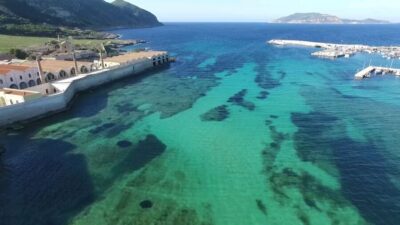 ★ 4.3From Trapani: Day Cruise to Favignana & Levanzo with LunchFrom $461,483 reviews
 ★ 5.0Boat Tour Egadi Day discover Favignana and Levanzo from TrapaniFrom $1391,183 reviews
 ★ 4.2From Trapani: Favignana and Levanzo Mini Cruise with LunchFrom $47814 reviews
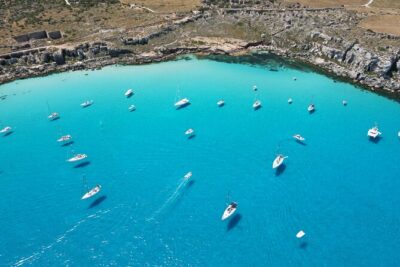 ★ 5.0Favignana and Levanzo, Egadi islands tour by boat from TrapaniFrom $114720 reviews
 ★ 5.0Boat tour to Egadi Favignana and Levanzo islands from TrapaniFrom $102614 reviews
 ★ 5.0Egadi Islands Tour: Favignana and Levanzo from TrapaniFrom $114607 reviews
Browse the lists this tour appears in