
Reviewed · MOUNT ETNA TOURS & SUMMIT
Etna – Trekking to the summit craters (only guide service) experienced hikers
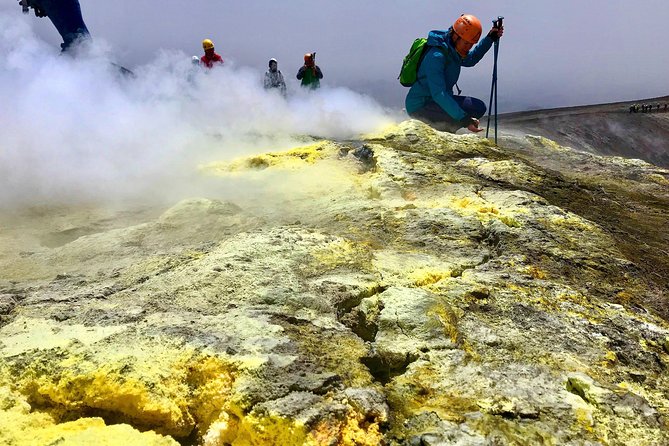
Walking crater edges on an active volcano is intense. This Etna Nord trek runs from Piano Provenzana into the summit craters with an expert guide, plus that early-morning 4×4 push up Etna’s wilder north side. It’s offered in English, has a small group limit, and you’ll be dressed for the hike before you even start walking.
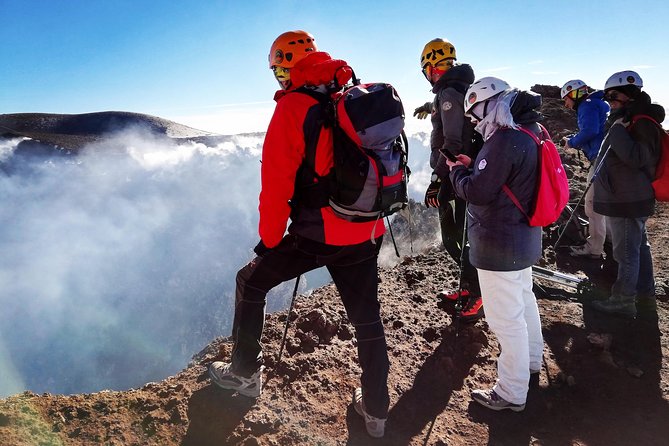
I love the way the guide-led pacing turns a hard climb into a steady, understandable route. Guides such as Paolo, Nikos, Raphael, Daniele, and Poldo focus on what you’re seeing—crater names, formations, and how today’s conditions shape where you walk. I also love the included gear: trekking poles, boots, a helmet, a warm jacket, extra socks, and even an extra backpack—so you’re not hunting last-minute equipment on Sicily’s mountain.
One drawback to plan for: the descent is long and steep, and you’ll feel altitude and wind. Also, volcanic access can change day to day, so the route and how close you get to the highest points may adjust for safety and visibility.
In This Review
- Quick highlights before you commit
- Why Etna Nord summit craters feel different from the usual Etna stops
- Piano Provenzana morning: where you start and what you’re really stepping into
- The 4×4 panoramic push: getting from 1,800 m up toward the hike start
- The summit hike from 2,960 m: four main craters and a route that changes
- What to expect during the high-crater walking (and why you might feel it more than you think)
- The return descent: 1,500 m negative gain and strong knees required
- Gear, wind, and volcanic air: what to pack so the day stays enjoyable
- Price and value: what your $139.13 really covers
- Group size and guide style: why people keep praising names like Nikos and Poldo
- Who should book this Etna Nord summit-crater trek
- Should you book the Etna Nord summit craters? My take
- FAQ
- How long is the Etna Nord summit crater trek?
- What time does the tour start?
- Is it offered in English?
- How high do you hike on Mount Etna?
- What size is the group?
- Is transport from my hotel included?
- What gear is included and what should I bring?
- Is there any extra cost beyond the tour price?
- What happens if weather or volcanic activity makes the route unsafe?
Quick highlights before you commit
- Small-group Etna Nord focus: groups max out at 12, and the north side is generally less crowded than the south.
- Real summit-crater time: you hike up from 2,960 m toward the crater area with route changes based on gas/heat/fractures.
- Included hiking kit: boots, poles, helmet, warm layer, extra socks—big help if you travel light.
- Big views from the 4×4 track: on clear days you can see stretches of Sicily, the Aeolians, the Strait of Messina, and more.
- Not a walk in the park on the way down: expect a heavy-feeling return with lots of negative gain.
- English-speaking, licensed volcanologist guide: you get explanations while you move, not just a quick stop-and-go chat.
More ways up the volcano from Sicily
- Etna Morning Trip
★ 4.5 · 1,241 reviews - Mt. Etna nature and flavors half day Tour from Catania
★ 5.0 · 545 reviews - Etna excursion 3000 meters with 4×4 cable car and Trekking
★ 4.5 · 504 reviews - Mount Etna Adventurous Hiking Tour with Equipment
★ 4.5 · 439 reviews
Why Etna Nord summit craters feel different from the usual Etna stops
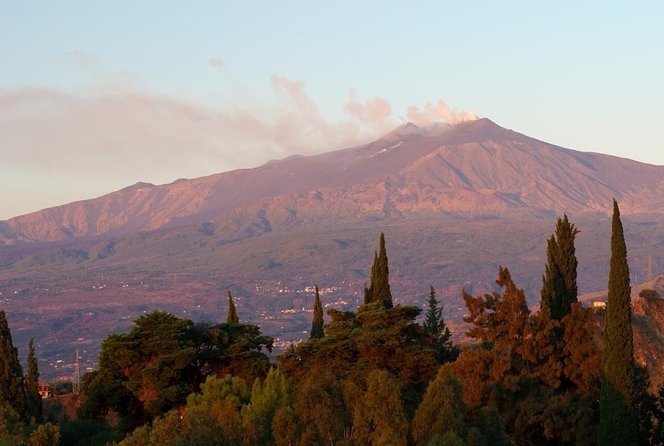
Etna is famous for a reason, but the easy-to-reach viewpoints can feel like you’re watching from far away. This trek is built around the idea that you should experience the volcano up close—on the north flank, with less foot traffic and more time moving through the volcanic terrain.
The route is also condition-driven. Your guide doesn’t just follow a rigid checklist; they choose the safest approach toward the most active crater they can reach that day, based on gas, heat, and rock fractures. That matters, because an active volcano doesn’t behave like a museum.
Finally, you start early and you finish back at the meeting point the same day. The pace suits experienced hikers who want the summit-crater experience without turning it into a multi-day expedition.
Piano Provenzana morning: where you start and what you’re really stepping into
Your day begins at CHIOSCO BAR MARENEVE DI FERRARO Etna Nord – Piano Provenzana (Via Provenzana, Linguaglossa). The meeting time is 7:45 a.m., and departures typically run 8:00–8:15 a.m. There’s also an afternoon start at 1:00 p.m. from May to October, so if mornings aren’t your thing, check which departure your date uses.
Before the hike, you get practical setup. You can use the restrooms, grab coffee or tea, and eat something light at the café near the meeting area. Then you get a short briefing, and the guide equips you on-site with the hike gear.
Piano Provenzana isn’t just a convenient parking lot. This zone sits on the north side and it was destroyed by the Oct 27, 2002 eruption, leaving the current volcanic setting. It’s still reachable by car along drivable access roads, and in winter you may need snow chains or winter tires. Translation: you’re not just visiting Etna—you’re starting in the middle of what the eruption left behind.
The 4×4 panoramic push: getting from 1,800 m up toward the hike start
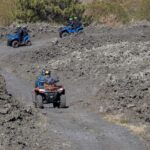
Once you’re briefed, you ride in authorized 4×4 vehicles up Etna’s northern flank. The panoramic track is about 9.5 km, and it climbs from roughly 1,800 m to 2,960 m, setting you up for the summit walk.
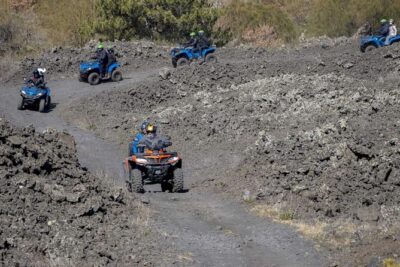
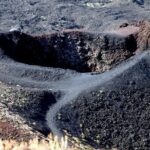
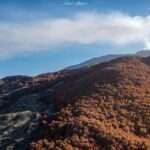
What I like about this part is that it’s not wasted driving. Along the way, you cross terrain formed by recent activity: forest patches, lava flows, a lava-flow channel, eruptive fractures, and even lateral craters that are about 40 m deep. It’s the best kind of pre-hike science—your eyes and your body learn together.
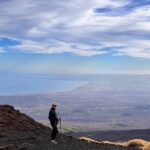
From the higher track, visibility can also be a big payoff. On rare clear days, you can see northern Sicily, the Aeolian Islands, the Strait of Messina, Calabria, and both the Ionian and Tyrrhenian Seas. You may also spot ranges and areas like the Madonie, the Gulf of Catania, Syracuse, Augusta, and the Valle del Bove if the weather cooperates.
The summit hike from 2,960 m: four main craters and a route that changes
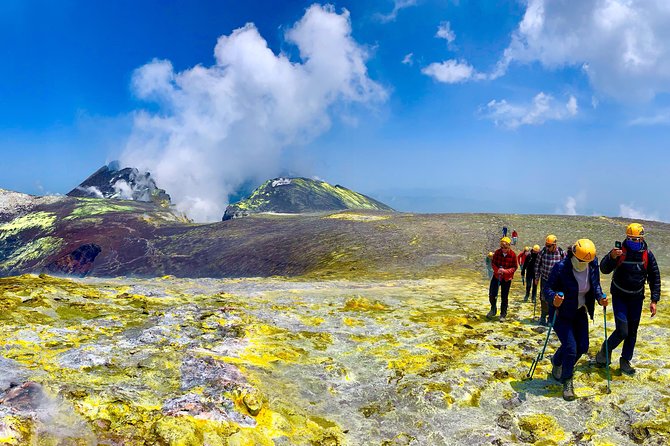
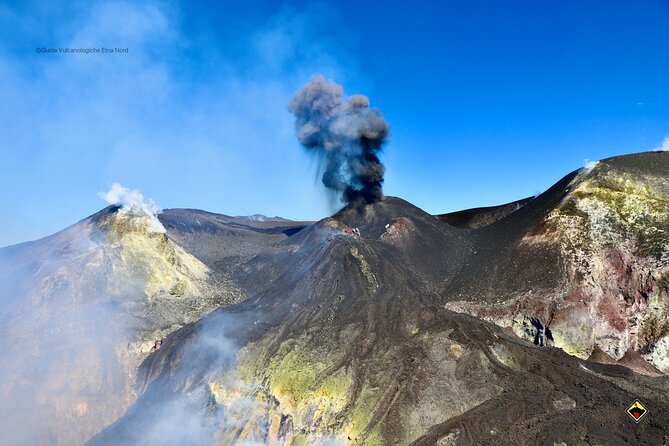
The real work starts at 2,960 m. From there, you begin a guided hike toward the summit crater area. Your climb is about 5 km with roughly 550 m ascent, and the route aims to reach the crater zone around 3,000 m and upward to about 3,323 m depending on conditions.
You’re targeting four main craters:
- North-East crater
- Voragine
- Bocca Nuova
- South-East crater
Here’s the practical part: Etna’s activity changes minute to minute. Your guides choose the safest route toward the most active crater they can reach and still keep the group safe. If gas is heavier, heat is intense, or fractures look unstable, the route can shift.
This is also why you want an experienced hiker mindset. Altitude ranges from about 2,960 m up to 3,323 m, and mild altitude effects are possible. If you have breathing issues or hypertension, this is not the kind of excursion to gamble on—fitness and health matter here.
A few we would gladly point a friend toward in Sicily

What to expect during the high-crater walking (and why you might feel it more than you think)
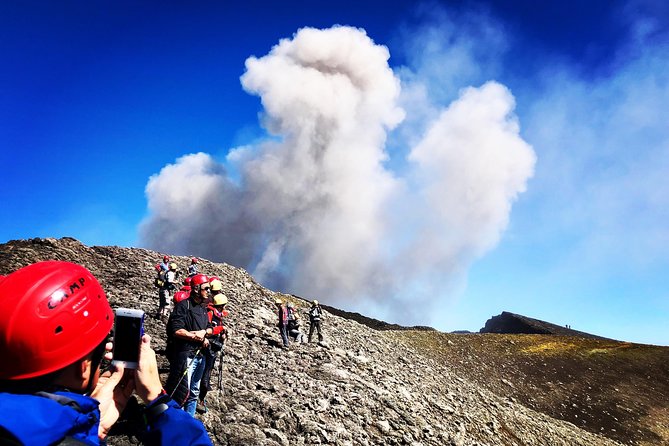
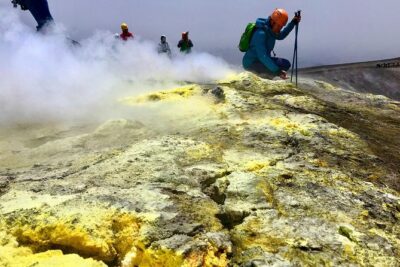
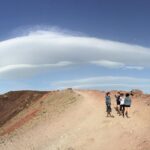
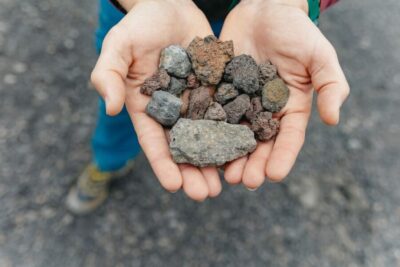
The path is not a polished trail. You’ll walk over volcanic materials like soft scoria and sandy gullies through recent lava terrain, including a wide area known as Piano delle Concalze. That matters because loose volcanic ground can sap energy, even when the ascent seems manageable on paper.
Later, the route crosses about 2.5 km of ski slopes. That section tends to feel rougher and stonier than you’d expect, which is why sturdy footwear is a non-negotiable. Your guides will keep you moving at a human pace, but you should still expect the kind of effort where you’re focused on your footing and breathing.
Altitude can add extra strain. Wind is also common on the upper crater area, so even if the air temperature isn’t brutal, wind-chill can make you feel colder fast. If you’re sensitive to cold, plan for it from the start.
The return descent: 1,500 m negative gain and strong knees required
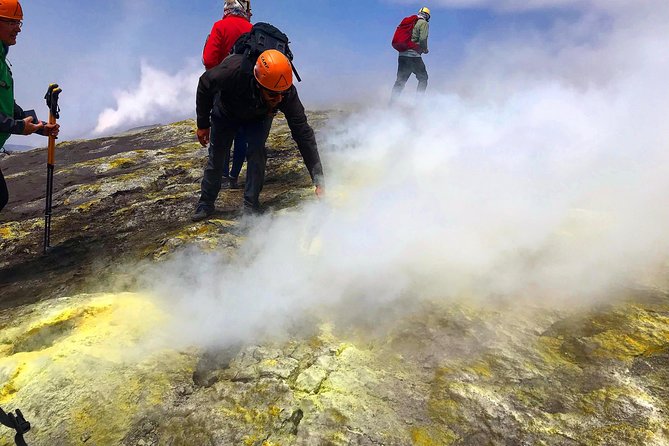
The climb is only half the story. The return is a long descent on foot from roughly 3,300 m down to 1,800 m—about 7 km with around 1,500 m negative gain. Reviews consistently flag this as tougher than people expect, especially for knees.
You’ll come down across loose volcanic material and sandy areas, and lava stones can stick to shoes. A long descent on sharp bits is not a fun souvenir, so think about ankle coverage and socks.
This is the section where your choice of clothing matters:
- Wear pants that cover your ankles to reduce grit and stone contact.
- Bring or use long socks if you tend to get debris into boots.
- Don’t plan on getting off the volcano looking pristine.
If the weather turns or volcanic conditions change, the guide may adjust how the return flows. But the core idea stays the same: this is a serious hike both up and down.
Gear, wind, and volcanic air: what to pack so the day stays enjoyable
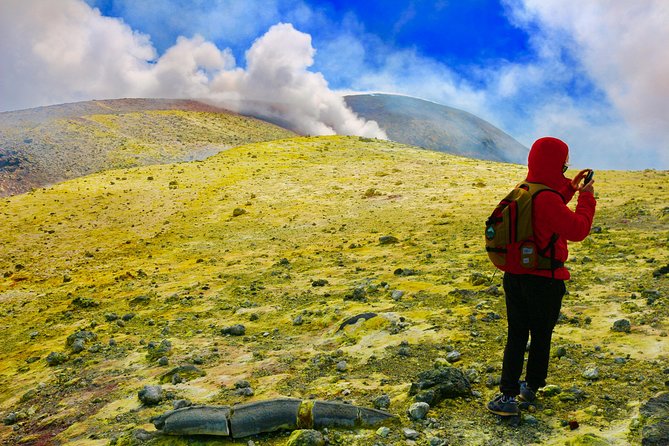
Good news: the tour includes a lot of the right gear. You get trekking poles, trekking shoes, helmets, a warm jacket, extra socks, and an extra backpack.
Bad news: some items still need to be on you. Hat and gloves aren’t included, and the guidance specifically recommends them in autumn, winter, and spring. Even in warmer months, a wind breaker can help a lot.
A key safety note that’s easy to overlook: avoid contact lenses. Volcanic gases and ash can cause problems, and the advice is to skip contacts rather than try to tough it out.
You also need to be ready for unstable footing. The tour area is volcanic and composed of inconsistent, unstable rocks. Without adequate shoes, insurance coverage won’t apply—so don’t treat this like a casual footwear day.
Finally, recognize the reality of an active volcano. Routes can change or the excursion can stop for safety if environmental, climatic, or volcanic conditions shift. Guides must respect the limits set by authorities, and they will stop where it’s still safe for the whole group.
Price and value: what your $139.13 really covers
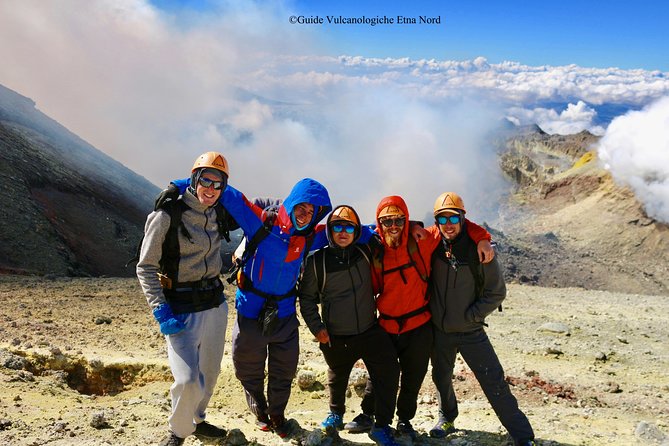
At $139.13 per person, this is one of the more “inclusive” Etna experiences because it bundles the essentials:
- Licensed volcano guide
- Entry/admission to Mount Etna
- Accident insurance
- Trekking poles, shoes, helmet, warm jacket, extra socks, extra backpack
That’s a big chunk of value for hikers who don’t want to source gear or worry about guide credentials.
Now for the add-ons and costs that can surprise people:
- Parking costs are not included: €5 weekdays and €8 Sundays and public holidays.
- Transport from your accommodation is not included, so you’ll need your own way to the meeting point.
- There can be an additional off-road vehicle one-way from 1,800 m up to 2,825 m for €50 per person, paid on the spot.
- If you choose public transport for the return (bus from 2,850 m to 1,800 m), the cost is listed as €70 instead of €50.
One practical tip: when you’re budgeting, treat the listed price as the base hike with gear and guide, then add the realistic local extras for parking and any transport segments your date uses.
Group size and guide style: why people keep praising names like Nikos and Poldo
This is capped at 12 travelers, so you’re not lost in a crowd. That small size is a major reason people rate it so highly.
Guides also seem to keep things both fun and structured. In English, you’ll typically get frequent explanations—crater formation, volcanic history, and what to expect as you move from lower lava terrain up toward the crater edges. People also highlight that guides keep a watchful eye on pacing and safety, with supportive behavior when conditions feel intense.
You may see guide names like Nikos, Daniele, Poldo, Paolo, Raphael, or Vincenzo depending on your date. The consistent theme is that the guide isn’t just pointing; they’re teaching while you hike.
Who should book this Etna Nord summit-crater trek
This fits best if you:
- Are an experienced hiker or very fit with strong knees
- Don’t mind cold wind at altitude
- Can handle loose volcanic ground and a long descent
- Want the north-side Etna experience with crater-edge walking
It’s also a good match if you want a guided “science walk,” with real talk about volcano behavior and daily route choices.
It’s not for you if you:
- Have breathing problems or hypertension
- Want a gentle day with minimal strain
- Need wheelchair-friendly or stroller-friendly terrain
- Travel with children under 12 (not suitable)
- Are pregnant after the third month (not allowed)
Should you book the Etna Nord summit craters? My take
If your goal is close-up Etna action with an expert guide, this is a strong choice. You’ll get the north flank, crater-edge walking, and enough altitude challenge to feel like you earned the views.
Book it if you’re comfortable with a tough return descent and you pack for wind and cold. Don’t book it if knees are a weak point or if you’re chasing a leisurely walk.
If you want a single decision rule: treat this as a serious hike with volcano-specific safety rules—not just a sightseeing tour. When conditions align, you can get truly close to active crater features. When they don’t, the guide’s job is to adjust or stop so the group stays safe.
FAQ
How long is the Etna Nord summit crater trek?
The duration is about 5 hours 30 minutes on average. Real time can be longer depending on conditions and the pace of the hike and descent.
What time does the tour start?
You meet at 7:45 a.m. The usual departure window is between 8:00 and 8:15 a.m. An afternoon start at 1:00 p.m. runs from May to October.
Is it offered in English?
Yes. The experience is offered in English.
How high do you hike on Mount Etna?
You start walking around 2,960 m and the route can reach the summit crater area up to about 3,323 m, depending on volcanic conditions and safety decisions by the guides.
What size is the group?
The maximum group size is 12 travelers.
Is transport from my hotel included?
No. Transport service from your accommodation is not included. You’ll need to get to the meeting point on your own.
What gear is included and what should I bring?
Included gear covers trekking poles, trekking shoes, helmets, warm jackets, extra socks, and an extra backpack. Hat and gloves are not included, and you should plan for them especially in autumn, winter, and spring.
Is there any extra cost beyond the tour price?
Parking tickets are extra (day rules apply). Also, an off-road vehicle one-way from 1,800 m up to 2,825 m costs €50 per person paid on the spot. A bus return option from 2,850 m to 1,800 m is listed as €70 instead of €50.
What happens if weather or volcanic activity makes the route unsafe?
The guides may vary the route or interrupt the excursion for safety. If the experience is canceled due to poor weather, you’ll be offered a different date or a full refund.
More Guided in Sicily

More Tour Reviews in Sicily
More Etna Summit Treks We Have Walked
Just added: the newest Sicily tours in our notebook
- Etna / Taormina★ 5.0 · 3 reviews
- Bikes★ 5.0 · 3 reviews
- Taormina shore tour – for small group cruise passengers★ 5.0 · 3 reviews
- Vegan Cooking Class in Catania with Lunch and Dinner★ 5.0 · 3 reviews
- Make & Taste Sicilian Desserts in Palermo – Learn Cannoli & More★ 5.0 · 3 reviews
- Sicilian Villages & Ricotta Tasting – including Lunch from Cefalu★ 4.0 · 3 reviews
Mount Etna Tours & Summit, compared.
 ★ 4.8Catania: Mount Etna Morning or Sunset Day Trip with TastingFrom $704,028 reviews
 ★ 4.8Catania: Sunset Jeep Tour of Mount Etna and Lava Flow CavesFrom $712,113 reviews
 ★ 4.8Etna and Alcantara Gorges Full-Day Tour with LunchFrom $1051,766 reviews
 ★ 4.7Etna: summit craters trekking with volcano guide 3350mtFrom $771,712 reviews
 ★ 4.9Catania: Mount Etna Trekking Tour Beyond the Tourist TrailsFrom $811,596 reviews
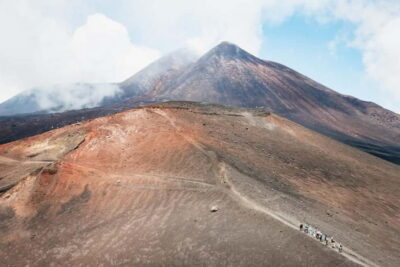 ★ 4.8Mount Etna: Guided Trek 3,000 Meters to the SummitFrom $1131,407 reviews
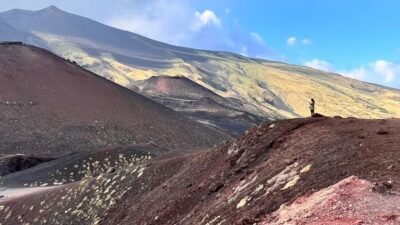 ★ 4.8Catania: Etna Sunset Tour with Pickup and Drop-offFrom $711,348 reviews
 ★ 4.8Etna Sunset Tour: Volcano trek, Cave & tasting from CataniaFrom $701,290 reviews
Browse the lists this tour appears in