
Reviewed · MOUNT ETNA TOURS & SUMMIT
Etna: summit craters trekking with volcano guide 3350mt
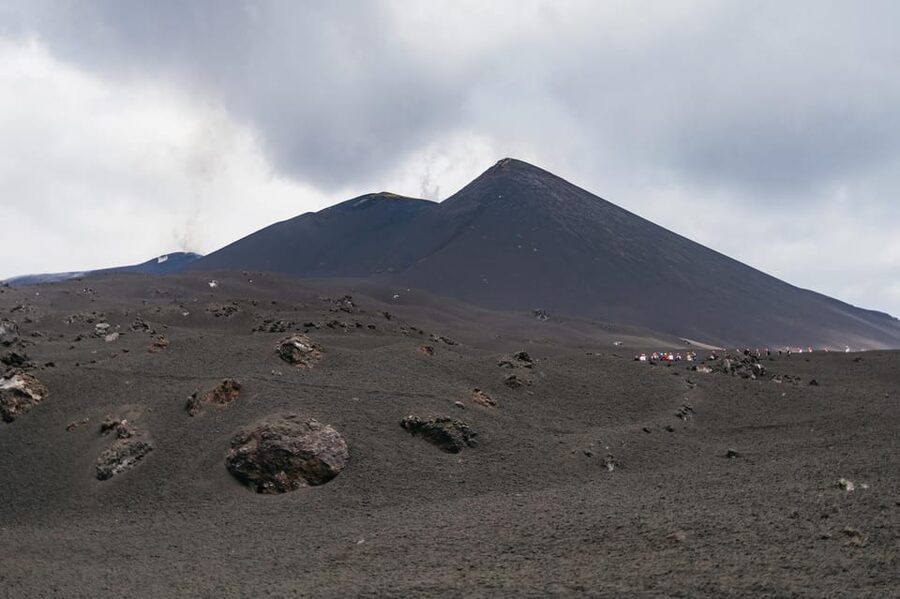
Etna’s summit craters make you feel tiny. This half-day trek pairs serious geology with a practical route to the crater rim, after a cable car and 4×4 ride. You’ll stand where the volcano is still actively writing its story.
I especially like the certified volcano guide focus, with explanations that make the terrain make sense. I also love the photo-friendly stops: from the crater edge looking down into the active system, to the lunar-like lava paths and Valle del Bove scenery.
One consideration: this is an active volcano, so the exact top segment can change. If conditions aren’t safe, you may fall back to a lower altitude plan, even though the day stays worth it.
In This Review
- Key takeaways before you go
- Summit craters on Etna: what makes this hike feel worth it
- Getting to altitude fast: cable car and 4×4 up to 2,800 meters
- The main trek: a roughly two-hour walk across lava and lunar-like terrain
- Central Crater rim views: Northeast and Southeast Crater outlooks
- Volcanic details you’ll actually notice at the rim
- Valle del Bove and the descent: Barbagallo craters and lava channels
- Price and what you really get for the money
- Gear, altitude, and the clothing that saves the day
- Difficulty level: who this Etna trek suits (and who should skip it)
- Safety and itinerary changes on an active volcano
- So should you book this Etna 3,350 m summit craters trek?
- FAQ
- What is included in the Etna summit craters trekking tour?
- What is not included in the price?
- How much do the cable car and 4×4 tickets cost?
- How long is the tour?
- Where do I meet for the tour?
- Is the cable car included, or do I buy it separately?
- What level of hiker is this for?
- Is this tour suitable for kids or people with medical issues?
- What should I bring?
Key takeaways before you go
- Certified volcano guide with safety-first decisions based on real-time conditions.
- Rim-walk crater views aimed at the Central Crater area, with outlooks over the Northeast and Southeast Craters.
- Real volcanic terrain: lava channels, sulfur-stained ground, gas emissions, and volcanic bombs in the scenery.
- Altitude + weather can surprise you, even on a warm day in Catania.
- Gear included (boots, helmet, sticks), but you still bring layers and food.
- Cable car and 4×4 tickets cost extra and are cash-only on the spot.
More ways up the volcano from Mount Etna
- Mount Etna: Summit Guided Hiking Tour up to 3,400 m
★ 4.8 · 4,792 reviews - Catania: Mount Etna Trekking Tour Beyond the Tourist Trails
★ 4.9 · 1,596 reviews - Mount Etna: Summit Trekking Tour
★ 4.9 · 347 reviews - Mount Etna: scenic Summit Trek with a volcano Guide and Gear
★ 4.5 · 284 reviews
Summit craters on Etna: what makes this hike feel worth it
Etna is not a museum volcano. The big draw here is the crater-rim viewpoint plus the walking sections through fresh-looking volcanic ground, which makes the whole day feel current, not historical.
You’ll get that classic Etna feeling: standing high above the world, with the Ionian coast panorama stretching out below you. Then, as you move along the rim and across lava terrain, the volcano stops being an idea and becomes a physical place with textures, colors, and features you can point at.
A certified volcano guide matters more than most people think. On Etna, “just walking” would be impressive, but explanations turn it into understanding. You learn why you’re seeing certain crater areas, gas emissions, and how lava channels and older features fit together.
Getting to altitude fast: cable car and 4×4 up to 2,800 meters
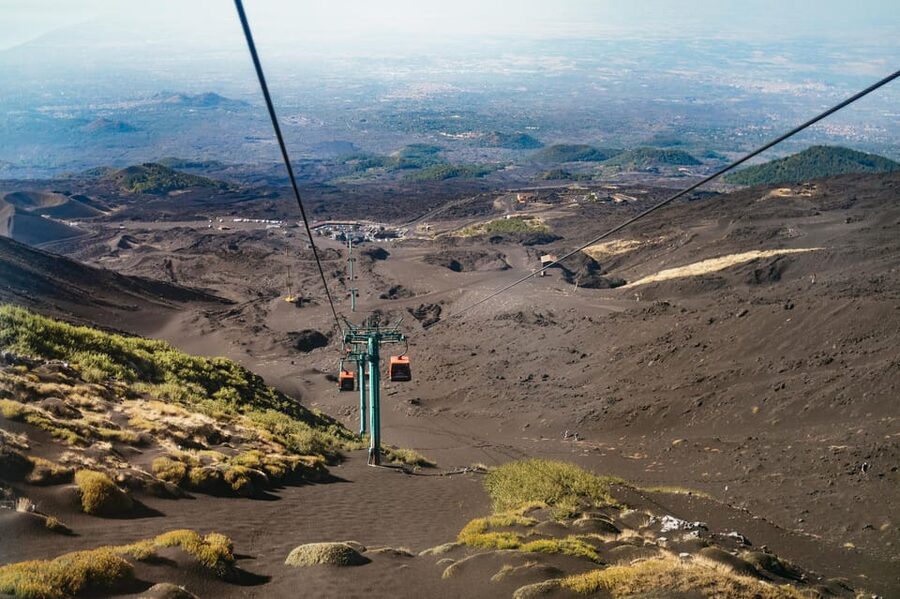
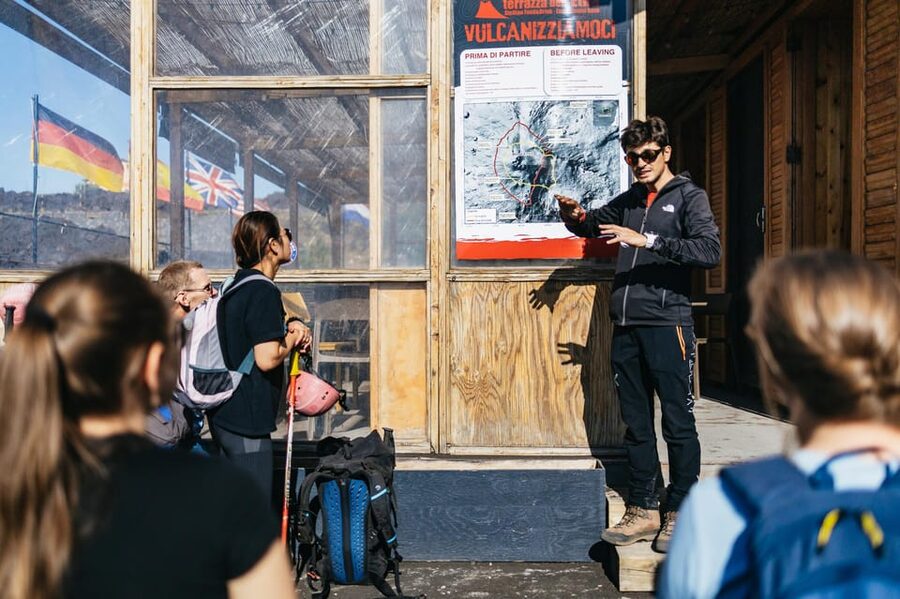
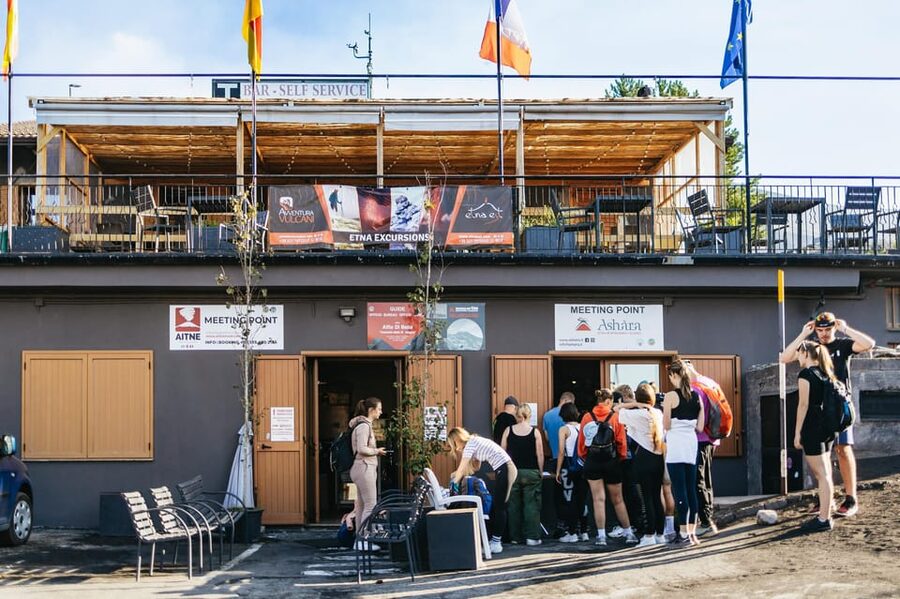
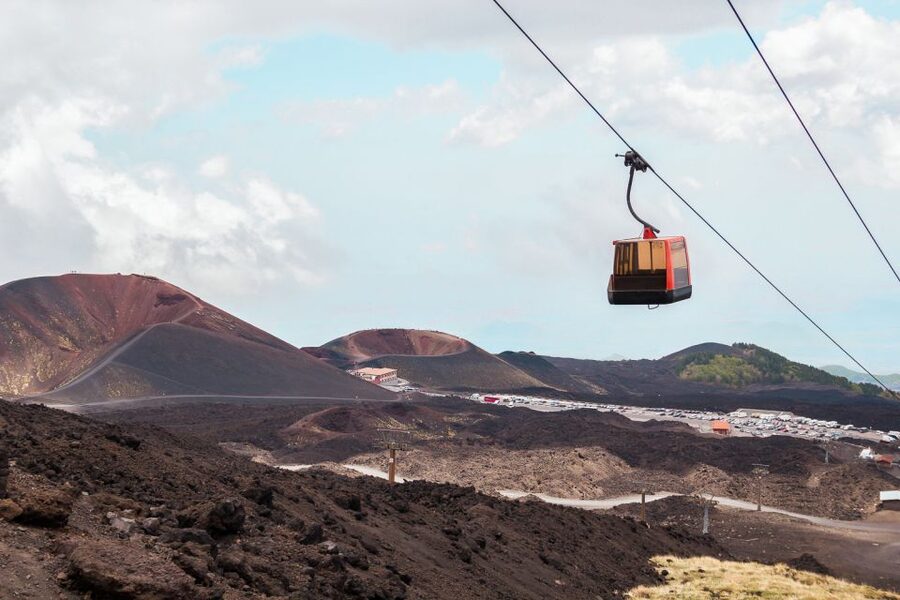
The day starts from the Ashàra Volcanological Guides info point near Rifugio Sapienza on Etna’s south side. From there, you ride a cable car for about 25 minutes, then take a jeep/4×4 transfer for around 30 minutes.
Why this matters: it saves your legs for the walking parts that actually go somewhere. You’re not spending the whole morning climbing switchbacks like a normal hike; you’re spending it moving through volcanic zones and getting crater-time.
It also changes the “feel” of the experience. The cable car ride gives you a quick altitude jump, and then the 4×4 puts you in position for an on-foot trek that starts already high. It’s part thrill ride, part access logistics done the Etna way.
The main trek: a roughly two-hour walk across lava and lunar-like terrain
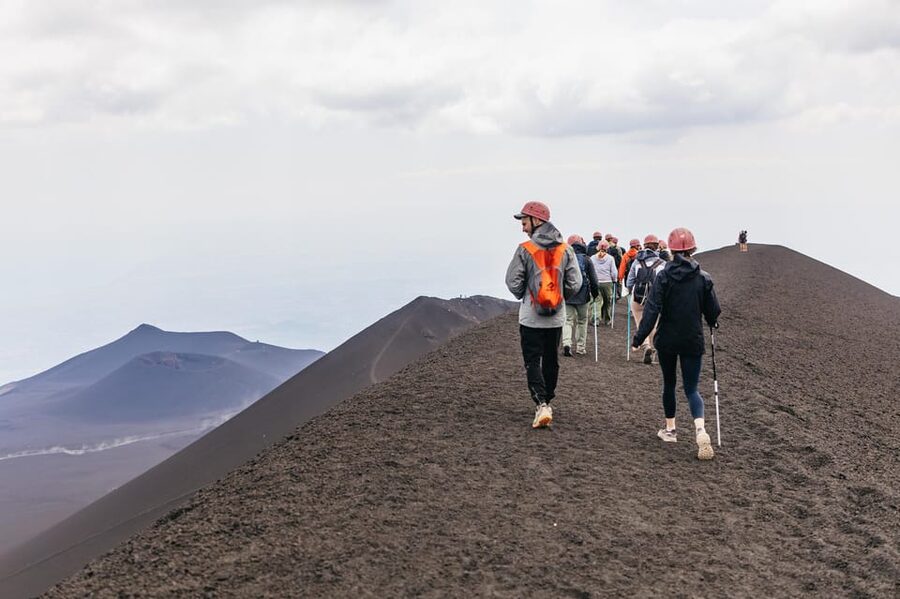
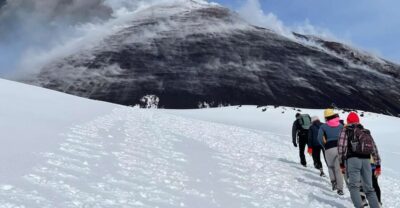
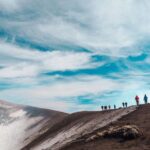
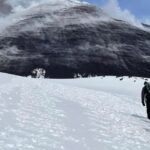
After the cable car and jeep ride, you begin an approximately two-hour hike through lava flows and lunar-like terrain toward the summit crater area. Expect sandy or uneven ground, plus stretches where traction and footing matter more than speed.
This is one of those hikes where pacing is everything. You’re going at moderate-to-medium effort, but at altitude the exertion feels heavier, especially if the wind is strong. One helpful theme from guide feedback is that guides keep you moving steadily with breaks built in, so you can actually enjoy the views and not just survive the climb.
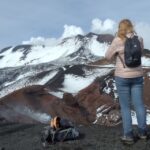
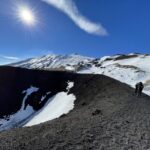
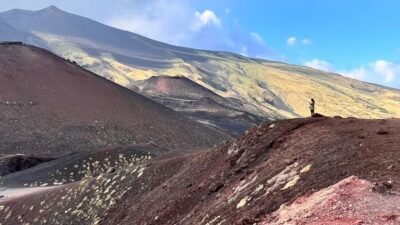
A good part of the day is how the scenery evolves as you walk. The volcanic terrain doesn’t look like “one thing.” It shifts in color and texture, and you’ll likely spot features that look strange in the best way: scoria-like ground, uneven channels, and areas with mineral deposits that can sparkle in the light.
Practical tip: bring the right clothing and take your time on uneven sections. If you’re comfortable on rocky or sandy paths, you’ll be fine. If you hate slipping on loose ground, you’ll want trekking poles and careful foot placement.
Central Crater rim views: Northeast and Southeast Crater outlooks
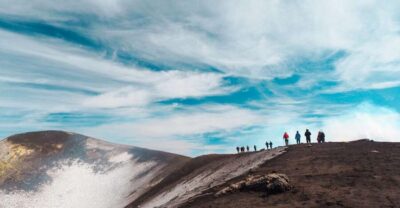
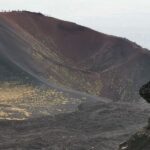
The highlight for many people is the stroll near the Cratere Centrale dell’Etna area, where you get crater rim views. From there, you can look out toward the vertiginous Northeast Crater and the famed Southeast Crater, the latter associated with the most recent and impressive eruptions (depending on what’s visible during your visit).
This is the moment that makes Etna feel cinematic. You’re not just watching a volcano from a distance. You’re walking along its edge and seeing the system drop away beneath you—sometimes with gas and smoke drifting through sightlines.
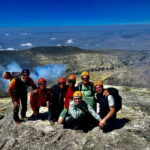
You’ll also have a break time and guided crater-time on the summit side, with photo stops built in. That matters because the best crater photos usually happen when your brain is calm enough to look, not when you’re rushing to be “first in line.”
One more thing to know: strong wind can change whether you go as high as planned, or whether the rim access is limited. In that case, you might still get spectacular views from a safe point, but you may miss the final crater-edge segment.
A few we would gladly point a friend toward in Mount Etna
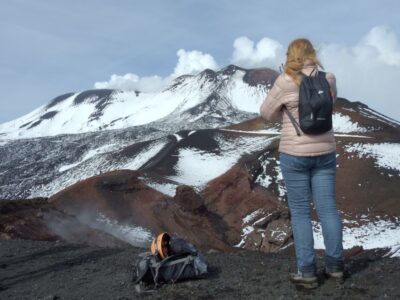
Volcanic details you’ll actually notice at the rim
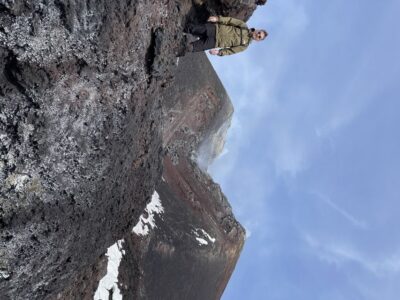
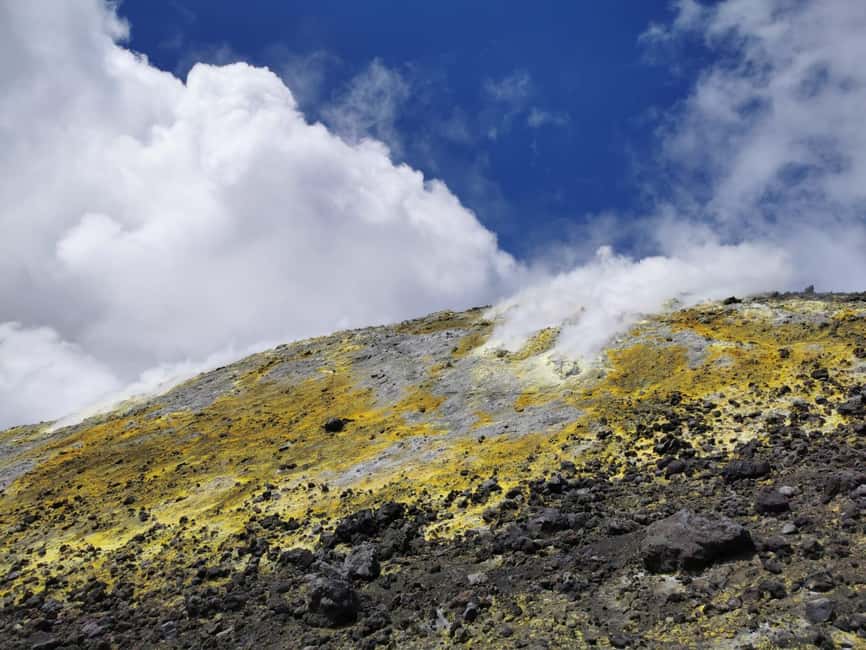
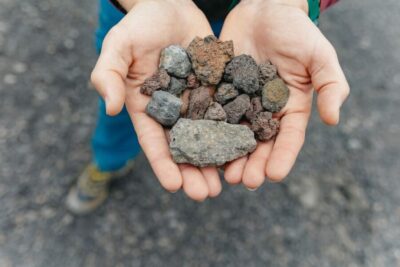
The scenery on Etna is more than “gray rock.” You’ll likely see gas emissions and other volcanic signs in the air and on the ground. If conditions allow, you may spot volcanic bombs and the bright mineral colors that come from sublimation of different elements, with sulfur often playing a big visual role.
If you’ve never been near active volcanic ground, this is where a guide helps you relax. Good guides explain what’s happening in plain terms—why certain areas look like they do, why the smells or gases might change, and how the terrain forms.
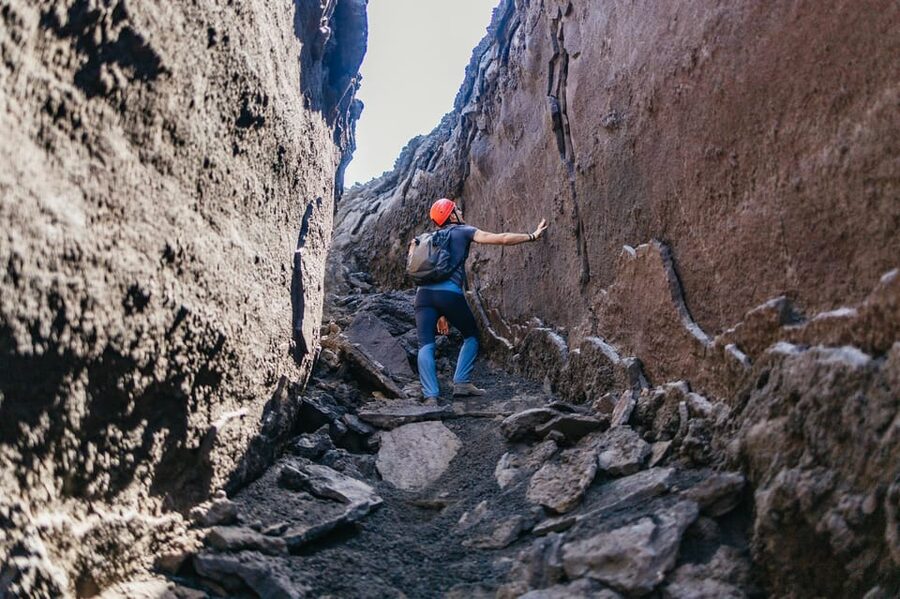
Also, keep your eyes open for what’s not obvious. Lava channels are a huge clue to how the volcano moves. When you later cross a lava channel during the descent, it connects the “wow view” with the “how it got there” explanation.
A small mindset shift helps: you don’t need to stare at hazards. You need to look where the guide points, listen for the “what this feature tells us” line, and keep your footing.
Valle del Bove and the descent: Barbagallo craters and lava channels
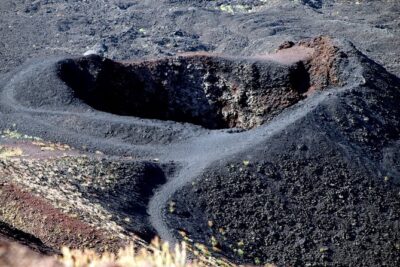
On the way down, you visit the Barbagallo craters and cross a lava flow channel. After that, you admire Valle del Bove, one of the most striking structural features on Etna’s flanks.
This part of the day is often where the hike feels most varied. Up top, you’re focused on crater rims and views. During descent, your eyes shift to shapes of the ground: channels cut by lava, crater remnants, and broader valleys that show how Etna has rearranged its surface over time.
It’s also a moment to be realistic about your body. Going down can be harder on knees than you’d think, especially on uneven volcanic slopes. If you tend to have trouble on descents, bring trekking poles and plan for a careful, steady pace.
Cable car again comes into play for the last stretch. You ride up/down back toward about 2,500 meters and then return toward the base, keeping the day efficient after the walking sections.
Price and what you really get for the money
The experience is listed at about $77 per person, and that number covers the hiking tour, plus a volcano or alpine multilingual guide. You also get hiking boots, rock helmet, and walking sticks, along with RCT insurance.
What’s not included is important: the cable car and 4×4 jeep tickets cost extra at €65 per person, payable on the spot in cash. There’s also a lower-cost fallback if the top can’t be reached: a plan that stops at around 3,000 m and uses only the cable car, priced at €52 per person.
So is it good value? In my view, yes, if you care about crater-rim access and want a guide who can read the volcano conditions. Paying extra for lift rides can feel annoying, but Etna access is part of the product. And the included gear reduces your prep costs.
Also, guide quality is a big part of the price justification. Many people highlight how guides are professional, safety-conscious, and tuned to both weather and volcanic risk. Names that show up repeatedly in positive feedback include Antonio, Massimo, Giacomo, Max, Nello, Luca, Marco, and Giovanni.
Gear, altitude, and the clothing that saves the day
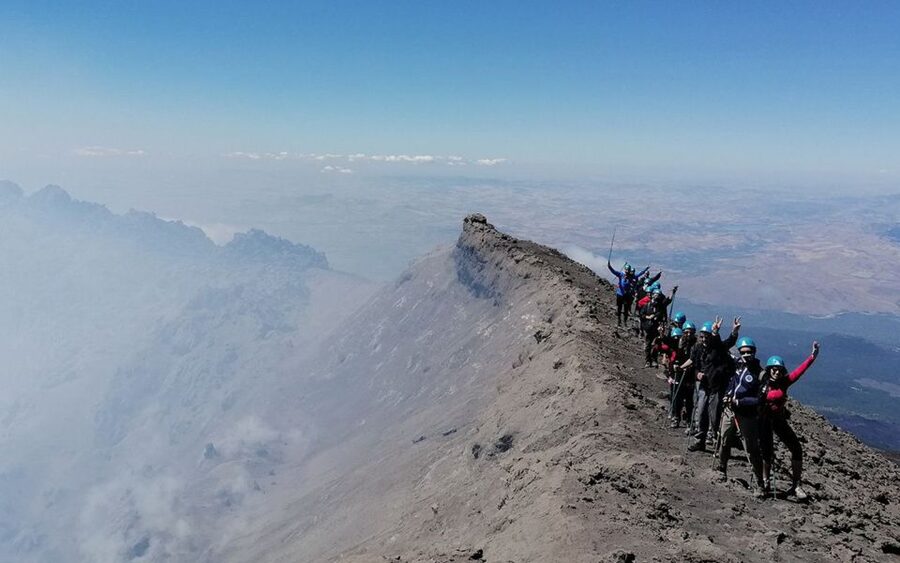
You don’t need to be an ultralight hiking expert here, but you do need the right basics. The tour advises sunglasses, sun hat, sunscreen, long pants, socks, and a daypack (often in the 10–20L range). You’ll also want a jacket because it can get cold and windy at the summit.
Food and water are on you. The hike is long enough that you’ll want snacks ready, especially on summit-time breaks when you don’t want to feel rushed or low-energy.
What’s provided helps a lot: hiking boots, rock helmet, and walking sticks. People also mention getting extra warm layers like windproof gear when conditions are rough, which is a big deal on Etna. Even when it’s warm at the start, the summit can feel like a different planet.
Altitude note: you’re roughly in the 2,500 m zone during parts of the day, and higher during the summit attempt. If you’re sensitive to breathlessness, move slowly on the climb and don’t force pace.
Difficulty level: who this Etna trek suits (and who should skip it)
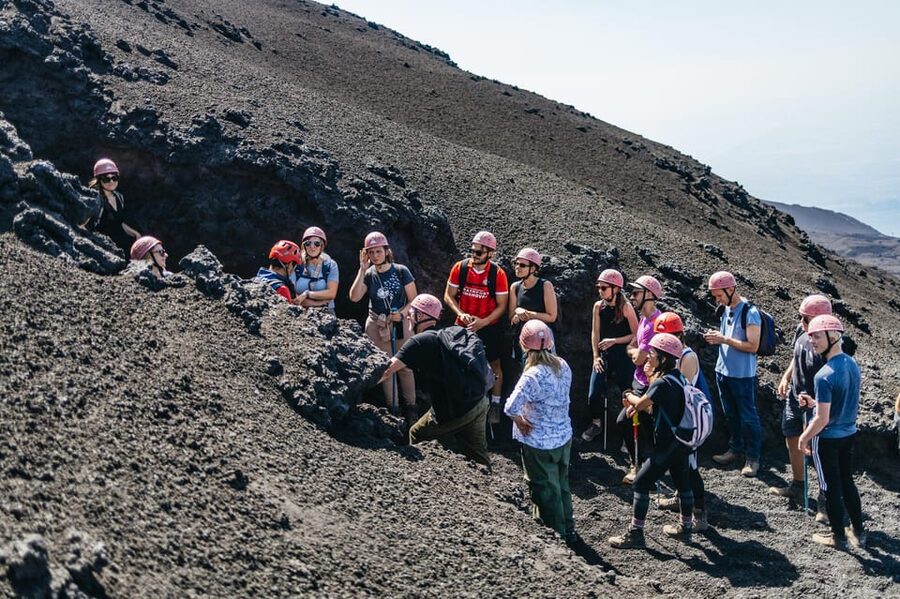
This hike is aimed at moderately trained hikers comfortable on sandy or uneven terrain. The difficulty is described as medium-high, with the key challenge being footing plus altitude effort.
It’s not suitable for children under 11, pregnant women, people with back problems, heart problems, vertigo, respiratory issues, or high blood pressure. If any of these apply, you should choose a different Etna format that doesn’t involve summit-area walking.
Who it fits best:
- Adults who hike a few times a month and can handle uneven ground
- People who want a guided geology explanation, not just a view photo
- Anyone who’s okay with the day changing if volcanic activity or wind makes the rim unsafe
If you’re a cautious hiker, don’t assume you’re out. The tour is built around guide discretion and safe pacing, and feedback highlights that guides actively help people manage pace and footing.
Safety and itinerary changes on an active volcano
This is the part you should respect, not fear. The tour is designed for an active volcano, so there can be variations based on volcanic risk or weather.
If summit conditions don’t allow reaching the top, you may stop at about 3,000 m and take the cable car only. If summit craters are forbidden due to strong volcanic activity, the plan shifts to the maximum safe altitude.
Wind is the common spoiler. Cold wind and gusts can make the crater rim a no-go even when everything else looks fine. The good news is that this tour isn’t only about hitting the highest point on paper. Guides can run an alternative route that still gives you serious volcanic sights and learning.
So should you book this Etna 3,350 m summit craters trek?
If you want the real Etna experience—the crater rim views, the lava terrain, and the guide who can connect what you see to why it matters—this is a strong choice.
I’d especially recommend booking if:
- You’re comfortable hiking on uneven volcanic ground
- You want geology explanations in real time
- You pack layers and accept that the summit segment may be adjusted for safety
Skip it if:
- You can’t handle altitude or uneven footing
- You have any of the listed medical limitations
- You’re not okay with a possible change in how high you go
The bottom line: for value, the “included” part (boots, helmet, sticks, guide, hiking) pairs well with the “extra” cable car and 4×4 tickets. Pay attention to the cash-only note, bring real summit clothing, and trust the guide’s call on the rim.
FAQ
What is included in the Etna summit craters trekking tour?
The tour includes the hiking experience, a volcano or alpine multilingual guide, hiking boots, RCT insurance, a rock helmet, and walking sticks.
What is not included in the price?
Cable car and 4×4 jeep tickets are not included. Food and water are also not included.
How much do the cable car and 4×4 tickets cost?
The cable car and 4×4 jeep tickets cost €65 per person, paid on the spot in cash. If the tour can’t reach the top, there’s an option to stop at 3,000 m and take only the cable car for €52 per person.
How long is the tour?
The duration is 6 hours.
Where do I meet for the tour?
Meet at Ashàra’s info point located at Rifugio Sapienza (Etna South side), close to the Terrazza dell’Etna restaurant.
Is the cable car included, or do I buy it separately?
You buy the cable car and 4×4 jeep tickets separately on the spot in cash.
What level of hiker is this for?
It’s for moderately trained hikers who are comfortable on sandy or uneven terrain. The difficulty is described as medium-high.
Is this tour suitable for kids or people with medical issues?
It is not suitable for children under 11, and it’s also not suitable for pregnant women, people with back problems, heart problems, vertigo, respiratory issues, or high blood pressure.
What should I bring?
Bring sunglasses, a sun hat, sunscreen, food and drinks, snacks, water, a jacket, a t-shirt, long pants, socks, and a daypack.
More Guided in Mount Etna
More Tour Reviews in Mount Etna
More Etna Summit Treks We Have Walked
Just added: the newest Mount Etna tours in our notebook
- Etna: Guided Tour to the Summit Craters – North Slope★ 5.0 · 3 reviews
- From Taormina: Mount Etna Half-Day Evening Hike★ 5.0 · 4 reviews
- Mount Etna: Private Trek on the North Slope Craters★ 5.0 · 4 reviews
- From Taormina or Catania: Private Full-Day Mount Etna Hike★ 4.5 · 8 reviews
- Mount Etna: Trek to the Craters of The 2002 Eruption★ 4.9 · 9 reviews
- Mount Etna: Private Half-Day Guided Family-Friendly Hike★ 5.0 · 11 reviews
Mount Etna Tours & Summit, compared.
 ★ 4.8Catania: Mount Etna Morning or Sunset Day Trip with TastingFrom $704,028 reviews
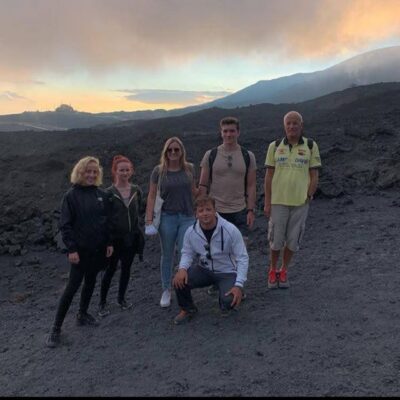 ★ 4.8Catania: Sunset Jeep Tour of Mount Etna and Lava Flow CavesFrom $712,113 reviews
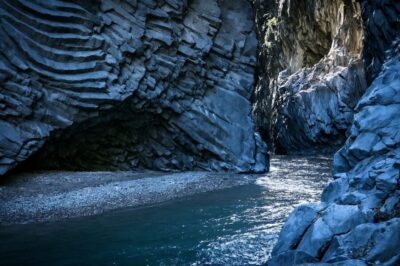 ★ 4.8Etna and Alcantara Gorges Full-Day Tour with LunchFrom $1051,766 reviews
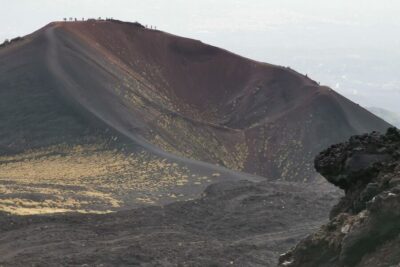 ★ 4.9Catania: Mount Etna Trekking Tour Beyond the Tourist TrailsFrom $811,596 reviews
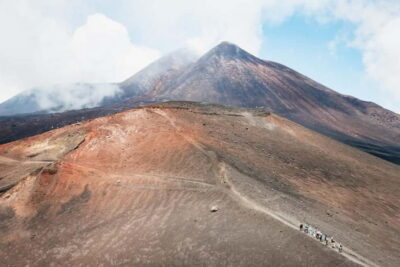 ★ 4.8Mount Etna: Guided Trek 3,000 Meters to the SummitFrom $1131,407 reviews
 ★ 4.8Catania: Etna Sunset Tour with Pickup and Drop-offFrom $711,348 reviews
 ★ 4.8Etna Sunset Tour: Volcano trek, Cave & tasting from CataniaFrom $701,290 reviews
 ★ 4.5Etna Morning TripFrom $711,241 reviews
Browse the lists this tour appears in