
Reviewed · MOUNT ETNA TOURS & SUMMIT
Mount Etna: Guided Trek 3,000 Meters to the Summit
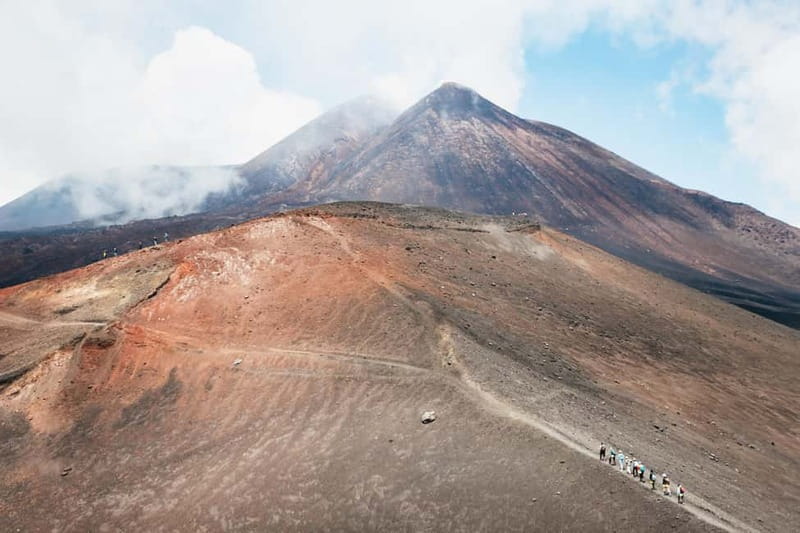
Etna makes Earth feel close. This guided trek takes you up to the summit craters of Europe’s tallest active volcano, with a volcanologist guide calling out what you’re seeing as you climb.
I love the built-in pacing: you get a structured start, helmets and poles, and a guide who keeps the group moving without turning it into a sprint. I also like the crater payoff, especially the stop for the 2001 Crater, which still fumes at altitude.
My only real caution is practical: the upper parts can be exposed, windy, and cold, and contact lenses are forbidden because volcanic ash can be in the air.
In This Review
- Quick hits before you hike Etna
- Mount Etna summit trek: what the day feels like
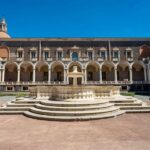
- La Terrazza Dell’Etna: where your hike really starts
- Cable car ride: fast altitude, big views, and one practical note
- Hiking from 2,500 to 3,000 meters: summit craters on foot
- Crater stop: the 2001 Crater (and the fumes factor)
- Descent and lunch: pacing matters more than you think
- The volcanologist guide: why this tour is more than a viewpoint
- Gear, ash, and wind: how to avoid the common Etna headaches
- Who this trek fits best (and who should skip it)
- Price and value: is $113 worth it at Etna’s altitude?
- Weather and volcanic risk: the Etna rule is flexible plans
- Should you book this Mount Etna guided trek to 3,000 meters?
- FAQ
- How long is the Mount Etna summit trek?
- How high do we go on this trek?
- Is the cable car ticket included or paid on site?
- What fitness level do I need?
- What should I bring for the trek?
- Who is this tour not suitable for?
- What languages are available for the guide?
Quick hits before you hike Etna
- 3,000 meters to the summit craters: the high point is the whole point of the day
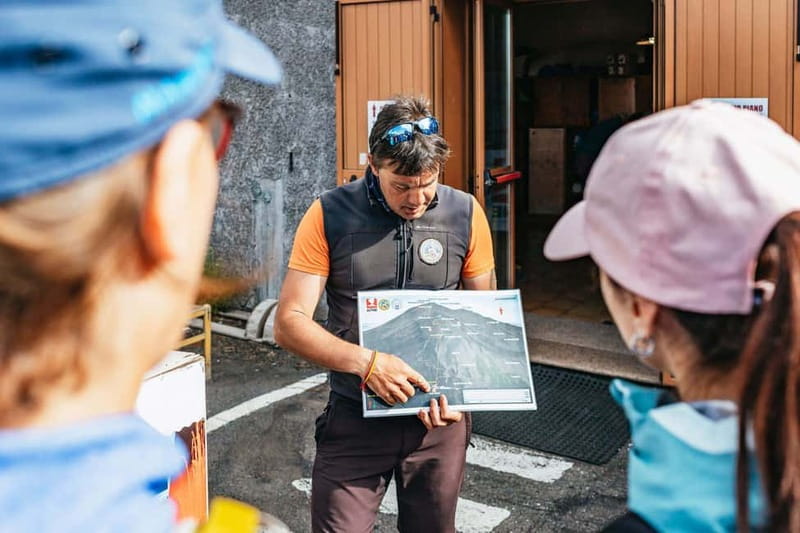
- Volcanologist guide in English or Italian: you’re not just walking, you’re learning as you go
- Cable car panoramas: you gain altitude fast, then switch to feet-on-lava walking
- Helmets and trekking poles provided: helpful for footing on rough ground
- 2001 Crater at 2,700 meters: fuming activity adds a real-life edge to the geology talk
More ways up the volcano from Catania
- Catania: Mount Etna Morning or Sunset Day Trip with Tasting
★ 4.8 · 4,028 reviews - Catania: Sunset Jeep Tour of Mount Etna and Lava Flow Caves
★ 4.8 · 2,113 reviews - Sicily: Etna and Alcantara Gorges Full-Day Tour with Lunch
★ 4.8 · 1,766 reviews - Mount Etna: Guided Trek 3,000 Meters to the Summit
★ 4.8 · 1,407 reviews
Mount Etna summit trek: what the day feels like
This is a half-day, high-altitude hike that’s built around two things: getting you up close to Etna’s active terrain, and making the science make sense while your legs do the hard work. You meet at La Terrazza Dell’Etna, get a trek briefing, then move up by cable car to around 2,500 meters before hiking higher.
The trek itself isn’t about tricky climbing ropes or mountain-summit scrambles in the Hollywood sense. It’s more like controlled “walk-your-way” terrain on sand, rock, and volcanic surfaces where you need steady steps and good boots. That said, you should expect exposed patches and uneven footing. In other words, Etna is dramatic, but you still earn the view.
La Terrazza Dell’Etna: where your hike really starts
Your day begins at La Terrazza Dell’Etna. You’ll meet your guide and get a briefing before anything steep begins. This matters more than it sounds, because Etna can change fast. Weather and volcanic conditions can interrupt schedules, and the guide has discretion to keep you safe.
The briefing is also your chance to match expectations with your body. The hike is described as suitable for medium physical training, and you should feel comfortable walking on sand and rock even when trails aren’t obvious. If you have health conditions, tell the guide early, so they can help you manage pace and risk.
Cable car ride: fast altitude, big views, and one practical note
After the briefing, you head to the cable car. The ride is short (listed at about 20 minutes) and takes you up to roughly 2,500 meters. This is a smart setup because it saves energy for the summit hike, not for a slow grind from town.
You’ll likely feel the air and temperature change right away. The upper sections are often windy, and you’ll want warm layers even if Sicily starts out sunny. Also, the info you get around the cable car ticket can be a little confusing: some parts indicate the cable car ticket is included, while other parts say it’s paid on site (listed as 50 EUR). I’d treat it like this: check your confirmation so you don’t get surprised at the start.
Hiking from 2,500 to 3,000 meters: summit craters on foot
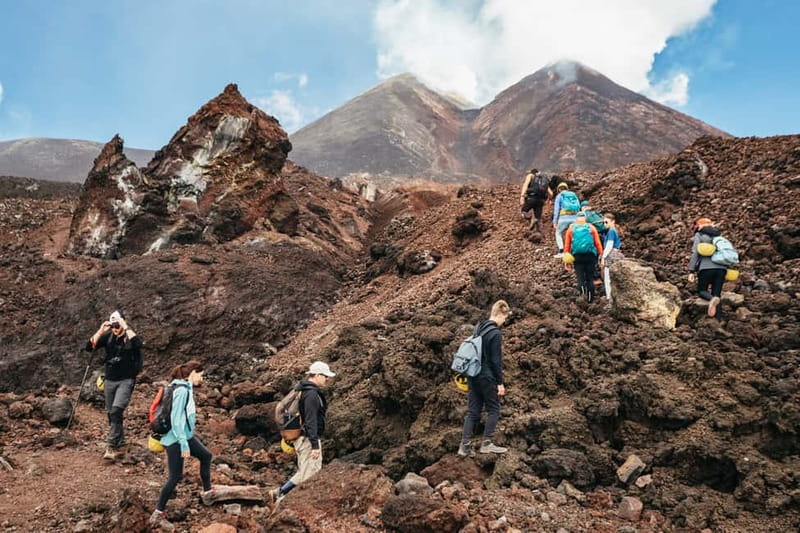
Once you get off the cable car, you begin the main hike toward the summit craters, reaching about 3,000 meters. The time on foot is broken into two hiking blocks in the plan: about 2 hours and then about 1.5 hours later in the day, with the overall experience taking around 6 hours.
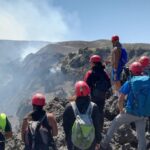
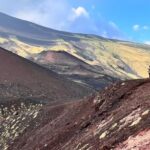
This is the section where the geology talk becomes real. You’ll cross otherworldly volcanic ground and pass areas associated with older and more recent lava flows. Your guide (a volcanologist) explains how the mountain works, not just what it looks like. That’s what turns the hike from scenic trekking into an actual “I get it now” kind of day.
Terrain tips that matter:
- Wear trekking boots with high socks and high enough coverage to avoid pebbles working into your feet.
- Expect exposed patches. You don’t need scrambling skills, but you do need careful footing.
- Bring windproof layers. At altitude, wind can steal heat fast, and the top can feel much colder than the base.
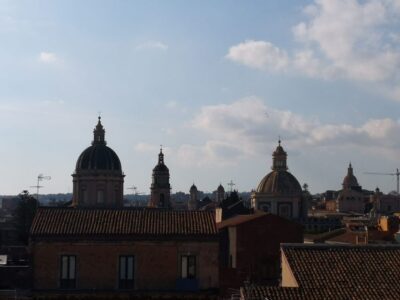
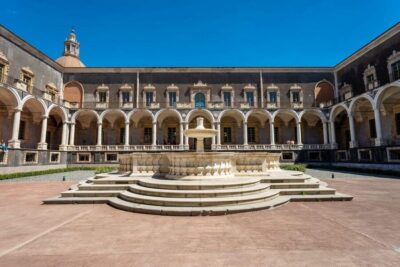
A few we would gladly point a friend toward in Catania
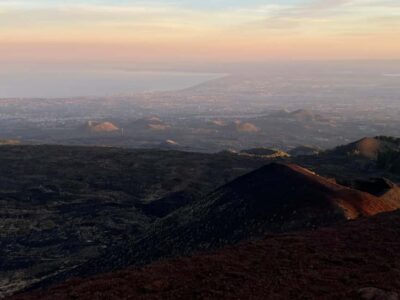
Crater stop: the 2001 Crater (and the fumes factor)
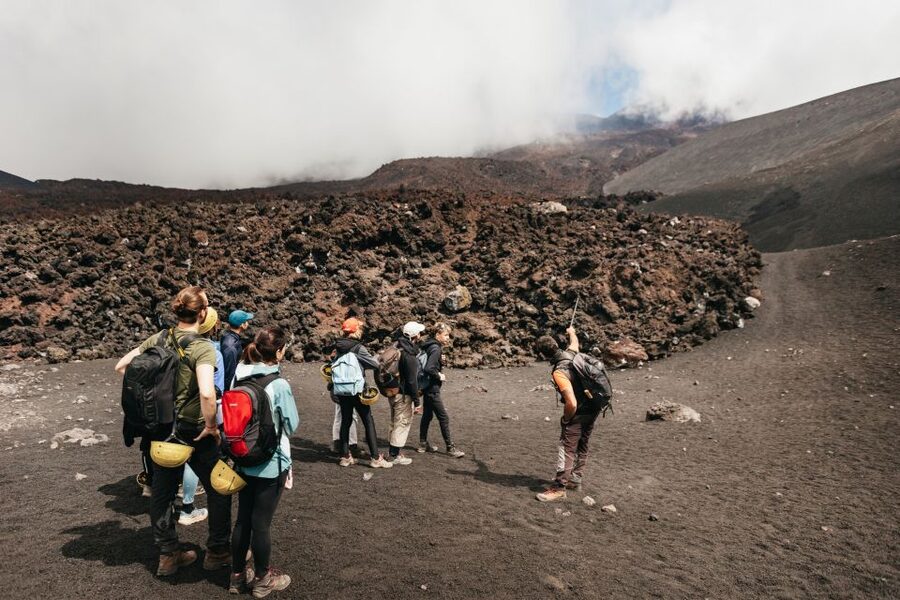
The itinerary includes a stop at the 2001 Crater at around 2,700 meters. This is a huge part of why people book the summit trek: you’re not just looking at extinct rock, you’re seeing an active volcano still giving off fumes.
The practical takeaway is simple. If winds shift, you might be walking through air that smells strong or irritates your face. The gear list recommends sunglasses, sunscreen, and warm clothing, and it’s also wise to bring a simple face covering or something to cover your nose and mouth if fumes drift your way. You’re not trying to “be brave.” You’re trying to stay comfortable and keep breathing easy during the moments that matter.
Descent and lunch: pacing matters more than you think
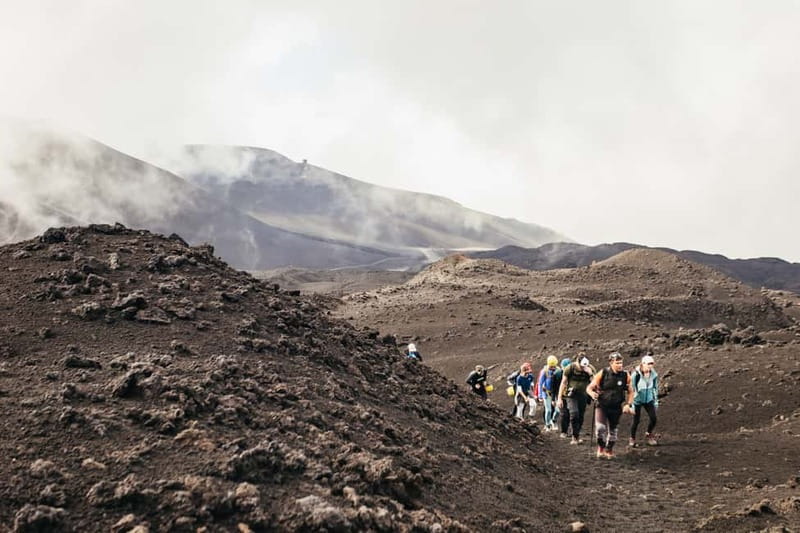
After reaching the summit area, the plan brings you back down toward about 2,500 meters, with a break for lunch. Lunch is not included, so you’ll want to bring a packed lunch.
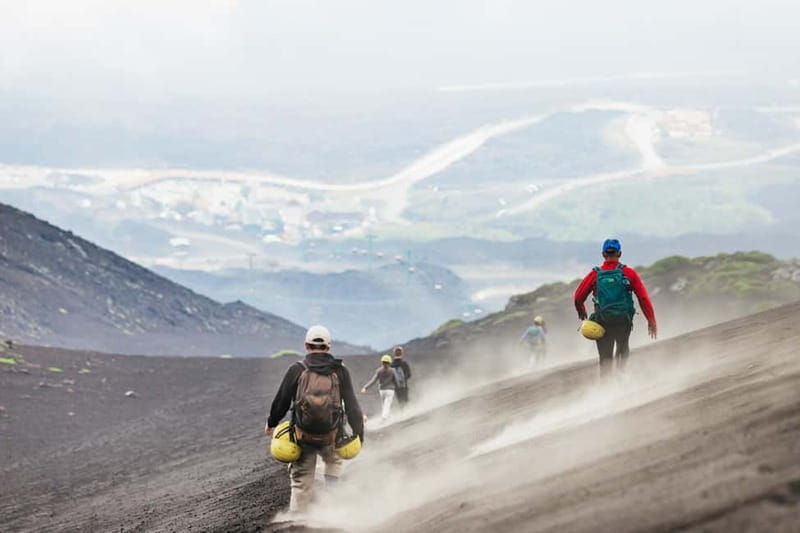
This is where your boots and layers really pay off. The descent can be harder than the climb because gravity turns uneven ground into a bigger challenge. Trekking poles help with stability (and you’re provided with them), but you’ll still want to slow down and place your feet deliberately.
When you’re choosing what to bring, think practical:
- A 10 to 20-liter backpack
- At least 1.5 liters of water
- A snack plus your packed lunch
- Extra layers: pullover, anorak, gloves, and a hat are all recommended
The volcanologist guide: why this tour is more than a viewpoint
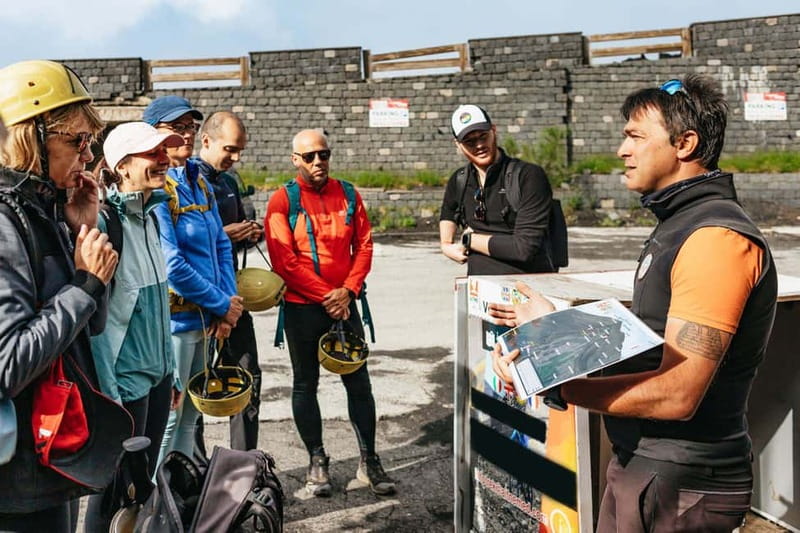
I like Etna trips most when they explain what’s happening as you watch it. This one does that by bringing in a volcanologist guide. You’ll hear about volcanic processes and the natural history of the region while you walk through surfaces shaped by past eruptions.
In real-world terms, that means your route becomes a living classroom. When your guide points out old flow areas versus more recent ground, you start to recognize why the terrain looks the way it does. Guides seen on departures include names like Luca and Marco, and also Manuel, and the common thread is that the day feels organized and informative rather than just “follow me.”
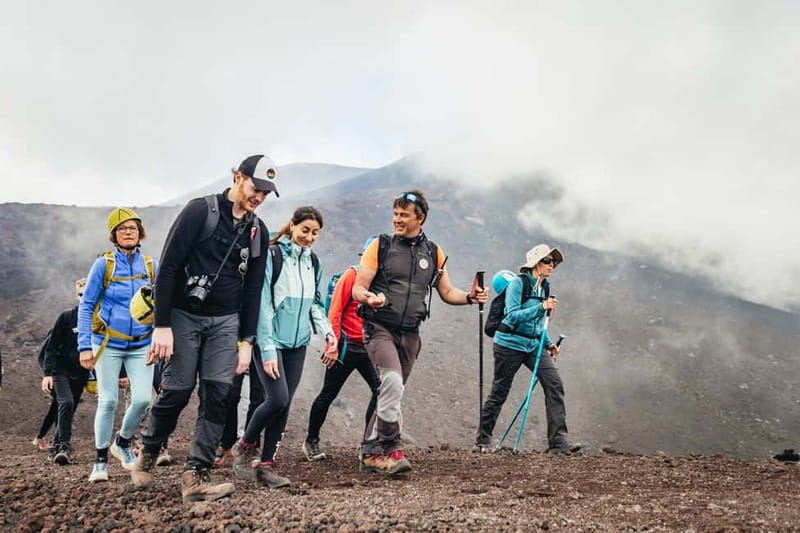
You’ll also get group management that affects comfort. Some people in the group will be faster on flat terrain and slower on uneven ground. A good guide adjusts the pace so nobody gets left behind, and so the group keeps energy for the crater views at the end.
Gear, ash, and wind: how to avoid the common Etna headaches
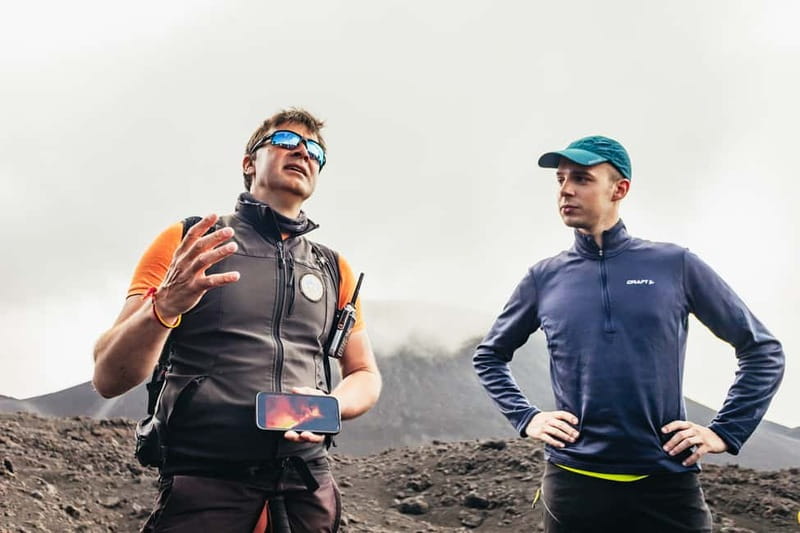
Etna summit days can be a mix of sun and harsh wind, sometimes in the same hour. Here’s what your checklist should focus on based on the tour requirements and the best practical advice:
- No contact lenses: volcanic ash can be spread by wind, and contact lenses are forbidden.
- Boots + socks: trekking boots with high socks help keep grit out.
- Warm layers: warm clothing is not optional up high; bring a pullover and anorak.
- Gloves and hat: recommended, and they make the wind more tolerable.
- Sunglasses and sunscreen: altitude glare is real.
- Extra T-shirt and long trousers: long pants are recommended, and it’s smart to wear them over your boot area to block rocks from sneaking in.
If you tend to get bothered by strong smells from gases, think about a simple face covering. It can make a big difference during the 2001 Crater stop.
Who this trek fits best (and who should skip it)
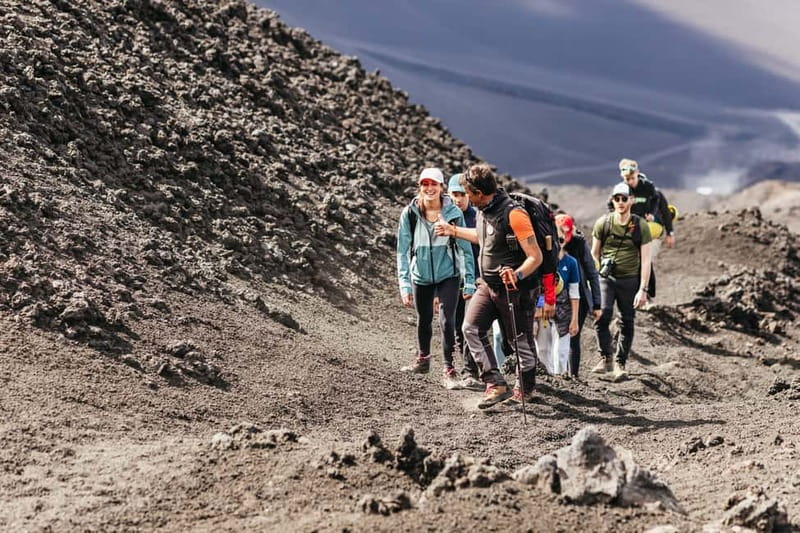
This is not a casual stroll. The tour is described as suitable for people with medium physical training who can handle walking on sand and rock when paths aren’t clearly marked. Some parts may be exposed. If you have vertigo, this is not suitable. If you have respiratory issues, heart problems, or mobility impairments, it’s also listed as not suitable.
It’s not meant for:
- Children under 10
- Pregnant women
- Anyone with vertigo, respiratory issues, or heart problems
- People with mobility impairments
If you’re a fit walker who can handle uneven ground for several hours and you’re comfortable with changing weather, this is a strong fit. If you’re unsure, treat the “medium physical training” label as a real warning: you want sturdy comfort, not wishful thinking.
Price and value: is $113 worth it at Etna’s altitude?
The listed price is $113.29 per person for about 6 hours, and that includes a guide, helmets, trekking poles, insurance, and the cable car ticket is shown as included in one place. But the “not included” section also says the cable car ticket is 50 EUR paid on site. That contradiction is worth checking before you go.
Even with that question mark, here’s how I’d think about value:
- You’re paying for altitude access plus safety gear (helmets, poles) and expert guidance from a volcanologist.
- The crater experience is time-efficient: you get up to around 3,000 meters within the same day without a slow, full-day climb from sea level.
- The guide’s explanations can turn the day into something you’ll remember for the science and the scale, not just the photos.
If you do end up paying the cable car ticket on site, you should still feel like this is a guided, high-altitude experience—not a cheap stroll. It’s priced for a reason: Etna isn’t gentle, and good guidance keeps the day smoother.
Weather and volcanic risk: the Etna rule is flexible plans
One thing Etna teaches fast is that plans can change. The tour notes that schedules are subject to change or be interrupted at the discretion of the guide due to weather, environmental causes, or volcanic risks.
This is where having a guide makes more sense than trying to freestyle. If conditions shift, you’re already set up with equipment and a team that knows how to adjust. In some cases, routes can change to match safer access points, and on at least one departure you might see additional costs if an alternate area is used. The safe bet: keep some flexibility in your day so you can accept reroutes without getting cranky.
Should you book this Mount Etna guided trek to 3,000 meters?
Book it if you want the summit craters experience with real context. This is a good choice if you:
- enjoy guided days that explain what you’re seeing
- can handle uneven, exposed volcanic ground
- pack warm layers and accept that wind and cold are part of the deal
Skip it if you have vertigo, respiratory or heart concerns, or any reason you shouldn’t be in a harsh high-altitude environment. And if you rely on contact lenses, take the lens rule seriously—ash exposure is part of the reality here.
If you’re on the fence, the decision comes down to this: you’re not just buying transport to a viewpoint. You’re buying time with a volcanologist, safety support, and a structured climb to one of Europe’s most active places.
FAQ
How long is the Mount Etna summit trek?
The tour lasts about 6 hours total.
How high do we go on this trek?
You hike up to the summit craters at around 3,000 meters, with a stop at the 2001 Crater at about 2,700 meters.
Is the cable car ticket included or paid on site?
The info is inconsistent: the experience lists the cable car ticket as included, but it also states the cable car ticket (50 EUR) is paid on site. Check your booking confirmation so you know what applies to your departure.
What fitness level do I need?
It’s described as suitable for medium physical training. You should be comfortable walking on sand and rock when there are no trails, and some parts may be exposed.
What should I bring for the trek?
Bring hiking shoes, sunglasses, sunscreen, and warm clothing. Also plan for a packed lunch, at least 1.5 liters of water, and a 10 to 20-liter backpack.
Who is this tour not suitable for?
It’s not suitable for children under 10, pregnant women, people with mobility impairments, and people with heart problems, vertigo, or respiratory issues.
What languages are available for the guide?
You’ll get a live guide in English and Italian.
More Guided in Catania

More Tour Reviews in Catania

More Etna Summit Treks We Have Walked
Just added: the newest Catania tours in our notebook
- Transfer Catania / Agrigento Airport★ 5.0 · 3 reviews
- Sicily private shore excursion – Etna and Taormina with personal driver★ 3.5 · 3 reviews
- Sunset Trekking on Mount Etna★ 5.0 · 3 reviews
- Private Transfer from Catania to Palermo or vice-versa with stop★ 5.0 · 3 reviews
- From Syracuse: Mount Etna Volcano Morning Trekking Tour★ 5.0 · 3 reviews
- Catania: Guided Street Food Tour with Tastings★ 5.0 · 3 reviews
Mount Etna Tours & Summit, compared.
 ★ 4.8Catania: Mount Etna Morning or Sunset Day Trip with TastingFrom $704,028 reviews
 ★ 4.8Catania: Sunset Jeep Tour of Mount Etna and Lava Flow CavesFrom $712,113 reviews
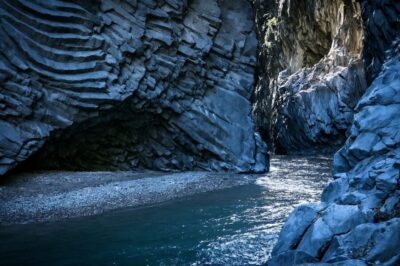 ★ 4.8Etna and Alcantara Gorges Full-Day Tour with LunchFrom $1051,766 reviews
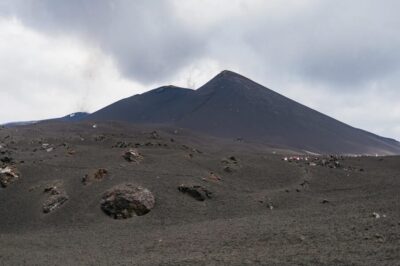 ★ 4.7Etna: summit craters trekking with volcano guide 3350mtFrom $771,712 reviews
 ★ 4.9Catania: Mount Etna Trekking Tour Beyond the Tourist TrailsFrom $811,596 reviews
 ★ 4.8Catania: Etna Sunset Tour with Pickup and Drop-offFrom $711,348 reviews
 ★ 4.8Etna Sunset Tour: Volcano trek, Cave & tasting from CataniaFrom $701,290 reviews
 ★ 4.5Etna Morning TripFrom $711,241 reviews
Browse the lists this tour appears in