
Reviewed · CATANIA TOURS
WalkingTour CATANIA – discovering the city of lava with a licensed guide
Catania hits fast, and the story sticks. This small-group walk with licensed guides turns major squares and streets into a clear lesson on how lava shaped the city’s buildings, markets, and everyday life. You start at the Piazza del Duomo meeting point, where the Norman-look Duomo, baroque details, and the liotru fountain set the tone for what you’ll see next.
Two things I really like: you get a smart, organized route through the historic core in just 2 to 3 hours, and the tour weaves in real local texture, especially around the daily fish market stop near the Duomo area. One watch-out: Ursino Castle admission is not included, and a bit of the walking happens on older sidewalks, so wear good shoes.
In This Review
- Key highlights before you go
- Piazza del Duomo: where Catania’s lava journey begins
- Norman-leaning Duomo Square and the liotru elephant of lava stone
- The “morning bonus” around the fish market
- Palazzo degli Elefanti: the Town Hall and its elephant-on-balconies clue
- A’ Piscaria fish market: what locals buy, not just what’s photographed
- If you’re picky about crowds
- Ursino Castle: lava filled the moat, and black basalt is still visible
- Ticket note you should plan for
- Via dei Crociferi: baroque façades rebuilt after the 1693 earthquake
- Piazza Università: the university courtyard made of lava pebbles
- The best part: how the guide makes lava feel personal
- Heat and pacing are real factors
- Price and value: $24.19 buys context, not just photos
- Who this tour is best for (and who should reconsider)
- Should you book this Catania walking tour?
- FAQ
- What is the duration of the Catania walking tour?
- Where does the tour start and meet the guide?
- What time does the tour typically start?
- What language is the tour offered in?
- How much does the tour cost?
- How many people are in the group?
- What sights are included in the walking route?
- Is Ursino Castle admission included?
- Is there any admission fee for other stops?
- What happens if weather is bad?
- Can I cancel for a full refund?
Key highlights before you go
- Meet your guide at the GS (GuidingSicily) infopoint in Piazza del Duomo
- Small group size (max 15) for easier questions and pacing
- Free admission stops at the Duomo area, Palazzo degli Elefanti, and the fish market area
- Fish market glimpse with a look at everyday Sicilian buying habits
- Ursino Castle views and lava evidence, but castle ticket isn’t part of the price
- Baroque rebuilt after the 1693 earthquake, explained street by street
What else Catania has going on
- Mt. Etna nature and flavors half day Tour from Catania
★ 5.0 · 545 reviews - From Catania: Mt. Etna, Wine and Alcantara Tour
★ 4.8 · 370 reviews - Etna Morning Tour (starting from Catania)
★ 5.0 · 362 reviews - Underground Catania
★ 5.0 · 302 reviews
Piazza del Duomo: where Catania’s lava journey begins
The tour starts at Piazza del Duomo, 95100 Catania CT, Italy. You meet at the GS (GuidingSicily) infopoint in the square, and then the licensed guide takes your group out on foot. The whole format is simple: a guided stroll that stays in the city center, designed for first-timers who want the lay of the land fast.
Because the group is capped at 15 people, you’re not stuck behind a crowd. That matters when you’re trying to read details on facades and fountains while also hearing the guide clearly. If you booked for 10:30 am, plan to arrive a few minutes early so you don’t feel rushed.
You’ll have a mobile ticket, and the tour ends back at the meeting point. That end-point matters more than it sounds. It means you can keep exploring on your own right after you get your bearings.
Norman-leaning Duomo Square and the liotru elephant of lava stone
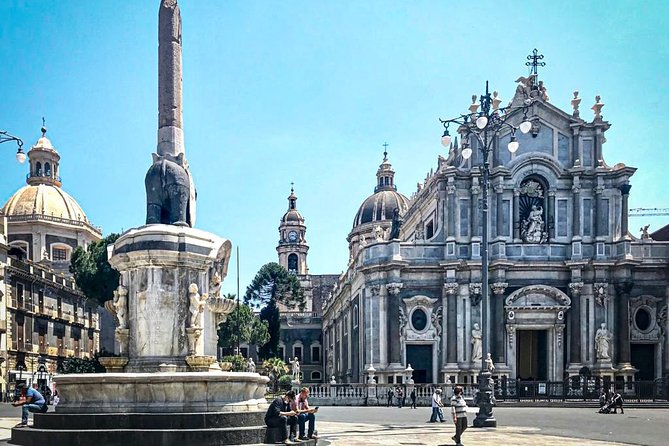
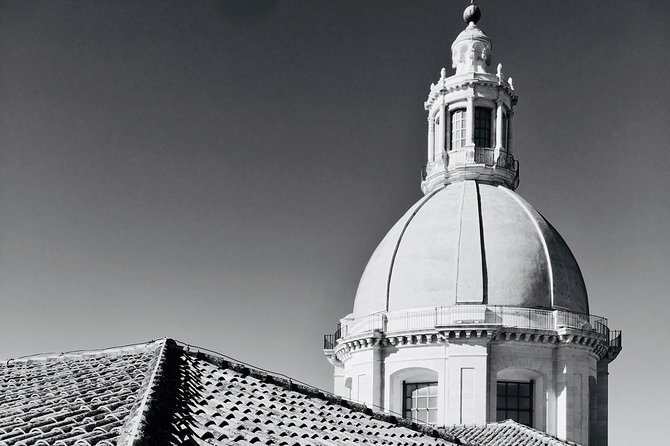
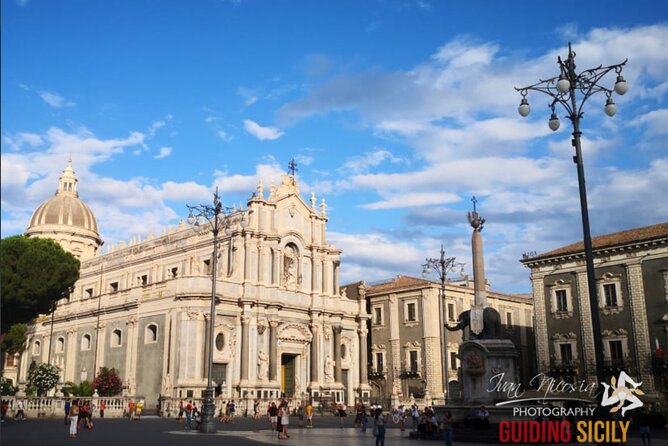
Stop 1 is Piazza del Duomo, centered on the Duomo building that’s Norman in origin with a baroque look. Even if you only catch it for a short time, this is a strong first impression because the square is doing three jobs at once: it’s sacred ground, civic space, and a stage for Catania’s identity.
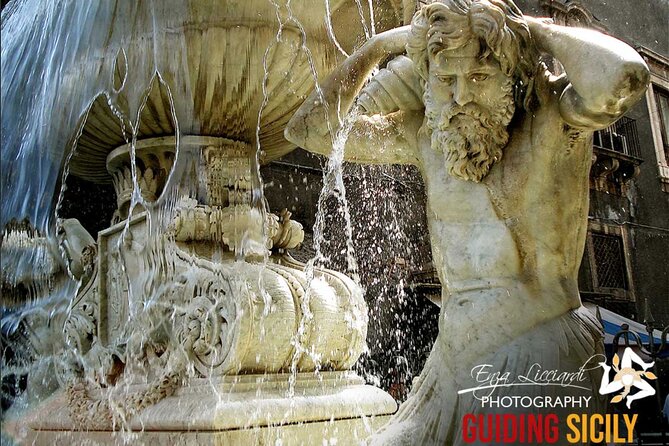
Right here you’ll also see Palazzo degli Elefanti (the Town Hall) and the fountain with the symbol of the city: the liotru, an elephant in lava stone topped with an obelisk. This is one of those images that helps everything else make sense later. Lava isn’t just geology in Catania. It’s a design choice, a building material, and a cultural symbol all in one.
The “morning bonus” around the fish market
If your tour time lines up with the morning walking schedule, you’ll also spend time near the adjacent historic fish market. The guide sets it up as a chance to see daily life: fresh fish on display, plus typical cured meats and regional cheeses. Fruit shows up too, and the vibe is less about a museum visit and more about what locals actually buy.
A quick practical thought: markets move with the day. So if you want to taste rather than just look, keep some small change or a card ready. Also, don’t plan on doing full food shopping during the tour, just enjoy the browsing and get the guide’s pointers.
Palazzo degli Elefanti: the Town Hall and its elephant-on-balconies clue
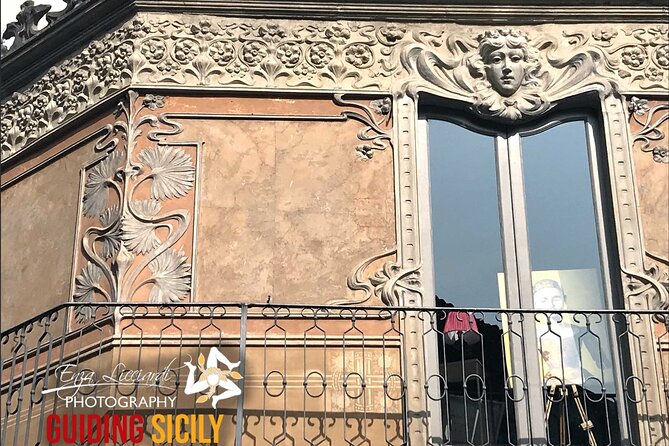
Next you go to Palazzo degli Elefanti, Catania’s Town Hall. The big idea here is the same as the liotru fountain: Catania uses lava and elephant imagery to brand itself, and the palazzo is built around that theme.
The name comes from the representations of a majestic mammal carved into the gables of balconies on the noble floor. Your guide uses the symbolism as a quick shortcut to understanding how the city’s power and identity show up in stone—literally—around you. It’s a short stop, but it’s one of those moments where the architecture starts to feel connected instead of random.
A few we would gladly point a friend toward in Sicily


A’ Piscaria fish market: what locals buy, not just what’s photographed
Stop 3 takes you to A’ Piscaria Mercato del Pesce, the fish market next to Piazza del Duomo. This market is held every day, and the stop is designed to show the breadth of Sicilian shopping beyond seafood.
Expect local food products ranging from fish to meat, along with cured meats, cheeses, and fruit/vegetables. It’s easy to think of food markets as just a “look and move on” attraction. This one works better because it explains the rhythm of local life and gives you context for what you’ll notice later when you’re wandering on your own.
If you’re picky about crowds
Fish markets can feel busy. The advantage here is the group stays small. So you’ll get time to look while still being able to move with the guide instead of getting stuck at the edges.
Ursino Castle: lava filled the moat, and black basalt is still visible
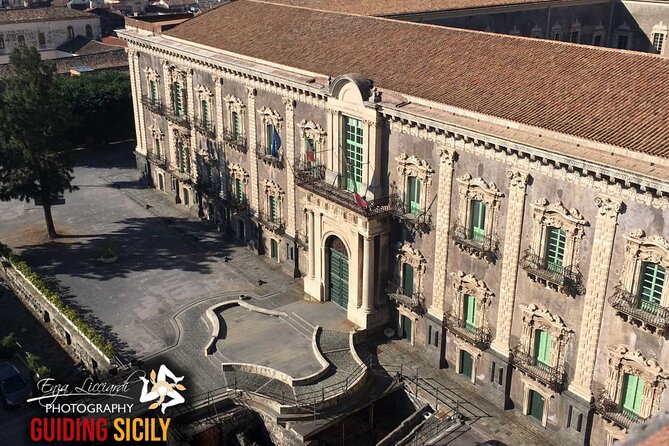
Then you head to Ursino Castle, a Swabian castle that once overlooked the sea. Today it sits in the historic center, and here’s the key lava story: in the 17th century a mighty lava flow filled the moat and surrounded the castle. Even now, the black basalt is still visible, a physical reminder that volcanic events shaped the city’s layout long before modern planning.
This stop has two layers:
- Big visual payoff: castle walls and the sense of how the city has shifted around it.
- A practical explanation: you start seeing lava as an ingredient used by generations, not a far-away natural threat.
Ticket note you should plan for
Ursino Castle’s admission is not included. That doesn’t ruin the stop—you can still enjoy what you see from the outside area while the guide explains its story. But if you want to go inside, you’ll need to budget extra time and ticket cost.
So I recommend you decide in advance: do you want the walking tour to be about quick context, or do you want to add an inside visit? If you’re short on time, the outside storytelling alone can be enough.
Via dei Crociferi: baroque façades rebuilt after the 1693 earthquake
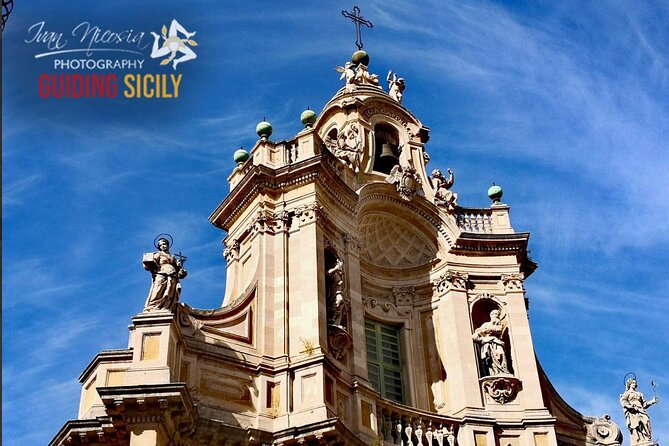
Stop 5 is Via dei Crociferi, and it’s one of the best streets for understanding Catania’s baroque side. The whole street feels like a lineup of churches and monasteries built after a devastating earthquake in 1693.
Your guide points out how the street reads as a sequence: one church after another, then monastery after monastery, with baroque façades stacked along the route. That detail matters because it turns architecture into narrative. You’re not just seeing pretty stone. You’re seeing how the city rebuilt itself and what it chose to emphasize when it rose again.
A practical note: this is a great street for photos, but don’t let the camera take over. Look up first. The baroque details are the point.
Piazza Università: the university courtyard made of lava pebbles
Stop 6 lands at Piazza Universita. Here the focus is academic Catania, not just the romance of plazas and churches. The Palazzo del Rettorato encloses a courtyard where lava pebbles form the walkway. Tens and tens of generations of students have passed through these stones, so you’re literally walking in the same kind of ground that shaped daily student life over centuries.
You’ll also see the Palazzo di San Giuliano in front, another university seat. It was formerly the home of one of the most powerful and richest families in Sicily, which helps you connect the city’s layers: religion, government, education, and wealth all stacking within a few blocks.
This stop is short, but it has a satisfying payoff. It gives you a different angle on the lava theme: not just lava as disaster history, but lava as a long-term building and surface choice.
The best part: how the guide makes lava feel personal
The tour’s strongest “value” isn’t just the number of landmarks. It’s how the licensed guide links them into one story you can carry with you.
In the guides I’ve studied from their public profiles and stories shared during tours, the common thread is clear explanation with real local flavor—especially around how lava has been reused for generations. You’ll hear how lava shaped what stands today, and how the city’s materials kept getting repurposed into practical building work and also into ornamental objects.
You may also get a guide with a great storytelling rhythm. Names like Maria Luisa and Giuseppe show up in real experiences, and they’re praised for connecting local history to modern daily life. Other names you might come across include Titianna, Tiziana, Enza, Ester, Alicia, Totò, and Ivan—each noted for making the walk feel like a conversation rather than a lecture.
Heat and pacing are real factors
Because this is a walking tour in the city center, the weather matters. The experience is listed as requiring good weather. On hot days, the smart approach is pacing and shade. One guide was specifically praised for being mindful of breaks and finding shade when it was very hot, so don’t feel guilty asking for a short pause if you need one.
Also, if you’re sensitive about hearing the guide over street noise, consider using your own small audio solution in addition to whatever guidance is provided. One person noted the guide’s voice was hard to hear, which is a reminder that city streets are louder than you think.
Price and value: $24.19 buys context, not just photos
At $24.19 per person for 2 to 3 hours, this tour is priced like a solid “intro ticket.” The reason is the structure: you’re not only walking between sights, you’re getting the explanations that connect them.
Another value signal: several stops list free admission tickets, including time at Piazza del Duomo/area, Palazzo degli Elefanti, the fish market area, the baroque street stop, and Piazza Universita. The one standout that costs extra is Ursino Castle, where admission is not included.
So you’re mostly paying for:
- a licensed guide
- a tight walking route in the central core
- meaningful context at each stop
- small group pacing (max 15)
If you’re trying to do Catania efficiently without spending museum hours, this is the type of tour that saves you from wandering cluelessly for your first day.
Who this tour is best for (and who should reconsider)
This walk is ideal if you:
- are visiting Catania for the first time and want a clean overview of key sights
- like history that explains why buildings and streets look the way they do
- enjoy food culture, especially markets and what locals actually buy
- want a guided route that helps you explore later without needing a plan
It may be less ideal if you:
- hate markets or get uncomfortable around crowds in tight spaces
- want to spend most of your time inside museums or paid attractions, since Ursino Castle admission isn’t included
- are very sensitive to uneven older sidewalks (one experience described parts of the walk as easy overall, but with older, rough sidewalks)
Should you book this Catania walking tour?
I think you should book it if your goal is a high-impact start in Catania. For the money, you get a guided tour built around the city’s main landmarks, plus the practical context that helps lava feel understandable instead of intimidating.
If you already have a tight schedule and want to add only one guided experience, this is a strong choice because it groups the Duomo area, fish market life, civic architecture, baroque streets, and a university/lava connection into one smooth arc.
If your priority is going inside Ursino Castle or doing a deeper museum-style day, plan extra time and budget for the castle ticket separately. Otherwise, you’ll walk away with a clear sense of how Catania works—stone, food, history, and daily life tied together.
FAQ
What is the duration of the Catania walking tour?
It runs about 2 to 3 hours.
Where does the tour start and meet the guide?
You meet in Piazza del Duomo at the GS (GuidingSicily) infopoint in Catania.
What time does the tour typically start?
The start time listed is 10:30 am.
What language is the tour offered in?
The tour is offered in English.
How much does the tour cost?
The price is $24.19 per person.
How many people are in the group?
The group is limited to a maximum of 15 travelers.
What sights are included in the walking route?
You’ll visit stops including Piazza del Duomo, Palazzo degli Elefanti, A’ Piscaria Mercato del Pesce, Ursino Castle, Via dei Crociferi, and Piazza Università.
Is Ursino Castle admission included?
No. Ursino Castle admission is not included.
Is there any admission fee for other stops?
Several stops list admission tickets as free, including the Duomo area, Palazzo degli Elefanti, A’ Piscaria, Via dei Crociferi, and Piazza Università.
What happens if weather is bad?
The experience requires good weather. If it’s canceled due to poor weather, you’ll be offered a different date or a full refund.
Can I cancel for a full refund?
Yes, you can cancel up to 24 hours in advance for a full refund. If you cancel less than 24 hours before the start time, the amount paid is not refunded.
More Guided in Sicily



More Tour Reviews in Sicily





Keep Exploring Catania




Just added: the newest Sicily tours in our notebook
- Etna / Taormina★ 5.0 · 3 reviews
- Bikes★ 5.0 · 3 reviews
- Taormina shore tour – for small group cruise passengers★ 5.0 · 3 reviews
- Vegan Cooking Class in Catania with Lunch and Dinner★ 5.0 · 3 reviews
- Make & Taste Sicilian Desserts in Palermo – Learn Cannoli & More★ 5.0 · 3 reviews
- Sicilian Villages & Ricotta Tasting – including Lunch from Cefalu★ 4.0 · 3 reviews
Catania Tours, compared.
 ★ 4.8Catania: Mount Etna Morning or Sunset Day Trip with TastingFrom $704,028 reviews
 ★ 4.8Catania: Sunset Jeep Tour of Mount Etna and Lava Flow CavesFrom $712,113 reviews
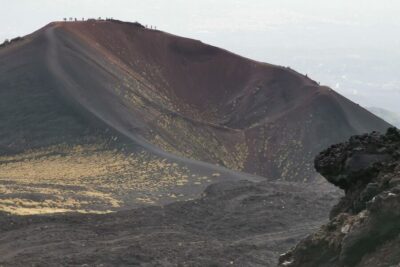 ★ 4.9Catania: Mount Etna Trekking Tour Beyond the Tourist TrailsFrom $811,596 reviews
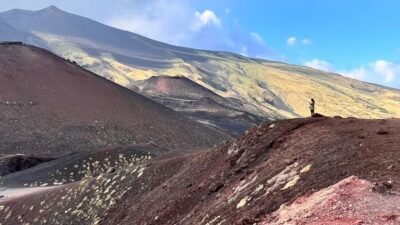 ★ 4.8Catania: Etna Sunset Tour with Pickup and Drop-offFrom $711,348 reviews
 ★ 4.8Etna Sunset Tour: Volcano trek, Cave & tasting from CataniaFrom $701,290 reviews
 ★ 4.8Catania: Etna Morning Excursion with Tasting and PickupFrom $711,224 reviews
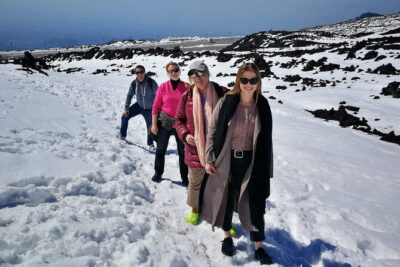 ★ 5.0Mt. Etna and Taormina village full day tour from CataniaFrom $1181,155 reviews
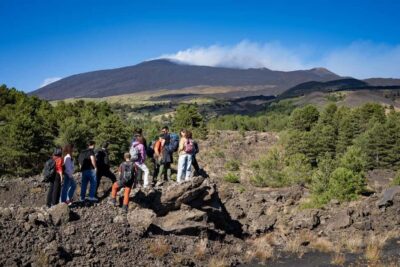 ★ 4.9Catania: Amazing Etna Morning Tour with Pickup and Drop-OffFrom $81799 reviews