
Reviewed · CATANIA TOURS
Underground Catania
Catania hides its oldest stories underground. I love how this Underground Catania route links Roman baths, lava-carved spaces, and the island’s seismic past, and I really like having an archaeology guide who turns names like Sant’Agata and Liotru into a clear timeline. One thing to keep in mind: the pacing can feel a touch slow in the tunnels and crypts, so plan for stops that take time and bring shoes you can stand in for a while.
You’ll tour in English with a small group (max 8), and it’s designed to be exclusive for your group, not a loud, rushing crowd. You may meet guides such as Oreste, Maria, or Matilde/Mathilde, and the best part is that questions get answered along the way. Expect to move from Piazza del Duomo down into underground spaces and back up toward the Stesicoro area.
In This Review
- Key things you’ll notice on this Underground Catania tour
- Why Underground Catania feels different from a normal city walk
- Piazza del Duomo starts the story: Terme Achilliane (Roman baths below the cathedral)
- The cathedral stop makes the timeline click: Basilica Cattedrale di Sant’Agata
- Putia dell’Ostello and the Amenano: the underground river you can still follow
- San Gaetano alle Grotte: lava, cisterns, catacombs, and early Christian tradition
- Guide quality and small-group size: the real value driver
- Price and value: what $96.79 buys you in two to three hours
- What to wear and how to plan your day in Catania
- Should you book Underground Catania?
- FAQ
- How long is the Underground Catania tour?
- Is the tour offered in English?
- What is the group size limit?
- Where do we meet, and where does the tour end?
- Are entry tickets included?
- Can I bring a service animal, and what’s the cancellation option?
Key things you’ll notice on this Underground Catania tour
- Roman thermal rooms under Piazza Duomo: Terme Achilliane dating to the III–IV century AD.
- Amenano underground river in a surviving cave branch: the Putia dell’Ostello shows how water shaped the city.
- A lava-flow cave turned church space: San Gaetano alle Grotte reused across Greek and Roman eras.
- St. Agatha’s story told where it happened: a site tied to tradition and early worship.
- Small-group feel: capped at 8 people, so you’re not shouting to be heard.
What else Catania has going on
- Mt. Etna nature and flavors half day Tour from Catania
★ 5.0 · 545 reviews - From Catania: Mt. Etna, Wine and Alcantara Tour
★ 4.8 · 370 reviews - Etna Morning Tour (starting from Catania)
★ 5.0 · 362 reviews - Underground Catania
★ 5.0 · 302 reviews
Why Underground Catania feels different from a normal city walk
Catania is a city of layers. You see it above ground—streets, churches, monuments—but the real “why” behind the buildings gets explained when you go below street level.
This tour does that work for you. It connects volcanic rock and water systems with real historical events, so the city’s present form makes sense instead of feeling random. And because the group stays small, you’re not just watching a guide point at walls—you’re learning how the underground world shaped daily life.
Most tours stop at one era. This one moves through multiple eras in sequence, with clear stop-and-explain moments along the way.
Piazza del Duomo starts the story: Terme Achilliane (Roman baths below the cathedral)
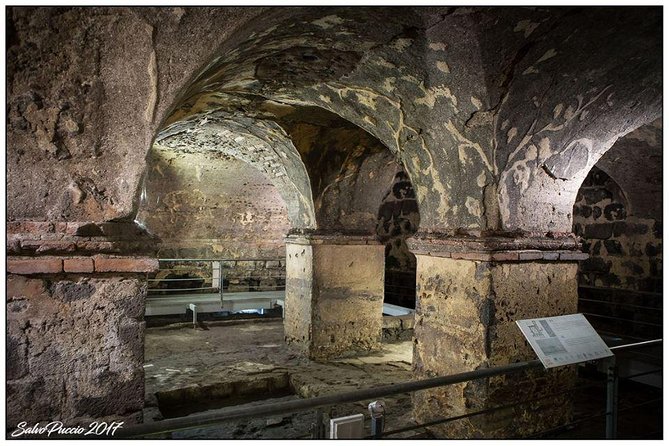
You begin at Piazza del Duomo area, and the first underground stop brings you straight into Roman thermal engineering. The Terme Achilliane complex dates to the III–IV century AD, and it originally stretched into the area around today’s cathedral.
Here’s what makes this more than a photo stop: you’re seeing how the Romans used heat and water in a city shaped by volcanic terrain. The tour focuses on what’s still accessible—only a portion of the original complex remains reachable, and that accessible section sits just below the cathedral area.
It’s also a nice reality check. Underground Catania isn’t one single tunnel system; it’s scattered remnants and reused spaces. That concept comes up again and again as you move through the rest of the tour.
Practical tip: thermal spaces can feel cooler and dim. Wear something comfortable for standing and walking in enclosed areas.
The cathedral stop makes the timeline click: Basilica Cattedrale di Sant’Agata
Next, you surface briefly at the Basilica Cattedrale di Sant’Agata. Even when you’re not going deep into the underground, this stop matters because it anchors everything you’ll see next.
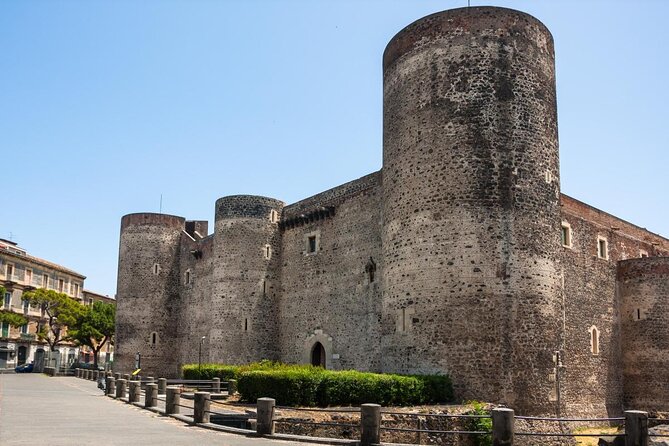
This cathedral is presented as the heart of Catania—sacred and profane through time. The tour frames how the site developed from a Norman-era ecclesia munita (a fortified church concept) into the current Baroque cathedral. You also hear about destruction and reconstruction across centuries, shaped by faith and by Catania’s repeated encounters with earthquakes and eruptions.
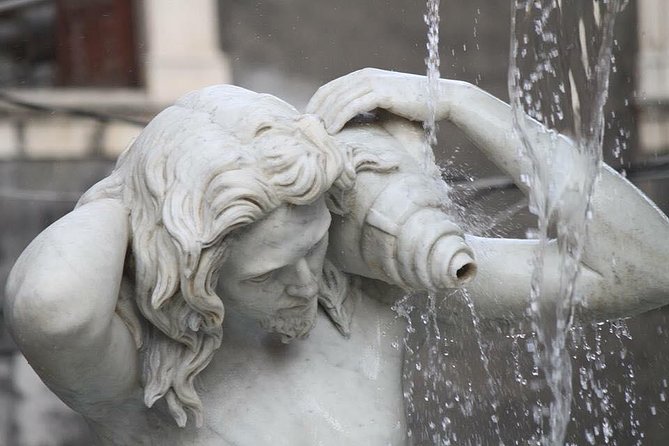
You’ll also get the story tied to Liotru and Sant’Agata. Liotru is part of Catania’s identity, and the tour uses that to explain why the city’s landmarks aren’t only architectural—they’re cultural memory.
This is a good checkpoint before you return underground. By the time you go back down, you’re not just looking at rock caves; you’re following a narrative.
Entrance note: the cathedral stop is marked as admission free.
Putia dell’Ostello and the Amenano: the underground river you can still follow
After the cathedral, the tour shifts into water—and not the kind you usually think of in Sicily.
At A Putia dell’Ostello, you learn about the Amenano, a mysterious underground river system that runs beneath historic Catania. Historically, the Amenano flowed to the surface and fed the Lake of Nicito. Over centuries, eruptions, earthquakes, and wars changed the city’s layout and even the natural appearance of the area.
What you visit here is described as a sliding cave where a branch of that underground river still flows. Instead of only hearing history, you get a space that feels practical and physical: water moving through rock and channels, making the underground landscape usable and worth reusing.
This stop is also one of the best “secret map” moments. Once you understand that water once ran where streets now sit, you start noticing the city differently. You’ll likely start spotting clues above ground too—how certain buildings align, why certain areas feel like they were shaped by more than just aesthetics.
Entrance note: admission here is included.

San Gaetano alle Grotte: lava, cisterns, catacombs, and early Christian tradition
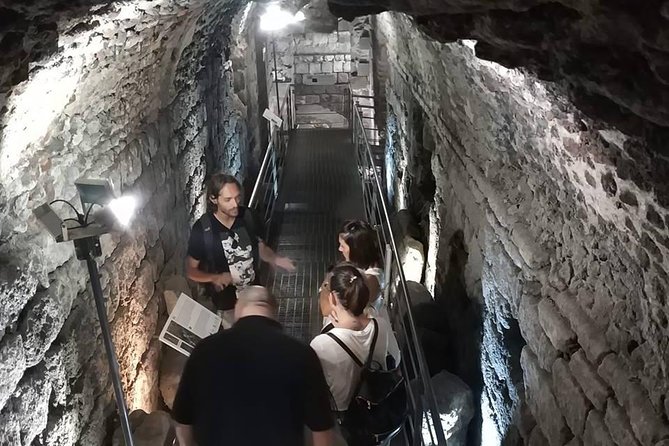
Now you get one of the most dramatic stops on the route: Chiesa di San Gaetano alle Grotte.
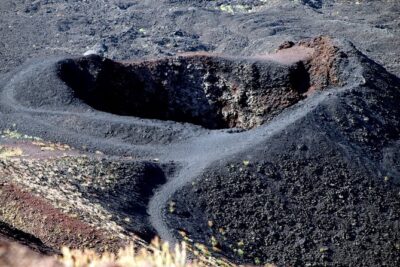
This site is tied to an ancient lava flow cave. The tour explains how it was reused across different eras:
- In Greek times, it was used as a cistern.
- Later, the Romans reused it as catacomb tomb space.
Then comes the religious layer that makes this stop memorable. According to tradition, the cave was the site of the first deposition of Saint Agatha, and a small church was built as early as 262. Today, the crypt preserves remains of ancient frescoes and decorations carved directly into the living rock.
This is one of those places where the “why underground” question gets answered in a very human way. Caves formed naturally by volcanic activity became useful storage and water spaces, then burial and sacred spaces, and then church spaces—so each era inherits the physical infrastructure and adds its own meaning.
Touring tip: if you’re the type who likes to take time in low-ceiling or crypt-like rooms, this is where you’ll appreciate having a guide who is fine with slower pacing. Some people find the walk segments between stops move at a comfortable rhythm, but the underground rooms themselves take attention.
Entrance note: admission is included at this stop.
Guide quality and small-group size: the real value driver
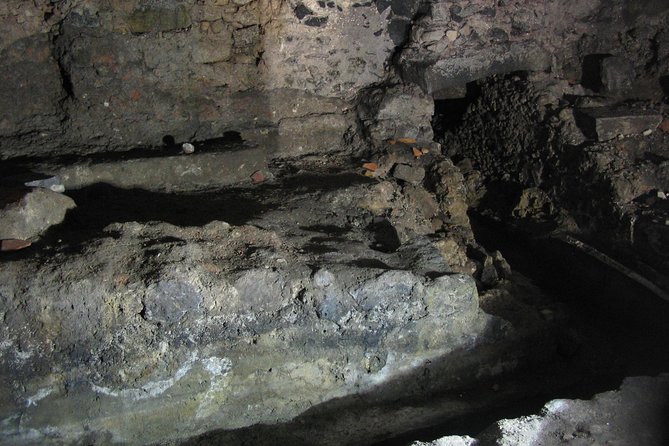
This tour runs with a maximum of 8 people. That number matters more than you’d expect. In underground spaces, you’re dealing with tight paths, shifting light, and moments where you need the guide close for explanations.
A small group also makes Q&A easier. Guides mentioned in past experiences include Oreste, Maria, and Matilde/Mathilde, and the consistent theme is that they connect the archaeology to real city life. You’ll hear stories that explain not only what happened, but how it changed what people could build afterward.
Also, the tour is offered in English, and you’ll use a mobile ticket. That’s a practical win if you hate digging for paper confirmations.
If you’re sensitive to pace, plan to ask the guide for a slightly faster or slower rhythm at the start. The itinerary is structured, but guides can often adjust based on the group’s needs.
Price and value: what $96.79 buys you in two to three hours
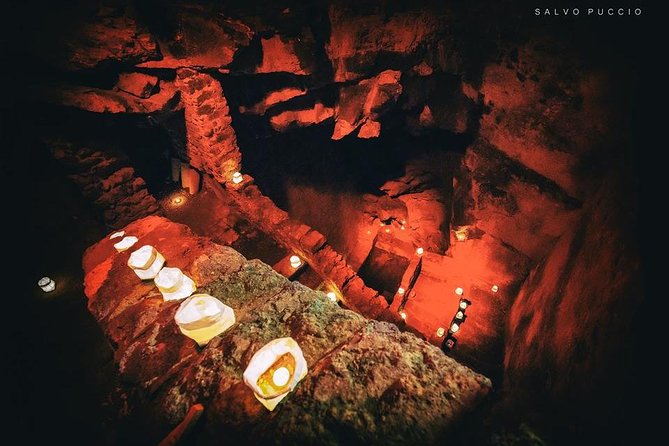
At about $96.79 per person, you’re paying for access, expertise, and time. Underground tours cost more because the work is real: guiding through specific historic structures, coordinating entry, and keeping groups small enough to move safely and meaningfully.
Here’s the value equation that helps you decide:
- The duration is about 2 to 3 hours, which is a good length for underground sites.
- Several stops include admission ticket coverage (and the main cathedral stop is free).
- You’re not just looking at one spot; you’re seeing multiple underground “types” of use—Roman baths, catacomb spaces, and water-related underground channels.
Is it a bargain? It depends on your style. If you want quick checkboxes, you might feel the cost is high for a short time. If you care about understanding how Catania became Catania—especially through volcanic and earthquake history—this price makes more sense.
Booking in advance helps. On average, it’s booked about 48 days ahead, so if you have fixed travel dates, reserve early so you’re not stuck.
What to wear and how to plan your day in Catania
Because you’ll be underground, think practical first:
- Wear comfortable shoes with good traction.
- Keep a light layer handy in case enclosed spaces feel cooler than the streets.
- If you’re visiting in a hot season, the underground stops are a relief, but you’ll still have some outdoor walking between sites.
Timing helps too. Since the tour blends cathedral-area walking with underground rooms, you’ll want to keep your schedule flexible for a couple of hours. It’s also near public transportation, so you won’t need a car just to do this.
One last planning detail: the tour starts and ends in different places. Meeting point is Piazza del Duomo, 7, and the tour ends near Piazza Stesicoro. Plan your next meal or transport around that ending point rather than assuming you’ll return to the starting square.
Service animals are allowed, and the tour notes that most people can participate, so it’s built for a fairly broad range of visitors.
Should you book Underground Catania?
Book this tour if you want the city’s story explained at the level of physical remains—lava caves, Roman engineering, and spaces tied to Sant’Agata. It’s also a great option if you don’t have time or energy for a full Etna volcano day. Underground Catania gives you the volcanic connection without requiring a long trip out of town.
Skip it (or at least reconsider) if you only want highlights with minimal walking and you hate slower pacing in enclosed areas. Also double-check how the experience is run for your specific booking. While it’s described as exclusive for your group and small in size, the max-group cap is still 8, so it’s not a full private-by-default one-person situation.
For the best experience, come with curiosity and be ready for a story told through tunnels and carved rock, not just plaques.
FAQ
How long is the Underground Catania tour?
It lasts about 2 to 3 hours.
Is the tour offered in English?
Yes, it’s offered in English.
What is the group size limit?
This experience has a maximum of 8 travelers.
Where do we meet, and where does the tour end?
You start at Piazza del Duomo, 7, 95131 Catania CT, Italy. The tour ends at Piazza Stesicoro, 95100 Catania CT, Italy.
Are entry tickets included?
Admission tickets are included for Terme Achilliane, A Putia dell’Ostello, and Chiesa di San Gaetano alle Grotte. The Basilica Cattedrale di Sant’Agata stop is free.
Can I bring a service animal, and what’s the cancellation option?
Service animals are allowed. You can cancel for a full refund up to 24 hours in advance of the experience start time.
More Tour Reviews in Sicily






Keep Exploring Catania





Just added: the newest Sicily tours in our notebook
- Etna / Taormina★ 5.0 · 3 reviews
- Bikes★ 5.0 · 3 reviews
- Taormina shore tour – for small group cruise passengers★ 5.0 · 3 reviews
- Vegan Cooking Class in Catania with Lunch and Dinner★ 5.0 · 3 reviews
- Make & Taste Sicilian Desserts in Palermo – Learn Cannoli & More★ 5.0 · 3 reviews
- Sicilian Villages & Ricotta Tasting – including Lunch from Cefalu★ 4.0 · 3 reviews
Catania Tours, compared.
 ★ 4.8Catania: Mount Etna Morning or Sunset Day Trip with TastingFrom $704,028 reviews
 ★ 4.8Catania: Sunset Jeep Tour of Mount Etna and Lava Flow CavesFrom $712,113 reviews
 ★ 4.9Catania: Mount Etna Trekking Tour Beyond the Tourist TrailsFrom $811,596 reviews
 ★ 4.8Catania: Etna Sunset Tour with Pickup and Drop-offFrom $711,348 reviews
 ★ 4.8Etna Sunset Tour: Volcano trek, Cave & tasting from CataniaFrom $701,290 reviews
 ★ 4.8Catania: Etna Morning Excursion with Tasting and PickupFrom $711,224 reviews
 ★ 5.0Mt. Etna and Taormina village full day tour from CataniaFrom $1181,155 reviews
 ★ 4.9Catania: Amazing Etna Morning Tour with Pickup and Drop-OffFrom $81799 reviews