

Reviewed · TRAPANI & SALT PANS
SALT TOUR-all inclusive: salt tour: Trapani, Paceco, Nubia
Salt flats teach a lot in two hours. This all-inclusive Trapani and Paceco salt tour turns sea-water chemistry into real-life Sicilian work, with a guide who actually makes it fun. I especially love the small group feel (limited to 8 people, with a max of 16) and the hands-on salt tastings, including salt flower options like orange, lemon, and herbs.
One thing to consider: the tour is weather-dependent, and one review noted an extra, paid aperitivo offer at the end that can stretch the total time and affect your evening plans.
In This Review
- Key things to know before you go
- Why Trapani’s salt pans feel different from a regular tour
- Getting started at the port: Vigili Del Fuoco in Trapani
- Maria Stella: the first mill and the 15th-century story
- Salina Chiusicella: four orders of tanks and serious bird spotting
- Culcasi salt pans: 600-year-old mill, museum tools, and the salt worker path
- Fleur de sel tasting: crystals and salt flower in real flavors
- Sunset chances over the salt flats: when weather helps (and when it doesn’t)
- Price and logistics: is $60.46 worth it?
- What you’ll notice about the guide: Alessio’s teaching style
- Who this SALT TOUR (Trapani, Paceco, Nubia) suits best
- Should you book this salt pans tour?
- FAQ
- How long is the SALT TOUR?
- Where does the tour start and end?
- What’s included in the price?
- Is there a vehicle for transportation?
- Is the tour offered in English?
- What’s the group size?
- Do I need good weather?
- Is free cancellation available?
- Are service animals allowed?
Key things to know before you go
- Small group, big attention: limited to 8 for intimacy, capped at 16 overall
- Guide name to watch for: many reviews call out Alessio for standout explanations and flexibility
- Three salt locations: Maria Stella, Salina Chiusicella, then Culcasi
- A real salt museum inside an ancient mill: you get tools, roles, and how it worked
- Tastings you can’t fake: salt crystals plus natural and flavored salt flower
- Conditions matter: the experience needs good weather, and sunset views are a big draw when skies cooperate
Out to the Trapani salt flats
- SALT TOUR-all inclusive: salt tour: Trapani, Paceco, Nubia
★ 5.0 · 589 reviews - Trapani: Salt Pans Sunset Tour and Flamingo Way
★ 4.4 · 252 reviews - Egadi Islands Tour Favignana Levanzo by Boat with Lunch from Trapani
★ 5.0 · 246 reviews - Egadi Sail Boat Tour to Favignana and Levanzo from Trapani
★ 5.0 · 194 reviews
Why Trapani’s salt pans feel different from a regular tour
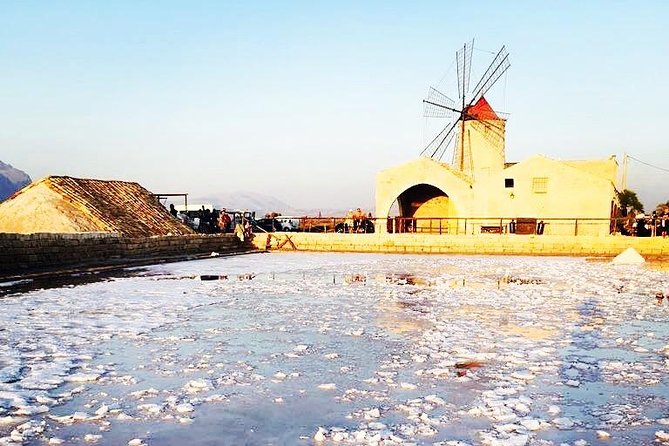
If you’re used to tours that start and stop at gift shops, this feels like a shortcut to understanding how an industry shapes a place. The salt pans around Trapani (and toward Paceco) are not just pretty views. They’re a working system—built with grids, channels, and long-term know-how.
You’ll also get a mix that works well for most people: practical “how it’s made” info, plus enough birdlife and walking to keep it lively. And because this tour is built for a small group, you’re not shouting over a crowd to ask one good question.
Two parts I’d call out for value: you’re not only watching from the edge. You’ll actually move through the salt areas and finish with a tasting focused on crystals and fleur de sel style salt flower.
Getting started at the port: Vigili Del Fuoco in Trapani
The tour meets at Vigili del Fuoco Distaccamento Portuale Trapani, Via Ammiraglio Staiti 101. Yes, it’s the fire station by the port—an easy landmark once you know where you’re aiming your phone.
After a quick start, you’ll board a vehicle (air-conditioned) and head straight toward the first salt pans. For many visitors, that’s a relief: you’re not spending the first hour figuring out transport or parking while you’re already thinking about sunsets.
The total time is about 2 hours 30 minutes, so pacing matters. This is not a slow “wander and hope” situation. The guide keeps the flow moving from mill to pans to museum and tasting.
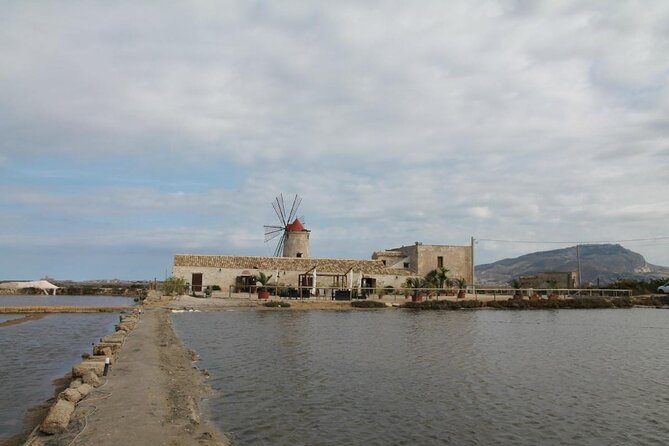
Maria Stella: the first mill and the 15th-century story
About 10 minutes into the tour, you reach the first salt pan: Maria Stella. This stop is your “origin story” moment. You’ll see (and hear about) an early mill built here dating to the end of the fifteenth century.
What makes this part click is the way salt production is explained as a process, not a single product. You’re introduced to the idea that salt isn’t just something you scoop—it’s the result of staged work over time, using evaporation and the specific layout of the pans.
Practical note: the tour includes walking through the salt areas and paths, so wear shoes you’d be happy getting a little dusty. Even if the day looks calm, salt flats can be firm underfoot but not always “slick-floor perfect.”
Salina Chiusicella: four orders of tanks and serious bird spotting
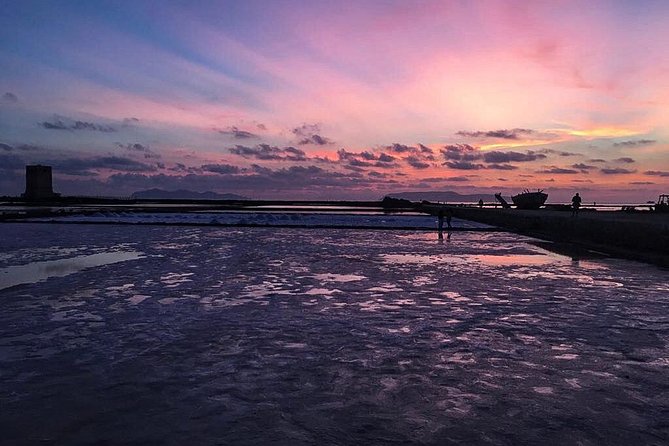
Next you go to Salina Calcara, also described through Salina Chiusicella. This is where the tour gets more visual and a bit more “wow.” You’ll follow the route through the salt tanks and learn about the four orders of salt tanks—the transformation from sea water into salt through staged steps.
This is also the stop where wildlife can steal the show. The tour description points to possible sightings of flamingos, herons, egrets, and other birds in the area. You might not get every species, but if conditions are good, you’ll likely get at least some great photo moments.
The benefit for you: this is an information-heavy tour without turning into a lecture. The guide’s job here is connecting the tank layout to what you see in front of you—so the process feels real.
Culcasi salt pans: 600-year-old mill, museum tools, and the salt worker path
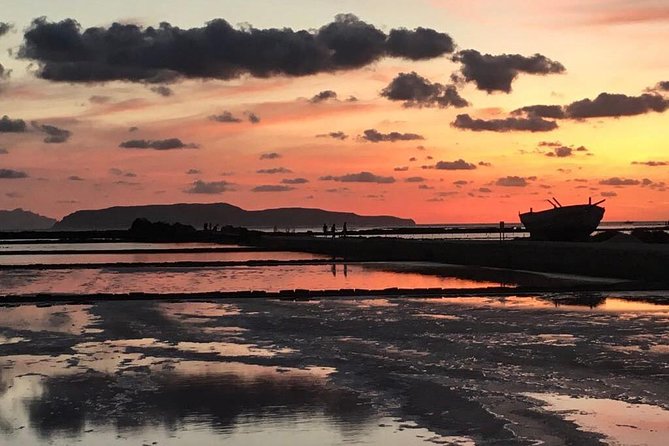
Then comes Saline Culcasi, the longest stop at about 1 hour 15 minutes. This is the “deepest” part of the tour in terms of explanation, because you’ll be able to enter an ancient mill over 600 years old, now operating as a museum.
Inside, you’ll learn how salt was collected, how the mill worked, and how tools and roles fit into the system. The museum part adds context for why salt wasn’t just an ingredient—it helped shape the local social order and daily life. You’re not only learning chemistry. You’re learning how people organized work around a product with real value.
After that, the tour moves into tasting and then into the walking portion called the path of the saltman, where you’ll walk inside the salt tanks.
A small drawback to flag: museum time plus tasting plus walking means this is the part that can feel long if you’re tired. Still, it’s also the part that most clearly justifies the all-inclusive “one-and-done” nature of the tour.
Fleur de sel tasting: crystals and salt flower in real flavors
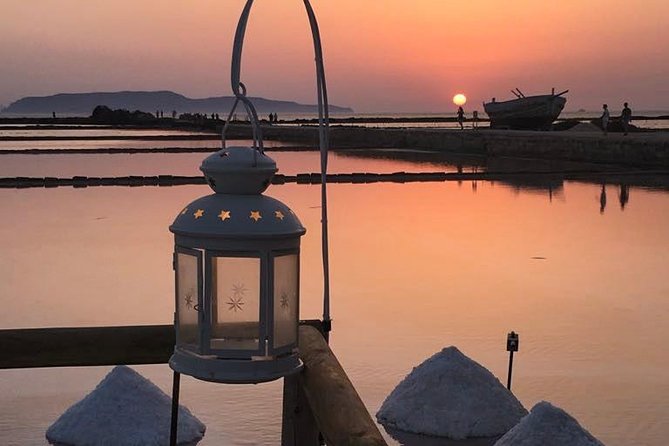
The tastings are one of the best reasons to book this instead of just visiting the salt museum on your own. You’ll taste:
- different types of salt crystals
- the most precious part: salt flower (also called fleur de sel style)
The flavored salt flower options are listed as natural and flavored with orange, lemon, rosemary, oregano, and more. That matters because it gives you a way to connect salt production to cooking and taste—without needing to be a foodie first.
One review also praised the tour for explaining why Trapani integrale salt is special, including health-related context. You’ll get an “OK, now I get what premium salt means” kind of education, and not just a generic product pitch.
And yes, the silly truth: salt is easy to ignore until someone helps you notice the differences. After tastings, you’ll understand why people get opinionated about it.
Sunset chances over the salt flats: when weather helps (and when it doesn’t)
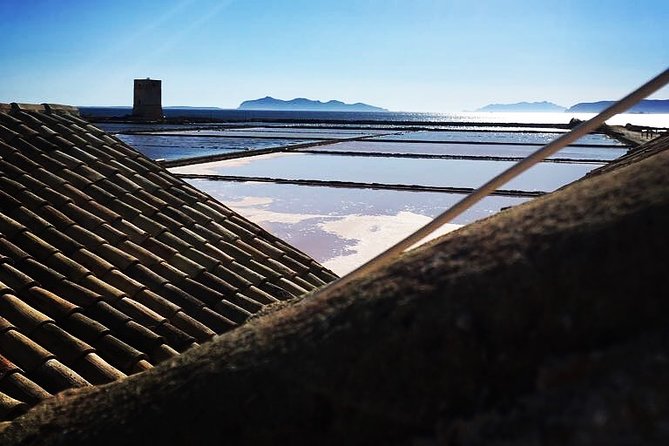
Sunset is a big deal in this area, and multiple reviews mention the view over the salt pans. But the tour is clear that it requires good weather. If clouds roll in, the timing and photo payoff can change fast.
For your planning: think of sunset as a bonus, not the only point. Even without dramatic light, the process explanations and the museum content still hold up. Still, if you’re booking because you want that golden glow, bring the attitude of a photographer and keep your schedule flexible.
If you’re aiming for the prettiest salt-pans photos, one review suggested July to September during harvesting season as an especially good time for pictures. If your dates don’t match, don’t stress—the tour still focuses on the production system, not just aesthetics.
Price and logistics: is $60.46 worth it?

At $60.46 per person for about 2 hours 30 minutes, this can feel like a fair deal, mainly because it includes the stuff that’s usually extra:
- air-conditioned vehicle
- all fees and taxes
- guided tour
- entry to the salt museum
- 3 different salt pans
- the salt worker path
- tastings of salt crystals and aromatized salt flower
The one thing not included is tips, so budget a little for that if you feel the guide earned it.
Now the balanced take: one review said the experience wasn’t worth the money and suggested a taxi + self-visit might be cheaper. That’s a legit consideration if you only want the museum view. But if you care about the “why” behind each tank, the tastings, and the guided flow between sites, the guide-led structure is the value.
Also, the tour is described as booked about 30 days in advance on average, which hints at demand. I’d treat that as a sign to lock in your slot earlier rather than waiting until the last minute.
What you’ll notice about the guide: Alessio’s teaching style
A clear pattern in the feedback: the guide Alessio gets called out for passion and professionalism. People mention that he explains:
- the history of salt manufacturing
- how salt tanks work as a system
- and practical details that make the whole thing stick (including odd-but-interesting math and craft details)
One review praised him for adjusting the tour timing due to traffic. Another mentioned the tour reshaped how they think about salt for cooking—no more defaulting to the usual supermarket options.
For you, the practical takeaway is this: if you enjoy asking questions and you like learning in the field, this guide format is a strong fit. If you want total silence and minimal talking, this may not be your style.
Who this SALT TOUR (Trapani, Paceco, Nubia) suits best
This tour fits best if you fall into one of these buckets:
- You like hands-on food education (salt isn’t just seasoning here)
- You want a short, structured countryside-style experience without long travel
- You care about small-group guided walking instead of large bus groups
- You’re traveling as a couple, a family, or a mixed group and want something that works for adults and kids (one review explicitly said it works for both)
It can be a romantic pick too. One review focused on sunset over the pans, and the overall format—walk, museum, tasting—naturally creates a calm rhythm.
Should you book this salt pans tour?
Yes, I’d book it if you want more than a quick photo stop. The combination of three salt pans, an ancient mill museum, and salt flower tastings is the kind of value that’s hard to replicate alone without paying for separate entries and spending time figuring out the route.
Hold off or plan carefully if timing is tight. The tour runs about 2 hours 30 minutes, and one review mentioned an added aperitivo for an extra cost at the end that can push the timeline. If you have dinner reservations right after, build in a buffer.
If you want a straightforward, guided path to understand Trapani/Paceco salt production—and you’re curious about why “good salt” costs more—this is an easy yes.
FAQ
How long is the SALT TOUR?
It lasts about 2 hours 30 minutes.
Where does the tour start and end?
It starts at Vigili Del Fuoco Distaccamento Portuale Trapani, Via Ammiraglio Staiti 101, 91100 Trapani TP, Italy and ends back at the same meeting point.
What’s included in the price?
Included: air-conditioned vehicle, all fees and taxes, guide, salt museum ticket, tastings of salt crystal and aromatized salt flower, visits to 3 different salt pans, and the path of the salt worker.
Is there a vehicle for transportation?
Yes. The tour includes an air-conditioned vehicle and uses minivans that are sanitized per COVID-19 regulations.
Is the tour offered in English?
Yes, it’s offered in English.
What’s the group size?
The tour has a maximum of 16 travelers, and the experience is described as limited to 8 people for an intimate experience.
Do I need good weather?
Yes. The experience requires good weather. If it’s canceled due to poor weather, you’ll be offered another date or a full refund.
Is free cancellation available?
Yes. You can cancel for a full refund up to 24 hours in advance of the experience start time.
Are service animals allowed?
Yes, service animals are allowed.
More Tours in Sicily



More Tour Reviews in Sicily

More Around Trapani and the Salt Pans




Just added: the newest Sicily tours in our notebook
- Etna / Taormina★ 5.0 · 3 reviews
- Bikes★ 5.0 · 3 reviews
- Taormina shore tour – for small group cruise passengers★ 5.0 · 3 reviews
- Vegan Cooking Class in Catania with Lunch and Dinner★ 5.0 · 3 reviews
- Make & Taste Sicilian Desserts in Palermo – Learn Cannoli & More★ 5.0 · 3 reviews
- Sicilian Villages & Ricotta Tasting – including Lunch from Cefalu★ 4.0 · 3 reviews
Trapani & Salt Pans, compared.
 ★ 4.2From Trapani: Cruise to Favignana and Levanzo with lunchFrom $532,286 reviews
 ★ 4.2Segesta, Erice and Salt Pans Full-Day Excursion from PalermoFrom $821,791 reviews
 ★ 4.3From Trapani: Day Cruise to Favignana & Levanzo with LunchFrom $461,483 reviews
 ★ 5.0Boat Tour Egadi Day discover Favignana and Levanzo from TrapaniFrom $1391,183 reviews
 ★ 4.2From Trapani: Favignana and Levanzo Mini Cruise with LunchFrom $47814 reviews
 ★ 5.0Favignana and Levanzo, Egadi islands tour by boat from TrapaniFrom $114720 reviews
 ★ 5.0Boat tour to Egadi Favignana and Levanzo islands from TrapaniFrom $102614 reviews
 ★ 5.0Egadi Islands Tour: Favignana and Levanzo from TrapaniFrom $114607 reviews
Browse the lists this tour appears in