
Reviewed · SYRACUSE & ORTIGIA
Ancient Syracuse: private guided tour of the Neapolis archaeological park
Ancient Syracuse gets real fast. This private guided walking tour in the Neapolis archaeological park turns scattered ruins into a clear, story-driven route through Greek and Roman Syracuse. You’ll see the main sites close up, with an English-speaking guide who helps you connect what you’re looking at to why it mattered.
I like two things most. First, you get up-close time at the key monuments instead of rushing from one photo spot to another. Second, the guides on this tour bring the place to life with focused explanations and plenty of chances to ask questions, including with guide names like Eva and Martina showing up repeatedly as standout guides.
One heads-up: the Neapolis park entrance is not included in the tour price (unless you chose a tour+ticket option). That means you should plan a little time for tickets, especially in busier hours.
In This Review
- Key highlights that make this tour worth your time
- Neapolis is where ancient Syracuse “clicks”
- What “private” changes at these ruins
- Parco Archeologico della Neapolis: the main walking loop
- Teatro Greco: the theatre stop, and the seasonal reality
- Ear of Dionysius: 15 minutes that can feel like a story climax
- Ancient Greek stone quarries: where the ground tells the how
- Anfiteatro Romano di Siracusa: the Roman showstopper
- Timing, tickets, and the meeting point that matters
- Value for the price: what $108.24 buys you
- Who should book this tour (and who might skip it)
- Should you book Ancient Syracuse at Neapolis with a private guide?
- FAQ
- How long is the private guided tour?
- Where does the tour start and end?
- Is the Neapolis park entrance ticket included?
- Are tickets needed for Teatro Greco, the Ear of Dionysius, and the Roman amphitheater stops?
- What languages is the tour offered in?
- Is this tour truly private?
- What should I know about the Greek theatre during spring and summer?
- What do I need to bring for the tour?
Key highlights that make this tour worth your time
- Private pacing at Neapolis: Your group walks together and gets time at each stop.
- Teatro Greco is the headline: It’s one of Sicily’s most important ancient Greek theatres.
- Ear of Dionysius adds atmosphere: A legendary stop tied to Syracuse’s cavey underworld.
- Roman amphitheater stop with context: Your guide explains Roman gladiators and the arena setting.
- Time flex with morning or afternoon departures: You can match it to your day in Syracuse.
Deeper into Ortigia and old Syracuse
- Syracuse: Tour of Ortigia Island & Caves with Local Skipper
★ 4.7 · 1,060 reviews - Tour of the island of Ortigia and exploration of sea caves with baths.
★ 5.0 · 668 reviews - Boat tour of Ortigia Island and sea caves
★ 5.0 · 407 reviews - Siracusa Boat excursion island of ortigia and sea caves
★ 5.0 · 147 reviews
Neapolis is where ancient Syracuse “clicks”
If you’ve tried reading about Syracuse’s past, you’ll know it can feel like a pile of separate sites. Neapolis helps fix that. It’s the archaeological area where many of Syracuse’s most important ancient monuments cluster, so you’re not hopping across the whole city to make sense of it.
This tour is built around a simple idea: walk the park route with a guide who can point out what you’d otherwise miss. Instead of guessing what a wall segment was for, you learn how the Greek world took shape here and how later Roman power changed the use of these spaces.
I also like that the tour doesn’t treat this as a long history lecture. It’s practical. You stand in front of something specific, you get the explanation, and you move on. That’s the fastest way to make ruins feel like a lived-in place, not just an outdoor museum.
What “private” changes at these ruins
A private tour sounds like a marketing label, but here it really affects how you experience the site. With your own group only, you’re not stuck following a crowd’s pace through the most interesting corners.
That matters at Neapolis, because the best parts are often small visual details: the angle of a theatre space, the setting of a legendary cave stop, the way Roman architecture turns an arena into a performance stage. When you’re in a group, you tend to scan for big photo moments. With a private guide, you notice structure and placement because you’re not constantly being pulled along.
Another advantage: the guides seem to be genuinely invested in answering questions. Names like Eva come up for being enthusiastic and patient, and Martina comes up for being very well educated and easy to talk with. Even if you don’t ask much, the explanations tend to feel tailored to what you’re looking at in front of you.
And since the tour ends back at the meeting point, you’re not left guessing how to reconnect with your day.
Parco Archeologico della Neapolis: the main walking loop
Most of your time is spent in the Parco Archeologico della Neapolis, which is the core of the experience. This is where you’ll see the main ancient monuments that make Syracuse feel like a real ancient city instead of a collection of ruins.
Expect this portion to be the slowest and most substantial part of the tour. The tour overview lists approximately 1 hour 30 minutes overall, but the Neapolis park stop itself is where the time investment concentrates, so plan to be ready for a solid walk.
What makes this stop valuable is that it’s not just sightseeing. Your guide guides your attention. You learn how each monument fits into the bigger story—Greek foundations first, then later use and influence visible in other structures nearby. If you’re the type who likes to understand what you’re seeing before you move on, this is where the tour delivers.
Practical tip: comfortable walking shoes matter. Neapolis is a park you move through, not a flat indoor route.
Teatro Greco: the theatre stop, and the seasonal reality
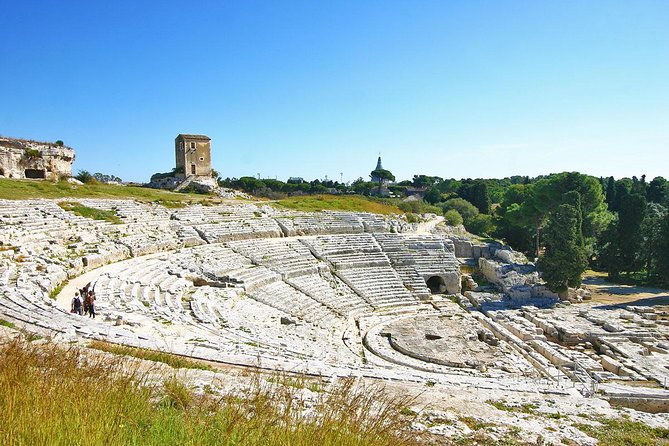
Teatro Greco is a big reason people book this tour. It’s described as the most important ancient Greek theatre in Sicily, and that reputation is easy to feel when you’re standing in the space.
This stop is also relatively short in the schedule—about 40 minutes—and the admission ticket is free. That makes it a smart use of time: you get a major landmark with little extra friction.
One seasonal factor is worth taking seriously. During the performance season (often spring and summer), the Greek theatre is covered and you’ll only see it partially. The practical takeaway: your expectation should be flexible in high season. If the uncovered look is what you’re picturing, go in prepared for temporary coverings and structures connected to nightly performances.
If you’re touring in warmer months, bring gear for comfort. An umbrella came up as a real-life tip for summer heat. It’s not just for rain.
A few we would gladly point a friend toward in Sicily



Ear of Dionysius: 15 minutes that can feel like a story climax
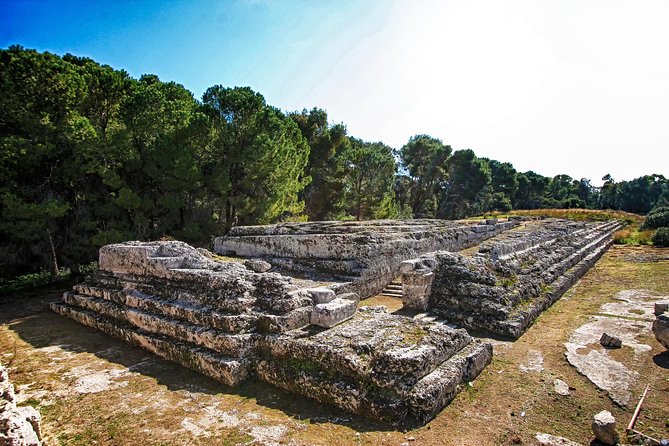
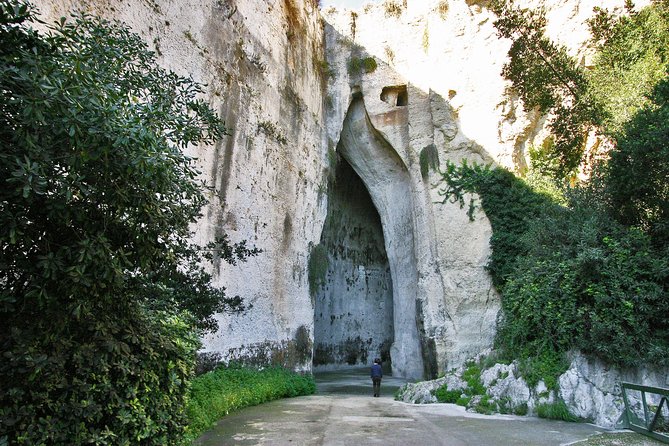
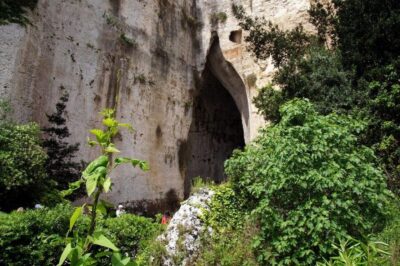
The Ear of Dionysius is one of those Syracuse labels that people remember because it sounds dramatic—and it is. This stop is scheduled for about 15 minutes and it’s free to enter.
What you should expect is not a long museum-style visit. It’s more like a focused pause in a legendary location. Your guide explains the meaning and story around it, which helps turn a cave-like setting into something more than a named point on a map.
There’s also a fun practical detail that makes cave and quarry-style stops better with a guide: acoustics. In these kinds of underground stone spaces, sound can carry in a surprising way. If you’re with friends or family, you might notice how easy it is for voices to bounce, and the “hear it in the space” effect is part of why these stops can end up being favorites.
Ancient Greek stone quarries: where the ground tells the how
Between the theatre and the Roman amphitheater, you’ll also see the ancient Greek stone quarries. This is one of the more intriguing stops because it answers a different question than most ruins: not just what was built, but how the material was taken and shaped.
The schedule doesn’t give a strict duration here the way it does for other stops, but plan for it as a meaningful add-on stop rather than a quick glance. Your guide points out what you’re seeing and explains the role of these quarry areas in Syracuse’s ancient life.
This is also where the acoustics note from the experience feedback really comes alive. Stone and caves can make sound travel well, and the effect can be noticeable enough that it turns a short pause into an “oh wow” moment.
If your group likes hands-on curiosity—how things were carved, how places were made—this quarry stop is often where your brain shifts from sightseeing to thinking like an ancient worker.
Anfiteatro Romano di Siracusa: the Roman showstopper
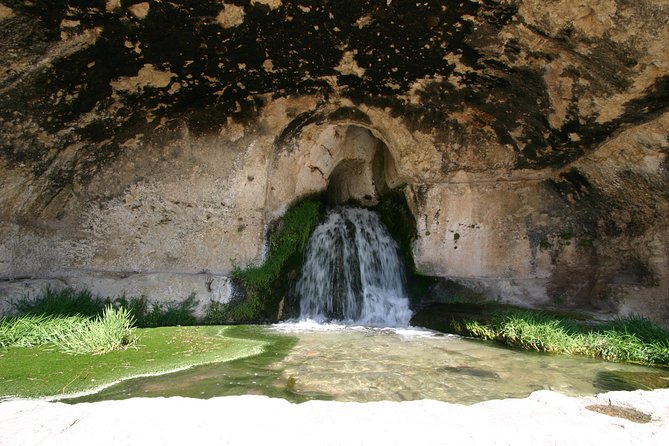
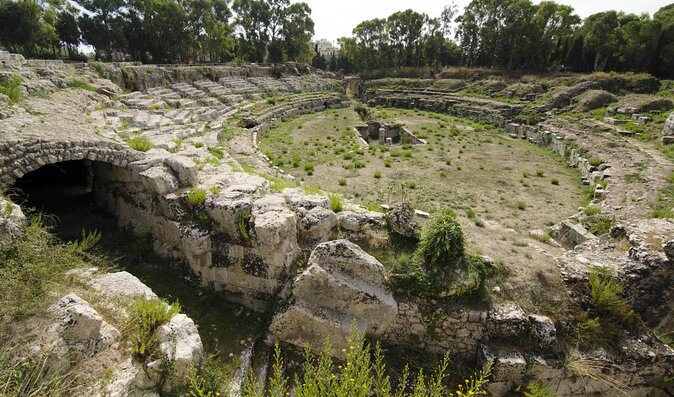
Next up is the Anfiteatro Romano di Siracusa, the Roman amphitheater. This stop runs about 15 minutes and the admission ticket is free.
The guide focus here is Roman gladiators and what the amphitheater setting was built for. Even with a short time block, that explanation helps you read the structure the way Romans likely used it: a performance space, an audience space, a show space.
This is a great contrast to the Greek theatre. Both involve dramatic gathering and staged viewing, but they represent different eras and different political cultural priorities. With the guide connecting these dots, you start to see the site as a chain of use, not isolated monuments.
If you’re wondering whether 15 minutes is enough: it is, as long as you go in ready to listen and look. The real payoff of the Roman amphitheater stop is the context your guide adds in that brief window.
Timing, tickets, and the meeting point that matters
This tour offers morning or afternoon departures, so you can match it to your pace in Syracuse. It’s designed as a walking experience with an approximate duration of 1 hour 30 minutes, which is a good length for fitting into a day without draining you.
Now the part that can make or break your experience: park admission. The tour price covers the guide and private walking tour, but the entrance ticket to the Neapolis park is not included in the standard setup. If you qualify for reduced or free entry categories, you may still need to present ID at the ticket office to access those benefits.
That also means you should expect that your day may stretch if ticket lines are long. If you can handle any ticket steps ahead of time, do it. And if you’re traveling in peak season, don’t treat timing like an abstract concept—treat it like something you manage.
Meeting point matters, too. You start at Largo Anfiteatro, 2, 96100 Siracusa SR and the tour ends back at the same meeting point, so you’re not bouncing between pickup and drop-off locations.
One more practical note: this experience requires good weather. If it gets canceled due to poor conditions, you’ll be offered a different date or a full refund.
Value for the price: what $108.24 buys you
At $108.24 per person, you’re paying for the guide and the private format. You’re not paying for the park admission (in the default ticket setup), so your true cost depends on what ticket you need and whether you’re paying standard admission.
Is it good value? For the right traveler, yes. Here’s why: you’re getting a guided route through multiple major ancient sites—Neapolis park, Teatro Greco, Ear of Dionysius, the stone quarries, and the Roman amphitheater—without having to plan the connections yourself or guess what matters at each stop.
Also, private guide time saves energy. If you’re trying to cover Syracuse and you don’t want to spend your limited vacation hours figuring out routes, meeting points, and what you should care about most, this is a direct solution.
The other value signal: the tour is highly recommended, with a rating of 4.7 and a strong approval percentage. That lines up with what you want from an archaeological park tour: clarity, good pacing, and guides who can answer questions.
Who should book this tour (and who might skip it)
This is a strong fit if you want:
- a focused route through the key ancient sites at Neapolis
- an English-speaking guide who explains what you’re seeing
- a private setup that works for couples and families who hate rushing
It also helps if you have a child who’s genuinely interested in history. A 10-year-old in the experience feedback was engaged by the guide’s explanations and patience, which tells me the tour can work for younger minds when the guide pitches it right.
You might skip it if:
- you hate walking and want only short, seated viewing time
- you’re on a super tight schedule and can’t build in time for the park admission step
- you’re visiting during spring/summer and feel strongly about seeing the Greek theatre uncovered. The seasonal coverage means your view may differ.
If you’re somewhere in the middle, book it and plan for comfort: shoes, water, and a sun tool (umbrella if it’s hot) can make the walk feel much easier.
Should you book Ancient Syracuse at Neapolis with a private guide?
I’d book it if you want the fastest path to understanding this part of Syracuse without doing mental homework. Neapolis can feel like fragments until someone connects the dots, and a private guide makes that connection clear and personal.
Do it if you value time with a real human who can point out what matters at Teatro Greco, the Ear of Dionysius, the Roman amphitheater, and the quarry spaces. It’s also a good bet when you want flexibility with morning or afternoon departures.
I’d think twice only if you’re extremely sensitive to ticket timing or you’re expecting an unobstructed view of the Greek theatre in high season. If that’s you, adjust your expectations and bring weather-friendly comfort.
FAQ
How long is the private guided tour?
The tour is listed as approximately 1 hour 30 minutes.
Where does the tour start and end?
It starts at Largo Anfiteatro, 2, 96100 Siracusa SR, Italy and ends back at the same meeting point.
Is the Neapolis park entrance ticket included?
No. The park admission ticket is not included in the standard tour price.
Are tickets needed for Teatro Greco, the Ear of Dionysius, and the Roman amphitheater stops?
Admission tickets are listed as free for Teatro Greco, the Ear of Dionysius, and the Anfiteatro Romano di Siracusa.
What languages is the tour offered in?
The tour is offered in English.
Is this tour truly private?
Yes. It’s a private tour, and only your group participates.
What should I know about the Greek theatre during spring and summer?
During the performance season (usually spring and summer), the Greek theatre is covered and only partially visible.
What do I need to bring for the tour?
Comfortable walking shoes are recommended. The tour is a walking experience.
More Tours in Sicily





More Tour Reviews in Sicily


More of Syracuse and Ortigia


Just added: the newest Sicily tours in our notebook
- Etna / Taormina★ 5.0 · 3 reviews
- Bikes★ 5.0 · 3 reviews
- Taormina shore tour – for small group cruise passengers★ 5.0 · 3 reviews
- Vegan Cooking Class in Catania with Lunch and Dinner★ 5.0 · 3 reviews
- Make & Taste Sicilian Desserts in Palermo – Learn Cannoli & More★ 5.0 · 3 reviews
- Sicilian Villages & Ricotta Tasting – including Lunch from Cefalu★ 4.0 · 3 reviews
Syracuse & Ortigia, compared.
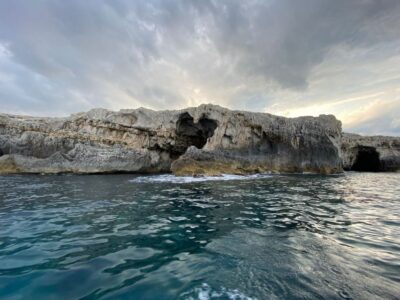 ★ 4.7Syracuse: Tour of Ortigia Island & Caves with Local SkipperFrom $231,060 reviews
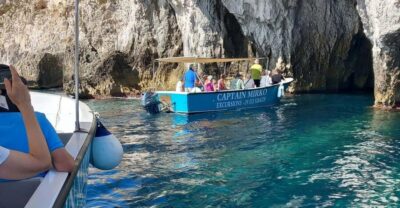 ★ 4.7Syracuse: Boat Tour with Captain Mirko, Snorkeling & CavesFrom $35746 reviews
 ★ 4.7Siracusa: Ortigia Boat Tour with Marine Grotto & SnorkelingFrom $47726 reviews
 ★ 4.8Siracusa: Ortigia & Sea Caves Boat Tour w/ Prosecco & FruitFrom $35723 reviews
 ★ 5.0Tour of the island of Ortigia and exploration of sea caves with baths.From $24668 reviews
 ★ 4.7Syracuse: Ortigia Island & Sea Cave Boat Tour with ProseccoFrom $23418 reviews
 ★ 5.0Boat tour of Ortigia Island and sea cavesFrom $24407 reviews
 ★ 4.6Catania: Syracuse, Ortigia, and Noto Tour with BrunchFrom $112404 reviews
Browse the lists this tour appears in