
Reviewed · MOUNT ETNA TOURS & SUMMIT
Etna North: Guided trekking to Summit volcano craters
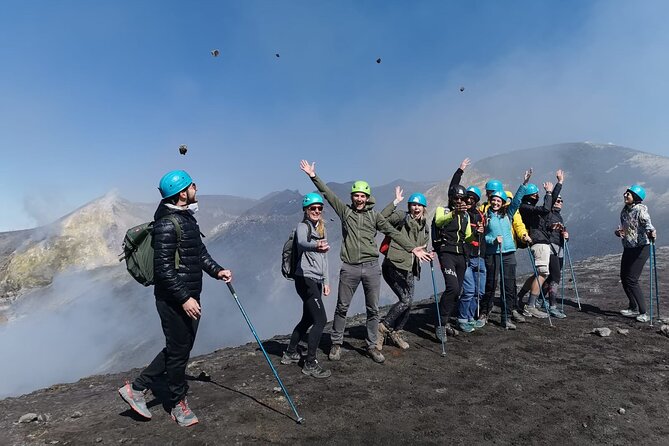
Etna rewards hikers who can handle steep air. This Etna North trek takes you up from Piano Provenzana toward the summit area and puts you on the crater rim, with views into the Central and Northeast craters and the Southeast crater nearby. I really like two things here: hitting the higher elevations most day tours miss (up to the 3,320m crater rim) and getting a real safety setup with helmets, boots, and guide leadership. The one drawback is timing can be tight—on at least one departure, waiting for another group cut the day short.
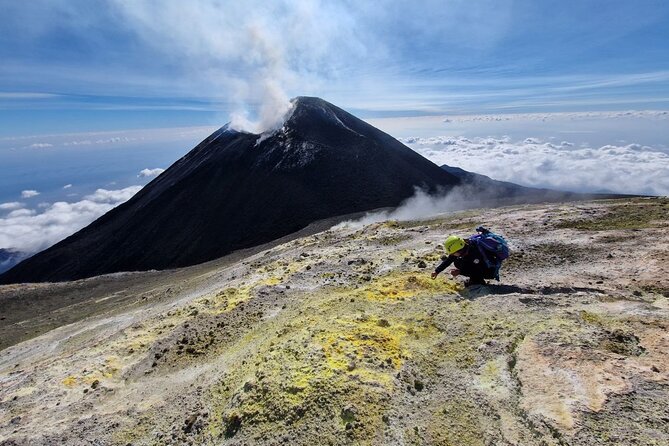
You’ll also get the volcanic details you came for. Along the route you’ll see steam vents, lava fields, and the pale sparkle of ground where elements (including sulfur) sublimate, plus gas emissions and volcanic bombs near the top. Expect teaching breaks with explanations as you climb and return, and then a descent that stays scenic thanks to coast views.
A few practical notes before you picture yourself at the summit: it’s about 5 hours total, starts at 8:00am, and groups max out at 20. You’ll need moderate fitness, and it’s not recommended for people with asthma or heart problems. Also, the 4×4 rides cost extra (60€ per person in cash on the spot), even though the walking gear is included.
In This Review
- Key highlights worth planning for
- Etna North: the value of going for the crater rim
- Piano Provenzana to 2,825m: the 4×4 start that makes the climb doable
- The summit ascent: Central and Northeast craters in focus
- What you should mentally prepare for
- Top-of-mountain geology: steam, bombs, and sulfur color
- The descent: fine ash, panoramic coast views, and guided pacing
- Guides and safety: why the best days feel calm
- Price and value: $78.10 plus the 60€ 4×4 ride
- Weather, restrictions, and why your day can change
- Who should book this trek (and who should skip it)
- Should you book the Etna North summit-craters trek?
- FAQ
- What time does the Etna North guided trek start?
- Where is the meeting point for this tour?
- How long does the trek last?
- Is the tour in English?
- What gear is included?
- Do I need to pay extra for the 4×4?
- Who is the trek suitable for, and who should avoid it?
- What’s the cancellation rule if weather is bad?
Key highlights worth planning for
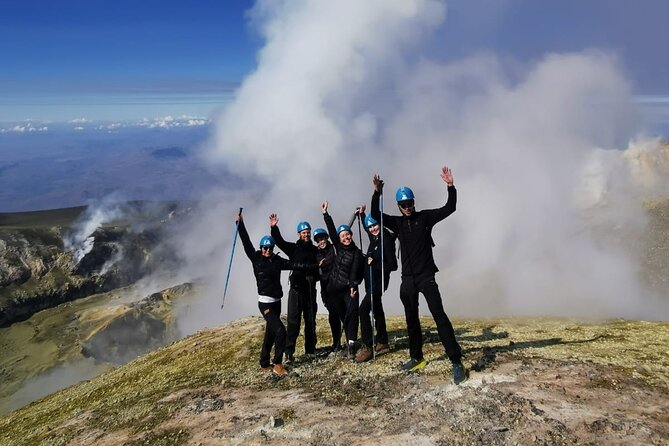
- Crater-edge walking near 3,320m, plus big sightlines toward multiple summit craters
- Expert hiking and volcanological guidance, with guides like Antonio and Massimo called out for clear English and strong safety habits
- All key gear included: boots, helmet, and walking sticks, so you’re not hunting rentals at the last minute
- Geothermal visuals on the way up: steam vents, lava fields, and sulfur-rich color on the ground
- North-side access using current safe routes, so the climb can be possible even when conditions shift
- Small group size (max 20), which helps keep the pace controlled
More ways up the volcano from Sicily
- Etna Morning Trip
★ 4.5 · 1,241 reviews - Mt. Etna nature and flavors half day Tour from Catania
★ 5.0 · 545 reviews - Etna excursion 3000 meters with 4×4 cable car and Trekking
★ 4.5 · 504 reviews - Mount Etna Adventurous Hiking Tour with Equipment
★ 4.5 · 439 reviews
Etna North: the value of going for the crater rim
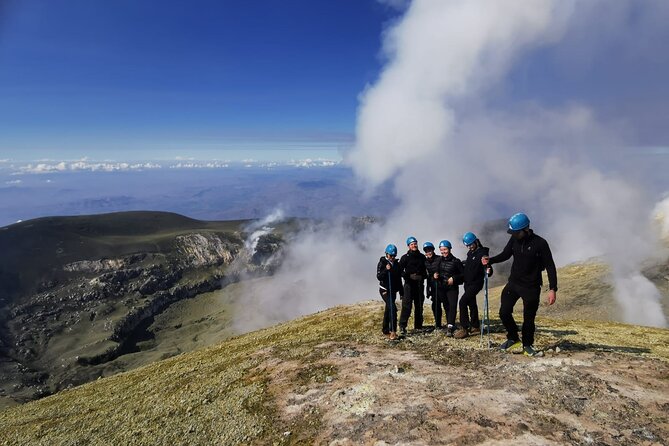
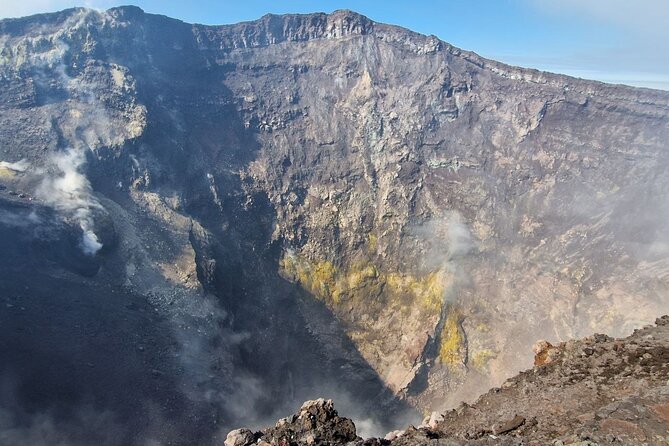
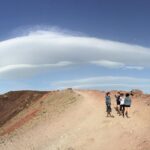
Etna is one of those places where “volcano tour” can mean wildly different things. This trek is aimed at the summit craters area, not just a viewpoint. The goal is to get you to the crater rim at about 3,320m, with a guided walk on the edge of the Central crater and views toward the Northeast and Southeast craters.
That matters because crater rims are where you feel the scale. You’re not guessing what’s beneath you—you’re looking down and across real volcanic terrain. And because the north-side route uses the slope currently considered safer for access, you’re seeing how guides think in terms of current conditions, not just a fixed postcard route.
Piano Provenzana to 2,825m: the 4×4 start that makes the climb doable
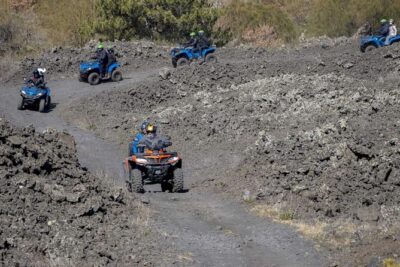
Your morning starts at Piano Provenzana – Etna nord, via Provenzana, 95015 Linguaglossa CT. The tour runs from 8:00am and begins with a 40-minute 4×4 ride from Piano Provenzana (around 1,800m) up to roughly 2,825m near Piano delle Concazze.
This ride is a big part of the practicality of the day. Instead of spending your energy grinding uphill from sea level, you start the hike higher, which helps you save stamina for the crater rim walking part. One tradeoff: the 4×4 ride is not included in the $78.10 price. You pay 60€ per person in cash on the spot.
If you’re organized, that cash detail is easy. If you’re not, it can slow you down before the day even starts—so plan ahead and have bills/coins ready.
The summit ascent: Central and Northeast craters in focus
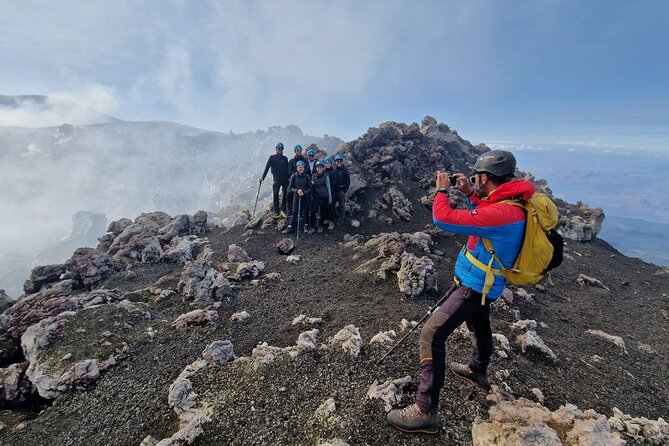
From about 2,825m, the main ascent starts. You’ll climb for roughly 2 hours to the main crater rim at 3,320m. This is the heart of the trek: once you reach the rim area, you walk along the edge of the Central Crater.
The description of the Northeast crater as vertiginous is not a marketing line—it’s the feeling you’ll get when you’re that close to the drop-offs. The guide keeps things safe and structured, and the route is paced for a group climb rather than a personal speedrun.
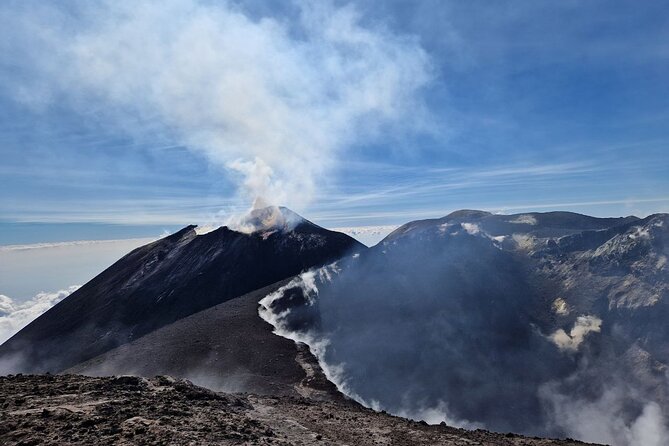
What I like most about the crater-rim portion is how the views are layered. You’re not just staring at one hole in the ground. You’ll face the Northeast crater up close, while also admiring the famous Southeast crater from your side. It’s the kind of perspective you simply don’t get from most bus tours.
What you should mentally prepare for
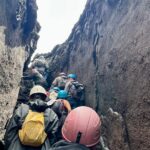
This isn’t a stroll. You’re walking at altitude, on volcanic ground that can be loose (including fine ash in parts of the day). If you’ve only done easy hikes, plan time to adjust your breathing and rhythm. Guides build in breaks, but you should still expect a steady effort.
A few we would gladly point a friend toward in Sicily

Top-of-mountain geology: steam, bombs, and sulfur color
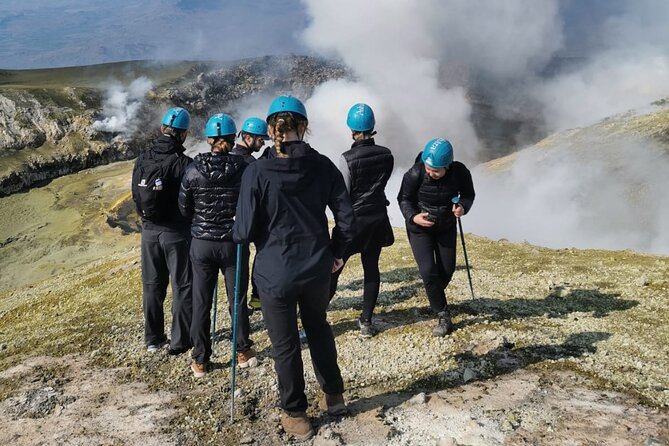
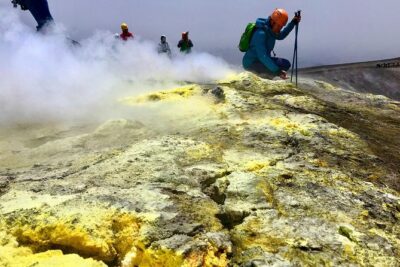
Once you’re up at the summit area (around 2,825m again for the visit segment), you shift from pure climbing into geology watching. Expect the volcanic environment to feel active: gas emissions, steam-type features, and the visual texture of the ground.
You’ll also see volcanic bombs—rounded chunks formed by past eruptions—and you’ll notice the ground can look oddly sparkly or bright because of sublimation of elements, especially sulfur. It’s one thing to read about mineral chemistry. It’s another thing to stand where it’s happening.
Then you’ll get guided explanations during the pauses: how Etna forms, how the volcanic features develop, and what you’re seeing right then on the ground and in the air. On several guides’ days, people highlighted the way the explanation stays clear and practical, not just lecture-style.
If you’re the type who likes to understand what you’re photographing, this part is where you’ll feel the most payoff.
The descent: fine ash, panoramic coast views, and guided pacing
After the summit crater experience, the path of descent takes you back down. The ground can include fine volcanic ash and slag, which changes traction and footing compared with normal trail dirt. The good news is that you’ll have walking sticks and you’re wearing trekking boots and a helmet, so you’re set up for stability.
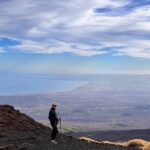
The descent is also described as very panoramic. As you move down, you get wider views back toward the Sicilian coast, and the breaks keep the experience from becoming one long grind.
One safety note that’s worth taking seriously: a guide has full responsibility for group wellbeing. In one snowy-weather situation, a guide made a call to turn part of the group back when conditions and footing weren’t working for everyone. If you have any concerns about altitude, breath control, or slipping risk, listen early and don’t treat it as a personal challenge issue.
Guides and safety: why the best days feel calm
This trek is built around an experienced volcanological/alpine guide and an insurance-covered setup. The included gear—boots, helmet, and sticks—isn’t just comfort. It’s part of risk management on steep, volcanic ground.
The strongest praise in the feedback focuses on how the guides run the day:
- Antonio is frequently mentioned for being informative, funny, and very attentive to safety.
- Massimo is praised for clear crater knowledge and a calm, careful approach.
- Communication is also credited to team members like Mary, helping keep timing understandable.
You’ll also notice something important: this is a group trek with shared pacing. If you want unlimited flexibility, private guiding usually fits better. But within the group format, safety culture matters, and the guides’ focus on “everyone’s okay” shows up repeatedly.
Price and value: $78.10 plus the 60€ 4×4 ride
On paper, the cost is $78.10 per person, and that’s a reasonable price for a guided summit-crater outing that includes trekking gear and insurance. The big catch is the 4×4. You pay 60€ per person in cash on the spot for the vehicle transfer segments.
So what’s the value?
- You’re paying for guidance, climbing leadership, and specialized crater-area knowledge.
- You’re not paying for boots/helmet/sticks separately (they’re included).
- The day is designed around a summit access route, which is hard to replicate on your own without local expertise.
Also worth noting: the summit walking portion includes the admission ticket, while the earlier vehicle segment is listed as admission not included. In practice, this means you’re not just trekking to a random point—you’re being taken into the areas that require permission.
If you’re budget-planning, just treat your likely total cost as the listed tour price plus the 60€ cash for 4×4.
Weather, restrictions, and why your day can change
Etna access isn’t always a simple checklist. This activity requires good weather. If it’s canceled due to poor weather, you’ll be offered a different date or a full refund.
And even when the weather is okay, volcanic conditions can affect what’s possible. In one account, high volcanic activity prevented touring north and the summit, but the team provided an alternative plan so the day still worked as an experience. That flexibility can matter because it lowers the odds that you’ll end up with nothing but disappointment.
Who should book this trek (and who should skip it)
This trek is best for people with moderate physical fitness. You should be comfortable with uphill walking, altitude adjustments, and footing changes on volcanic ash/slag. The total time is about 5 hours, with structured segments that balance driving and hiking.
It’s not recommended for people with asthma or heart problems, based on the tour’s own guidance. If either of those applies to you, I’d treat this as a hard stop rather than a “maybe” activity.
Because groups max out at 20 and the hike is guided, it suits visitors who want a structured, safe, information-heavy Etna day. If you’re traveling with limited hiking experience or you prefer lots of self-paced wandering, consider whether private guiding would better match your style.
Should you book the Etna North summit-craters trek?
I’d book it if you want the real Etna feeling: crater-edge walking, multiple summit-crater perspectives, and guided geology explanations with practical safety support. The included gear is a genuine convenience, and the north-side approach gets you toward elevations many visitors never reach.
I’d be more cautious if you hate strict group pacing or if you’re sensitive to altitude and unstable footing. Also, if you travel in winter or shoulder seasons, understand that conditions can turn fast, and guides may need to prioritize safety over “pushing on.”
If your goal is summit-crater access with professional leadership, this is a solid choice. Just budget for the extra 4×4 cash, show up ready to walk, and listen closely to your guide’s guidance on pace and footing.
FAQ
What time does the Etna North guided trek start?
It starts at 8:00am.
Where is the meeting point for this tour?
The meeting point is Piano Provenzana – Etna nord, via Provenzana, 95015 Linguaglossa CT, Italy.
How long does the trek last?
The duration is listed as about 5 hours.
Is the tour in English?
Yes, the tour is offered in English.
What gear is included?
You get hiking boots, a helmet, and walking sticks, plus insurance and a volcanological/alpine guide.
Do I need to pay extra for the 4×4?
Yes. 4×4 tickets are not included. You pay 60€ per person in cash on the spot.
Who is the trek suitable for, and who should avoid it?
It’s for people with moderate physical fitness. It’s not recommended for people with asthma or heart problems.
What’s the cancellation rule if weather is bad?
You can cancel for a full refund up to 24 hours before the experience starts. The activity requires good weather; if canceled due to poor weather, you’ll be offered a different date or a full refund.
More Guided in Sicily


More Tour Reviews in Sicily

More Etna Summit Treks We Have Walked
Just added: the newest Sicily tours in our notebook
- Etna / Taormina★ 5.0 · 3 reviews
- Bikes★ 5.0 · 3 reviews
- Taormina shore tour – for small group cruise passengers★ 5.0 · 3 reviews
- Vegan Cooking Class in Catania with Lunch and Dinner★ 5.0 · 3 reviews
- Make & Taste Sicilian Desserts in Palermo – Learn Cannoli & More★ 5.0 · 3 reviews
- Sicilian Villages & Ricotta Tasting – including Lunch from Cefalu★ 4.0 · 3 reviews
Mount Etna Tours & Summit, compared.
 ★ 4.8Catania: Mount Etna Morning or Sunset Day Trip with TastingFrom $704,028 reviews
 ★ 4.8Catania: Sunset Jeep Tour of Mount Etna and Lava Flow CavesFrom $712,113 reviews
 ★ 4.8Etna and Alcantara Gorges Full-Day Tour with LunchFrom $1051,766 reviews
 ★ 4.7Etna: summit craters trekking with volcano guide 3350mtFrom $771,712 reviews
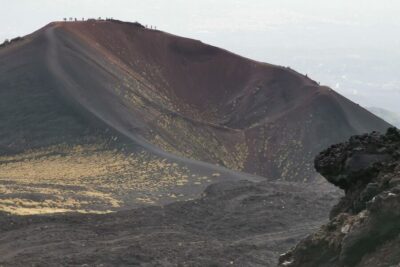 ★ 4.9Catania: Mount Etna Trekking Tour Beyond the Tourist TrailsFrom $811,596 reviews
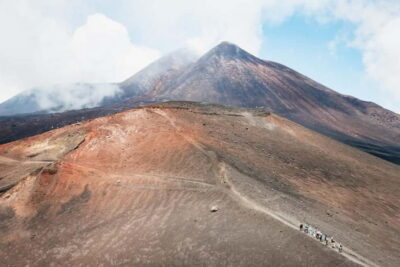 ★ 4.8Mount Etna: Guided Trek 3,000 Meters to the SummitFrom $1131,407 reviews
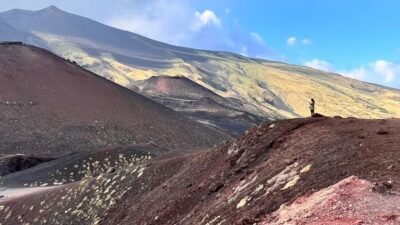 ★ 4.8Catania: Etna Sunset Tour with Pickup and Drop-offFrom $711,348 reviews
 ★ 4.8Etna Sunset Tour: Volcano trek, Cave & tasting from CataniaFrom $701,290 reviews
Browse the lists this tour appears in