
Reviewed · MUSEUMS
Tecnoparco Archimede Museum Exhibition Ticket
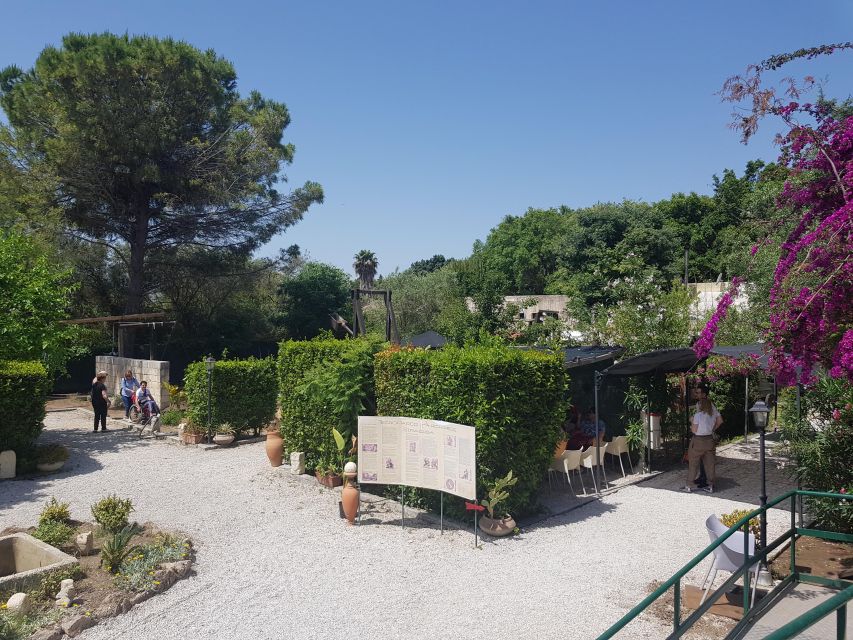
Sicily turns math into machines. In the Archimede Museum Exhibition you get a guided tour (Italian and English) plus multilingual audio, and I especially love the 1:1 scale replicas and the hands-on way the war machines are explained. The main thing to plan for is heat—bring water and look for shaded spots during your time there, because it’s easier to enjoy the details when you’re comfortable. Even with a private group, you’ll still want to pace yourself.
Highlights that actually matter: a scientific guide walks you through Archimedes’ discoveries and inventions, and you see how his ideas were tied to the defense of Syracuse from the Romans. If you’re lucky with timing, guides like Erika and Martina have a knack for keeping kids engaged while still staying precise and focused.
In This Review
- Key points to know before you go
- Where this Archimedes museum sits in your day (and why it’s smart)
- Start with the mechanics: levers, pulleys, winches
- The centerpiece: Archimedes’ war machines and Roman defense of Syracuse
- How lifting machines turn strength into motion
- Hydrostatics: Archimedes’ screw, experiments, and water power
- Burning mirrors: the most famous invention, shown in models
- Water clocks: timing, measurement, and real-life applications
- What the guidance and audio setup really gives you
- Replicas that feel real: what 1:1 scale changes
- Who this museum suits best
- Price and value: why $9 can feel like a bargain
- Quick planning tips so you enjoy it more
- Should you book Tecnoparco Archimede Museum Exhibition Ticket?
- FAQ
- FAQ
- How long is the Tecnoparco Archimede Museum Exhibition Ticket?
- Where is this museum located?
- How much does the ticket cost?
- Are the tours guided?
- What languages are offered for the guided tour?
- Is an audio guide included?
- What will I see in the exhibition?
- Are the replicas to scale?
- Is it wheelchair accessible?
- Is food included?
Key points to know before you go
- 1:1 natural-scale replicas so you can judge size, leverage, and “how it would feel” rather than guessing from small models
- Six themed zones that move from basic mechanics to war machines to water technology
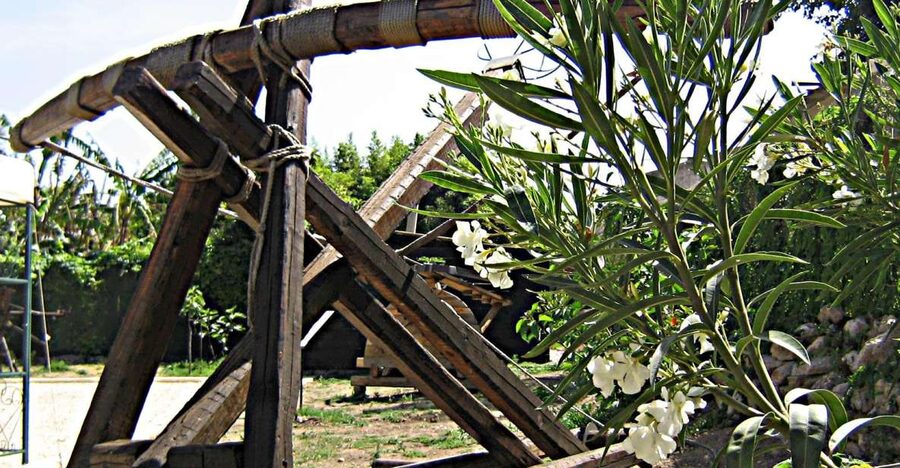
- War-focused section on Roman-era engines like catapult, ram, crossbow, scorpion, onager, and ballista
- Two different burning mirror models in the famous “sun weapon” area
- Audio guide support in multiple languages alongside the live English/Italian guide
- Great fit for families because the explanations keep shifting from theory to visible mechanics
A few we would gladly point a friend toward in Syracuse
- Catacomb of St. John: Entrance ticket and guided tour with VR viewer
★ 4.0 · 34 reviews - Syracuse: Entry ticket and guided tour of the Catacombs of Saint Lucia
★ 4.0 · 25 reviews - Syracuse: Cathedral Admission Ticket.
★ 4.0 · 9 reviews - Syracuse: Cathedral entrance ticket with VR viewer experience
★ 4.7 · 4 reviews
Where this Archimedes museum sits in your day (and why it’s smart)
Tecnoparco museo di Archimede is a permanent exhibition in Sicily built around Archimedes’ technical world, especially the ideas he contributed around the 3rd century BC. The ticket is priced around $9 per person and the visit is designed to fit into a 1-day stop. For the money, you’re not just paying for a room of static pictures—you’re paying for a guided, structured look at how different machines work.
What makes this kind of stop valuable is that it doesn’t ask you to be an engineer to understand it. Even if you’re starting from zero, the museum breaks technology into bite-size categories: levers and pulleys, lifting cranes, hydrostatics, burning mirrors, and water clocks. You can walk through it like a science lesson, but with objects you can see at real proportions.
One practical note: your visit includes the guide and the audio tools, but it does not include food or drinks, and it also doesn’t cover transport to and from the museum. If you’re pairing this with other sites in the area, give yourself buffer time for travel and plan a snack outside the experience.
Start with the mechanics: levers, pulleys, winches
The tour kicks off in the educational zone focused on levers, pulleys, and winches. This section is where you build your “mental toolkit” for everything that comes next. In a museum like this, the danger is getting stuck in names—lever, pulley, winch—without feeling what changes. The structure here helps because you see how the basic principles scale up into bigger systems later.
Think of it like learning the alphabet before you read a paragraph. Once you understand the leverage logic, it’s much easier to follow why later machines need certain beams, certain tension, and certain moving parts. You also get a clearer sense of what Archimedes was doing: solving practical problems with mechanics rather than relying on magic.
If you’re traveling with kids, this early area is often the easiest on attention. Simple mechanical components give you quick “aha” moments before the museum turns to warfare and heavy engineering.
The centerpiece: Archimedes’ war machines and Roman defense of Syracuse
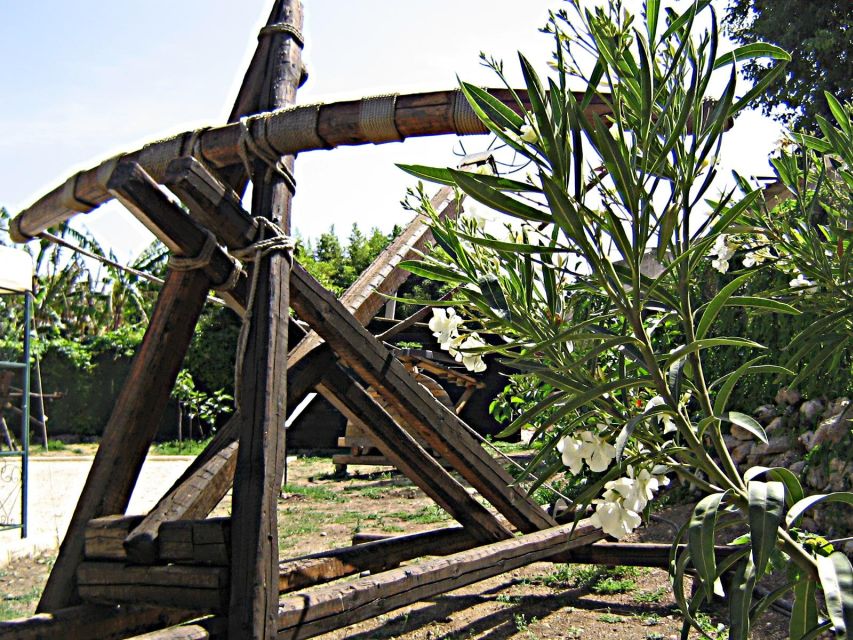
The museum’s most dramatic zone is the teaching section dedicated to Archimede’s war machines. This is where the exhibit shifts from building blocks to battlefield-sized technology. You’ll encounter replicas and scale reproductions of engines such as the catapult, ram, crossbow, scorpion, onager, and ballista. The goal isn’t to make you an expert in weapons; it’s to show how engineering decisions support defense.
This is also where the live guide matters most. A scientific guide doesn’t just list parts. They connect the design to purpose: range, impact, stability, and the realities of operating a machine in a siege setting. The tour highlights how Archimedes defended Syracuse from Roman attack, and you’ll feel the narrative link between invention and strategy rather than treating each machine as a separate artifact.
One consideration: if you dislike war-related topics, you might want to brace yourself for the tone of this section. The museum frames these devices through engineering and defense, but the subject is still weapons. If you’re bringing young kids, it helps that the guides often know how to explain safely and keep it educational.
How lifting machines turn strength into motion
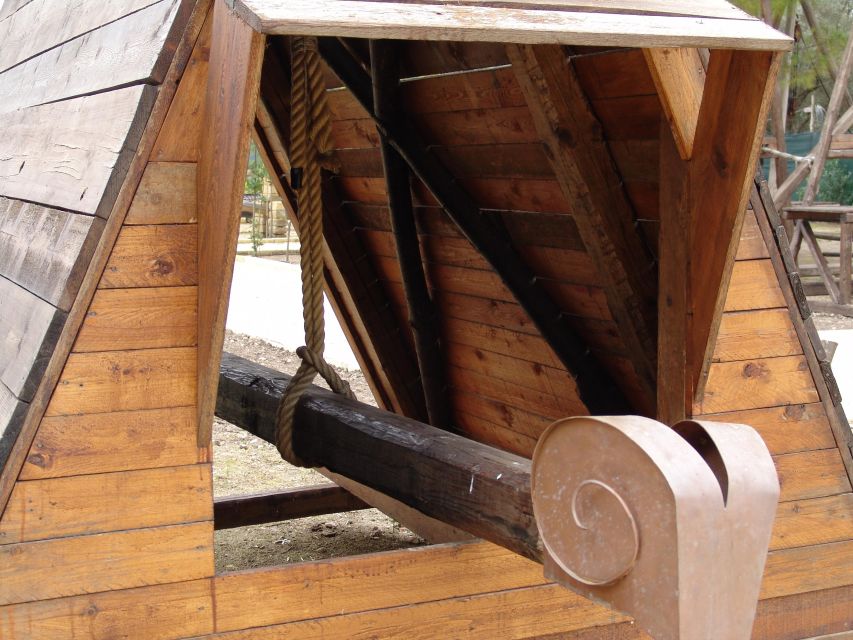
After the war machines, you move into lifting machines, including two crane types and something called manus ferrea. The teaching focus here is different. Instead of asking how to throw force at a target, the question becomes: how do you move weight, reposition structures, and control heavy movement.
This part is a nice reset because it’s less about weapons and more about motion and handling. Lifting technology also connects to everyday engineering logic. Once you understand how a crane changes direction and leverage, you start seeing patterns across the exhibit—how systems reuse the same mechanical principles in different contexts.
For adults, this section can feel like the “missing link” between early mechanics and later hydrostatics. It’s a bridge from simple devices to complex systems that require coordinated movement and careful geometry.
A few we would gladly point a friend toward in Syracuse
Hydrostatics: Archimedes’ screw, experiments, and water power
The section on hydrostatics is one of the most rewarding parts for people who like practical science. Here you’ll see the Archimedes screw, experiments built around Archimedes’ principle, and Corobats (tools and approaches connected to leveling and measurement). You also encounter presses and worm screws, which help show how Archimedes’ ideas span multiple applications.
Why this zone is so valuable is that it changes what “technology” means. In many history museums, machines look like either weapons or curiosities. Here, water management and measurement become central. You’re essentially looking at how someone could move water, measure surfaces, and engineer systems that work with gravity and flow.
If you’re the kind of traveler who likes a museum that makes you think, this is where it clicks. You start to notice how the museum’s layout supports that shift. The hydrostatics section doesn’t feel random. It’s the science behind the later water-clock zone and it echoes the overall theme: problem-solving using mechanics.
Burning mirrors: the most famous invention, shown in models
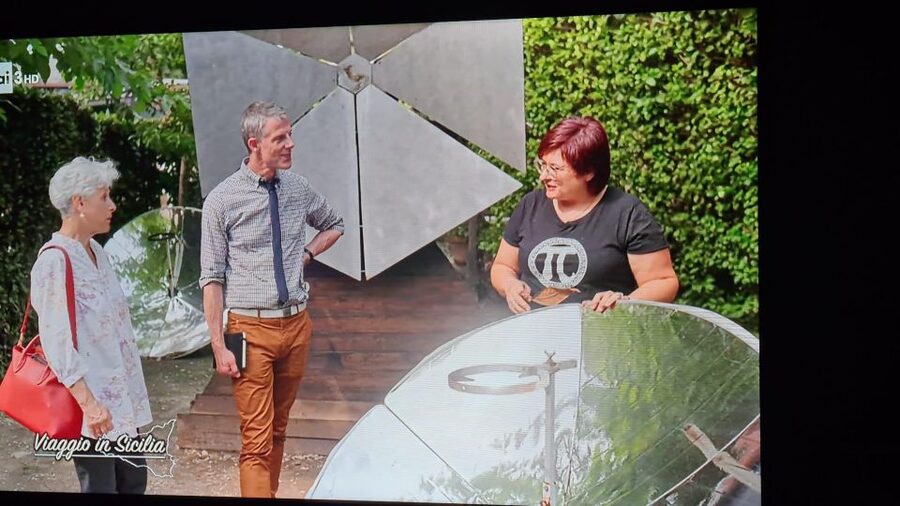
No Archimedes museum write-up is complete without the burning mirrors area. In this exhibit section, you can see two different models of this famous concept. It’s framed as an educational zone, which helps because the goal isn’t just to hear a legend. You’ll be directed through what the invention is supposed to do, and you can study the design as an object rather than an idea only.
The burning mirror section can be a highlight for two very different reasons. If you’re into optics and physics, it’s a chance to see how form matters. If you’re traveling with kids, the concept of sun power tends to grab attention fast, and the guided explanations keep it from becoming a story without substance.
If you’re sensitive to “myths versus reality” debates, keep an open mind here. The museum treats it as part of Archimedes’ invention world and gives you the structure to understand why it captured imaginations in the first place.
Water clocks: timing, measurement, and real-life applications
The final educational section focuses on water clocks and different applications connected to the Archimedes screw. This is a great end point because it wraps technology into something daily and measurable: time. When you’re finished, you’ll have a better sense of why water management and mechanical measurement show up again and again in the museum.
Even if you don’t remember every component name, you’ll likely remember the experience of seeing how systems control flow and turn it into a readable result. Water clocks are a reminder that engineering is not just about power. It’s about measurement, repeatability, and function.
For your last stretch, it helps to slow down. The earlier parts can feel busy because you’re learning categories. In the water-clock zone, you can settle into the idea that each machine is solving a specific problem with the same general toolkit: leverage, motion, control, and water.
What the guidance and audio setup really gives you
This ticket includes a guided tour in Italian and English, led by a scientific guide, with multilingual audio guides available in English, French, German, Russian, Spanish, and Portuguese. Audio support matters here because technology and names can move fast when you’re standing in front of moving parts. You can keep up without losing what the guide is connecting.
The museum also runs the experience as a private group. That’s an underappreciated detail. A private setting can mean your guide spends more time clarifying for the people in front of them rather than sticking to a fixed script. In practice, that’s often where families feel the biggest difference—kids can ask questions, and the explanation can shift to match their pace.
From the reviews, guides like Erika and Martina are specifically praised for enthusiasm and preparation, and that’s a big deal in a museum of technical machines. When the guide is invested, you don’t just see replicas. You understand what you’re seeing.
Replicas that feel real: what 1:1 scale changes
One of the most praised aspects is that the replicas are in 1:1 natural scale. This matters more than it sounds. Small models can trick your brain. If a machine looks tiny, your mind assumes it must be simple or symbolic. At natural scale, you instantly register the seriousness: the bulk, the leverage, the effort behind positioning, and the sense of physical “weight” behind each component.
This also changes how you evaluate the story about defense strategies. Syracuse wasn’t defended by a neat gimmick. It was defended (as the museum frames it) through engineering choices. Natural scale helps you take that narrative seriously because you can see the machines as they would have to be: practical and built for use.
Who this museum suits best
This experience fits best if you like hands-on explanations, science in object form, and a clear structure. It’s a strong choice for:
- Families with kids who enjoy mechanisms and stories about inventions
- Travelers who want something different from the usual “church and view” routine
- Adults who enjoy engineering, optics, water systems, or the logic of siege-era design
- Anyone who likes learning history through technology rather than dates and names
If your idea of a perfect museum is mostly artwork or quiet atmosphere, you might find the war-machine sections intense. But the museum is built to be educational and guided, not sensational.
Price and value: why $9 can feel like a bargain
At roughly $9 per person, the value is strong because you’re getting three things that usually cost more separately: a live guide, a structured tour across multiple thematic zones, and a museum designed around real machines instead of flat displays. You also get audio guide coverage in multiple languages, which extends the experience beyond the live guide’s two languages.
The main cost you’ll manage yourself is time. You’ll want a full visit window to see all six areas without racing. Add local transport time and don’t rely on snacks being on site. If you plan around those simple gaps, the ticket can feel like an efficient, smart use of a day in Sicily.
Quick planning tips so you enjoy it more
- Bring water and dress for heat. The museum experience can feel better when you’re not fighting the weather.
- Wear comfortable shoes. Natural-scale machinery usually means more standing, walking, and looking up.
- If you’re traveling as a family, use the early mechanics zone as your warm-up. It helps kids build confidence before the big machines.
- If you want the story thread (defense of Syracuse), stay with the guide’s flow through war machines instead of skipping ahead.
Should you book Tecnoparco Archimede Museum Exhibition Ticket?
If you want a Sicily stop that’s different from the usual sightseeing loop, I’d book it. The 1:1 replicas, the six themed areas, and the live science guide combine into a tour that explains technology in a way that clicks fast. Guides like Erika and Martina are highlighted for enthusiasm and clear teaching, and that matters a lot when you’re surrounded by complex machinery.
I’d hesitate only if you’re not into engineering topics at all, or if war-machine content would put you off. Otherwise, this is a solid value day: structured, guided, and genuinely practical in how it teaches you to look at machines and understand why they exist.
FAQ
FAQ
How long is the Tecnoparco Archimede Museum Exhibition Ticket?
The ticket is valid for 1 day, and you can visit within the available starting times.
Where is this museum located?
It’s in Sicily, Italy.
How much does the ticket cost?
The price is $9 per person.
Are the tours guided?
Yes. You get a live guided tour by a scientific guide.
What languages are offered for the guided tour?
The guided tour is offered in English and Italian.
Is an audio guide included?
Yes. Multilingual audio guides are included (English, French, German, Russian, Spanish, Portuguese).
What will I see in the exhibition?
You’ll see replicas and models related to Archimedes, organized into six thematic areas: Levers; War Machines; Lifting Machines; Hydrostatics; Burning Mirrors; and Water Clocks.
Are the replicas to scale?
Yes. The replicas are described as 1:1 natural scale.
Is it wheelchair accessible?
Yes, the experience is wheelchair accessible.
Is food included?
No. Food and drinks are not included in the ticket.
More Museums in Syracuse

More Tickets in Syracuse



More Tour Reviews in Syracuse





Just added: the newest Syracuse tours in our notebook
- Tour of Syracuse by Ape Calessino★ 3.0 · 3 reviews
- Syracuse Showdown Scavenger Hunt★ 5.0 · 3 reviews
- Sicily Boats Avola: Plemmirio boat tour 4 people 4 hours★ 5.0 · 3 reviews
- Groovy Geneva Scavenger Hunt★ 5.0 · 3 reviews
- Syracuse: Ortigia & Sea Caves Boat Tour with Local Skipper★ 5.0 · 3 reviews
- Siracusa: Neapolis’s Archaeological Park small group tour★ 5.0 · 3 reviews
Museums, compared.
 ★ 4.7Guided tour of the Trapani Salt Pans and Salt MuseumFrom $21423 reviews
 ★ 5.0Guided tour of the salt pans of Trapani and the Salt MuseumFrom $21188 reviews
 ★ 5.0Tile Museum – Majolica Museum – Rooms at the GeniusFrom $1885 reviews
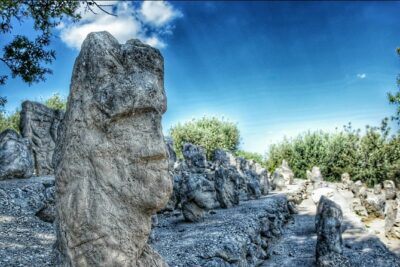 ★ 3.5Enchanted Castle of Sciacca – Museum TicketsFrom $763 reviews
 ★ 4.7Palermo: Tour of Church of the Gesù & Casa Professa MuseumFrom $935 reviews
 ★ 4.1Syracuse: Museum Guided Tour with Sicilian Puppet showFrom $7327 reviews
 ★ 5.0Saline Culcasi Full Immersion : From the Museum to the Salt CollectionFrom $3223 reviews
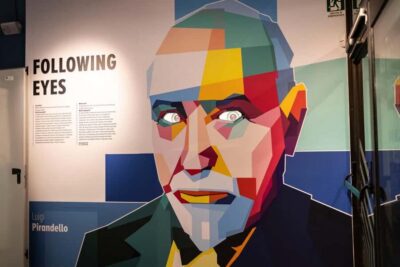 ★ 4.5Palermo Museum of Illusions: an interactive experience for all agesFrom $1820 reviews
Browse the lists this tour appears in