
Reviewed · NOTO & BAROQUE TOWNS
Ragusa Ibla: Walking Tour with Local Guide
Ragusa Ibla packs baroque drama in two hours. This walking tour threads you through the historic center of Ibla, starting at the Portal of San Giorgio and ending at the cathedral, with stops that connect architecture, art, and local life in a tight loop.
I love the Portal of San Giorgio for how it captures Sicily’s mix of styles and survives the town’s worst days. I also love the reset of the Ibleo Garden right in the middle of the walking route.
If stairs make you grumble, this may be a small drawback: the route includes an imposing staircase at the cathedral, and the tour focuses on Ibla rather than pushing up to the higher Ragusa Superiore viewpoints.
In This Review
- Key points to know before you go
- Portal of San Giorgio: the archway that survived
- Ibleo Garden and San Giacomo: calm shade, serious art
- Ragusa Ibla alleys: where Baroque masks and balconies do the talking
- The Conversation Circle (Caffè dei Cavalieri): a neoclassical pause
- Church of S. Giuseppe: majolica floor and a cathedral-like face
- Cathedral of San Giorgio: staircase, 18th-century paintings, and St. George
- Pacing, timing, and shoe advice for a 2-hour Ibla loop
- Price and value for a private group up to 15
- Who this tour suits best (and who should plan differently)
- Should you book Ragusa Ibla: Walking Tour with Local Guide?
- FAQ
- How long is the Ragusa Ibla walking tour?
- Where does the tour start?
- Where does the tour end?
- What is included in the price?
- What isn’t included?
- Is this a private group tour?
- How many people can be in a group?
- What languages are available?
- How much does it cost?
- What is the cancellation policy?
Key points to know before you go
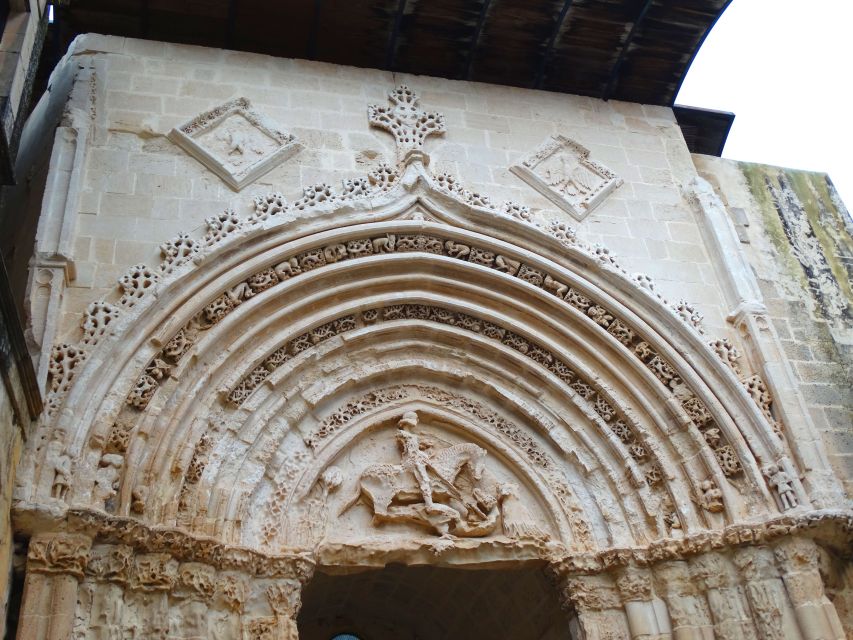
- Portal of San Giorgio (Gothic-Catalan style) in light pink stone, with St. George vs. the dragon in the center
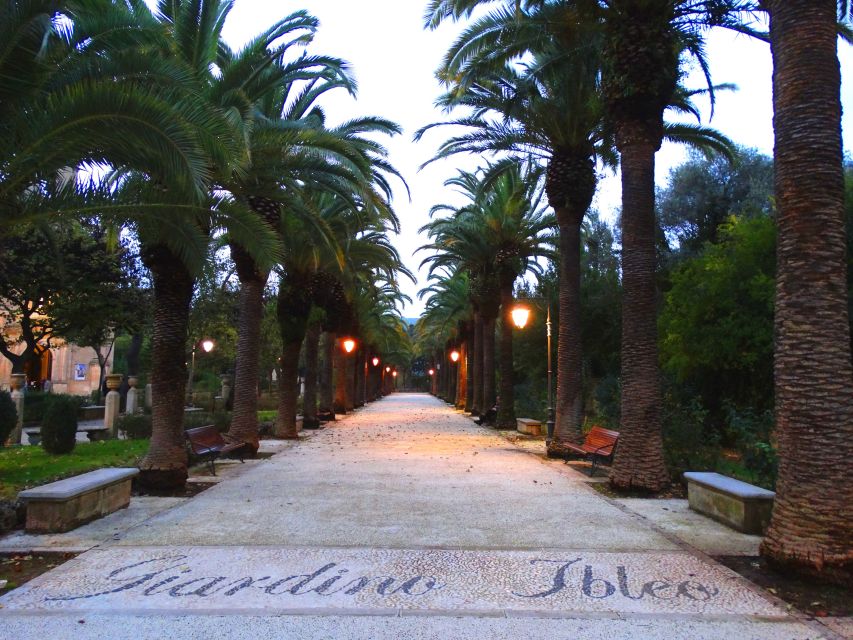
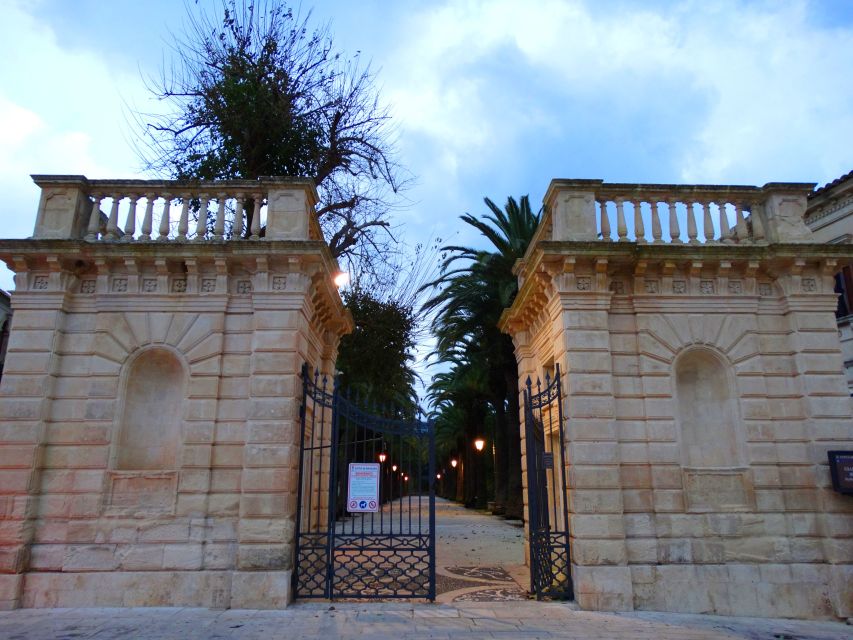
- Ibleo Garden, the oldest in Ragusa, with a palm-lined avenue of 50 trees and fountains (including one shaped like Sicily)
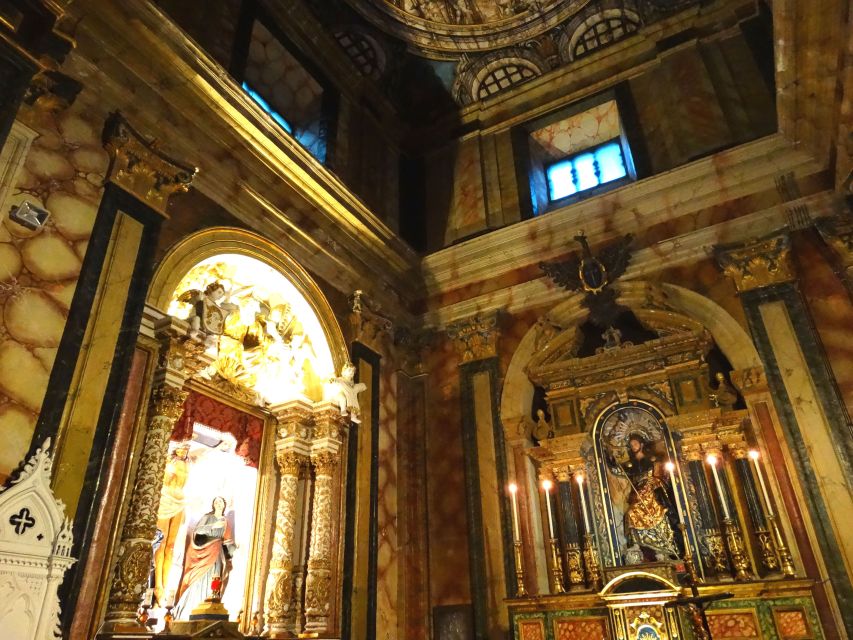
- Church of San Giacomo, set on an ancient temple with a wooden ceiling, Corinthian columns, statues, and prized paintings
- Conversation Circle (Caffè dei Cavalieri), a neoclassical 19th-century meeting place for Ragusan nobles
- Church of S. Giuseppe, Baroque and designed to mirror the cathedral’s feel, with a colored majolica interior floor
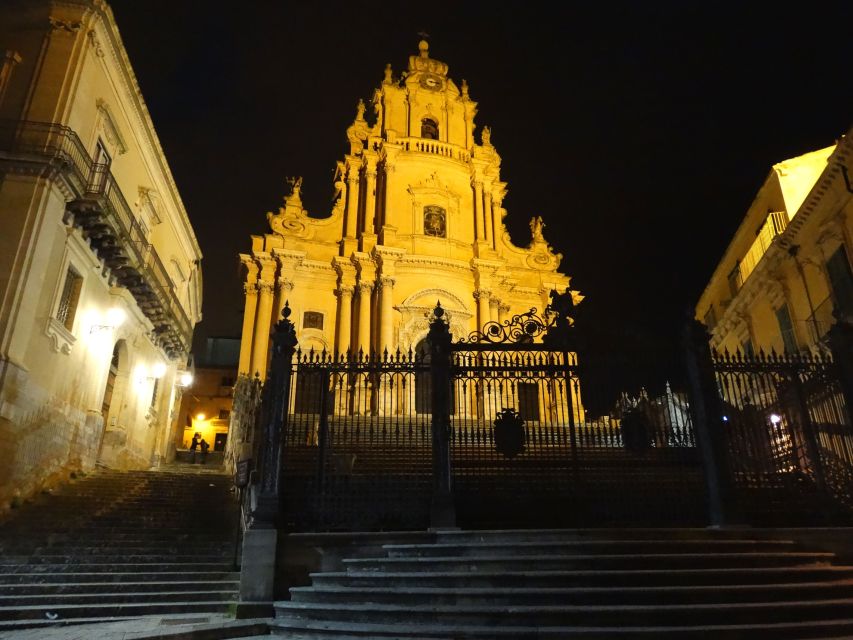
- Cathedral of San Giorgio, reached via an imposing staircase, with 18th-century paintings, a large pipe organ, and a St. George reliquary statue
More of the baroque south-east
- 3-hour walking tour Discovering Ragusa Baroque
★ 5.0 · 51 reviews - Ragusa: Private Cooking Class at a Local’s Home
★ 4.9 · 13 reviews - Ragusa: Dining Experience at a Local’s Home
★ 4.9 · 12 reviews - Olive Oil Tasting & Historic Olive Mill Tour in Ragusa area
★ 5.0 · 9 reviews
Portal of San Giorgio: the archway that survived
Your tour starts at the meeting point by the Portal of San Giorgio on Via dei Normanni, in front of the restaurant Risìu. The guide has a visible license badge around the neck, which makes it easy to spot the right person fast.
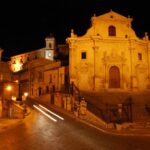
This first stop sets the tone for all of Ragusa Ibla. The portal is in a Gothic-Catalan style, built with light pink stones, and it’s famous for surviving the earthquake that destroyed much of the town. In the central panel, you’ll see the fight between St. George and the dragon, which is more than decoration here—it’s part of the town’s identity and its religious iconography.
If you’re the type who usually walks past facades without reading them, this is a great place to start. You’ll get a quick sense of what you’re looking at, so the rest of the walk feels like a guided story instead of a list of buildings.
Ibleo Garden and San Giacomo: calm shade, serious art
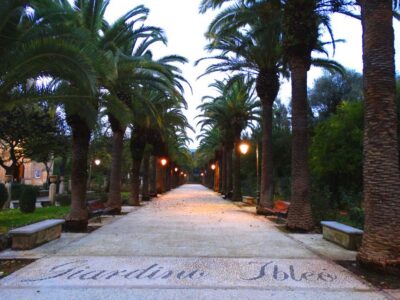
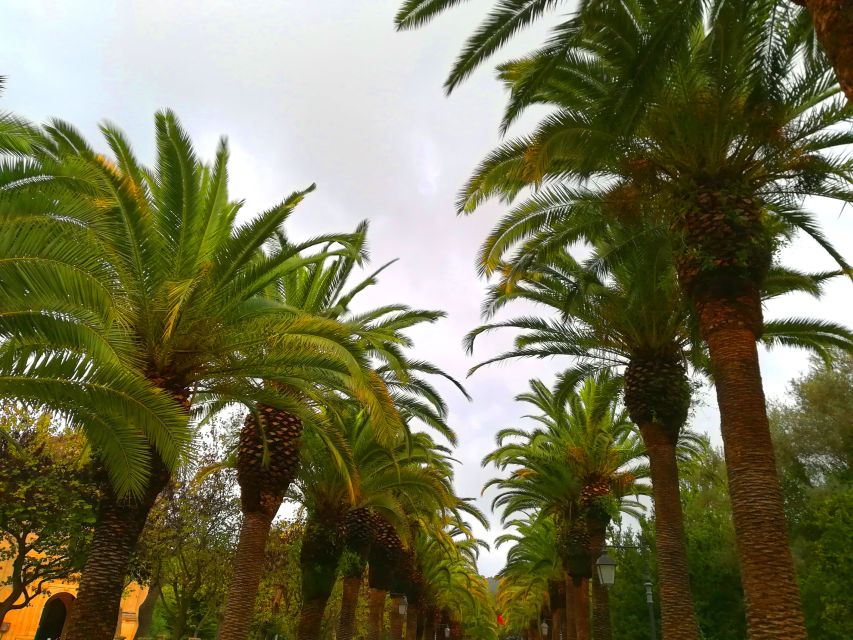
A few steps away is the entrance to the Ibleo Garden, the oldest garden in Ragusa. It was built in the 19th century and sits above the Irminio Valley and the Iblei Mountains, so even when you’re still in town, it feels like you’re stepping into a different pocket of Sicily.
What I like most is the contrast. One moment you’re on narrow streets; the next you’re under the shade of ancient trees and exotic plants. You’ll notice an avenue of 50 palm trees leading in, plus an elegant balcony that borders the garden. It’s a very “locals know where to breathe” kind of stop.
Inside, there are fountains with standout details: one is shaped like Sicily, and there’s also a monument to the fallen of the Great War. There are even churches within the garden, which helps the place feel less like a park and more like a spiritual and cultural refuge.
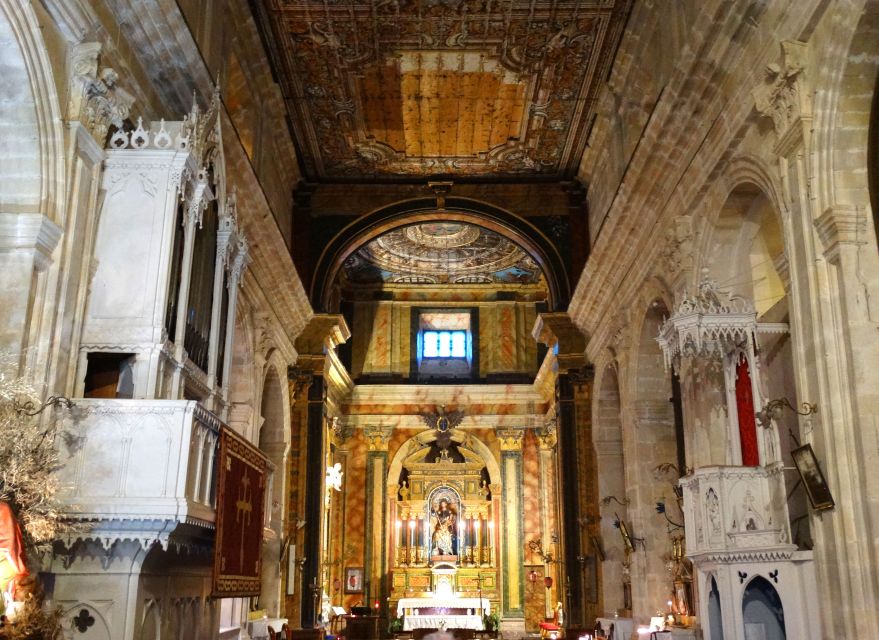
From the garden, you move to the Church of San Giacomo. It sits on an ancient temple, and the interior does the heavy lifting: a wooden ceiling, Corinthian columns, statues, and precious paintings. If baroque churches can sometimes feel overwhelming, this one is a strong payoff because the features are varied enough to keep your attention without needing a museum-level explanation.
Ragusa Ibla alleys: where Baroque masks and balconies do the talking
After the garden, the tour swings back into walking mode through the historic center. Expect alleys, elegant Baroque-style buildings, and the kind of street rhythm that makes Ibla feel lived-in rather than staged.
You’ll look at palaces from the outside, including balconies supported by the kinds of decorative masks that are characteristic of the late Baroque style in this part of Sicily. You don’t need to know art history to enjoy this. It’s visual and immediate: stone details that show off, and a street layout that makes each turn reveal a new facade.
You’ll also pass through places that still make Ragusa function. There are Sicilian ceramics shops and artisan stores along the way, including shops where the famous Sicilian carts are still made. That matters, because it ties the pretty architecture to actual craft—not just sightseeing.
One practical thing: your guide can help you notice what to look for as you go. With a local, I love that you stop seeing buildings as background and start seeing them as choices—why a balcony faces the street, why a facade has certain motifs, why a church sits where it does.
The Conversation Circle (Caffè dei Cavalieri): a neoclassical pause
Mid-walk, you’ll visit the Conversation Circle, also called the Caffè dei Cavalieri. From the outside, it looks elegant and slightly formal, and that’s the point.
It’s a neoclassical building wanted in the 19th century by the nobles of Ragusa as an exclusive meeting point. The idea wasn’t casual coffee; it was a place for conversation, status, and social life. Even from outside, you can spot hints of the interior atmosphere: precious frescoes and chandeliers on the ceiling, plus mirrors that would have helped create that 19th-century shine.
This stop works well because it resets you again. You go from churches and stone symbolism into a building tied to daily social culture. It’s a reminder that Ibla isn’t just sacred space—it’s also where people gathered, argued, traded news, and built reputations.
Church of S. Giuseppe: majolica floor and a cathedral-like face
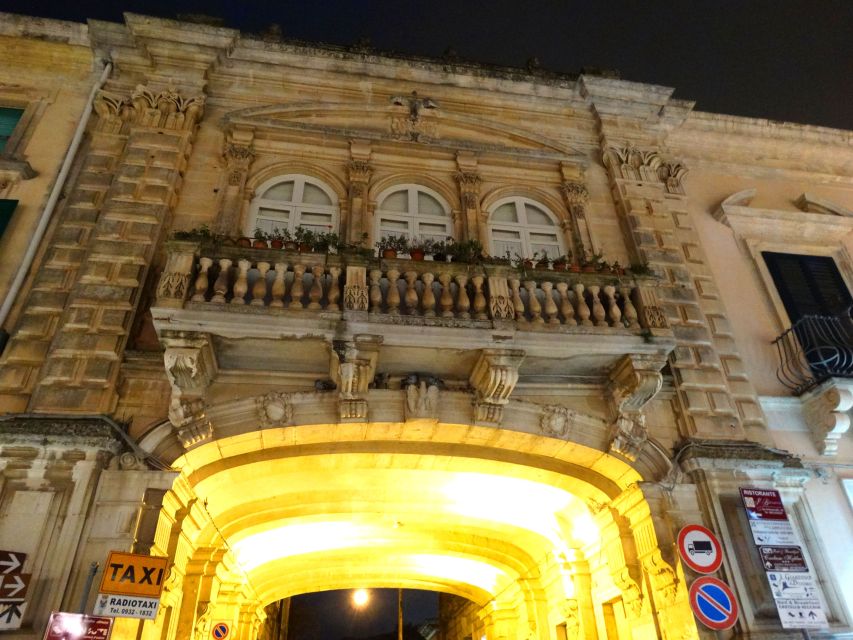
As the walk heads toward the Cathedral of San Giorgio, you’ll see the Church of S. Giuseppe. The facade is Baroque and designed to feel similar to the cathedral, which makes it a useful comparison point while you’re still on the move.
Inside, the highlight is the colored majolica floor. This is one of those details that makes you slow down. Majolica has a way of turning light into pattern, and it gives the church an easy-to-notice visual signature even if you’re not focused on the bigger art pieces.
Why I like this stop: it makes the cathedral finale feel earned. You’re seeing decorative choices build toward what you’ll get at San Giorgio—bigger scale, grander interior art, and the same “religion as art” mindset.
Cathedral of San Giorgio: staircase, 18th-century paintings, and St. George
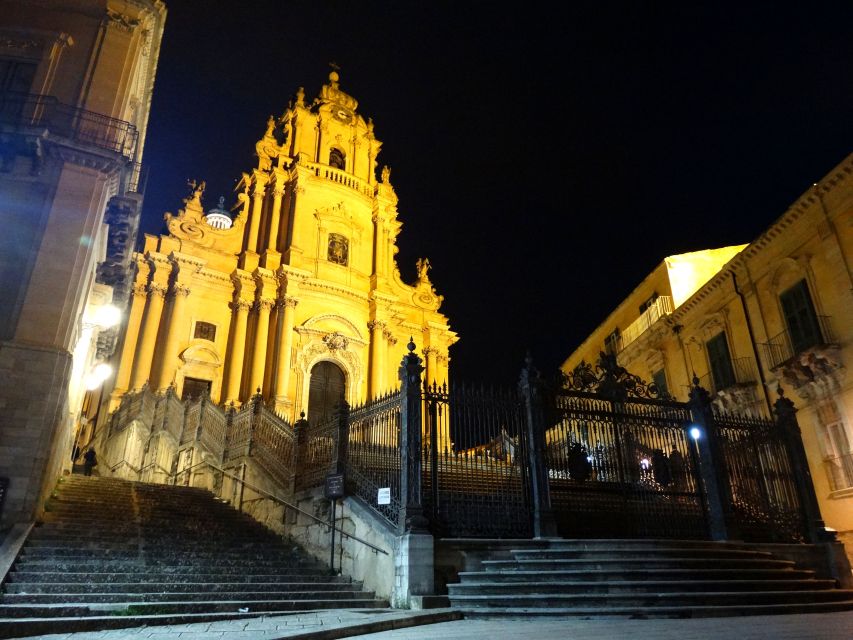
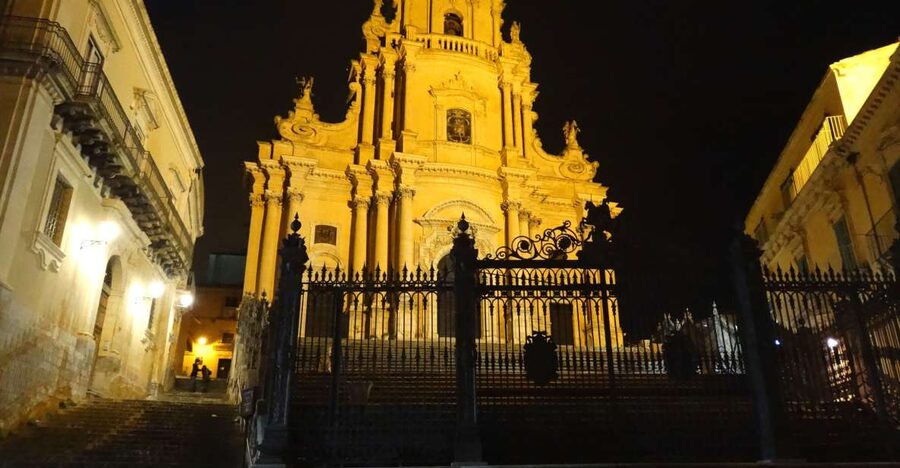
The tour ends at the Cathedral of San Giorgio, preceded by an imposing staircase. This is the part where Ibla goes full theatrical. Even before you enter, the setting in the highest part of the main square gives the cathedral a dominant presence.
Inside, you’ll see a mix of what makes this church special. There are paintings by 18th-century Sicilian masters, a large pipe organ, and a statue of St. George on horseback that includes his reliquary.
If you’re wondering whether this is worth saving for last, yes. The route is structured so you understand the town’s main symbols before you reach the biggest one. You start at St. George on the portal. Then you see how the church world spreads across Ibla. Finally, you arrive at San Giorgio with the full statement: art, craft, and religious power in one place.
Also, ask your guide to point out the key elements as you stand inside. These churches are easy to rush through if you don’t have a few “anchor points” to look for.
Pacing, timing, and shoe advice for a 2-hour Ibla loop
This is a 2-hour walking tour. That’s not long, so the pacing is usually efficient: you’ll spend most of your time at meaningful stops like the portal, garden, key churches, and the cathedral, with shorter walking segments between.
You’ll be on uneven historic streets and you should expect stairs at least at the cathedral. I’d plan on comfortable shoes, not delicate sandals. If your legs are sensitive, you can also manage your pace by pausing briefly at each main stop, letting your guide finish the essentials before you move on.
Because food and drink are not included, it’s smart to think about timing. If you’re going later in the day, you’ll likely want a light snack beforehand or a plan for after the tour.
Price and value for a private group up to 15
The price is $389.70 per group, up to 15 people, with starting times depending on availability. For a private guide, it can be good value—especially if you have a group that can actually fill the upper end.
Here’s the math that helps you judge value fast:
- At the full 15-person group size, that’s roughly $26 per person.
- If it’s just a small group, the per-person cost climbs, but you still get the advantage of a private, guided walk with a licensed guide.
What you’re really paying for isn’t just access. It’s context: why the portal survived, how the garden fits into the town’s religious landscape, and what makes each church interior worth stopping for instead of just snapping photos and moving on.
If you like guided walks where you leave with names and meaning—rather than only pictures—this tends to make sense. If you’re traveling solo and want the cheapest option, you may prefer self-guided time. But if you want a clean “greatest hits” loop in limited time, a private guide earns its keep.
Who this tour suits best (and who should plan differently)
This tour is a strong fit if you:
- want a high-quality overview of Ragusa Ibla without spending all day organizing routes
- enjoy churches but want someone to connect the details to the big picture
- like a mix of sacred sites, garden calm, and architecture
It may not be ideal if:
- you’re chasing the widest possible view prospects only from the high points (the focus here stays on Ibla)
- you need a tour with long, flat walking or minimal stairs (the cathedral has an imposing staircase)
A small practical tip: if you get a guide like Federica, you’re likely to get extra local pointers too, including where to eat nearby. Even if you’re not hunting for restaurants on the clock, it helps to ask one question while you’re already in the neighborhood.
Should you book Ragusa Ibla: Walking Tour with Local Guide?
I think you should book this tour if you want a smart, guided route that makes Ragusa Ibla feel understandable fast. The combination of the Portal of San Giorgio, the calming Ibleo Garden, and the finishing stop at Cathedral of San Giorgio gives you a satisfying arc in just two hours.
If your priorities are deep museum time or a long trek up and down multiple districts, then you might want to add extra self-guided exploring after. But as a focused introduction—especially for first-timers—this one is a solid choice.
FAQ
How long is the Ragusa Ibla walking tour?
The tour lasts 2 hours.
Where does the tour start?
It starts at the Portal of San Giorgio (Via dei Normanni street), in front of the restaurant Risìu.
Where does the tour end?
The tour ends back at the same meeting point where it began.
What is included in the price?
The tour includes a licensed tour guide.
What isn’t included?
Food and drink are not included, and there is no transfer/pick-up drop-off.
Is this a private group tour?
Yes. It’s a private group.
How many people can be in a group?
The price is per group up to 15.
What languages are available?
The guide offers the tour in Italian, English, French, and Spanish.
How much does it cost?
The price is $389.70 per group.
What is the cancellation policy?
You can cancel up to 24 hours in advance for a full refund.
More Tours in Ragusa


More Tour Reviews in Ragusa


More Baroque Towns to Reach

Just added: the newest Ragusa tours in our notebook
- Tour in the heady scents of our garden in Ragusa★ 5.0 · 4 reviews
- Sicily wine food tours from Ragusa★ 5.0 · 4 reviews
- Ragusa: Traditional Sicilian Cooking Class★ 4.4 · 5 reviews
- Ragusa Countryside Home Cooking Class & Meal★ 4.8 · 6 reviews
- Radici: IImmerse yourself in the heady scents of our garden★ 4.7 · 7 reviews
- Ragusa Ibla: Walking Tour with Local Guide★ 4.4 · 8 reviews
Noto & Baroque Towns, compared.
 ★ 4.6Catania: Syracuse, Ortigia, and Noto Tour with BrunchFrom $112404 reviews
 ★ 5.0Syracuse, Ortigia and Noto walking tour from CataniaFrom $129273 reviews
 ★ 4.7From Catania: Neapolis of Syracuse, Ortygia, and Noto TourFrom $130234 reviews
 ★ 4.4From Catania: Syracuse and Noto Culture and History TourFrom $80232 reviews
 ★ 3.9From Catania: Syracuse, Ortygia, and Noto Tour140 reviews
 ★ 4.7From Catania: Syracuse, Ortigia and Noto Full-Day TourFrom $113133 reviews
 ★ 4.8Noto, Modica and Ragusa: The Baroque Tour from CataniaFrom $124133 reviews
 ★ 4.4Catania: Noto, Modica and Ragusa Ibla Baroque TourFrom $101106 reviews
Browse the lists this tour appears in