
Reviewed · NOTO & BAROQUE TOWNS
3-hour walking tour Discovering Ragusa Baroque
Baroque everywhere in just three hours. This walk through Ragusa Superiore and Ragusa Ibla focuses on UNESCO-listed churches and late Baroque façades, including terrace viewpoints, ornate balconies, and grotesque masks.
Two things I love right away are the storytelling and the stop-by-stop pace. With guide Serena leading in English, you get clear explanations of what you’re seeing and why it matters, and you also build a great sense of the town thanks to the dramatic look down over Ibla.
One consideration: you’ll climb and descend a lot of stairs, and this tour is not recommended for reduced mobility because of the steps.
In This Review
- Key highlights you’ll feel in real life
- Why Ragusa’s Baroque feels different when you walk it
- Start at San Giovanni Battista: terrace views and patron-saint stories
- Santa Maria delle Scale: stairs, the Ibla panorama, and earthquake-era clues
- The late Baroque balcony sequence: masks and grotesque faces you’ll remember
- Chiesa di Santa Maria dell’Itria and Palazzo Cosentini: connected sacred spaces
- Duomo di San Giorgio: the façade with stairs and the saint’s feast
- The café of the knights and the Benedictine church oval interior
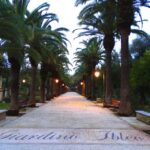
- Giardini Iblei: the green lung moment in the middle of Baroque
- Steps, time of day, and who should choose a different plan
- Price and value: what $78.44 buys you in Ragusa
- Getting the most out of it: practical tips I’d use
- Should you book Discovering Ragusa Baroque?
- FAQ
- How long is the Discovering Ragusa Baroque walking tour?
- Where does the tour start and where does it end?
- What is the price per person?
- Is the tour offered in English?
- Are there admission tickets included, and are the stops free?
- How many people are in the group?
- Is this tour suitable for people with reduced mobility?
- Do I need a printed ticket?
- Is the tour dependent on weather?
- Can I get a full refund if I cancel?
Key highlights you’ll feel in real life
- Small group size (max 10): easier questions, less rushing.
- UNESCO Baroque circuit: churches and façades that look like they belong in a single, continuous story.
- Terraces, balconies, and grotesque masks: Ragusa’s decorative language is the main character.
- Ibla views and a garden break: the route gives you both stone drama and greenery.
- Multiple churches, plus possible interior visits: depending on time of day and season, you may see interiors too.
- Pop-culture bonus for Inspector Montalbano fans: a café tied to filming scenes fits right into the walk.
More of the baroque south-east
- 3-hour walking tour Discovering Ragusa Baroque
★ 5.0 · 51 reviews - Ragusa: Private Cooking Class at a Local’s Home
★ 4.9 · 13 reviews - Ragusa: Dining Experience at a Local’s Home
★ 4.9 · 12 reviews - Olive Oil Tasting & Historic Olive Mill Tour in Ragusa area
★ 5.0 · 9 reviews
Why Ragusa’s Baroque feels different when you walk it
Ragusa doesn’t do Baroque like a museum. It does it like a neighborhood. On this tour, you’re not just looking at pretty stone—you’re walking between levels of the city, so the façades, terraces, and church towers feel like they belong to daily life. That vertical change matters. It’s the difference between seeing a landmark once and understanding how the town connects Upper Ragusa to Ibla.
The other big reason this works is focus. The itinerary concentrates on late Baroque architecture—churches with ornate exteriors, balcony details, and courtyard-adjacent viewpoints. You’ll also get small context pieces: patron-saint celebrations, local legends, and how certain architectural features relate to the area’s history, including reconstruction after an earthquake.
The practical payoff for you is simple: in about three hours, you cover a lot of the town’s visual “signature” without needing to plan routes between scattered churches. And since admissions for the listed church stops are free, most of your time goes to looking and listening instead of paying extra.
Start at San Giovanni Battista: terrace views and patron-saint stories
Your tour begins at Cattedrale di San Giovanni Battista in Piazza S. Giovanni. This is a smart starting point because it immediately shows you the style and ambition of Ragusa’s Baroque period. You’ll start by seeing the late Baroque external façade, plus the terrace area surrounded by a balustrade and side gardens.
From there, you’ll go inside the cathedral. That combination—outside first, inside second—helps you read the building as a whole. Even if you’re not a church architecture expert, the guide’s pace is meant to give you mental hooks fast: what to notice on the exterior, then how that style continues in the interior space.
Expect the tour to connect the architecture with people. The guide explains the history and also the feast of the patron saint, so the cathedral feels less like a backdrop and more like a living tradition. If you’re visiting Ragusa for a short time, this is also a confidence builder. You’ll know what “Ragusa Baroque” looks like before you start hopping between other churches and façades.
Plan about 30 minutes for this first stop, and give yourself a moment to orient on arrival. Piazza S. Giovanni is busy and parking can be tricky depending on where you’re staying, so it helps to start calm.
Santa Maria delle Scale: stairs, the Ibla panorama, and earthquake-era clues
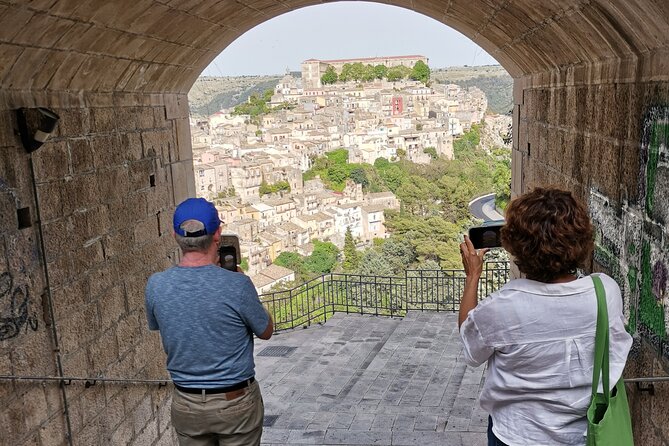
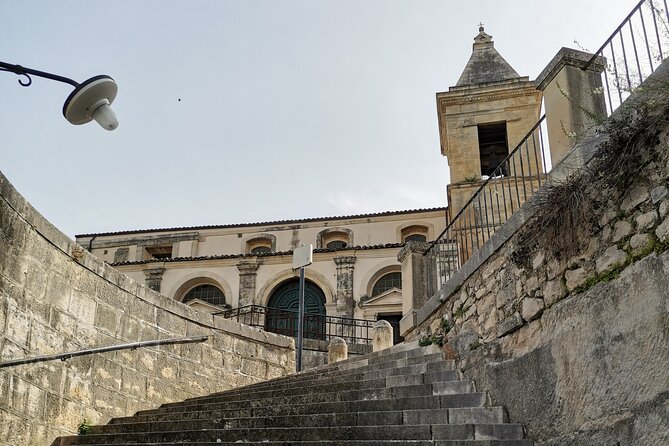
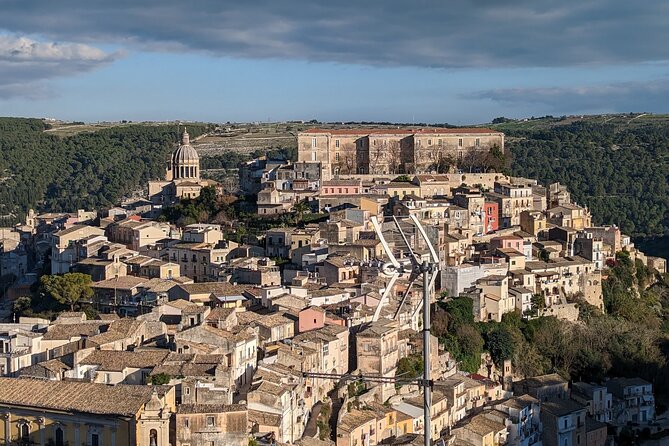
Stop two is Chiesa di Santa Maria delle Scale, and it’s memorable for its physical drama. You’ll go down through the stairs, passing the church, and you’ll pause to admire a panoramic view of Ibla.
That view stop isn’t just for photos. It’s a guided “big picture moment.” You’ll understand how Ibla sits below Ragusa Superiore, which makes the later façades and garden stop feel more meaningful. When you see Ibla from above, the city starts to look planned—even when it’s clearly layered by time.
Depending on the time of day and the period of the year, you might also be able to visit the interior. The interior is described as a precious testimony of the architectural style prior to the earthquake. You don’t need the technical details to appreciate this idea. What you want is the human scale: some parts survived, some were rebuilt, and the town’s look reflects that shifting history.
This stop is about 20 minutes, and it’s usually easier to enjoy if you’re comfortable with steps. Wear shoes with grip; Ragusa’s stone streets can be slick if weather turns.
The late Baroque balcony sequence: masks and grotesque faces you’ll remember
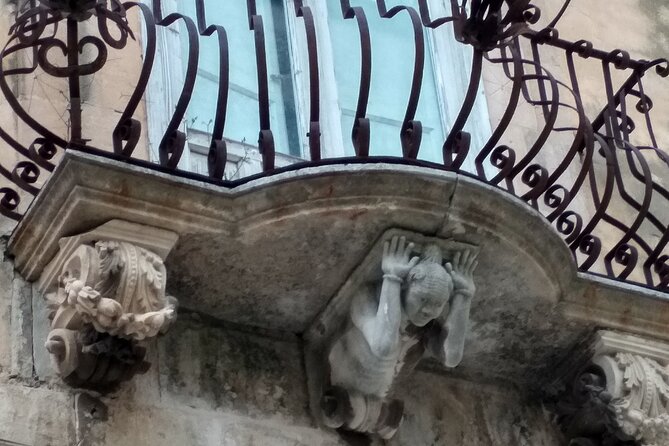
After Santa Maria delle Scale, the walk leans into what makes Ragusa feel instantly recognizable: late Baroque façades and the decorative balconies—especially the ones decorated with grotesque masks.
This part of the tour is where you start to “read” the architecture instead of just admiring it. The guide points out how the masks are integrated into the façade and how they sit alongside the balconies. You’ll also spend time looking at multiple versions of the same theme: one façade, then another, then the combination of façade + balcony detail, each time with a new explanation to keep it from becoming repetitive.
If you’ve seen Baroque buildings elsewhere in Sicily, you’ll notice Ragusa’s style has its own attitude. The masks make it feel playful, even a little theatrical, while the stonework stays undeniably grand. It’s the kind of detail you might miss on your own unless someone slows you down and tells you what to look for.
This segment also sets you up for the next church cluster, because once you’ve learned the visual vocabulary—balustrades, balcony groupings, mask motifs—the rest of the itinerary becomes easier. You’ll spot patterns, and you’ll start to connect them.
Chiesa di Santa Maria dell’Itria and Palazzo Cosentini: connected sacred spaces
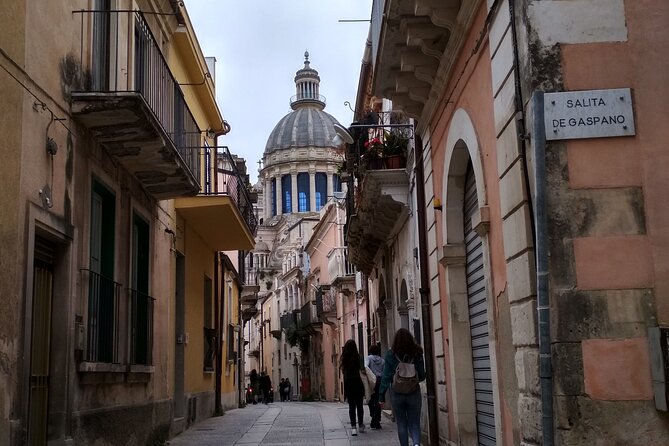
Stop three is Chiesa di Santa Maria dell’Itria. Like earlier stops, the focus is a mix of story and visuals. The guide tells you the background of the church and then you admire the late Baroque façade.
Here’s what makes it more than a pretty exterior: you also get to appreciate the Palazzo Cosentini, which is listed as UNESCO heritage. The key detail is that it was once connected internally to the church. That connection helps you understand something important about Ragusa’s Baroque period: sacred spaces and powerful families weren’t always separated into strict categories. Physical links could exist, and the architecture could reflect status and devotion at the same time.
Interior access depends on conditions. Depending on time of day and season, you might be able to visit the inside of the church. If it’s not open, don’t worry—the façade and the connection story still carry the stop.
You’ll usually spend about 20 minutes here. It’s a good break in the route because the explanations are designed to keep your attention on details rather than rushing to the next corner.
Duomo di San Giorgio: the façade with stairs and the saint’s feast
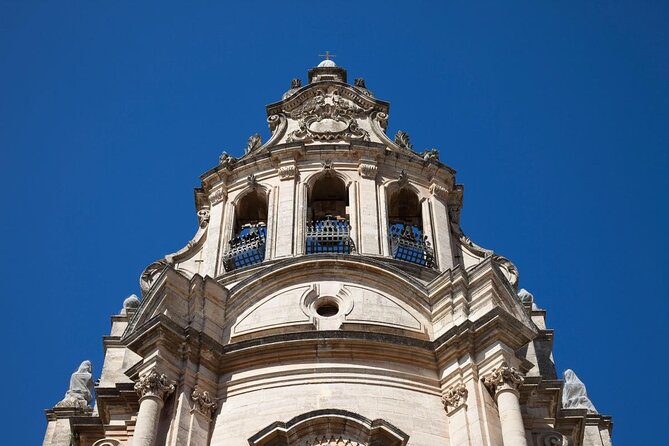
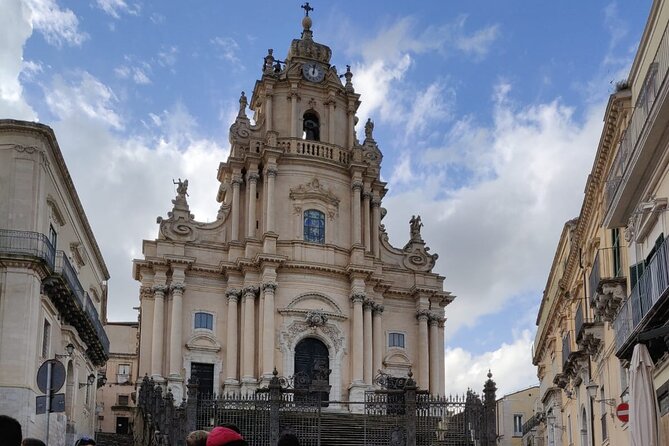
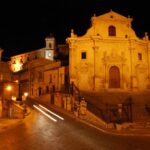
Stop four brings you to Duomo Di San Giorgio, and this is one of those moments where the guide’s timing makes the façade look even better. You’ll hear the story of the church and the saint, plus the feast associated with the patron figure. That matters because Baroque architecture often serves event culture as much as it serves aesthetics.
Then you’ll get the classic exterior moment: the beautiful façade with a staircase. It’s the kind of stair emphasis you don’t notice as much when you’re walking quickly or scrolling photos. With a guide, you start noticing how access and elevation are built into the design.
Again, the interior visit can depend on the day and season. If you can go inside, you’ll see that Baroque idea of shaped space—softening the church into something more dramatic and emotional than a simple room.
This stop is about 30 minutes, which gives enough time not only to see the main church but also to connect it with the next two special adds.
The café of the knights and the Benedictine church oval interior
Between major churches, the tour adds two extra “hooks.”
First is a stop at the conversation club, also known as the café of the knights. This location is famous for scenes from Inspector Montalbano fiction. Even if you’re not a fan, it adds a nice change of pace. It reminds you that these buildings aren’t frozen in the past; they keep showing up in modern storytelling.
Second, you’ll admire the late Baroque façade of a Benedictine church listed as UNESCO heritage. Depending on timing, you may also visit the interior, described as a precious oval-shaped interior. The oval detail is worth showing up for because it breaks the usual rectangular expectation you might have walking into churches.
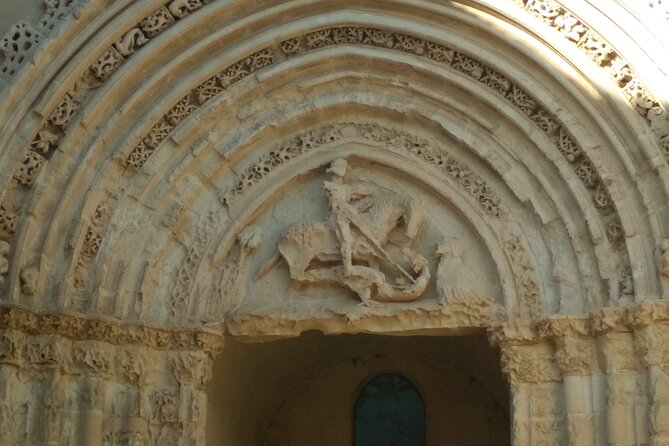
You’ll also see the ancient portal of the Saint George church, described as testimony of architectural style prior to the earthquake. That’s another reminder that Ragusa’s Baroque story isn’t only about decoration. It’s also about survival and rebuilding—what remained, what changed, and how old doorways can still signal earlier eras.
If you’re the kind of person who likes walking tours that feel like a guided conversation rather than a lecture, this is where you’ll probably relax and enjoy the flow.
Giardini Iblei: the green lung moment in the middle of Baroque
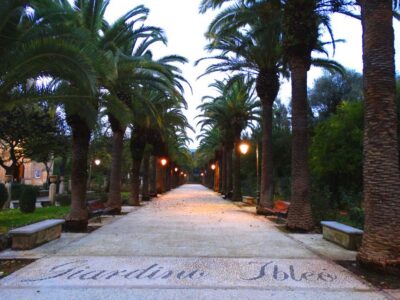
Stop five is Giardini Iblei, and this is a smart design choice for a walking tour. You get a garden break—a real change from stone façades and church exteriors into a calmer pace. The gardens act as a green lung of Ibla, and they also host multiple churches.
Depending on time and period of the year, you may visit the church of St. James and the church of St. Agata. Even if interior access isn’t possible, the gardens still work because the route’s earlier viewpoints set you up to see how the city breathes.
It’s also a practical moment. By the time you reach the gardens, you’ve done stairs, pauses, and façade reading. A bit of greenery helps you reset. You’ll spend about 30 minutes here, and the rest of your time goes to the walk itself and moving between attractions.
When the tour ends near Iblean Garden in Ragusa Ibla, you’re placed where it’s easy to keep exploring: there are the urban bus stop and taxis nearby. That makes the end of the tour feel useful rather than awkward.
Steps, time of day, and who should choose a different plan
Let’s talk feet. This tour involves many steps, and at least one review notes around 300 steps on a typical route. The tour is marked as not recommended for people with reduced mobility for that reason.
If you’re generally mobile, plan for a steady walking pace and short stops. Bring comfortable sneakers with grip. You’ll also enjoy it more if you avoid overly tight shoes or shoes with no traction, since you’ll be on stone and uneven surfaces.
Timing matters too. Several interiors are listed as possible depending on the time of day and period of the year. That means your best plan is to show up with flexible expectations. Even if you don’t enter every interior, the façades and viewpoints remain the main show.
Weather matters as well. The experience requires good weather. If rain or bad conditions cancel it, you should expect an offered alternative date or a full refund.
Price and value: what $78.44 buys you in Ragusa
At $78.44 per person for about three hours, this tour isn’t trying to be the cheapest way to see a town. The value comes from three places.
First, you’re paying for interpretation. Ragusa Baroque is full of detail—balconies, mask motifs, terraces, stair emphasis—and without a guide it’s easy to miss the pattern. A good guide helps you look longer with less confusion.
Second, you’re getting a small-group setup: the tour has a maximum of 10 travelers. That size tends to make questions feel normal, not rushed. It also keeps the pacing realistic for church stops and viewpoint breaks.
Third, the admissions noted for the church stops are free. That keeps the cost predictable and lets you focus on the experience instead of counting extra tickets.
A final value note: the tour is offered in English, and the tour includes a mobile ticket. If you’ve had to manage printed vouchers while walking through towns, you’ll appreciate that.
Getting the most out of it: practical tips I’d use
Here are a few choices that can make the experience smoother.
- Start thinking in layers: Ragusa Superiore to Ibla is a vertical route. If you stay in the lower town, you’ll want a plan to get up for the starting point.
- Plan around parking and transport: one helpful suggestion is to allow time to park in the lower town and take a bus to Ragusa Superiore, or do it the other way around depending on your base.
- Bring water and a light layer: you’ll be outside a lot, even though you’ll enter churches when possible.
- Ask questions when you want them: with the small-group size, it’s easy to get clarifications about feast days, façades, and how reconstruction is reflected in what you see now.
- Use the guide’s communication style: based on feedback, Serena may share updates in advance (including via WhatsApp) and can offer help on how to reach the meeting point from your hotel.
If you care about Baroque details, this tour is the kind where you’ll go back after to look at façades again with new eyes.
Should you book Discovering Ragusa Baroque?
Book it if you want your Ragusa trip to feel organized and meaningful fast. This is especially worth it if you have limited time and you want both Upper Ragusa and Ibla in one guided sweep, with the architecture explained instead of just photographed.
Skip or consider an alternative if stairs are a deal-breaker for you, since the route includes a lot of steps. Also, if you’re hoping for long free time to wander without stopping, this tour keeps a guided rhythm—church exteriors, possible interiors, views, then off again.
If you like walking tours where the guide slows you down just enough to notice the little things—grotesque masks, balcony patterns, terrace balustrades—this one is an easy yes. And if you end near Iblean Gardens with your feet tired but your brain awake, that’s exactly how it should feel.
FAQ
How long is the Discovering Ragusa Baroque walking tour?
The tour lasts about 3 hours.
Where does the tour start and where does it end?
It starts at Cattedrale di San Giovanni Battista, Piazza S. Giovanni, 41/45, Ragusa. It ends near Ragusa Ibla at Via Giardino, 5, close to the Iblean Garden area.
What is the price per person?
The price is $78.44 per person.
Is the tour offered in English?
Yes, it is offered in English.
Are there admission tickets included, and are the stops free?
The stops listed for the churches show admission ticket Free.
How many people are in the group?
The tour has a maximum of 10 travelers.
Is this tour suitable for people with reduced mobility?
It is not recommended for people with reduced mobility because there are many steps.
Do I need a printed ticket?
No. You’ll get a mobile ticket.
Is the tour dependent on weather?
Yes. It requires good weather, and if it’s canceled due to poor weather, you’ll be offered a different date or a full refund.
Can I get a full refund if I cancel?
Yes. Free cancellation is available up to 24 hours in advance for a full refund. If you cancel less than 24 hours before the start time, the amount you paid will not be refunded.
More Tours in Ragusa

More Tour Reviews in Ragusa

More Baroque Towns to Reach
Just added: the newest Ragusa tours in our notebook
- Tour in the heady scents of our garden in Ragusa★ 5.0 · 4 reviews
- Sicily wine food tours from Ragusa★ 5.0 · 4 reviews
- Ragusa: Traditional Sicilian Cooking Class★ 4.4 · 5 reviews
- Ragusa Countryside Home Cooking Class & Meal★ 4.8 · 6 reviews
- Radici: IImmerse yourself in the heady scents of our garden★ 4.7 · 7 reviews
- Ragusa Ibla: Walking Tour with Local Guide★ 4.4 · 8 reviews
Noto & Baroque Towns, compared.
 ★ 4.6Catania: Syracuse, Ortigia, and Noto Tour with BrunchFrom $112404 reviews
 ★ 5.0Syracuse, Ortigia and Noto walking tour from CataniaFrom $129273 reviews
 ★ 4.7From Catania: Neapolis of Syracuse, Ortygia, and Noto TourFrom $130234 reviews
 ★ 4.4From Catania: Syracuse and Noto Culture and History TourFrom $80232 reviews
 ★ 3.9From Catania: Syracuse, Ortygia, and Noto Tour140 reviews
 ★ 4.8Noto, Modica and Ragusa: The Baroque Tour from CataniaFrom $124133 reviews
 ★ 4.7From Catania: Syracuse, Ortigia and Noto Full-Day TourFrom $113133 reviews
 ★ 4.4Catania: Noto, Modica and Ragusa Ibla Baroque TourFrom $101106 reviews
Browse the lists this tour appears in