
Reviewed · SYRACUSE & ORTIGIA
Syracuse: Ortygia & Neapolis Archaeological Park Guided Tour
Syracuse hits you with centuries fast. This guided tour connects Ortygia and Neapolis, mixing ancient temples, baroque churches, and rock-cut wonders in a tight 2-hour loop.
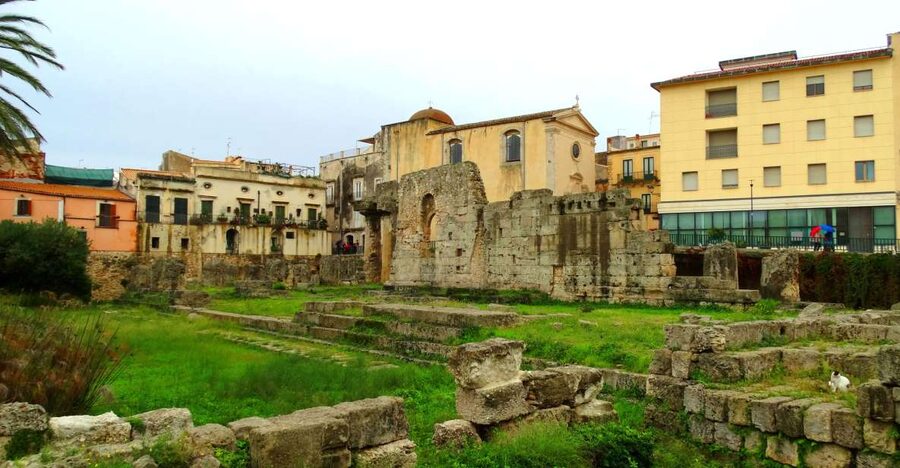
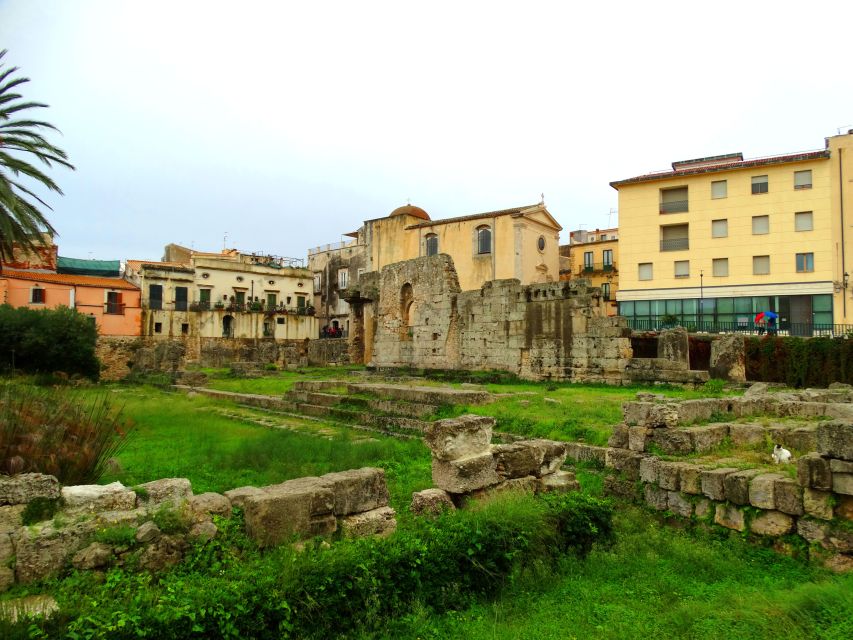
I especially like how it starts with the Temple of Apollo (dating to 580 BC) and frames what you’re seeing with real context, not just dates.
You’ll also get a strong sense of how Syracuse became layered over time. The baroque Cathedral of Syracuse sits on remains of an earlier Athena temple, and the nearby Santa Lucia alla Badia includes a Caravaggio painting.
One thing to plan for: the most important sights have separate entry needs. Duomo (Cathedral) tickets and the Neapolis Archaeological Park ticket are not included, and you’ll handle the move from Ortigia to Neapolis yourself.
Key things I’d watch for on this tour
- Temple of Apollo (580 BC): you’ll see why this old Doric temple is such a big deal in Sicily
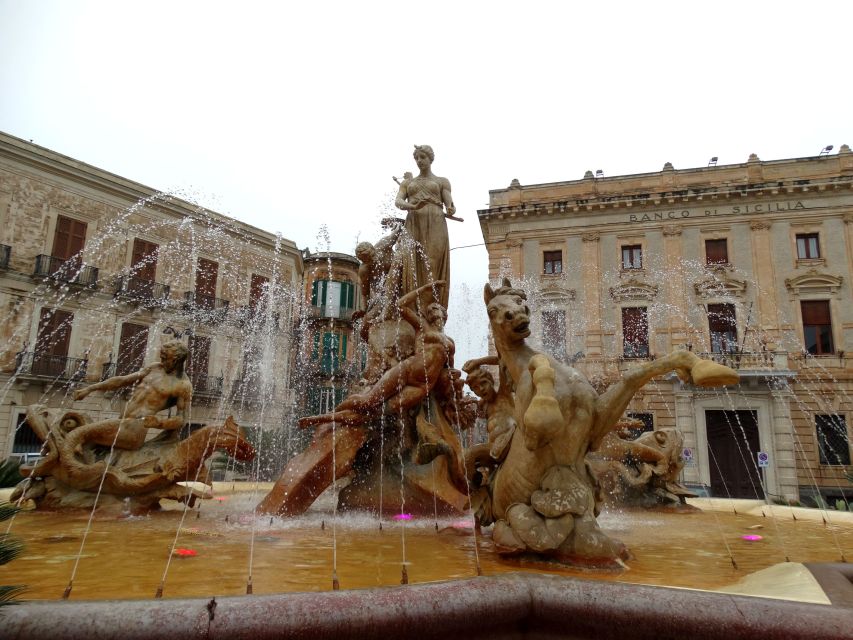
- Diana Fountain at Piazza Archimede: a classic Ortigia scene with easy photo angles
- Cathedral built over Athena temple remains: look for columns that reappear from the walls
- Santa Lucia alla Badia + Caravaggio: art that’s not just famous, but tied to this exact church
- Fonte Aretusa waterfront: fresh-water spring life, with papyrus and the sea nearby
- Ear of Dionysus (Latomie del Paradiso): an echo-famous quarry cave that sounds as impressive as it looks
In This Review
- Getting Ortygia bearings from Umbertino Bridge
- Temple of Apollo to Piazza Archimede: the city’s timeline in walking form
- Cathedral of Syracuse: baroque drama on top of Athena’s bones
- Santa Lucia alla Badia and Caravaggio’s Burial of Saint Lucia
- Fonte Aretusa and the Ortigia waterfront: sea views with a twist
- Neapolis Archaeological Park route: Roman Pool and water-game engineering
- Altar of Hieron and the Latomie del Paradiso: where scale turns to sound
- Greek theater finale: seeing Greeks, then Romans, in the same stone
- Price and value: €2-hour sprint vs what you actually get
- Who this tour fits best (and who should choose differently)
- Should you book this Syracuse Ortygia and Neapolis guided tour?
- FAQ
- Where does the tour start?
- How long is the guided tour?
- Is this a private tour?
- Are entry tickets included for the Cathedral (Duomo) and Neapolis Archaeological Park?
- Does the tour include transportation between Ortigia and Neapolis?
- What languages are available for the live guide?
- Is there free cancellation?
Getting Ortygia bearings from Umbertino Bridge
Start at Umbertino Bridge, by the Archimedes statue. It’s a good choice because Ortygia (Syracuse’s island core) can feel like a maze of lanes, plazas, and waterfront turns once you’re walking on your own. With a guide, you get a clean first mental map fast.
The route immediately sets the tone: you’re not just strolling through pretty streets. You’re tracing why Syracuse mattered. From here, you move toward one of the most powerful anchors in the whole town: the Temple of Apollo, dating to 580 BC. The tour frames it as the oldest Doric temple in Sicily, and that detail changes how you look at the stone. Even if you’re not an architecture person, you can still feel the scale of its importance.
If you want a tour that helps you understand rather than just collect photos, this one works. It’s also private group style, so you’re less likely to get shuffled into the “follow the crowd” rhythm. If your guide is Giuseppe, you’re in good shape for an entertaining pace that can still keep younger visitors engaged.
Deeper into Ortigia and old Syracuse
- Syracuse: Boat Tour with Captain Mirko, Snorkeling & Caves
★ 4.7 · 746 reviews - Siracusa: Ortigia Boat Tour with Marine Grotto & Snorkeling
★ 4.7 · 726 reviews - Siracusa: Ortigia & Sea Caves Boat Tour w/ Prosecco & Fruit
★ 4.8 · 723 reviews - Syracuse: Ortigia Island & Sea Cave Boat Tour with Prosecco
★ 4.7 · 418 reviews
Temple of Apollo to Piazza Archimede: the city’s timeline in walking form
After the bridge, you’ll reach the heart of Ortigia around Piazza Archimede. This square is dedicated to the Syracusan mathematician, and the tour uses it as a way to talk about Syracuse beyond just battles and emperors. It’s a reminder that this city produced ideas as well as monuments.
From there, you’ll see the Diana Fountain. It’s one of those stops where the setting does half the work: the view is open, the light is often good, and you can pause without feeling like you’re breaking the tour flow. The fountain also acts like a pacing tool. After the early ancient landmark energy, it gives your brain a breather before the next wave of baroque and religious architecture.
Then you move into the small-scale feel of Ortigia’s alleys, ending up at Piazza della Minerva. This square is made of white limestone, and that matters because it changes the look of the facades around it. The buildings don’t just sit there; they glow a bit in the right light, making the whole square feel “composed,” even though you’re walking through it casually.
Cathedral of Syracuse: baroque drama on top of Athena’s bones
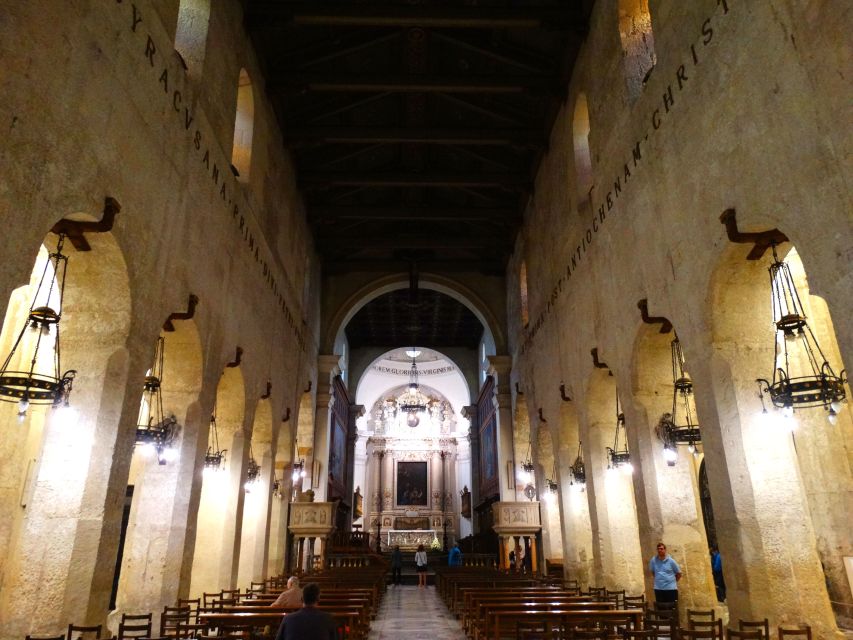
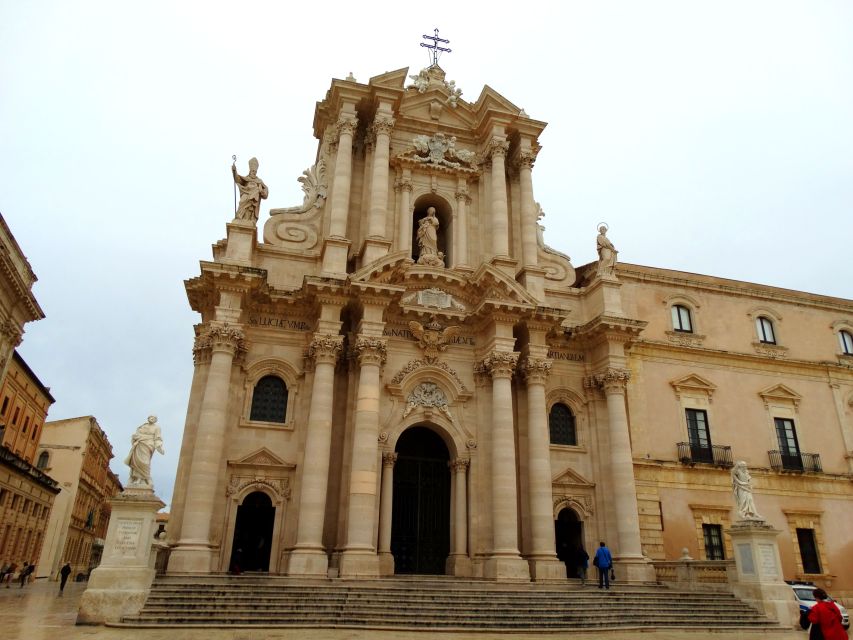
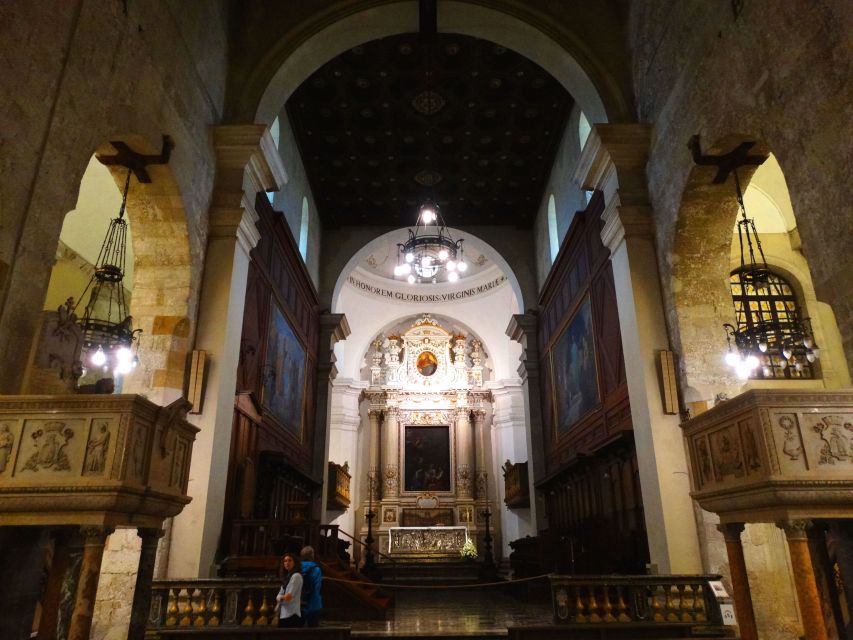
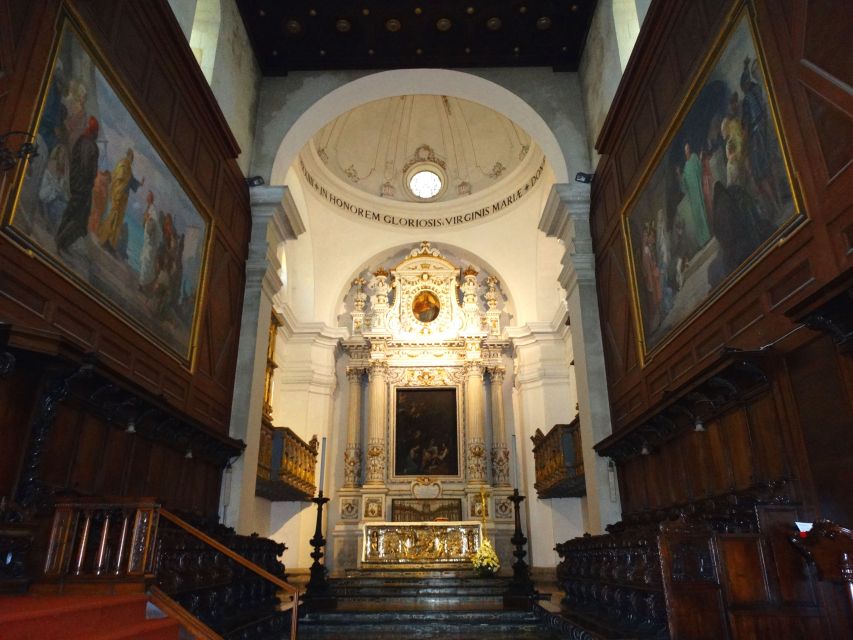
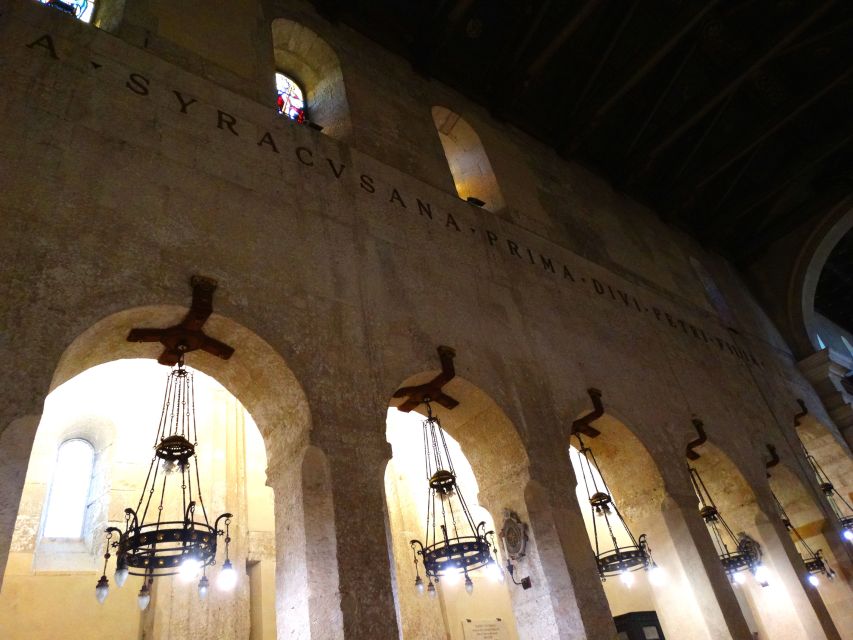
The big anchor in this section is the Cathedral of Syracuse (dedicated to the Nativity of Mary Most Holy). Here’s why the tour framing matters: you’re seeing a baroque and Rococo façade, but the story goes deeper. The cathedral was founded on the remains of an ancient Temple of Athena, and some columns can still re-emerge from the church walls.
That’s not a trivia fact. It’s a visual experience. If you go in expecting only baroque church design, you might miss the layered architecture that makes this cathedral special. With a guide, you know where to look—especially on the external side and, more importantly, inside.
The cathedral square is also a social hub. Nearby you’ll spot civic and noble buildings that help explain how the church and city power sat together: the Palazzo del Vermexio (Town Hall) and the Palazzo Beneventano are part of that same “what ruled here” picture. You’re not just touring a monument. You’re reading the organization of the town.
Santa Lucia alla Badia and Caravaggio’s Burial of Saint Lucia
From the cathedral, you continue to the Church of Santa Lucia alla Badia, where you’ll find a Caravaggio painting: The burial of Saint Lucia. This is a strong stop if you care about art that’s tied to a place, not art that traveled there just to be admired.
The practical catch: Duomo ticket is not included in the tour price. That doesn’t make the tour bad—it just means you should budget for on-site entry. If you show up without tickets, you’ll lose time and the flow of the visit. If the group is on a fixed schedule, you’ll appreciate having that sorted.
Fonte Aretusa and the Ortigia waterfront: sea views with a twist
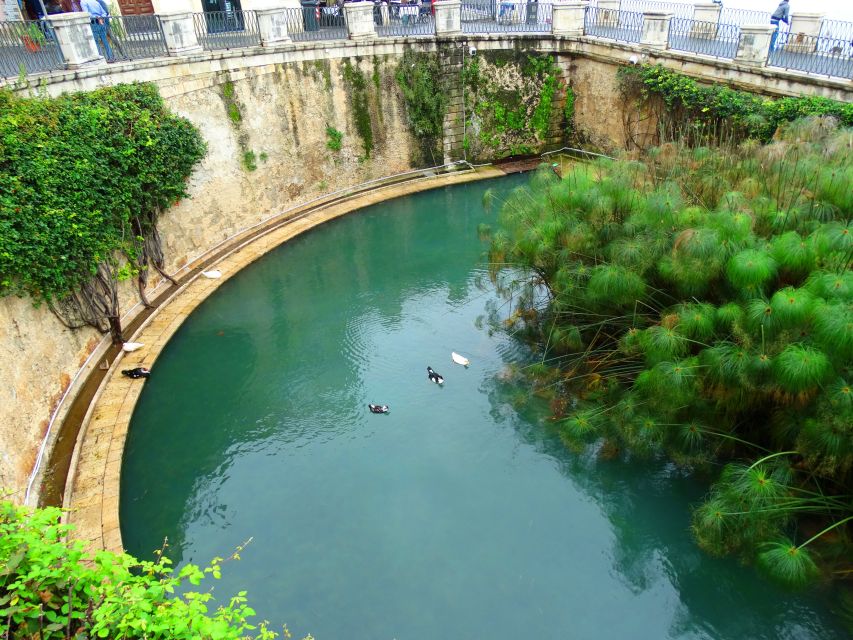
After the cathedral area, the tour shifts toward the sea. This is where Ortigia becomes more than stone. You’ll head to Fonte Aretusa, described as an unusual fresh-water mirror inhabited by fish and ducks, with papyrus plants growing there. It’s one of those odd-but-believable details that feels right in Sicily: nature doing its own thing right beside a Mediterranean coastline.
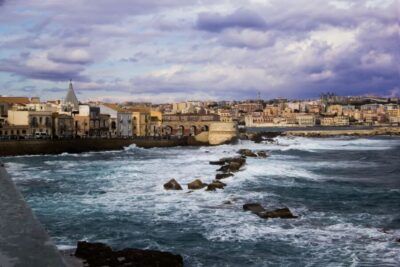
Just a few meters away, you’ll reach the Alfeo seafront—the oldest stretch of seafront on the island. This part is worth paying attention to because it gives you the “why” behind the sights you’ve already seen. The city’s power didn’t come only from temples and churches. It also came from the fact that a sea-connected port city can feed itself, trade, and defend itself.
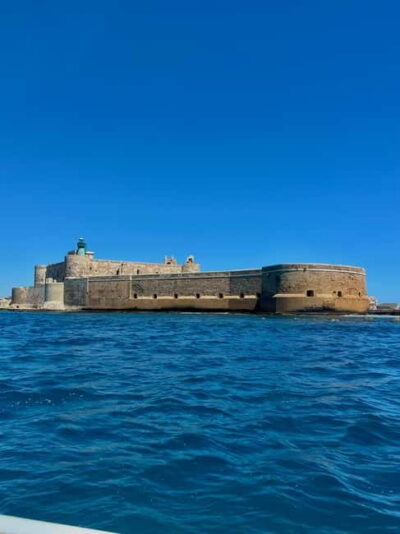
Then you’ll finish this first phase with views toward Maniace Castle, a fortress from the Swabian period. Historically it served as a prison and military barracks. Looking at a castle from outside is always a little limited, but this stop still lands well because you can see how its military purpose shaped its position along the water.
This is also the most enjoyable section to pause. The waterfront lighting can be dramatic, and you can reset before the tour switches gears to the Neapolis archaeological area.
A few we would gladly point a friend toward in Syracuse

Neapolis Archaeological Park route: Roman Pool and water-game engineering
Now you move toward Neapolis, the archaeological zone on the mainland side. The tour handles the walking and guided stops, but transfer from Ortigia to Neapolis and back is not included. So plan on using your own transport or public transport.
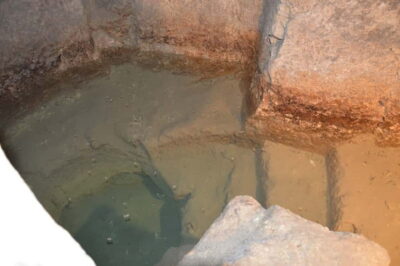
The visit begins at Church of San Nicolò ai Cordari (11th century). That’s a useful opening move because it transitions you from island Ortigia into the larger-scale city remnants of Neapolis. Then you head to the lower area, where you’ll see the Roman Pool—large water tanks dug into the rock. Pipes reportedly brought water to support Roman amphitheater nautical games and water fights.
Even if you’ve seen other Roman engineering before, this kind of detail makes the ruins feel more “functional.” You’re not only looking at where people sat. You’re seeing how they powered events.
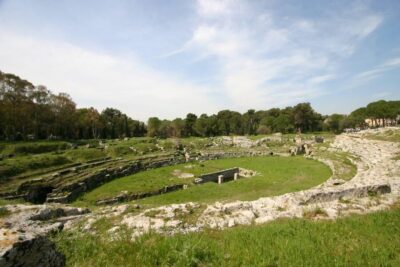
Next comes the Roman amphitheater from the Augustus era. It has an elliptical structure carved into rock and spans three levels. This is the kind of monument where a guide helps you visualize the scale quickly: you can understand seating arrangement and how performances would have worked without getting lost in the empty stone.
If you’re short on time, this is one of the best ways to get oriented in Neapolis. The tour keeps you moving between “this is what it was” stops, not just random photo stops.
Altar of Hieron and the Latomie del Paradiso: where scale turns to sound
From the amphitheater, you’ll reach the Ara of Hieron, an immense altar dedicated to Zeus where bull sacrifices took place. The altar is hard to imagine from a distance because it’s not the “small, intimate” kind of ancient monument. It’s meant for ceremony and scale. A guided explanation helps you connect the structure to the ritual it supported.
Then you head toward the Latomie del Paradiso, which were quarries used to extract stone. This is where the Neapolis experience gets physical. You’re not only seeing the aftermath of ancient building. You’re standing near the material source itself.
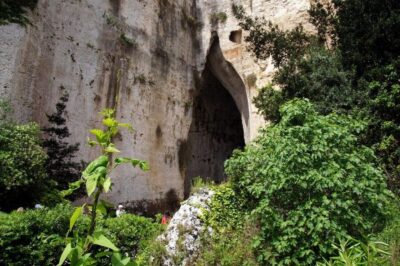
The highlight here is the Ear of Dionysus. The cave is about 23 meters high, and it’s famous for the exceptional echo inside it. The tour’s description makes it sound like a neat curiosity. Once you’re there, the echo concept changes your perception: this isn’t just a “hole in rock.” It’s a shaped space where sound behaves differently than outdoors.
It’s also a great reminder that the ancient world engineered more than temples. They shaped natural features into performance spaces, listening spaces, and ceremony spaces.
Greek theater finale: seeing Greeks, then Romans, in the same stone
The tour wraps up by admiring the Greek theater, carved into stone. It’s described as the most famous and important monument in the archaeological park, built by the Greeks and renovated by the Romans.
That Greek-to-Roman layer is worth catching. If you only think of ancient Greece as one style and Rome as another, this stop corrects that. You see how later powers didn’t erase what came before—they modified it.
From a practical standpoint, it’s also a satisfying landing point because the theater is easy to understand visually even if you’re not versed in ancient seating patterns. You can look at the carved rock and immediately sense the audience layout.
Again, the Neapolis Archaeological Park ticket is not included. So you’ll want to plan for that cost separately. It’s one of the few ways your final “all-in” spending may surprise you if you’re expecting everything to be covered.
Price and value: €2-hour sprint vs what you actually get
The price is listed as $369.31 per group up to 30 people, for about 2 hours. That sounds high at first glance, so here’s how I think about value for this specific route.
You’re buying three things:
- A guide who can connect Ortygia and Neapolis into one coherent story
- Access to a fast-moving sequence of major sites: Apollo, Cathedral, Santa Lucia, and the major Neapolis monuments
- A structure that helps you avoid wasting time on guesswork, especially around the cathedral and archaeological complex
For a private group, the per-person math depends heavily on how many people you bring. A group of two won’t price like a group of ten. But if you have a family, friends, or a small club, the value can swing quickly because you’re not paying for individual guided tickets.
The two main “not included” items—Duomo ticket and Neapolis Park ticket, plus transport between Ortigia and Neapolis—are the real variables. If you plan those early, the tour becomes a clean, efficient way to see a lot without losing your bearings.
If you have limited time in Syracuse, this tour format makes sense. It’s designed to be a focused sampler, not a slow day spent wandering.
Who this tour fits best (and who should choose differently)
This tour is a good fit if:
- You want a guided route that links Ortygia’s landmarks to Neapolis’s major monuments
- You care about explanations that connect the sites, not just quick stops
- You’re traveling with mixed ages and want an energetic pace that still feels manageable (the tone from guides like Giuseppe seems to work well for younger visitors)
It may be less ideal if:
- You hate waiting for tickets on-site
- You’re hoping for a super slow, freeform stroll where you can linger for an hour at one view
- You want everything fully packaged, including transport, because transfers aren’t included
Should you book this Syracuse Ortygia and Neapolis guided tour?
I’d book it if you want the “best of Syracuse” feeling without spending your whole day figuring out what goes where. The mix of Ortygia waterfront stops (like Fonte Aretusa) and the Neapolis ruins (like the Ear of Dionysus) creates a satisfying contrast: water and sound on one side, ritual and performance spaces on the other.
I wouldn’t book it blindly if you’re not ready to handle on-site tickets and the Ortigia-to-Neapolis move yourself. Those are easy to plan, but they’re real costs and real logistics.
If you’re the kind of traveler who likes to leave a place with clear mental images—what was Greek, what was Roman, what was rebuilt, and why it looks the way it does—this guided format is a smart use of time.
FAQ
Where does the tour start?
The tour meets at the Umbertino Bridge near the statue of Archimedes.
How long is the guided tour?
The duration is 2 hours.
Is this a private tour?
Yes. It’s listed as a private group tour.
Are entry tickets included for the Cathedral (Duomo) and Neapolis Archaeological Park?
No. Duomo ticket and Neapolis Archaeological Park ticket are not included.
Does the tour include transportation between Ortigia and Neapolis?
No. Transfer by own vehicle or public transport from Ortigia to Neapolis and back is not included.
What languages are available for the live guide?
The guide offers live commentary in English, Italian, French, German, and Spanish.
Is there free cancellation?
Yes. You can cancel up to 24 hours in advance for a full refund.
More Tours in Syracuse
More Tour Reviews in Syracuse
More of Syracuse and Ortigia
Just added: the newest Syracuse tours in our notebook
- Tour of Syracuse by Ape Calessino★ 3.0 · 3 reviews
- Syracuse Showdown Scavenger Hunt★ 5.0 · 3 reviews
- Sicily Boats Avola: Plemmirio boat tour 4 people 4 hours★ 5.0 · 3 reviews
- Groovy Geneva Scavenger Hunt★ 5.0 · 3 reviews
- Syracuse: Ortigia & Sea Caves Boat Tour with Local Skipper★ 5.0 · 3 reviews
- Siracusa: Neapolis’s Archaeological Park small group tour★ 5.0 · 3 reviews
Syracuse & Ortigia, compared.
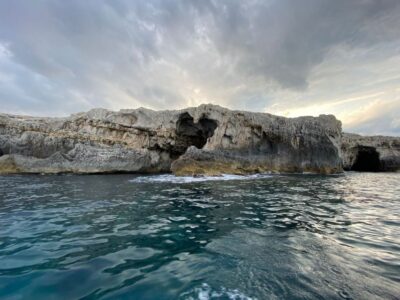 ★ 4.7Syracuse: Tour of Ortigia Island & Caves with Local SkipperFrom $231,060 reviews
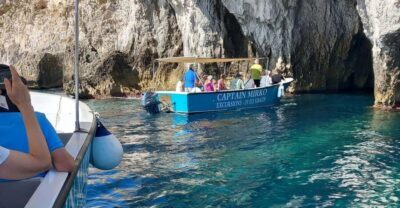 ★ 4.7Syracuse: Boat Tour with Captain Mirko, Snorkeling & CavesFrom $35746 reviews
 ★ 4.7Siracusa: Ortigia Boat Tour with Marine Grotto & SnorkelingFrom $47726 reviews
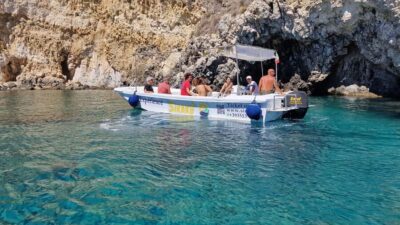 ★ 4.8Siracusa: Ortigia & Sea Caves Boat Tour w/ Prosecco & FruitFrom $35723 reviews
 ★ 5.0Tour of the island of Ortigia and exploration of sea caves with baths.From $24668 reviews
 ★ 4.7Syracuse: Ortigia Island & Sea Cave Boat Tour with ProseccoFrom $23418 reviews
 ★ 5.0Boat tour of Ortigia Island and sea cavesFrom $24407 reviews
 ★ 4.6Catania: Syracuse, Ortigia, and Noto Tour with BrunchFrom $112404 reviews
Browse the lists this tour appears in