
Reviewed · SYRACUSE & ORTIGIA
Syracuse: Ortigia Private Walking Tour
Ortigia is small, but it packs a lot. This private walking tour threads together Greek and Baroque Syracuse with sea views in about two hours, starting right at the Temple of Apollo. You’ll get a licensed guide to connect the dots fast.
What I like most is the stop at Cathedral Square, especially the Cathedral’s unusual mix of layers and its still-in-use interior (optional, with an admission fee). I also love the pace: you move at walking speed, but you keep getting the kind of context that makes old stones feel readable.
One thing to consider: places of worship require a dress code (no shorts, no sleeveless tops; shoulders covered), and the optional market stop only makes sense if it’s open (morning and working days).
In This Review
- Key highlights to look for
- Ortigia in Two Hours: What This Private Walk Really Covers
- Meeting at Largo XXV Luglio and Starting at the Temple of Apollo
- Cathedral Square and the Bright Limestone Cathedral (Optional Interior)
- Aretusa Fountain: The Sea-Legend Stop With Papyrus in the Water
- Viewpoint Moments, the Jewish Quarter, and Via Maestranza
- Finishing at Piazza Archimede (and the market option)
- Price and value: what $220.91 per group gets you
- Private vs small-group: which format is smarter for you
- Practical tips: dress code, photos, and getting the timing right
- Who should book this, and who might want more time
- Should you book the Syracuse Ortigia Private Walking Tour?
- FAQ
- What’s the duration of the Ortigia private walking tour?
- Where do I meet the guide?
- Is the tour private or shared?
- Which languages are offered?
- Is the Cathedral interior included?
- Are there dress rules for visiting churches?
- Can I visit the fish and fruit market at the end?
- Is the tour wheelchair accessible?
- What’s the cancellation policy?
Key highlights to look for
- Temple of Apollo start point in Largo XXV Luglio, with your guide holding a Hermes Sicily Tours sign/logo
- Cathedral Square focus, including the bright limestone buildings and an optional Cathedral interior visit
- Aretusa Fountain myth + papyrus details tied to Syracuse legends and Archimedes-area lore
- Jewish Quarter and Via Maestranza stroll, with a sense of how the city’s power changed hands
- Panorama time plus finishing around Piazza Archimede in the heart of Ortigia
- Private flexibility, with guides like Galina and Eva praised for smooth, accommodating tours (even when access or weather shifted)
Deeper into Ortigia and old Syracuse
- Syracuse: Boat Tour with Captain Mirko, Snorkeling & Caves
★ 4.7 · 746 reviews - Siracusa: Ortigia Boat Tour with Marine Grotto & Snorkeling
★ 4.7 · 726 reviews - Siracusa: Ortigia & Sea Caves Boat Tour w/ Prosecco & Fruit
★ 4.8 · 723 reviews - Syracuse: Ortigia Island & Sea Cave Boat Tour with Prosecco
★ 4.7 · 418 reviews
Ortigia in Two Hours: What This Private Walk Really Covers
Ortigia is the historic island core of Syracuse, and it’s compact enough that you can see a lot without sprinting. This tour is built for people who want structure: you don’t just wander—you hit the key scenes and learn why they matter.
Expect a relaxed walking route with stops that show how power changed over centuries. You’ll see traces ranging from the Greeks to the baroque era, with the sea nearby as your constant backdrop. It’s also a good fit if you’re short on time but still want the “real Syracuse” feeling.
The private format is the big lever here. You can ask questions, slow down when something catches your eye, and keep the vibe calm. Guides in past groups (like Galina and Eva) got strong praise for being clear, friendly, and willing to adapt when conditions changed.
Meeting at Largo XXV Luglio and Starting at the Temple of Apollo
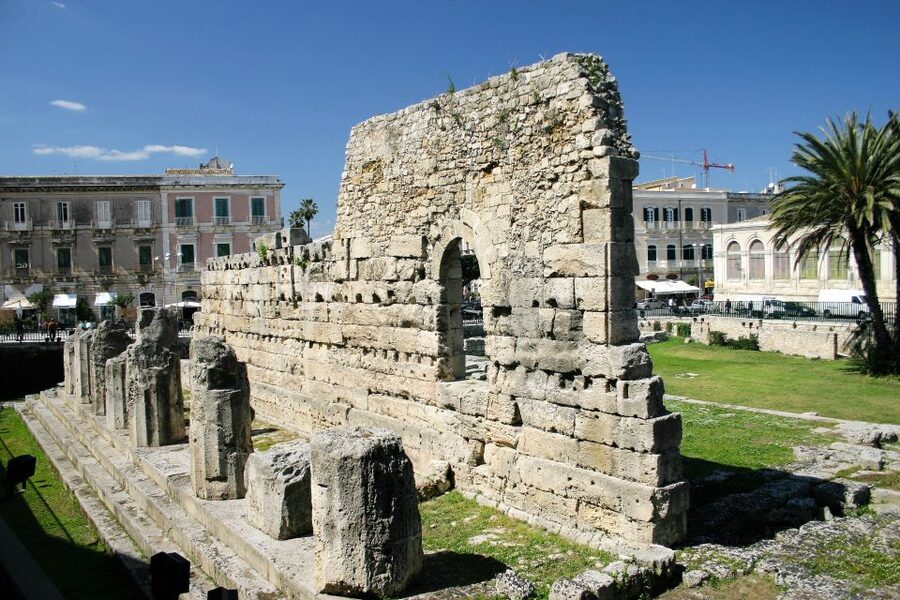
You meet at Largo XXV Luglio, right by the entrance area to Ortigia, at the Temple of Apollo. Your guide will be easy to spot with a Hermes Sicily Tours sign/logo. The meeting area is specifically noted near the small fountain on the right side and benches in front of the temple—useful if you arrive early and want to wait without wandering.
Starting at the Apollo Temple makes sense because it sets the baseline: Syracuse’s story starts here, and your guide gives you a short introduction to the town so later stops don’t feel random. Instead of memorizing dates, you’ll understand what each layer represents—Greek foundations, later reuse, and the baroque presentation that took over visible space.
This is also where I’d expect first-time visitors to get their bearings fast. Ortigia’s lanes can feel like a maze if you go solo, but with a guided start, you’re building a mental map immediately.
Cathedral Square and the Bright Limestone Cathedral (Optional Interior)
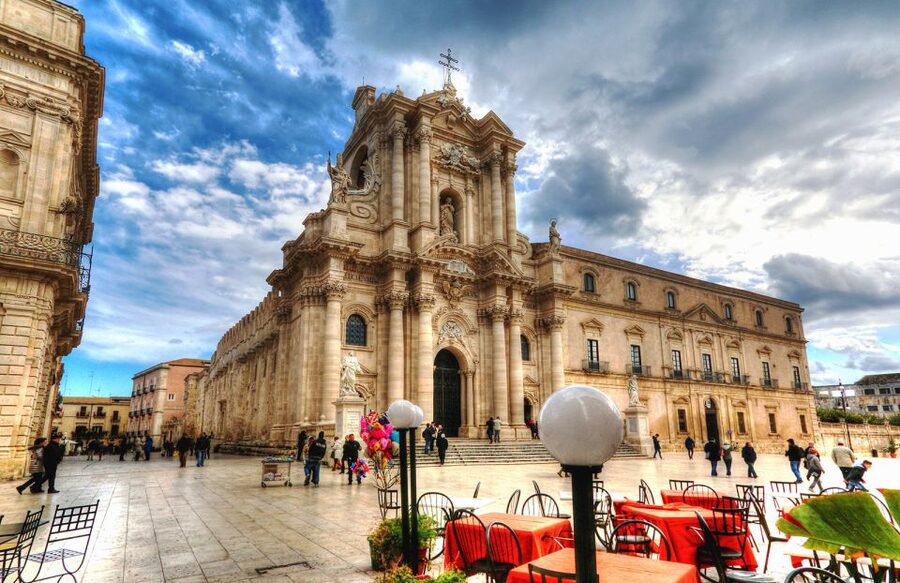
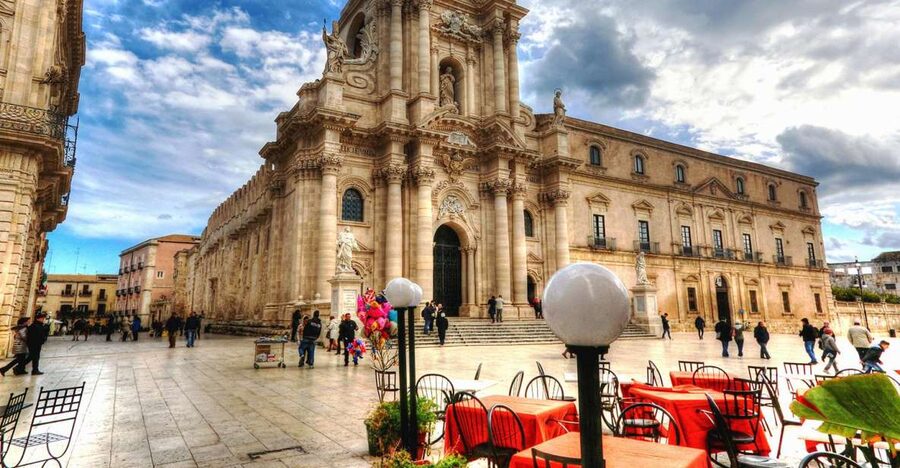
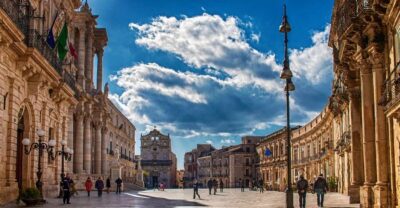
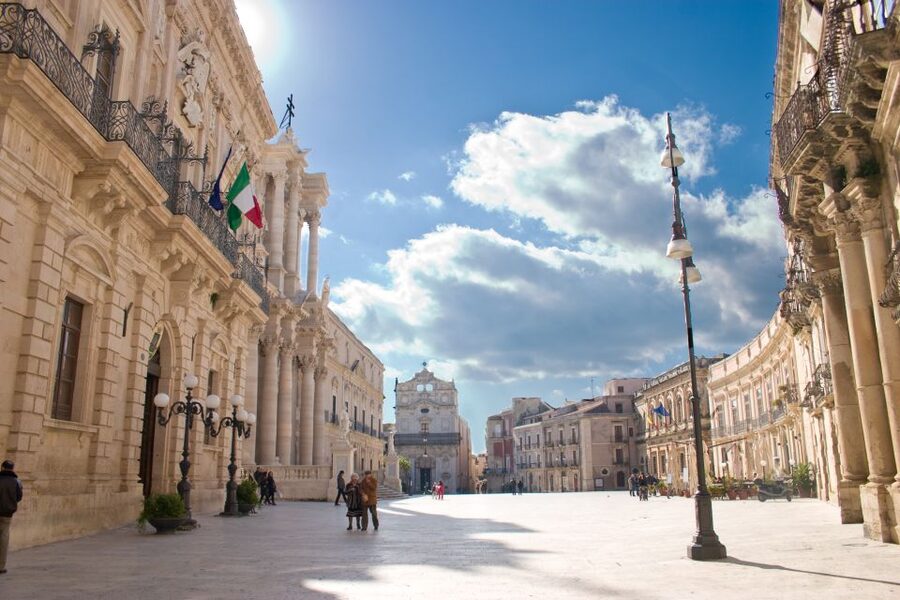
After a short walk, you’ll reach Cathedral Square—a bright pocket of architecture that’s easy to admire even if you’re tired. Here the tour shines because it doesn’t treat the Cathedral like a postcard; it treats it like a living building with a past.
You’ll pass or view major structures around the square, including the town hall, Palazzo Beneventano, the bishop’s palace, and St. Lucy’s Church. But the real anchor is the Cathedral itself: it’s described as the only church still in use today that once began as a pagan temple.
That detail matters because it explains the visual weirdness (in a good way). You’re not seeing “one era collapsed into another” for drama—you’re seeing how Syracuse physically reused sacred space as rulers and religions changed.
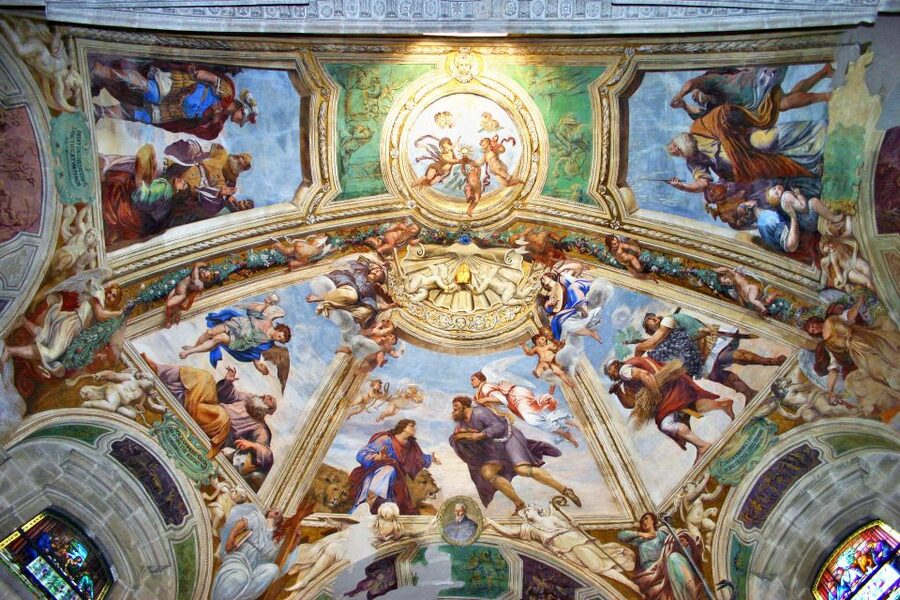
Important practical note: you should plan for an optional interior visit only if you’re ready for the dress rules. The Cathedral interior visit is mentioned as optional, and admission fees aren’t included. If you’re traveling with a party that might not want to pay extra, you can still enjoy the outside and the square’s context, then decide on the interior based on your timing and comfort.
If you want the moment most praised by groups, this is it. The Cathedral was repeatedly called out as a highlight—especially for how the earlier temple elements relate to the church’s design.
Aretusa Fountain: The Sea-Legend Stop With Papyrus in the Water
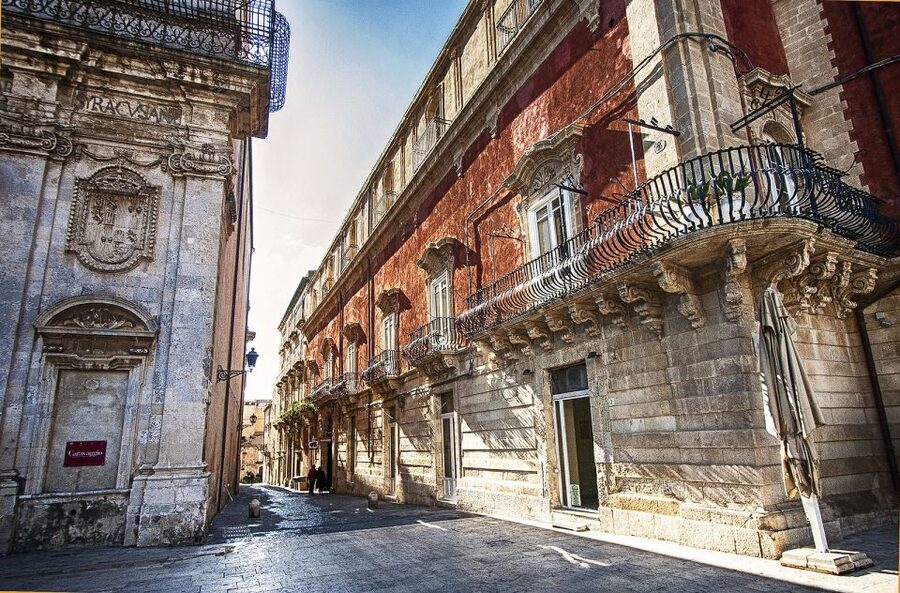
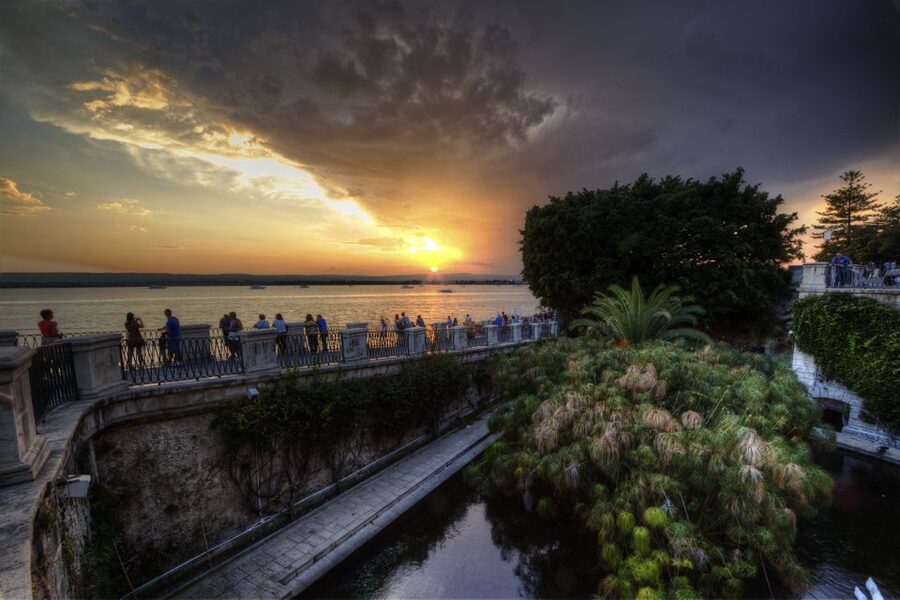
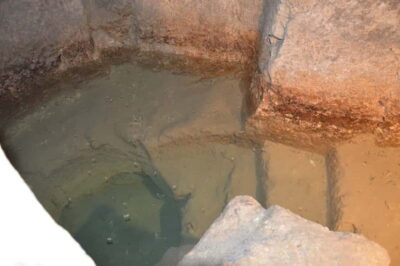
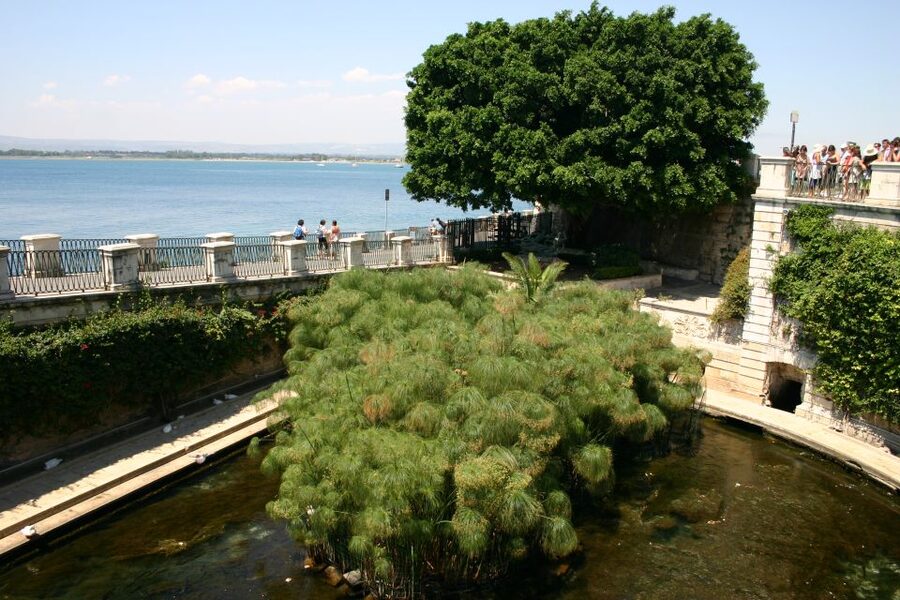
Next comes Aretusa Fountain, near the sea. This is the stop that adds softness after the heavier stone and political history. You’re guided to understand the myth: Aretusa’s story was told by Ovidius, and the fountain’s clear, fresh water supports papyrus that was probably brought here during Archimedes’ time in town.
Even if you’re not a mythology person, this works because it turns the scenery into a clue. Instead of thinking, That’s a pretty fountain, you’re thinking, Why is there papyrus here, and why does Syracuse link itself to Greek scientific legend like Archimedes?
You’ll also get sea air and a change in pace. This is the kind of stop where you’ll naturally pause for photos. If your day is hot, it’s also a breathing point—short, shaded or breezy depending on the exact light.
A few we would gladly point a friend toward in Syracuse
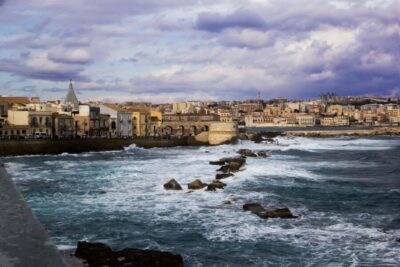
Viewpoint Moments, the Jewish Quarter, and Via Maestranza
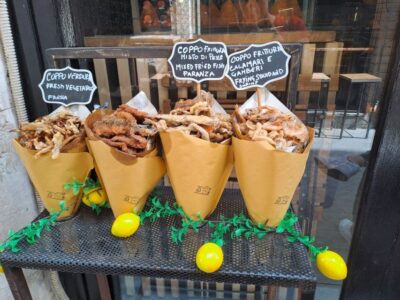
The tour keeps moving through Ortigia’s neighborhoods and power centers. You’ll cross into the Jewish Quarter, then head toward Via Maestranza, a street associated with the nobility’s pompous homes. That’s a small sentence, but it adds real texture: you’re walking a path that once reflected status, not just geography.
Then there’s a viewpoint stop. The listing doesn’t specify which exact lookout you’ll get, but it does promise panoramas of the sea. This is a big deal in Ortigia because the “island town” feeling comes from seeing water edges and sightlines. If you usually miss those views on city walks, this one builds them in.
Finally, you’ll connect the past to present again at Archimedes Square, where the neoclassical Fountain of Diana is mentioned as a reminder of Syracuse’s glorious past. It’s another thematic loop: Greek roots, myth, and later artistic language showing up in public space.
Finishing at Piazza Archimede (and the market option)
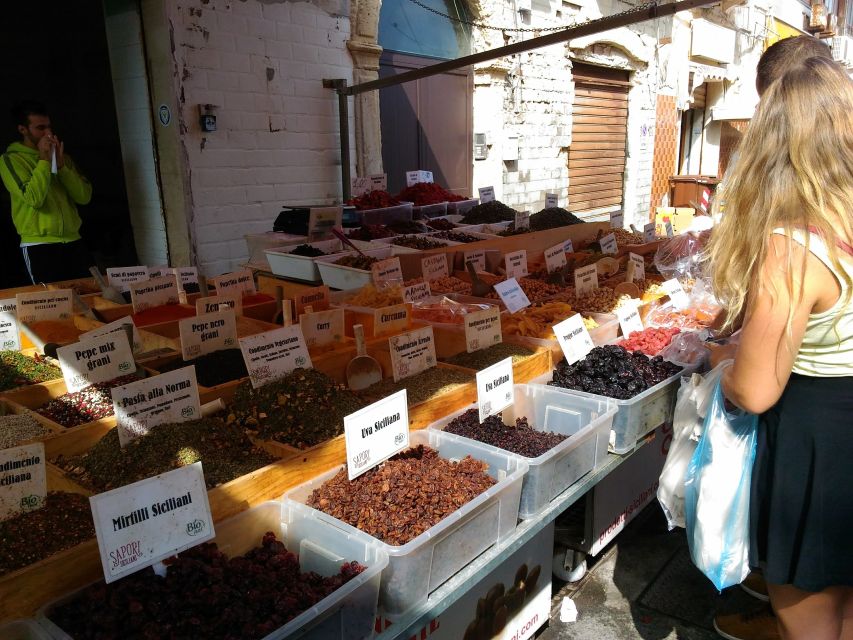
The tour ends at Piazza Archimede, right in the center of Ortigia. This is convenient because you finish where you can decide what your next hour looks like—coffee, gelato, a museum detour, or simply wandering a little more.
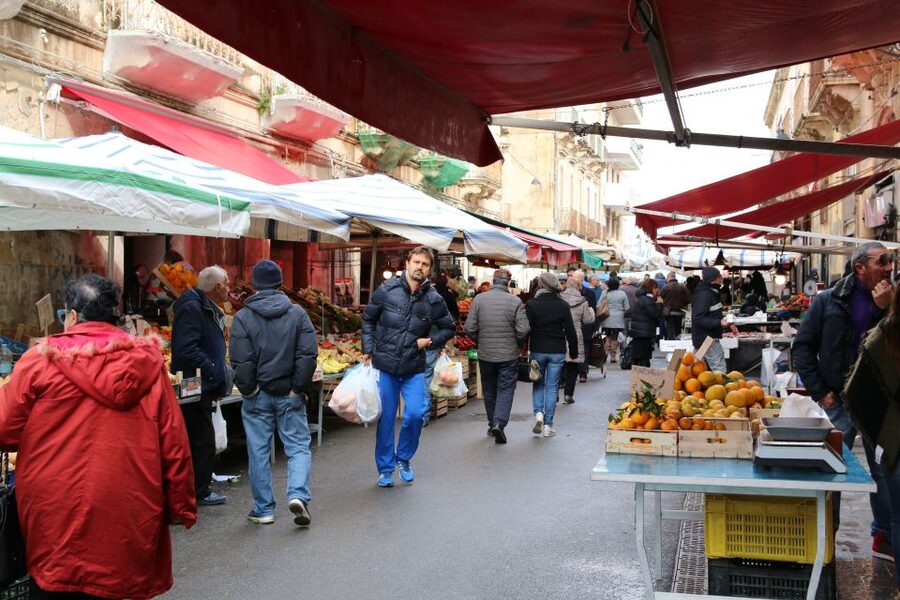
You can also ask your guide to end at the local fish and fruit market. That can be a great way to trade history talk for everyday Syracuse. But plan for the timing reality: the market is open only in the morning and on working days. If your walk falls outside that window, you may still get a look at the vibe, but don’t build your schedule around it.
If you like to end tours by eating what you see, this is a smart option. Fresh market browsing turns your last stop into a sensory “wrap-up” of the day.
Price and value: what $220.91 per group gets you
The price is $220.91 per group (up to 9 people) for a roughly 2-hour private walking tour with a licensed guide. That pricing model is important: it means the value changes depending on how many people are in your group.
- If you’re traveling as a couple or family, the cost per person can be reasonable compared to paying separate fares, because you’re splitting the guide time.
- If you’re a small group of friends, it can be a solid way to get private attention without paying “big city tour” prices that scale fast.
Why I think it’s fair: this tour packs high-signal stops—Temple of Apollo, Cathedral Square, Aretusa, and the key neighborhoods—into one route. You’re paying for interpretation, pacing, and the ability to ask questions without losing time. And the tour is built around a licensed guide, which is a non-trivial part of value in historic sites.
Also, the tour is wheelchair accessible, so the experience is designed to be workable for people who need that kind of consideration.
Private vs small-group: which format is smarter for you
You can book this as a private tour or sometimes as a small/shared group. In practice, private is best when:
- you want flexibility,
- you’re traveling with kids or multiple generations,
- you care about specific details and plan to ask lots of questions.
Some strong praise in the provided feedback was exactly about the private setup—like groups that wanted a quiet family experience. Guides also earned compliments for being accommodating and friendly, with Eva particularly praised for excellent English and adapting when a visit by a German President complicated usual access.
Shared/group options can be good if you’re fine with a less tailored pace. Just note that shared group tours are bookable in English or Italian, and the guide may explain both in rare cases of very small groups.
Practical tips: dress code, photos, and getting the timing right
A few “don’t-get-stuck” tips will save you hassle:
Dress code for churches: plan for covered shoulders. No shorts, no sleeveless tops. This matters if you want the optional interior visit to the Cathedral.
Market timing: the fish and fruit market is open only in the morning and on working days. If you’re arriving later in the day, don’t count on that ending stop.
Bring comfy shoes: Ortigia streets are walkable, but they’re still cobbled and uneven in places. Two hours sounds short until you’re moving over historic pavement.
Use the viewpoint opportunity: if the day is clear, take the sea panorama seriously. Don’t rush past it just because you’ve already seen a similar view elsewhere in Sicily.
Languages: guides can work in Italian, English, and German. If you want the smoothest experience, pick your language upfront—this is where good tours feel effortless rather than like you’re following along with effort.
Weather resilience: at least one praised guide noted they kept things enjoyable even when it rained. In other words, have a light layer or rain protection, and don’t assume the day is ruined if the sky misbehaves.
Who should book this, and who might want more time
This tour is a great fit if you want:
- a structured first visit to Ortigia,
- strong context without hours of reading,
- a route that connects Greek origins to later baroque beauty,
- and a guide who can tailor the pace.
It also works well if you’re the type who likes to ask questions—past groups praised guides for being flexible and for explaining clearly at each attraction. That makes a big difference in places where architecture alone can’t explain the story.
You might consider adding independent time before or after if:
- you’re a serious archaeology fan who wants to linger longer at specific ruins,
- you like to shop slowly at the market and don’t want a timed finish,
- or you want multiple churches with long interior visits beyond what’s built into a two-hour flow.
Should you book the Syracuse Ortigia Private Walking Tour?
I’d book it if you want the shortest route to the best “why is this here?” answers in Ortigia. The combination of the Apollo Temple start, the Cathedral Square focus, and Aretusa’s myth-and-water connection is a smart hit list for a first or second day in Syracuse.
It’s especially worth it for private travelers who care about pacing and conversation. And if you value the Cathedral interior, make sure your outfit fits the dress code and you’re ready for an admission fee.
If your schedule lines up with market hours and you can handle a bit of walking, finishing near Piazza Archimede with the option to go by the fish and fruit market is a satisfying way to turn history into something you can smell and taste.
FAQ
What’s the duration of the Ortigia private walking tour?
It lasts about 2 hours.
Where do I meet the guide?
Meet your guide at the Apollo Temple area in Largo XXV Luglio. The guide will have a Hermes Sicily Tours sign/logo.
Is the tour private or shared?
You can choose a private tour, or in some periods you may have an option for a shared/small-group format.
Which languages are offered?
The tour guide can work in Italian, English, or German. Shared group tours are bookable in English or Italian.
Is the Cathedral interior included?
The Cathedral interior visit is described as optional, and admission fees are not included.
Are there dress rules for visiting churches?
Yes. You need to follow a dress code: no shorts or sleeveless tops, and shoulders must be covered for both men and women.
Can I visit the fish and fruit market at the end?
You can ask to end at the market, but it’s open only in the morning and on working days.
Is the tour wheelchair accessible?
Yes, the tour is listed as wheelchair accessible.
What’s the cancellation policy?
The tour offers free cancellation up to 24 hours in advance for a full refund.
If you tell me your group size and what time of day you’re in Ortigia, I can help you decide whether to do private only, aim for the market ending, and which language makes the most sense.
More Tours in Syracuse
More Tour Reviews in Syracuse
More of Syracuse and Ortigia
Just added: the newest Syracuse tours in our notebook
- Tour of Syracuse by Ape Calessino★ 3.0 · 3 reviews
- Syracuse Showdown Scavenger Hunt★ 5.0 · 3 reviews
- Sicily Boats Avola: Plemmirio boat tour 4 people 4 hours★ 5.0 · 3 reviews
- Groovy Geneva Scavenger Hunt★ 5.0 · 3 reviews
- Syracuse: Ortigia & Sea Caves Boat Tour with Local Skipper★ 5.0 · 3 reviews
- Siracusa: Neapolis’s Archaeological Park small group tour★ 5.0 · 3 reviews
Syracuse & Ortigia, compared.
 ★ 4.7Syracuse: Tour of Ortigia Island & Caves with Local SkipperFrom $231,060 reviews
 ★ 4.7Syracuse: Boat Tour with Captain Mirko, Snorkeling & CavesFrom $35746 reviews
 ★ 4.7Siracusa: Ortigia Boat Tour with Marine Grotto & SnorkelingFrom $47726 reviews
 ★ 4.8Siracusa: Ortigia & Sea Caves Boat Tour w/ Prosecco & FruitFrom $35723 reviews
 ★ 5.0Tour of the island of Ortigia and exploration of sea caves with baths.From $24668 reviews
 ★ 4.7Syracuse: Ortigia Island & Sea Cave Boat Tour with ProseccoFrom $23418 reviews
 ★ 5.0Boat tour of Ortigia Island and sea cavesFrom $24407 reviews
 ★ 4.6Catania: Syracuse, Ortigia, and Noto Tour with BrunchFrom $112404 reviews
Browse the lists this tour appears in