
Reviewed · MOUNT ETNA TOURS & SUMMIT
Summit Etna North 3380mt: 4×4 and trekking
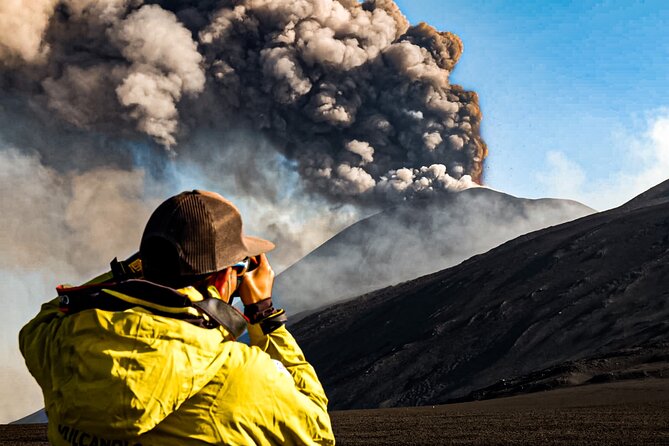
Mount Etna feels close on the north side. This guided 4×4-and-trek day takes you from Piano Provenzana up through lava country to the summit zone around 3,380 m, with a plan that adapts to changing volcanic conditions. I love the smaller-group pace (max 10) and the fact that you’re not just driven up and rushed off the crater rims. The main drawback to weigh is the physical demand: you’re hiking at high altitude with real exposure to cold, wind, ash, and uneven volcanic ground.
What makes this one especially compelling is the mix of “wow drive” and “real hike.” You’ll spend time on an authorized panoramic track crossing forests, recent lava flows, fractures, and deep lateral craters—then you switch to a focused climb and crater-walk at the top. My one caution: if you have breathing or cardio issues, or if you’re not used to regular hiking, this is strongly discouraged.
In This Review
- Key highlights worth knowing
- A north-side Etna day that actually feels like Etna
- Getting to Piano Provenzana: where the day begins
- The 4×4 drive: panoramic, bumpy, and practical
- Stop-by-stop: what you do and why it matters
- Stop 1: Piano Provenzana briefing and gear time
- Stop 2: Itinerario Crateri Sommitali (the north flank track)
- Stop 3: The summit hike to crater rims (near 3,380 m)
- Stop 4: Back to Piano Provenzana for the reset
- Gear, health, and what you should bring (so the hike stays fun)
- Price and value: what $78.61 buys you, and what you pay on the spot
- Who this tour is best for (and who should skip)
- Weather, route changes, and how to stay calm when plans flex
- Should you book this Summit Etna North 3380mt day?
- FAQ
- FAQ
- What time does the tour start?
- How long is the trekking and the full experience?
- What’s included in the price?
- Is the 4×4 ride included?
- What should I wear or bring for comfort and safety?
- Is this tour suitable for children or people with health issues?
Key highlights worth knowing
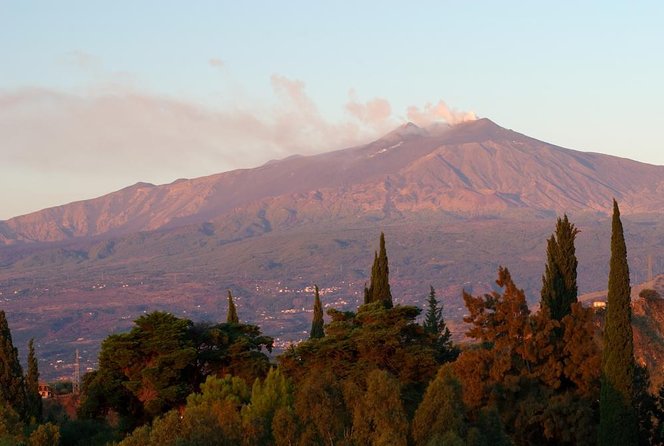
- North-side Etna, less crowded than the typical southern-route approaches, starting at Piano Provenzana
- Authorized 4×4 + guided trekking from roughly 2,960 m up toward the summit area
- Crater-rim walking near fumaroles and multiple named craters (North-East, Voragine, Bocca Nuova, South-East)
- A safety-first route that changes daily based on gas, heat, and fractures
- Small group size (max 10) with guides who adjust pace when needed
- Hands-on gear support: shoes, poles, socks, helmets, backpack, jackets provided
More ways up the volcano from Sicily
- Etna Morning Trip
★ 4.5 · 1,241 reviews - Mt. Etna nature and flavors half day Tour from Catania
★ 5.0 · 545 reviews - Etna excursion 3000 meters with 4×4 cable car and Trekking
★ 4.5 · 504 reviews - Mount Etna Adventurous Hiking Tour with Equipment
★ 4.5 · 439 reviews
A north-side Etna day that actually feels like Etna
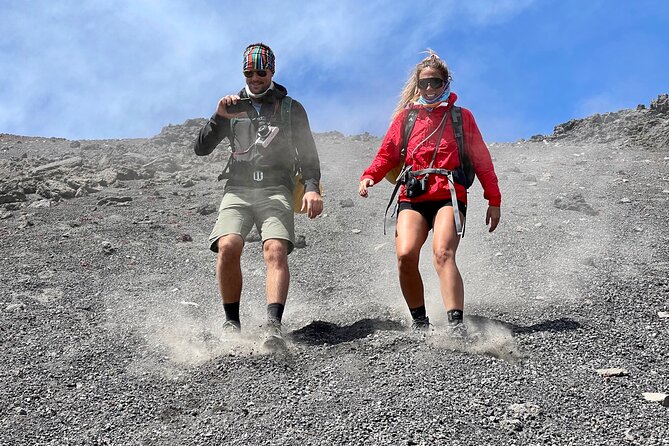
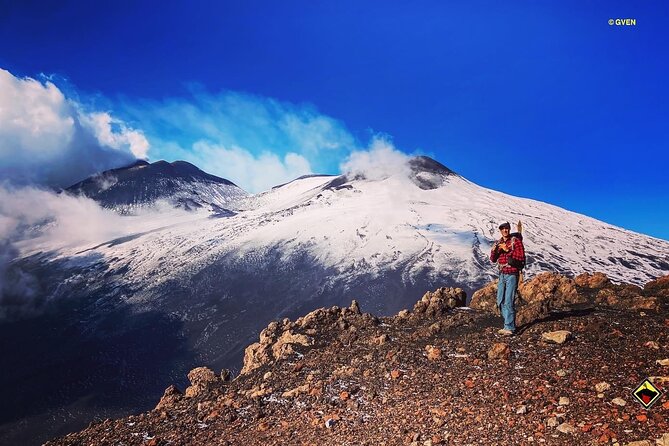
Most Etna outings you’ll see are built around quick transport and short time at the top. This one is built differently. You start from Piano Provenzana on the north flank, then you earn your summit views with a guided climb that reaches the summit area near 3,380 m.
That north-side choice matters. Piano Provenzana is described as less crowded than other Etna stations, and you feel it right away: pine forest, lava fields, and a more lived-in rhythm around the meeting point. The result is a day that feels more grounded—less like a sightseeing drive, more like a real outing into a working volcano.
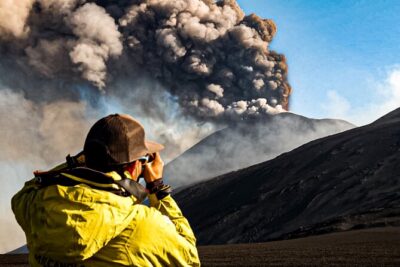
The other big reason I like this approach is the guide-led flexibility. Volcanic activity changes daily. Your route is chosen toward the safest yet most active secure crater option, and it can shift if gas, heat, or fractures make the original plan unsafe. You’re not “stuck” to a script. You’re hiking with working information.
Getting to Piano Provenzana: where the day begins
Your day starts at the CHIOSCO BAR MARENEVE DI FERRARO Etna nord – Piano Provenzana near Linguaglossa (Via Provenzana). Expect an early meeting rhythm for the morning departure: you meet at 7:45 a.m., with departure roughly 8:00–8:15 a.m. There’s also an afternoon start option at 1:00 p.m., running May to October.
Plan to arrive with time to spare. Before the excursion begins, there’s room to handle basics: you can use restrooms at the meeting area, and there’s a café setup where you can grab breakfast—coffee or tea and a pastry is an easy move before you’re busy with gear and altitude.
One more detail that’s worth remembering: Piano Provenzana sits within the wider volcanic aftermath of the October 27, 2002 eruption. It’s not a generic viewpoint. The area was reshaped and some facilities were destroyed, and you still see a volcanic environment that feels historical and active at the same time.
If you’re driving yourself, you’ll also want to think seasonally. The access road to the starting zone is described as drivable, but in winter you should carry snow chains or use winter tires. It’s one of those “small thing that can ruin your morning” considerations.
The 4×4 drive: panoramic, bumpy, and practical
After the briefing, you move to authorized 4×4 vehicles for a panoramic climb up Etna’s north flank. The driving part isn’t just transport—it’s built for getting you onto the right high-altitude terrain without wasting the day on long uphill slog.
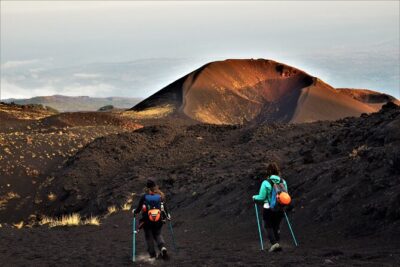
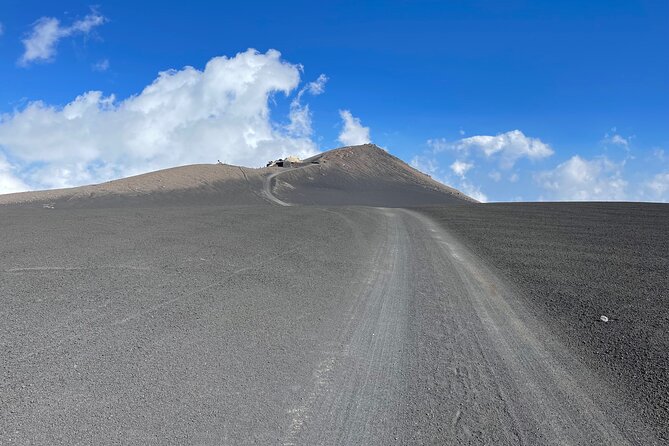
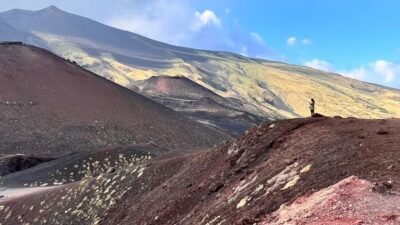
Along the way, you cross lava country and different volcanic features. The route is described as climbing from about 1,800 m to 2,960 m, covering roughly 9.5 km of panoramic track. You’ll pass forests, recent lava flows, a lava-flow channel, eruptive fractures, and lateral craters that can be around 40 m deep. It’s the kind of variety that keeps you paying attention even before the hike begins.
Views are a big part of the payoff. On clear days, you may look over northern Sicily, the Aeolian Islands, the Strait of Messina, and parts of both the Ionian and Tyrrhenian seas. Rare clarity can also show ranges and coasts like the Madonie, plus areas such as the Gulf of Catania, Syracuse, Augusta, and the Valle del Bove.
Is there a drawback? The 4×4 ride is part of the experience, but it also means you’ll feel vibration and bumps. Bring a jacket even if the lower area is comfortable; conditions at altitude can flip fast.
Stop-by-stop: what you do and why it matters
A few we would gladly point a friend toward in Sicily
Stop 1: Piano Provenzana briefing and gear time
At Piano Provenzana, you meet your volcanological guide team, and you get the equipment and instructions you need before you head out. This matters more than it sounds. Etna is not a normal hike, so gear fit and safety habits are part of getting the day right.
The tour setup includes practical prep: you can use the restrooms first, then you meet the guides. They handle equipment and provide what you need for the climb. If you’re arriving hungry, there’s café time before the group briefing.
One “think ahead” note from the operation: winter conditions can involve snow, so bringing what you need for layers is important. Your own vehicle access may also require chains in winter.
Stop 2: Itinerario Crateri Sommitali (the north flank track)
This is where you cover the high-altitude approach by 4×4 on an unpaved panoramic track on the wild north slope. The goal is to get you close to the summit zone while keeping the experience off the most crowded lines.
You’ll move through that chain of volcanic features—forests, fresh lava, fractures, and deep craters—while guides stay with you through the drive and later the hike. The group size is kept small, so you’re not stuck in a long line of hikers.
This stop is also about timing. The morning start is built for good conditions, and the afternoon option is available only during May to October. Either way, you’ll be adapting to what the volcano is doing that day.
Stop 3: The summit hike to crater rims (near 3,380 m)
From about 2,960 m, the guided trek begins. The summit hike is described as around 5 km with about 550 m of ascent. At these elevations, that’s not a “slow walk.” It’s a climb where you feel altitude.
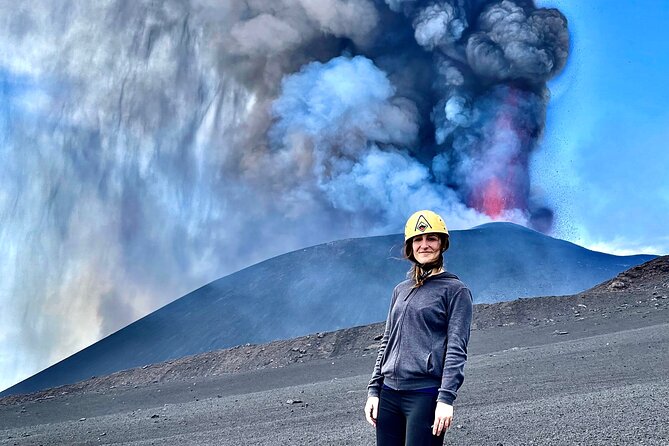
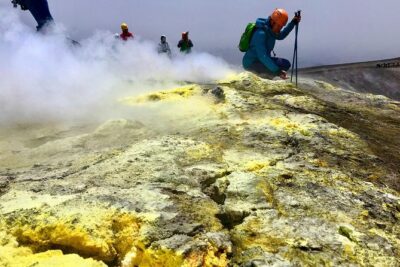
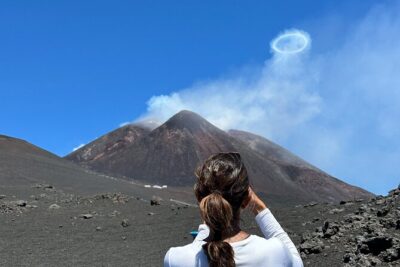
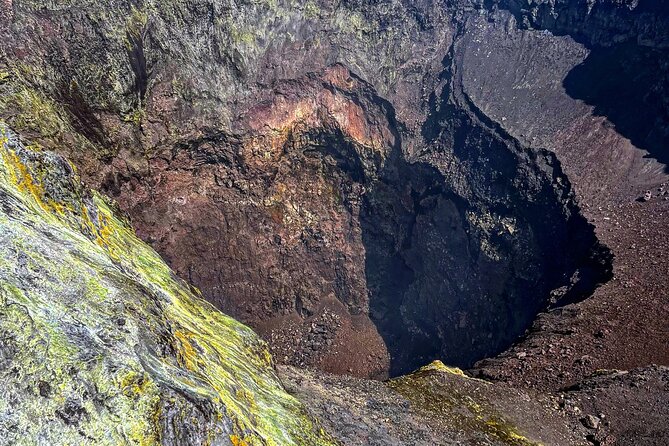
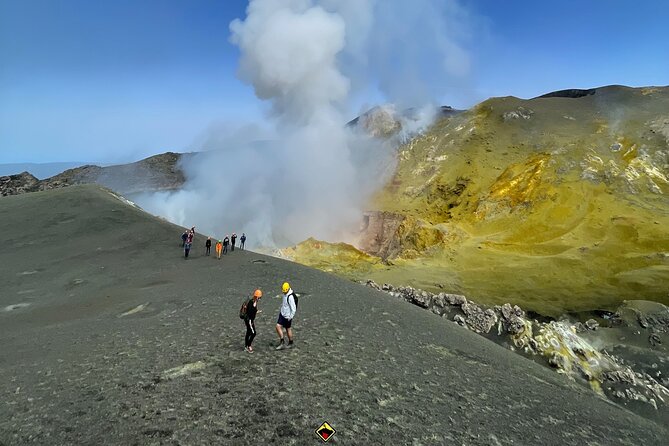
The tour targets the summit area with four main craters: North-East, Voragine, Bocca Nuova, and South-East. You’re walking the rims of active craters rather than just viewing from a distance. That’s a huge part of the value here: you’re close to fumarolic gas, mineral color changes, and formations from recent lava.
The route is chosen for safety. Because volcanic activity changes daily, guides pick the safest path toward the most active yet secure crater option. If gas, heat, or fractures affect the area, your route can be adjusted. This is one reason your guide’s instructions matter—don’t treat route changes as a “delay.”
Altitude can cause mild effects even for people who feel fit, so the operation asks you to report health issues. The descent is on soft scoria channels: about 4 km of down route with roughly 600 m of drop. Total walking distance is around 8–9 km over the day, spread across about 5 hours of overall activity time (including drive components).
At the top, it can be cold. One seasonal tip that comes up in the experience: in late September, temperatures at the summit zone have been around 2°C. Layers aren’t optional.
Also: you’ll likely see fumaroles, gases, and ash particles. The tour explicitly recommends not using contact lenses because of volcanic gases and ash.
Stop 4: Back to Piano Provenzana for the reset
After the hike, you head back by 4×4 for roughly 25–30 minutes, ending again at Piano Provenzana. This is a nice bookend because the meeting area is set up for real life: souvenir spots, cafés and bars for coffee or lunch, and places to refill water bottles.
Piano Provenzana also serves multiple roles depending on season. In winter, it’s a ski resort; in summer, it becomes a base for guided hikes and excursions. So you’re not just dropped into an empty high point—you come back to an actual working station.
Gear, health, and what you should bring (so the hike stays fun)
One of the best value points here is the gear package. Included items include trekking shoes, trekking poles, socks, protective helmets, a backpack, and jackets, plus accident insurance. You won’t need to show up with your own hiking kit in perfect Etna mode.
That said, not everything is included. The tour says K-way rain jacket, hat, and gloves aren’t included, and they’re recommended in autumn, winter, and spring.
If you want to give yourself the best odds of feeling comfortable at altitude, focus on the basics that work everywhere: layers that breathe, warm top for the rim area, and sun protection. One practical tip that shows up: bring sunglasses and sunscreen, because the summit area can be bright and exposed.
Health-wise, take the warnings seriously. The tour is not suited for children under 12. It’s strongly discouraged for people with cardio-vascular problems, breathing problems, or hypertension. And it’s described as requiring good physical preparation because volcanic soil can be inconsistent and unstable, plus you’ll hike at high altitude where fatigue comes quickly.
If you don’t regularly hike or you rarely do uphill walking, this is the wrong kind of challenge. The tour asks for a moderate physical fitness level, but the actual summit trek is demanding.
Price and value: what $78.61 buys you, and what you pay on the spot
The listed price is $78.61 per person for the experience. That number is only part of the final cost.
The tour data also states that the off-road vehicle portion from about 1,800 m to 2,825 m round trip costs €60 per person, paid on the spot. So you should budget for that extra amount if you’re comparing total cost.
On top of that, parking might be €5 on weekdays and €8 on Sundays and public holidays.
What you’re really buying with the base price is the guided part and the training-wheel gear. You get an authorized volcanological guide, included safety gear (helmets and protective items), trekking poles/shoes/socks/jackets, and accident insurance. Considering the altitude and the safety rationale behind the route changes, that guided support is a big part of the value.
In other words: this isn’t the cheapest Etna option. But it’s priced like a serious guided activity, with gear and a crater-focused objective.
Who this tour is best for (and who should skip)
This tour makes the most sense if you:
- enjoy hiking and can handle steep ground for altitude distances
- want the north side approach with a more personal group size
- want guided crater walking rather than a quick photo stop
- can dress in layers and tolerate cold or wind at the rim
You should probably skip if you:
- have breathing or heart conditions, or hypertension
- hate uneven footing or don’t do uphill hiking regularly
- can’t manage cold exposure or the effects of high altitude
- want a stroller-friendly day (it’s not suited for kids under 12)
The operation also notes that service animals are allowed, which may matter for some visitors, but the activity itself is still physically demanding.
Weather, route changes, and how to stay calm when plans flex
One thing you should expect on Etna is not perfect predictability. The tour says it can vary or even interrupt based on environmental, climatic, or volcanic conditions to protect the group.
That’s not a negative if you’re there for the real thing. It’s the way a working volcano is handled safely. Your guide is watching for gas, heat, fractures, and the safest secure crater option. So if the route shifts, it’s usually because safety needs it—not because the team is unprepared.
Also keep the weather angle in mind: the experience requires good weather. If it’s canceled due to poor weather, you’ll be offered another date or a full refund.
Should you book this Summit Etna North 3380mt day?
I’d book it if you want a north-side Etna experience with a real climb and crater-rim walking—plus the help of a volcanological guide and a full gear package. The small group size (max 10), the crater-focused objective, and the route-changing safety logic are the heart of the value.
I’d think twice if you’re expecting an easy hike, if your fitness isn’t built for steep altitude walking, or if you have any of the breathing/heart-related concerns the tour warns about.
If you’re physically ready and you bring layers (and skip contact lenses), this is one of the more authentic ways to see Etna up close without treating the volcano like a quick bus stop.
FAQ
FAQ
What time does the tour start?
For the morning option, you meet at 7:45 a.m. and depart around 8:00–8:15 a.m. There’s also an afternoon start at 1:00 p.m. from May to October.
How long is the trekking and the full experience?
The overall experience runs about 5 hours (approx.). The guided summit hike is about 5 km with around 550 m of ascent, and the descent is about 4 km with around 600 m of drop, for a total of about 8–9 km on foot.
What’s included in the price?
The included items are an authorized volcanological guide, trekking shoes, trekking poles, socks, protective helmets, backpack, jackets, protective helmets (listed), and accident insurance.
Is the 4×4 ride included?
No. The off-road vehicle portion is not included. It costs €60 per person and is paid on the spot (round trip from about 1,800 m to 2,825 m).
What should I wear or bring for comfort and safety?
Dress in layers, because the summit area can be very cold. The tour recommends sunglasses and sunscreen. In autumn, winter, and spring, bring a hat, gloves, and a rain jacket (k-way) since those are not included.
Is this tour suitable for children or people with health issues?
It’s not suited for children under 12. It’s strongly discouraged for people with cardio-vascular problems, breathing problems, or hypertension, and it requires good physical preparation.
More Hiking & Trekking in Sicily
More Tour Reviews in Sicily
More Etna Summit Treks We Have Walked
Just added: the newest Sicily tours in our notebook
- Etna / Taormina★ 5.0 · 3 reviews
- Bikes★ 5.0 · 3 reviews
- Taormina shore tour – for small group cruise passengers★ 5.0 · 3 reviews
- Vegan Cooking Class in Catania with Lunch and Dinner★ 5.0 · 3 reviews
- Make & Taste Sicilian Desserts in Palermo – Learn Cannoli & More★ 5.0 · 3 reviews
- Sicilian Villages & Ricotta Tasting – including Lunch from Cefalu★ 4.0 · 3 reviews
Mount Etna Tours & Summit, compared.
 ★ 4.8Catania: Mount Etna Morning or Sunset Day Trip with TastingFrom $704,028 reviews
 ★ 4.8Catania: Sunset Jeep Tour of Mount Etna and Lava Flow CavesFrom $712,113 reviews
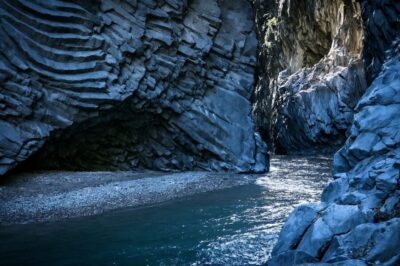 ★ 4.8Etna and Alcantara Gorges Full-Day Tour with LunchFrom $1051,766 reviews
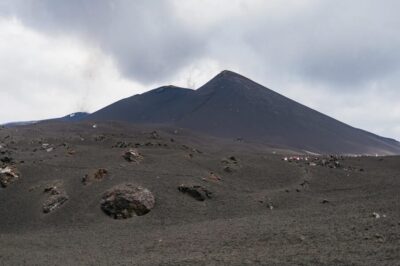 ★ 4.7Etna: summit craters trekking with volcano guide 3350mtFrom $771,712 reviews
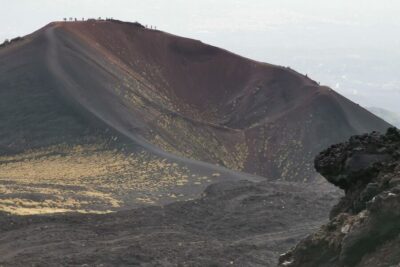 ★ 4.9Catania: Mount Etna Trekking Tour Beyond the Tourist TrailsFrom $811,596 reviews
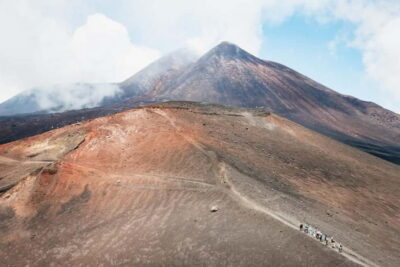 ★ 4.8Mount Etna: Guided Trek 3,000 Meters to the SummitFrom $1131,407 reviews
 ★ 4.8Catania: Etna Sunset Tour with Pickup and Drop-offFrom $711,348 reviews
 ★ 4.8Etna Sunset Tour: Volcano trek, Cave & tasting from CataniaFrom $701,290 reviews
Browse the lists this tour appears in