
Reviewed · SYRACUSE & ORTIGIA
Siracusa Walking Tour with Audio and Written Guide by a Local
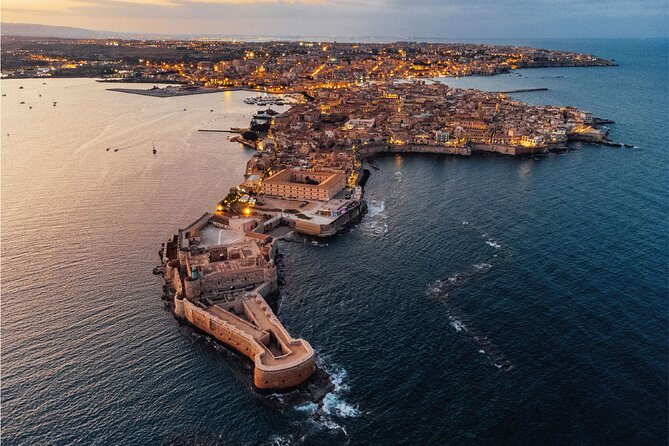
One neighborhood, two thousand years of stories, and zero schedule stress. This Siracusa walking tour uses a digital audio-and-text guide so you can explore Ortigia and nearby ancient sites on your terms while still feeling guided.
I really like two things: the way the route keeps you moving with short stops, and the fact that audio + written notes help you understand what you’re seeing even if you don’t speak Italian. The other big win is practical: it’s wheelchair and stroller accessible, so the walk is easier than many old-town routes.
One possible drawback: you’ll need a smartphone with internet to use the digital guide, and in a few cases the connection can be flaky. If you plan for that, it’s a smooth experience.
In This Review
- Key things you’ll enjoy on this Syracuse walk
- A self-guided Syracuse walk that still feels like a local
- Start at the Mercato di Ortigia: market energy and Mediterranean crossroads
- Temple of Apollo and Fontana di Diana in Ortigia’s center
- Syracuse Cathedral: a church sitting on ancient temple foundations
- Arethusa Spring: the fountain that inspired writers
- Neapolis Archaeological Park: Greek Theatre and the Ear of Dionysius
- The Madonna delle Lacrime and Santa Lucia al Sepolcro: faith shaped by miracles
- Timing reality: how 4 to 5 hours plays out on your feet
- What’s free and what’s not: manage tickets without stress
- Smartphone setup: the difference between smooth and frustrating
- Navigation tips so you spend less time looking at your screen
- Local food advice: use the guide beyond monuments
- Who this tour fits best in Syracuse
- Should you book this Siracusa Walking Tour?
- FAQ
- How much does the Siracusa walking tour cost?
- How long is the tour?
- Is this tour offered in English?
- What languages are included in the guide?
- Do I need headphones?
- Do I need internet on my smartphone?
- Are tickets included for all monuments?
- Where does the tour start and end?
- Is the tour accessible for strollers or wheelchairs?
- What is the cancellation policy?
Key things you’ll enjoy on this Syracuse walk
- Self-paced route: short walking segments, then time to linger
- Audio or text on demand: listen through speakers or use headphones
- Five-language support: English, Spanish, Italian, German, French
- Ortigia + major ancient stops: from the market to Neapolis archaeology
- Smart map navigation: connected with Google Maps
- Great value: a full half-day for a low per-person price
Deeper into Ortigia and old Syracuse
- Syracuse: Boat Tour with Captain Mirko, Snorkeling & Caves
★ 4.7 · 746 reviews - Siracusa: Ortigia Boat Tour with Marine Grotto & Snorkeling
★ 4.7 · 726 reviews - Siracusa: Ortigia & Sea Caves Boat Tour w/ Prosecco & Fruit
★ 4.8 · 723 reviews - Syracuse: Ortigia Island & Sea Cave Boat Tour with Prosecco
★ 4.7 · 418 reviews
A self-guided Syracuse walk that still feels like a local
This is not the classic group “follow me” style tour. It’s a mobile guide that gives you structure without forcing you to stick to anyone else’s pace. You’ll walk the route, press play when you’re ready, and spend more time where your curiosity pulls you in.
At $7.84 per person, the price is the kind of value you notice right away. You’re not paying for a person standing there for hours—you’re paying for a guided experience you control. That matters in Ortigia, where street corners and views make you want to stop again and again.
You should also know how you’ll hear the guide. The audio can play through your phone’s speakers, or you can use headphones if you have them. Either way, the experience is designed to be listen-while-you-walk, not “stand and read for 45 minutes.”
Start at the Mercato di Ortigia: market energy and Mediterranean crossroads
You begin at the Ortigia Street Market in Vicolo Bagnara. This is a smart start because you’re already in the part of Syracuse where daily life and history touch.
The first stop focuses on the market’s role since Greek and Roman times—a meeting place for merchants and ideas across the Mediterranean. You’ll hear how goods like fish, fruit, vegetables, and spices weren’t just traded; they were part of cultural exchange, too. That context helps you look at the present-day market with more meaning, not just “shops and stalls.”
Practical tip: give yourself a moment before you start the audio so you can orient visually. Old streets here can look similar, and having your bearings helps you enjoy the stories instead of juggling maps.
Temple of Apollo and Fontana di Diana in Ortigia’s center
Ortigia is compact, but the route keeps rewarding you with landmarks that feel important even when you’re just passing through. One of the highlights is the Temple of Apollo, built at the beginning of the 6th century BC. It’s noted as the oldest example of a Doric temple in Sicily, so even if you’re not a temple-nerd, this is a big deal historically.
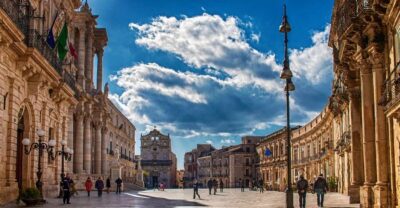
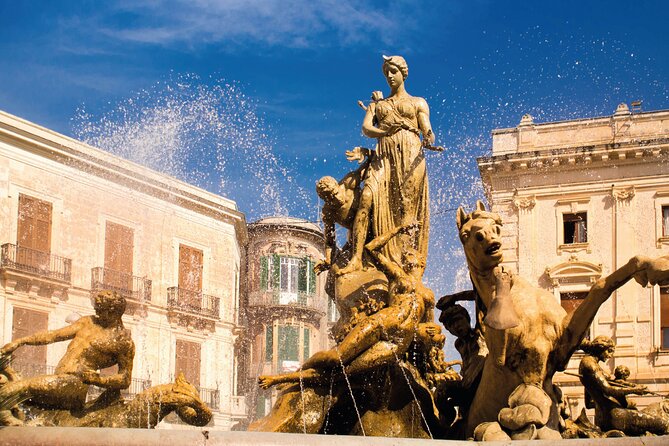
Then you head to Piazza Archimede for the Fontana di Diana. The fountain was created between 1906 and 1907 by Palermo sculptor Giulio Moschetti. It’s a nice contrast: you’re moving from the ancient Doric presence into a more modern work of civic art, still tied to local identity.
What to expect: these are great stops for quick photos and short pauses. The guide keeps the timing tight, so you won’t lose the day to one site.
Syracuse Cathedral: a church sitting on ancient temple foundations

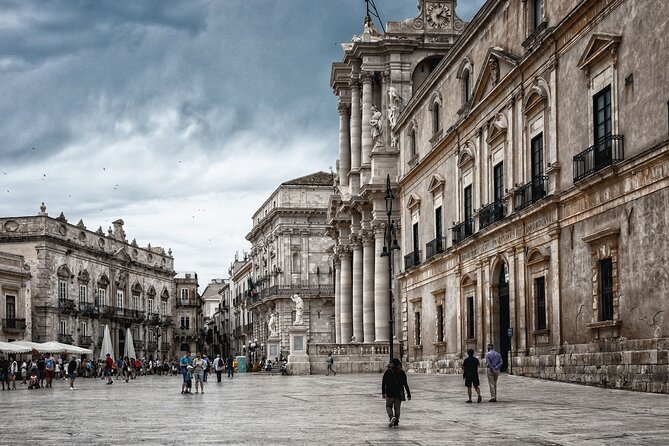
Next up is Syracuse Cathedral, also known as the Cathedral of Syracuse. The guide explains that it stands on the foundations of an ancient Doric temple dedicated to Athena, built by the Greek-Siceliots in the 5th century BC.
This is one of those places where “where you stand” matters. You’re not just seeing a religious building; you’re seeing layers—Greek Sicily underneath later architecture. That’s why the audio/text format works well here: you can read or listen while you look around, so the story clicks immediately.
Note on tickets: the cathedral entry is marked as not included. So plan for a possible paid stop if you want to go inside rather than just admire from the outside.
A few we would gladly point a friend toward in Syracuse
Arethusa Spring: the fountain that inspired writers
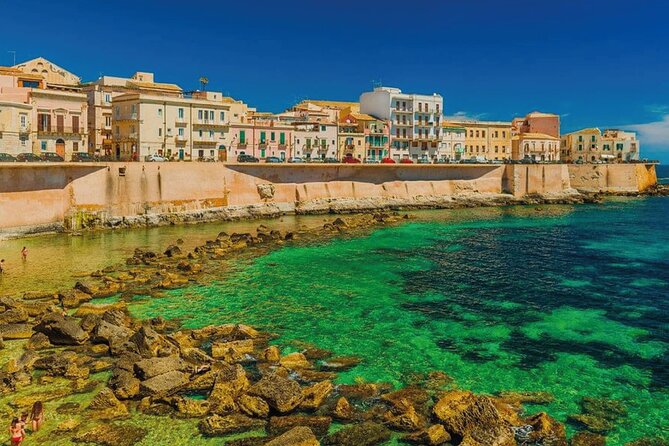
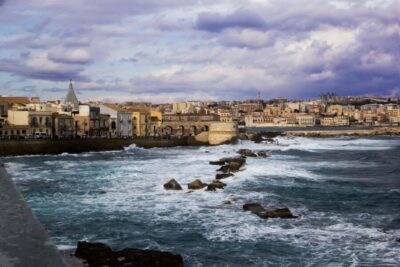
Then you shift to water—a short distance from the sea—and to a spot that’s been pulling writers toward it for ages: Arethusa Spring (Fonte Aretusa). You’ll also hear its local nickname, a funtana re papiri, or the fountain of papyrus.
It’s a quick stop (listed around 10 minutes), but it’s worth using as a reset. Even if you only have time for a short look and a photo, it gives your walk variety: market energy, architectural history, and then a calm natural element.
Practical tip: if you like photos without people in them, arrive early in the stop window and be ready for short waiting time near popular spots.
Neapolis Archaeological Park: Greek Theatre and the Ear of Dionysius

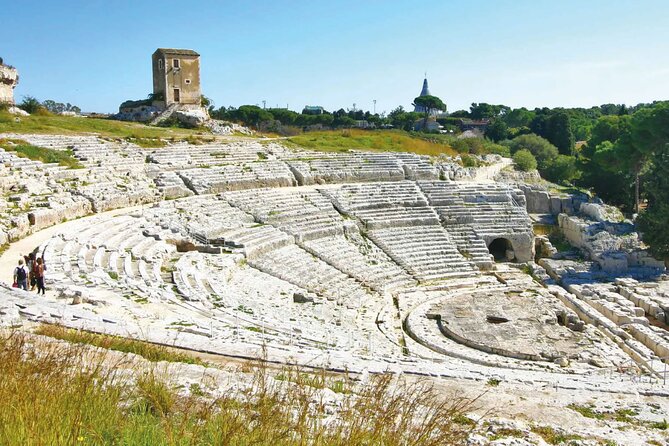
This is where your tour expands beyond Ortigia. The Parco Archeologico della Neapolis is large (about 240,000 square meters) and one of the biggest archaeological areas in the Mediterranean. The route allots about 1 hour 30 minutes, which feels right because this section isn’t just one viewpoint—it’s multiple must-sees.
Two key stops are highlighted:
- The Greek Theatre of Syracuse, remembered for its grandeur. It’s described as one of the most important theatres in the world, and compared with the scale of the theatre of Athens.
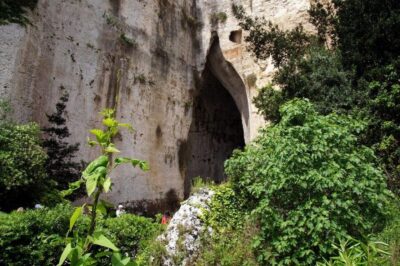
- The Ear of Dionysius, a famous cave area in the Latomia del Paradiso, dug by stone quarrymen along limestone veins.
Why this part is valuable: the audio/text guide helps you “see” the sites as they were used. Otherwise, some ruins can feel like pretty stone fragments. Hearing what made the theatre and quarry area significant makes it easier to appreciate the engineering and the scale.
Note on tickets: Neapolis park entry is listed as not included, so check what’s required when you arrive. If you only have time for the exterior viewpoints, you can still get meaning from the stories.
The Madonna delle Lacrime and Santa Lucia al Sepolcro: faith shaped by miracles
After ancient theatres and stone caves, you end your walk with two sanctuaries that explain how belief and local memory shape Syracuse.
First is the Sanctuary of Madonna delle Lacrime, built after a miracle in 1953. The guide shares the story that an effigy of the Immaculate Heart of Mary began to weep. The route stops at about 20 minutes, which is enough time to take it in without rushing.
Then comes Santuario di Santa Lucia al Sepolcro. This is located just outside the city walls and marks the site of the martyrdom and burial of Santa Lucia, patron saint of the city. It’s listed around 15 minutes.
How to get the most out of these stops: treat them as cultural anchors. You’ll learn why these places matter to locals, not just what they look like. That way, your walk doesn’t feel like a checklist—it feels like a city with living meaning.
Timing reality: how 4 to 5 hours plays out on your feet
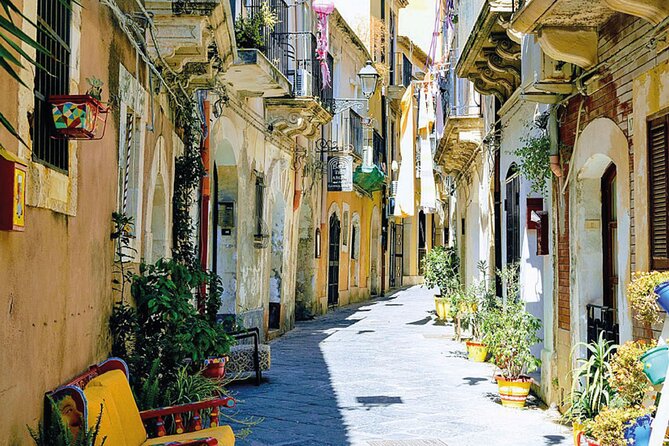
The route is designed for about 4 to 5 hours, but your real time depends on how often you pause. The biggest time-saver is the way the stops are paced: you’ll typically walk a short distance, then get an audio/text segment, then move again.
From experience with this kind of route style, I’d plan your day like this:
- Start with Ortigia sites while energy is high
- Use Neapolis as your “bigger time block”
- Keep your last sanctuaries flexible for photos and a calmer finish
Also, you’re not stuck with one pace. You can linger at a fountain, slow down for a viewpoint, or speed up when something doesn’t grab you.
What’s free and what’s not: manage tickets without stress
Some stops are listed as free admission, including:
- Mercato di Ortigia (market area)
- Fontana di Diana
- Arethusa Spring
- Madonna delle Lacrime
- Santa Lucia al Sepolcro
Other stops are listed as not included, specifically:
- Syracuse Cathedral
- Parco Archeologico della Neapolis (and its key ancient areas)
The practical takeaway: bring the mindset that your digital guide covers the story and navigation, while you handle any paid entries directly on-site. If you want inside access for the cathedral and park, build a little extra time so ticket lines don’t squeeze your schedule.
Smartphone setup: the difference between smooth and frustrating
This tour runs on your phone. You’ll get details to activate the digital guide in your voucher, and you’ll need a smartphone with internet connection. The guide is connected to Google Maps, which makes the route easier to follow step-by-step.
Two things to keep in mind:
- Headphones aren’t included. If you want cleaner audio, bring your own.
- Your phone’s connection can make or break the experience. If your service is weak (for example, on a cruise day or in an area with spotty signal), you’ll want to be ready to handle that.
If you’ve got the option, try to make sure your guide is accessible on your phone before you start walking. When the connection holds, the audio-and-text rhythm feels excellent.
Navigation tips so you spend less time looking at your screen
The guide uses the phone map connection, but you’ll still want to keep your attention mostly on the streets. Here’s how to do it without turning your day into a phone-finding contest:
- Let Google Maps get you to the next area first, then start the audio
- When the audio begins, keep your eyes up and use the written section only if you want extra detail
- At busy corners, pause off to the side before switching between screens
Some people find the written text display needs extra scrolling. That’s not fatal—you just want to plan for it by pausing when you need to read.
Local food advice: use the guide beyond monuments
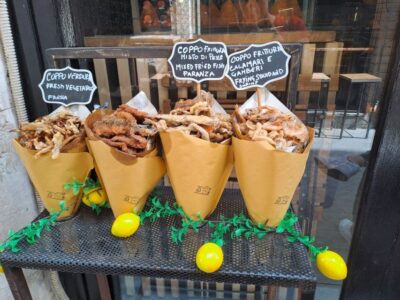
This experience includes best advice for local restaurant with authentic food. That part can genuinely improve your day because Ortigia is tourist-friendly and also tourist-price friendly.
My advice: don’t pick a restaurant on the first street you see. Use the guide’s suggestions, then compare with what you can find nearby. You’re aiming for a place that feels local in how it serves, not just a menu that looks good in photos.
If you build in one meal or snack break between the Ortigia cluster and the Neapolis block, the whole route feels easier and less like a sprint.
Who this tour fits best in Syracuse
This works especially well if you:
- Want a structured route but hate being rushed
- Prefer your own pace through narrow streets
- Enjoy learning through audio while you walk
- Want multilingual support (English plus Spanish, Italian, German, French)
It also fits well for people who may want accessibility-friendly pacing, since the walk is listed as wheelchair and stroller accessible.
If you strongly prefer a live guide who answers questions on the spot, you might still enjoy the stories but could feel limited by the phone-first format. In that case, consider pairing it with a shorter guided segment. But if you’re happy to explore independently with a trusted guide in your pocket, this is built for you.
Should you book this Siracusa Walking Tour?
If you want Ortigia and the big Syracuse ancient highlights without paying for a long, rigid guided group tour, I’d book this. The value is hard to beat, and the mix of market life, Doric-era context, and Neapolis scale makes the route feel like a full Syracuse day rather than a quick sightseeing loop.
Only skip—or be cautious—if you know you’ll struggle with internet access on your phone. Since the guide depends on a digital setup, a weak signal can turn “easy self-guided walk” into “why isn’t it playing?”
If your phone works and you’re comfortable using audio + text while you walk, this is one of those low-cost plans that can make your day feel smarter and more connected.
FAQ
How much does the Siracusa walking tour cost?
It costs $7.84 per person.
How long is the tour?
The duration is listed as 4 to 5 hours (approx.).
Is this tour offered in English?
Yes, it is offered in English, and the audio/text support is available in multiple languages.
What languages are included in the guide?
The guide includes English, Spanish, Italian, German, and French.
Do I need headphones?
No. You can hear the audio through your phone speakers, and you can use headphones if you have them. Headphones are not included.
Do I need internet on my smartphone?
Yes. You’ll need a smartphone with an internet connection to use the digital guide.
Are tickets included for all monuments?
Some sites are free, while others are not included. Syracuse Cathedral and Parco Archeologico della Neapolis are marked as not included, while stops like the market, fountain, Arethusa Spring, and the two sanctuaries are listed as free.
Where does the tour start and end?
Start: Mercato di Ortigia, Vicolo Bagnara, 96100 Siracusa SR, Italy.
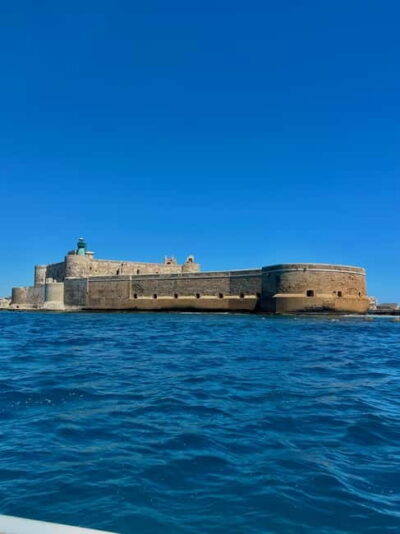
End: Castello Maniace, Piazza Federico di Svevia, 5, 96100 Siracusa SR, Italy.
Is the tour accessible for strollers or wheelchairs?
Yes. It’s listed as wheelchair and stroller accessible.
What is the cancellation policy?
You can cancel for free up to 24 hours in advance for a full refund. Less than 24 hours before start time is not refunded.
More Tours in Syracuse
More Tour Reviews in Syracuse
More of Syracuse and Ortigia
Just added: the newest Syracuse tours in our notebook
- Tour of Syracuse by Ape Calessino★ 3.0 · 3 reviews
- Syracuse Showdown Scavenger Hunt★ 5.0 · 3 reviews
- Sicily Boats Avola: Plemmirio boat tour 4 people 4 hours★ 5.0 · 3 reviews
- Groovy Geneva Scavenger Hunt★ 5.0 · 3 reviews
- Syracuse: Ortigia & Sea Caves Boat Tour with Local Skipper★ 5.0 · 3 reviews
- Siracusa: Neapolis’s Archaeological Park small group tour★ 5.0 · 3 reviews
Syracuse & Ortigia, compared.
 ★ 4.7Syracuse: Tour of Ortigia Island & Caves with Local SkipperFrom $231,060 reviews
 ★ 4.7Syracuse: Boat Tour with Captain Mirko, Snorkeling & CavesFrom $35746 reviews
 ★ 4.7Siracusa: Ortigia Boat Tour with Marine Grotto & SnorkelingFrom $47726 reviews
 ★ 4.8Siracusa: Ortigia & Sea Caves Boat Tour w/ Prosecco & FruitFrom $35723 reviews
 ★ 5.0Tour of the island of Ortigia and exploration of sea caves with baths.From $24668 reviews
 ★ 4.7Syracuse: Ortigia Island & Sea Cave Boat Tour with ProseccoFrom $23418 reviews
 ★ 5.0Boat tour of Ortigia Island and sea cavesFrom $24407 reviews
 ★ 4.6Catania: Syracuse, Ortigia, and Noto Tour with BrunchFrom $112404 reviews
Browse the lists this tour appears in