
Reviewed · NOTO & BAROQUE TOWNS
Ragusa Ibla Walking and Photography Tour
Ragusa Ibla looks like it was built for photos. This walking-and-photography tour teaches you exactly how to frame Duomo di San Giorgio and the view points around Ragusa Ibla, using your phone or camera, with photo coaching from local expert Liina Salonen. I love that the focus stays on beauty and angles, not a long lecture, and I also like that you end with a professional portrait shot for you in the gardens.
One thing to keep in mind: this is mostly an exterior photo walk. You do not go inside the churches or palazzi listed on the route, so if you’re after interiors and deep architectural access, you may want a different kind of tour.
In This Review
- Key things that make this Ragusa Ibla tour worth your time
- Ragusa Ibla, but with a camera plan in your pocket
- A photo lesson that actually applies while you walk
- The route: stop-by-stop where to aim your lens
- Stop 1: Duomo Di San Giorgio (outside photos only)
- Stop 2: Belvedere Solarino (viewpoint coaching)
- Stop 3: Chiesa di Santa Maria delle Scale (exterior details)
- Stop 4: Chiesa di Santa Lucia (views beside the church)
- Stop 5: Chiesa di Santa Maria dell’Itria (iconic bell tower)
- Stop 6: Palazzo Cosentini (architecture from the street)
- Stop 7: Chiesa delle Santissime Anime del Purgatorio (short and focused)
- Stop 8: Circolo di Conversazione (exterior frontage)
- Stop 9: Chiesa di San Giuseppe (more exterior framing)
- Stop 10: Portale di San Giorgio (the doorway moment)
- End point: Giardini Iblei (portrait demo and your professional shot)
- The professional portrait: why it’s included and how to get the best use
- Price and value: what $52.34 really buys you
- Small group size means real attention
- Who should book this Ragusa Ibla photography walk
- Practical tips to make your photos sharper right away
- Should you book? My take for the kind of trip you’re planning
- FAQ
- How long is the Ragusa Ibla walking and photography tour?
- Where does the tour start and end?
- What’s included in the price?
- Do we enter the churches on the route?
- Are admission tickets included?
- Is the tour small-group?
- Is this tour good for both phone and camera users?
- Is bottled water provided?
- Is cancellation free?
- Is it suitable for people with limited mobility?
Key things that make this Ragusa Ibla tour worth your time
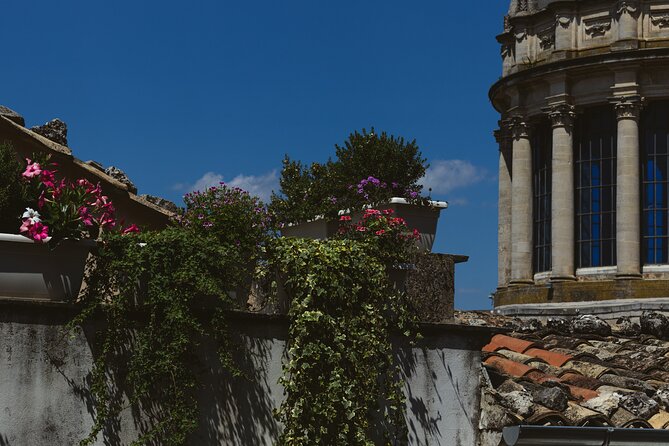
- Exterior-first photo stops focused on where to stand and how to shoot
- Duomo di San Giorgio viewpoint coaching, including a dedicated view stop at Belvedere Solarino
- Iconic bell-tower framing at Chiesa di Santa Maria dell’Itria
- Your portrait is part of the deal, taken by a professional photographer (and you get a demonstration at the end too)
- Small group size (max 12 people), which helps you get real attention
- Built for phones and cameras, so it’s not only for gear nerds
More of the baroque south-east
- Syracuse, Ortygia & Noto small group Tour from Catania with lunch
★ 4.5 · 98 reviews - Syracuse & Noto – Day Tour from Taormina
★ 4.0 · 51 reviews - Shared Tour by Minivan or Car from Syracuse to Ragusa, Noto and Modica
★ 4.5 · 50 reviews - Private Tour of Syracuse, Ortigia and Noto
★ 4.5 · 45 reviews
Ragusa Ibla, but with a camera plan in your pocket
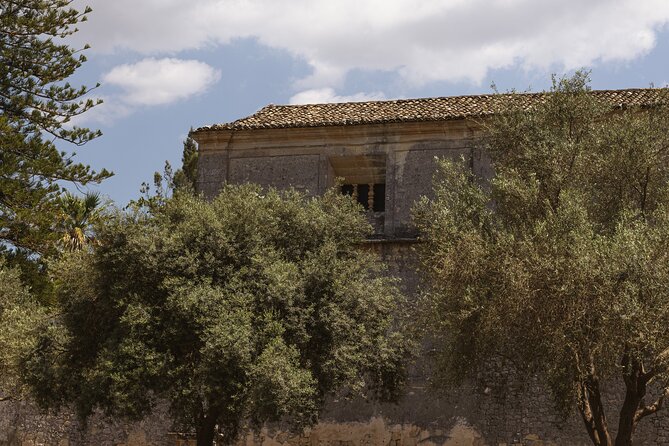
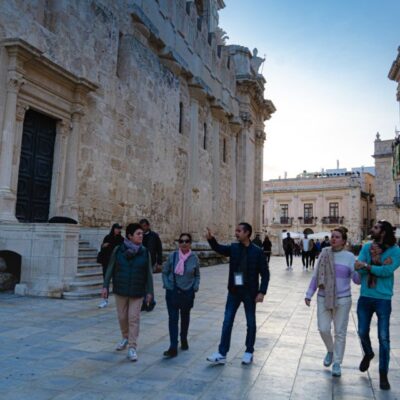
Ragusa Ibla can make you do the usual thing: stop, snap a few pics, and hope the angle is right. This tour nudges you past that. The route is designed around a classic Ragusa Ibla problem—great-looking spots, but too many wrong standing places—so your guide teaches you how to find the right view fast.
The best part is that it doesn’t drag. The walk is about 50 minutes of walking with plenty of short stops, and the total tour time is roughly 2 to 3 hours. That mix keeps your legs fresh enough for the tight streets and the quick photo decisions you’ll be making.
And yes, it’s in Sicily, so you’re walking through a town that naturally gives you strong lines, dramatic facades, and built-in framing. The coaching simply helps you capture it with less guesswork.
A photo lesson that actually applies while you walk
I like tours where the tips are usable immediately. Here, your guide shows you where to stand, then you shoot, then you adjust. It’s simple but effective.
Expect guidance on:
- Angles in each spot (where the view gets best shape)
- How to photograph landmarks you see on the route, with practical placement and direction
- How to get a flattering photo of yourself—important in a town where the background is so good you’ll want to be in it
- How to use your phone or camera’s capabilities without needing fancy equipment
What makes this more valuable than a standard sightseeing walk is the way it blends landmark shooting with self-portrait direction. You’re not just collecting views—you’re creating a set of photos that look intentional.
And you’ll meet photo stories along the way from your guide(s). The experience is led by Liina Salonen, and in the town’s explanation style you may also hear local context shared by an additional guide named Carmelo, a native of Modica.
The route: stop-by-stop where to aim your lens
The itinerary moves from Ragusa Ibla’s big landmark corners toward smaller churches, portals, and viewpoints, ending in the Giardini Iblei gardens for your portrait moment. Most stops are 5 to 10 minutes, which means you’ll learn to shoot quickly instead of spending forever fiddling.
Stop 1: Duomo Di San Giorgio (outside photos only)
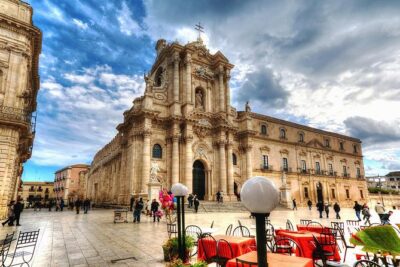
You start at Piazza Duomo, 36, 97100 Ragusa RG, near the Duomo di San Giorgio area. At this first stop, you look at the Duomo from the outside. The tour notes that admission is not included, and you are not entering, so treat this as a pure exterior framing lesson.
What to do with your camera:
- Chase the most complete facade view you can get from the street.
- Watch for the angle that shows the building’s strongest lines without turning your image into a messy jumble.
- Take a first quick shot, then follow your guide’s cues and take a second that’s more “composed.”
A few we would gladly point a friend toward in Sicily
Stop 2: Belvedere Solarino (viewpoint coaching)
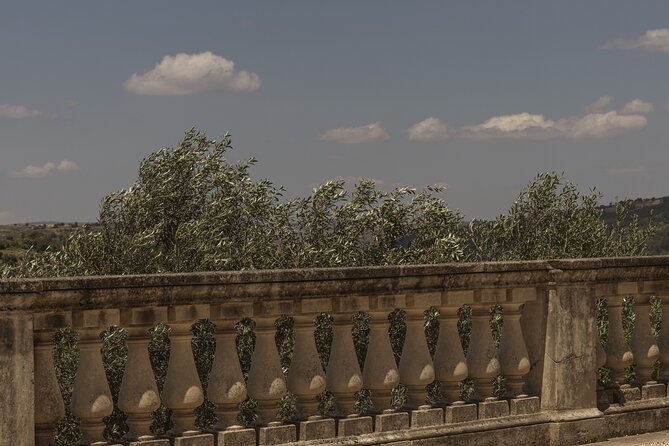
This is where the tour earns its reputation. At Belvedere Solarino, your guide points out a view of Duomo di San Giorgio and gives you tips for photographing it.
Viewpoints can be tricky because you often end up too high or too low. The coaching helps you find a framing height that makes the Duomo look anchored in the town instead of floating awkwardly.
This is also a good moment to try:
- Portrait mode vs. landscape mode (see which keeps the scene balanced)
- A slightly wider shot first, then a tighter one if you can step closer or crop effectively
Stop 3: Chiesa di Santa Maria delle Scale (exterior details)
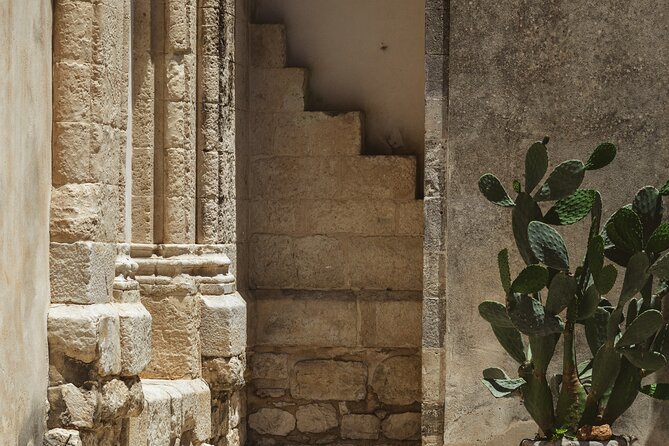
Next is Chiesa di Santa Maria delle Scale. Again, you don’t enter. The guide shares history and context, but the actual task is about exterior composition.
I’d use this stop to practice “small detail” shooting:
- Photograph textures and stone edges.
- Look for lines that lead the eye toward the church, not away from it.
- Take one photo that’s more about the facade and one that includes the surrounding street feel.
Stop 4: Chiesa di Santa Lucia (views beside the church)
At Chiesa di Santa Lucia, the emphasis is on the exterior and the beautiful views right next to the church.
This is one of those stops where your best shot might be half a step to the left or right. If the background looks perfect from one angle but your subject (the church) looks skewed, don’t force it—move and shoot again.
Stop 5: Chiesa di Santa Maria dell’Itria (iconic bell tower)
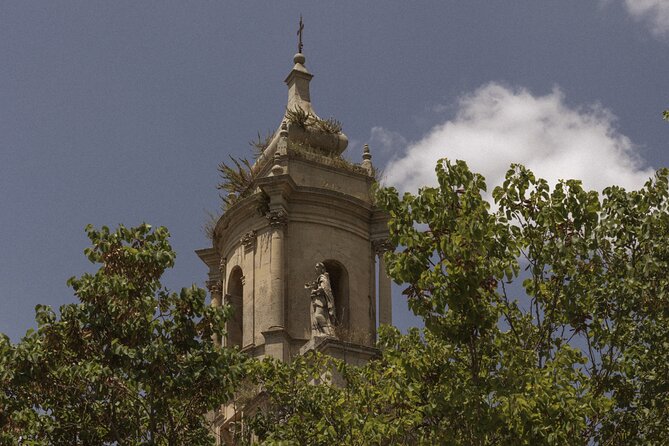
This is a big one for photos. Chiesa di Santa Maria dell’Itria has the kind of bell tower that makes Ragusa Ibla instantly recognizable, and your guide will show you the best place to take a photo of it.
Because the tower is your focal point, you’ll want to:
- Keep the tower vertical in the frame as much as possible.
- Avoid the shot that cuts off the top or makes it look tilted.
- If you’re using a phone, check that image stabilization isn’t fighting your movement when you press the shutter.
Stop 6: Palazzo Cosentini (architecture from the street)
Next is Palazzo Cosentini. You look at the architecture from outside, and admission is listed as not included. Since you’re not entering, don’t plan to spend time hunting doorways.
Use this stop for a different skill than the churches:
- Build a shot with symmetry or strong repeating patterns.
- Capture how the palazzo sits within the street’s perspective.
Stop 7: Chiesa delle Santissime Anime del Purgatorio (short and focused)
At Chiesa delle Santissime Anime del Purgatorio, you get a history note, then you focus on the exterior. This stop is shorter, around 5 minutes, so think of it as your “quick hit” practice stop.
Stop 8: Circolo di Conversazione (exterior frontage)
Circolo di Conversazione is another exterior-focused stop, with no entry. Since it’s brief, make your shots efficient:
- Shoot one clean exterior frame.
- Shoot one “street context” shot that includes the surroundings.
Stop 9: Chiesa di San Giuseppe (more exterior framing)
Chiesa di San Giuseppe continues the rhythm: quick context, then you photograph the exterior. This is helpful if you want a set of images that feel consistent rather than random.
Try to use a similar lens or framing style for multiple church stops so your photo series looks cohesive.
Stop 10: Portale di San Giorgio (the doorway moment)
Then you reach Portale di San Giorgio, the kind of doorway/entry feature that photographs well because it gives you built-in framing and texture.
This is a nice moment to slow down just a touch:
- Take one shot straight-on.
- Take one from a slight angle to show depth.
End point: Giardini Iblei (portrait demo and your professional shot)
The walk finishes in Giardini Iblei, and this is where you get the portrait photography demonstration. You spend about 30 minutes here, and admission isn’t listed as required.
This is the part that turns the tour from nice photos into a deliverable set. You’re given:
- A professional portrait taken as part of the experience
- Time and coaching during the final segment so your own shots of yourself look better too
Your guide is also helping you create flattering self-portraits, which is often where people struggle on vacation. In Ragusa Ibla, the town does half the work for you—the guide helps you do the other half.
The professional portrait: why it’s included and how to get the best use
A lot of photo tours say you’ll get great photos. This one actually includes a professional portrait photographer and a professional portrait as part of the package. That matters because you’re not leaving your face and outfit shots to luck.
Here’s how to make that inclusion pay off:
- Wear something that reads clearly against light stone backgrounds (you don’t need to overthink it, just avoid blending into everything).
- Bring your best “vacation neutral” expression. The guide coaching is about angles and posing too, not only about the scenery.
- During the portrait segment and demo time, pay attention to the guide’s positioning cues before you start snapping on your own.
Also, you’ll get bottled water, which sounds small until you realize how much it helps during a concentrated two-hour sprint of stops and shooting.
Price and value: what $52.34 really buys you
At $52.34 per person, this is positioned as a value-priced Sicilian experience. The key isn’t only the walking time. It’s what’s baked in.
You’re getting:
- A guided exterior photo walk with tips for phone or camera
- A professional portrait by a photographer
- All fees and taxes
- Bottled water
- A mobile ticket
If you compare it to a normal walking tour plus a separate portrait session, this price looks pretty sensible. Even if you already like taking photos, the portrait inclusion is a strong reason to book. It also gives you two ways to remember the day: the photos you compose, and the portrait someone else composes for you.
One practical note: the tour is often booked about 46 days in advance on average. If Ragusa Ibla is on your plan, I’d book early rather than waiting for last-minute availability.
Small group size means real attention
This tour caps at 12 people. That’s not a huge detail, but it changes the feel. It helps your guide manage quick photo instruction at each stop and keeps you from feeling rushed every time you lift your phone.
It’s also a good match for the type of coaching involved. When the instruction is about exact angles and positioning, smaller groups are simply easier to work with.
Who should book this Ragusa Ibla photography walk
This experience fits best if you:
- Like taking photos but want better results without buying new gear
- Want a sightseeing walk that doubles as a photo lesson
- Care about getting at least one great image of yourself, not just shots of buildings
- Prefer short stops with quick shooting opportunities rather than long museum-style time
It might not be the best fit if you:
- Want to enter churches or palazzi as part of the visit
- Prefer deeper indoor history and long stays in one location
- Have limited walking comfort, since the experience includes about 50 minutes of walking spread with stops
Practical tips to make your photos sharper right away
You don’t need to become a camera expert. Just do a few basics before you go:
- Charge your phone or camera fully. The tour is paced for quick stops and repeated tries.
- Bring a phone strap or steadier grip if you plan to use your camera one-handed.
- Wear comfortable shoes. Ragusa Ibla streets can be uneven, and you’ll be moving between viewpoints and facades.
- Plan for some walking even though there are many stops. The overall movement is part of how you’ll reach the best angles.
- Since it’s a mobile ticket, have it ready on your phone at the meeting point.
Meeting point is Piazza Duomo, 36, 97100 Ragusa RG, Italy, and the tour ends back there.
Should you book? My take for the kind of trip you’re planning
If your Ragusa Ibla day feels like it’s missing one thing, book this. The price is fair for what you get, especially because you leave with your own photos and an included professional portrait. The structure is also smart: quick stops, clear shooting prompts, and the best spots for Duomo di San Giorgio and the bell tower area.
Choose it when you want a fun walk plus instruction, and when you’re excited to take home a set of photos that look planned, not accidental. Skip it if you mostly want church interiors, museums, or long-form history touring. This one is built for exterior beauty and the skill of capturing it.
FAQ
How long is the Ragusa Ibla walking and photography tour?
The tour runs about 2 to 3 hours total, with around 50 minutes of walking and multiple short photo stops.
Where does the tour start and end?
It starts at Piazza Duomo, 36, 97100 Ragusa RG, Italy (near Piazza Duomo 36, 97100 Ragusa RG) and ends back at the meeting point.
What’s included in the price?
You get all fees and taxes, a professional portrait, and bottled water. The tour uses a mobile ticket.
Do we enter the churches on the route?
No. The itinerary focuses on exterior views only, and you are not entering the buildings listed on the walk.
Are admission tickets included?
Some stops list admission tickets as not included. Since the tour is focused on exteriors and does not enter, you typically won’t need to budget for admissions as part of the walk, but entry fees are not included where tickets might apply.
Is the tour small-group?
Yes. The maximum group size is 12 people.
Is this tour good for both phone and camera users?
Yes. Your guide will explain how to maximize the capabilities of your phone or camera, including how to compose shots and how to photograph yourself.
Is bottled water provided?
Yes. Bottled water is included.
Is cancellation free?
Yes. You can cancel for a full refund up to 24 hours before the experience starts.
Is it suitable for people with limited mobility?
Most people can participate, but there is about 50 minutes of walking with several stops. It includes some movement, so plan accordingly if mobility is a concern. Service animals are allowed.
More Tours in Sicily
More Tour Reviews in Sicily

More Baroque Towns to Reach

Just added: the newest Sicily tours in our notebook
- Etna / Taormina★ 5.0 · 3 reviews
- Bikes★ 5.0 · 3 reviews
- Taormina shore tour – for small group cruise passengers★ 5.0 · 3 reviews
- Vegan Cooking Class in Catania with Lunch and Dinner★ 5.0 · 3 reviews
- Make & Taste Sicilian Desserts in Palermo – Learn Cannoli & More★ 5.0 · 3 reviews
- Sicilian Villages & Ricotta Tasting – including Lunch from Cefalu★ 4.0 · 3 reviews
Noto & Baroque Towns, compared.
 ★ 4.6Catania: Syracuse, Ortigia, and Noto Tour with BrunchFrom $112404 reviews
 ★ 5.0Syracuse, Ortigia and Noto walking tour from CataniaFrom $129273 reviews
 ★ 4.7From Catania: Neapolis of Syracuse, Ortygia, and Noto TourFrom $130234 reviews
 ★ 4.4From Catania: Syracuse and Noto Culture and History TourFrom $80232 reviews
 ★ 3.9From Catania: Syracuse, Ortygia, and Noto Tour140 reviews
 ★ 4.8Noto, Modica and Ragusa: The Baroque Tour from CataniaFrom $124133 reviews
 ★ 4.7From Catania: Syracuse, Ortigia and Noto Full-Day TourFrom $113133 reviews
 ★ 4.4Catania: Noto, Modica and Ragusa Ibla Baroque TourFrom $101106 reviews
Browse the lists this tour appears in