
Reviewed · SYRACUSE & ORTIGIA
Ortigia guided night tour, Syracuse
Night makes Ortigia feel like a storybook.
This guided Ortigia night tour is built around the island’s main monuments, but with a different mood: alleys after dark, lights on stone, and a guide who connects the dots across centuries of change. I like that you get a walk that’s easy to follow while still covering the big-name sights, and I like the focus on what those places meant as Syracuse changed hands.
Two things I particularly enjoy are the night pacing and the guided context. You spend short, smart stretches at each stop, so you don’t burn the evening lost in side streets, and the narration ties together the island’s shifting eras during multiple colonisations. The one drawback to plan for: you won’t be able to go inside the cathedral in Piazza Duomo, even though you’ll get the story behind it from the square.
In This Review
- Key highlights worth your attention
- Ortigia After Dark: What makes this 2-hour walk click
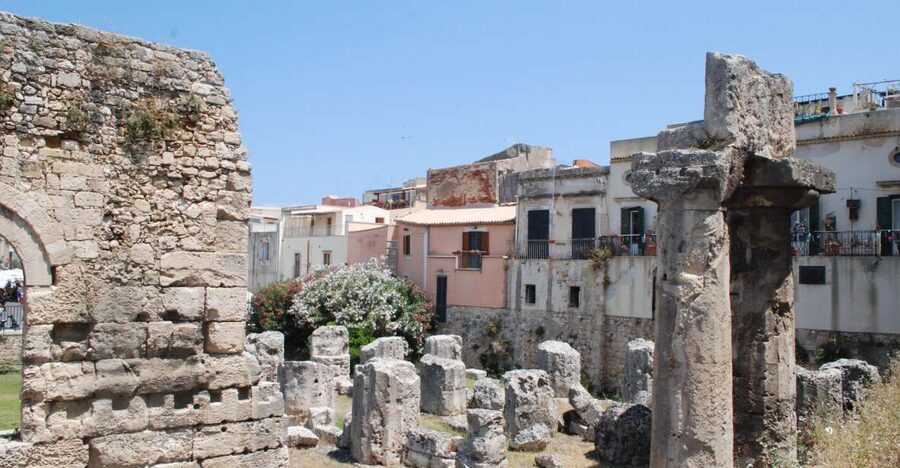
- Starting at the Temple of Apollo: the night route’s anchor
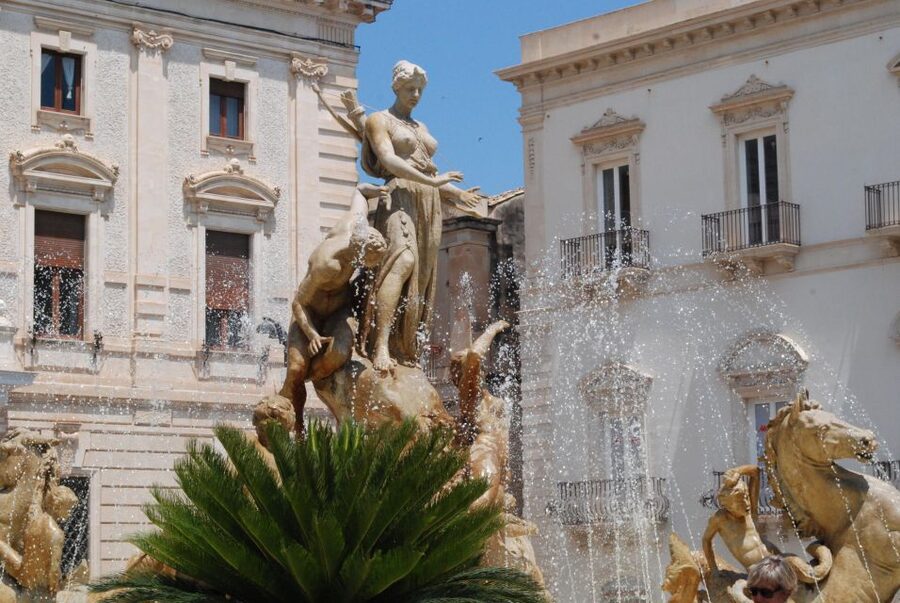
- Piazza Archimede and the Diana Fountain (1907)
- Piazza Duomo: cathedral history from the square
- Palazzo Bellomo (Galleria regionale): a quick art-and-architecture pause
- Via Castello Maniace: the long look at the Swabian castle
- Palazzo Montalto: the alleyway architecture stop
- Fonte Aretusa: legend at the water’s edge
- What you’ll actually learn: colonisations, layers, and context
- Pace and group vibe: how 2 hours feels on Ortigia
- Price and value: is $88 per person fair?
- Languages, comfort, and who can join
- Should you book the Ortigia guided night tour?
- FAQ
- Where does the Ortigia night tour start?
- How long is the guided night tour?
- How much does the tour cost?
- What sights will I see during the tour?
- Can I enter the cathedral in Piazza Duomo?
- What’s included in the price?
- What is not included?
- What languages are offered for the live guide?
- Is there a cancellation option?
- Is the tour wheelchair accessible?
Key highlights worth your attention
- Temple of Apollo first, setting the tone right away with one of Ortigia’s oldest Doric West treasures
- Piazza Archimede in the evening, including the Diana Fountain (1907) as a photo and resting point
- Piazza Duomo with explanation, not interior access, so you get the transformation story without a church visit
- Castello Maniace at the island tip, where the night atmosphere really clicks
- Fonte Aretusa with legend, turning a famous spring into a small “wait-for-it” moment
- A true guided route, so you’re not guessing what you’re looking at in the dark
Deeper into Ortigia and old Syracuse
- Syracuse: Boat Tour with Captain Mirko, Snorkeling & Caves
★ 4.7 · 746 reviews - Siracusa: Ortigia Boat Tour with Marine Grotto & Snorkeling
★ 4.7 · 726 reviews - Siracusa: Ortigia & Sea Caves Boat Tour w/ Prosecco & Fruit
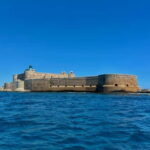
★ 4.8 · 723 reviews - Syracuse: Ortigia Island & Sea Cave Boat Tour with Prosecco
★ 4.7 · 418 reviews
Ortigia After Dark: What makes this 2-hour walk click
Ortigia at night feels calmer, but not quieter in spirit. The streets narrow, the light changes, and the monuments look different than they do in daytime photos. This tour leans into that shift: you’re out for about 2 hours and you move from one key landmark to the next without long detours.
The best part for me is how the guide keeps things coherent. You’re not just seeing buildings; you’re learning how the island evolved through repeated layers of rule and rebuilding. With a tight route, that kind of storytelling actually lands, because you’re seeing the evidence right where it matters.
It’s also a good length if your evening is busy. You’ll cover major stops on Ortigia without turning your night into an all-night walking project. And since it’s a guided experience, you’ll spend less time asking what something is and more time enjoying what makes it special.
Starting at the Temple of Apollo: the night route’s anchor
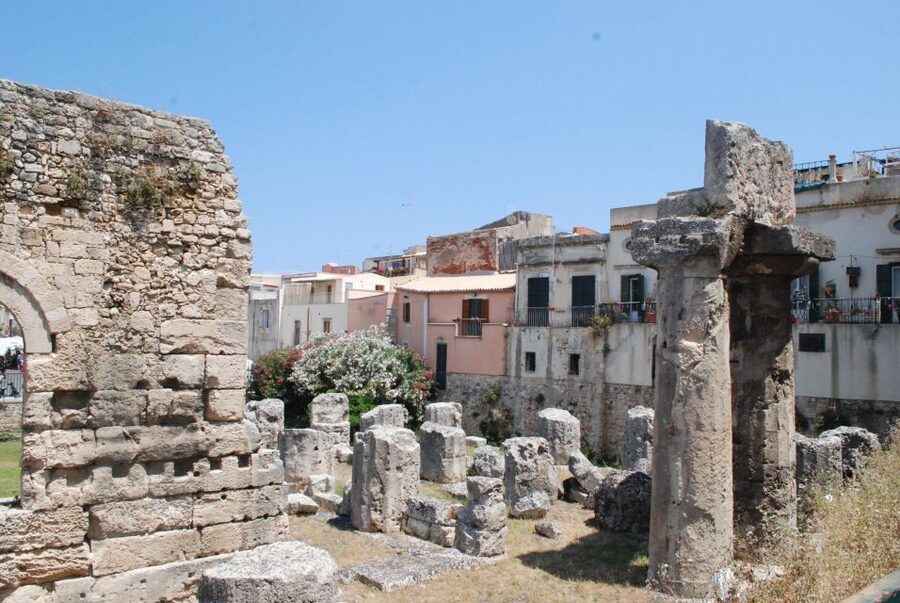
The tour begins at the Temple of Apollo, and that’s a smart move. This site is described as one of Ortigia’s most important monuments and the oldest Doric West temple there. Starting here gives you a clear “before and after” baseline for everything else you’ll see later.
Expect a short visit (about 15 minutes) that sets the scene. Even if you’re not a deep-archaeology person, you’ll likely appreciate the way the guide frames the temple’s age and status. In a night tour, this kind of opener matters because it gives you something solid to watch for as the evening continues.
Practical tip: night lighting can flatten details. So when the guide points things out, look where they indicate rather than trying to spot everything on your own in the dark.
Piazza Archimede and the Diana Fountain (1907)
Next comes Piazza Archimede, a brief stop of about 10 minutes that works as a breather between larger monument moments. This square is tied to the Diana Fountain dating from 1907, and in evening light, it becomes a natural focal point. It’s one of those spots where you can pause, reorient, and enjoy the lighting without feeling rushed.
What makes this stop valuable is how it functions in the route. After a serious opener at the temple, the fountain stop feels lighter. It’s also the kind of landmark you can remember later when you’re wandering back through Ortigia on your own, since it’s a recognizable meeting point.
If you like night photography, this is likely one of your easiest photo moments. The fountain gives you a clear subject, and the square setting keeps things from getting too chaotic.
Piazza Duomo: cathedral history from the square
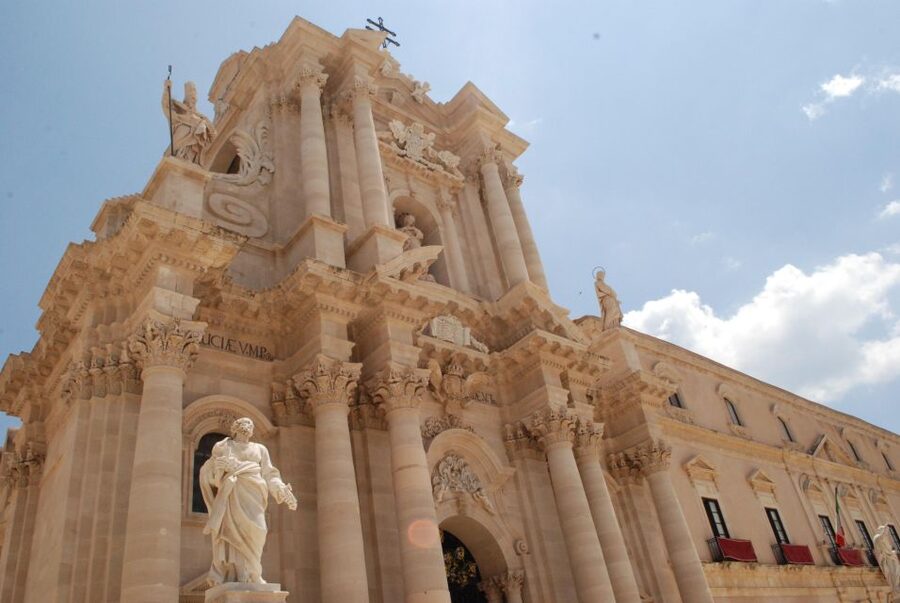
At Piazza Duomo, you get a longer stop of about 25 minutes. The cathedral here is described as majestic and steeped in history, and the guide pauses to explain the church’s story through transformations linked to multiple colonisations.
There’s a catch: it’s not possible to visit the church inside. So you’re viewing from the piazza and taking in the architecture and context from the outside. That might sound limiting, but it actually helps a night tour flow. You spend your time learning rather than lining up or waiting for interior access.
Why I think this stop is worth it: the guide isn’t treating it like a quick checklist photo. They’re connecting how the building’s identity shifted over time. If you enjoy understanding why a city looks the way it does, this is one of the strongest segments.
A few we would gladly point a friend toward in Syracuse
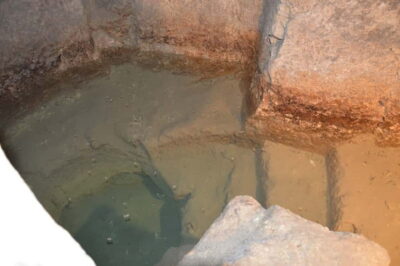

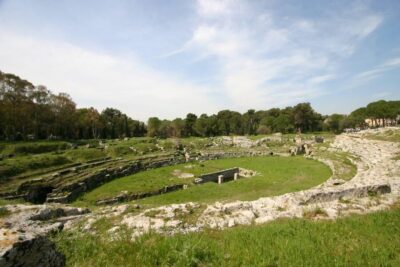
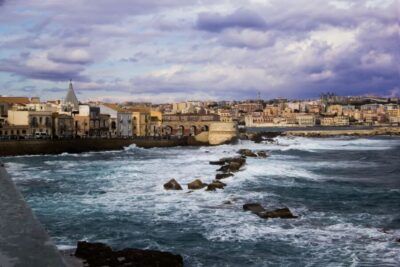
Palazzo Bellomo (Galleria regionale): a quick art-and-architecture pause
The tour then moves to the Galleria regionale di Palazzo Bellomo di Siracusa for about 10 minutes. Even with a short stop, the intent is clear: you see a key historic presence tied to the built fabric of Ortigia.
Because the time is brief, you’re not expecting a full museum experience here. Instead, it works as a “context stop.” The guide’s explanation helps you connect what you’re seeing to the broader story of the island—so later, when you pass similar-looking palazzos or facades, you’ll know what to look for.
If you’re someone who likes architecture but doesn’t want to commit to a full indoor visit on your first night, this kind of stop is a good fit.
Via Castello Maniace: the long look at the Swabian castle
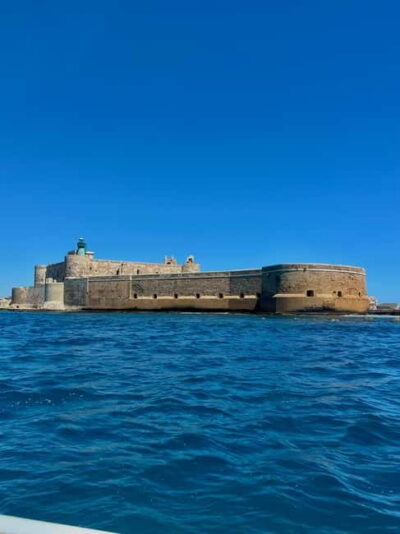
After that, you head to Via Castello Maniace for about 25 minutes, one of the most time-heavy segments of the walk. The destination is Maniace Castle, located at the tip of Ortigia. It’s described as one of the most important monuments of the Swabian period, and at night the mood is described as magical.
This is the moment where the tour’s “night” concept pays off. Castle silhouettes and waterfront-edge viewpoints tend to read dramatically in low light, and the guide’s framing makes it feel less like a random stop and more like the evening’s highlight.
I also appreciate the length. Twenty-five minutes is enough time to slow down and take in details, not just pass by quickly. In a short tour, that’s a big deal—too many night walks feel like a sprint. This one gives you at least one stretch that feels unhurried.
Palazzo Montalto: the alleyway architecture stop
Next is Palazzo Montalto for about 10 minutes. It’s described as a beautiful historical palace hidden among Ortigia’s alleys. That “hidden” feeling matters, because Ortigia is at its best when you’re moving through narrow lanes rather than only looking at open squares.
This stop is short, so it’s not designed to be a deep architectural lecture. Instead, it gives you a taste of the palace side of Ortigia—how the island isn’t only temples and major piazzas, but also layered residential and civic presence.
If you like getting little surprises as you walk, this is that kind of segment. You’ll likely remember the sense of discovery more than the exact facade details.
Fonte Aretusa: legend at the water’s edge
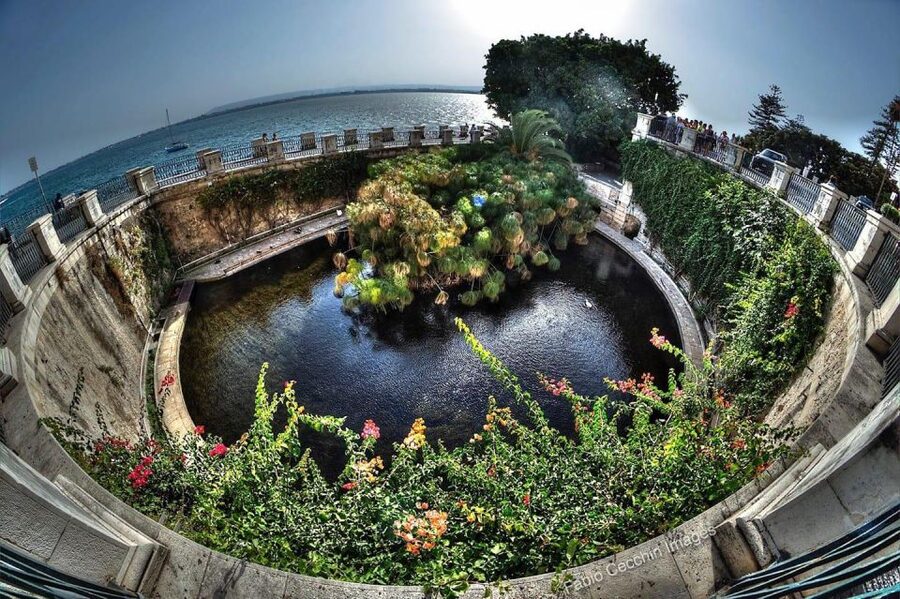
The final major stop is Arethusa Spring (Fonte Aretusa), for about 25 minutes. It’s described as beautiful, and the guide introduces a legend tied to the spring. Ending with water and story is a strong choice for a night tour, because it lets the evening settle rather than abruptly cut off.
This is also one of the more “human” moments on the route. Temples and castles are impressive, but a spring with a legend gives you something you can carry with you as you leave—an image and a narrative that makes the island feel lived-in.
Expect the guide’s explanation to do most of the work here. You’re not just staring at a landmark; you’re hearing why it matters in the island’s imagination. For me, that’s what turns a nighttime walk from sight-seeing into a memory.
After the spring, you return to the Temple of Apollo, where the route wraps up.
What you’ll actually learn: colonisations, layers, and context
The tour’s center of gravity is the guide’s narration: history linked to Ortigia and how the island changed through multiple colonisations. That theme shows up repeatedly at the main monuments.
In practice, this means you’ll likely hear explanations that connect these places beyond their looks. The temple anchors the ancient side. Piazza Duomo and the cathedral story bring the transformation angle. Maniace Castle adds another layer through the Swabian period. And Fonte Aretusa brings in legend, which is often where history becomes something you feel rather than just facts you memorise.
This is why I think the guided format matters. Night touring makes landmarks harder to interpret. With a guide, the darkness becomes a mood, not a barrier.
Pace and group vibe: how 2 hours feels on Ortigia
The entire walk is designed to fit into 2 hours, with multiple short stops and one longer highlight at Maniace Castle plus a longer landing at Fonte Aretusa. That stop pattern keeps energy up without turning the tour into a nonstop shuffle.
The durations are specific: Temple of Apollo (15 minutes), Piazza Archimede (10), Piazza Duomo (25), Palazzo Bellomo area (10), Via Castello Maniace (25), Palazzo Montalto (10), Arethusa Spring (25). It’s a tight schedule, but it’s balanced—one long segment in the middle and one long segment at the end.
If you like walking but you hate feeling rushed, this likely lands in a good middle ground. You’ll get enough time at key points to look, listen, and take in the night atmosphere.
Price and value: is $88 per person fair?
At $88 per person for a 2-hour guided night experience, you’re paying for three things: a qualified guide, a planned route through multiple landmark areas, and interpretation that helps you understand what you’re seeing.
Is it cheap? No. But the value calculation depends on how you like to travel. If you enjoy wandering with context—knowing what a monument represents and why it changed—this kind of guided format can feel worth it. You’re also covering major sights in one go, which saves you the hassle of planning a first-night self-guided route.
If you prefer to save money for meals and sightseeing entrances, you might choose a self-guided walk. But even then, you’d likely wish for a guide the moment you reach Piazza Duomo and start hearing how the cathedral’s identity shifted over colonisations.
Also note what’s not included: meal and drinks. So if you’re doing this as your main evening activity, you’ll probably want to plan food before or after.
Languages, comfort, and who can join
The live guide works in Italian, English, and Russian, which is useful if you want the storytelling in a language you actually speak well. That kind of clarity matters most at night, because you don’t want to miss the key explanations.
The tour is also described as wheelchair accessible, which is great for travelers who need mobility support. I’d still recommend thinking about comfort on uneven historic streets, but the accessibility note means it’s planned to accommodate wheelchairs.
This tour is a strong match if you want:
- An organized first look at Ortigia
- A night experience with history and legend
- A route that hits the main monuments without a full day commitment
Should you book the Ortigia guided night tour?
I’d book this if your main goal is a high-quality first-night orientation—seeing Ortigia’s key landmarks while a guide explains why they matter. The mix of Temple of Apollo, the Duomo area, the Swabian-era Maniace Castle, and Fonte Aretusa gives you variety in one 2-hour walk, and the night setting helps the story feel more vivid.
I would skip it if you specifically want indoor access to the cathedral or you need time to linger at a single stop for long photos and slow wandering. Since church entry isn’t part of it and the schedule is time-boxed, it’s better for people who like motion and guided interpretation.
If you want a guided, memorable night overview of Syracuse’s Ortigia without turning your evening into a research project, this one makes a lot of sense.
FAQ
Where does the Ortigia night tour start?
The tour starts at the Temple of Apollo.
How long is the guided night tour?
The duration is 2 hours.
How much does the tour cost?
The price is $88 per person.
What sights will I see during the tour?
You’ll see the Temple of Apollo, Piazza Archimede (including the Diana Fountain), Piazza Duomo, Palazzo Bellomo (Galleria regionale), Maniace Castle area via Via Castello Maniace, Palazzo Montalto, and Fonte Aretusa. You return to the Temple of Apollo at the end.
Can I enter the cathedral in Piazza Duomo?
No. The tour includes an explanation at Piazza Duomo, but it’s not possible to visit the church inside.
What’s included in the price?
A qualified tour guide is included.
What is not included?
Meal and drinks are not included.
What languages are offered for the live guide?
The guide is available in Italian, English, and Russian.
Is there a cancellation option?
Yes. The tour offers free cancellation up to 24 hours in advance for a full refund.
Is the tour wheelchair accessible?
Yes, the tour is described as wheelchair accessible.
More Tours in Syracuse
More Tour Reviews in Syracuse
More of Syracuse and Ortigia
Just added: the newest Syracuse tours in our notebook
- Tour of Syracuse by Ape Calessino★ 3.0 · 3 reviews
- Syracuse Showdown Scavenger Hunt★ 5.0 · 3 reviews
- Sicily Boats Avola: Plemmirio boat tour 4 people 4 hours★ 5.0 · 3 reviews
- Groovy Geneva Scavenger Hunt★ 5.0 · 3 reviews
- Syracuse: Ortigia & Sea Caves Boat Tour with Local Skipper★ 5.0 · 3 reviews
- Siracusa: Neapolis’s Archaeological Park small group tour★ 5.0 · 3 reviews
Syracuse & Ortigia, compared.
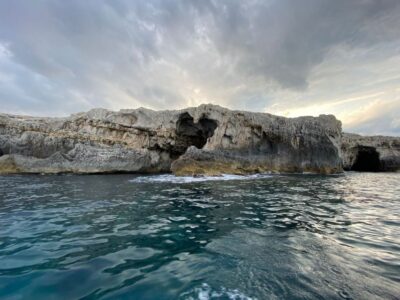 ★ 4.7Syracuse: Tour of Ortigia Island & Caves with Local SkipperFrom $231,060 reviews
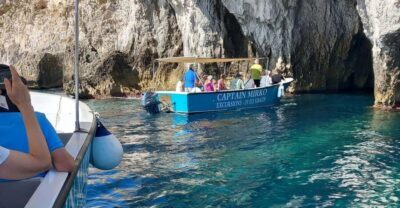 ★ 4.7Syracuse: Boat Tour with Captain Mirko, Snorkeling & CavesFrom $35746 reviews
 ★ 4.7Siracusa: Ortigia Boat Tour with Marine Grotto & SnorkelingFrom $47726 reviews
 ★ 4.8Siracusa: Ortigia & Sea Caves Boat Tour w/ Prosecco & FruitFrom $35723 reviews
 ★ 5.0Tour of the island of Ortigia and exploration of sea caves with baths.From $24668 reviews
 ★ 4.7Syracuse: Ortigia Island & Sea Cave Boat Tour with ProseccoFrom $23418 reviews
 ★ 5.0Boat tour of Ortigia Island and sea cavesFrom $24407 reviews
 ★ 4.6Catania: Syracuse, Ortigia, and Noto Tour with BrunchFrom $112404 reviews
Browse the lists this tour appears in