
Ortigia starts to feel close fast, especially by rickshaw. I love how the rickshaw makes the baroque alleys and waterfront viewpoints feel easy, not tiring, while still giving you great angles for photos. I also like that a local guide turns each stop into a clear little story, so you’re not just looking at buildings.
The best part for planning is the customizable pickup and the relaxed way the route flows from Syracuse into Ortigia. You stay in a private group, which keeps the pace comfortable and the questions coming. One practical consideration: the timing is tight, so the stops are mostly photo-and-look-and-listen, not a long sit-down at each monument.
In This Review
- Key moments that make this tour worth it
- Ortigia on wheels: what the rickshaw format changes
- Your first photo stops in Syracuse: Apollo and Diana
- The Giudecca (Jewish quarter): why a “quieter maze” is a highlight
- Piazza Duomo: the Cathedral built into Athena’s temple
- Fountain of Arethusa: myths plus a real freshwater spring
- Promenade views and the big port: where the sea becomes the story
- Maniace Castle at the island tip: the “final view” moment
- How long should you book: 1–3 hours and what that really means
- Price and value: what $85 for up to 3 buys you
- Pickup and drop-off: the part that matters more than people think
- The guide’s style: why the stories make the monuments easier to remember
- Who this tour is best for (and who might want something else)
- Should you book this rickshaw tour of Ortigia and Syracuse?
- FAQ
- What’s the duration of the Ortigia and Syracuse rickshaw tour?
- How many people are in a group?
- Where does the tour pick up, and where does it end?
- What languages are available for the guide?
- What’s included in the price?
- Can I cancel if plans change?
Key moments that make this tour worth it
- Pick-up wherever you are in Syracuse, then drop off where you want after the ride
- Temple of Apollo as your first landmark photo stop at the island’s entrance
- Piazza Duomo plus a cathedral built into the footprint of an ancient Greek temple
- Fountain of Arethusa with myth stories tied to the freshwater spring by the sea
- Castello Maniace at the island tip for real coastal, “this is the end of the island” views
- Ecology-friendly rickshaw format that keeps you moving without fighting parking and traffic
Deeper into Ortigia and old Syracuse
- Syracuse: Boat Tour with Captain Mirko, Snorkeling & Caves
★ 4.7 · 746 reviews - Siracusa: Ortigia Boat Tour with Marine Grotto & Snorkeling
★ 4.7 · 726 reviews - Siracusa: Ortigia & Sea Caves Boat Tour w/ Prosecco & Fruit
★ 4.8 · 723 reviews - Syracuse: Ortigia Island & Sea Cave Boat Tour with Prosecco
★ 4.7 · 418 reviews
Ortigia on wheels: what the rickshaw format changes
Ortigia and Syracuse can be a lot on foot. This is the rare setup where you still get the walkable feel of the old streets, but you don’t have to do all the work with your legs. The rickshaw keeps you upright, relaxed, and ready to look up at facades and down at details as you pass.
The other big win is how human the experience feels. You ride with a local guide who talks with energy about the place, not from a script that sounds memorized. In real terms, that means you’ll understand why the Temple of Apollo matters, why the Duomo area is such a “must,” and why the little fountains are more than pretty water.
Your first photo stops in Syracuse: Apollo and Diana
You start in Syracuse and head straight for the Temple of Apollo. It’s one of those spots where, even before you hear the explanation, you get the scale: a Doric temple that anchors the entrance area of Ortigia. Getting it early helps, because it sets your brain into history-mode right away.
Then you swing to the Fountain of Diana in Piazza Archimede. This is where the city’s baroque identity shows up clearly—myths and water, staged with style, in a public square you can actually enjoy without rushing. Plan to slow your phone-camera or camera timing here, since this stop is made for looking closely as well as snapping.
The Giudecca (Jewish quarter): why a “quieter maze” is a highlight
After the formal landmarks, the tour heads into the Giudecca, the Jewish quarter. This is the portion that often surprises people because it feels different from the big squares. The streets are calmer, the vibe shifts, and the guide’s stories make the place feel layered rather than just old.
This is also where your pace matters. Because the ride is private and relaxed, you’re not getting shoved along by a crowd at every turn. You’re able to notice courtyards and corners that you’d likely miss if you were sprinting between major sites.
If you like neighborhoods with character, this section is one of the better uses of your time. It’s not just a checkbox; it’s an atmosphere stop, and it helps you understand Ortigia as a living place, not a museum.
Piazza Duomo: the Cathedral built into Athena’s temple
Piazza Duomo is the heart-stop in the middle of the route, and it’s easy to see why. This is one of Sicily’s iconic squares, and the Cathedral there is especially notable because it incorporates the ancient Greek temple of Athena. That means you’re not just looking at one era—you’re watching eras stacked together.
You’ll have time here to visit and enjoy the details, plus shop a bit if you want to. The practical upside is that Duomo is central enough that, even if you’re short on time elsewhere, it still feels like a major payoff.
Also, this is a great photo moment without feeling like you’re constantly waiting your turn. The space is open and legible, so you can frame the architecture without needing perfect angles or a long walk to find them.
A few we would gladly point a friend toward in Syracuse

Fountain of Arethusa: myths plus a real freshwater spring
From Piazza Duomo, the route continues to the Fountain of Arethusa. This is one of those places that feels romantic even if you’re not trying to be. It’s a freshwater spring overlooking the sea, surrounded by papyrus in the setting you’re guided to look for while you’re there.
The guide tells the myth of Arethusa and Alpheios, which changes how you experience the water. Instead of treating it as a scenic stop, you get the story that locals and visitors have been connecting to the spot for generations. If you enjoy understanding why something became famous, this is a strong use of the guided format.
And yes, you’ll likely want a photo here. The spring’s position makes it easy to capture the idea of sea-meets-spring in a single frame.
Promenade views and the big port: where the sea becomes the story
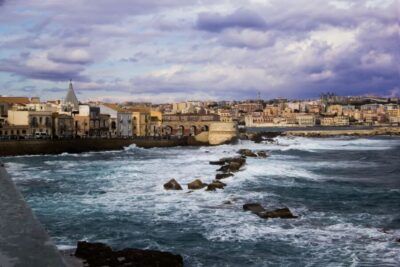
As you move along the promenade, the tour gives you sea views and glimpses of the large port. This is where Ortigia starts to feel like a peninsula with a strong sense of place—water isn’t in the background; it’s part of the setting.
It’s also a useful break in the pacing. After a stretch of architecture and myths, the open-air viewpoints let you reset, look out, and appreciate how the island sits in the Ionian Sea. If you’re the type who likes geography—how a coastline shapes a city—this section gives you that without needing extra planning.
Maniace Castle at the island tip: the “final view” moment
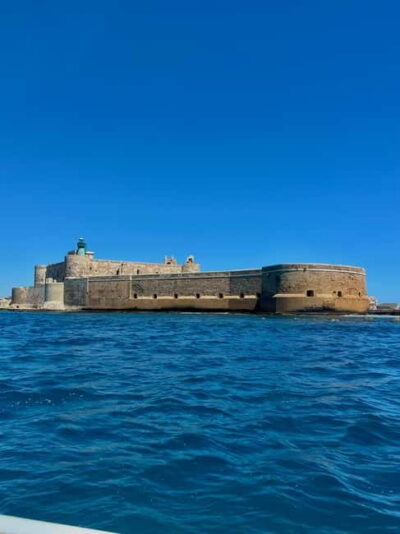
The last major stop is Castello Maniace, perched at the very tip of Ortigia. It’s a 13th-century bastion, and the fortified shape makes it feel practical and powerful, not just pretty. When you arrive, you get the sense of a location built to watch the sea—and that’s exactly what the view delivers.
You’ll have a bit of time to enjoy the castle area and take in the bay. This is often the kind of endpoint that makes the whole tour feel satisfying, because you end where the island’s character is most obvious: sea all around, with fortifications in the foreground.
If you want your final moment to be scenic, not rushed, this is the stop that usually does it.
How long should you book: 1–3 hours and what that really means
This experience is set up for 1–3 hours, depending on the timing you choose and how long you spend at each stop. Many of the best parts are built around photo stops plus short visits, so think of it as “high value coverage” rather than “slow travel with long museum time.”
If you’re on a tight schedule—maybe you have one afternoon in Syracuse or you’re trying to see both Syracuse and Ortigia without burning your whole day—this duration makes sense. If you want long, independent time inside major sites, you might feel the need to return later on your own. But for orientation, stories, and a strong overview, it’s a very efficient format.
Price and value: what $85 for up to 3 buys you
The price is $85 per group up to 3 people. That can be a good value when you compare it to the cost of piecing together multiple transfers, parking hassles, or separate guide time for a neighborhood-spanning route.
It also helps that you’re booking a private group setup. With only your group, the guide can match your pace and interest level. In practical terms: you’re more likely to feel you got your money’s worth because you’re not trapped behind a crowd line or forced into a fast rhythm.
And the pickup makes the “total cost” feel lower, mentally. You’re not paying extra just to get started or wasting energy figuring out the meeting point while you’re already in an unfamiliar city.
Pickup and drop-off: the part that matters more than people think
The tour includes pickup, and you can choose the starting point—hotel, bed & breakfast, parking lot, or other locations. This is especially handy in Ortigia, where arriving on your own can turn into a puzzle of where to leave the car and how to get to the right streets.
You also get flexibility at the end. The ride returns you to Syracuse, and you can arrange a personalized drop-off for convenience. That means you’re not forced into a “walk back to your plan” situation right after your sightseeing.
In real use, this kind of arrangement is what helps people catch the tour even when they’re arriving from a cruise or when they want to avoid extra movement right at the start.
The guide’s style: why the stories make the monuments easier to remember
The guide’s role isn’t just narrating. It’s connecting what you’re seeing to why it exists and how the myths and history fit into daily life. When the guide talks with enthusiasm about the city’s traditions, you leave with a clearer mental map.
You’ll also find that the tone stays practical. You’ll get enough background to understand the significance of Temple of Apollo and the Duomo area, while still keeping the tour moving so you don’t lose momentum.
If you prefer listening at your own pace, there’s also an optional audio guide in many languages. The live guide is offered in English and Italian, which is great if you want interaction and follow-up questions.
Who this tour is best for (and who might want something else)
This works especially well for small groups of up to three people. It’s ideal if you want an efficient highlights route through Ortigia without spending your day in taxis, lots, or long walks.
I also think it’s a smart pick if you like history but don’t want a heavy lecture format. The tour keeps the story-to-sight ratio strong, with myths and architectural details tied to specific stops.
If you’re a “slow and deep” traveler who expects long hours at each site, you might feel constrained by the brief time at stops. In that case, use this tour for orientation and then plan a separate follow-up visit where you can linger.
Should you book this rickshaw tour of Ortigia and Syracuse?
Book it if you want a relaxed, low-stress way to see the big Ortigia landmarks in a short time, with a local guide making the place understandable. The pickup flexibility, private group setup, and the mix of ancient sites, baroque squares, and sea views are a strong combination.
Skip it if your priority is long, self-guided time inside major monuments. For everyone else who wants a smart overview of Ortigia’s highlights—without the friction of getting around—this is a very solid choice.
FAQ
What’s the duration of the Ortigia and Syracuse rickshaw tour?
The tour lasts from 1 to 3 hours, depending on the time slot you choose.
How many people are in a group?
This is a private group experience, with pricing set for a group of up to 3 people.
Where does the tour pick up, and where does it end?
Pickup is included and can be arranged wherever you like in Syracuse, such as a hotel, bed & breakfast, or parking lot. The tour returns you to Syracuse with the option of a personalized drop-off.
What languages are available for the guide?
Live guiding is available in English and Italian. An optional audio guide is available in many additional languages.
What’s included in the price?
The price includes pickup and a local guide.
Can I cancel if plans change?
Yes, free cancellation is available up to 24 hours in advance for a full refund.
More Tours in Syracuse
More Tour Reviews in Syracuse
More of Syracuse and Ortigia
Just added: the newest Syracuse tours in our notebook
- Tour of Syracuse by Ape Calessino★ 3.0 · 3 reviews
- Syracuse Showdown Scavenger Hunt★ 5.0 · 3 reviews
- Sicily Boats Avola: Plemmirio boat tour 4 people 4 hours★ 5.0 · 3 reviews
- Groovy Geneva Scavenger Hunt★ 5.0 · 3 reviews
- Syracuse: Ortigia & Sea Caves Boat Tour with Local Skipper★ 5.0 · 3 reviews
- Siracusa: Neapolis’s Archaeological Park small group tour★ 5.0 · 3 reviews
Syracuse & Ortigia, compared.
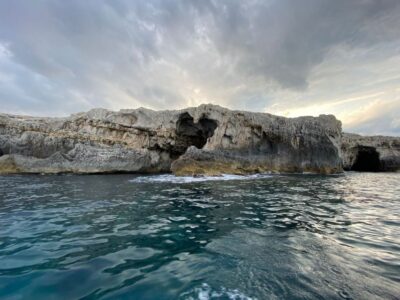 ★ 4.7Syracuse: Tour of Ortigia Island & Caves with Local SkipperFrom $231,060 reviews
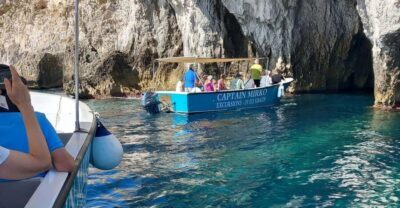 ★ 4.7Syracuse: Boat Tour with Captain Mirko, Snorkeling & CavesFrom $35746 reviews
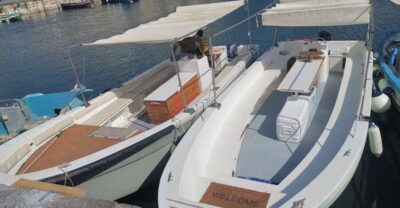 ★ 4.7Siracusa: Ortigia Boat Tour with Marine Grotto & SnorkelingFrom $47726 reviews
 ★ 4.8Siracusa: Ortigia & Sea Caves Boat Tour w/ Prosecco & FruitFrom $35723 reviews
 ★ 5.0Tour of the island of Ortigia and exploration of sea caves with baths.From $24668 reviews
 ★ 4.7Syracuse: Ortigia Island & Sea Cave Boat Tour with ProseccoFrom $23418 reviews
 ★ 5.0Boat tour of Ortigia Island and sea cavesFrom $24407 reviews
 ★ 4.6Catania: Syracuse, Ortigia, and Noto Tour with BrunchFrom $112404 reviews
Browse the lists this tour appears in