
Reviewed · MOUNT ETNA TOURS & SUMMIT
Etna: Trekking to the summit craters at 3,340 meters
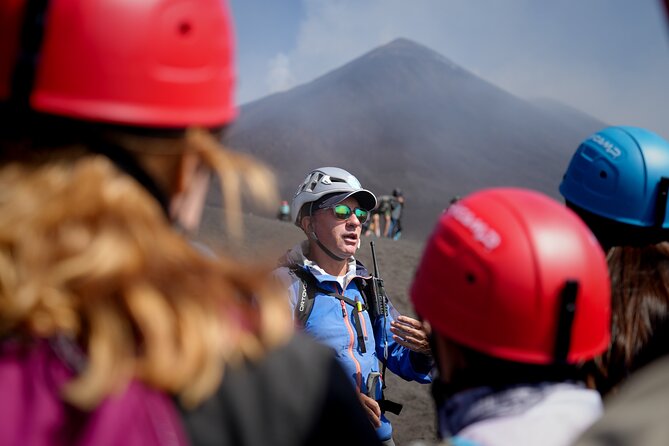
Climbing Etna feels like walking onto another planet. This half-day trek takes you toward the summit craters near 3,300–3,400m, with a trained volcanologist guide and gear included. You also get a real sense of how the volcano behaves, not just a quick viewpoint stop.
Two things I’d happily pay for: the volcanologist-led explanations (with guide Fabricio described as careful and safety-focused), and the included kit—windbreaker jacket, trekking poles, and a protective helmet—so you can focus on the hike. One thing to plan for: it’s not a fully all-in price, since the round-trip cable car and 4×4 (paid on site) and lunch are separate.
In This Review
- Key things to know before you go
- Why the Etna summit-crater trek feels different than a normal hike
- Catania pickup, Belpasso meeting point, and the “half day” timing
- What’s included (and why it matters at 3,300m)
- The first big stop: Valle del Bove and the famous volcanic setting
- Cratere Centrale and Crateri Barbagallo: the summit zone approach
- Climbing toward the 2001 eruption crater: what to expect from the route
- The photo break: how to get the shot without slowing the hike too much
- Guide-led safety and altitude awareness (what I’d watch for)
- Price and value: €78.10 plus the €82 on-site transport
- Who this Etna summit-crater trek is best for
- Practical tips that make the hike easier
- Should you book the Etna trekking to the summit craters?
- FAQ
- FAQ
- What time is pickup in Catania?
- Where does the tour meet?
- How high do you trek on Mount Etna?
- What’s included in the price?
- What extra costs are not included?
- Is the tour offered in English?
Key things to know before you go
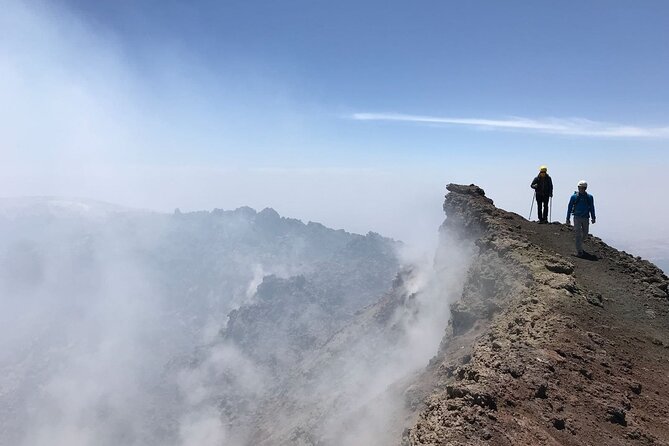
- Summit craters around 3,300–3,400m for big altitude views and volcanic terrain
- Trained volcanologist guide, with Fabricio-style safety-first guidance
- Photo break overlooking the summit craters, plus a clear route toward an eruption site
- Cratere Centrale and Crateri Barbagallo, plus a stop in Valle del Bove
- Included gear: windbreaker jacket, trekking poles, helmet, and insurance
- Extra on-site payment of €82 for cable car and 4×4 transport, plus lunch not included
More ways up the volcano from Sicily
- Etna Morning Trip
★ 4.5 · 1,241 reviews - Mt. Etna nature and flavors half day Tour from Catania
★ 5.0 · 545 reviews - Etna excursion 3000 meters with 4×4 cable car and Trekking
★ 4.5 · 504 reviews - Mount Etna Adventurous Hiking Tour with Equipment
★ 4.5 · 439 reviews
Why the Etna summit-crater trek feels different than a normal hike
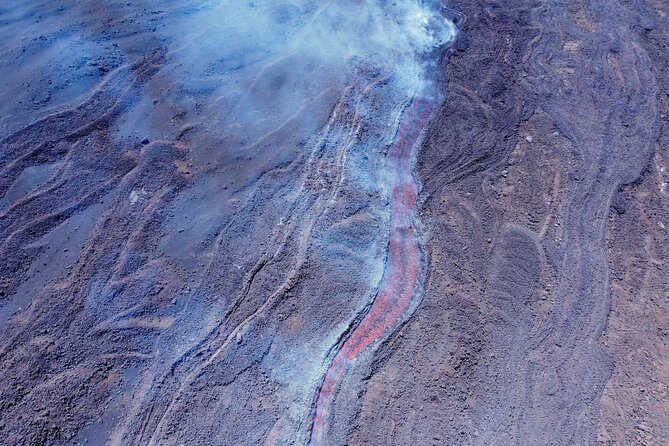
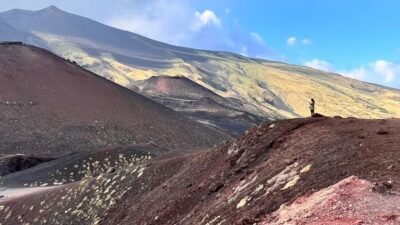
Etna doesn’t do subtle. When you climb high enough to see the craters clearly, the whole mountain reads like a giant story written in ash, rock, and lava scars. This trek is built for that moment when the volcano goes from background to the main event.
What makes this experience practical is that you’re not left to guess what you’re seeing. You walk with a volcanological guide who helps you connect the scenery to volcanic history and ongoing activity, so the views make sense as more than just scenery. And because you’re staying in a structured group (max 20), you also get more confidence about pacing and safety.
Catania pickup, Belpasso meeting point, and the “half day” timing
You’ll typically get hotel pickup from Catania around 7:30 AM, then the trek begins around 9:00 AM. The walking portion targets the summit area, reaching roughly 3,400m, and the total tour time is listed at about 6 hours.
The meeting point is Monte Gebel SP92, 19, 95032 Belpasso (CT), Italy, and the activity ends back at the starting point. If you’re doing this as part of a Sicily base-trip (like Catania hotels), the early start matters. You’ll want to treat the rest of your day as recovery time.
What’s included (and why it matters at 3,300m)
At this altitude, comfort and safety are not “nice-to-haves.” The tour includes the practical stuff that helps you handle wind and uneven ground:
- Windbreaker jacket
- Trekking poles
- Protective helmet
- Volcanological guide
- Insurance
Even if you’re an experienced walker, these inclusions reduce what you need to pack and wear. A helmet sounds like overkill until you’re in a rocky volcanic zone where you really don’t want to think about head protection. Trekking poles are especially useful on loose surfaces, so your legs can do less fighting and more moving.
One more detail I appreciate: it’s offered in English, which means you can actually follow the explanations while you’re walking, not just translate them later.
The first big stop: Valle del Bove and the famous volcanic setting
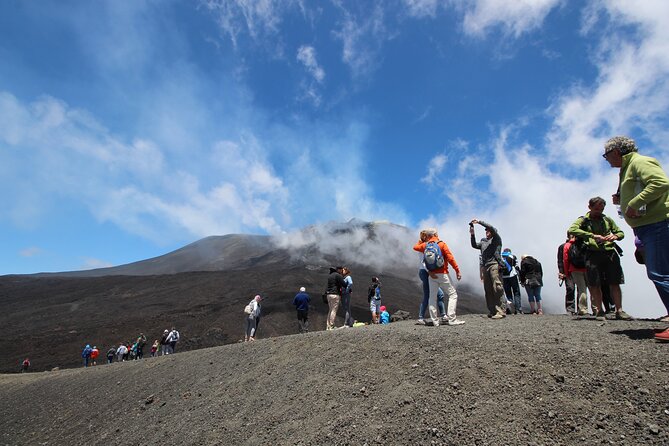
Your route centers on Mount Etna reaching about 3,300m, and one of the key places you’ll admire is Valle del Bove. You’ll get around 30 minutes here, and the admission ticket is free.
Valle del Bove is one of those Etna areas that makes you instantly understand scale. From that high viewpoint, the volcanic terrain reads like a whole system, not separate craters and peaks. You’re not just looking at one dramatic feature—you’re seeing how different zones connect on the mountain.
The trade-off is time. Thirty minutes is enough to take in the views and get photos, but not enough to stroll endlessly. If you’re the type who wants to linger, keep an eye on the group pace and ask your guide where to stand for the best crater angles.
A few we would gladly point a friend toward in Sicily
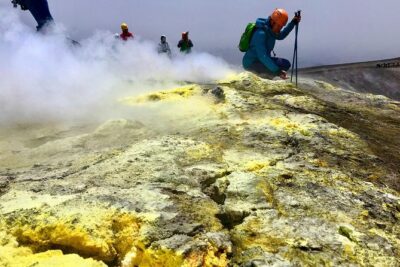
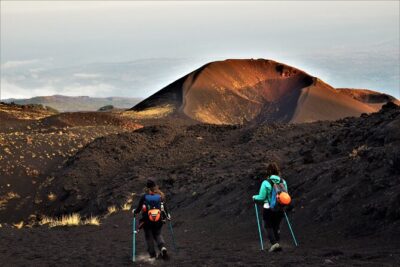
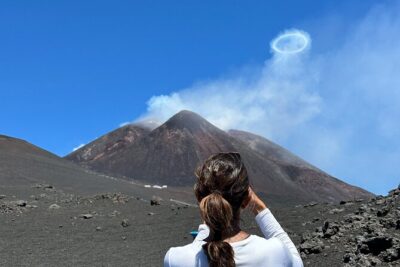
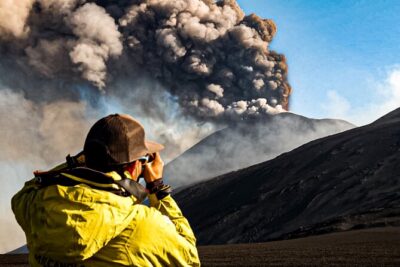
Cratere Centrale and Crateri Barbagallo: the summit zone approach
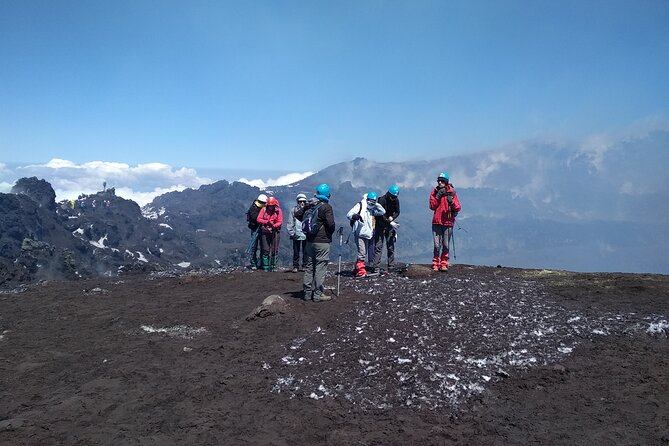
As you move toward the summit craters, you’ll visit areas including Cratere Centrale and Crateri Barbagallo. This is the part of the hike where the volcano becomes real up close: you’re walking toward crater terrain, not just above it.
This is also where a trained guide makes the biggest difference. A volcanologist won’t just narrate from a distance—they help you interpret what you’re seeing as you approach. That’s valuable because crater areas can look similar at first glance, but their histories and characteristics aren’t.
And since you’re in a group of up to 20 people, you’re more likely to get those “wait, look there” moments without feeling like you’re fighting for position.
Climbing toward the 2001 eruption crater: what to expect from the route
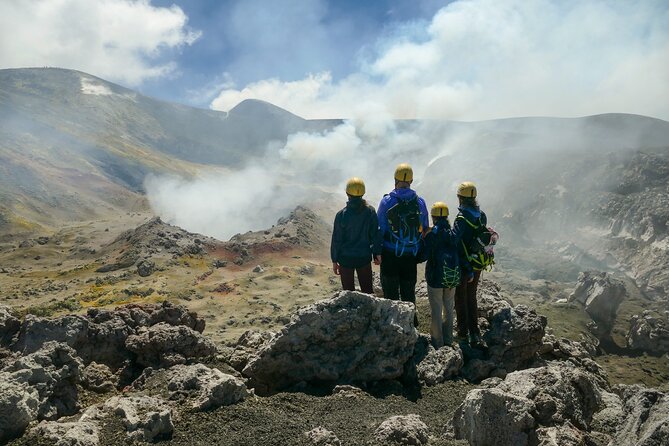
One of the highlights is climbing toward the crater that exploded during the 2001 eruption. That matters because the hike becomes more than a scenic walk—you’re tying the present-day route to specific volcanic events.
Expect a route where footing and pacing matter. The terrain in crater zones can feel uneven and demanding, especially with altitude in the mix. The guide’s job is not only explaining; it’s keeping the group safe and moving at a pace that works for everyone.
In the Etna hike review I found most consistent with this style of tour, the guide approach was described as very informative and safety-focused. That’s exactly what you want when you’re aiming for summit-area craters.
The photo break: how to get the shot without slowing the hike too much
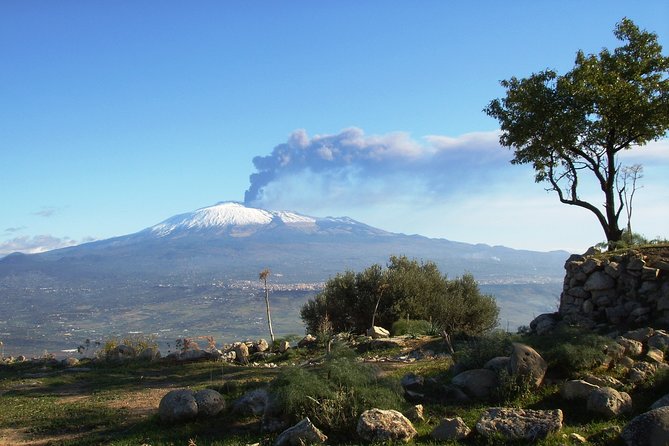
You’ll have a photo break overlooking the summit craters. This is the point where everyone turns their head at once, because the view is the payoff: crater edges, surrounding volcanic features, and the broad feel of how large Etna really is.
To make the break work for you, plan ahead:
- Have your camera or phone ready before you reach the best angle.
- Keep one hand free if possible, especially if the ground is rocky.
- Don’t wait until the last minute to take your shots—let the guide move the group first, then follow to the best spot.
This break is also one of the best times to ask questions. Guides can point out what you’re looking at while you’re actually looking at it.
Guide-led safety and altitude awareness (what I’d watch for)
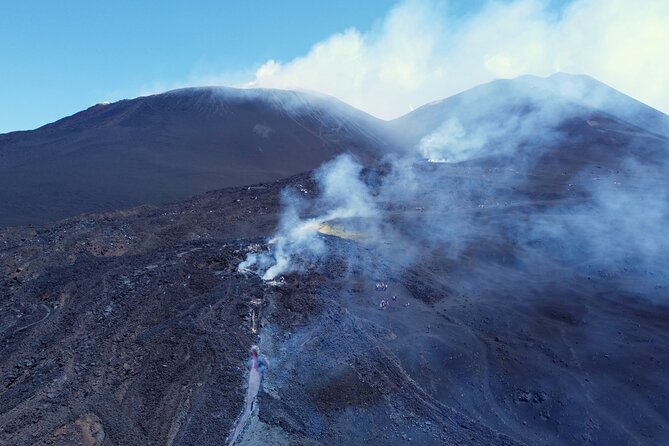
Altitude can sneak up on you even if you’re fit. It’s not just about breath—it’s about how your brain and legs feel when oxygen is thinner. This trek doesn’t claim to be a gentle walk; it’s a purposeful climb to the summit crater zone.
The tour’s included gear (helmet, poles, jacket) supports safety, but your job is simple: listen to your guide, move steadily, and avoid the “race the mountain” mindset. A good sign is that the experience is built around a trained volcanologist guide whose role is helping you understand and stay safe while you’re walking.
If you’re someone who gets winded, you’ll still likely do fine as long as you maintain steady effort. The group format helps—people aren’t sent off to sprint in random directions.
Price and value: €78.10 plus the €82 on-site transport
The listed price is $78.10 per person, and the tour runs around 6 hours with a volcanologist guide and a lot of included gear. That base cost covers the guided trekking experience and the safety-related inclusions like helmet, jacket, poles, and insurance.
Then there’s the part you should budget for: €82 per person for the round-trip cable car and 4×4 vehicle, paid on site. Lunch is also not included.
So what’s the real value equation?
- If you want a guided, gear-supported trek to crater zones with expert volcanic context, the base price is reasonable.
- If you’re comparing “cheap transportation up the mountain” to “guided crater walk with interpretation,” this becomes a better deal than it looks at first glance.
- The big caution is that your final total is closer to a “do not forget the on-site fee” trip, not a low-cost hike.
Who this Etna summit-crater trek is best for
This tour is a good fit if you want:
- A guided Mount Etna experience that explains what you’re seeing
- Summit-area views without handling all the logistics alone
- An active half-day outdoors that feels like the real Etna, not a quick bus stop
It’s also a solid choice for people who prefer small groups (up to 20 travelers) and want English commentary.
Who should think twice? If you know you dislike altitude walking or you struggle on rocky ground, treat this as a “maybe with preparation” activity. The tour says most travelers can participate, but it also targets crater territory at around 3,400m, so you’ll want to be honest about your comfort level.
Practical tips that make the hike easier
You’ll be glad you planned for the basics, because conditions can change fast at altitude:
- Wear sturdy hiking shoes with grip. Poles help, but traction still matters.
- Dress in layers. You’ll have a windbreaker included, but you might still want an extra layer underneath.
- Bring water. The tour listing doesn’t mention lunch, so hydration is on you during the day.
- Pack a light snack if you can. It’s not provided, and you’ll want energy for the return.
- Have a backup plan for clothing if you get sweaty early, since wind can cool you down later.
If weather looks rough, keep expectations flexible. The tour notes that good weather is required, and crater-area conditions can change quickly.
Should you book the Etna trekking to the summit craters?
If your goal is to see Etna’s craters with expert explanation and solid safety structure, I think this is a smart booking. The included gear and helmet alone make it easier to travel light and hike safely, and the guide-led focus on volcanic context turns the hike into more than just a view.
Book it if you’re comfortable starting early and walking at high altitude. Consider a different option if you want a long, unhurried stroll or if you’d rather not budget the additional €82 on-site transport fee and handle your own lunch.
FAQ
FAQ
What time is pickup in Catania?
Hotel pickup from Catania is around 7:30 AM, and the trekking tour starts around 9:00 AM.
Where does the tour meet?
The meeting point is Monte Gebel SP92, 19, 95032 Belpasso CT, Italy.
How high do you trek on Mount Etna?
The tour reaches about 3,300m and has you in the summit area reaching roughly 3,400m.
What’s included in the price?
Included are the volcanological guide, windbreaker jacket, trekking poles, protective helmet, and insurance.
What extra costs are not included?
Lunch is not included, and you’ll pay on site €82.00 per person for the round-trip cable car and 4×4 vehicle.
Is the tour offered in English?
Yes, the tour is offered in English.
More Hiking & Trekking in Sicily
More Tour Reviews in Sicily
More Etna Summit Treks We Have Walked
Just added: the newest Sicily tours in our notebook
- Etna / Taormina★ 5.0 · 3 reviews
- Bikes★ 5.0 · 3 reviews
- Taormina shore tour – for small group cruise passengers★ 5.0 · 3 reviews
- Vegan Cooking Class in Catania with Lunch and Dinner★ 5.0 · 3 reviews
- Make & Taste Sicilian Desserts in Palermo – Learn Cannoli & More★ 5.0 · 3 reviews
- Sicilian Villages & Ricotta Tasting – including Lunch from Cefalu★ 4.0 · 3 reviews
Mount Etna Tours & Summit, compared.
 ★ 4.8Catania: Mount Etna Morning or Sunset Day Trip with TastingFrom $704,028 reviews
 ★ 4.8Catania: Sunset Jeep Tour of Mount Etna and Lava Flow CavesFrom $712,113 reviews
 ★ 4.8Etna and Alcantara Gorges Full-Day Tour with LunchFrom $1051,766 reviews
 ★ 4.7Etna: summit craters trekking with volcano guide 3350mtFrom $771,712 reviews
 ★ 4.9Catania: Mount Etna Trekking Tour Beyond the Tourist TrailsFrom $811,596 reviews
 ★ 4.8Mount Etna: Guided Trek 3,000 Meters to the SummitFrom $1131,407 reviews
 ★ 4.8Catania: Etna Sunset Tour with Pickup and Drop-offFrom $711,348 reviews
 ★ 4.8Etna Sunset Tour: Volcano trek, Cave & tasting from CataniaFrom $701,290 reviews
Browse the lists this tour appears in