
Reviewed · MOUNT ETNA TOURS & SUMMIT
ETNA – Trekking to the Craters Eruption of 2002
Etna’s 2002 cracks still feel alive. This guided trek on Sicily’s Mount Etna follows the eruptive fracture from Piano Provenzana, taking you through lava ground and forest patches while your guide explains what you’re seeing. The outing runs about 2 to 3 hours, starts at 10:00am, and uses an easy mobile ticket so you can spend more time on the trail and less time sorting logistics.
What I love most is the way the hike mixes drama and clarity. You get up-close views of the 2002 craters on a real volcanic walk, and the guides (Fabio, Sylvia, Giuseppe, Marco) bring specific, practical science into the scenery—often stopping often enough to catch your breath and make sense of the terrain. I also like that it stays small, with a maximum of 12 people, so the group pace actually works.
One consideration: you’ll want to come prepared for basic needs. Bottled water and snacks aren’t included, and near the craters, conditions can turn from calm to demanding fast.
In This Review
- Key things I’d plan around
- Entering Etna Nord at Piano Provenzana
- The trek plan: from the fracture to the side craters
- Stop 1: Piano Provenzana and the 2002 eruptive fracture
- Lava field + woods for contrast
- Side crater moment: a bottoniera
- Back to the meeting point
- Guides make or break Etna day tours
- Terrain reality: poles, footing, and how hard it feels
- Weather, wind, and that sulphur-air factor
- Timing: a 10:00am start and a focused crater window
- Price and value: what $36.14 actually buys you
- What to bring so you’re not thinking about stuff
- Should you book this Etna 2002 crater trek?
- FAQ
- How long does the trek take?
- Where does the tour start?
- What time does it begin?
- Is the trek in English?
- What’s included in the price?
- What should I bring since food and drinks aren’t included?
- How big is the group?
- Do I need good weather?
- Can I cancel for a refund?
Key things I’d plan around
- The 2002 eruptive fracture route: you’re hiking the actual line of the eruption path.
- Piano Provenzana starting point: the walk begins at Etna Nord and keeps you close to the action.
- Lava, beech, and laricius pine woods: more variety than a single-note crater hike.
- Side crater stop called a bottoniera: a standout detour on the volcanic walk.
- Telescopic poles included: a simple help for uneven, rocky footing.
- Rest stops with real explanations: guides pause often so you don’t just follow—you’re guided.
More ways up the volcano from Sicily
- Etna Morning Trip
★ 4.5 · 1,241 reviews - Mt. Etna nature and flavors half day Tour from Catania
★ 5.0 · 545 reviews - Etna excursion 3000 meters with 4×4 cable car and Trekking
★ 4.5 · 504 reviews - Mount Etna Adventurous Hiking Tour with Equipment
★ 4.5 · 439 reviews
Entering Etna Nord at Piano Provenzana
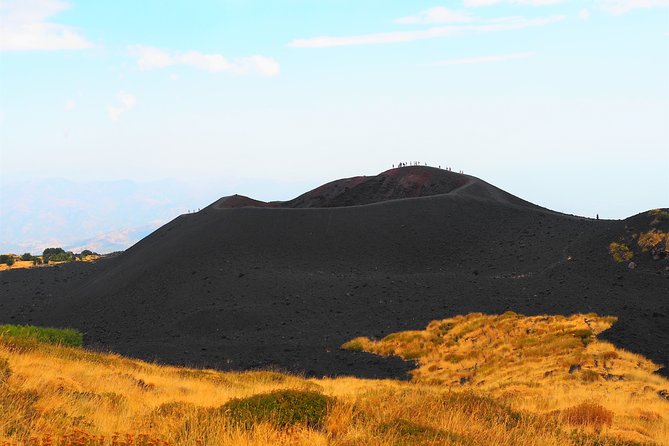
Starting from Piano Provenzana puts you in the Etna Nord zone, right where the volcanic story is readable on foot. You’re not doing a long drive and then hopping out for a quick photo stop. Instead, the route is built around walking along the 2002 eruptive fracture—so the setting is part of the point.
This is one of those walks where the ground under you keeps changing. You move across lava field terrain, then shift through patches of beech and laricius pine woods. That mix matters because it changes the feel of the hike: less “only rock, only heat,” more “a living environment next to a violent event.”
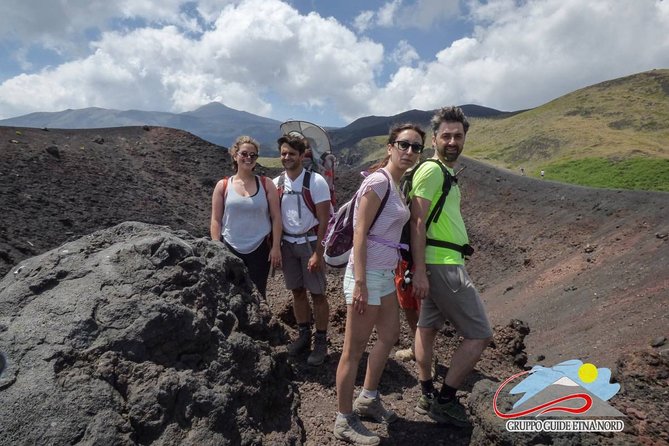
And because the tour uses a small group format (up to 12), you’re not stuck in a slow-moving line with zero chance to hear what the guide is explaining. That sounds small, but it makes a real difference when you’re standing close to craters.
The trek plan: from the fracture to the side craters
The whole experience is essentially one guided trekking loop out of Piano Provenzana and back. It’s described as about 2 to 3 hours total, with the walking time focused around the crater terrain.
Stop 1: Piano Provenzana and the 2002 eruptive fracture
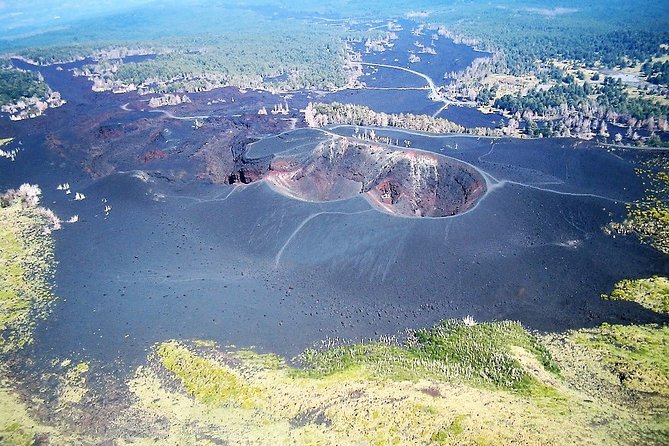
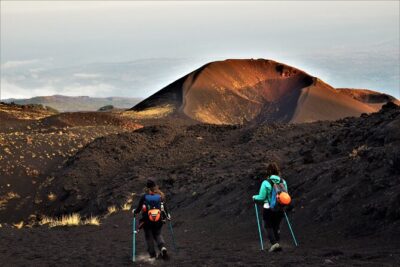
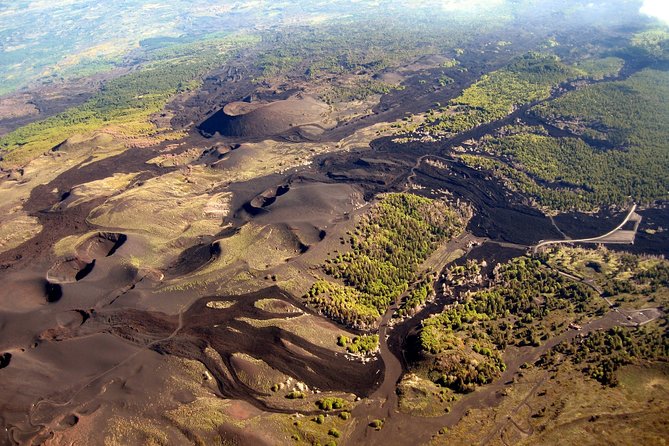
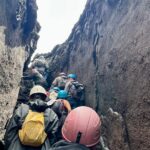
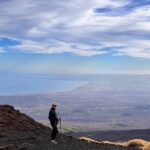
This is the main event. You begin at Piano Provenzana and follow the 2002 eruptive fracture, which is the line where the eruption shaped the ground. You’ll walk through volcanic surfaces that feel unmistakably “otherworldly,” then transition into wooded areas along the way.
The guided part isn’t just pointing. The route includes time to understand what you’re looking at. One guide (Fabio) is singled out for passion and detailed know-how about volcanic activity—down to the chemistry side—and he also manages the day based on what the air is doing. That matters because Etna can mix sulphur smells and wind in a way that affects how long you can comfortably stay close to certain areas.
Lava field + woods for contrast
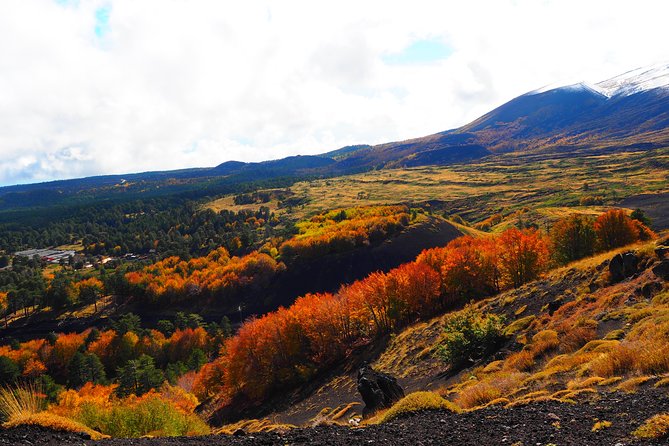
Expect a hike that keeps switching textures and visuals. The lava field gives you the raw, direct feel of the eruption. Then the beech and laricius pine woods add shade and relief, and they also help break up the effort. Even if you’re not a “nature person,” this contrast helps you stay engaged because you’re not staring at one type of ground the whole time.
A few we would gladly point a friend toward in Sicily
Side crater moment: a bottoniera
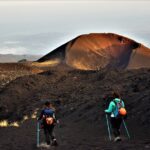
A highlight in the route is the side craters area known as a bottoniera. That’s the kind of detail that turns a standard crater walk into something more specific. Side craters don’t just look cool; they also help you see how the eruption played out beyond the main fracture line.
Back to the meeting point
At the end, the activity returns you to where you started. It’s the kind of tour that leaves you with a clear start and finish, which is great if you’ve got other plans later in Sicily.
Guides make or break Etna day tours
Etna tours rise or fall on pacing and explanation. On this trek, the guides are a big part of why people rate it so highly.
Fabio gets mentioned as a standout for the way he teaches. In one account, the guide’s passion and knowledge—specifically about volcanic activity and even volcanic chemistry—came through clearly. That’s not just trivia. It helps you interpret why the ground looks the way it does and why certain crater viewpoints feel different.
Sylvia is praised for mixing views, stories, and practical guidance. One person describes her helping during the more difficult parts of the route, which is the kind of detail you really care about when you’re on uneven volcanic ground.
Giuseppe is repeatedly described as keeping the group moving at the right pace, with a tone that makes you feel safe. He’s also credited with managing a group well enough that people could hike without problems—and even bring teens along successfully. That’s a strong signal that the guide knows how to balance the science with actual hiking comfort.
Marco is noted for teaching more than just rocks. One account highlights a lecture on the flora of the Etna park. Even a short talk here can be useful because it helps you look at the vegetation as part of the story, not just scenery.
Terrain reality: poles, footing, and how hard it feels
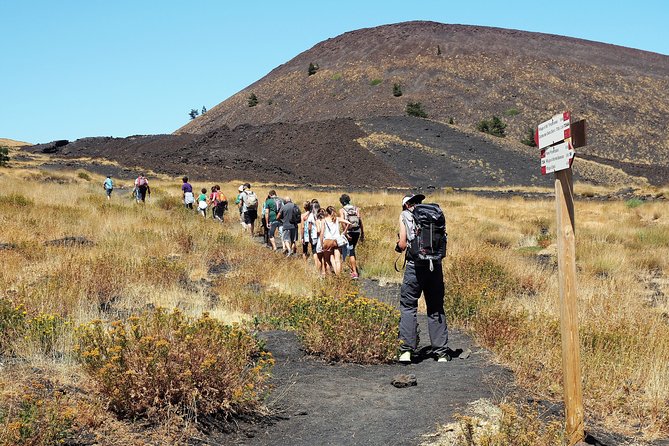
This trek is a guided hike through volcanic surfaces. That means uneven ground is part of the package, especially near crater areas.
Good news: the tour includes telescopic poles, which can help a lot on descent and on jagged footing. Even if you’re an active walker, poles take the stress off your knees and ankles.
And if you’re worried about gear, there’s another helpful detail mentioned in accounts of the experience: guides may provide loans of items like walking shoes, windbreakers, and sticks at no extra cost. You shouldn’t assume you’ll get everything every time, but it’s worth knowing that extra support exists if your hiking shoes are more city-sneaker than trail-ready.
How difficult is it? One comment specifically says the hike is about 5 km and not difficult. Still, “not difficult” can mean different things on lava terrain. If you’re comfortable walking on rough, irregular ground for a couple of hours, you’re likely to be fine.
Weather, wind, and that sulphur-air factor
This experience requires good weather. That’s not fine print—it’s practical. Crater areas can be exposed, and wind can change visibility and comfort quickly.
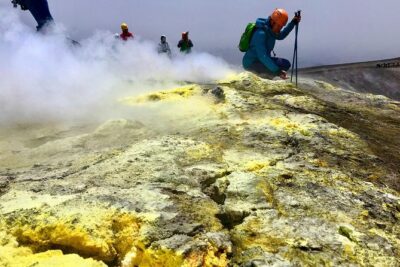
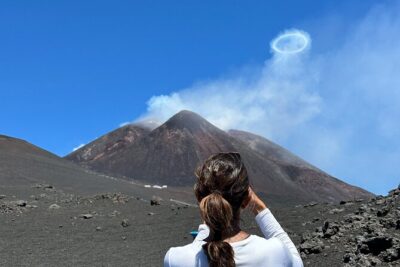
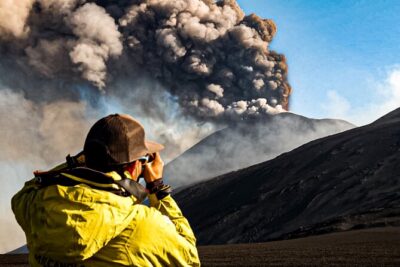
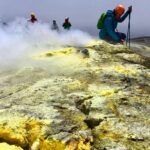
In accounts of the day, guides adapt based on the sulphur and wind combination, which affects how long you can comfortably stay close to certain crater viewpoints. Translation: you’re hiking with someone who adjusts the plan for safety and comfort, not just a fixed script.
So I suggest you plan your Etna day with flexibility. If the tour changes date due to weather, take the reroute seriously. The mountain is the product, and you’ll get far more from it when conditions cooperate.
Timing: a 10:00am start and a focused crater window
The trek begins at 10:00am from the Piano Provenzana meeting point in Linguaglossa (Etna Nord, via Provenzana, 95015). You’re back at the meeting point by the end.
A mid-morning start is often a smart choice on Etna. You’re not rushing out at dawn, but you’re also not waiting too long while wind patterns and visibility change.
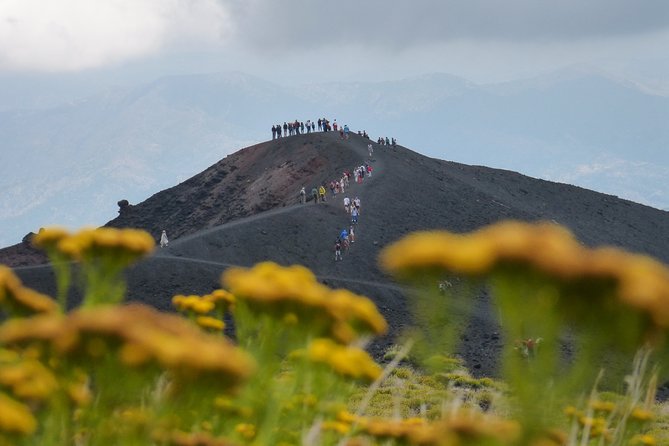
In terms of duration, plan for about 2 to 3 hours. Guides tend to pace so you can hike, hear explanations, and still enjoy the craters. People describe rest stops happening often enough to get explanations without turning the hike into an endless standstill.
Price and value: what $36.14 actually buys you
At $36.14 per person, this is one of the more affordable ways to get a guided Etna crater walk—especially because it includes two key things:
- Admission ticket included
- Telescopic poles included
You’re also paying for a small-group format (maximum 12), which can be rare at this price point. Smaller groups mean you’re more likely to hear the guide, ask questions, and move at a pace that matches your actual hiking ability.
What’s not included is also important for value:
- Bottled water
- Coffee and/or tea
- Snacks
So the best value move is simple: bring your own water and a small snack so you don’t spend your energy hunting food mid-hike.
If you’re comparing options, treat this as a guided trek that covers the crater experience and the basics for the trail. You’re topping up with your own hydration and fuel.
What to bring so you’re not thinking about stuff
Because the tour doesn’t include bottled water, coffee/tea, or snacks, I’d treat that as your checklist.
I’d bring:
- A refillable bottle or plan to buy bottled water before you start
- A snack you can eat quickly if you get hungry
- A layer you can handle if the wind picks up near craters
- Closed-toe shoes with traction (even if loan shoes are sometimes available, your own comfort matters)
Also, the route goes through both open volcanic areas and wooded sections. That means the ground can vary quickly, so your footwear matters more than for a simple nature walk.
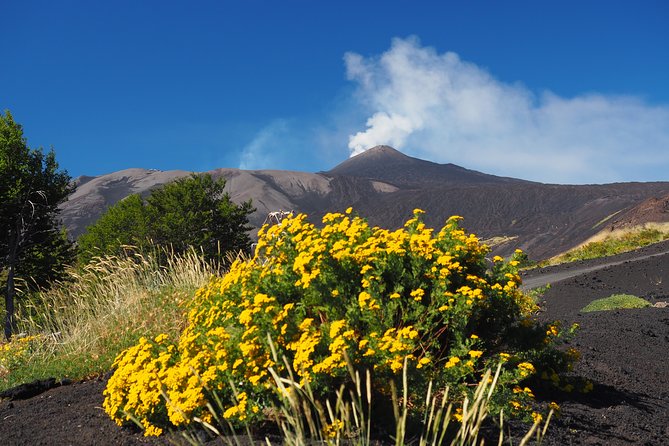
If you’re sensitive to strong smells, know that sulphur and wind can be a factor near crater areas. The guide’s experience helps manage time near viewpoints, but the atmosphere is part of Etna.
Should you book this Etna 2002 crater trek?
If you want a crater-focused walk without turning the day into a long, complicated logistics puzzle, I think you should book it. This hits a sweet spot: short enough to fit into a travel day, guided enough to make the volcano make sense, and specific enough to follow the 2002 eruptive fracture rather than doing a generic crater stroll.
This is also a strong pick if you value a guide who teaches while you hike. Names like Fabio, Sylvia, Giuseppe, and Marco keep showing up for a reason: the explanations and safety/pacing seem to be the heart of the experience.
Skip it (or reconsider) if you can’t handle uneven volcanic terrain or if you’re unwilling to plan around weather. Since good weather is required, you’ll do best if you’re flexible with timing.
FAQ
How long does the trek take?
The experience runs about 2 to 3 hours (approx.), with the trekking portion focused around the route starting at Piano Provenzana.
Where does the tour start?
It starts at Piano Provenzana – Etna nord, via Provenzana, 95015 Linguaglossa CT, Italy.
What time does it begin?
The start time is 10:00 am.
Is the trek in English?
Yes. The tour is offered in English.
What’s included in the price?
You get a mobile ticket, an admission ticket, and telescopic poles.
What should I bring since food and drinks aren’t included?
Bottled water and coffee and/or tea are not included, and snacks aren’t included either. Plan to bring your own water and a small snack.
How big is the group?
The maximum group size is 12 travelers.
Do I need good weather?
Yes. The experience requires good weather. If it’s canceled due to poor weather, you’ll be offered a different date or a full refund.
Can I cancel for a refund?
Free cancellation is available up to 24 hours in advance for a full refund. If you cancel less than 24 hours before the start time, the amount paid won’t be refunded.
More Hiking & Trekking in Sicily
More Tour Reviews in Sicily

More Etna Summit Treks We Have Walked
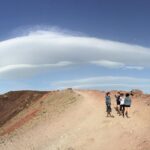
Just added: the newest Sicily tours in our notebook
- Etna / Taormina★ 5.0 · 3 reviews
- Bikes★ 5.0 · 3 reviews
- Taormina shore tour – for small group cruise passengers★ 5.0 · 3 reviews
- Vegan Cooking Class in Catania with Lunch and Dinner★ 5.0 · 3 reviews
- Make & Taste Sicilian Desserts in Palermo – Learn Cannoli & More★ 5.0 · 3 reviews
- Sicilian Villages & Ricotta Tasting – including Lunch from Cefalu★ 4.0 · 3 reviews
Mount Etna Tours & Summit, compared.
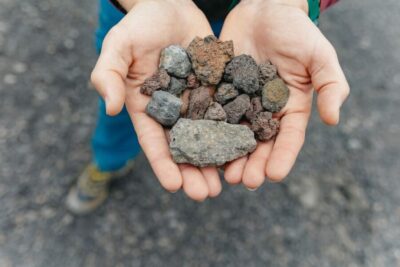 ★ 4.8Catania: Mount Etna Morning or Sunset Day Trip with TastingFrom $704,028 reviews
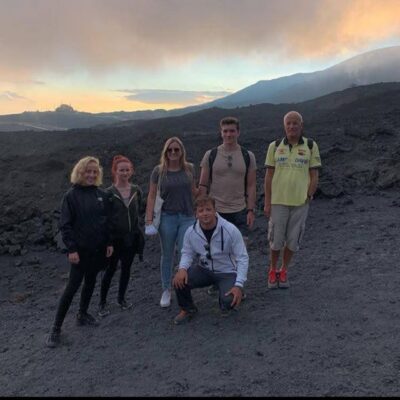 ★ 4.8Catania: Sunset Jeep Tour of Mount Etna and Lava Flow CavesFrom $712,113 reviews
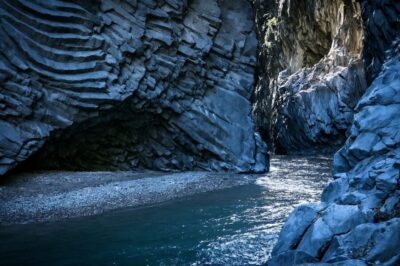 ★ 4.8Etna and Alcantara Gorges Full-Day Tour with LunchFrom $1051,766 reviews
 ★ 4.7Etna: summit craters trekking with volcano guide 3350mtFrom $771,712 reviews
 ★ 4.9Catania: Mount Etna Trekking Tour Beyond the Tourist TrailsFrom $811,596 reviews
 ★ 4.8Mount Etna: Guided Trek 3,000 Meters to the SummitFrom $1131,407 reviews
 ★ 4.8Catania: Etna Sunset Tour with Pickup and Drop-offFrom $711,348 reviews
 ★ 4.8Etna Sunset Tour: Volcano trek, Cave & tasting from CataniaFrom $701,290 reviews
Browse the lists this tour appears in