
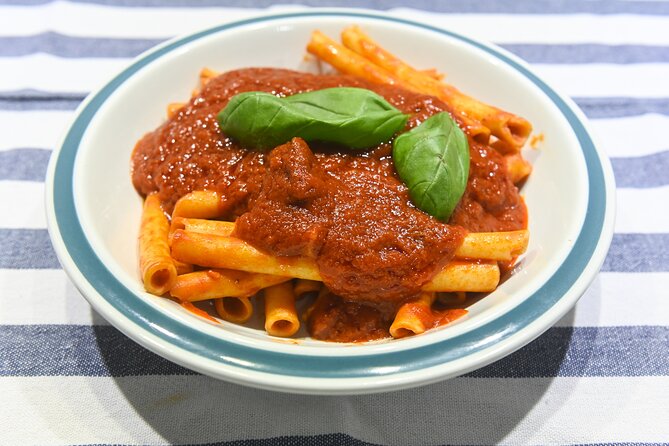
Reviewed · CATANIA TOURS
Share Your Pasta Love in Local’s Home in Catania
You won’t learn pasta like this anywhere else. In a Catania home, you get a real Italian welcome, hands-on fresh pasta instruction, and a sit-down meal you helped make, with hosts like Angela and Marilù bringing both skill and humor; the main catch is the cost can feel steep if you’re comparing it to a simple restaurant dinner.
I especially like the small-group size (max 12) and the fact you’re working in someone’s kitchen, not a studio. You’re not just watching dough happen. You’re mixing, kneading, shaping, and eating, often with a Sicilian-specific twist like pistachio pasta and classic combinations such as pasta alla Norma or anelletti al forno. One possible drawback: language support can vary day to day, so if you want all instructions in English, come ready to use a little patience and translation help if needed.
Expect about 1.5 hours of warm, practical cooking, followed by the meal portion where everything clicks. You’ll start with a small appetizer plus an aperitif, then make pasta (pappardelle, tagliatelle, or ravioli), and finish with tiramisù, plus complimentary wine (one bottle per three people).
In This Review
- Key highlights you’ll feel in your hands
- A Catania home kitchen beats the usual “class” setup
- What you’ll make: fresh pasta shapes plus Sicilian flavors
- The welcome, aperitif, and wine: part lesson, part meal
- How the 90 minutes usually feel (and what to do with your time)
- Small group size (up to 12): better pace and more interaction
- Price and value: what $83.08 covers, and what might sting
- Catania logistics: where to meet and how to plan your arrival
- Who should book this (and who should skip it)
- Should you book Share Your Pasta Love in a Local Home in Catania?
- FAQ
- How long is the pasta-making experience?
- How much does it cost?
- Is it offered in English?
- How many people are in the group?
- What do I eat during the experience?
- Is wine included?
- Where does the experience start and end?
- Do I get a ticket on my phone?
- What is the cancellation policy?
Key highlights you’ll feel in your hands
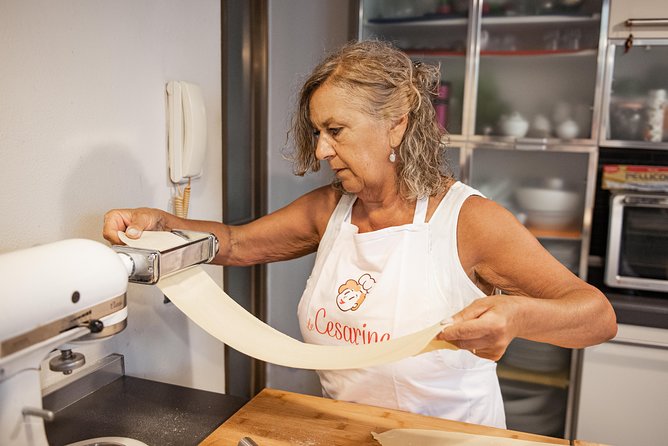
- A real Catania home setting: you’re welcomed into a lived-in kitchen, not a classroom
- Fresh pasta training: knead, shape, and cook classic formats with a local host
- Sicilian-focused dishes: you might make pasta like pasta alla Norma, anelletti al forno, or pasta con le sarde
- Aperitif, wine, and tiramisù: the lesson ends with what you cooked, plus dessert
- Small group energy (up to 12): easier conversation and quicker feedback while you work
What else Catania has going on
- Mt. Etna nature and flavors half day Tour from Catania
★ 5.0 · 545 reviews - From Catania: Mt. Etna, Wine and Alcantara Tour
★ 4.8 · 370 reviews - Etna Morning Tour (starting from Catania)
★ 5.0 · 362 reviews - Underground Catania
★ 5.0 · 302 reviews
A Catania home kitchen beats the usual “class” setup
This experience is built around one big idea: you cook like a person in someone’s family kitchen. That changes everything. The pacing tends to be calmer than a large, high-throughput tour, and you’re more likely to get personal cues while your dough is still workable.
In the real homes where this happens, you’ll often notice the details that don’t show up in cooking demonstrations: how ingredients are handled, how the host talks you through the feel of dough, and how the room itself is set up for an actual meal at the end of the process. People with names like Angela, Giusi, Antonella, Marilù, Andrea, and Graziella have been part of these experiences, and the common thread is warmth plus an easy sense of humor.
If you’re the type who likes to learn by doing, not just tasting, you’ll probably appreciate the hands-on format. If you’re mainly chasing spectacle, you might find it less exciting than a big sightseeing-heavy day. Here the payoff is skill, conversation, and the food you finish with.
What you’ll make: fresh pasta shapes plus Sicilian flavors
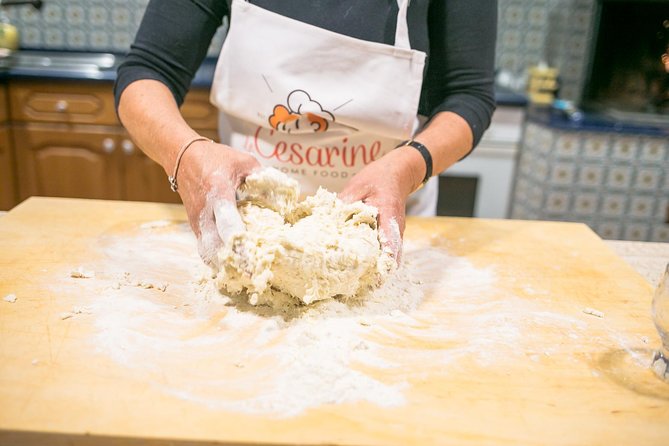
You don’t just make one pasta and call it a day. You’ll be guided through forming classic fresh pasta—often pappardelle, tagliatelle, or ravioli—with techniques that match what’s typical in Sicily.
The menu examples give you a sense of the flavor direction. You might see:
- Pasta alla Norma (Sicilian style)
- Anelletti al forno (baked pasta, very Sicily-coded)
- Pasta con le sarde (pasta with sardines)
- Tiramisù for dessert
The formats matter because they change how you handle dough and sauce. Wider noodles like pappardelle can be more forgiving as you learn, while ravioli asks for more precision. Tagliatelle sits somewhere in the middle. The host’s guidance helps you get the hang of it fast.
One review also points out pistachio pasta being taught. That tells me the class can go beyond the most basic lesson and into Sicilian ingredients and variations. Even if you don’t make pistachio dough that day, the broader lesson is the same: you learn how to shape pasta you can recognize when you see it on menus at home.
The welcome, aperitif, and wine: part lesson, part meal
The experience starts with a warm reception and small food to settle you in. You’ll get an appetizer plus an aperitif first. This is useful for two reasons. First, it stops you from walking in hungry and rushed. Second, it sets the tone: you’re guests in a home, and you’ll eat like it.
Wine is included as one bottle per three people. That’s a practical detail for value. It means the wine is there, but it’s not an endless open bar situation. If you drink lightly, you’ll likely feel perfectly happy with that. If you’re a heavy drinker, you might think about pairing expectations before you book.
After you make pasta, you eat what you made together at the table. That’s not a throwaway detail. The meal portion is what turns a cooking class into a memory you’ll keep. You’ll taste the results of your own work while the host is still nearby to explain what you just did.
Dessert is tiramisù, which is a fitting ending: sweet, familiar, and forgiving. It’s also a chance to learn a classic finish rather than only focusing on the main dish.
How the 90 minutes usually feel (and what to do with your time)
The total duration is about 1 hour 30 minutes. In that window, you’ll move from welcome to hands-on work to dinner. It’s not a slow, full-day cooking retreat. It’s designed to be efficient without feeling rushed.
Here’s what that means for you, practically:
- Wear clothes you can move in while kneading and shaping dough.
- Bring a good attitude toward mess. Fresh pasta work gets floury; that’s part of the process.
- If you’re hoping for lots of English-only explanation, plan to lean on gestures, simple questions, and translation tools if needed.
One important note from past experiences: at least one instructor was described as not speaking English, even though the activity offers English. That doesn’t mean your day will be the same, but it does suggest you should treat language as flexible rather than guaranteed. The cooking actions themselves are the universal language. Even if you don’t catch every word, you’ll still be doing the steps.
You’ll also get conversation time. That’s often when you learn the “why” behind technique: what makes a dough feel right, how locals think about pasta shape, and why certain Sicilian pairings show up again and again.



Small group size (up to 12): better pace and more interaction
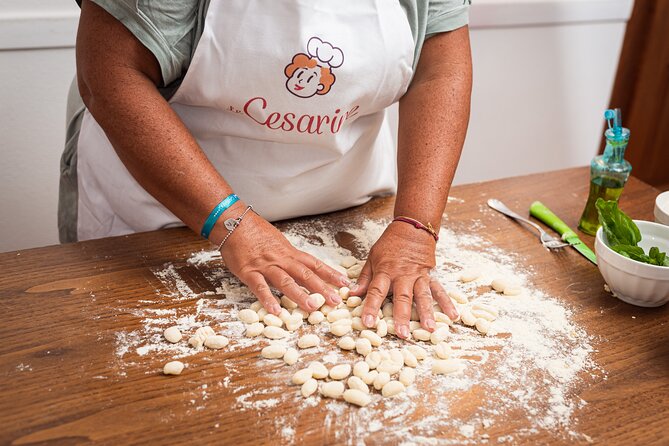
With a maximum of 12 people, this class usually stays in that sweet spot where you can ask questions and get feedback. In larger settings, you can get stuck waiting for attention while your dough dries out. In smaller ones, the host can spot issues faster—like dough that’s too dry, or a shape that needs a slightly different roll.
Smaller groups also make it easier to connect. You’re in a home, so there’s a natural sense of sharing space. Conversations tend to form around what you’re making, where you’re from, and what you’ve been eating around Catania.
If you want a social experience, this size helps. If you’d rather keep things calm and focused on cooking, it’s still manageable. You won’t feel swallowed by a crowd.
Price and value: what $83.08 covers, and what might sting
The price is $83.08 per person for about 90 minutes. That’s in the range where you should ask: am I paying mostly for food, or mostly for instruction and hospitality?
Here, you get a bundle:
- A guided cooking lesson in a local home
- A shared meal with pasta you shaped plus tiramisù
- An appetizer and an aperitif at the start
- Complimentary wine (one bottle per three people)
That bundle is the core value story. You’re not just buying dinner. You’re buying a meal plus the skill to recreate parts of it later.
Still, one review flagged a value concern: the wine allocation didn’t feel like enough for the total price paid, especially for a group split. That’s a reasonable consideration. If alcohol is a big part of how you measure value, check your expectations. Also note you’re paying for host time and expertise, and that usually costs more than a typical restaurant experience.
My take: if you come to this to learn and eat well, the price makes sense. If you’re mainly looking for a cheap meal or you’re determined to drink heavily, you might feel underwhelmed.
Catania logistics: where to meet and how to plan your arrival
Meeting is at Via Agostino de Cosmi, 95123 Catania CT, Italy, and the activity ends back at the same point. It’s described as near public transportation, which matters because Catania can be easier on foot in some areas and easier by transit overall.
You’ll also get a mobile ticket. That’s straightforward, and it helps you avoid ticket-printing hassles.
Because this takes place in a home, I’d build in a little extra margin. Arrive a few minutes early so you can settle in before the lesson starts.
Who should book this (and who should skip it)
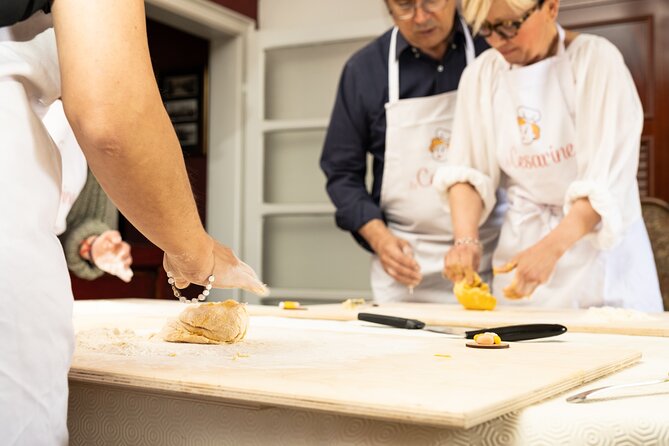
This is best for you if:
- You want a hands-on Sicilian food experience, not a quick tasting tour
- You like learning cooking basics you can actually repeat later
- You’re traveling with an open, curious mindset for conversation and humor in a home setting
You might think twice if:
- You’re only interested in sightseeing and need more “big view” time
- You want a guaranteed fully English-speaking explanation from start to finish (some days may be less language-heavy than you hope)
- You’re chasing the lowest possible cost per hour and don’t care much about wine, dessert, or cooking instruction
It’s also a good fit for a morning or evening meal flow in Catania, because the class ends with you eating. You’re not left hunting for dinner afterward.
Should you book Share Your Pasta Love in a Local Home in Catania?
I think you should book it if you’re excited by the idea of learning fresh pasta in a real Catania home and finishing the experience with a proper meal—aperitif first, pasta you made, and tiramisù. The small group limit and the Sicilian-specific approach (from pasta alla Norma to anelletti al forno, plus chances for variations like pistachio pasta) make it more than a generic “how to boil noodles” stop.
If value is your top concern, go in with clear expectations about wine: it’s complimentary, but it’s not a limitless amount. Also assume that while the experience offers English, communication styles can vary depending on the host.
If you want a Catania memory that tastes like you worked for it, this is the kind of booking that pays off.
FAQ
How long is the pasta-making experience?
It’s about 1 hour 30 minutes.
How much does it cost?
The price is $83.08 per person.
Is it offered in English?
Yes, it is offered in English.
How many people are in the group?
The class has a maximum of 12 travelers.
What do I eat during the experience?
You’ll have an appetizer and aperitif at the start, then you’ll make and eat pasta, and you’ll have tiramisù for dessert.
Is wine included?
Yes. Wine is included with the meal, with one bottle per three guests.
Where does the experience start and end?
It starts at Via Agostino de Cosmi, 95123 Catania CT, Italy and ends back at the same meeting point.
Do I get a ticket on my phone?
Yes, it’s a mobile ticket.
What is the cancellation policy?
You can cancel for a full refund up to 24 hours in advance of the experience start time, with confirmation received at booking.
More Tour Reviews in Sicily






Keep Exploring Catania





Just added: the newest Sicily tours in our notebook
- Etna / Taormina★ 5.0 · 3 reviews
- Bikes★ 5.0 · 3 reviews
- Taormina shore tour – for small group cruise passengers★ 5.0 · 3 reviews
- Vegan Cooking Class in Catania with Lunch and Dinner★ 5.0 · 3 reviews
- Make & Taste Sicilian Desserts in Palermo – Learn Cannoli & More★ 5.0 · 3 reviews
- Sicilian Villages & Ricotta Tasting – including Lunch from Cefalu★ 4.0 · 3 reviews
Catania Tours, compared.
 ★ 4.8Catania: Mount Etna Morning or Sunset Day Trip with TastingFrom $704,028 reviews
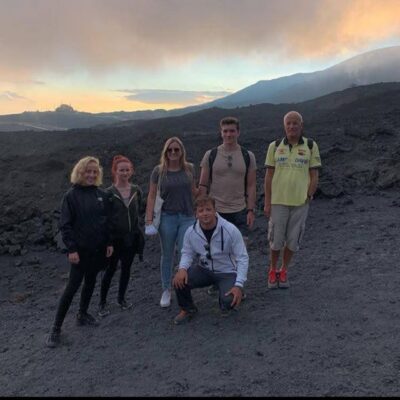 ★ 4.8Catania: Sunset Jeep Tour of Mount Etna and Lava Flow CavesFrom $712,113 reviews
 ★ 4.9Catania: Mount Etna Trekking Tour Beyond the Tourist TrailsFrom $811,596 reviews
 ★ 4.8Catania: Etna Sunset Tour with Pickup and Drop-offFrom $711,348 reviews
 ★ 4.8Etna Sunset Tour: Volcano trek, Cave & tasting from CataniaFrom $701,290 reviews
 ★ 4.8Catania: Etna Morning Excursion with Tasting and PickupFrom $711,224 reviews
 ★ 5.0Mt. Etna and Taormina village full day tour from CataniaFrom $1181,155 reviews
 ★ 4.9Catania: Amazing Etna Morning Tour with Pickup and Drop-OffFrom $81799 reviews
Browse the lists this tour appears in