
Reviewed · SYRACUSE & ORTIGIA
Private tour Syracuse -Archaeological Park and Ortigia with lunch
Echoes from ancient Syracuse. In about four hours, you get a guided walkthrough of the UNESCO Neapolis Archaeological Park and a focused stroll through Ortigia’s most famous sights.
I like the hands-on feel of a private guide who can explain what you’re looking at, and I love that your day ends with an included lunch built around classic local flavors.
One thing to keep in mind: this is a walking-heavy day on stone paths, and the pace depends on your guide and your group. If you need frequent breaks or prefer minimal uphill walking, bring that up early so expectations are clear.
In This Review
- Key things to know before you go
- Neapolis Archaeological Park, right where the story starts
- Greek Theater and the Ear of Dionysius: what you’ll actually notice on the ground
- Greek Theater (and why size matters)
- Ear of Dionysius: the acoustics moment
- Latomie (ancient quarries) and Roman amphitheater
- Altar of Hiero, Nympheum, and Greek-era details
- Ortigia walking tour: Greek Apollo Temple to the fountains that give the island its identity
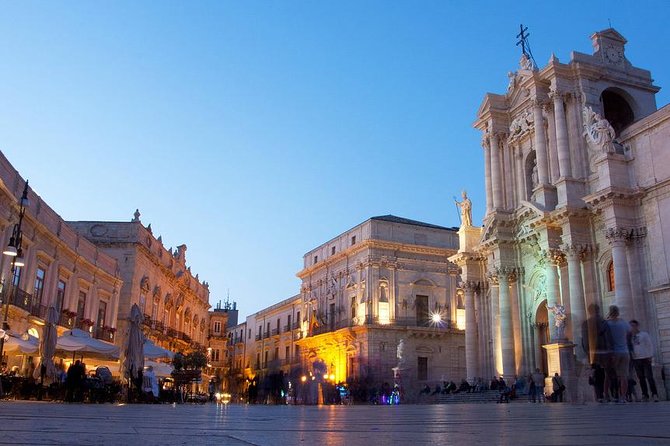
- Cathedral Square and the Cathedral area: the easy win if it’s your first time
- Lunch in Syracuse: prosciutto, cheese, olives, bread, pasta alla norma, and wine
- Price and logistics: does $468.55 per person make sense?
- Who this tour fits best (and where you should slow down)
- The optional wine and local food tasting upgrade: worth it?
- Should you book this Syracuse and Ortigia private tour?
- FAQ
- How long is the Syracuse and Ortigia private tour?
- What’s included in the price?
- Is the Neapolis Archaeological Park admission fee included?
- Where does pickup happen?
- Is this tour private?
- What language is the tour offered in?
- What is included in the lunch?
- Can I cancel for free?
Key things to know before you go
- UNESCO Neapolis in one tight circuit: Greek Theater, Roman amphitheater, Latomie, and more
- Ear of Dionysius acoustics: a site made for pauses, not speed-walking
- Ortigia highlights close together: Apollo Temple, Cathedral Square, Arethusa Fountain, and Diana’s fountain
- Lunch with structure: antipasti (prosciutto, cheese, olives), homemade bread, pasta alla norma, plus wine
- Private pickup and drop-off from Siracusa or Taormina for a stress-free start
Deeper into Ortigia and old Syracuse
- Syracuse: Boat Tour with Captain Mirko, Snorkeling & Caves
★ 4.7 · 746 reviews - Siracusa: Ortigia Boat Tour with Marine Grotto & Snorkeling
★ 4.7 · 726 reviews - Siracusa: Ortigia & Sea Caves Boat Tour w/ Prosecco & Fruit
★ 4.8 · 723 reviews - Syracuse: Ortigia Island & Sea Cave Boat Tour with Prosecco
★ 4.7 · 418 reviews
Neapolis Archaeological Park, right where the story starts
Syracuse doesn’t feel like one era. It feels like layers—Greek, Roman, then the later city that grew around these ruins. That’s exactly why this tour works so well: you start at Neapolis Archaeological Park, then finish in Ortigia, where the old and the everyday sit side by side.
At the park, your guide helps you connect monuments to real human use. You’re not just looking at stones; you’re learning what these places were for and why they mattered. The big selling point is seeing a cluster of headline sites without having to plan, drive, and stitch the day together yourself.
You’ll also get a panoramic view from the top of the hill—a small moment that makes the whole route click. From up there, you can understand why Syracuse became so important and why these structures were built where they are.
Practical note: Neapolis admission is not included. Plan on paying the park entrance fee separately (listed at €16.50 per person). If you like smooth logistics, bring a little extra cash or card-readiness so you’re not stuck at the gate.
Greek Theater and the Ear of Dionysius: what you’ll actually notice on the ground
The park visit is built around major stops that feel iconic for a reason.
Greek Theater (and why size matters)
You’ll see the Greek Theater, highlighted as the biggest Greek theater in Sicily. In real life, it’s not just impressive because it’s large. It’s impressive because it shows how Greek culture built drama into daily life—people gathered here, and the design shaped how sound carried and how performances landed on the audience.
If you care about architecture, ask your guide what you’re seeing in terms of structure and layout. This is one of those spots where explanations make you look twice.
Ear of Dionysius: the acoustics moment
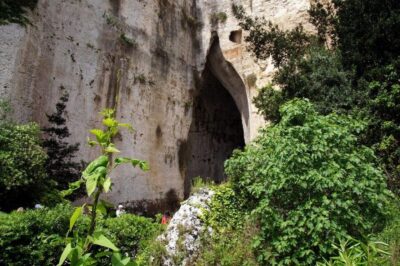
Next comes the legendary Ear of Dionysius cave, famous for its unique acoustics. Even if you’ve heard about it before, the first time you’re standing there, it’s hard not to pause. This place is made for testing your assumptions about sound—how it travels, how it changes in enclosed stone spaces.
One of the fun extras you might get from a talented guide: a short song or vocal bit that leans into the echo. It turns a “photo stop” into an experience you remember.
A few we would gladly point a friend toward in Syracuse
Latomie (ancient quarries) and Roman amphitheater
Then you’ll move through the ancient Greek quarries (Latomie). These are the kind of locations that make you think about labor and reuse. You’re not looking at polished monuments; you’re walking through carved limestone spaces that shaped how the city grew.
After that, the route continues with Roman touches, including the Roman amphitheater. The transition helps you see Syracuse as a place that kept being used and rebuilt instead of a museum that froze in time.
Altar of Hiero, Nympheum, and Greek-era details
Your guide also points out stops like the altar of Hiero and the Nympheum fountain. The reason these matter is simple: they round out the park beyond the big headline theater and cave. You start noticing how much of the site was connected to public life—ritual, gatherings, water, and daily flow.
Ortigia walking tour: Greek Apollo Temple to the fountains that give the island its identity
After Neapolis, the vibe shifts. Ortigia is where you feel Syracuse as a living place. You’re not dodging tour buses and big crowds in every direction; you’re walking through a compact old island that gives you that “I could spend another day here” feeling.
You’ll visit key points around the historic center, including:
- Greek Apollo Temple
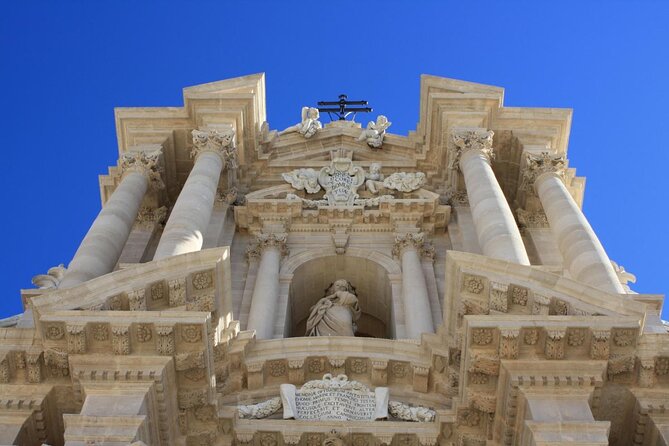
- Cathedral Square with bright limestone buildings and the Cathedral
- Palazzo Beneventano
- St. Lucy’s Church
- Arethusa Fountain
- The Jewish Quarter
- Archimedes Square
- Fountain of Diana
Your guide’s job here is to connect buildings and street corners to the bigger story. The best Ortigia tours don’t just say what’s where. They help you understand how the island’s identity formed—from religious and civic spaces to water features and neighborhood traditions.
One tip: if you’re the type who likes photos, take them, but also look up. Ortigia’s charm comes from the stonework and how the architecture sits together. The tour’s paced walking makes it easier to notice details without feeling rushed.
Cathedral Square and the Cathedral area: the easy win if it’s your first time
Within Ortigia, the Cathedral Square area is an easy win. It’s visually striking right away—limestone buildings in bright tones that make the whole square feel sunlit even on a cloudy day.
This is also the spot where your guide can give you quick context that makes the rest of Ortigia easier to understand. Once you get oriented here, the rest of the walk stops feeling like separate landmarks and starts feeling like a single connected island.
If you’re short on time in Syracuse, this kind of first-pass orientation is exactly what you want from a private format.
Lunch in Syracuse: prosciutto, cheese, olives, bread, pasta alla norma, and wine
By the time lunch arrives, you’ll be ready for something real. The tour includes a traditional lunch with a lineup of Sicilian favorites: antipasti (prosciutto, cheese, olives, homemade bread), then pasta alla norma, followed by wine.
This isn’t a tiny snack pretending to be lunch. It’s an actual meal with enough variety to keep you satisfied even if you came hungry. And if you’re picky, you’ll likely appreciate that the menu is classic and straightforward rather than weirdly experimental.
A practical angle: pasta alla norma is filling. I’d plan to slow down after lunch instead of rushing into a late afternoon drive. With this tour, you’ve already done the heavy sightseeing work, so you can enjoy the rest of your day at a human pace.
Price and logistics: does $468.55 per person make sense?
Let’s talk value. At $468.55 per person, this isn’t a budget tour. It’s a premium way to do Syracuse fast and with less stress.
Here’s what you’re paying for:
- Private tour (your group only) with a dedicated professional guide
- Driver/guide and hotel pickup and drop-off from Siracusa or Taormina
- The included traditional lunch
What’s not included:
- Admission to Neapolis Archaeological Park (listed as €16.50 per person)
So where does the money pay off? If you hate logistics—finding the meeting point, timing buses, negotiating parking, or trying to assemble a self-guided route—this format removes the friction. It also helps you spend your short time in Syracuse on the right stops, in the right order, instead of wandering.
Also, it’s set up for people who book early. The fact it’s commonly reserved about 90 days in advance is a hint that this is a popular “first visit to Syracuse” style day.
Who this tour fits best (and where you should slow down)
This tour is a strong fit if you want:
- A guided introduction to both Neapolis and Ortigia
- A day that balances monuments and streets without turning your afternoon into a navigation project
- A comfortable end with lunch and wine included
It’s also a good fit for mixed ages, as long as everyone is okay with a moderate amount of walking on historic ground. The route includes archaeological areas and outdoor stops, so wear shoes you trust on uneven surfaces.
The one caution I’d give you: the experience depends on the guide’s pace and physical comfort level, and one weak match can make the day feel rushed or under-explained. Because this is private, you have more flexibility to set expectations, ask questions, and request more time at specific spots.
If you have mobility limits, tell the operator up front and ask how the walking is paced.
The optional wine and local food tasting upgrade: worth it?
The experience lists an option to upgrade with a wine and local food tasting. If you’re the type who likes to slow down for small tastings and chat with the people serving your food, this can be a fun add-on.
But if you already plan to enjoy the included lunch with wine and you’re more about sightseeing than sampling, you might decide the base meal is enough. The smart move is to match the upgrade to your personal style: extra tasting time or more free time after the tour.
Should you book this Syracuse and Ortigia private tour?
Yes, I’d book it if you want the simplest path to the two most important parts of Syracuse—Neapolis and Ortigia—with pickup, guidance, and a real lunch handled for you. The combination of UNESCO ruins, iconic stops like the Ear of Dionysius and Arethusa Fountain, and the structured meal makes this a good use of a limited time trip.
I would think twice if you need a very low-walking day, or if you’re sensitive to pace. On days like this, shoes, energy, and expectations matter. If you communicate your comfort level and ask for a steady rhythm, you’ll set yourself up for the kind of day where Syracuse feels clear, connected, and memorable.
FAQ
How long is the Syracuse and Ortigia private tour?
It lasts about 4 hours.
What’s included in the price?
The tour includes a driver/guide, a professional guide, hotel pickup and drop-off, a private tour, and traditional lunch.
Is the Neapolis Archaeological Park admission fee included?
No. Admission to the Archaeological Park is not included and is listed at €16.50 per person.
Where does pickup happen?
Your guide picks you up at your hotel or port in Siracusa or Taormina.
Is this tour private?
Yes. It’s a private tour, and only your group participates.
What language is the tour offered in?
The tour is offered in English.
What is included in the lunch?
Lunch includes antipasti such as prosciutto, cheese, olives, and homemade bread, plus pasta alla norma and wine.
Can I cancel for free?
Yes. There is free cancellation, with a full refund if you cancel at least 24 hours before the experience start time.
If you tell me your travel month and whether anyone in your group has mobility limits, I can help you decide if this is the right pacing for your day.
More Tours in Syracuse
More Tour Reviews in Syracuse
More of Syracuse and Ortigia
Just added: the newest Syracuse tours in our notebook
- Tour of Syracuse by Ape Calessino★ 3.0 · 3 reviews
- Syracuse Showdown Scavenger Hunt★ 5.0 · 3 reviews
- Sicily Boats Avola: Plemmirio boat tour 4 people 4 hours★ 5.0 · 3 reviews
- Groovy Geneva Scavenger Hunt★ 5.0 · 3 reviews
- Syracuse: Ortigia & Sea Caves Boat Tour with Local Skipper★ 5.0 · 3 reviews
- Siracusa: Neapolis’s Archaeological Park small group tour★ 5.0 · 3 reviews
Syracuse & Ortigia, compared.
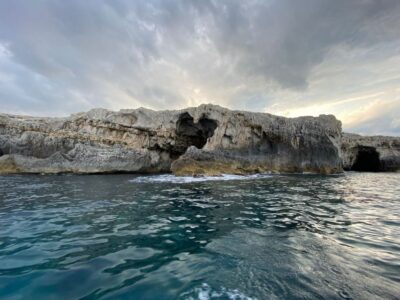 ★ 4.7Syracuse: Tour of Ortigia Island & Caves with Local SkipperFrom $231,060 reviews
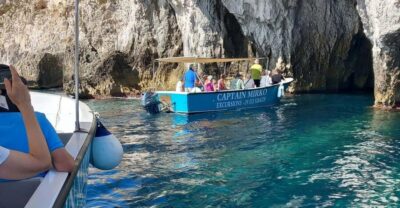 ★ 4.7Syracuse: Boat Tour with Captain Mirko, Snorkeling & CavesFrom $35746 reviews
 ★ 4.7Siracusa: Ortigia Boat Tour with Marine Grotto & SnorkelingFrom $47726 reviews
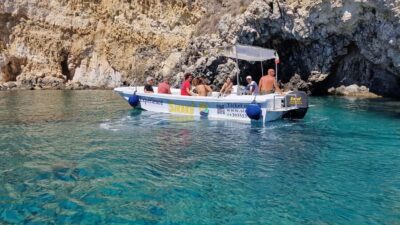 ★ 4.8Siracusa: Ortigia & Sea Caves Boat Tour w/ Prosecco & FruitFrom $35723 reviews
 ★ 5.0Tour of the island of Ortigia and exploration of sea caves with baths.From $24668 reviews
 ★ 4.7Syracuse: Ortigia Island & Sea Cave Boat Tour with ProseccoFrom $23418 reviews
 ★ 5.0Boat tour of Ortigia Island and sea cavesFrom $24407 reviews
 ★ 4.6Catania: Syracuse, Ortigia, and Noto Tour with BrunchFrom $112404 reviews
Browse the lists this tour appears in