
Fresh pasta time in Palermo feels personal. In this small-group class, you’ll make cannoli and ravioli in a local kitchen setting, not a loud demo. You’ll also get plenty of hands-on time kneading dough, rolling pasta, and learning techniques you can actually repeat later.
I especially like the way the day starts with dessert—cannoli—then uses a natural pause (the dough resting) to switch gears to ravioli. I also love the human side: Chiara and Walter share family stories and Sicilian food traditions as you cook, so the meal lands with meaning, not just technique.
One thing to consider: this is not a sightseeing tour. It’s a 3-hour cooking experience focused on making and eating what you produce, so if you mainly want streets, churches, and views, you may prefer a walking tour instead.
In This Review
- Key highlights worth aiming for
- A Palermo cooking class that starts with cannoli (not pasta first)
- Cannoli prep: flour, eggs, kneading, and fresh ricotta filling
- Ravioli with your hands: fresh pasta technique you can repeat
- The sauce and the meal: grandma-style tomato comfort
- Prosecco, photos, and stories: the social part you’ll remember
- Where this class shines for value (and what you might not like)
- Getting there near Teatro Massimo without stress
- Who should book this Palermo ravioli and cannoli class
- Should you book Family Recipe in Palermo
- FAQ
- What will I cook in the Palermo class?
- How long is the cooking class?
- How large is the group?
- Who teaches, and what languages are used?
- Where do I meet for the class?
- Is prosecco included?
- Do I get photos or take-home materials?
- Can families book, and are kids allowed?
- Is there free cancellation?
Key highlights worth aiming for
- Cannoli dough from A to Z using just flour and eggs, then shaping and filling with fresh ricotta
- Ravioli you make with your own hands—mix, portion, and form the pasta for a true from-scratch result
- Small group size (max 6) that keeps the experience relaxed and interactive
- Chiara and Walter’s storytelling between courses, connecting recipes to Sicilian life
- Photos and recipes included (they’ll send SLR photos and provide what you need to recreate the meal)
The rest of what Palermo puts on
- Palermo: NO Mafia Walking Tour
★ 4.8 · 2,431 reviews - Palermo: Hop-on Hop-off Bus Tour 24-hour Ticket
★ 3.9 · 2,410 reviews - Palermo Original Street Food Walking Tour by Streaty
★ 5.0 · 2,105 reviews - Segesta, Erice and Salt Pans Full-Day Excursion from Palermo
★ 4.2 · 1,791 reviews
A Palermo cooking class that starts with cannoli (not pasta first)
If you’ve ever thought, why do cooking classes always begin with the hardest thing first, this one flips the order. You begin with cannoli—you make the dough, shape it, and get it in a good resting window. Then, while that element does its thing in the fridge, you shift to the fresh pasta you’ll use for the ravioli (and the wider fresh-pasta program).
That flow matters. Starting with cannoli gives you quick momentum and immediate payoff, and it also sets the tone: this class feels like you’ve been invited into someone’s kitchen, with real explanations and no rushing through steps. The pace stays friendly enough that you’re learning while still having fun.
Another practical plus: with only up to 6 people, you’re not watching from the sidelines. You get to do. Even better, you’ll be in a central Palermo location near Teatro Massimo, so this fits neatly into an afternoon without turning into a logistics headache.
Cannoli prep: flour, eggs, kneading, and fresh ricotta filling
Cannoli here isn’t treated like a store-bought shortcut. The class focuses on the dough process from the basics all the way through shaping and building the final cannolo.
You’ll learn the fundamentals you can actually take home:
- You work with the dough using simple ingredients like flour and eggs.
- You get guidance through each stage, from mixing to handling.
- You’ll follow the timing so the dough rests properly before you move on.
Then comes the best part for many people: the filling. You’ll stuff the cannolo with fresh ricotta, and that moment changes everything. Cannoli tastes like cannoli when the filling is properly fresh and handled with care, and you get that payoff because you’re actively participating, not just assembling at the end.
If you’re the type who cares about texture—how dough behaves and how ricotta tastes when it’s freshly worked into the process—this class delivers. You’re learning why certain steps matter, not just being shown what to do.
Ravioli with your hands: fresh pasta technique you can repeat
Once the cannoli dough is resting, the class pivots to ravioli. This is where you really get the “hands-on” side people love: making fresh pasta and turning it into something you can eat right away.
Here’s what the session is built around:
- Fresh pasta preparation led by Chiara and Walter
- Rolling/working the dough for filling
- Shaping ravioli so they hold together properly
- Pairing your work with a Sicilian-style sauce
The point isn’t to impress you with fancy equipment. It’s to demystify the steps. When you’ve mixed, worked, and shaped the dough yourself, the technique stops feeling like a mystery and starts feeling like something you can reproduce at home.
You’ll also be in the hands-on rhythm that makes pasta classes worth paying for: a clear sequence, real instruction, and enough time to feel you’ve done the work, not just followed along. One subtle benefit is confidence. When you can shape ravioli that actually look like ravioli, you stop worrying you’ll never manage this cuisine.
The sauce and the meal: grandma-style tomato comfort
The ravioli isn’t meant to be a standalone project. Your work gets paired with a tomato sauce described as grandma’s sauce—the kind of simple, comforting pairing that makes homemade pasta feel like Sunday lunch.
I like how this is handled: you’re not just learning technique for technique’s sake. You’re learning the full food experience. The sauce becomes a teaching tool, because it shows how Sicilian cooking balances handmade pasta with a grounded, flavor-forward everyday foundation.
And then there’s the timing. You’re not waiting all day for your final plate. You cook, you rest, you switch tasks, and then you eat what you made. That keeps the experience satisfying even if you’re not a “food nerd.” The meal is the reward.
More street-food crawls around Palermo
Prosecco, photos, and stories: the social part you’ll remember
Food is half the reason to book a Palermo cooking class. The other half is what happens around the food.
This experience leans hard into the social side. Chiara and Walter share family stories and explain how Sicilian traditions show up in the dishes you’re making. That storytelling lands best because it’s woven between courses rather than dropped in as a lecture. It’s practical too: you hear the “why” behind techniques and ingredients, and you understand how people eat these foods in real life.
You’ll also enjoy a glass of prosecco during the class. If prosecco isn’t your thing, the experience also includes soft drinks and snacks, so you’re not stuck without options.
Finally, you’ll receive SLR photographs sent to you after the experience. It’s a small inclusion, but it’s thoughtful. It gives you something concrete to look back on—especially if you’re not used to bringing your camera into cooking settings.
Where this class shines for value (and what you might not like)
Let’s talk money, because $106 in Palermo can mean different things depending on what you’re getting.
For this price, you’re not just paying for instruction. You’re paying for:
- A small-group, limited-to-6 setup
- Hands-on teaching for both cannoli and ravioli
- Tasting of the recipes you prepared (so you actually eat the result)
- Prosecco (or soft drinks/snacks)
- Everything you need for the lesson
- SLR photos sent to participants
- Local taxes included
In practice, that adds up to a full meal experience plus technique training. If you’re the type who’s tried a “show-and-stand” class before, this one is a stronger deal because you do the work and get real output.
Now the balanced caveat: if you’re hoping for a cooking class that’s mostly quiet, structured, and minimal on conversation, this might feel a bit more social than you expect. It’s designed to feel familiar and conversational, with plenty of talk between steps.
Getting there near Teatro Massimo without stress
You meet just a few steps from Teatro Massimo, near Piazza Giuseppe Verdi. Walk onto Via dell’Orologio, and look for Family Recipe at number 44.
This location choice matters. You don’t have to cross Palermo to find it, and you can pair it easily with other central activities before or after. If you’re using a phone map, double-check the address number so you don’t waste time circling the block.
Tip: wear comfortable clothes and expect to spend real time at a kitchen workstation. Even if you’re careful, this is flour-and-dough territory.
Who should book this Palermo ravioli and cannoli class
This experience is a strong match if you want:
- Hands-on cooking lessons, not passive demonstrations
- A small-group setting where you can ask questions and get individual guidance
- Sicilian food culture tied to real people and real stories
- A meal experience that feels like a memory, not just a ticket
It’s also a good option for couples and friends who like doing something together. And it can work well for teens who are curious about cooking skills, since the class runs as an activity where participants actively shape and prepare.
The one audience it may not suit: if you’re traveling with limited time and need to spend every hour seeing major sights, this 3-hour block will feel like a trade-off. It’s a cooking-and-eating experience first.
Should you book Family Recipe in Palermo
If you’re excited by the idea of learning fresh pasta technique and making cannoli from scratch, this is an easy yes. The small group (max 6), the hands-on focus, and the inclusion of tastings plus prosecco make it feel like a complete experience rather than a half-day activity with a modest payoff.
I’d book it when you’re in Palermo with room for one full afternoon that isn’t about crowds or checklists. Choose it when you want something you’ll actually remember later—especially if you love the idea of bringing home recipes, not just photos.
FAQ
What will I cook in the Palermo class?
You’ll prepare cannoli and ravioli. The class also includes guidance on fresh pasta for ravioli and tagliatelle.
How long is the cooking class?
The class lasts 3 hours.
How large is the group?
It’s a small group limited to 6 participants.
Who teaches, and what languages are used?
The instructor is Italian and English.
Where do I meet for the class?
You meet a few steps from Teatro Massimo, near Piazza Giuseppe Verdi. Turn into Via dell’Orologio, and find Family Recipe, number 44.
Is prosecco included?
Yes. A bottle of prosecco is included, or soft drinks and snacks.
Do I get photos or take-home materials?
You’ll receive SLR photographs sent to all participants, and you’ll have what you need for the lesson (recipes are also part of what you take home).
Can families book, and are kids allowed?
The activity is designed for families. If there are children under 18 in the family, they must be accompanied by a parent or guardian.
Is there free cancellation?
Yes. You can cancel up to 24 hours in advance for a full refund.
More Cooking Classes to Book
More Sicilian Street-Food Crawls

More Palermo, Start to Finish
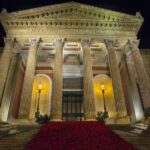
Just added: the newest Palermo tours in our notebook
- Private Transfer from/to Trapani★ 5.0 · 3 reviews
- Private Tour from Palermo to Monreale, Santa Rosalia and Mondello★ 5.0 · 3 reviews
- Palermo: Cannolo & Cassata MasterClass★ 5.0 · 3 reviews
- Camporeale: Sallier de La Tour Wine Discovery Tour★ 4.6 · 3 reviews
- Sicily … A Love of a Lifetime★ 4.5 · 3 reviews
- Sicilian Cooking Class in Palermo – Private Option★ 5.0 · 3 reviews
Palermo City Tours, compared.
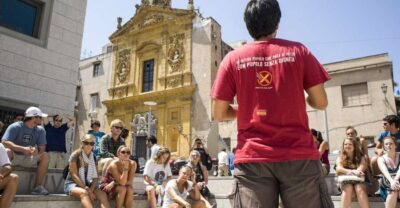 ★ 4.8Palermo: NO Mafia Walking TourFrom $402,431 reviews
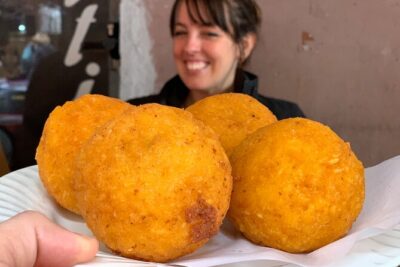 ★ 5.0Palermo Original Street Food Walking Tour by StreatyFrom $832,105 reviews
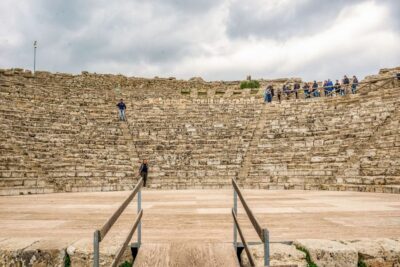 ★ 4.2Segesta, Erice and Salt Pans Full-Day Excursion from PalermoFrom $821,791 reviews
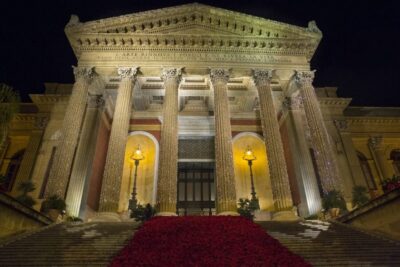 ★ 4.5Palermo: Teatro Massimo Opera House Guided TourFrom $141,573 reviews
 ★ 4.9Palermo: Street Food and History Walking TourFrom $571,486 reviews
 ★ 4.2From Palermo: Monreale and Cefalù Half-Day TripFrom $711,354 reviews
 ★ 4.2Palermo: Agrigento and the Valley of the Temples Day TourFrom $771,240 reviews
 ★ 5.0Palermo No Mafia walking tour: discover the Anti-mafia culture in SicilyFrom $391,011 reviews
Browse the lists this tour appears in