
Reviewed · PALERMO CITY TOURS
Palermo: NO Mafia Walking Tour
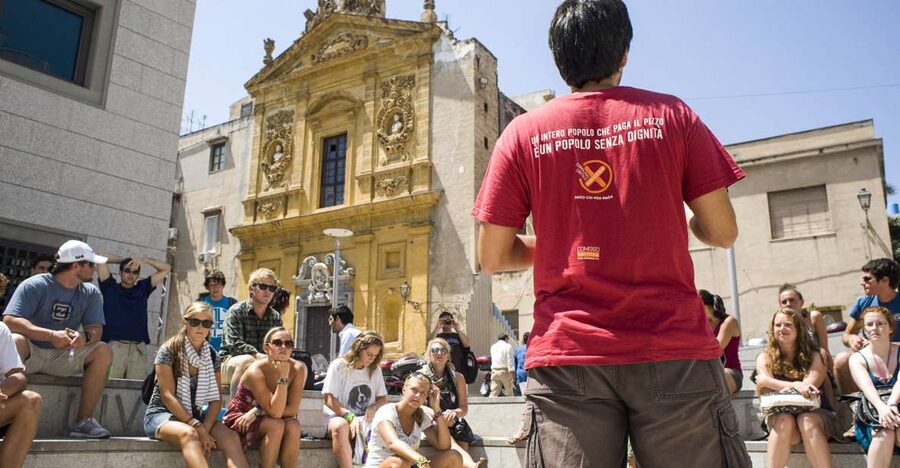
Cosa Nostra is not a movie plot here. This Palermo anti-mafia walking tour uses real landmarks and real stories to explain how the Mafia shaped life in Sicily, and how ordinary people pushed back. Guides like Linda, Valeria, Salvatore, Giuseppe, and Marinella bring the subject to street level, not tabloid level.
I love the focus on grassroots resistance, especially the anti-extortion work tied to Addiopizzo. I also like that you don’t just hear myths or movie-style glamour—you learn the social and political mechanics behind the intimidation. One drawback to consider: the topic can feel heavy, and it is still a full 3-hour walk, so you’ll want comfortable shoes and a mindset for serious history.
In This Review
- Key highlights at a glance
- Why this Palermo No Mafia walk is worth your time
- Meeting up in Palermo’s historic center (and why the start matters)
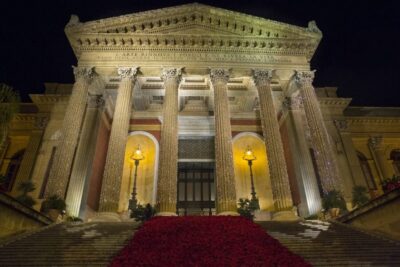
- Teatro Massimo: culture, identity, and the city’s public face
- Il Capo open-air market: everyday Palermo behind the headlines
- Piazza Della Memoria: honoring judges and prosecutors
- Cassaro orange stickers and pago chi non paga: resistance you can spot
- Piazza Beati Paoli, Palermo Cathedral, and city hall: the full social map
- How the Addiopizzo contribution changes the feel of the tour
- What you’ll learn (and what you won’t)
- Tips to get the most out of your 3 hours
- Who this Palermo Mafia walking tour is for
- Should you book the Palermo No Mafia Walking Tour?
- FAQ
- How long is the Palermo No Mafia walking tour?
- How much does the tour cost?
- What’s included in the price?
- Are museum or monument entrances included?
- What sites will we see during the walk?
- What should I bring?
- What languages are available for the live guide?
- Is it a large group or a small group?
- Is there free cancellation?
- Can I book without paying right away?
Key highlights at a glance
- Teatro Massimo and major historic-center stops that keep the story grounded in place
- Piazza Della Memoria, a memorial tied to prosecutors and judges killed by the Mafia
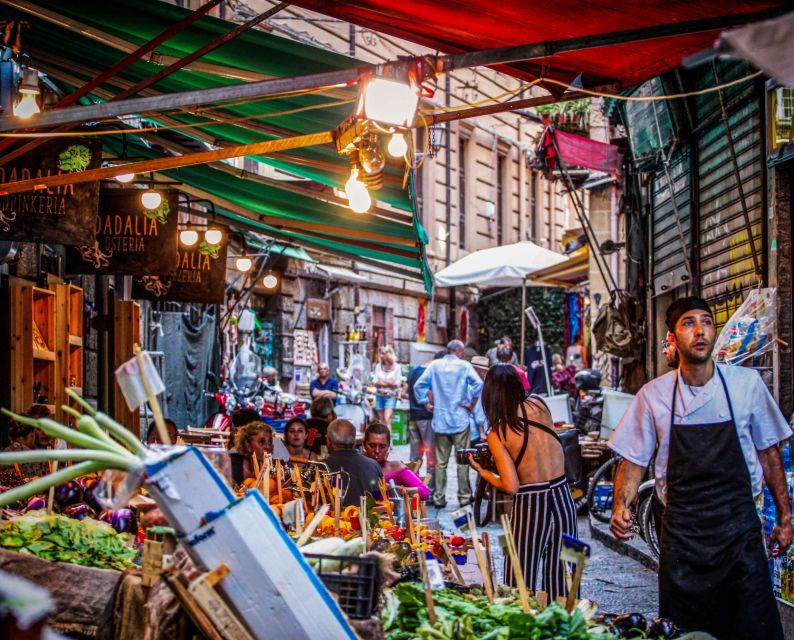
- Il Capo open-air market (Il Capo), where you see Palermo’s everyday energy up close
- Cassaro orange stickers linked to pago chi non paga, a visible ethics-vs-extortion campaign
- Catholic landmarks and civic buildings (Palermo Cathedral and city hall) to show the full social picture
- A guide who can explain the Mafia phenomenon beyond clichés, with time for questions
The rest of what Palermo puts on
- Palermo: NO Mafia Walking Tour
★ 4.8 · 2,431 reviews - Palermo: Hop-on Hop-off Bus Tour 24-hour Ticket
★ 3.9 · 2,410 reviews - Palermo Original Street Food Walking Tour by Streaty
★ 5.0 · 2,105 reviews - Segesta, Erice and Salt Pans Full-Day Excursion from Palermo
★ 4.2 · 1,791 reviews
Why this Palermo No Mafia walk is worth your time
If you’re in Palermo looking for a classic “Mafia tour,” this one does something smarter. It treats the Mafia as a system—how it affected business, politics, and everyday decisions—and then shifts to the people who said no.
The value is that you get both sides of the story in one route: the pressure and the pushback. And you do it on foot through the historic center, where the city’s layers are visible even if you don’t speak Italian.
The format also helps. A 3-hour walking tour is long enough for real context, but short enough that you won’t spend your whole day inside a lecture mode. Small group options mean you’re more likely to get your questions answered without shouting over the crowd.
Meeting up in Palermo’s historic center (and why the start matters)
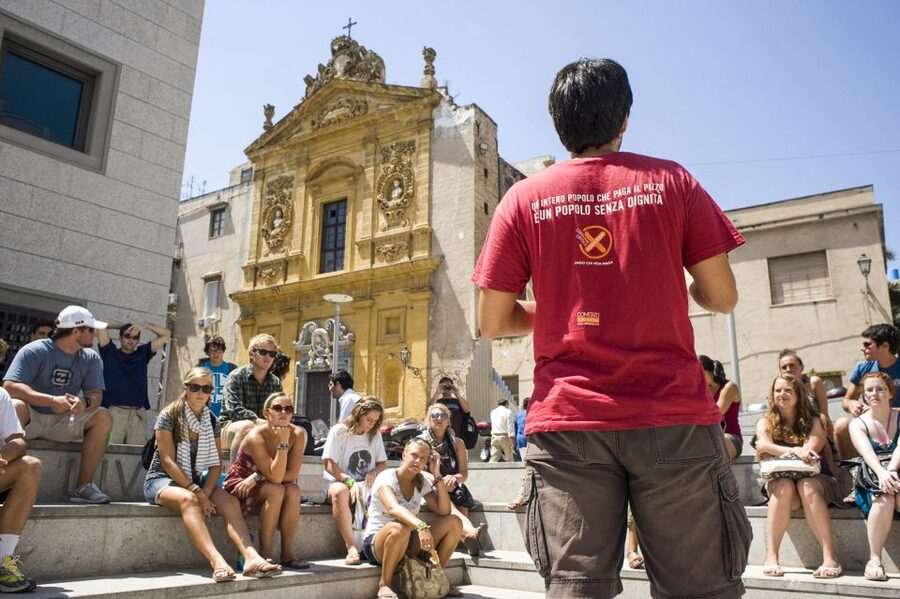
You meet your guide at a meeting point that can vary by option. From there, you begin in Palermo’s historic center, which is the point of the tour. This is not about far-flung sites. It’s about understanding how the Mafia story sits right inside the city’s normal rhythm.
Early on, you’ll get a framework for what you’re about to see: how power works, how intimidation works, and how the anti-mafia movement gained traction through civic action. A good guide keeps the tone clear and human, so you don’t get lost in names and dates.
Practical note: the tour is built for walking. Bring comfortable shoes because you’ll be on your feet for the full route. If you’re sensitive to crowded sidewalks, go in expecting narrow streets and busy corners.
Teatro Massimo: culture, identity, and the city’s public face
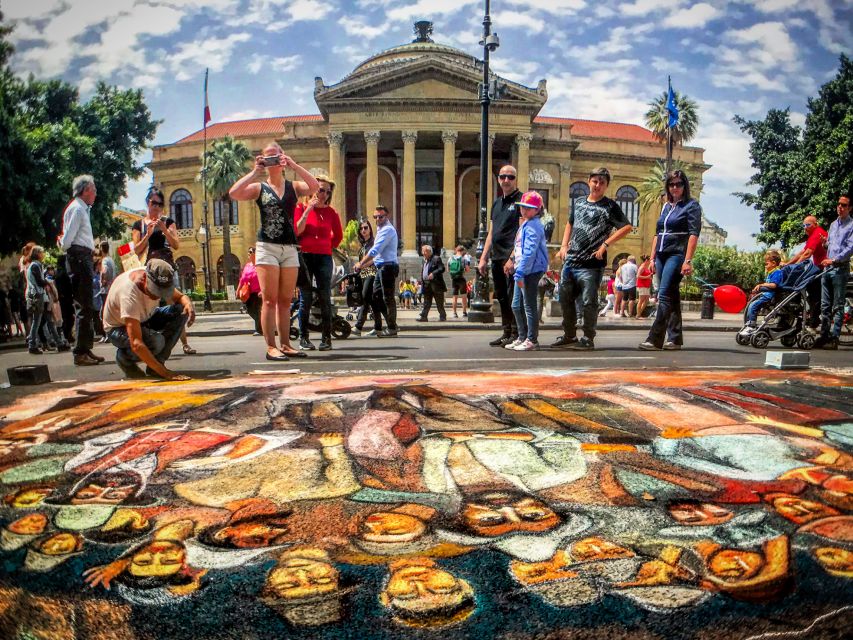
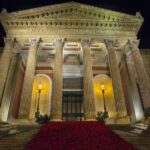
One of the first iconic stops is Teatro Massimo. Seeing it on this kind of tour changes the vibe. The theater stands for public life—art, identity, the idea that the city is more than fear.
Your guide typically uses landmarks like this to explain how Palermo’s public institutions and cultural spaces fit into the bigger story of influence and control. You’re learning to read the city: what gets protected, what gets negotiated, and what people choose to ignore.
This is also a nice break from the stereotype “Mafia = dark alleys.” Palermo can look grand and ordinary at the same time, and that contrast is part of the lesson.
Il Capo open-air market: everyday Palermo behind the headlines
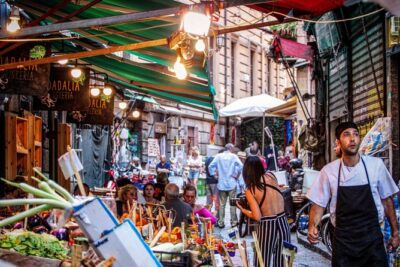
You also pass by Il Capo, the well-known open-air market area. Markets are where extortion and corruption feel real—not because you’re staring at crime scenes, but because you’re watching how people run daily business.
This stop helps you understand the day-to-day reality of the Mafia’s presence. Instead of treating Cosa Nostra as a distant villain, the story connects to commerce: who depends on whom, and how pressure can spread through routine transactions.
Even if you’re not shopping, it’s a smart moment to see the city as locals do. It’s one thing to learn concepts. It’s another to watch people move through the space while your guide explains what was at stake.
A few we would gladly point a friend toward in Palermo
Piazza Della Memoria: honoring judges and prosecutors
Then comes one of the tour’s most direct emotional anchors: Piazza Della Memoria. This memorial is dedicated to prosecutors and judges killed by the Mafia. That detail matters. It shifts the focus from street-level drama to legal confrontation.
On this part of the walk, you’ll usually hear how anti-mafia efforts didn’t just come from politicians or police. They also came from professionals who risked their lives to pursue justice. It’s the kind of stop that makes the later story feel personal, not abstract.
If you’re the type who likes to understand impact, this is a must-pay-attention stop. Take a minute, look around, and let the guide’s explanation land before you move on.
Cassaro orange stickers and pago chi non paga: resistance you can spot
Along the Cassaro, you’ll see shops and businesses with orange stickers on their windows. These are tied to the ethical consumer campaign called pago chi non paga, which translates to paying people who don’t pay the extortion racket.
This is one of the most practical parts of the tour, because it explains how refusal becomes visible. Instead of only talking about anti-mafia figures, the tour points to choices made by ordinary shop owners and community members—choices that cost money, risk, and social friction.
For you, that’s where the tour becomes more than history. It turns into a real-life lesson about civic courage and consumer power. You’ll start noticing how systems are held up, and how systems can also be challenged from below.
Piazza Beati Paoli, Palermo Cathedral, and city hall: the full social map
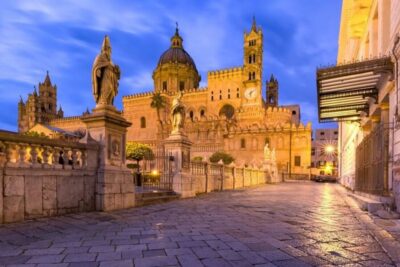
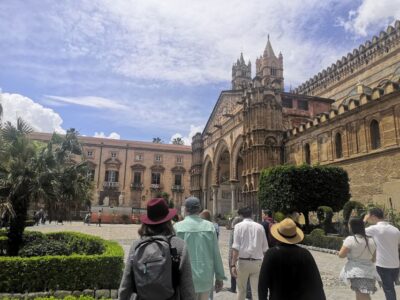
The route also includes stops near Piazza Beati Paoli, Palermo Cathedral, and city hall. These aren’t random photo ops. They help your guide build a map of how society connects—religious life, civic life, and community identity.
Piazza Beati Paoli adds a layer of local lore and place-based storytelling, which can help you understand how fear and myth can coexist in the same city. Palermo Cathedral and city hall bring you back to institutions, reminding you that anti-mafia work wasn’t only about survival. It was also about defending the idea of rule of law.
One reason this structure works is that it fights “Mafia as an island.” The story becomes integrated: culture, power, legitimacy, and resistance all in the same urban frame.
How the Addiopizzo contribution changes the feel of the tour
Your ticket includes a contribution to the Addiopizzo charitable organization. That matters because the tour’s goal isn’t only to inform—it supports ongoing anti-mafia work.
I like tours that connect facts to action, and this one does. When you understand what intimidation costs and what civic resistance costs, it becomes easier to see why support systems exist beyond speeches and symbolism.
So, even if you’re just passing through Palermo for a few days, this tour gives you a way to participate in a cause that’s still active in the community.
What you’ll learn (and what you won’t)
This tour is designed to go beyond clichés and myths about the Mafia. You’re learning about the Mafia’s history and its role within Sicilian society, plus the anti-mafia movement’s past, present, and future.
That said, it’s not a museum-style experience. Entrance fees to monuments and museums are not included. So you should expect more street-level interpretation than formal indoor stops.
Also, because the topic is serious, the best approach is to keep an open mind. This isn’t about enjoying shock for sport. It’s about understanding how violence, intimidation, and corruption can reshape a normal city—and how people respond when they refuse to play along.
Tips to get the most out of your 3 hours
A few practical ideas can make this tour better for you:
- Bring comfortable shoes and plan for a real walk, not a short stroll.
- Come with at least a couple of questions, especially if you want more clarity on how intimidation works in everyday business.
- If you’re traveling with people who usually skip “heavy” topics, suggest they focus on one theme: civic courage. It helps the story click.
- Pace yourself mentally. The narrative can be intense, and taking a breath at memorial stops makes the experience more meaningful.
Also, guides often set the tone with clarity and humor. Names that show up frequently include Linda, Valeria, Salvatore, Giuseppe, and Marinella—and across those different voices, the common thread is passion and a willingness to explain.
Who this Palermo Mafia walking tour is for
This works best if you want Palermo with context. It’s ideal for you if:
- you’re curious about the real history and social mechanics behind Cosa Nostra
- you like guided storytelling tied to specific places
- you care about the anti-mafia movement and civic resistance, not just crime lore
- you want a local perspective that stays grounded in everyday life
It might be less ideal if you’re hoping for a light, purely sightseeing walk with minimal emotion. The subject is hard. The route uses meaningful locations on purpose.
Should you book the Palermo No Mafia Walking Tour?
If you want one activity that turns Palermo from a postcard into a lived-in reality, book this. The $40 price for a 3-hour guided walk is strong value when you consider what’s included: a live guide, a focused route through major landmarks, and a contribution to Addiopizzo.
I’d especially book it early in your trip. After this, you’ll start reading the city differently—spotting signs of resistance, understanding why certain places matter, and seeing how everyday life connects to bigger systems.
If the idea of hearing about intimidation, violence, and corruption sounds too intense for your trip mood, then choose a lighter day. But if you can handle serious history and you want to learn the truth behind the headlines, this is one of the most worthwhile ways to spend a few hours in Palermo.
FAQ
How long is the Palermo No Mafia walking tour?
The tour lasts 3 hours.
How much does the tour cost?
It costs $40 per person.
What’s included in the price?
You get a live guide and a walking tour, plus a contribution to the Addiopizzo charitable organization.
Are museum or monument entrances included?
No. Entrance fees to museums and monuments are not included.
What sites will we see during the walk?
You’ll see major historic-center landmarks such as Teatro Massimo, Il Capo, Piazza Della Memoria, Piazza Beati Paoli, Palermo Cathedral, and city hall, plus the Cassaro area with orange stickers linked to pago chi non paga.
What should I bring?
Wear comfortable shoes for walking.
What languages are available for the live guide?
The tour is offered in Spanish, French, English, and Italian.
Is it a large group or a small group?
Small group options are available.
Is there free cancellation?
Yes. You can cancel up to 24 hours in advance for a full refund.
Can I book without paying right away?
Yes. It’s reserve now & pay later, so you can book and pay nothing today.
More Tours in Palermo
More Tour Reviews in Palermo
More Palermo, Start to Finish
Just added: the newest Palermo tours in our notebook
- Private Transfer from/to Trapani★ 5.0 · 3 reviews
- Private Tour from Palermo to Monreale, Santa Rosalia and Mondello★ 5.0 · 3 reviews
- Palermo: Cannolo & Cassata MasterClass★ 5.0 · 3 reviews
- Camporeale: Sallier de La Tour Wine Discovery Tour★ 4.6 · 3 reviews
- Sicily … A Love of a Lifetime★ 4.5 · 3 reviews
- Sicilian Cooking Class in Palermo – Private Option★ 5.0 · 3 reviews
Palermo City Tours, compared.
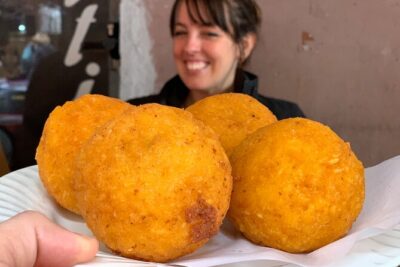 ★ 5.0Palermo Original Street Food Walking Tour by StreatyFrom $832,105 reviews
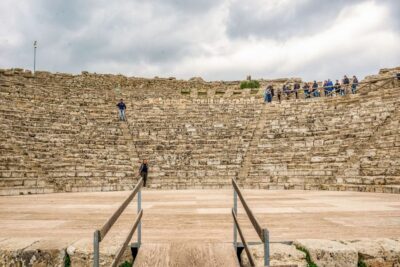 ★ 4.2Segesta, Erice and Salt Pans Full-Day Excursion from PalermoFrom $821,791 reviews
 ★ 4.5Palermo: Teatro Massimo Opera House Guided TourFrom $141,573 reviews
 ★ 4.9Palermo: Street Food and History Walking TourFrom $571,486 reviews
 ★ 4.2From Palermo: Monreale and Cefalù Half-Day TripFrom $711,354 reviews
 ★ 4.2Palermo: Agrigento and the Valley of the Temples Day TourFrom $771,240 reviews
 ★ 5.0Palermo No Mafia walking tour: discover the Anti-mafia culture in SicilyFrom $391,011 reviews
 ★ 4.9Palermo: Pizza and Gelato Cooking Class with Dinner and WineFrom $71951 reviews
Browse the lists this tour appears in