
Reviewed · PALERMO CITY TOURS
Palermo No Mafia walking tour: discover the Anti-mafia culture in Sicily
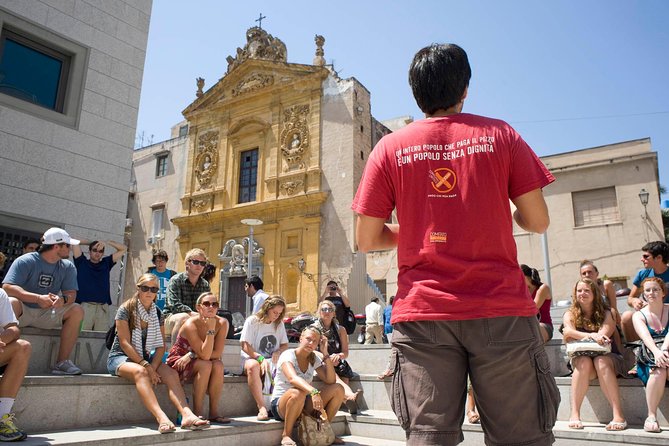
Palermo can feel like it has two faces, and this walk explains why: the city’s famous landmarks plus the fight against the Mafia. I like that the tour keeps things human and practical, connecting big places like Teatro Massimo and Palermo Cathedral to real stories of extortion and resistance. The small group size (up to 15) also means you get room to ask questions without getting lost in a crowd.
One thing to consider is that the focus is strongly on anti-mafia action, not a traditional art-and-architecture tour, so if you want more standalone history lessons, you may feel a bit of repetition.
In This Review
- What You’ll Like Most (And What to Watch For)
- Key Highlights at a Glance
- Why This No Mafia Tour Feels More Real Than Movie Palermo
- Starting Point at Teatro Massimo: Rebirth in Stone and Story
- Wall of Legality: 70 Meters of Names, Faces, and Consequences
- The Old Open-Air Market: Where Extortion Meets Everyday Shopping
- Piazza della Memoria by the Courthouse: What Justice Costs
- Palermo Cathedral and the Church-Mafia Connection: A Tough, Necessary Conversation
- Cappadonia Gelati and Addiopizzo: Refusing pizzo with Your Wallet
- City Hall at Palazzo Pretorio: Politics, Corruption, and Counterpower
- The Real Value of the Price: What $39.30 Buys You in Palermo
- Who This Tour Is Best For (And Who Might Want a Different One)
- Practical Tips for a Smooth 3-Hour Walk
- Should You Book the Palermo No Mafia Walking Tour?
- FAQ
- How long is the Palermo No Mafia walking tour?
- What does the tour cost?
- What language is the tour offered in?
- How many people are in the group?
- Where does the tour start and end?
- What’s included in the price?
- What isn’t included?
- Will I get a ticket on my phone?
- Is it okay to join if I have no special health needs?
- What if the weather is rainy?
- What is the cancellation window?
What You’ll Like Most (And What to Watch For)
I particularly enjoy how the route uses public spaces as evidence: a memorial plaza for murdered judges, a long mural for victims, and even a gelato shop tied to refusing pizzo (extortion). You’ll also get a clear sense of how the anti-mafia movement changed daily life, including how grassroots efforts try to break the cycle for the next generation.
The main trade-off: there are moments when you’ll be standing and listening for the story, so plan on comfortable shoes and some patience in between photo stops.
The rest of what Palermo puts on
- Palermo: NO Mafia Walking Tour
★ 4.8 · 2,431 reviews - Palermo: Hop-on Hop-off Bus Tour 24-hour Ticket
★ 3.9 · 2,410 reviews - Palermo Original Street Food Walking Tour by Streaty
★ 5.0 · 2,105 reviews - Segesta, Erice and Salt Pans Full-Day Excursion from Palermo
★ 4.2 · 1,791 reviews
Key Highlights at a Glance
- Teatro Massimo’s comeback story and its unexpected pop-culture connection
- Wall of Legality: Italy’s longest wall painting, 70 meters long
- Piazza della Memoria at the courthouse memorial for judges and prosecutors
- Arab-Norman Palermo Cathedral and the talk on Church ties to the Mafia
- Cappadonia Gelati and Addiopizzo: a refusal story you can support with your wallet
- Up-close walk in a small group of max 15, led in English
Why This No Mafia Tour Feels More Real Than Movie Palermo
Most Sicily tours give you the romance. This one adds the uncomfortable layer: how organized crime worked, and how ordinary people fought back. You’re not just looking at buildings. You’re learning how power shaped life in Palermo, and how the city pushed back with judges, community groups, and people who said no to extortion.
I also like the tone. It’s not Mafia as entertainment. The story is framed around resistance and the anti-mafia culture that grew from it. That shift matters because Palermo isn’t a stage set; it’s a place where the consequences are still part of the public memory.
Finally, you get a route that feels like a fast orientation to central Palermo old-town. Even with the serious subject, the day stays grounded: major landmarks, street-level context, and quick stops you can actually picture later.
Starting Point at Teatro Massimo: Rebirth in Stone and Story
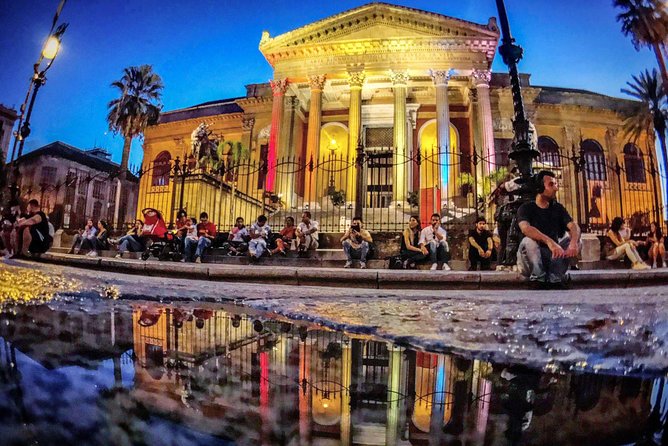
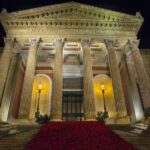
The tour begins at P.za Giuseppe Verdi, and the first big stop is Teatro Massimo. This opera house is famous in its own right, but it also has that extra pop-culture pull from the Godfather series. The guide uses that attention-grabber to pivot into the deeper meaning: the theater as a symbol of the city’s rebirth after decades of Mafia violence.
This is a strong opener for first-timers, because it teaches you how Palermo turns trauma into public space. You’ll hear how a grand monument can function as a civic reset button, even when the past was brutal.
One small practical tip: Teatro Massimo can be a busy area, so arrive a bit early and use the first moments to get your bearings. You’ll want an easy start since the tour is about three hours on foot.
Wall of Legality: 70 Meters of Names, Faces, and Consequences
Next up is the Wall of Legality, described as the longest wall painting in Italy at about 70 meters. It’s not art for art’s sake. The wall represents well-known victims, and the guide treats it like a living memorial.
For your photos, it’s one of the most visually rewarding stops, because you’re capturing faces and names in a public corridor of the city. For the emotional side, it’s the opposite of abstract. You don’t just hear that people were hurt. You see the faces connected to that history.
If you’re the type who likes to understand “who,” this stop is a payoff. It helps you connect the later courthouse memorial and the Church discussion to real individuals, not a vague cloud labeled Mafia.
A few we would gladly point a friend toward in Palermo
The Old Open-Air Market: Where Extortion Meets Everyday Shopping
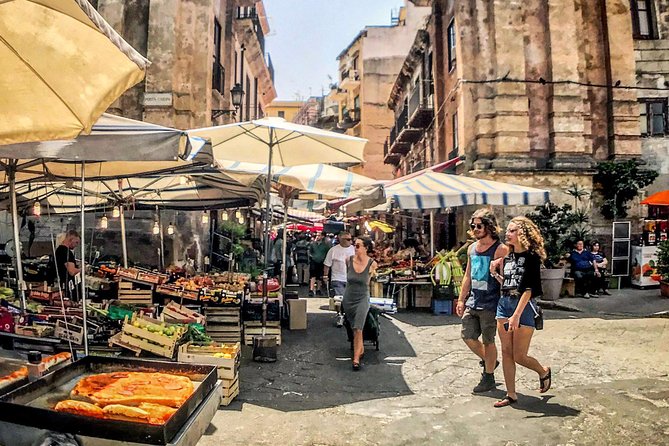
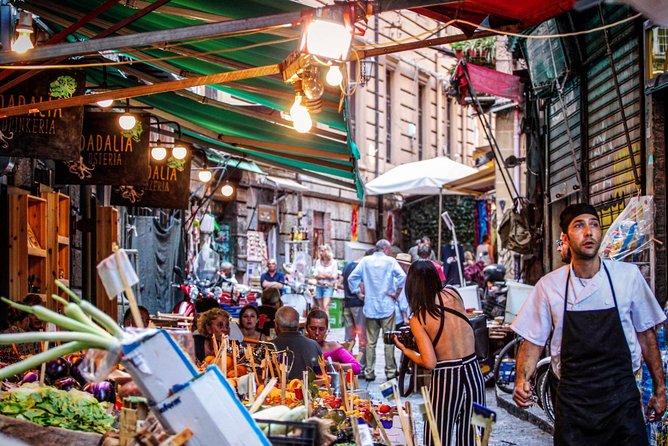
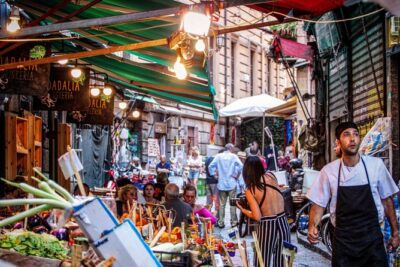
Between the mural and the next civic memorial, you’ll pass through an old open-air market area. The emphasis here is on the everyday relationship between shopkeepers and organized crime—because extortion was not only violence. It was also pressure inside normal routines.
This stop is loud in the good way: a sensory reminder that organized crime didn’t live in secret rooms. It was tied to commerce, competition, and fear. The guide uses the market’s energy to explain why refusing extortion could be costly—and why anti-mafia activism often had to be steady, not dramatic.
One drawback: market areas can also mean more standing around while the guide delivers the story. Bring a sense of humor and accept that the most important part is what you’re hearing, not just what you’re walking past.
Piazza della Memoria by the Courthouse: What Justice Costs
At Palazzo di Giustizia, you’ll reach Piazza della Memoria, a memorial dedicated to judges and prosecutors killed by the Mafia. This is where the tour shifts from background to consequence. The guide connects legal work to courage, and it’s clear that anti-mafia culture isn’t only street-level. It also lives in courtrooms.
What I like here is the balance. The tour doesn’t just focus on crime. It highlights people in roles that many visitors never think about until something terrible happens. It’s a reminder that systems can be targeted, and that rebuilding trust takes time.
If you’re someone who wants the story tied to institutions, this stop delivers. You’ll leave with a better sense of why prosecutors and judges became central symbols in the anti-mafia struggle.
Palermo Cathedral and the Church-Mafia Connection: A Tough, Necessary Conversation
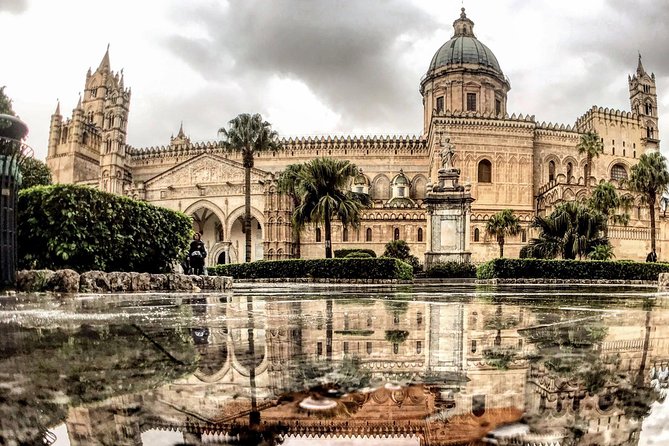
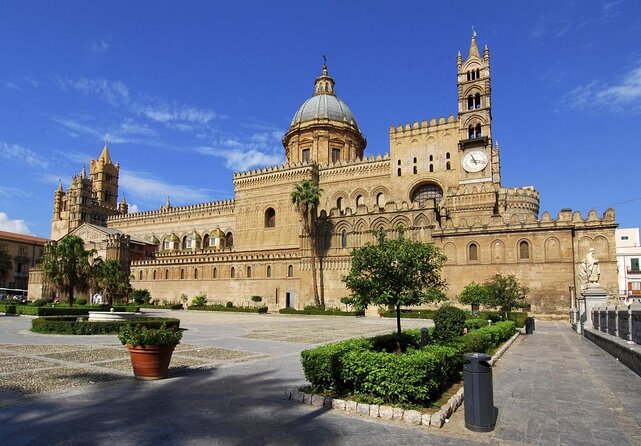
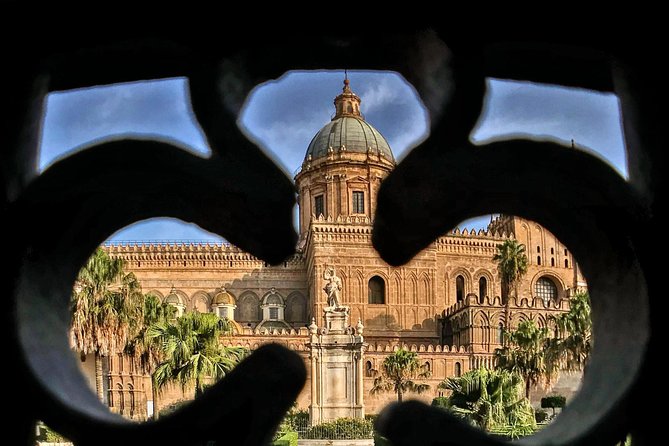
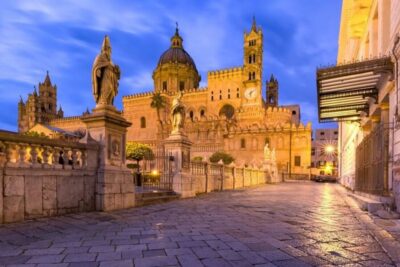
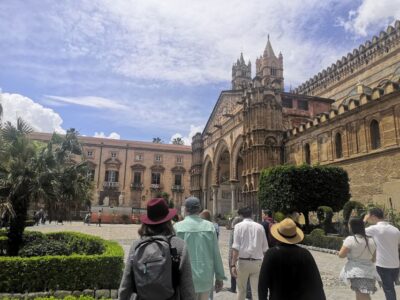
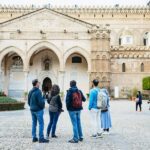
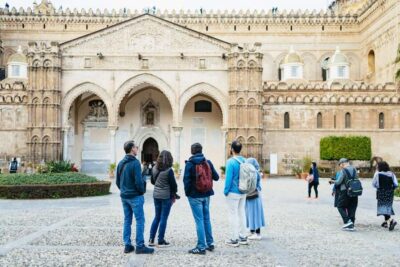
Then comes Cattedrale di Palermo, the Arab-Norman Cathedral. The guide talks about the relationship between the Catholic Church and the Mafia, and this is one of the stops that separates this tour from the simple “crime story” versions you may have seen in pop culture.
You’ll get context for how influence can operate through social structures. The point isn’t to reduce everything to a single villain or a single institution. It’s to show how power can be negotiated, tolerated, or resisted—sometimes slowly, sometimes publicly.
Practical note: cathedral stops are often time-sensitive and can be affected by crowds or local activity. The good news is this part is short, and you’ll still get the key explanation without turning the walk into a long indoor detour.
Cappadonia Gelati and Addiopizzo: Refusing pizzo with Your Wallet
One of the most memorable segments is the Cappadonia Gelati stop along the Cassaro. You’ll look for an orange sticker on the windows. The guide explains that the owners—like other businesses in the Addiopizzo movement—have said no to the extortion racket called pizzo.
This is where the tour becomes action-oriented. You’re given a chance to support the anti-mafia campaign through shopping. It’s not charity as a vibe. It’s a real economic signal: money goes to refusal, not fear.
If you like to take stories home, this is your easiest “I can do that” moment. Get a gelato, take a photo of the sticker if it’s visible, and use it as a concrete ending point for the earlier memorials and mural. It ties the whole tour together.
City Hall at Palazzo Pretorio: Politics, Corruption, and Counterpower
The final civic stop is Palazzo Pretorio, also called the Municipio di Palermo (Palermo City Hall). This is a smart move in the itinerary because city administration is where power becomes policy and policy becomes daily life.
The guide explains that City Hall has been the seat of corrupted politicians and also of those fighting against the Mafia. That contrast is the heart of the anti-mafia message: the struggle wasn’t only against gangsters. It was also inside governance.
As you finish, you’ll walk toward the end point at Fontana Pretoria, in Piazza Pretoria, where you can continue your visit in the old-town center. It’s a good flow: meaning first, then the freedom to explore.
The Real Value of the Price: What $39.30 Buys You in Palermo
At $39.30 per person for about three hours, the price feels fair because you’re paying for more than walking. You’re paying for a local guide who connects major landmarks to anti-mafia culture, and you’re also supporting a cause tied to the Addiopizzo network. The tour includes a local guide plus a small solidarity contribution (a quote for the Addiopizzo local NGO).
That “cause + context” blend is what makes the tour good value. If you were paying for a standard guided city walk, you might get architecture and street facts. Here you’re getting meaning and memory, plus the chance to support resistance with a simple purchase.
Also, the tour being offered in English and capped at 15 travelers helps a lot. Smaller groups usually mean better back-and-forth questions, and the reviews you’ll see are very consistent about guides being passionate and able to answer questions.
Who This Tour Is Best For (And Who Might Want a Different One)
This is a great match if you want Palermo beyond the tourist glow. It suits history-minded travelers, first-time visitors who want an orientation, and anyone who cares about how communities respond to organized crime.
It’s also a strong choice for people who dislike Mafia-as-entertainment stereotypes. One theme that comes through in many experiences is that the tour explains the issue in a grounded way, and it often has a moving effect—especially because it focuses on resistance and the anti-mafia movement.
If you specifically want a heavy dose of purely historical timelines or a deeper architectural lecture, you may find the focus leans message-forward. There’s a chance it can feel like the same core themes come up at different stops, because the guide is reinforcing the anti-mafia throughline.
Practical Tips for a Smooth 3-Hour Walk
Because this is a walking tour of about three hours, start by taking the shoes advice seriously. Comfortable shoes matter, since you’re moving between several landmark-heavy zones.
A big factor is pacing. Some stops are short but involve listening and standing while the guide explains the story. If you prefer constant movement, plan for occasional pauses and use that time to look around. Sicily street life is part of the context.
Weather is another easy win. You’ll want a dry layer and an umbrella if rain hits, since there’s no hint that this tour becomes fully indoor.
Lastly, if you’re traveling with kids, one of the strongest signals from real experiences is that the tour can work even with young ages. Just know it’s serious subject matter, and the walking time is real. Bring snacks only if allowed by the guide and local setting, and expect a calmer rhythm if needed.
Should You Book the Palermo No Mafia Walking Tour?
Yes, if you want the Palermo story that goes past the movies and past postcards. This tour is especially good for understanding how anti-mafia culture works in daily life, not only what the Mafia did. The stops are well-chosen: a major monument, a long mural of victims, a market context, a memorial for judges, the cathedral’s complicated discussion, and a real-world no-pizzo shop.
I’d also book it if you care about value. For the price, you get a tight route, a small group, guided explanation in English, and a built-in solidarity contribution tied to Addiopizzo.
If you’re the type who only wants art, architecture, and a museum-style timeline, you might find the message focus less appealing. In that case, pair this with another city walk that leans more scenic or museum-based.
FAQ
How long is the Palermo No Mafia walking tour?
It runs for about 3 hours.
What does the tour cost?
The price is listed as $39.30 per person.
What language is the tour offered in?
The tour is offered in English.
How many people are in the group?
The tour has a maximum of 15 travelers.
Where does the tour start and end?
It starts at P.za Giuseppe Verdi, 455, 90133 Palermo PA, Italy and ends at Fontana Pretoria, Piazza Pretoria, 90133 Palermo PA, Italy.
What’s included in the price?
Included are a local guide and a small solidarity contribution to an Addiopizzo local NGO.
What isn’t included?
Hotel pickup and drop-off and lunch are not included.
Will I get a ticket on my phone?
Yes, the tour uses a mobile ticket.
Is it okay to join if I have no special health needs?
There are no health restrictions listed, and most travelers can participate.
What if the weather is rainy?
The tour suggests bringing an umbrella and a dry jacket in rainy weather.
What is the cancellation window?
Free cancellation is available up to 24 hours in advance for a full refund.
More Tours in Palermo
More Tour Reviews in Palermo
More Palermo, Start to Finish
Just added: the newest Palermo tours in our notebook
- Private Transfer from/to Trapani★ 5.0 · 3 reviews
- Private Tour from Palermo to Monreale, Santa Rosalia and Mondello★ 5.0 · 3 reviews
- Palermo: Cannolo & Cassata MasterClass★ 5.0 · 3 reviews
- Camporeale: Sallier de La Tour Wine Discovery Tour★ 4.6 · 3 reviews
- Sicily … A Love of a Lifetime★ 4.5 · 3 reviews
- Sicilian Cooking Class in Palermo – Private Option★ 5.0 · 3 reviews
Palermo City Tours, compared.
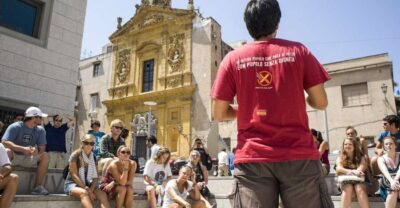 ★ 4.8Palermo: NO Mafia Walking TourFrom $402,431 reviews
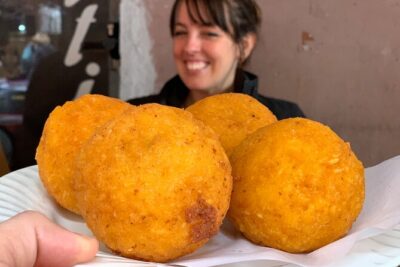 ★ 5.0Palermo Original Street Food Walking Tour by StreatyFrom $832,105 reviews
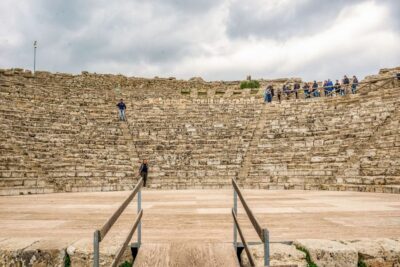 ★ 4.2Segesta, Erice and Salt Pans Full-Day Excursion from PalermoFrom $821,791 reviews
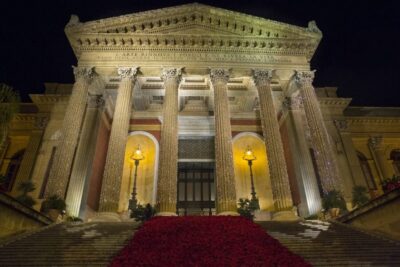 ★ 4.5Palermo: Teatro Massimo Opera House Guided TourFrom $141,573 reviews
 ★ 4.9Palermo: Street Food and History Walking TourFrom $571,486 reviews
 ★ 4.2From Palermo: Monreale and Cefalù Half-Day TripFrom $711,354 reviews
 ★ 4.2Palermo: Agrigento and the Valley of the Temples Day TourFrom $771,240 reviews
 ★ 4.9Palermo: Pizza and Gelato Cooking Class with Dinner and WineFrom $71951 reviews
Browse the lists this tour appears in