
Reviewed · PALERMO CITY TOURS
Palermo Walking Tour and Street Food
Follow the smells through Palermo.
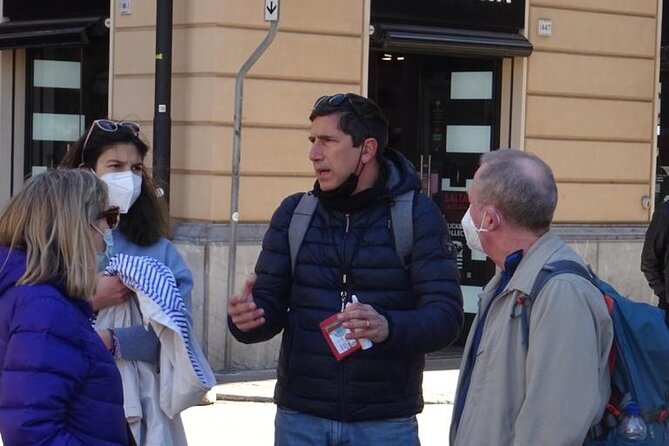
This Palermo walking tour and street food experience strings together markets, historic landmarks, and a real taste of daily life in the old center, with Fabrizio guiding you on foot. I like that you get both street-food stops and major sights like the Cathedral, not just one or the other. One thing to consider: it’s still a walking tour first, so the food tastings are a set portion, not a full-on food festival.
You’ll move through compact neighborhoods on a route built for pace and context, with a small maximum group size of up to 14 people. I especially like that the itinerary mixes “where you are” explanations with hands-on sampling, so you get your bearings fast.
If you have dietary needs, plan ahead. You can ask for gluten-free options (24 hours before), and you should also request vegetarian street food at reservation.
In This Review
- Key things to know before you go
- Where the tour starts: Quattro Canti at 10:30 am
- What makes the itinerary work: history that doesn’t drag
- Stop 1: Teatro dell’Opera dei Pupi (puppet opera with an actual heritage story)
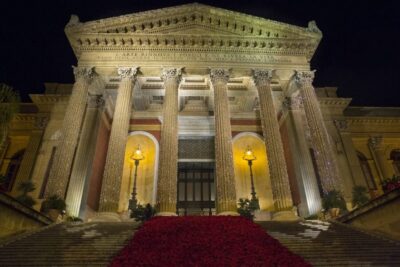
- Stop 2: Teatro Massimo and its legends (ticket not included)
- Stop 3: Capo Street Market (a real street-food focus)
- Stop 4: Dainotti’s da Arianna friggitoria (45 minutes of deep-fried comfort)
- Stop 5: Via Beati Paoli (a medieval Sicily story stop, no ticket)
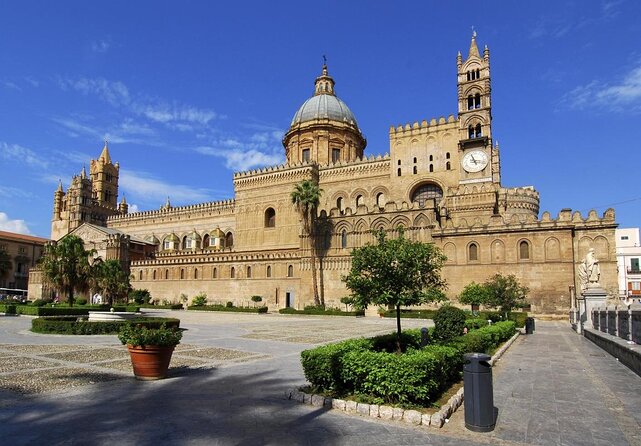
- Stop 6: Cattedrale di Palermo (UNESCO-listed Arab-Norman Cathedral, ticket included)
- Stop 7: Cassaro Alto (Palermo’s ancient spine)
- Stop 8: Quattro Canti details you’ll actually notice
- Value for $48.98: what you’re really paying for
- Dietary needs: how to make the tastings work for you
- Who should book this Palermo tour
- Should you book? My practical take
- FAQ
- How much does the Palermo Walking Tour and Street Food cost?
- How long is the tour?
- What time does the tour start, and where do I meet?
- Does the tour include food and drinks?
- Is entry to the Palermo Cathedral included?
- Can I request gluten-free or vegetarian options?
- What is the maximum group size?
Key things to know before you go
- Small group size (max 14) keeps the walk practical and questions easy to ask.
- Old town route with set landmarks means you’ll see Quattro Canti, Cassaro Alto, and the UNESCO-listed Cathedral area.
- Food and drink are built into the timing, not tacked on at the end.
- Multiple included admissions (puppet theater, Capo street market, Dainotti’s da Arianna, and Palermo Cathedral) reduce guesswork.
- English-speaking guide with local storytelling about how Palermo works.
- Cruise passenger pickup exists, with a 10:00 am pickup if you message the guide.
The rest of what Palermo puts on
- Palermo: NO Mafia Walking Tour
★ 4.8 · 2,431 reviews - Palermo: Hop-on Hop-off Bus Tour 24-hour Ticket
★ 3.9 · 2,410 reviews - Palermo Original Street Food Walking Tour by Streaty
★ 5.0 · 2,105 reviews - Segesta, Erice and Salt Pans Full-Day Excursion from Palermo
★ 4.2 · 1,791 reviews
Where the tour starts: Quattro Canti at 10:30 am
The meeting point is Quattro Canti, Via Maqueda (90133 Palermo). You’ll meet there at 10:30 am, and the tour ends at Bar Ruvolo on Via Maqueda, about 50 meters from Quattro Canti and roughly 20 minutes from the port.
This matters because Palermo is a city where the center is walkable, but confusing if you’re dropped in the wrong spot. Starting in Quattro Canti is smart: it’s right in the middle of major old-city corridors, so your first hour is naturally a “get your bearings” experience.
If you’re arriving by cruise ship, you also have an option: there’s pickup at 10:00 am to the port for cruise passengers, but you need to message the tour guide. That saves you from the classic cruise-day scramble.
What makes the itinerary work: history that doesn’t drag
The route is about balance: you’re walking through Palermo’s historic center while the guide ties buildings, streets, and food culture together. Most people enjoy this because you’re not stuck in a museum cadence.
A typical stop pattern looks like this: a short landmark moment, then a food-market or friggitoria moment, then back to sightseeing. That rhythm keeps the tour from feeling repetitive, especially in warm weather, when you’ll want shade and short transitions.
One practical note: your time is fixed. This tour gives you a smart mix of sights and tastings, but it doesn’t try to stop so long at every place that you’d lose the rest of the historic center.
Stop 1: Teatro dell’Opera dei Pupi (puppet opera with an actual heritage story)
Your first named stop is Teatro dell’Opera dei Pupi. The ticket is included, and you’ll spend about 10 minutes here.
Opera dei pupi is a very specific Sicilian tradition: puppet theater that developed in southern Italy and became especially rooted in Sicily in the early 1800s. It’s recognized as Masterpieces of the Oral and Intangible Heritage of Humanity, which is a fancy label, but it translates to something real: you’re seeing a local art form tied to identity, not a generic performance.
Why this stop is worth your time: it sets the tone for the rest of the walk. Palermo isn’t just stone monuments. It’s also stories people still tell, and puppet opera is one of those story machines.
Stop 2: Teatro Massimo and its legends (ticket not included)
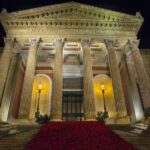
Next up is Teatro Massimo, where you’ll have about 15 minutes. The ticket here is not included, so you’re not planning on an indoor visit during this segment. You’ll be there mainly to look, orient, and learn what the guide tells you about the building.
The facts that help you understand the scale are straightforward: it’s the largest opera house in Italy and the third one in Europe, built in 1875 and surrounded by legends.
Even without going inside, this is a useful stop because it gives you a “Palermo beyond cathedrals” perspective. And since opera is part of the cultural life of cities like this, it also connects nicely to the puppet theater you saw first.
More street-food crawls around Palermo
Stop 3: Capo Street Market (a real street-food focus)
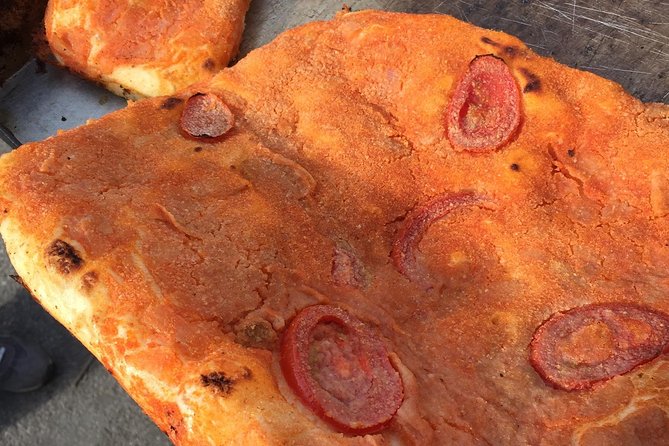
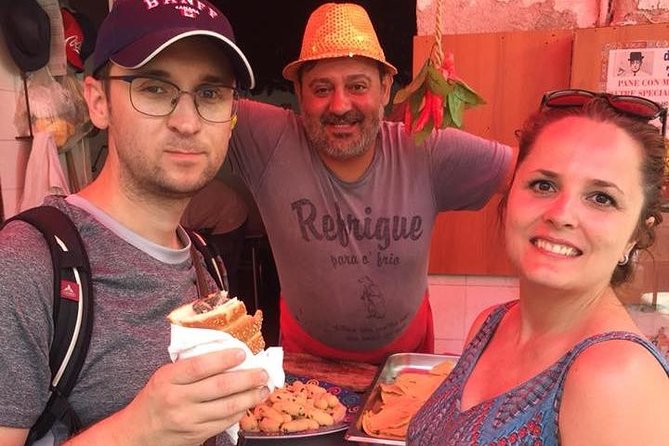
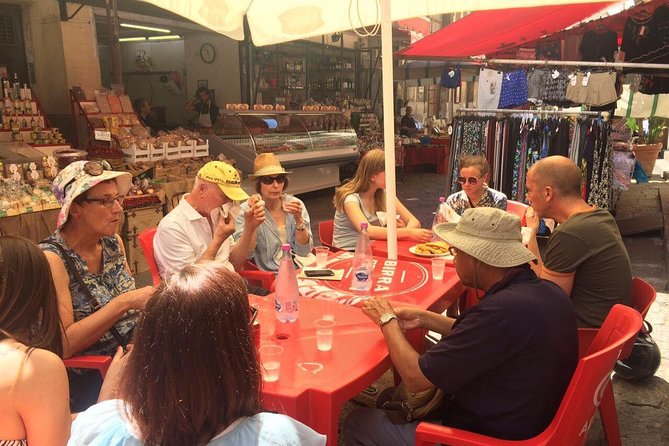
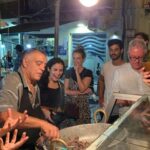
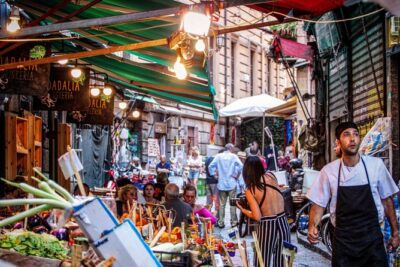
Then you move into the flavor of the city at Capo Street Market, a stop set at about 30 minutes with the admission ticket included. This is described as the best street food market in Palermo, and the value here is the guided entry.
A market visit with a guide beats wandering alone because you don’t have to guess what to order, and you spend your time learning what’s local and why. The pacing also matters: the route is timed so you can sample without turning the tour into a long, uneven detour.
If you’re hungry, this stop is your anchor. It’s where “Palermo by food” becomes obvious.
Stop 4: Dainotti’s da Arianna friggitoria (45 minutes of deep-fried comfort)
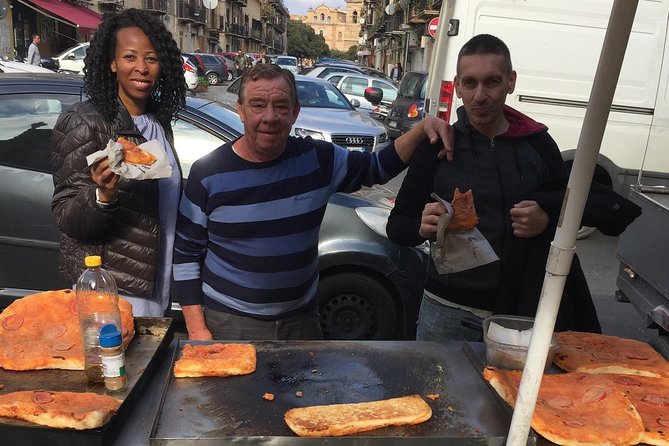
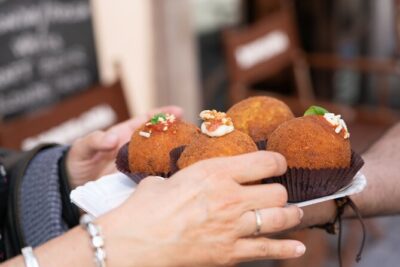
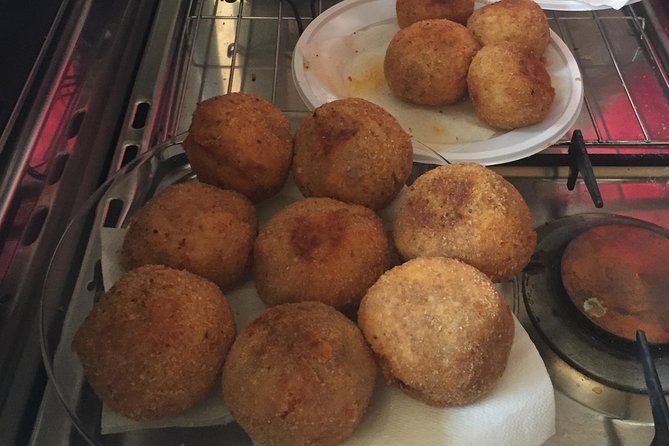
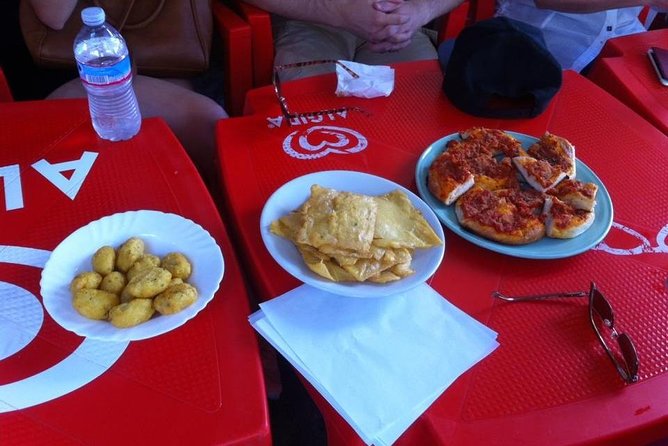
Your next food stop is Dainotti’s da Arianna, described as a top friggitoria (fried-food shop) in the old center. You’ll spend 45 minutes, and admission is included.
This is longer than some walking tours’ food segments, which is a good sign if you prefer tasting to be part of the experience rather than a quick bite. It also gives the guide room to explain what you’re eating and how it fits Palermo’s daily snack culture.
From the guide’s approach, you should expect a mix of sampling plus context: what’s typical here, what locals reach for, and how Palermo’s street food behaves differently from tourist-centered versions of the same idea.
This is also often where you’ll get the clearest “I understand Palermo now” feeling—because fried street food is simple and immediate. You don’t need historical background to enjoy it, but the guide supplies it.
Stop 5: Via Beati Paoli (a medieval Sicily story stop, no ticket)
At Via Beati Paoli, you spend about 10 minutes, and the admission is free. The guide talks about Beati Paoli as a secretive sect thought to have existed in medieval Sicily.
Here’s the interesting part: the sect is linked to the novel I Beati Paoli by Luigi Natoli. The novel is fictional, but the local history hints have enough evidence that the story feels more grounded than pure fantasy.
Why include a story stop like this? Because Palermo’s center is full of places where real events and legends overlap. One minute you’re looking at a street; the next minute you’re understanding why people attached mystery to the street in the first place.
Stop 6: Cattedrale di Palermo (UNESCO-listed Arab-Norman Cathedral, ticket included)
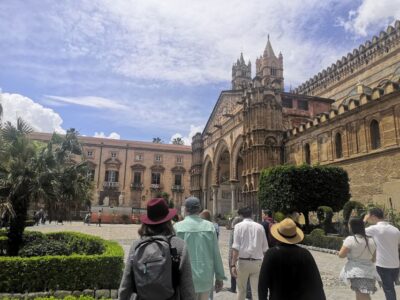
The biggest “this is why I’m here” moment is Cattedrale di Palermo, with about 20 minutes and the admission ticket included.
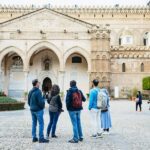
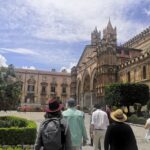
This cathedral is part of the UNESCO listing Arab-Norman Palermo and the Cathedrals of Cefalù and Monreale (inscribed in 2015). The guide’s job is to help you see the layers without overwhelming you.
You’ll learn a few key turning points:
- It was founded under Archbishop Gualtiero Offamilio (1169–1190).
- In Islamic times, it functioned as a mosque.
- After the conquest of Palermo, Roberto the Guiscardo converted it into a cathedral church.
- Its standout elements include inlays and architectural/sculptural work reflecting Romanic and early Gothic decorative taste in Sicily.
I like this stop because it gives Palermo an architectural spine. Once you see the blending of eras in the cathedral, the rest of the city starts to make more sense: the streets feel like they belong to a place where cultures built on each other instead of simply replacing each other.
Stop 7: Cassaro Alto (Palermo’s ancient spine)
Next is Cassaro Alto, about 15 minutes, with no ticket needed. This is Palermo’s most ancient street, originally known as Via Toledo from the 16th century.
After the unification of Italy, the street name changed to Via Vittorio Emanuele II, but the older name still shows up in local use.
This stop is short, but it’s useful in a practical way. You’re not just learning trivia—you’re learning the old layout of the city. Cassaro Alto is one of the main spines, and recognizing it helps you understand where you are as you keep walking on your own after the tour.
Stop 8: Quattro Canti details you’ll actually notice
Finally, you spend time around Quattro Canti again (it’s both the start and the end anchor of the day). This octagonal square sits at the intersection of via Maqueda and Cassaro (also known as corso Vittorio Emanuele).
The guide shares a fun detail: it’s sometimes called the Octagon or the Sun’s Theatre, because during the day, one façade is lit by the sun at a time.
Here’s the level of specificity that makes the square feel real:
- The Four Corners were built from 1609 to 1620.
- Each façade is divided into levels.
- The fountains in the lowest level represent Palermo’s main rivers: Oreto, Kemonia, Pannaria, Papireto.
- The middle levels include allegories of seasons using figures such as Eolo, Venus, Cerere, Bacchus.
- Another level carries statues of Carlo V and the Filippo line (II, III, IV).
- The top level shows saints Agata, Ninfa, Oliva e Cristina, before the arrival of Saint Rosalia in 1624.
Why it’s worth attention: when you notice these details once with a guide, you start spotting them later, on your own, without feeling lost.
Value for $48.98: what you’re really paying for
At $48.98 per person, you’re paying for more than just walking. You’re buying a guided route that includes:
- Food tasting
- A drink (water, beer, or coca cola)
- A local guide
- Suggestions for more attractions and food
- Visit of the Palermo Cathedral
- Admission tickets at multiple stops (puppet theater, Capo street market, Dainotti’s da Arianna, and the Cathedral)
You also get the practical benefit of a timed itinerary: about 3 hours total, finishing near the city center and not far from the port. For cruise passengers in particular, that kind of structure is a big part of the value.
Could you DIY the route cheaper? Probably. But you’d either pay for separate entries without guidance, or you’d spend time figuring out what to eat and where to go. This tour removes most of the “wait, which street is this” friction.
Dietary needs: how to make the tastings work for you
The tour is designed to handle requests, but you have to speak up early.
- For gluten-free, you need to ask 24 hours before.
- For vegetarian street food, request it when you reserve.
This is more than a checkbox. Food tours can easily fall apart if the group’s needs aren’t handled in advance. So if you have celiac or strict gluten limits, plan early and send your request clearly.
Also remember: the tour includes tastings at set places. That means you’ll want to arrive ready to taste, not to treat the day like a restaurant meal with choices.
Who should book this Palermo tour
This is a strong fit if you want:
- A first-time orientation to Palermo’s historic center
- A mix of street food plus landmark context
- A small-group feel, up to 14 people
- A plan that works well around a cruise day, since the pickup is set at 10:00 am
It may be less ideal if you’re chasing a purely food-heavy itinerary where the main goal is eating lots of different dishes. This one’s built for history-and-food balance, with tastings as part of the route, not the full day’s mission.
Should you book? My practical take
If your ideal Palermo day looks like walking first, tasting along the way, and leaving with a better sense of the city’s layers, then yes, I’d book it. You’re getting multiple included stops, including the Palermo Cathedral and entries tied to local culture like opera dei pupi, without needing to plan separately.
Book it if you like structure and you want someone local to connect the dots between streets, architecture, and daily food habits. Skip it only if you want an all-food experience where you’re trying to maximize quantity over context.
FAQ
How much does the Palermo Walking Tour and Street Food cost?
It costs $48.98 per person.
How long is the tour?
The tour lasts about 3 hours.
What time does the tour start, and where do I meet?
It starts at 10:30 am at Quattro Canti, Via Maqueda, 90133 Palermo PA, Italy.
Does the tour include food and drinks?
Yes. Food tasting and a drink (water, beer, or coca cola) are included.
Is entry to the Palermo Cathedral included?
Yes. The tour includes a visit to the Palermo Cathedral.
Can I request gluten-free or vegetarian options?
Yes. For gluten-free, you must request it 24 hours before. For vegetarian street food, you should request it when you reserve.
What is the maximum group size?
The tour has a maximum of 14 travelers.
More Tour Reviews in Palermo
More Sicilian Street-Food Crawls
More Palermo, Start to Finish
Just added: the newest Palermo tours in our notebook
- Private Transfer from/to Trapani★ 5.0 · 3 reviews
- Private Tour from Palermo to Monreale, Santa Rosalia and Mondello★ 5.0 · 3 reviews
- Palermo: Cannolo & Cassata MasterClass★ 5.0 · 3 reviews
- Camporeale: Sallier de La Tour Wine Discovery Tour★ 4.6 · 3 reviews
- Sicily … A Love of a Lifetime★ 4.5 · 3 reviews
- Sicilian Cooking Class in Palermo – Private Option★ 5.0 · 3 reviews
Palermo City Tours, compared.
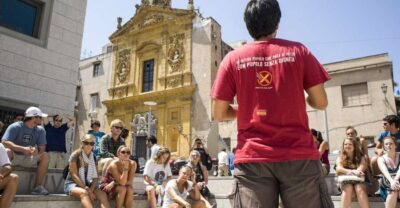 ★ 4.8Palermo: NO Mafia Walking TourFrom $402,431 reviews
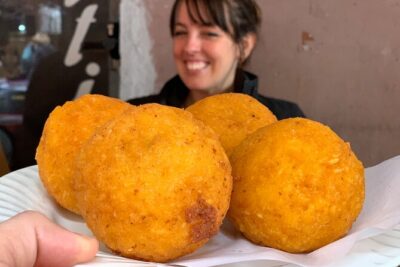 ★ 5.0Palermo Original Street Food Walking Tour by StreatyFrom $832,105 reviews
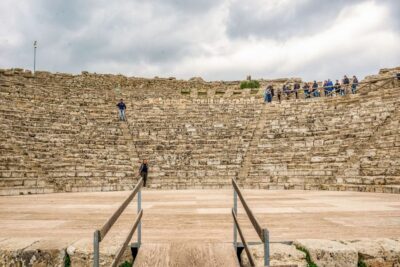 ★ 4.2Segesta, Erice and Salt Pans Full-Day Excursion from PalermoFrom $821,791 reviews
 ★ 4.5Palermo: Teatro Massimo Opera House Guided TourFrom $141,573 reviews
 ★ 4.9Palermo: Street Food and History Walking TourFrom $571,486 reviews
 ★ 4.2From Palermo: Monreale and Cefalù Half-Day TripFrom $711,354 reviews
 ★ 4.2Palermo: Agrigento and the Valley of the Temples Day TourFrom $771,240 reviews
 ★ 5.0Palermo No Mafia walking tour: discover the Anti-mafia culture in SicilyFrom $391,011 reviews
Browse the lists this tour appears in