
Reviewed · PALERMO CITY TOURS
Palermo in 2 hours Main monuments and historic markets
Palermo clicks into focus fast. In two hours, I like how this walk ties Teatro Massimo and the UNESCO Arab-Norman Cathedral to the daily buzz of the city’s historic markets, all with a real local guide who explains what you’re seeing and why it matters.
Two things I really like are the storytelling quality and the food time. I’ve seen guides connected with this route—like Maurizio (and sometimes Fabrizio)—keep the pace lively with myths and local context, not a dry script. And you get a short street-food tasting stop so Palermo’s famous flavors show up early, not as an afterthought.
One thing to consider: not every stop’s entrance is included, so you might still pay at a couple of the big landmarks along the way. If you hate surprises, plan a small extra budget for tickets.
In This Review
- Key highlights you’ll notice right away
- A two-hour Palermo route that makes sense on day one
- Getting from Via Cavour to the Cathedral without stress
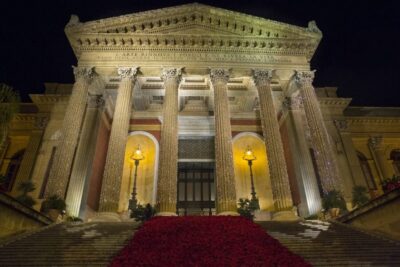
- Teatro Massimo: Why Palermo needed an opera house
- Teatro dell’Opera dei Pupi: Palermo’s puppet world with UNESCO ties
- Piazza Pretoria and the Palazzo delle Aquile power story
- Piazza Olivella: Sant’Ignazio’s Baroque drama and Santa Rosalia’s legend
- Strolling the ancient Cassaro: Palermo’s oldest main street feel
- Cape Market (Capo Market): real stalls, real smells, short free bites
- Palermo Cathedral: Arab-Norman style inside UNESCO form
- Guide style that changes the whole experience
- Price and value: what $23.26 buys you in real terms
- Who should book this walk (and who should choose something else)
- Should you book Palermo in 2 hours? My take
- FAQ
- How long is the Palermo walking tour?
- Where do I meet and where does the tour end?
- What is included in the price?
- Are any tickets included for the major sights?
- How many people are in the group?
- What happens if the weather is bad or I need to cancel?
Key highlights you’ll notice right away
- Teatro Massimo first: The largest opera house in Italy sets the tone immediately
- Opera dei Pupi UNESCO: Puppetry culture connected to Palermo’s old traditions
- Piazza Pretoria’s Renaissance fountain: A classic photo spot with civic-history context
- Piazza Olivella and Sant’Ignazio: Baroque spectacle plus Santa Rosalia’s legend
- Cape Market street life: Stalls, locals shopping, and a short free taste of street food
- Arab-Norman Cathedral entrance: One UNESCO stop you’ll understand better after the walk
The rest of what Palermo puts on
- Pub Crawl Palermo
★ 5.0 · 595 reviews - Palermo: Pasta and Tiramisu Small Group Cooking Class with Wine
★ 5.0 · 348 reviews - Classic Boat Tour in Palermo
★ 5.0 · 268 reviews - Sicilian Cuisine Cooking Class in Palermo
★ 5.0 · 208 reviews
A two-hour Palermo route that makes sense on day one
This is the kind of walk that helps you get your bearings fast. You start with major landmarks, then you shift into street-level Palermo through the historic markets, and the guide connects the dots between empires, religions, and local legends.
The timing is tight by design—about two hours. In practice, you’ll want to treat it as “about two hours” and stay flexible, because the guide’s explanations can stretch the feel of the walk.
Because the group is capped at 20 people, you won’t feel packed in like some big-city tours. You can also ask questions without shouting, which matters a lot when you’re trying to understand Palermo’s neighborhood-by-neighborhood personality.
Getting from Via Cavour to the Cathedral without stress
The meeting point is Via Cavour, 131, Palermo, with the tour starting at 10:30 am. You’ll finish at Palermo Cathedral on Via Vittorio Emanuele, so your day ends in a very central zone if you’re planning lunch nearby or continuing on foot.
Bring your mobile ticket and keep it handy on your phone. Since the route stays mostly walkable, it’s a good fit when you want “maximum landmarks per hour” without hopping buses.
Also, do yourself a favor: wear shoes that handle uneven pavement and stop-and-start crowds near the markets. Palermo looks great at street level, but it’s not a carpeted pedestrian zone.
Teatro Massimo: Why Palermo needed an opera house
Your first stop is Teatro Massimo, known as the largest opera house in Italy. Even if you don’t care about opera, you’ll likely understand why locals still talk about it—this is a city that has always wanted big cultural stages.
You’ll have about 10 minutes here, mostly to orient yourself with the building’s role in Palermo’s identity. The catch: the admission ticket for this stop is not included, so you should treat this first moment as “see and learn,” not “full inside visit.”
If you’re deciding whether this stop is worth it, my take is yes. It’s one of those landmarks that instantly upgrades your sense of scale once you’re out on the street again.
Teatro dell’Opera dei Pupi: Palermo’s puppet world with UNESCO ties
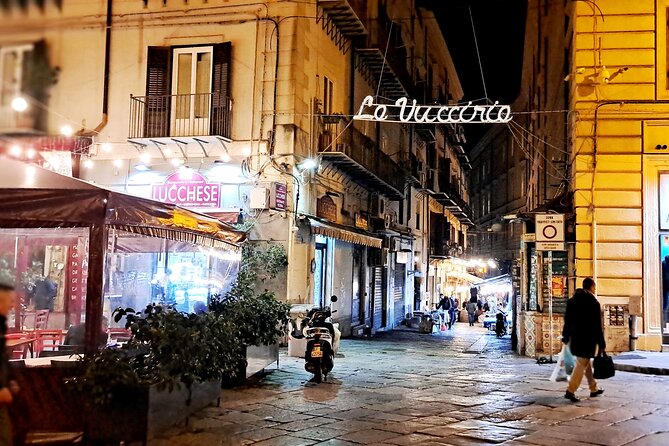
Next comes Teatro dell’Opera dei Pupi, a traditional Palermo show tied to puppetry culture. This stop connects to the UNESCO recognition for the form, and the route names Mimmo Cuticchio, a key figure associated with this tradition.
You’ll get another short visit—around 10 minutes—to see why the puppets matter beyond being a tourist craft. Palermo’s puppet theatre is storytelling, performance, and local memory all in one package, and the guide’s explanations help you notice the cultural structure behind what looks like simple theatre.
Like Teatro Massimo, entrance here is not included. If you want inside time, you’d need extra tickets, but even the quick stop gives you a useful mental framework for what you might notice later around town.
A few we would gladly point a friend toward in Sicily
Piazza Pretoria and the Palazzo delle Aquile power story
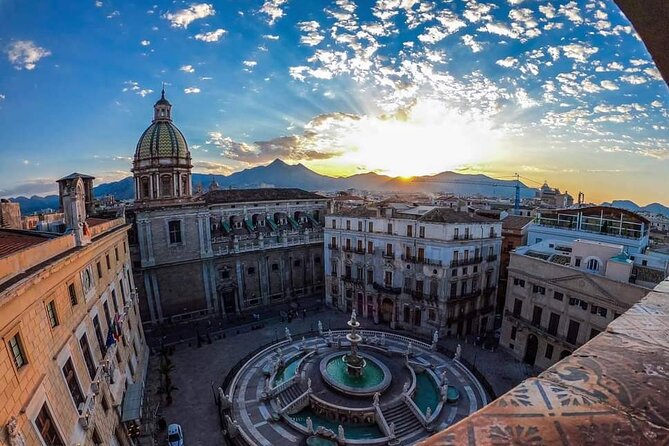
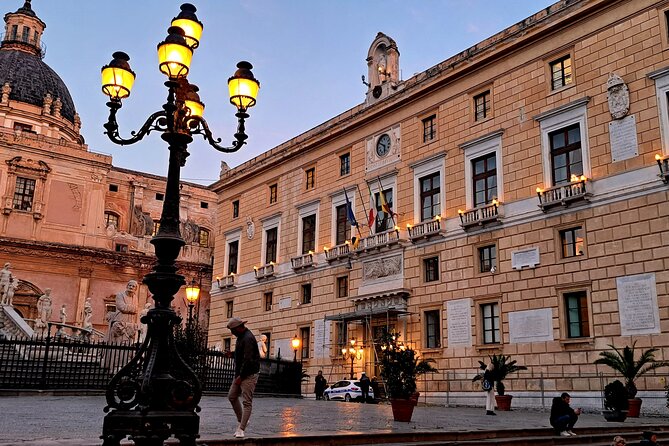
At Piazza Pretoria, you’re standing in front of a monumental Renaissance fountain, right across from the historic seat of civic administration at Palazzo delle Aquile. The fountain isn’t just eye candy—it’s a visual reminder that power often shows itself through public projects.
This stop includes admission, and you’ll have about 10 minutes. That short timing works well because the square is also a natural break point—easy to refocus, then continue into the more chaotic, human scale streets.
Practical tip: take a few minutes to look past the fountain itself. The square has angles that change the view, and the guide usually helps you connect what you’re seeing to the bigger Palermo story.
Piazza Olivella: Sant’Ignazio’s Baroque drama and Santa Rosalia’s legend
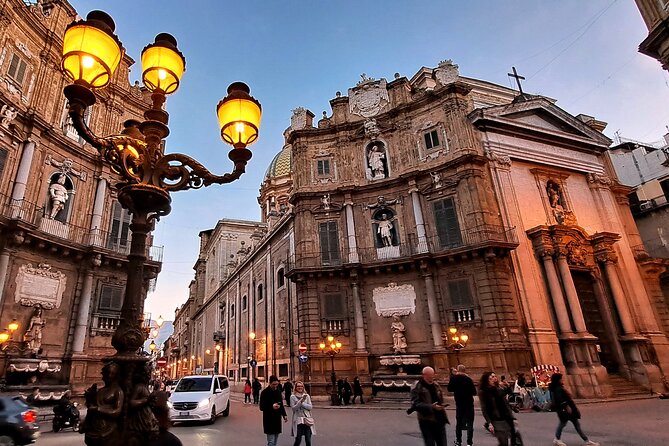
Now you shift to Piazza Olivella, which packs more meaning than its size suggests. The area includes the Regional Archaeological Museum and Sant’Ignazio, described as one of the city’s most sumptuous Baroque temples. You’ll also hear about the birthplace of Santa Rosalia, Palermo’s patroness, proclaimed by popular acclaim after she freed the city from the plague.
This portion runs about 15 minutes and is listed as free for the stop itself. That’s a big plus because Baroque churches can add up in ticket costs elsewhere, and here you get the payoff through context.
The best part of this stop is how the legend becomes practical. Santa Rosalia’s story isn’t just something from a museum wall—it shows up in how Palermo talks about protection, faith, and survival. Once you hear that, you’ll notice people referencing her throughout your time in the city.
Strolling the ancient Cassaro: Palermo’s oldest main street feel
As you continue, you’ll walk along the Cassaro, described as Palermo’s oldest street lined with palaces, churches, and convents. This is where Palermo starts to feel less like “named sights” and more like a living urban thread.
It’s an ideal stretch for absorbing the city’s mix of architecture and eras. The guide’s job here is to point out patterns you might otherwise miss—like where styles change and how different communities left marks along the same corridor.
If you only do a few hours in Palermo, this is the “connect the dots” segment. It helps you understand how neighborhoods link to monuments without needing a bus or a map puzzle.
Cape Market (Capo Market): real stalls, real smells, short free bites
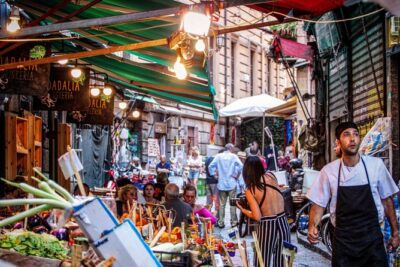
One of the biggest values here is that you don’t just look at Palermo—you walk through the market world. The experience includes crossing the Cape Market, and there’s also a short stop for free street food tasting.
This is where the city earns its reputation as a street-food capital. You’ll see local products and stall life up close, and you’ll get a quick taste of what people actually eat as they shop and move through the day.
The tasting is intentionally short. It’s not trying to replace a full food crawl, but it gives you instant flavor memory to carry with you later. After this, when you’re back in a café or snack bar on your own, you’ll have a better sense of what to order.
The guide also weaves in dessert talk—things like Sicilian sweets and the stories behind them. Even if you don’t stop for dessert immediately, you’ll leave with ideas for what to look for later.
Palermo Cathedral: Arab-Norman style inside UNESCO form
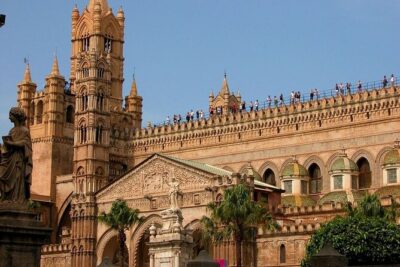
Your final major stop is Palermo Cathedral, where the route includes admission. The cathedral is UNESCO heritage and highlighted specifically for its Arab-Norman style, which is a perfect match for Palermo’s identity: different cultures, layered over time.
You’ll be inside long enough to appreciate that the building isn’t just one style. It’s a visible conversation between influences, and the guide helps you read the architecture like it’s saying something—not just showing it.
If you’re the type who usually skips cathedrals, this is the exception. The Arab-Norman focus gives you a “why” that makes the interior feel purposeful, not just grand.
Since the tour ends here on Via Vittorio Emanuele, plan something simple afterward—coffee, a light lunch, or a slow walk. You’ve earned a breather.
Guide style that changes the whole experience
This is one of those tours where the guide matters as much as the monuments. In the feedback I saw, people repeatedly praised guides like Maurizio (and also referenced Fabrizio) for keeping the visit engaging, sharing opinions, and giving practical city tips.
That matters in Palermo, because the city rewards curiosity. You’ll hear about myths and legends like the Beati Paoli secretive legend, plus the role of Santa Rosalia and even hints at the stories behind Sicilian desserts.
I also like that the advice can go beyond sight facts. One recurring theme is guidance on how to interact with merchants—like how to haggle without making it awkward. That’s the kind of practical street confidence that pays off when you’re shopping later.
Price and value: what $23.26 buys you in real terms
At about $23.26 per person, this tour sits in a “light commitment” category—especially if you’re new to Palermo and want structure immediately. The value comes from three things working together:
- A licensed guide who interprets monuments and legends while you walk
- Included access where it counts: Piazza Pretoria admission and Cathedral entrance
- Time in the market plus a short free street-food tasting, which you would otherwise have to seek out on your own
What’s not included is also important. Tickets for some stops—like Teatro Massimo and the puppet theatre—are listed as not included. So if you want full interior time at multiple places, you may pay extra.
For me, the math works if your goal is orientation and a smart first pass. If your goal is deep museum time and lots of indoor tickets, you might need a longer, more ticket-heavy tour.
Who should book this walk (and who should choose something else)
This is best for you if:
- You have just a short window in Palermo and want the “main bones” plus the market atmosphere
- You like history tied to real streets (not just a slideshow)
- You want a practical guide who can point you toward what to do next
It may be less ideal if:
- You want long, inside visits for multiple paid attractions
- You dislike walking in uneven old-street areas
- You’re planning a very tightly scheduled day and can’t handle the walk running a bit longer than the headline duration
The upside is that it ends at the Cathedral, so it naturally funnels you into central sightseeing after.
Should you book Palermo in 2 hours? My take
I’d book this tour if it’s your first morning in Palermo or one of your first days. The mix is strong: big landmark context early (Teatro Massimo), culture you might not seek on your own (Opera dei Pupi), and then the market and street-food pulse that makes Palermo feel like Palermo.
If you do book, go in with a simple plan: treat this as a guided “map with stories,” then build your own day around what the guide makes you curious about. And check the weather forecast—this experience calls for good weather, so if conditions are rough, you might want to shift your plans accordingly.
FAQ
How long is the Palermo walking tour?
It lasts about 2 hours.
Where do I meet and where does the tour end?
Meet at Via Cavour, 131, Palermo, and the tour ends at Palermo Cathedral on Via Vittorio Emanuele.
What is included in the price?
Included are a licensed professional guide, crossing the Cape Market, a short stop for free street food tasting, and entrance to the Cathedral. Entrance to Piazza Pretoria is also included.
Are any tickets included for the major sights?
Not all of them. Teatro Massimo and Teatro dell’Opera dei Pupi list admission as not included, while the Cathedral entrance is included. Piazza Pretoria is included, and the stop at Piazza Olivella is listed as free.
How many people are in the group?
The group size is capped at a maximum of 20 travelers.
What happens if the weather is bad or I need to cancel?
The experience requires good weather. If it’s canceled due to poor weather, you’ll be offered a different date or a full refund. You can cancel for a full refund up to 24 hours in advance.
More Historical Tours in Sicily
More Tour Reviews in Sicily





More Palermo, Start to Finish


Just added: the newest Sicily tours in our notebook
- Etna / Taormina★ 5.0 · 3 reviews
- Bikes★ 5.0 · 3 reviews
- Taormina shore tour – for small group cruise passengers★ 5.0 · 3 reviews
- Vegan Cooking Class in Catania with Lunch and Dinner★ 5.0 · 3 reviews
- Make & Taste Sicilian Desserts in Palermo – Learn Cannoli & More★ 5.0 · 3 reviews
- Sicilian Villages & Ricotta Tasting – including Lunch from Cefalu★ 4.0 · 3 reviews
Palermo City Tours, compared.
 ★ 4.8Palermo: NO Mafia Walking TourFrom $402,431 reviews
 ★ 5.0Palermo Original Street Food Walking Tour by StreatyFrom $832,105 reviews
 ★ 4.2Segesta, Erice and Salt Pans Full-Day Excursion from PalermoFrom $821,791 reviews
 ★ 4.5Palermo: Teatro Massimo Opera House Guided TourFrom $141,573 reviews
 ★ 4.9Palermo: Street Food and History Walking TourFrom $571,486 reviews
 ★ 4.2From Palermo: Monreale and Cefalù Half-Day TripFrom $711,354 reviews
 ★ 4.2Palermo: Agrigento and the Valley of the Temples Day TourFrom $771,240 reviews
 ★ 5.0Palermo No Mafia walking tour: discover the Anti-mafia culture in SicilyFrom $391,011 reviews
Browse the lists this tour appears in