
Reviewed · PALERMO CITY TOURS
Palermo Historic Markets and Monuments Walking Tour With A Guide
Palermo’s highlights fit in one walk. In about three hours, you bounce from Palermo Cathedral to Teatro Massimo, then to the star square Quattro Canti, Fontana Pretoria, and finally Capo street market. I especially like how the route hits big landmarks while still leaving you time to notice street life.
I also like the guide-led approach. You’re not just staring at buildings—you’re getting the why behind what you see, and the small-group/private format makes it easier to ask questions. One thing to keep in mind: this is a city walk, not a slow, deep museum-style experience inside every site.
In This Review
- Quick hits before you go
- A 3-Hour Loop Through Palermo’s Big Icons
- Palermo Cathedral: Rooftop Views and Underground Royal Tombs
- Teatro Massimo: Neoclassical Splendor Without the Detour
- Quattro Canti and Fontana Pretoria: Baroque Corners and Renaissance Waterworks
- Capo Street Market: What to Eat and How to Shop Smart
- How the Guides Make the Tour Feel Personal (Andrea, Pamela, Nicoletta and More)
- Price and Tickets: Getting Real Value for $40
- Pace, Walking, and Where You Meet
- Should You Book This Palermo Walking Tour?
- FAQ
- How long is the Palermo Historic Markets and Monuments Walking Tour?
- Where does the tour start and end?
- Is this tour private or group-based?
- What languages are available for the guide?
- Do I need to buy tickets for the sites?
- What are the main stops on the route?
- Is this a walking tour?
- What’s included in the price?
- Is public transportation involved?
- What is the cancellation policy?
Quick hits before you go
- Five major stops in ~3 hours keeps the pace moving and helps you get your bearings fast.
- Rooftop panoramas from Palermo Cathedral plus a look at underground spaces for a fuller sense of the building.
- Teatro Massimo gives you the scale and drama of one of Europe’s biggest opera houses.
- Quattro Canti and Fontana Pretoria pack Baroque symmetry and Renaissance sculpture into one walkable stretch.
- Capo street market is the payoff for food lovers, with classic bites like arancini, panelle, and cannoli.
- Guides such as Andrea, Pamela, Nicoletta, and Alessandro are repeatedly praised for being friendly, engaging, and quick with helpful context.
The rest of what Palermo puts on
- Pub Crawl Palermo
★ 5.0 · 595 reviews - Palermo: Pasta and Tiramisu Small Group Cooking Class with Wine
★ 5.0 · 348 reviews - Classic Boat Tour in Palermo
★ 5.0 · 268 reviews - Sicilian Cuisine Cooking Class in Palermo
★ 5.0 · 208 reviews
A 3-Hour Loop Through Palermo’s Big Icons
This tour works like a strong first day in Palermo. You’re walking through the historic center and seeing landmarks that make the city feel different from other Italian stops. The whole thing is timed tightly—around 36 minutes per stop—so you get the main ideas without getting stuck in line after line.
You also get a real sense of how Palermo layers eras on top of each other. One moment you’re looking at medieval-and-baroque style at the cathedral. Next, you’re facing the elegant theater architecture. Then the route shifts to the “wow” factor of Quattro Canti and Fontana Pretoria, before ending with a food-and-shopping scene at Capo market.
If you prefer a slow wander with lots of time to linger, this may feel a bit quick. But if your goal is to see the essentials and leave with a shortlist of places to return to later, it’s a smart format.
Palermo Cathedral: Rooftop Views and Underground Royal Tombs
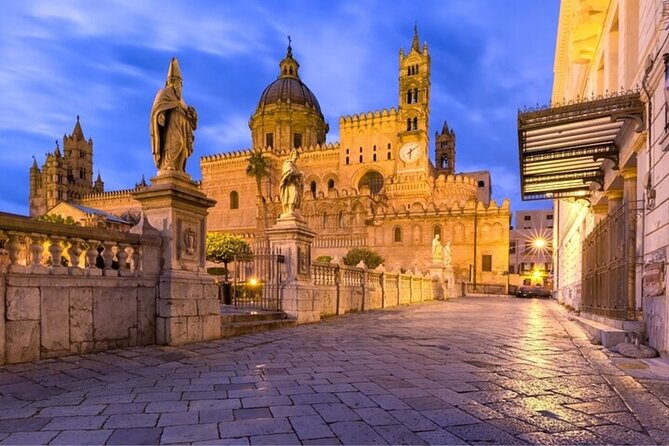
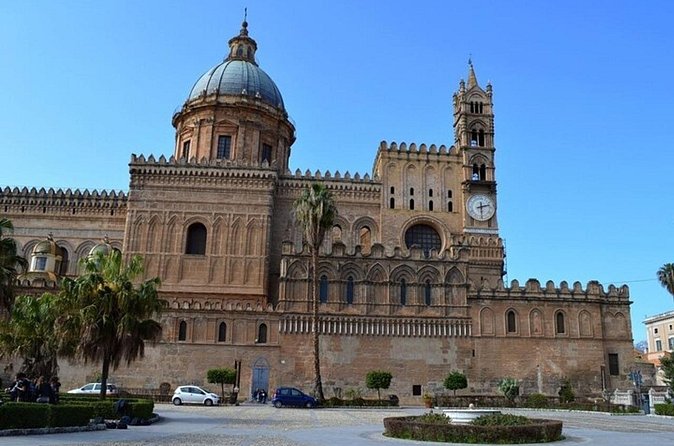
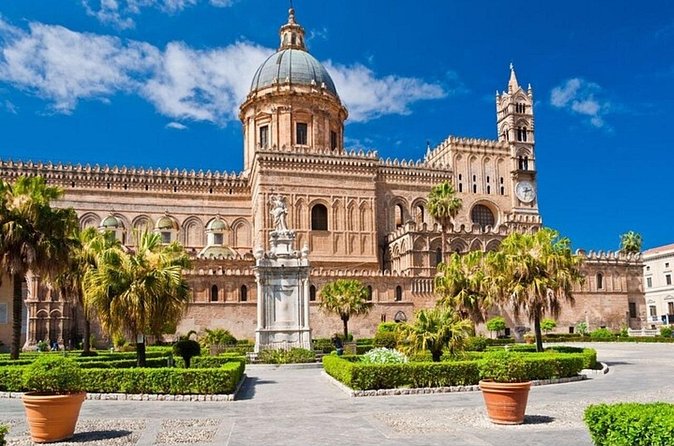
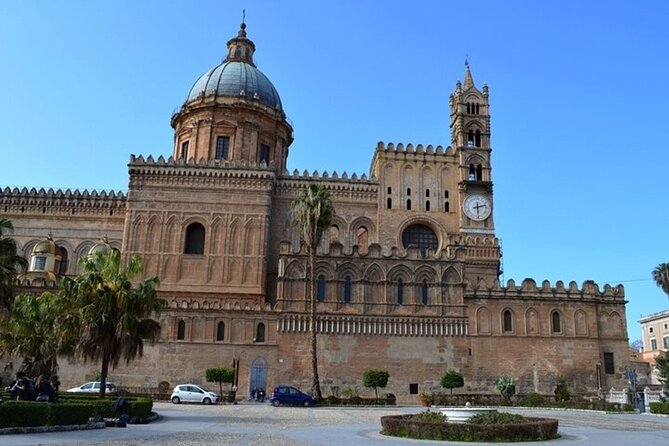
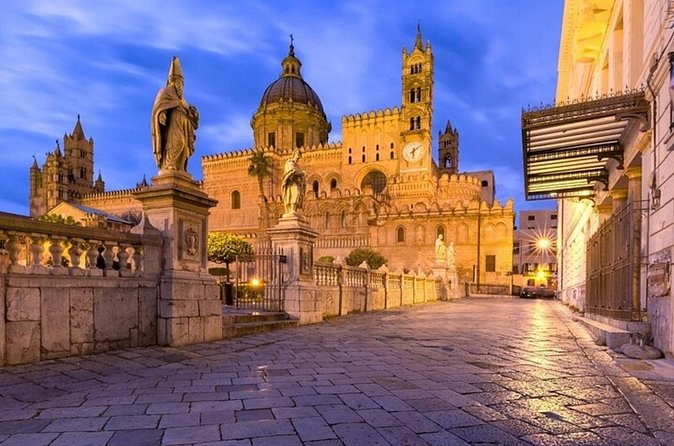
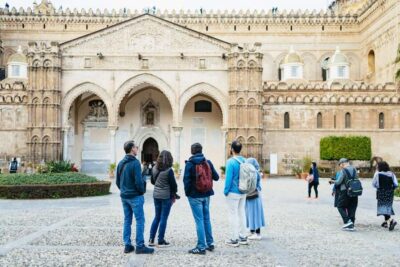
Palermo Cathedral is the anchor stop. Expect the big exterior features first—carvings and statues—and then time inside where you can see the interior’s visual punch: mosaics, columns, and ornate chapels. The point isn’t just beauty. It’s how the building reflects changing influences over centuries.
What I like most here is the combination of viewpoints and layers. The plan includes panoramic views from the rooftop, including sights toward Mount Pellegrino. It also includes a look at crypts and tombs beneath the cathedral, tied to Sicilian royalty. That mix helps you understand the cathedral as both a public symbol and a private resting place.
Potential drawback: because it’s a guided city tour (not a full, slow museum deep-dive), you won’t spend hours and hours in one room trying to photograph every detail. Still, it’s a strong hit of “Palermo looks like this” in a short amount of time.
Teatro Massimo: Neoclassical Splendor Without the Detour
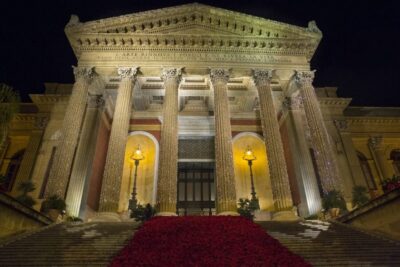
Teatro Massimo is the kind of stop that makes you stop walking. It’s one of Europe’s largest opera houses, and the architecture has that formal, neoclassical sense of scale—grand lines, dramatic presence, and interiors built for performance.
On this tour, the goal is to help you read the theater quickly. You’ll see the impressive facade and then go in with a guide to connect the design with the theater’s role in Sicilian culture. If you’re an opera fan, you’ll likely appreciate the logic of the space. If you’re not, it still works because the architecture is the story.
One practical note: you might think this would lead to a full inside-theater production experience. It doesn’t. Think of it as a guided visit that gives context and structure, with the option of attending a live performance being separate.
Quattro Canti and Fontana Pretoria: Baroque Corners and Renaissance Waterworks
Quattro Canti, also called the Four Corners, is where Palermo’s historic center snaps into focus. It’s an intersection square with symmetrical facades, and each corner is dressed with symbolism. The details are meant to map out the city’s story: references to the four seasons, Spanish kings, and patron saints of Palermo.
Then you move to Fontana Pretoria, a Renaissance fountain that brings sculpture and motion into the middle of the square. You’ll get a look at the mythological figures and animals, plus the ornate decoration that makes the fountain feel like a public art gallery. The water and the figures create a quick visual lesson in what Renaissance art valued: style, storytelling, and craftsmanship.
Here’s a useful way to experience these stops: slow down for two minutes when you arrive. Stand where you can see one corner clearly, then take a step to line up the next one. It’s the quickest way to “get” the symmetry the guide will be pointing out.
The only consideration is weather and comfort. These are outdoor-heavy areas. Wear comfortable shoes—your feet will do most of the work.
A few we would gladly point a friend toward in Sicily
Capo Street Market: What to Eat and How to Shop Smart
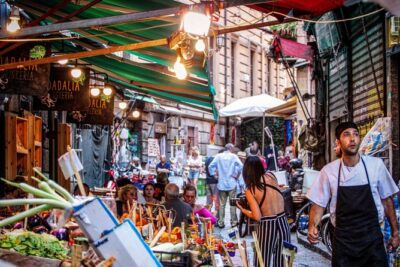
Capo street market is the stop you’ll remember when you think about Palermo days later. This is one of the city’s oldest outdoor markets, and it’s lively in a very everyday way: narrow alleys, vendors calling out, shoppers comparing prices, and stalls stacked with produce, local foods, and small crafts.
The big win is food. You’ll have a chance to sample classic Sicilian street bites like arancini, panelle, and cannoli. Even if you don’t plan to eat at every stall, it’s a great moment to taste what locals actually reach for.
For shopping, I’d treat it like this: buy small, buy specific. If you’re looking for edible souvenirs, you’ll often have an easier time than carrying fragile items. If you’re buying crafts, focus on one or two items you truly like, then build a gift bag around that.
Also, don’t assume the market is only for tourists. It’s a working neighborhood scene. If you keep it respectful—quick photos, don’t block stalls—you’ll blend in better and get better recommendations from the people selling.
How the Guides Make the Tour Feel Personal (Andrea, Pamela, Nicoletta and More)
The strongest praise for this tour isn’t about monuments—it’s about the guides. Names like Andrea and Pamela come up for being friendly, engaging, and able to make three hours feel like less. People also highlight the guides’ local knowledge and an ability to connect the dots between sites.
You’ll also see a theme: guides give practical direction, not just facts. Pamela, for example, is described as sharing insider suggestions for dining and visiting on the rest of the island. That kind of advice can save you time later when you’re planning day trips.
Other guides mentioned—Nicoletta, Alessandro, Martina, Alessia, Mathilde, Giosé, and Marta—are described as warm, patient, and responsive to questions. In plain terms, that matters because Palermo can feel layered and confusing if you don’t know what you’re looking at. A guide helps you turn “big buildings” into “meaning.”
If you care about stories behind the architecture and the lived-in feel of the city, this guide format is a big part of the value.
Price and Tickets: Getting Real Value for $40
At about $40.04 per person for roughly three hours, this is priced like a solid “high-impact overview.” The value comes from the combination: multiple top sights, a guide, and a route designed to keep you moving through the historic center without wasting half a day figuring out what’s where.
One detail to watch: the tour includes guidance and help booking tickets for the visits you want. At the same time, the overall listing says entry to monuments and museums is not included. The itinerary also marks several stops as admission ticket free, including cathedral, theater, Quattro Canti, Fontana Pretoria, and Capo market. So in practice, you’ll likely be covered for the planned stops, but you should confirm anything that goes beyond what’s on the walk.
So I’d budget like this: expect to pay for food and drinks on your own, and expect that anything extra inside museums or special exhibits is separate.
The good news is that you don’t have to overthink it. This is meant to be a guided walking tour that gets you oriented and helps you decide what deserves a return visit.
Pace, Walking, and Where You Meet
This is a city walking tour, so your schedule and your shoes matter. You’re covering several central landmarks over about three hours, with the tour returning to the meeting point. Comfortable walking shoes are a must, especially if you’re visiting during warm weather or if you plan to keep exploring after the tour ends.
You’ll start at V. Ruggiero Settimo, 55, 90139 Palermo PA, Italy and end back there. It’s noted as near public transportation, which is useful if you’re arriving by bus or train and want an easy jump-off point.
Most people can participate, and the structure is fairly straightforward. Still, because it’s a guided walking loop, plan on staying with the group and keeping your timing tight.
Should You Book This Palermo Walking Tour?
Book it if you want a strong first introduction to Palermo. This tour is ideal when you’re short on time but still want to see the city’s most recognizable landmarks—cathedral views, Teatro Massimo scale, Quattro Canti symbolism, Fontana Pretoria sculpture, and Capo market food.
Skip or adjust expectations if you’re the type who wants long, quiet time inside monuments. The format is a guided overview, not a slow, full interior museum session for every stop.
My practical rule: if you like the idea of getting your bearings, learning what to look for, and then using that knowledge to plan your next days, this is a good value pick. And if your group picks a guide like Andrea or Pamela, you’ll likely come away with not just photos, but clearer next steps.
FAQ
How long is the Palermo Historic Markets and Monuments Walking Tour?
It runs for about 3 hours.
Where does the tour start and end?
The tour starts at V. Ruggiero Settimo, 55, 90139 Palermo PA, Italy, and it ends back at the same meeting point.
Is this tour private or group-based?
It can be private or a small group option, and it’s described as only your group participating.
What languages are available for the guide?
The guide is available in English, Spanish, French, and Italian.
Do I need to buy tickets for the sites?
Entry to monuments and museums is listed as not included, but the stops on the route are marked as admission ticket free in the itinerary. The team can also help you book tickets for desired visits.
What are the main stops on the route?
The tour includes Cattedrale di Palermo, Teatro Massimo, Quattro Canti, Fontana della Vergogna (Fontana Pretoria), and the Capo Street Market.
Is this a walking tour?
Yes. It’s a walking tour through the city.
What’s included in the price?
Included items include a walking tour, guide support in multiple languages, help from the team to book tickets for desired visits, and a mobile ticket. Tips, food, drinks, entry, and transportation are not included.
Is public transportation involved?
No transport is included, but it’s noted as near public transportation. Any public transport you use is at your own expense.
What is the cancellation policy?
You can cancel for a full refund up to 24 hours in advance. If you cancel less than 24 hours before the start time, the amount is not refunded.
More Tours in Sicily




More Tour Reviews in Sicily

More Palermo, Start to Finish


Just added: the newest Sicily tours in our notebook
- Etna / Taormina★ 5.0 · 3 reviews
- Bikes★ 5.0 · 3 reviews
- Taormina shore tour – for small group cruise passengers★ 5.0 · 3 reviews
- Vegan Cooking Class in Catania with Lunch and Dinner★ 5.0 · 3 reviews
- Make & Taste Sicilian Desserts in Palermo – Learn Cannoli & More★ 5.0 · 3 reviews
- Sicilian Villages & Ricotta Tasting – including Lunch from Cefalu★ 4.0 · 3 reviews
Palermo City Tours, compared.
 ★ 4.8Palermo: NO Mafia Walking TourFrom $402,431 reviews
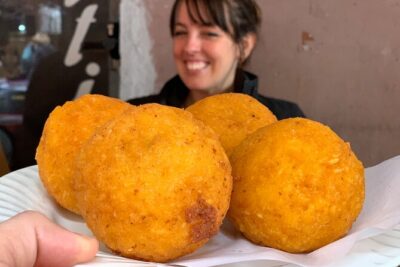 ★ 5.0Palermo Original Street Food Walking Tour by StreatyFrom $832,105 reviews
 ★ 4.2Segesta, Erice and Salt Pans Full-Day Excursion from PalermoFrom $821,791 reviews
 ★ 4.5Palermo: Teatro Massimo Opera House Guided TourFrom $141,573 reviews
 ★ 4.9Palermo: Street Food and History Walking TourFrom $571,486 reviews
 ★ 4.2From Palermo: Monreale and Cefalù Half-Day TripFrom $711,354 reviews
 ★ 4.2Palermo: Agrigento and the Valley of the Temples Day TourFrom $771,240 reviews
 ★ 5.0Palermo No Mafia walking tour: discover the Anti-mafia culture in SicilyFrom $391,011 reviews
Browse the lists this tour appears in