
Reviewed · PALERMO CITY TOURS
Palermo: Anti-Mafia 3-Hour Walking Tour
Palermo isn’t just a pretty postcard—it’s a place where people pushed back. On this 3-hour anti-mafia walking tour, you move through the historic center and watch how the fight against the racket shows up in real public spaces. I like that it isn’t only about the Mafia as a topic; it’s about how Palermo’s residents organized, spoke up, and built everyday resistance.
Two things I especially value: the English-speaking local guide who makes complex history clear, and the tour’s built-in purpose. Your fee includes a donation to Addiopizzo, the grassroots group working so businesses and consumers refuse extortion money.
One heads-up: this is a lot of walking for three hours. It’s manageable for most people, and there are places to sit along the way, but if you’re traveling with kids or you hate heat, plan carefully for summer temperatures and crowded streets.
In This Review
- Key Highlights You’ll Actually Feel
- Teatro Massimo: Where the Godfather Connection Gets Rewritten
- Capo Market to the Mural of Legality: Reading the City’s Message
- Piazza della Memoria and the Cathedral: When Faith Meets Power
- City Hall and Palermo Spring: Civic Resistance, Not Just Crime History
- Price and Value: What $54.19 Really Buys You
- How the Anti-Mafia Story Stays Coherent on Foot
- Walking Reality: What to Expect in Movement and Comfort
- Who This Tour Suits Best (and Who Might Not)
- Should You Book This Palermo Anti-Mafia Walk?
- FAQ
- How long is the Palermo Anti-Mafia walking tour?
- How much does the tour cost?
- What languages are available for the guide?
- Where do I meet the guide?
- What stops are included on the route?
- Does the price include a donation to an anti-mafia group?
- Can I cancel for a full refund?
Key Highlights You’ll Actually Feel
- Teatro Massimo first: you get the Godfather association out of the way, then learn what Palermo wants to say about itself.
- Capo Market area stop: you’re not only staring at monuments; you pass through the city’s everyday life.
- Mural of Legality: a street-art style reminder that legality can be public, not theoretical.
- Piazza della Memoria + Cathedral: you connect violence with institutions, including the Catholic Church’s complicated relationship with Mafia power.
- City Hall finale: the story lands on civic action, not just crime history.
- Small group size (max 18): easier questions, calmer pace, and better guide-to-you interaction.
The rest of what Palermo puts on
- Pub Crawl Palermo
★ 5.0 · 595 reviews - Palermo: Pasta and Tiramisu Small Group Cooking Class with Wine
★ 5.0 · 348 reviews - Classic Boat Tour in Palermo
★ 5.0 · 268 reviews - Sicilian Cuisine Cooking Class in Palermo
★ 5.0 · 208 reviews
Teatro Massimo: Where the Godfather Connection Gets Rewritten
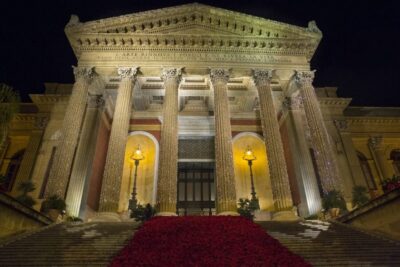
You start at P.za Giuseppe Verdi, right by Teatro Massimo, and you’ll quickly understand why this stop matters. Many people arrive with the Mafia pop-culture image in their head—especially thanks to The Godfather. The tour doesn’t pretend that association doesn’t exist. Instead, it uses Teatro Massimo as a way to reset your expectations: yes, the Mafia is part of the story, but Palermo’s identity is bigger than film scenes.
What I like here is the tone. The guide frames the walk as a mix of place and meaning: what you see in the city, and what it says about power, fear, and public resistance. And because the guide is English-speaking and local, you can ask questions without feeling like you’re guessing at terms. In several guide experiences I read about, locals like Salvatore—and also Sylvia and Silvia in other departures—were praised for clear English and strong command of the subject.
Practical note: Teatro Massimo is a major landmark, so it also helps you get your bearings fast. Even if you’re new to Palermo, you’ll feel oriented for the rest of the route.
Capo Market to the Mural of Legality: Reading the City’s Message
From Teatro Massimo, the walk moves toward the Mural of Legality and Beati Paoli Square, passing through the Capo Market area. This stretch is one of the reasons the tour feels grounded. You’re not shuffling between “photo spots.” You’re moving through Palermo’s historic center in a way that makes the city feel lived-in.
Capo Market is known for being colorful and busy, and it’s a good bridge between personal everyday life and the larger political story. When a tour keeps you near commerce and street life, it stops history from becoming untouchable. The guide uses the movement through this area as context for the next stop: legality as a public stance.
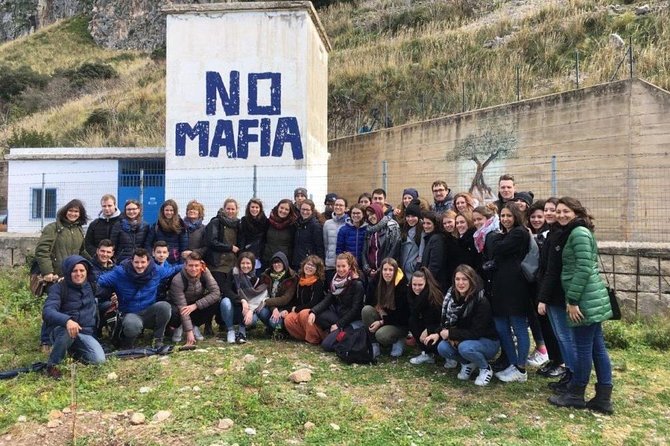
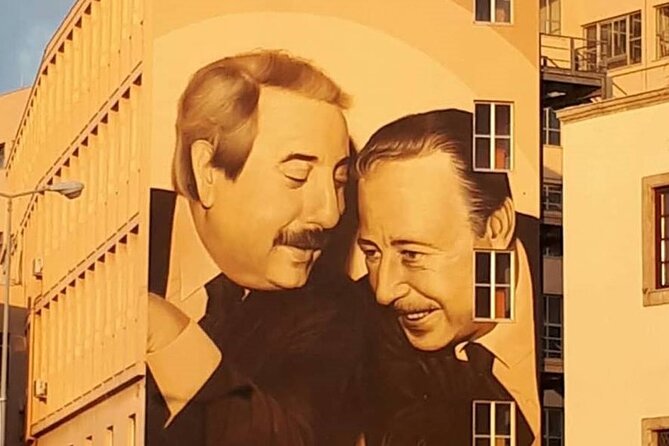
Then you reach the Mural of Legality near Beati Paoli Square. This is the kind of place where a guided explanation changes the whole experience. It’s not just a mural you pass by. It becomes a cue for reflection on civil antimafia—how ordinary people, groups, and institutions push back against Mafia influence. If you’ve ever wondered how something as abstract as “anti-Mafia” becomes real, this is where you start seeing the mechanism.
A small but useful detail: the pacing here is designed so the narrative keeps you connected while the city around you keeps doing its normal thing. That contrast—story vs. street—works well.
Piazza della Memoria and the Cathedral: When Faith Meets Power
Next comes Piazza della Memoria, home to a memorial dedicated to magistrates killed by the Mafia. This is a serious stop, and it shifts the tone from symbolism to consequence. You’re not just learning dates and events; you’re seeing how communities remember people who tried to do the right thing and paid for it.
I find memorials like this important for two reasons. First, they make the threat real in human terms. Second, they show that anti-Mafia resistance isn’t only about violence stopping—it’s about justice being pursued, and remembered, even when it’s costly.
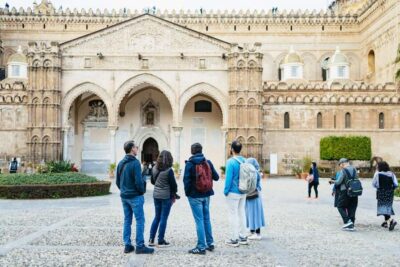
From there, the tour addresses the Cathedral and the issue of relations between the Mafia and the Catholic Church. This part can be uncomfortable, but it’s also essential. Palermo’s anti-Mafia story isn’t one simple “good guys vs. bad guys” line. It’s tied to power, influence, and the complicated ways organizations can overlap—sometimes quietly—for better or worse.
This is also where you’ll notice how the guide structures the walk. The stops aren’t random. Each one becomes a theme:
- memorial as memory,
- cathedral as institution,
- and the Mafia as a pressure system that can touch all kinds of structures.
City Hall and Palermo Spring: Civic Resistance, Not Just Crime History
The last stop is City Hall, which also experienced the season of Palermo Spring. That phrase points to a civic spirit—people pushing for change in a visible, public way, not only through backroom decisions.
This final leg is a smart choice. If your only takeaway from Mafia history is fear, it can feel heavy and hopeless. Ending on a civic landmark steers the story toward agency: the idea that Palermo’s fight against the racket includes community action and public courage.
It also helps you understand why the tour emphasizes civil mobilization. The tour isn’t selling you a dramatic thriller version of Palermo. It’s showing how the city’s public face—government, institutions, shared spaces—can be part of the resistance.
When the tour ends back at the meeting point, you’ll likely feel like you saw Palermo from a different angle. Not as a backdrop, but as a participant in the story.
A few we would gladly point a friend toward in Sicily
Price and Value: What $54.19 Really Buys You
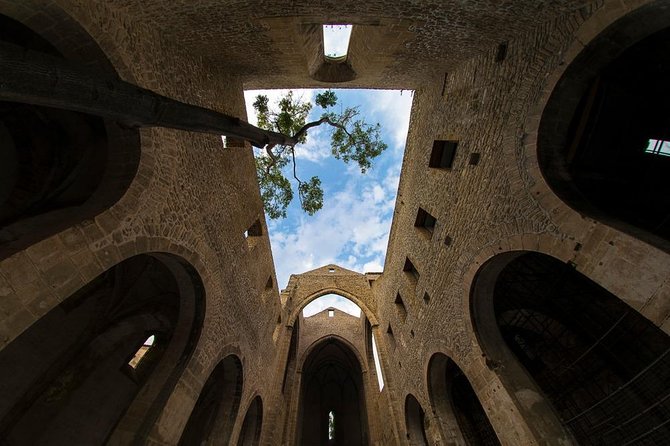
At $54.19 per person for about three hours, this isn’t the cheapest walking tour in Palermo. But it also isn’t priced like a generic “highlights only” route. You’re paying for two things that change the quality of the experience.
1) A guide with an English-speaking narration designed to connect places to meaning. In the guide feedback I saw, Salvatore and Silvia/Sylvia-style departures were singled out for clear, professional English and strong answers to questions.
2) A donation included in the fee to Addiopizzo. This matters because it turns the learning into support. Addiopizzo is described as a grassroots movement building a community of businesses and consumers who refuse to pay extortion money to the Mafia. That’s direct, real-world intent—not just a lecture.
Group size is max 18, which usually means you don’t get lost in a crowd of strangers. You can hear the guide and ask questions, and you spend less time waiting at stop points.
So for value, I’d frame it like this: you’re not only buying a route—you’re buying a focused narrative with a built-in contribution.
How the Anti-Mafia Story Stays Coherent on Foot
A good walking tour connects dots. This one keeps its theme tight: every stop acts like a chapter about the phenomenon of the Mafia and the ways Palermo’s residents organized against Mafia power.
What helps the coherence is the structure. Each location—Teatro Massimo, the Mural of Legality area, Piazza della Memoria, the Cathedral, City Hall—pushes a different angle:
- culture and image (Teatro Massimo),
- legality in public (Mural of Legality),
- justice and remembrance (Piazza della Memoria),
- institutions and moral conflict (Cathedral),
- civic action and public change (City Hall).
Also, the tour calls itself a new way of visiting Palermo, beyond clichés. That’s exactly what it feels like: you stop treating Palermo as scenery and start treating it as a living argument about power and community.
If you like tours that take history seriously but still work at street level, this is the kind of experience that fits.
Walking Reality: What to Expect in Movement and Comfort
This is a three-hour walking tour in Palermo’s historic center. Most travelers can participate, and the route includes some places to sit and listen as the group continues. Still, you should treat it as an active cultural walk, not a slow sightseeing stroll.
Here’s how I’d plan for it:
- Wear comfortable shoes. The route is in an older center where surfaces and distances can surprise you.
- If you go in warmer months, think about heat and crowding. The tour is only three hours, but summer conditions can make it feel longer.
- Bring water. The tour duration is short, but Palermo can get intense.
If you’re traveling with kids, I’d be cautious. Some guide feedback frames it as less suitable for children due to the walking and the heavier themes. Adults (and teens who can handle serious topics) tend to get more out of the conversations and reflections.
Who This Tour Suits Best (and Who Might Not)
This is ideal if you:
- want Palermo history with a clear moral and civic lens,
- like learning from local guides who can answer follow-up questions,
- appreciate tours that connect landmarks to real social issues,
- are comfortable with reflective, serious subject matter.
It might be less ideal if you:
- want only light entertainment and quick photos,
- dislike walking for three hours,
- are traveling with very young kids.
Should You Book This Palermo Anti-Mafia Walk?
Yes—if you want Palermo to make sense through its people and its public spaces. This tour stands out for two practical reasons: the narrative is guided and structured, and your payment supports Addiopizzo’s anti-extortion work. You’ll come away with more than facts—you’ll understand why civil mobilization matters in a city like Palermo.
If your main goal is a simple highlight loop with minimal walking, you might choose a different tour. But if you’re ready for a thoughtful, street-level look at how Palermo resists the racket, booking this one is a smart move.
FAQ
How long is the Palermo Anti-Mafia walking tour?
The tour lasts about 3 hours.
How much does the tour cost?
It costs $54.19 per person.
What languages are available for the guide?
Guides are available in English, Italian, or French.
Where do I meet the guide?
The tour meets at P.za Giuseppe Verdi, 54, 90138 Palermo PA, Italy.
What stops are included on the route?
Key stops include Teatro Massimo, the Mural of Legality near Beati Paoli Square (with the Capo Market area passed along the way), Piazza della Memoria, the Cathedral, and the City Hall.
Does the price include a donation to an anti-mafia group?
Yes. Your fee includes a donation to Addiopizzo.
Can I cancel for a full refund?
Yes. You can cancel up to 24 hours in advance for a full refund.
More Tours in Sicily





More Tour Reviews in Sicily

More Palermo, Start to Finish


Just added: the newest Sicily tours in our notebook
- Etna / Taormina★ 5.0 · 3 reviews
- Bikes★ 5.0 · 3 reviews
- Taormina shore tour – for small group cruise passengers★ 5.0 · 3 reviews
- Vegan Cooking Class in Catania with Lunch and Dinner★ 5.0 · 3 reviews
- Make & Taste Sicilian Desserts in Palermo – Learn Cannoli & More★ 5.0 · 3 reviews
- Sicilian Villages & Ricotta Tasting – including Lunch from Cefalu★ 4.0 · 3 reviews
Palermo City Tours, compared.
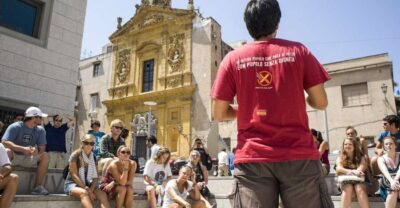 ★ 4.8Palermo: NO Mafia Walking TourFrom $402,431 reviews
 ★ 5.0Palermo Original Street Food Walking Tour by StreatyFrom $832,105 reviews
 ★ 4.2Segesta, Erice and Salt Pans Full-Day Excursion from PalermoFrom $821,791 reviews
 ★ 4.5Palermo: Teatro Massimo Opera House Guided TourFrom $141,573 reviews
 ★ 4.9Palermo: Street Food and History Walking TourFrom $571,486 reviews
 ★ 4.2From Palermo: Monreale and Cefalù Half-Day TripFrom $711,354 reviews
 ★ 4.2Palermo: Agrigento and the Valley of the Temples Day TourFrom $771,240 reviews
 ★ 5.0Palermo No Mafia walking tour: discover the Anti-mafia culture in SicilyFrom $391,011 reviews
Browse the lists this tour appears in