
Reviewed · TRAPANI & SALT PANS
Marsala: Guided tour of the Genna Salt Pans
Marsala’s salt pans have a smell you’ll remember. This guided visit takes you into working salt tanks built by the Spanish in the 15th century, overlooking the Stagnone Lagoon. The big win here is the guided explanation of how production works, from brine to salt crystallization, and the atmosphere—sun, wind, iodine, and history in one place.
I also like that the tour feels built for real understanding, not just a stroll. You get a guide with multi-language options (Italian, English, Spanish, French), and the whole experience is short enough to fit easily into a day around Marsala. One drawback to consider: if you’re hoping for extra visual aids (like diagrams or a water-flow model), the spoken explanation may feel a bit light on visuals for some people.
In This Review
- Key things to know before you go
- Marsala’s Salt Pans and Stagnone Lagoon Views
- Entering the salt pans: what the guided walk is really like
- What you learn: from brine to salt crystallization
- The Spanish-built pans: a centuries-old production system
- Practical tips: shoes, sun, and how to stay comfortable
- Meeting point: where the tour starts inside the salt pans
- Price and value: is $14 for 45 minutes fair?
- Language and clarity: choosing the right tour
- Who this tour is best for (and who should skip)
- Should you book the Genna Salt Pans guided tour?
- FAQ
- How long is the guided tour of the Genna Salt Pans?
- Where do I meet for the tour?
- Is the tour available in multiple languages?
- What will the guide explain during the tour?
- What should I wear or bring?
- Is this tour indoors?
- Can I bring pets or strollers?
- Is there a cancellation option?
- Is a guided entrance ticket included?
Key things to know before you go
- Working salt pans, not a museum: you’ll tour the tanks where salt production happens.
- Spanish-era layout from the 15th century: you’ll see the historical system still used today.
- Stagnone Lagoon views: the pans sit right where the lagoon and the salt fields meet.
- You learn the full production sequence: from tank function to crystallization.
- Bring sun-ready comfort: hat, water, and grippy shoes matter here.
- Language matters: choose your language carefully and expect the guide to teach in that language.
Out to the Trapani salt flats
- Marsala: Guided Salt Pans Walk Tour with Windmill Visit
★ 4.7 · 162 reviews - Marsala: Guided tour of the Genna Salt Pans
★ 4.4 · 97 reviews - Guided tour of the Marsala Salt Pans and salt harvesting
★ 4.7 · 60 reviews - Marsala: Wellness in the Pink Salt Pans with Dinner
★ 4.7 · 21 reviews
Marsala’s Salt Pans and Stagnone Lagoon Views
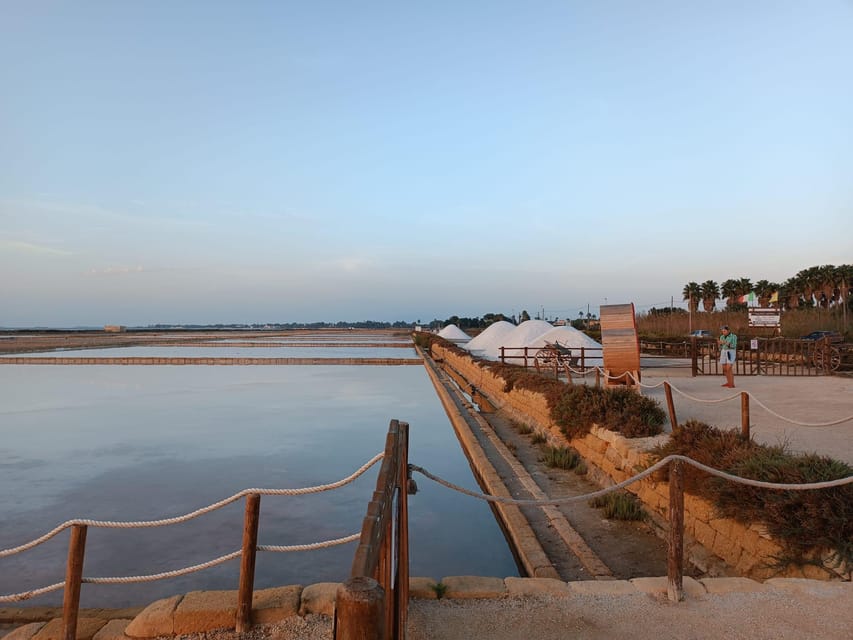
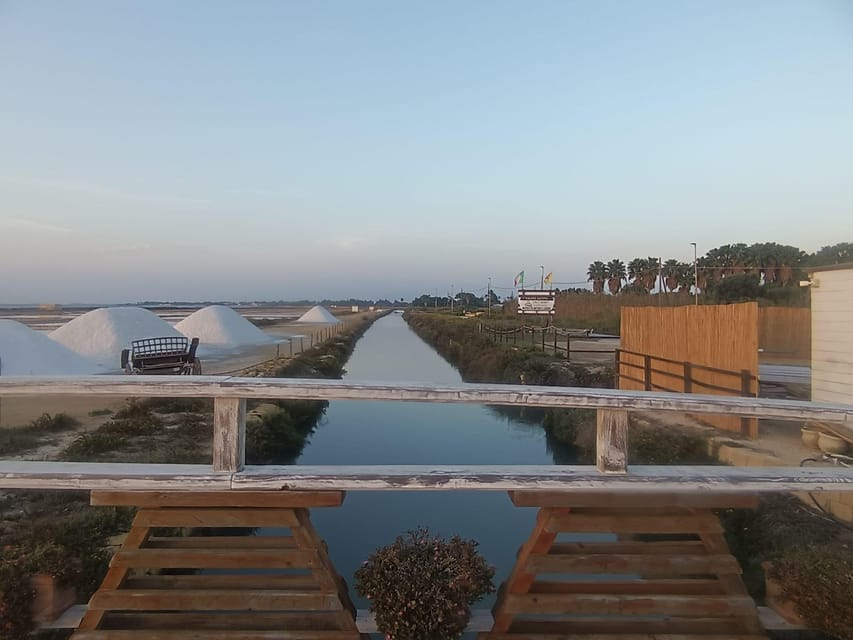
The Genna Salt Pans sit in a part of Sicily where nature does a lot of the work for you. As you approach, you can understand why salt production is seasonal and weather-driven: the whole operation depends on sun, wind, and evaporation—conditions that are part of the scenery. On this tour, you’re not just looking at salt tanks from far away. You get to be up close, on the working grounds, with the lagoon nearby.
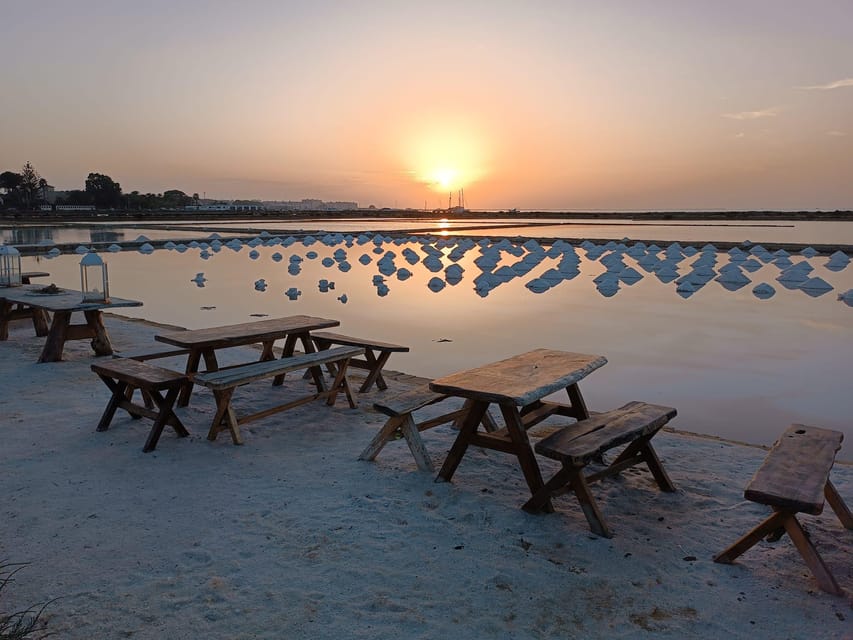
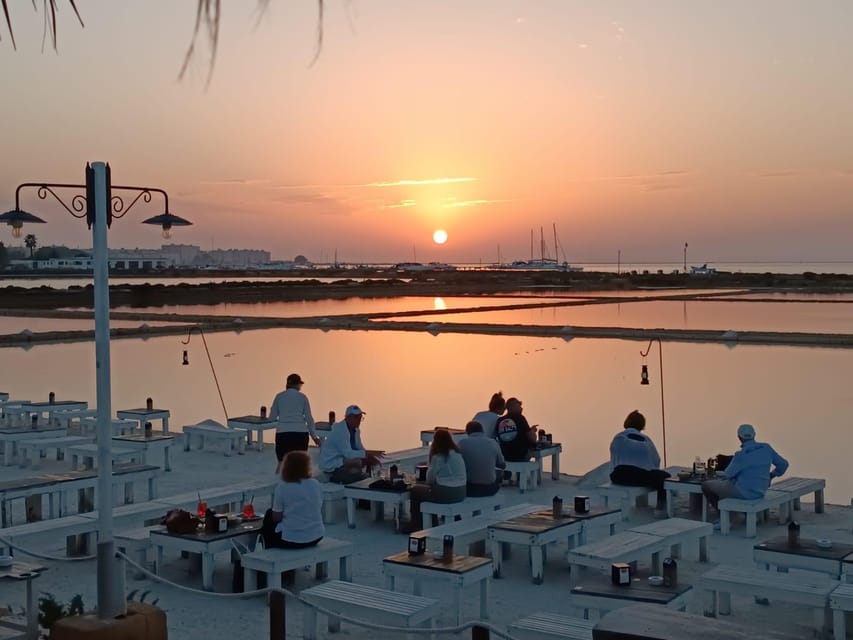
One of the strongest parts of the experience is the setting. The salt pans overlook the Stagnone Lagoon, so even if you’re there for the science of salt, you’ll still get those wide, salty-air views. And yes, you’ll notice the signature scent—iodine mixed with heat and wind. It’s not subtle, and that’s exactly the point. You’re stepping into an active landscape that smells like the job.
Another plus is the history you can’t ignore. The salt pans include sections built by the Spanish in the 15th century. That matters because you’re seeing a production system that has had centuries to be refined—an approach that looks practical, not staged.
Entering the salt pans: what the guided walk is really like
This tour is built around guided movement inside the salt pans. You start at Saline Genna, and you meet at the salt shop inside the salt pans. From there, the guide takes you into the salt area where you’ll see the different tanks and learn what each one is for.
The key is that the tour isn’t just description from a distance. You’ll be close enough to understand the physical setup of the production process. That’s where the tour’s value comes from: you can connect what you’re hearing to what you’re standing near—salt tanks, water behavior, and how everything ties together.
Because the tour lasts 45 minutes, it stays focused. It’s not trying to be a whole-day history tour, and it’s not trying to be a classroom lecture. Instead, it’s a compact explanation with the working environment as your visual reference.
What you learn: from brine to salt crystallization
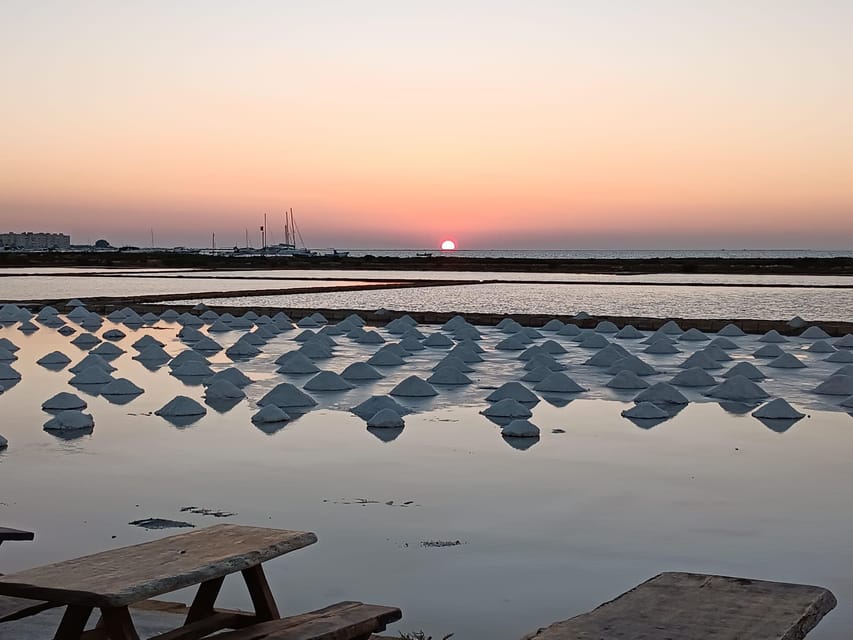
The promise of this guided tour is the full production story, right up to crystallization. In plain terms, salt making is about controlling water and timing. The guide walks you through how the salt tanks work and how the process unfolds across the different stages.
Here’s why that explanation matters for you. If you’ve ever wondered why salt isn’t made in a simple pot, this tour helps you see the logic. The setup is designed for gradual, step-by-step changes—moving from water that contains salt to conditions where salt crystals can form. The different tanks exist for a reason, and the guide connects those reasons to what you can see.
I also like that the tour is short enough to keep the story coherent. You’re not getting lost in details that go beyond what you can observe during the walk. Still, since the explanation is spoken, your experience will depend on how clearly it’s delivered in your chosen language.
The Spanish-built pans: a centuries-old production system
One highlight called out for this experience is that you’ll tour salt pans built by the Spanish in the 15th century. Even without turning it into a deep history lecture, that detail changes how you see the tanks. You’re not looking at a modern industrial plant. You’re looking at a system that grew from long practice—how people learned to harness local conditions and repeat an efficient workflow.
What you gain from that historical angle is perspective. Salt production in Sicily isn’t a gimmick or a novelty. It’s tied to the land and to the people who learned how to make something stable and valuable from water, time, and weather.
And the atmosphere reinforces the story. The smell of iodine, the presence of sun and wind, and the open-air layout all help you connect the historical setup to today’s reality: this is still an environment designed for evaporation and salt formation.
Marsala, glass in hand

Practical tips: shoes, sun, and how to stay comfortable
This tour is outdoors in an active working area, so comfort is practical, not optional. The recommendation is straightforward: bring a hat, bring water, and wear gym shoes.
I agree with that advice for a few reasons. First, you’ll likely be walking on uneven ground around tanks. Good grip helps you stay relaxed and steady. Second, the “iodine, sun, and wind” atmosphere means you should plan like you’re spending time outside in warm weather, not like you’re sitting in a cool building.
Also, wear clothes you don’t mind getting a bit salty or dusty. The tour is about being there in the salt environment. That smell is part of the experience, but you’ll want to stay comfortable while you’re absorbing it.
Meeting point: where the tour starts inside the salt pans
The meeting point is the salt shop inside the salt pans. That’s a helpful detail because it reduces confusion. Instead of searching for a gate or a random pickup spot, you can orient yourself around the shop.
If you’re arriving from central Marsala, I’d suggest you give yourself enough time to reach the salt area before your start time. Once you’re inside, the tour moves quickly, and you won’t get value by rushing.
This is also where you’ll likely confirm language and get oriented for what to do next. Since this tour can be offered in Italian, English, Spanish, and French, it’s worth paying attention to the language you’re scheduled for before you step into the tanks.
Price and value: is $14 for 45 minutes fair?
At $14 per person for a 45-minute guided tour, the price is relatively easy to justify—if what you want is a focused overview with a guide.
Here’s the value equation I see:
- You’re paying for an on-site explanation inside a working salt system.
- The ticket includes entrance and a guided tour (so it’s not just access).
- You get the story from tank function to crystallization without needing to piece it together on your own.
What you should consider is that this is a short visit. If you want a long, slow, photo-heavy experience with lots of pauses, you may find the pace brisk. But if your ideal day includes quick learning, good scenery, and a hands-on walk, this time length is actually a benefit.
Language and clarity: choosing the right tour
The tour can be done in four languages: Italian, English, Spanish, and French. That’s great on paper, because salt production has enough steps that it’s helpful to hear the process clearly.
That said, clarity depends on the guide and the language delivery. One reason this tour is sometimes praised is because guides explain the phases of salt production in a way that feels complete and easy to follow. The other side of that coin is that if you’re someone who learns best from diagrams, sketches, or physical demonstrations, you might want more than just spoken instruction.
My practical advice: pick your language carefully and keep expectations realistic. This is a 45-minute guided walk, not a lab or a classroom with models. If you’re the kind of traveler who loves seeing tools and mechanics up close, arrive ready to ask questions during the tour (when appropriate) and focus your attention on the tanks the guide points out.
Who this tour is best for (and who should skip)
This is a strong fit if you like:
- short guided experiences that feel purposeful
- learning how traditional production works in real spaces
- travel with a sensory edge—sun, wind, and that iodine scent included
- history that’s attached to something functional, not just decorative
You might consider a different option if:
- you need lots of visual aids to understand the water-to-crystal logic
- you’re very sensitive to language mismatches
- you dislike outdoor walking in sun and wind
Also note what’s not allowed, because it affects how the space feels. The tour rules exclude pets (with assistance dogs allowed) and baby strollers, among other items. If you’re traveling with mobility constraints or need extra help, you’ll want to plan carefully around the outdoor terrain and the fact that you’re walking inside the pans.
Should you book the Genna Salt Pans guided tour?
I’d book this tour if you want a high-value, low-time way to understand how salt is made in Marsala—especially if you’re curious about crystallization and you like being inside the working environment. The combination of Spanish-era pans, Stagnone Lagoon views, and a guide-led explanation makes it feel more alive than a simple lookout.
I’d be cautious if your main goal is highly detailed visuals or if language is critical to your experience. In that case, double-check the language you’re booking, and go in knowing it’s a guided walk with spoken explanation inside the tanks.
If that sounds like your style—practical learning, great setting, short duration—this is an easy add to your Marsala day.
FAQ
How long is the guided tour of the Genna Salt Pans?
The tour lasts 45 minutes.
Where do I meet for the tour?
You meet at the salt shop inside the salt pans.
Is the tour available in multiple languages?
Yes. The live guide offers tours in Italian, English, Spanish, and French.
What will the guide explain during the tour?
The guide explains how the salt tanks work and the production process, up to crystallization.
What should I wear or bring?
The tour recommends a hat, water, and gym shoes.
Is this tour indoors?
No. It takes place inside the salt pans outdoors.
Can I bring pets or strollers?
Pets are not allowed (assistance dogs are allowed). Baby strollers are not allowed.
Is there a cancellation option?
Yes—free cancellation is available up to 24 hours in advance for a full refund.
Is a guided entrance ticket included?
Yes. The entrance ticket includes the guided tour and a guide.
More Tour Reviews in Marsala

More Marsala Wine Country
More Around Trapani and the Salt Pans


Just added: the newest Marsala tours in our notebook
- Marsala: Kayak Tour in Stagnone di Marsala Nature Reserve★ 5.0 · 4 reviews
- Marsala: Market Tour & Meal at a Local’s Home★ 5.0 · 5 reviews
- Marsala Wellness on the Isola Lunga Salt Pans with Aperitif★ 4.7 · 5 reviews
- Salt tub scrub in Marsala★ 3.7 · 6 reviews
- Evening tour of a historic winery and wine tasting with Sicilian cuisine★ 4.9 · 8 reviews
- Discovering Marsala in the historic Pellegrino Cellars★ 4.3 · 8 reviews
Trapani & Salt Pans, compared.
 ★ 4.2From Trapani: Cruise to Favignana and Levanzo with lunchFrom $532,286 reviews
 ★ 4.2Segesta, Erice and Salt Pans Full-Day Excursion from PalermoFrom $821,791 reviews
 ★ 4.3From Trapani: Day Cruise to Favignana & Levanzo with LunchFrom $461,483 reviews
 ★ 5.0Boat Tour Egadi Day discover Favignana and Levanzo from TrapaniFrom $1391,183 reviews
 ★ 4.2From Trapani: Favignana and Levanzo Mini Cruise with LunchFrom $47814 reviews
 ★ 5.0Favignana and Levanzo, Egadi islands tour by boat from TrapaniFrom $114720 reviews
 ★ 5.0Boat tour to Egadi Favignana and Levanzo islands from TrapaniFrom $102614 reviews
 ★ 5.0Egadi Islands Tour: Favignana and Levanzo from TrapaniFrom $114607 reviews
Browse the lists this tour appears in