
Reviewed · TRAPANI & SALT PANS
Guided tour of the Marsala Salt Pans and salt harvesting
Salt pans work like a slow clock.
In Marsala, you get a tight, hands-on tour of the Stagnone Islands salt production system, from the Infersa mill to the working harvest. I especially like how the visit turns a flat-looking salt area into a real process you can picture, and I like the variety of salts you hear about, including whole salt and fior di sale. One heads-up: it’s outdoors, so if weather turns, the schedule may shift.
You meet inside the mill, get boots, and follow your guide through a multimedia path that explains how sea salt is made. The pace is short and focused (about 1 hour), which is great if you want a meaningful stop without losing half a day. Just know there’s no food or drinks included, so plan water and a snack if you’re arriving hungry.
In This Review
- Key things to love about this Marsala salt-pan experience
- Marsala Salt Pans: Why This One-Hour Stop Feels Different
- Meeting Inside Infersa Mill (and Why Shoe Size Matters)
- The Multimedia Path: Learning Salt Production Without the Confusion
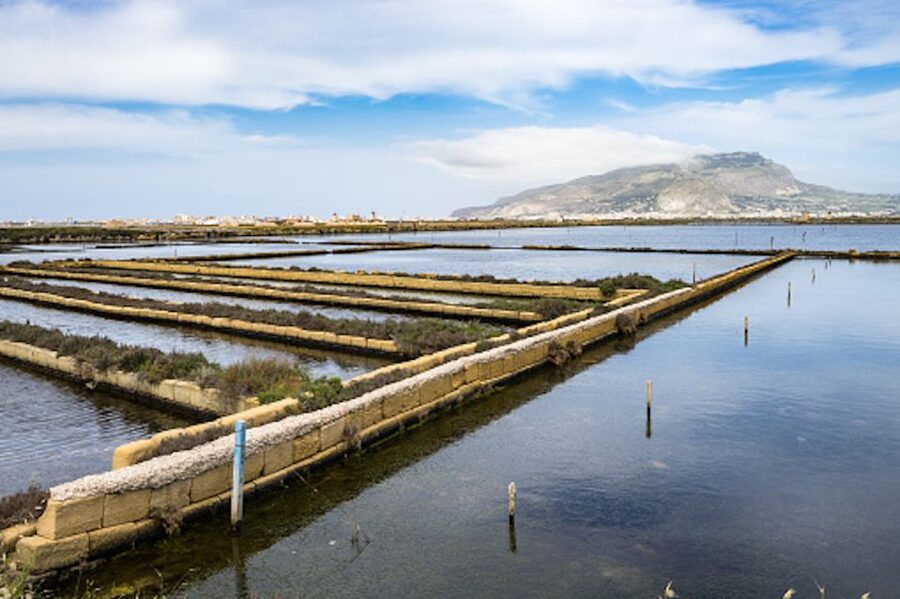
- Stagnone Islands Walk: Tanks, Canals, Windmills, and Salt Piles
- Joining the Salt Harvest: A Hands-On Moment You’ll Remember
- Meet the Salts: Whole Salt and Fior di Sale
- How Salt Becomes More Than Food: Cooking and Cosmetics
- Price and Value: Is $41 Worth It?
- Logistics That Actually Matter: Timing, Weather, and What to Bring
- Who Should Book This Salt Harvest Tour?
- Should You Book? My Practical Take
- FAQ
- How long is the Marsala salt pans and salt harvesting guided tour?
- Where do I meet the guide?
- What’s included in the price?
- Are food and drinks included?
- Do I need to bring my own shoes or boots?
- What language is the tour offered in?
- What happens if the weather is bad?
- Is there a cancellation option?
Key things to love about this Marsala salt-pan experience
- Infersa Mill visit first, so you understand the process before you walk the pans
- Multimedia learning that makes traditional salt work easy to follow
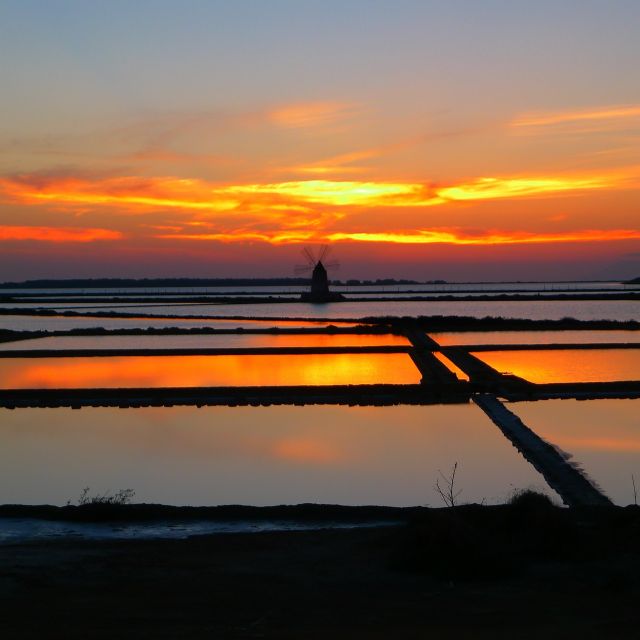
- Windmills, canals, and salt tanks you can actually see and connect to the production steps
- Salt-harvest participation, not just photo time
- Salt varieties you learn to recognize, including whole salt and fior di sale
- Real-world uses for salt in cooking and skin-care, not just souvenirs
Out to the Trapani salt flats
- Marsala: Guided Salt Pans Walk Tour with Windmill Visit
★ 4.7 · 162 reviews - Marsala: Guided tour of the Genna Salt Pans
★ 4.4 · 97 reviews - Guided tour of the Marsala Salt Pans and salt harvesting
★ 4.7 · 60 reviews - Marsala: Wellness in the Pink Salt Pans with Dinner
★ 4.7 · 21 reviews
Marsala Salt Pans: Why This One-Hour Stop Feels Different
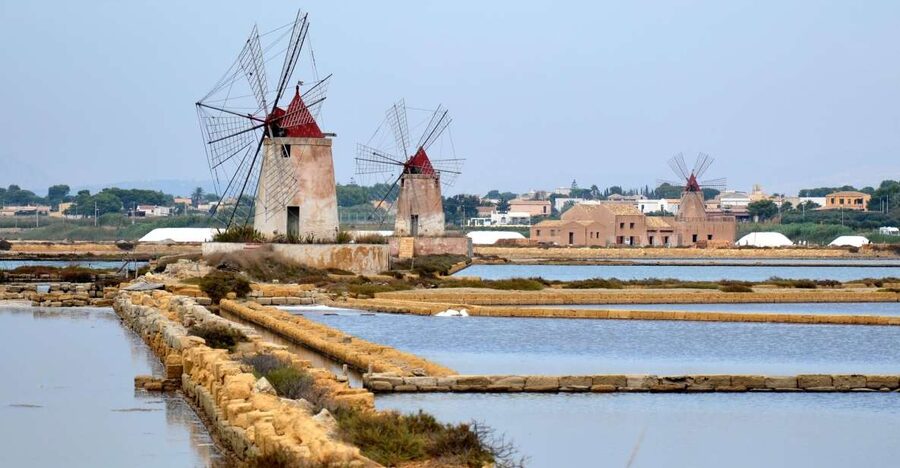
Marsala’s salt pans aren’t a museum display. They’re an active working environment tied to the identity of the area, where water, sun, and human timing do the heavy lifting.
What makes this tour worthwhile is the order. You start with the mill, where you learn what you’re looking at. Then you move along the nature trail with your guide and connect the dots between tanks, small canals, windmills, and the piles of salt. That sequence matters. Without the mill intro, the scene can feel like a grid of odd shapes. With it, you start seeing the system.
Also: this is a compact experience. At $41 per person and around one hour, you’re not signing up for an all-day commitment. For many people visiting western Sicily, that’s exactly the right slot.
Meeting Inside Infersa Mill (and Why Shoe Size Matters)
You’ll meet your guide inside the Infersa Mill. It’s the right kind of start point: you’re sheltered for the explanation parts, and you’re close to where the production story begins.
Included with the tour are boots, which is a big deal in a working salt area. Salt pans can be slick and irregular underfoot, and you don’t want to show up in sneakers that you’ll regret 15 minutes later. The tour asks you for your shoe size when you book, so they can provide the right footwear from the start. Don’t skip this step.
Plan for a short outing. You’ll be outside as the tour moves along the pans and into the harvest activity, so dress accordingly. If you tend to get cold easily, bring a light layer. If you tend to overheat easily, wear breathable clothing and keep an eye on the sun.
The Multimedia Path: Learning Salt Production Without the Confusion
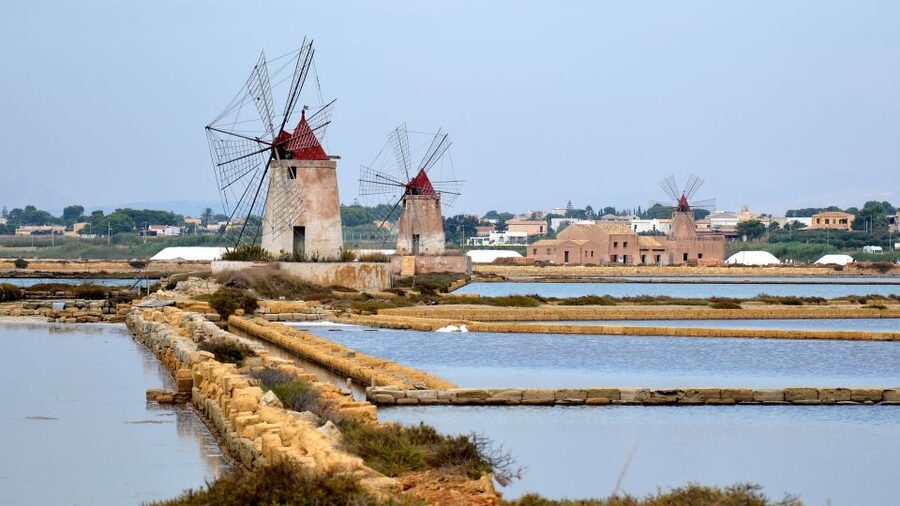
Inside the mill, you’ll follow a multimedia path designed to explain the ancient and precise art of sea salt production. This is where the tour earns its keep. Salt making sounds simple until you try to picture how water becomes usable crystals and why different steps happen at specific moments.
The best part of the mill segment is that it gives you the mental map you need for what you’ll see next. You’re not just handed facts. You’re guided through the logic: why the tanks look the way they do, why the canals matter, and how the final salt piles form.
If you like learning by seeing, you’ll appreciate that the mill experience is built for clarity. It also sets the tone for the rest of the tour, so the salt harvesting doesn’t feel random. It feels like the next step in a system.
Stagnone Islands Walk: Tanks, Canals, Windmills, and Salt Piles
After the mill visit, you continue along a nature trail described as unique. Even if you’re not a nature-trail person, this part is worth it because you’re matching your new knowledge to real features.
Here’s what you’ll be seeing:
- Tanks and small canals that show how water is managed
- Windmills that connect the environment to the work
- Piles of salt that reveal what the process produces
This is also where the sensory side begins to click. Salt pans aren’t loud like city attractions, but they have a specific feel and texture: the air, the geometry, the bright, mineral look of the work areas. A guided tour helps because your guide isn’t just pointing. They’re linking each feature to the production story.
One practical note: it’s outdoors, so your comfort depends on weather. The tour notes that in adverse conditions, the reservation may be subject to changes or modifications. That’s not a red flag—just Sicily. Keep your schedule flexible in case they adjust timing.
Marsala, glass in hand


Joining the Salt Harvest: A Hands-On Moment You’ll Remember
The tour moves from viewing to doing. In the company of your guide, you join the salt harvest, which turns the experience from educational to personal.
This part is often what makes salt tours stick in your memory. The work is simple in concept but satisfying in practice. You’re not just watching salt appear; you’re participating in the moment when salt is collected from the pans.
A couple of things you’ll likely notice during the harvest:
- The work takes care, not speed
- You start understanding why timing and conditions matter
- You get a stronger appreciation for what ends up on your table
Also, a recent highlight people bring up is the ability to take part in the harvest itself, not just observe it. That makes the experience feel more like a living process and less like a staged demonstration.
Meet the Salts: Whole Salt and Fior di Sale
Back in the mill experience, you learn about different types of salt. Two that stand out are:
- Whole salt, described as strictly hand-picked
- Fior di sale, described as purely flavored
These labels matter because they point to how salt is treated and what kind of character you can expect. Whole salt is presented as a hand-picked product, which signals attention to how it’s gathered. Fior di sale is described as purely flavored, which hints at the idea that certain finishing choices can change what you taste and how you use it.
This is where the tour becomes more than a novelty stop. It gives you useful buyer knowledge. After this, you’ll have a clearer sense of what you’re paying for when you see different salt products for sale back home.
How Salt Becomes More Than Food: Cooking and Cosmetics

The tour doesn’t stop at salt production. It connects salt to daily life in two big ways: cooking and cosmetics.
On the cooking side, you’ll learn practical uses—especially how salt features beyond basics. Salt has long been a key ingredient, but the guide helps you understand the difference that salt type can make in real dishes. If you cook even occasionally, this part gives you something you can use immediately after the trip.
On the skin-care side, you’ll hear about salt’s moisturizing power and how it’s used in cosmetics for products aimed at skin well-being. The message here isn’t that salt cures everything. It’s that salt can play a role in everyday care and that the same mineral that seasons food also has applications in beauty products.
This two-lane approach—kitchen and bathroom—helps the experience feel relevant even if you’re not a serious food person. You’ll walk out understanding why salt has economic value far beyond the pantry.
Price and Value: Is $41 Worth It?
At $41 per person for about one hour, this tour is priced like an experience with real labor and a real working setting. You’re paying for:
- A guide (English or Italian)
- Entry to the Infersa Mill
- Boots
- The structured route through the pans and the harvest participation
Food isn’t included, so you’re not paying for a meal. But the benefit is you can slot this tour into a day without it turning into a whole itinerary monster.
For value, think of it like this: many salt visits are mostly scenery. This one ties the scenery to production learning and to the harvest step. That blend—mill education plus hands-on work—justifies the fee more than a quick walk with no context.
If you’re tight on time, this is one of the better ways to get a meaningful sense of Marsala’s salt identity without overcommitting.
Logistics That Actually Matter: Timing, Weather, and What to Bring
Because the tour is short, a few practical points can make your experience smoother:
- Wear the provided boots (and make sure your shoe size was correct at booking)
- Plan for outdoor time as you move between mill and pans
- Bring water if you tend to get thirsty; food and drinks aren’t included
- If you’re planning other stops the same day, allow a little wiggle room because weather can cause changes or modifications
Language is listed as Italian and English, so you can expect the tour to run with interpretation rather than a silent walk.
Also, there’s a common-sense tip: if you’re photographing, keep your phone protected around the work areas. You don’t want to drop anything at the harvest stage.
Who Should Book This Salt Harvest Tour?
You’ll probably love this if:
- You like food-adjacent travel where you learn how products are made
- You enjoy hands-on activities, even if they’re short
- You want a clear, guided introduction to Marsala beyond wine and old streets
- You’re curious about how one ingredient shows up in both cooking and cosmetics
You might skip it if:
- You hate outdoor activities in sun or wind
- You want a long, museum-style explanation with lots of indoor time
- You’re not interested in learning about salt types and uses
For most people passing through Marsala, this fits well as a focused cultural and practical experience.
Should You Book? My Practical Take
Book it if you want a short tour that actually teaches you something and lets you participate in the work. The one-two punch of Infersa Mill education and salt harvest participation is exactly what makes this experience feel more real than a quick photo stop.
Skip it only if you’re not comfortable being outdoors for part of the hour, or if you need food included (since that’s not part of the package). Otherwise, it’s a smart, value-minded add-on that deepens your understanding of Marsala in a way souvenirs can’t.
FAQ
How long is the Marsala salt pans and salt harvesting guided tour?
The tour lasts 1 hour.
Where do I meet the guide?
You’ll meet the guide inside the Infersa Mill.
What’s included in the price?
The tour includes a visit to the Infersa Mill, boots, and a guide.
Are food and drinks included?
No. Food and drinks are not included.
Do I need to bring my own shoes or boots?
No. Boots are included, but you need to provide your shoe size at booking so the correct footwear is available.
What language is the tour offered in?
The guide/host is listed in Italian and English.
What happens if the weather is bad?
If weather is adverse, the reservation may be subject to changes or modifications.
Is there a cancellation option?
Yes. You can cancel up to 24 hours in advance for a full refund.
More Tour Reviews in Marsala






More Marsala Wine Country
More Around Trapani and the Salt Pans


Just added: the newest Marsala tours in our notebook
- Marsala: Kayak Tour in Stagnone di Marsala Nature Reserve★ 5.0 · 4 reviews
- Marsala: Market Tour & Meal at a Local’s Home★ 5.0 · 5 reviews
- Marsala Wellness on the Isola Lunga Salt Pans with Aperitif★ 4.7 · 5 reviews
- Salt tub scrub in Marsala★ 3.7 · 6 reviews
- Evening tour of a historic winery and wine tasting with Sicilian cuisine★ 4.9 · 8 reviews
- Discovering Marsala in the historic Pellegrino Cellars★ 4.3 · 8 reviews
Trapani & Salt Pans, compared.
 ★ 4.2From Trapani: Cruise to Favignana and Levanzo with lunchFrom $532,286 reviews
 ★ 4.2Segesta, Erice and Salt Pans Full-Day Excursion from PalermoFrom $821,791 reviews
 ★ 4.3From Trapani: Day Cruise to Favignana & Levanzo with LunchFrom $461,483 reviews
 ★ 5.0Boat Tour Egadi Day discover Favignana and Levanzo from TrapaniFrom $1391,183 reviews
 ★ 4.2From Trapani: Favignana and Levanzo Mini Cruise with LunchFrom $47814 reviews
 ★ 5.0Favignana and Levanzo, Egadi islands tour by boat from TrapaniFrom $114720 reviews
 ★ 5.0Boat tour to Egadi Favignana and Levanzo islands from TrapaniFrom $102614 reviews
 ★ 5.0Egadi Islands Tour: Favignana and Levanzo from TrapaniFrom $114607 reviews
Browse the lists this tour appears in