
Reviewed · MOUNT ETNA TOURS & SUMMIT
Join us for a Sicilian cooking class in a professional kitchen on Etna, using fresh ingredients from our organic garden
Etna smells like dinner, and the cooking lesson follows that same theme. You’re in a professional kitchen near Mount Etna, using organic-garden ingredients for a true taste of the area. It’s hands-on, chef-led, and built around Sicilian habits you can actually copy at home.
What I love most is how much you get to do yourself, especially with fresh pasta and working the dough and pots on the stove. I also like having the chef right there to guide you through local flavors and the pacing of a real kitchen, not a staged demo.
One consideration: for a stated 2-hour experience at $94, you’ll want to be okay with a class that may include some chef-prepped steps, with time shifting based on the group and what you’re making.
In This Review
- Key highlights
- Where the Etna Kitchen Experience Really Starts
- From Organic Garden to Your Cutting Board
- Hands-On Sicilian Cooking: Pasta, Sauce, and Real Kitchen Rhythm
- Zero-Waste Lessons You Can Use After You Fly Home
- The Kitchen to Table Moment (and What’s Included)
- Price and Value: Is $94 Fair for What You Get?
- Group Size and Languages: Comfort, Attention, and Communication
- Practical Tips for a Smooth Day at Favazza Etna Winery
- Who This Class Fits Best
- Should You Book This Sicilian Cooking Class on Etna?
- FAQ
- Where is the meeting point for the class?
- How long is the cooking class?
- How much does the class cost?
- What’s included in the price?
- What languages are available?
- Is the experience wheelchair accessible?
- What is the cancellation policy?
Key highlights
- Organic-garden ingredients: seasonal veggies, herbs, and local goodies from the slopes of Etna
- Hands-on cooking: you’ll work the dough and cook alongside the chef
- Zero-waste focus: you learn how to use every part of ingredients
- Small group setting: limited to 8 participants in a cozy, professional kitchen
- Meal + wine: the cooked dish is shared at the end with Favazza wine
More ways up the volcano from Catania
- Catania: Mount Etna Morning or Sunset Day Trip with Tasting
★ 4.8 · 4,028 reviews - Catania: Sunset Jeep Tour of Mount Etna and Lava Flow Caves
★ 4.8 · 2,113 reviews - Sicily: Etna and Alcantara Gorges Full-Day Tour with Lunch
★ 4.8 · 1,766 reviews - Mount Etna: Guided Trek 3,000 Meters to the Summit
★ 4.8 · 1,407 reviews
Where the Etna Kitchen Experience Really Starts
This experience meets at Favazza Etna Winery in Sant’Alfio, with the address Via Fossapoliti Formazzo 46, 95010. That matters because it anchors the whole vibe: you’re not just cooking somewhere, you’re part of the Etna food world, right at the foot of the volcano.
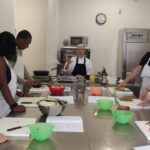
The class itself happens in a fully equipped professional kitchen. That’s a big deal if you care about comfort and flow. A real kitchen setup means you’re working in a space designed for cooking—not a cramped room where everything feels like a class set.
You’ll likely notice the tone is practical and friendly. The chef guides you, but the whole point is that you’re not watching the work happen from the sidelines. The kitchen feels built for small-group learning, which helps if you want questions answered quickly.
From Organic Garden to Your Cutting Board
The star of the sourcing is the garden. The class uses fresh ingredients straight from the organizers’ organic garden, including seasonal vegetables and aromatic herbs grown on Etna’s slopes. In plain terms, it’s a “cook what’s in season” approach, and on Etna that can change the whole character of a dish from week to week.
You’ll also get a chance to connect ingredients to technique. Fresh produce behaves differently than supermarket produce—texture, water content, and flavor are all more alive. That’s why the class doesn’t feel like a “recipe only” experience. It’s more like learning how Sicilian cooking tastes when the ingredients are actually fresh.
In at least one real class flow, there’s also a short garden stop to collect what you’ll use. If your time is tight on the day, plan to arrive early enough to settle in. When a group starts late, the kitchen pace tightens and you may end up doing fewer steps than you imagined.
Hands-On Sicilian Cooking: Pasta, Sauce, and Real Kitchen Rhythm
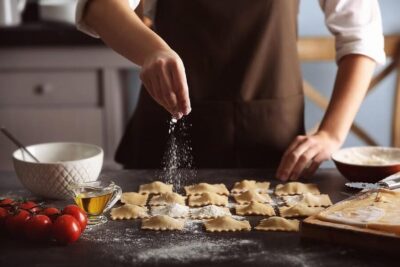
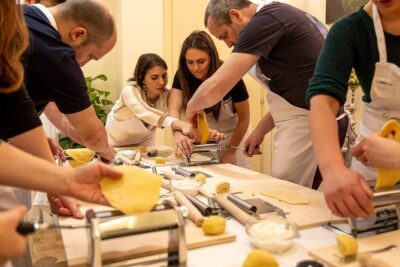
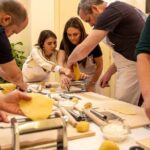
This is a cooking class where you truly get your hands involved. The experience includes the chance to make fresh pasta, and you’ll work dough and pots as the chef guides the process. That hands-on element is what makes it feel like a skill-building session, not a food tasting.
The chef is by your side throughout, and that’s important for two reasons:
First, local Sicilian cooking has its own logic—how flavors balance, and how steps connect. Second, a professional kitchen needs timing. If the session is limited to 2 hours, the chef will likely handle some parts so the meal still lands on time.
One example mentioned for the style of dishes is Pasta al Norma, which is a classic Sicilian combination and a great way to learn the island’s flavor thinking. Even if your exact dish varies, the structure tends to follow the same idea: you’ll do core prep and key hands-on steps, while the chef keeps the dish moving toward a finished plate.
Also, the class includes a zero-waste angle. The point isn’t “be perfect.” It’s learn how to think beyond discarding. In a kitchen lesson, that changes how you handle ingredients—scraps become part of the plan, not an afterthought.
Zero-Waste Lessons You Can Use After You Fly Home
You’ll be taught how to use every part of the ingredients, which is one of the most practical parts of the whole experience. In everyday cooking, zero-waste tips are often vague. Here, you’re learning during the same process that creates your meal, so the lesson doesn’t float in theory.
What to look for during the class:
- How the chef talks about ingredients beyond the obvious “usable pieces”
- Whether you get to participate in steps that prevent waste
- How the handouts reinforce those choices after class
Even if you never cook at Etna-level produce intensity, you can still apply the mindset. When you understand why something gets used, you’re more likely to plan your prep and buy smarter in your own kitchen.
This is also where the garden-to-kitchen connection helps. When you’re cooking with ingredients that were grown for flavor and picked fresh, you’re more naturally motivated to respect them and not treat leftovers as garbage.
Hands in the flour, Catania style
The Kitchen to Table Moment (and What’s Included)
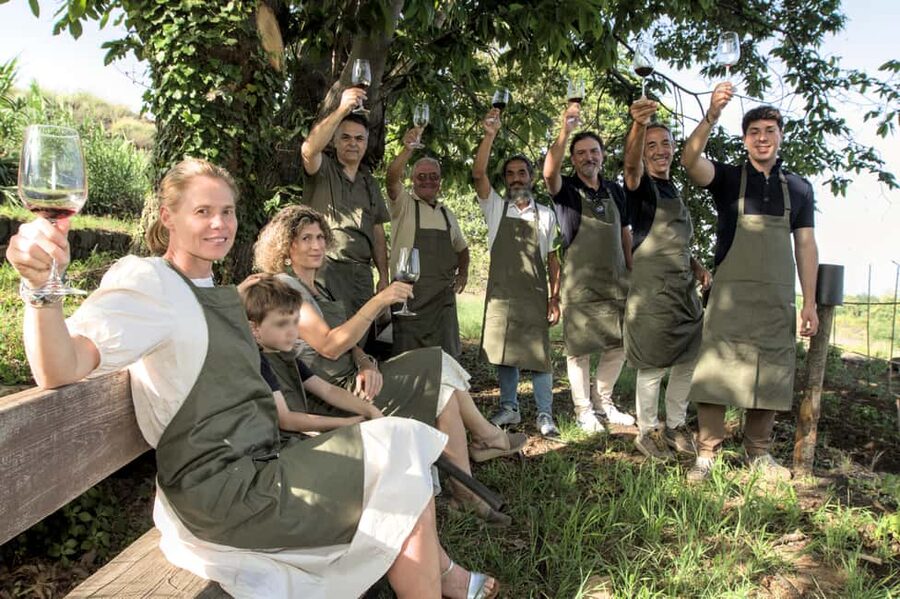
At the end, you eat together. The cooked dish is served with care, and it’s paired with wine from the Favazza side of the story. The class includes a lunch element with Favazza wine, and you’ll be provided a glass of wine as part of the meal.
In some sessions, the wine is shared family-style rather than individually portioned. That can be a plus if you like a relaxed table vibe, and it can be a consideration if you’re budgeting alcohol or prefer strict single-serves.
You’ll also get materials during the cooking class: a handout, apron, dishcloth, pencil, and notebook. The handout and notebook combo is a subtle but useful detail. It means you can take the lesson home in a way that’s more than just photos.
One timing note to keep in mind: the experience is listed as 2 hours, but the actual pace can depend on how the garden portion and the hands-on steps line up. If the chef has to manage different skill levels, or if the group starts later, you might finish quicker than a “full two-dish cooking day” style of class.
Price and Value: Is $94 Fair for What You Get?
Let’s talk straight about value. The class is priced at $94 per person for a duration of 2 hours, including the cooking lesson and lunch with Favazza wine, plus the prep materials.
Where the value feels strongest:
- You’re paying for a hands-on skill-building class in a professional kitchen
- You get garden-sourced ingredients with a zero-waste teaching focus
- Small group size (max 8) helps the chef guide you rather than rushing you
Where the value can feel weaker for some people:
- If you’re expecting multiple dishes or a longer multi-course flow, the 2-hour format can feel tight
- If you end up mostly doing only one major “from-scratch” component (like pasta) while other parts are chef-prepped, you may feel like you did less than you imagined
The sweet spot is this: if you want one authentic Sicilian dish, real hands-on pasta work, a chance to learn zero-waste habits, and a table meal with wine, $94 can make sense. If you want a marathon of multiple dishes and lots of separate prep stations, you may want to look for a longer format.
Group Size and Languages: Comfort, Attention, and Communication
The class is limited to 8 participants, which is the right scale for a hands-on lesson. In small groups, you’re less likely to wait for your turn at the station, and the chef can circulate.
Language coverage is Italian and English. That matters if you want to follow the why behind the steps, not just copy the final moves. A bilingual setting also helps if your group includes different comfort levels with Italian.
If you’re sensitive to timing or coordination, the small group format can help. Fewer people means the chef can keep things moving without losing control of the kitchen rhythm.
Practical Tips for a Smooth Day at Favazza Etna Winery
Start with meeting point awareness. The meeting location is Favazza Etna Winery in Sant’Alfio at Via Fossapoliti Formazzo 46. If you arrive late, it affects more than just your start time. In a timed 2-hour class, late arrivals compress everything else.
Wear clothes that are comfortable for hands-on cooking. Even with an apron provided, you’ll still be working with flour, dough, and stove-area heat. You don’t need to dress fancy for a kitchen day.
Also, bring the mindset that this is a guided process. The chef will handle some steps to keep the dish on schedule, but you’ll still get meaningful participation—especially with the pasta and the cooking action at the stove.
Who This Class Fits Best
This Sicilian cooking class on Etna is a strong match if you:
- Want authentic flavors tied to seasonal ingredients from an organic garden
- Like hands-on lessons where you do the work, not just watch
- Care about practical habits like zero-waste cooking
- Prefer small-group attention with an expert chef
It may not be your best choice if you’re the type who needs a long, multi-dish cooking marathon. With a 2-hour window, the class is more likely to focus on one main dish with key hands-on components, rather than a full series of different preparations.
Should You Book This Sicilian Cooking Class on Etna?
Book it if you want a compact, small-group lesson that connects Etna’s garden produce to Sicilian cooking habits, with real hands-on time and a meal at the end with Favazza wine. The value feels strongest when your goal is learning how the ingredients and technique work together.
Skip (or choose a longer format) if you’re expecting multiple full dishes cooked from scratch end to end, or you’re easily disappointed by tighter timing. In a 2-hour class, the kitchen will optimize for finishing and sharing the meal together.
If you’re flexible, hungry, and ready to cook, this is a great way to spend a couple hours on Etna that doesn’t feel touristy. It’s food, technique, and local ingredients in one room—then you sit down and eat what you made.
FAQ
Where is the meeting point for the class?
You meet at Favazza Etna Winery, Via Fossapoliti Formazzo 46, 95010 Sant’Alfio CT, Italy.
How long is the cooking class?
The experience lasts 2 hours.
How much does the class cost?
The price is $94 per person.
What’s included in the price?
You join a cooking class with an expert chef and enjoy a lunch with Favazza wine. You also receive materials during the class: handouts, an apron, dishcloth, pencil, and notebook.
What languages are available?
The instructor speaks Italian and English.
Is the experience wheelchair accessible?
Yes, it’s wheelchair accessible.
What is the cancellation policy?
You can cancel up to 24 hours in advance for a full refund.
More Tour Reviews in Catania

More Cooking Classes to Book

More Etna Summit Treks We Have Walked
Just added: the newest Catania tours in our notebook
- Transfer Catania / Agrigento Airport★ 5.0 · 3 reviews
- Sicily private shore excursion – Etna and Taormina with personal driver★ 3.5 · 3 reviews
- Sunset Trekking on Mount Etna★ 5.0 · 3 reviews
- Private Transfer from Catania to Palermo or vice-versa with stop★ 5.0 · 3 reviews
- From Syracuse: Mount Etna Volcano Morning Trekking Tour★ 5.0 · 3 reviews
- Catania: Guided Street Food Tour with Tastings★ 5.0 · 3 reviews
Mount Etna Tours & Summit, compared.
 ★ 4.8Catania: Mount Etna Morning or Sunset Day Trip with TastingFrom $704,028 reviews
 ★ 4.8Catania: Sunset Jeep Tour of Mount Etna and Lava Flow CavesFrom $712,113 reviews
 ★ 4.8Etna and Alcantara Gorges Full-Day Tour with LunchFrom $1051,766 reviews
 ★ 4.7Etna: summit craters trekking with volcano guide 3350mtFrom $771,712 reviews
 ★ 4.9Catania: Mount Etna Trekking Tour Beyond the Tourist TrailsFrom $811,596 reviews
 ★ 4.8Mount Etna: Guided Trek 3,000 Meters to the SummitFrom $1131,407 reviews
 ★ 4.8Catania: Etna Sunset Tour with Pickup and Drop-offFrom $711,348 reviews
 ★ 4.8Etna Sunset Tour: Volcano trek, Cave & tasting from CataniaFrom $701,290 reviews
Browse the lists this tour appears in