
Reviewed · PALERMO CITY TOURS
Full Day Exclusive Excursion to Segesta, Erice & Trapani Salt Flats from Palermo
Three worlds of Sicily in one day. You’ll connect the Greek temple of Segesta, the medieval hill town of Erice, and the salt-making country around Trapani, all in a tight 7 to 8 hours.
I love how the day mixes classic architecture with real working scenery. Segesta delivers that dramatic hilltop feel, and Erice gives you walkable streets plus almond treats that taste like a souvenir.
One thing to plan for: salt viewing depends on season and timing. The salt pans can be less active in some months, and Trapani may feel quiet if you arrive during siesta hours.
In This Review
- Key highlights worth your time
- From Palermo at 8:30: how the day actually runs
- Segesta’s hilltop temple: the star you’ll remember
- Erice and Castello di Venere: medieval lanes plus big views
- Trapani salt flats and the Museo del Sale: the working landscape of salt
- Why Trapani can feel hit-or-miss
- Private tour value: what you gain (and what you should check)
- Food and sweet stops: what to plan for
- Timing, weather, and what to wear
- Who this tour fits best
- Should you book the Palermo to Segesta, Erice, and Trapani salt flats tour?
- FAQ
- What’s the duration of this excursion from Palermo?
- How much is it, and is it private?
- What time does pickup happen in Palermo?
- What’s included in the price?
- What isn’t included?
- Are there any stops with free admission?
- Do I need a special ticket for Segesta?
- Is the tour in English?
- What’s the cancellation policy?
- When do I get confirmation?
Key highlights worth your time
- Segesta’s temple sits above it all: big Greek proportions with an airy, open setting
- Erice is built for slow wandering: cathedral, towers, lanes, and that postcard view toward Trapani
- Salt at Trapani is a story, not just a photo stop: you’ll hear how monopolies and trade shaped production
- Two salt stops, two vibes: a museum session plus time around the saline area and windmills
- Private pickup means less stress: you start at 08:30 and keep your day in one group
- Food moments can be part of the ride: Sicilian pastries like cannoli and Genovese-style treats come up often
The rest of what Palermo puts on
- Palermo: NO Mafia Walking Tour
★ 4.8 · 2,431 reviews - Palermo: Hop-on Hop-off Bus Tour 24-hour Ticket
★ 3.9 · 2,410 reviews - Palermo Original Street Food Walking Tour by Streaty
★ 5.0 · 2,105 reviews - Segesta, Erice and Salt Pans Full-Day Excursion from Palermo
★ 4.2 · 1,791 reviews
From Palermo at 8:30: how the day actually runs
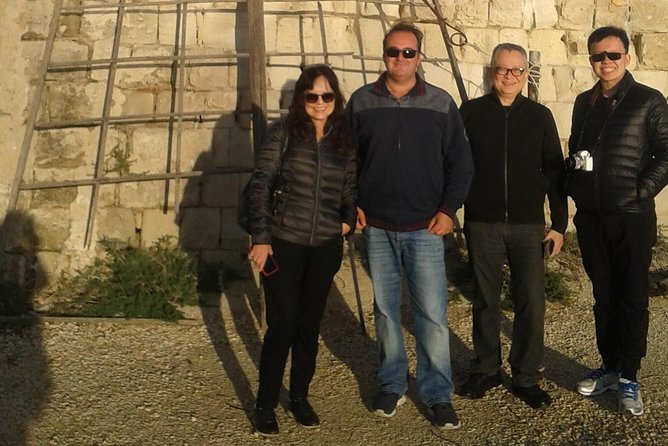
This is an exclusive private tour for your group (up to 3 people), starting with pickup around 08:30 a.m. across Palermo hotels, B&Bs, ports, and similar accommodations. The tour runs about 7 to 8 hours, so you’re looking at a full day with a lot of moving—but not the kind of constant hustling that ruins photos.
The transport is in a licensed air-conditioned vehicle, so you’re not baking in the back seat while you wait for the next stop. You’ll also get a mobile ticket, and the tour is offered in English.
One practical note: the listing includes a professional English-speaking driver, while a licensed guide is listed as not included. In practice, you should treat this as a day where you’ll hear plenty of commentary during the drive and at stops, but double-check what level of formal guiding you’re booking so expectations match reality.
The day is best for people with moderate walking ability. Erice is on a hill, and even when you aren’t climbing like a mountaineer, you’ll want comfortable shoes and a bit of stamina.
Segesta’s hilltop temple: the star you’ll remember
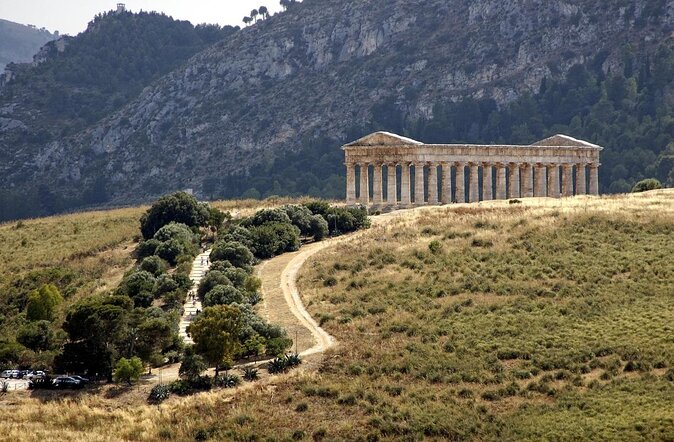
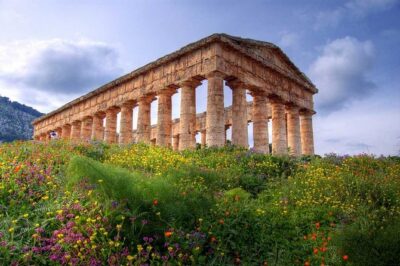
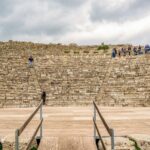
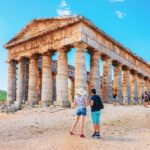
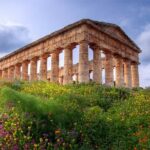
Segesta is the kind of place that makes you stop talking and just look. The Tempio di Segesta is often called the Great Temple, built during the last thirty years of the 5th century BC. It has the classic Greek “grammar” you expect—hexastyle on the front, with six columns on the short side—and the preservation is strong enough that you can still read the structure clearly when you stand close.
Plan your hour here around two goals:
1) See the whole temple from a distance first so you understand the setting on the hill.
2) Then get in for the closer details and proportions.
Admission for Segesta is not included. The temple ticket runs €18.50 per person, so if you’re budgeting, add that on top of the tour price.
A small heads-up that helps: Segesta can also involve extra time if you want the more extended views (there’s mention of a short ride option for reaching the theater area for an extra charge). If you’re short on time that day, focusing on the temple itself is still a very complete experience. And even in less-than-perfect light, the temple holds up because the architecture is doing the heavy lifting.
Erice and Castello di Venere: medieval lanes plus big views
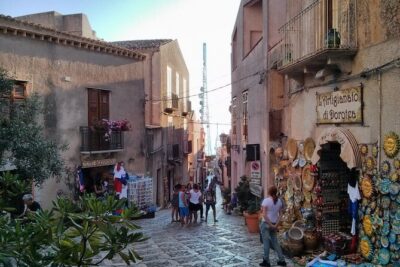
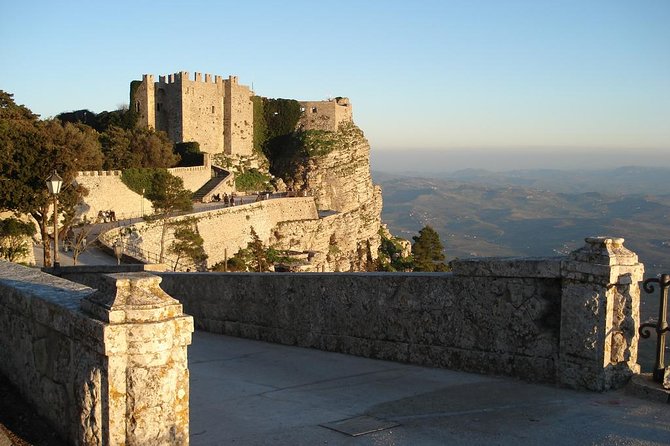
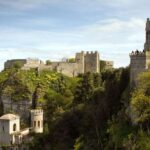
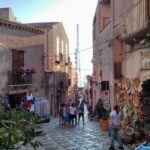
Erice is where the day turns from stone-and-history to a proper hill town stroll. You’ll visit the Castello di Venere area, a medieval cluster sitting around 760 meters above sea level, surrounded by cyclopean walls—huge, ancient-looking stones that make you feel like you’re walking inside a fortress.
What makes this stop work is the mix:
- You’ll move through stone paths and small lanes that feel gently storybook.
- You’ll pass key points tied to the town’s medieval layout, including a temple dedicated to Venus, the castle and towers, and the cathedral.
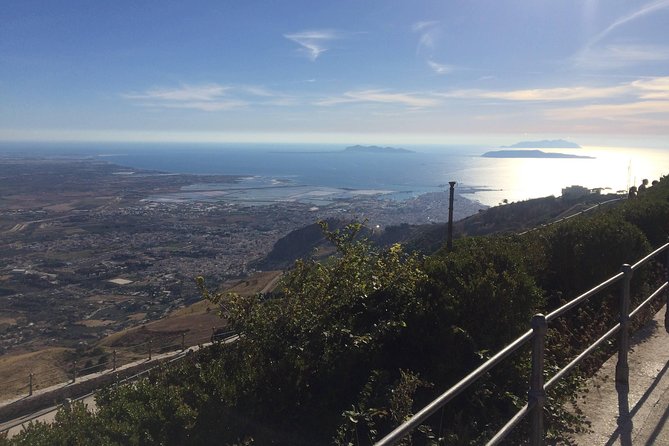
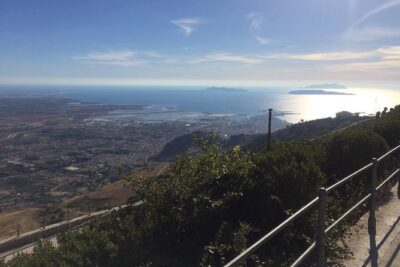
Then comes the moment Sicilians love for a reason: the view. From Erice you can see Trapani’s curved, sickle-like coastline and also look toward Monte Cofano reserve and Custonaci below. Even if fog rolls in (it happens), you’re still in a magical town. Heavy fog can soften the view, but it doesn’t erase the atmosphere.
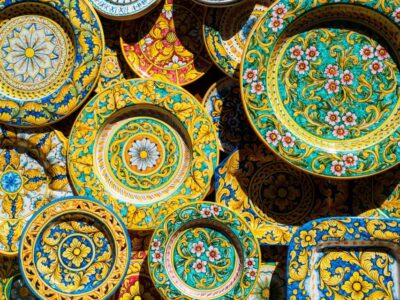
This stop includes time for tasting. Almond sweets are a major thing in Erice, and it’s smart to plan on eating at least a small portion here rather than trying to save everything for later. One guide example that comes up often is Umberto, who’s known for steering people toward the best cannoli and sweet treats around town.
Also, Erice involves walking. Even if the pace is relaxed, you’ll climb and descend a bit. If your legs run cold, bring layers; hills turn breezy fast.
Trapani salt flats and the Museo del Sale: the working landscape of salt
Now for the Trapani section—this is where the tour earns its name, because salt isn’t just “an interesting texture to photograph.” It’s a trade system, a labor system, and a long timeline of who controlled production.
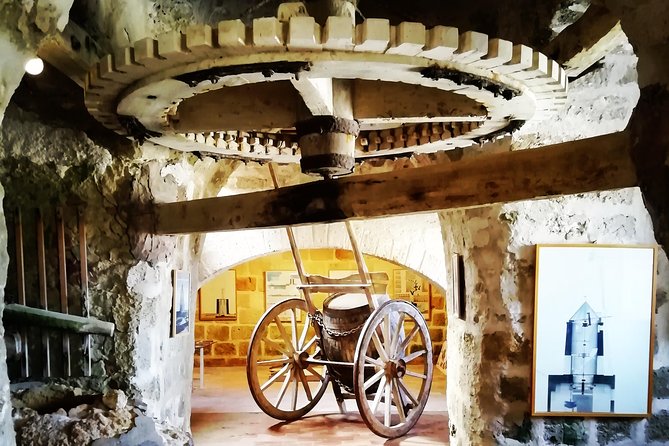
You’ll visit the Museo del Sale, with context that runs from Phoenician presence to Norman domination, including a salt monopoly tied to state control. Under the Spanish crown, salt production hit its peak and helped turn Trapani into a major European trade center for this precious commodity. You’ll also hear how production and ownership shifted over time, then how industrial salt and global competition contributed to decline—plus how the world wars altered what could continue and what couldn’t.
There’s an admission detail here: the Museo del Sale ticket isn’t included.
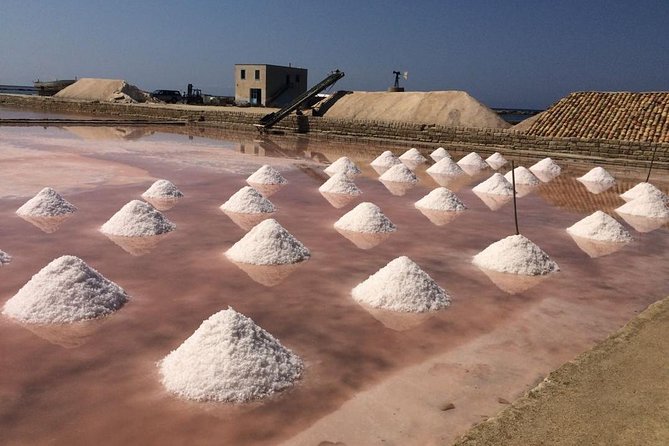
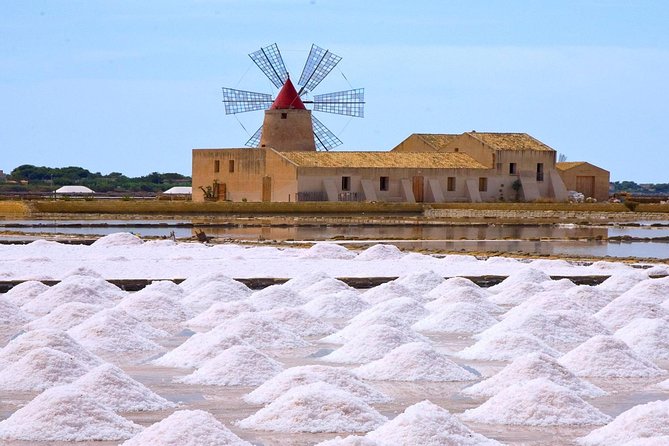
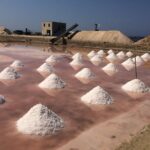
After that, you’ll head to the Riserva Naturale Saline di Trapani e Paceco. This part is listed as free for admission, and it includes the chance to visit a salt museum inside an old wind mill. This is a big reason the salt portion feels more than one-note. You’re not just standing near mounds; you’re understanding how the place works.
Two things can affect what you actually see:
- Seasonality: salt pans are more visually active when salt harvesting is underway.
- Timing: if you arrive during quieter hours, you might see less movement around the pans.
That leads to my practical advice. If you care about seeing active salt work, ask your guide what season will let you best observe. If your day lines up with low activity, the museum context still makes the area worth it—you’ll just spend more time learning than watching.
Out to the Trapani salt flats
Why Trapani can feel hit-or-miss
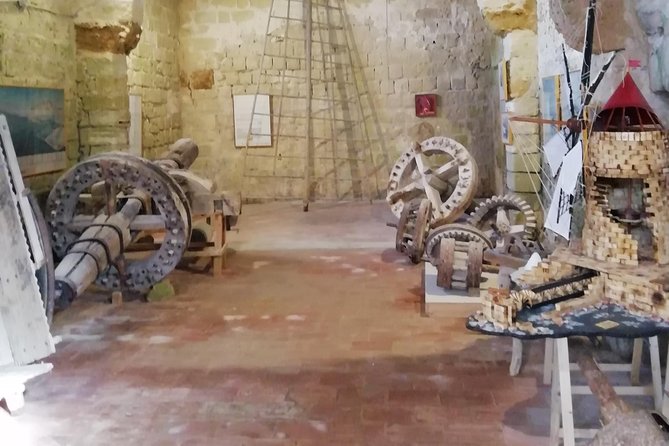
Trapani is the final anchor, and it can swing between charming and slightly inconvenient depending on timing. One of the biggest real-world factors is that towns in this region can feel slowed down during siesta time, when shops and streets close earlier than you’d expect.
So what should you do with that? Don’t plan on an extended shopping mission in Trapani. Treat it more like:
- a short chance to see the old center,
- a chance to eat something nearby if you’re hungry,
- and then time for the salt area.
If you get stuck in a closed-town moment, that doesn’t mean the day is ruined. The salt views and windmill museum are still there, and the day’s main “wow” targets—Segesta and Erice—should already have hit.
Also, lunch isn’t included in the price. The upside is flexibility: you can choose what works with your hunger level and the pace your guide sets.
Private tour value: what you gain (and what you should check)
For $660.13 per group up to 3, you’re paying for convenience and for a day that isn’t designed to squeeze you with strangers. That’s not a bargain price by Italian standards, but it can be good value if:
- you want hotel pickup and less time figuring out trains or rental logistics,
- you care about getting the story behind each stop,
- and you’d rather move as a unit than manage a self-guided route.
The private format also matters on hills like Erice. If your group needs more time for photos or wants to skip a section, a flexible guide can often adjust. Cristian and Umberto are two guide names that come up with a reputation for being accommodating and attentive to timing.
But here’s what to check before you commit: confirm what “guide” means for your specific booking. The tour includes a professional English-speaking driver, and it’s built for commentary at stops—but since a licensed guide is listed as not included, you’ll want clarity on whether you’ll have a certified guide for the full day or only certain segments.
If you prefer a strictly structured, museum-guide experience, this is the one line item to verify. If you’re happy with strong driving commentary and a smooth plan, you’ll likely find it works well.
Food and sweet stops: what to plan for
This is a Sicily day, so you should budget time and stomach space for local food. Food and drinks are not included, but tasting culture is baked into the experience through frequent snack opportunities.
Cannoli and Genovese-style cookies show up again and again with guides pointing you toward the best places. One named example in Erice is Pasticceria Maria Grammatico. Even if you don’t end up there, the bigger point is this: don’t treat sweets as an afterthought. Grab a bite when the guide suggests it, because that’s when you’ll taste something made for this town, not just something convenient.
If you eat breakfast lightly, I’d also carry a small snack for the car. A day like this can move faster than you expect between climbs, viewpoints, museum context, and photo pauses.
Timing, weather, and what to wear
This is a full day outdoors with some walking on uneven surfaces and steps. Even on a sunny day, Erice sits high enough to feel cool in the breeze. On foggy days, you might not get the full distance view—but the town still feels romantic and strange in a good way.
So:
- Wear comfortable shoes with grip.
- Bring a light layer for the hilltop.
- If you’re prone to headaches, consider sunglasses even when it’s not bright; glare can bounce off pale stone.
If heavy fog is forecast, adjust expectations for the Trapani-distance panorama. Don’t cancel your plan over it. The charm of Erice still comes through in the streets and churches, and the salt museums still do their job.
Who this tour fits best
I think this works best for three types of people:
- You want a guided day that feels private, with pickup and transportation handled.
- You like architecture and viewpoints but also want something practical and real, like salt production.
- You prefer a plan with flexible pacing instead of a strict museum schedule.
It might be less ideal if:
- You’re only going for photo-heavy salt pans and need active harvesting to impress you.
- You dislike paying separate admissions (Segesta ticket is added, and the Museo del Sale ticket isn’t included).
If you’re traveling as a couple or a small family group, the private setup can make the day feel calmer. If you’re a solo traveler, you may want to compare whether the cost per person still feels fair for your style of touring.
Should you book the Palermo to Segesta, Erice, and Trapani salt flats tour?
Book it if you want one focused day that hits the big “West Sicily” icons without messing around with transport. Segesta + Erice alone are worth a long day, and the salt portion adds real context that makes the scenery meaningful.
Consider alternatives or ask extra questions if you’re very sensitive to:
- seasonal salt visibility,
- added admissions (especially Segesta at €18.50 per person and Museo del Sale),
- and the meaning of “licensed guide” for your booking.
If you like your Sicily days guided, organized, and still human, this private itinerary is a solid match. It’s the kind of route where the drive time doesn’t feel wasted, because the day’s storyline keeps moving from temple to hill town to the salt that built an economy.
FAQ
What’s the duration of this excursion from Palermo?
The tour runs about 7 to 8 hours, depending on the timing of transfers and traffic conditions.
How much is it, and is it private?
It costs $660.13 per group for up to 3 people, and it’s an exclusive private tour just for your group.
What time does pickup happen in Palermo?
Pickup is offered starting at 08:30 a.m., with drop-off back to your accommodation after the tour.
What’s included in the price?
Included features are a professional English-speaking driver, hotel pickup and drop-off, transport by licensed air-conditioned minivan or car, the private tour format for your group, and round trip service.
What isn’t included?
Food and drinks aren’t included. Entrance fees also aren’t fully included: the Segesta temple ticket is €18.50 per person, and tickets for parts marked as not included (like Museo del Sale) may be paid on-site. A licensed guide is also listed as not included.
Are there any stops with free admission?
Yes. Castello di Venere in Erice and Erice viewing time are listed as free, and Riserva Naturale Saline di Trapani e Paceco is also listed as free admission.
Do I need a special ticket for Segesta?
Yes. The Segesta temple entrance ticket is not included, and the listed price is €18.50 per person.
Is the tour in English?
Yes, it’s offered with English-language service.
What’s the cancellation policy?
You can cancel for a full refund up to 24 hours before the experience’s start time.
When do I get confirmation?
You should receive confirmation within 48 hours of booking, subject to availability.
More of Segesta and Erice
More Around Trapani and the Salt Pans

More Palermo, Start to Finish

Just added: the newest Palermo tours in our notebook
- Private Transfer from/to Trapani★ 5.0 · 3 reviews
- Private Tour from Palermo to Monreale, Santa Rosalia and Mondello★ 5.0 · 3 reviews
- Palermo: Cannolo & Cassata MasterClass★ 5.0 · 3 reviews
- Camporeale: Sallier de La Tour Wine Discovery Tour★ 4.6 · 3 reviews
- Sicily … A Love of a Lifetime★ 4.5 · 3 reviews
- Sicilian Cooking Class in Palermo – Private Option★ 5.0 · 3 reviews
Palermo City Tours, compared.
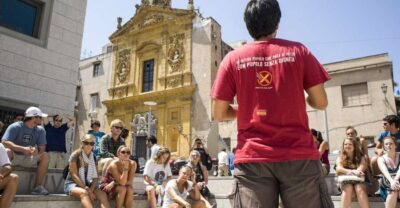 ★ 4.8Palermo: NO Mafia Walking TourFrom $402,431 reviews
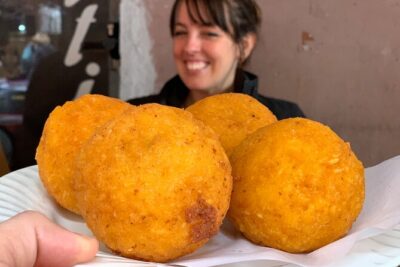 ★ 5.0Palermo Original Street Food Walking Tour by StreatyFrom $832,105 reviews
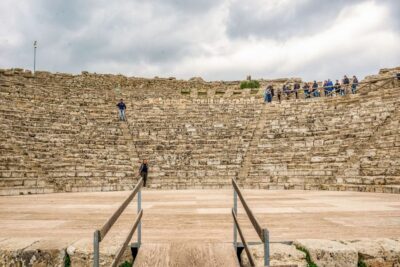 ★ 4.2Segesta, Erice and Salt Pans Full-Day Excursion from PalermoFrom $821,791 reviews
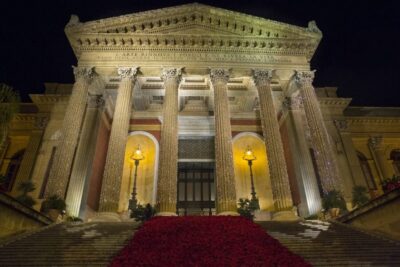 ★ 4.5Palermo: Teatro Massimo Opera House Guided TourFrom $141,573 reviews
 ★ 4.9Palermo: Street Food and History Walking TourFrom $571,486 reviews
 ★ 4.2From Palermo: Monreale and Cefalù Half-Day TripFrom $711,354 reviews
 ★ 4.2Palermo: Agrigento and the Valley of the Temples Day TourFrom $771,240 reviews
 ★ 5.0Palermo No Mafia walking tour: discover the Anti-mafia culture in SicilyFrom $391,011 reviews
Browse the lists this tour appears in