
Reviewed · MOUNT ETNA TOURS & SUMMIT
Volcanological excursion of the wild and less touristy side of the Etna volcano
Etna on the quiet north side changes your scale. I love the wild, less-touristy feel of Piano Provenzana and the volcanic terrain you don’t get on the busier south, and I especially love the way guides explain what you’re seeing, like Pepe and Poldo did for other groups. One thing to think about: this is a real hike at altitude, with steep crater-edge sections that can trigger dizziness for some people.
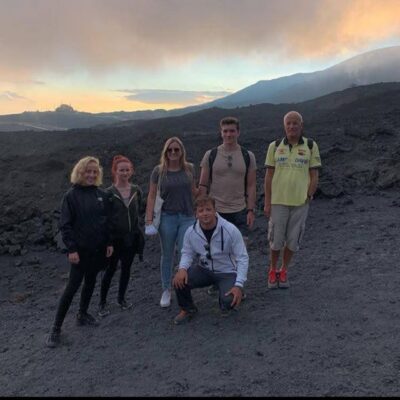
You start early and move with a tight group (maximum 20), so the day stays focused. I like that the tour provides practical climbing/hiking support: helmets, trekking poles, and proper warm layers, plus an insurance safety net and admission to Etna. The only real tradeoff is that you’ll still need to do your part—good shoes, water, and a calm head around volcanic dust and crater edges.
In This Review
- Quick hits before you go
- Entering Piano Provenzana: Etna’s north-side starting point
- The 4×4 ride that sets the mood for the whole day
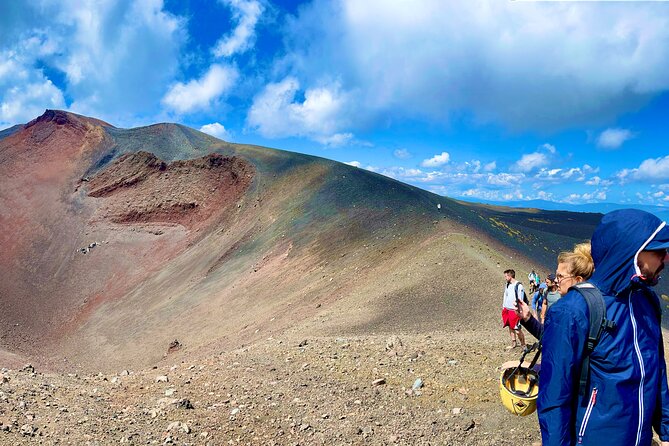
- Crateri Sommitali at Piano delle Concazze (the big panorama moment)
- The crater-edge hike (~7 km): lava, ash, and history you can walk on
- Why this feels more authentic: Etna’s north side without the churn
- Price and value: what $71 covers, and what you should plan for
- What to pack and how to prepare (so the volcano stays fun)
- Who should book this north Etna hike (and who should skip it)
- Should you book Guide Vulcanologiche Etna Nord’s wild north Etna trip?
- FAQ
- What time does the tour start?
- Where do we meet for the excursion?
- How long is the excursion?
- Is entry to Mount Etna included?
- What is included with the price?
- What extra costs should I plan for on-site?
- What physical fitness level do I need?
- Are contact lenses recommended?
Quick hits before you go
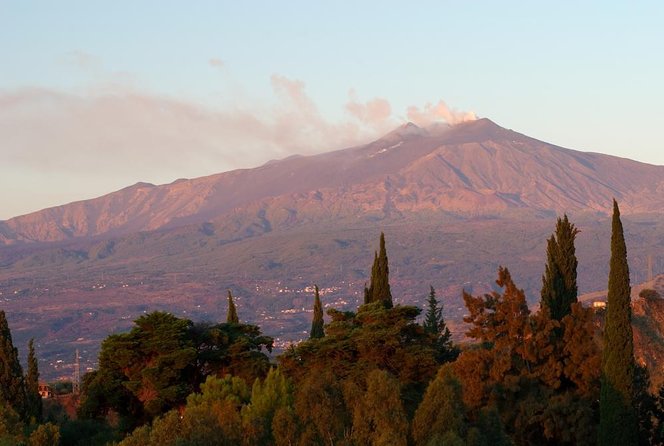
- Piano Provenzana (1,800 m): a quieter Etna “base camp” where forest meets fresh lava fields
- Authorized 4×4 access: you ride up Etna’s north road to places most visitors never reach
- Crateri Sommitali viewpoint: stop at Piano delle Concazze by the Etna Nord Volcanological Observatory
- Crater-edge hike (~7 km): walk ash and lava flats, plus historic crater sites
- Real vulcanology: INGV monitoring points and clear explanations from certified volcanological guides
- Small-group pace: calm, controlled hiking with equipment and help when footing gets tricky
More ways up the volcano from Sicily
- Etna Morning Trip
★ 4.5 · 1,241 reviews - Mt. Etna nature and flavors half day Tour from Catania
★ 5.0 · 545 reviews - Etna excursion 3000 meters with 4×4 cable car and Trekking
★ 4.5 · 504 reviews - Mount Etna Adventurous Hiking Tour with Equipment
★ 4.5 · 439 reviews
Entering Piano Provenzana: Etna’s north-side starting point
Piano Provenzana is where the tour’s “wild Etna” vibe begins. You reach it by paved roads on Etna’s north side, and you’ll find the practical stuff you want at altitude: small cafés/bars for a quick coffee, souvenir shops, restrooms, and paid parking in blue-striped spaces.
This area matters because it’s not a crowded postcard. It sits at 1,800 meters, surrounded by pine forest, with stark lava flows in plain sight. On a drive into town you can already see the contrast: dark, jagged rock next to living woodland. That mix is a big part of why the north side feels more intimate.
Also, this place was reshaped by the October 27, 2002 eruption. Older tourist infrastructure disappeared, and what survived as ruins helps you understand how violent and fast Etna can change a landscape. Even if you’ve been to Etna before, arriving here (instead of heading straight to the more famous access points) gives you a very different first impression.
Practical tip: If you’re driving, plan on paying for parking on-site. The tour isn’t telling you to park for free.
The 4×4 ride that sets the mood for the whole day
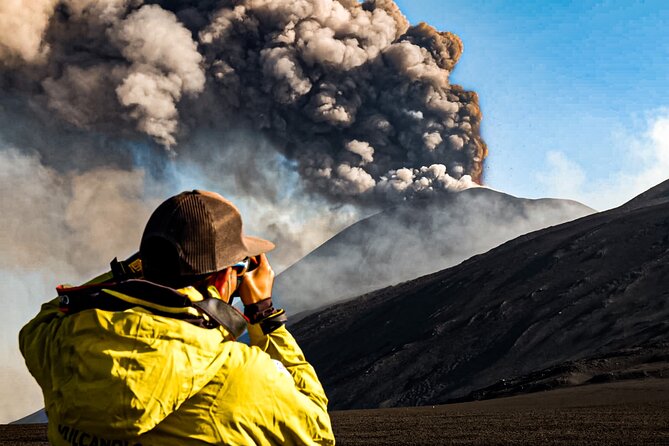
After a short briefing at Piano Provenzana, the day shifts gears. You board authorized vehicles and head up Etna’s north road—crossing forest and wide lava fields from the 2002 eruption. This is not just scenic transport. It’s your route into the part of Etna that stays out of the usual tourist flow.
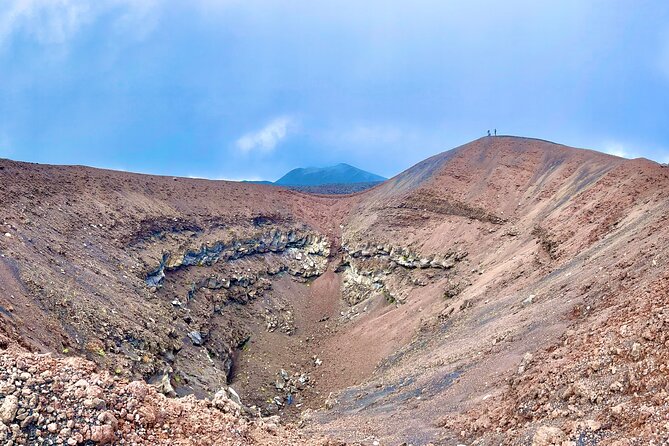
You’ll pass visible remnants of what used to be there—ruins of older facilities, including a semi-buried hotel roof that you’ll remember because it looks impossible until you see it with your own eyes. As you climb, the terrain turns more lunar: broad flows, sharp fractures, and places where craters sit tens of meters deep.
You also get the science layer. Monitoring stations from INGV appear in the landscape, and your guide uses that as a jumping-off point to explain how Etna behaves and how observations are made when everything looks chaotic from ground level.
Cost note that affects value: the tour price covers a lot, but there’s an on-the-spot supplement tied to these 4×4 vehicle sections. The information you get says €50 per person is paid on-site for the vehicle portions (split across different altitude ranges). Add that into your budget, or the trip can feel cheaper on paper than it is in real life.
Crateri Sommitali at Piano delle Concazze (the big panorama moment)
The tour’s high-altitude feeling starts to click when you reach Piano delle Concazze (about 2,860 m) near the Etna Nord Volcanological Observatory. This is your stop where views take over, especially on clear days.
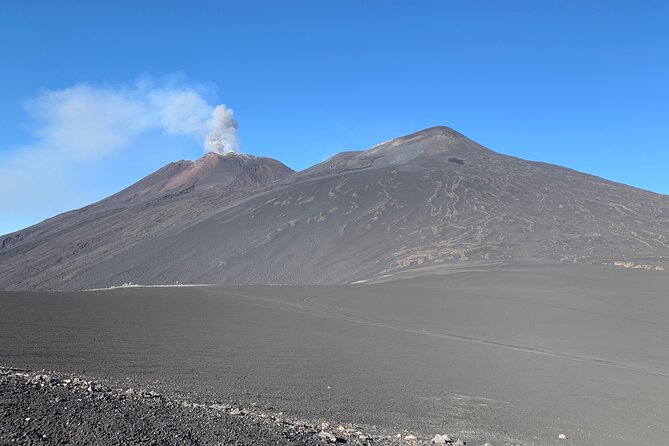
From here, you can look far across the island: out toward Catania and Syracuse, and across mountain ranges like Nebrodi and Peloritani, plus the Madonie. People can often see the Aeolian Islands too, with Calabria showing on the horizon on good visibility days. Etna’s summit craters are still steaming above you, and that detail turns the view from pretty to meaningful. You’re not just watching scenery—you’re watching active geology.
This part also helps you pace the hike mentally. Even if you’re not winded yet, this gives you a “why am I doing this?” moment. Your guide can connect what you’ll walk later (crater edges, ash paths, lava history) to what you see in the distance.
Why I like this stop: it’s a sensory reset. After climbing through lava fields, you get a wide, still landscape—then your guide translates what you’re looking at.
The crater-edge hike (~7 km): lava, ash, and history you can walk on
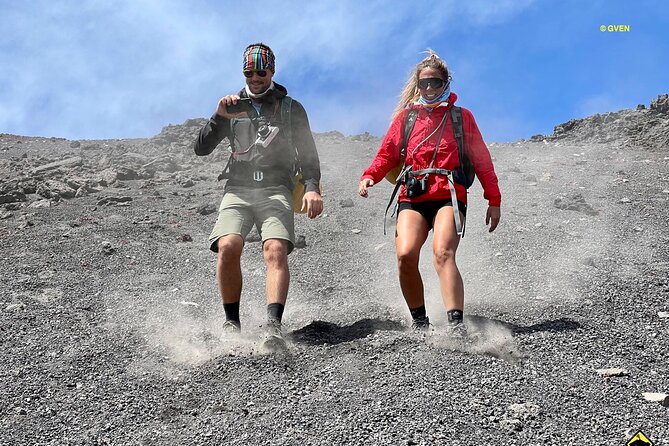
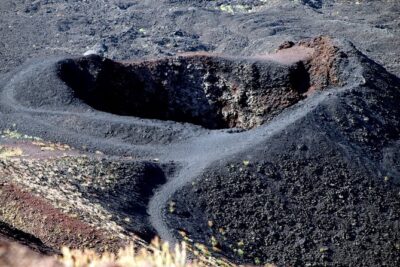
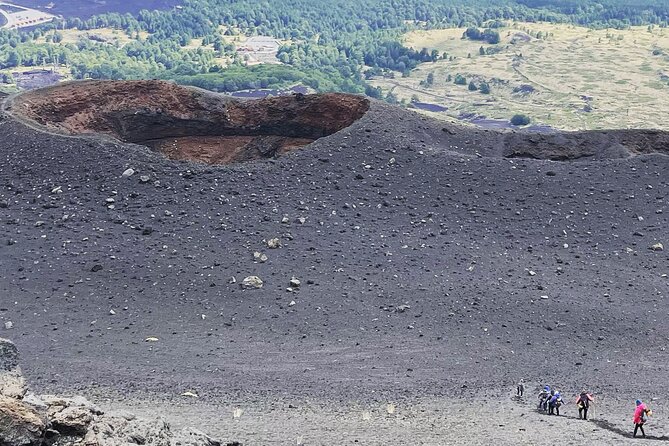
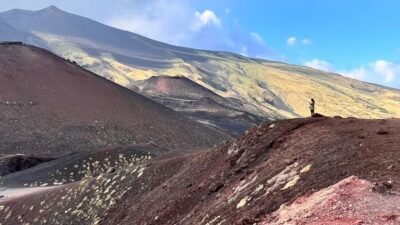
The main walking section is about 7 kilometers and takes roughly two hours (your pace depends on weather and how much your guide stops to answer questions). You go from the high area toward a stark plateau of fresh lava and ash. The ground can be inconsistent, and near crater edges you need to keep your balance and your eyes open.
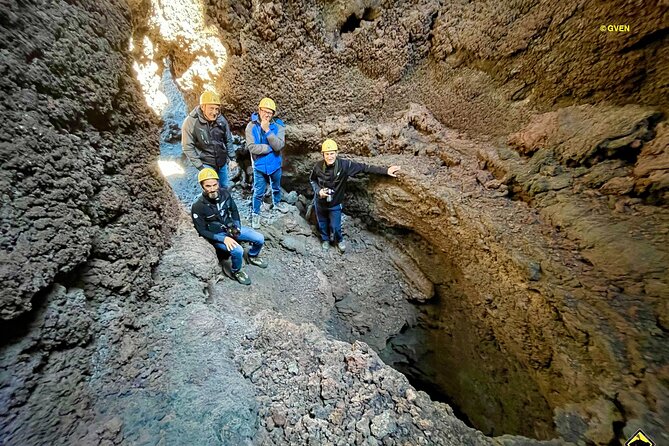
Here’s where the provided equipment really earns its keep. You should count on volcanic conditions where your feet and lungs will feel it. The tour includes trekking poles, trekking shoes, helmets, a warm jacket, extra socks, and an extra backpack, plus a guide-led pace. That’s a lot of gear to have solved for you.
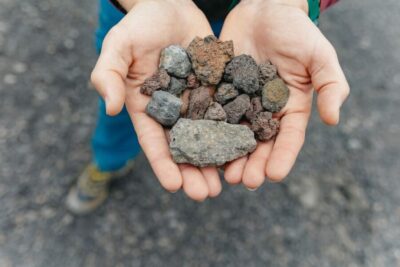
Your route covers crater and lava features linked to eruptions over a broad time span—places connected to 2002, 1911, 1923, 1874, 1879, 1809, 1646, 1614, and 1624. You’ll also see the north-flank fault and walk through areas that help explain how lava moved (including ancient lava tubes). Pioneer plants appear too, clinging to new rock where you’d expect life to have zero chance.
Fitness reality check: the tour materials recommend moderate physical fitness and note that some people may feel symptoms of fatigue easier at altitude. Because the soil can be unstable, this isn’t a sit-down tour. If you struggle on uneven ground in daily life, this will probably feel harder than the distance suggests.
Safety note that’s worth taking seriously: the information you get says the route can cause dizziness for susceptible individuals, and the crater-edge walking is exactly the kind of place where that matters. I’d rather you plan for that than ignore it and push through.
Dust and optics: the tour advises not to use contact lenses because of volcanic gases and ash. If you wear contacts, plan on bringing glasses.
At the end, you descend back toward Piano Provenzana, with a sandy-channel and forest part of the way. It’s the kind of finish that feels a bit wild: you’re coming down from a lunar-scape to pine trees, and you can feel your day’s effort in your legs.
Why this feels more authentic: Etna’s north side without the churn
You’re going to notice the north side difference fast. Piano Provenzana and the routes linked to Etna’s north volcanological work tend to feel calmer than the typical visitor circuit. That matters because Etna is a “look, ask, listen, and slow down” place. If crowds are pushing you, you spend more time moving than learning.
The guide style also seems to be a core strength. In the notes from past participants, guides like Pepe, Linda, Poldo, Vincenzo, and Domenico show up as people who answered questions and explained the science at a pace that fits normal humans. One theme is how organized things feel: equipment checks, readiness checks, and explanations that don’t talk over your head.
Another theme is that people feel safe. The route is active and sometimes gritty, but the guides keep the group managed. That safety feeling is part of why the north side ends up feeling more genuine than a rushed “see-and-go” stop.
Price and value: what $71 covers, and what you should plan for
At $71.20 per person, this is positioned as an affordable way into a serious part of Etna. You’re getting a licensed volcanological guide, admission to Mount Etna, and a lot of hiking support gear. You also get insurance in case of accidents, which matters when you’re walking on uneven volcanic surfaces.
Where it gets more nuanced is what’s not included. Expect these add-ons:
- Parking: about €5 on weekdays and €8 on Sundays and public holidays
- 4×4 vehicle supplement: €50 per person paid on-site for the vehicle sections
- Windbreaker: not included (you may want your own, depending on the day)
- Transport from your accommodation: not included
So the real value story looks like this: you pay a moderate base price for admission + guide + gear, then you pay site fees for access and parking. If you budget for those up front, the trip’s value feels solid because you aren’t doing a barebones hike. You’re doing a guided volcanology experience with the tools to handle the terrain.
Also, small-group size (maximum 20) helps justify the price. You get more face-time with your guide and fewer long waits.
What to pack and how to prepare (so the volcano stays fun)
This trip is weather-dependent, and volcanic days can shift fast. Even if you’re not bringing a ton of gear, you should still dress with care.
Bring:
- A windbreaker (not included)
- Water (there’s no mention of water being provided for the trek, and you’ll want it)
- A hat—one past participant specifically warned that on hot days there’s little shade
- Sunglasses and sunscreen, since you’ll be exposed during higher parts of the day
Wear:
- Proper hiking shoes you trust on rocky, dusty ground
- Layers. Yes, warm jackets are provided, but mountain weather still plays games.
Avoid:
- Contact lenses, since volcanic gases and ash can cause issues
Health reality:
The trip is strongly discouraged for people with cardio-vascular problems, breathing problems, or hypertension. If any of that applies to you, don’t “tough it out.” Choose a calmer Etna experience instead.
And mentally plan for this: it’s a crater-edge day. Even when the views are stunning, you’ll want to move slowly and keep your footing steady.
Who should book this north Etna hike (and who should skip it)
This tour is best for you if:
- You want Etna’s less-touristy north side, not the main conveyor belt
- You enjoy guided explanation and want your walk tied to real volcanology
- You can handle uneven volcanic ground and a route around crater edges
- You like a small group where you can ask questions and get real answers
It may not fit you if:
- You’re looking for an easy stroll with minimal height and minimal walking
- You get dizzy around edges or you know altitude affects you strongly
- Your fitness is limited in ways that make uneven terrain unsafe
There’s also a family angle: the route is described as suitable for children over 6, which suggests it can work when families are prepared and kids can handle the hike and the altitude.
Should you book Guide Vulcanologiche Etna Nord’s wild north Etna trip?
Book it if you want Etna with fewer crowds and more substance. The north side route, the crater-edge walking, and the way certified volcanological guides explain the scene turn this into more than a checklist stop. Add the practical gear (helmets, poles, shoes, warm layers) and the small-group setup, and you get a day that feels thoughtfully managed.
Skip (or choose another option) if you’re not comfortable with hiking at high altitude or if crater-edge dizziness is a concern. This is not the day to “see what happens” with health limits.
If you’re the kind of traveler who likes to trade a few extra steps for real understanding, this wild north Etna excursion is a smart bet.
FAQ
What time does the tour start?
The meeting/start time is 7:45 am.
Where do we meet for the excursion?
The meeting point is Chiosco Bar MareNeve di Ferraro Etna nord–Piano Provenzana, Via Provenzana, 95015 Linguaglossa CT, Italy.
How long is the excursion?
The duration is about 4 hours 30 minutes.
Is entry to Mount Etna included?
Yes, admission/entry to Mount Etna is included.
What is included with the price?
Included items are a licensed volcanological guide, trekking poles, trekking shoes, helmets, a warm jacket, extra socks, extra backpack, accident insurance, and entry to Mount Etna.
What extra costs should I plan for on-site?
You should plan for parking (about €5 weekdays or €8 Sundays/public holidays) and an on-the-spot €50 per person 4×4 vehicle supplement for the vehicle portions.
What physical fitness level do I need?
The tour recommends moderate physical fitness and notes it’s not suitable for people with certain health conditions, including cardio-vascular or breathing problems and hypertension. It also notes dizziness can happen near crater edges.
Are contact lenses recommended?
No. You’re advised not to use contact lenses because volcanic gases and ash may cause problems.
More Tours in Sicily

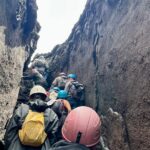
More Tour Reviews in Sicily
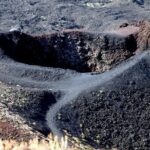
More Etna Summit Treks We Have Walked
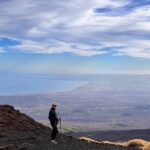
Just added: the newest Sicily tours in our notebook
- Etna / Taormina★ 5.0 · 3 reviews
- Bikes★ 5.0 · 3 reviews
- Taormina shore tour – for small group cruise passengers★ 5.0 · 3 reviews
- Vegan Cooking Class in Catania with Lunch and Dinner★ 5.0 · 3 reviews
- Make & Taste Sicilian Desserts in Palermo – Learn Cannoli & More★ 5.0 · 3 reviews
- Sicilian Villages & Ricotta Tasting – including Lunch from Cefalu★ 4.0 · 3 reviews
Mount Etna Tours & Summit, compared.
 ★ 4.8Catania: Mount Etna Morning or Sunset Day Trip with TastingFrom $704,028 reviews
 ★ 4.8Catania: Sunset Jeep Tour of Mount Etna and Lava Flow CavesFrom $712,113 reviews
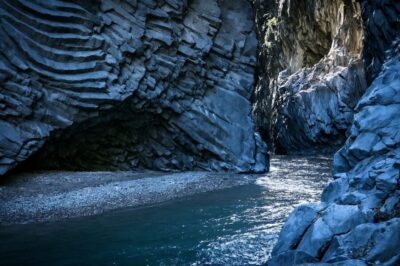 ★ 4.8Etna and Alcantara Gorges Full-Day Tour with LunchFrom $1051,766 reviews
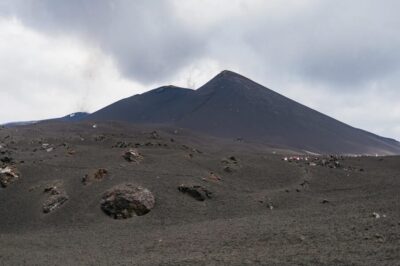 ★ 4.7Etna: summit craters trekking with volcano guide 3350mtFrom $771,712 reviews
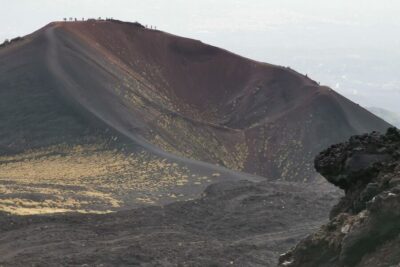 ★ 4.9Catania: Mount Etna Trekking Tour Beyond the Tourist TrailsFrom $811,596 reviews
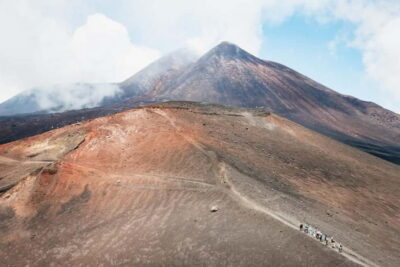 ★ 4.8Mount Etna: Guided Trek 3,000 Meters to the SummitFrom $1131,407 reviews
 ★ 4.8Catania: Etna Sunset Tour with Pickup and Drop-offFrom $711,348 reviews
 ★ 4.8Etna Sunset Tour: Volcano trek, Cave & tasting from CataniaFrom $701,290 reviews