
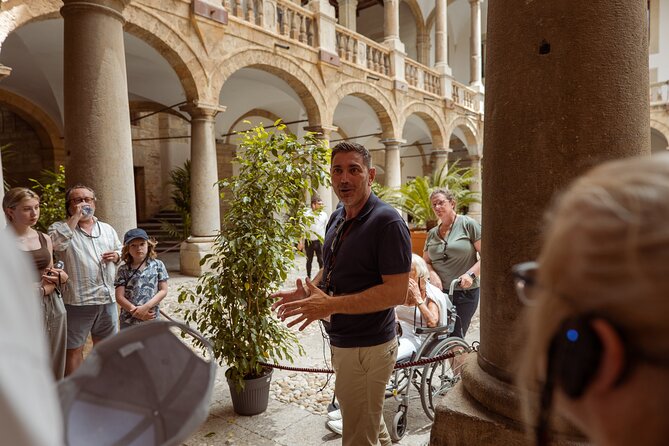
Reviewed · PALERMO CITY TOURS
Palermo Walking Tour and Guided Visit to Palazzo dei Normanni
Palermo can feel like a puzzle with too many pieces. This tour helps you line them up fast, and you get great context before you walk into the big landmark: the Palatine Chapel. I especially like the mix of street-level Palermo (churches, markets, piazzas) and the “how did they build this?” payoff at the Norman Palace. Another plus is the English-speaking licensed guide, which makes the sights easier to understand instead of just look at.
You do need to budget a little extra for one stop. Teatro Massimo entry costs €12 per person, since it is not included in the main price.
Quick takeaway: this is a well-paced morning route that’s ideal when you want to see the key sights without spending your whole day figuring out where to go next.
In This Review
- Key points to know before you go
- How this Palermo walking route actually helps you understand the city
- Meeting point, start time, and the kind of walking you should expect
- Teatro Massimo: one of Italy’s biggest opera stages, with an added ticket
- San Domenico and the “Pantheon” feel of Palermo’s church life
- La Vucciria: market energy that fits naturally into a sightseeing route
- Piazza Pretoria and Quattro Canti: Baroque Palermo at street level
- Piazza Pretoria and the Praetorian Fountain
- Quattro Canti (Piazza Vigliena)
- Cattedrale di Palermo: a quick, meaningful stop before the Norman Palace
- Palazzo dei Normanni + Palatine Chapel: the moment that pulls the whole day together
- Norman Palace background that makes the building click
- Palatine Chapel: Byzantine, Norman, and Fatimid in one small space
- Price and value: what you actually pay for
- Who should book this tour?
- Should you book? My practical decision guide
- FAQ
- FAQ
- How long is the Palermo walking tour?
- What language is the tour offered in?
- Is the visit to Palazzo dei Normanni included in the price?
- Do I need to pay extra for Teatro Massimo?
- Which stops on the route have free admission?
- Where do we meet the tour guide?
- What time does the tour start?
- How big is the group?
- Is free cancellation available?
Key points to know before you go
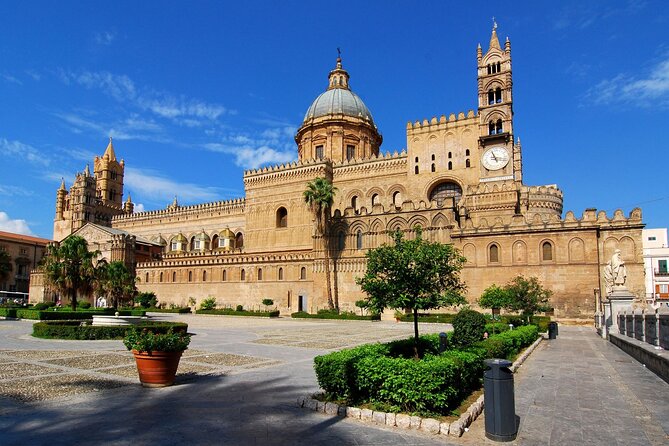
- A 5.5-hour loop built around major monuments, not a random stroll
- Palazzo dei Normanni + the Palatine Chapel are ticketed, so you avoid the guesswork
- Teatro Massimo has a separate €12 ticket, and it’s the only paid admission among the listed stops
- La Vucciria is right in the historic center area, so you can smell the city while you learn it
- Small group size (max 20) keeps the guide’s explanations more useful
- Morning start at 9:00 am helps you see the center while the light is still friendly
The rest of what Palermo puts on
- Pub Crawl Palermo
★ 5.0 · 595 reviews - Palermo: Pasta and Tiramisu Small Group Cooking Class with Wine
★ 5.0 · 348 reviews - Classic Boat Tour in Palermo
★ 5.0 · 268 reviews - Sicilian Cuisine Cooking Class in Palermo
★ 5.0 · 208 reviews
How this Palermo walking route actually helps you understand the city
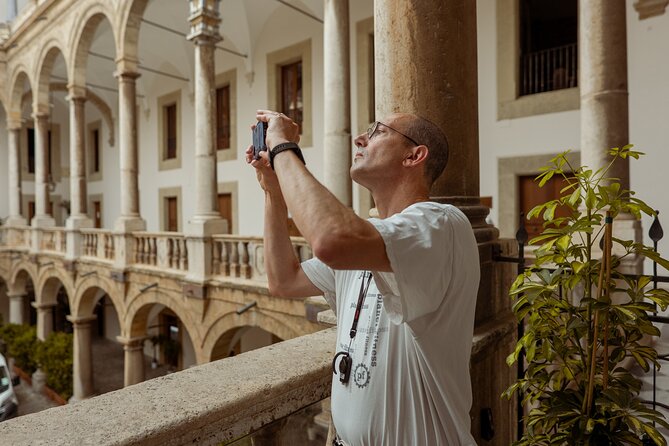
Palermo’s charm is real, but it can also be a lot—new streets every minute, different eras stacked on top of each other, and signage that doesn’t always match what you expected. This tour is built to solve that problem. You move through a sequence of landmarks that all connect to the city’s story: power and worship, public life and trade, and the Baroque identity that shows up in piazzas and monuments.
I like that the tour doesn’t treat Palermo Cathedral, the fountains, and the Norman Palace like separate attractions. Your guide ties them together with clear explanations, so the city starts to feel like one conversation instead of a list. And because the group is small (up to 20), you get a bit more flexibility to ask questions without slowing down the whole day.
One practical note: the route uses short time blocks at each stop (around 25 minutes), so you’ll get the essentials at every photo stop. If you love lingering in places, you may want to plan an extra hour later on your own.
Meeting point, start time, and the kind of walking you should expect
You start at Towns of Italy, the Tourist Hub & Cooking School on Via Volturno 44, Palermo. The tour begins at 9:00 am and ends back at the same meeting point, so you don’t need to worry about lining up transport at the end.
The listing notes it is near public transportation, which is useful if you’re staying a bit outside the core. Still, this is a walking day in Palermo’s historic center. Wear comfortable shoes. You’ll be on uneven sidewalks and cobblestone-type surfaces that are common around the main sights.
Also, budget a bit of mental energy for pacing. With multiple stops and a fixed total duration (about 5 hours 30 minutes), the best strategy is to show up ready to watch, listen, and move. If you like to multitask—photos, notes, then checking your next stop—this route works well.
Teatro Massimo: one of Italy’s biggest opera stages, with an added ticket
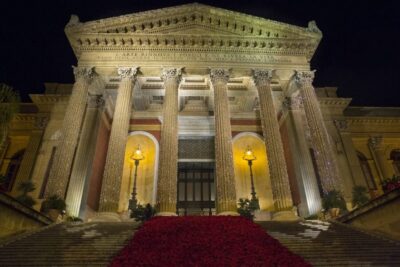
The day begins at Teatro Massimo Vittorio Emanuele on Piazza Verdi. This is an opera house and opera company, and it’s described as the biggest in Italy and among the largest in Europe. It was dedicated to King Victor Emanuel II, which gives you a quick political anchor for the building.
Here’s the helpful part: even if you aren’t an opera person, the exterior and setting tell you about Palermo’s ambition and status when the theater was built. It’s the kind of structure that looks “important” before you even understand why, and the guide helps you read the symbolism.
Drawback to consider: the €12 Teatro Massimo ticket is not included. If you’re trying to keep costs tight, you can decide on the spot whether the interior visit is worth that add-on. If you love architecture, though, it’s the one paid admission you’ll likely feel good about spending.
San Domenico and the “Pantheon” feel of Palermo’s church life
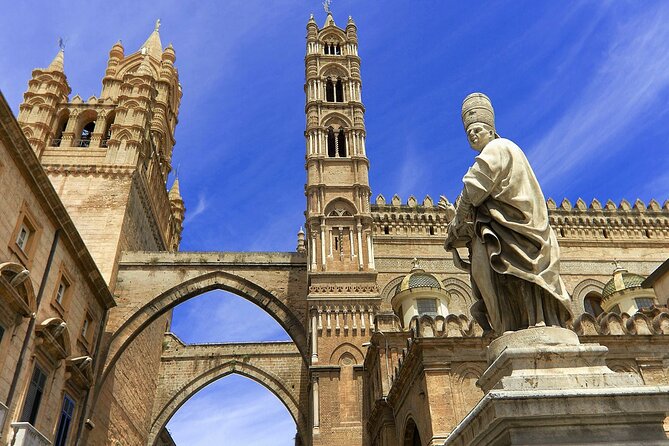
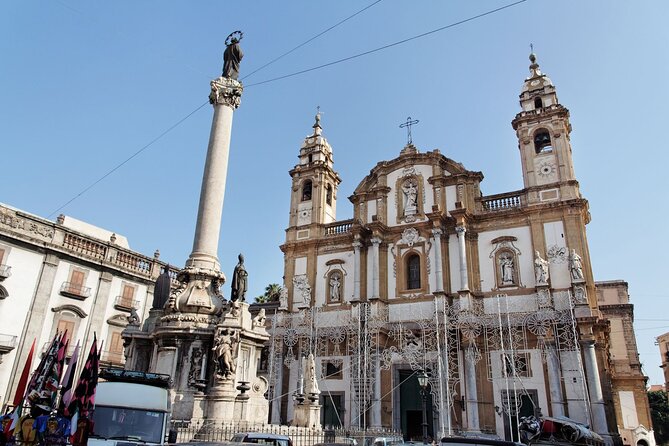
Next you’ll stop at Chiesa di San Domenico, a Baroque Roman Catholic church in Piazza San Domenico. This church sits in the ancient quarter around La Loggia, in central Palermo, and it has an unusual reputation: it houses burial monuments of many notable Sicilians. That’s why it is often described as the Pantheon of illustrious Sicilians.
What I like here is the tone shift. Palermo is often marketed as food and street scenes (and yes, it’s great for that), but church monuments add a deeper layer. They show you how families, influence, and public memory worked on the island.
The setting also helps you orient. Piazza San Domenico opens to Via Roma a few blocks south of a large building associated with postal services, and it sits near other major landmarks in the area. In practical terms: you’re not just “in front of a church.” You’re at a junction where the city’s neighborhoods connect.
Entry is free at this stop, so it’s an easy win for time and value.
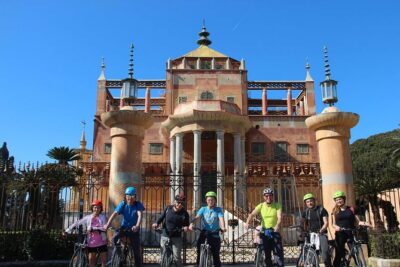
Palermo's palaces and chapels, up close
La Vucciria: market energy that fits naturally into a sightseeing route
From San Domenico you move into La Vucciria, Palermo’s famous outdoor market area around Piazza San Domenico. This is where the city shows you its everyday life. The stalls are known for fish, meat, and produce, though you can find a little of everything.
The best way to enjoy this stop is to treat it like sensory orientation, not a food challenge. You don’t have to eat a full meal here to get value. Watch how people move through narrow spaces, notice the ingredients that dominate, and use it as a contrast to the more ceremonial stops earlier in the morning.
It’s also practical that the market visit sits between major sights. You’re not stuck in a single neighborhood for hours. You get the market atmosphere as a brief, human-scale chapter—then you move on to the big, geometric Palermo of fountains and squares.
This stop is free to visit, which keeps the tour’s overall cost easier to control.
Piazza Pretoria and Quattro Canti: Baroque Palermo at street level
Then comes a classic move: you step into the Baroque identity of Palermo’s public spaces.
Piazza Pretoria and the Praetorian Fountain
At Piazza Pretoria, the star is the monumental Praetorian Fountain. It dominates the piazza on the west flank of Santa Caterina. One block south of Quattro Canti, it’s positioned in a way that makes it easy to use as a landmark later.
The fountain’s backstory is a great example of Palermo’s layered identity. It was originally built in 1544 in Florence by Francesco Camilliani, then it was sold, transferred, and reassembled in Palermo in 1574. That one detail makes the whole thing feel less like decoration and more like a physical record of how power and taste traveled across the region.
Quattro Canti (Piazza Vigliena)
Next is Quattro Canti, officially known as Piazza Vigliena. It is described as a Baroque square and considered the center point of Palermo’s historic quarters.
If you’ve ever struggled to picture how historic cities are organized, this is the stop that helps. Quattro Canti is basically a city hub in stone form—four corners, designed focus, and a sense that the surrounding streets radiate from here. Even a short visit gives you mental coordinates for the rest of the day.
Both of these stops are free, and that matters because they’re also where you’ll get the most satisfying “I get it now” feeling: you see the layout of the city and the style choices that keep showing up.
Cattedrale di Palermo: a quick, meaningful stop before the Norman Palace
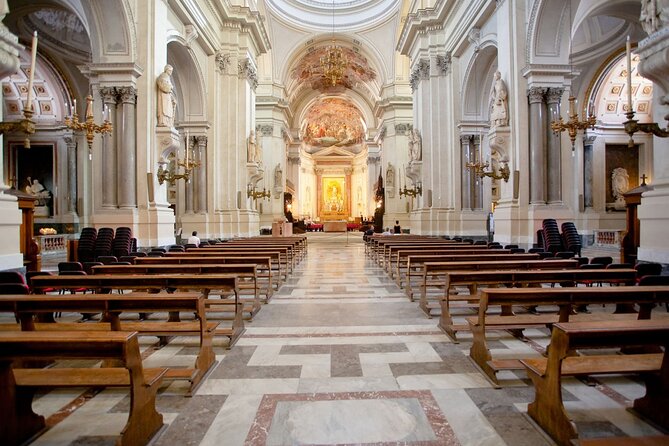
At Cattedrale di Palermo, you’re at Palermo’s main cathedral church, dedicated to the Assumption of the Virgin Mary. It’s the cathedral church of the Roman Catholic Archdiocese of Palermo.
For me, this stop is valuable because it sits between Palermo’s public piazzas and the palace complex. The cathedral represents religious authority. Then, later, the Norman Palace represents political power. Seeing them close together helps you understand how “who holds authority” shows up in different forms across the same city.
The visit here is free. And because the tour keeps the timing tight, you won’t feel stuck waiting around. You get the essentials and move on.
Palazzo dei Normanni + Palatine Chapel: the moment that pulls the whole day together
Now for the reason this tour is worth your time: the Norman Palace (Palazzo dei Normanni) and the Royal Palace + Palatine Chapel.
Norman Palace background that makes the building click
The Palazzo dei Normanni is also called the Royal Palace of Palermo. It was the seat of the Kings of Sicily with the Hauteville dynasty, and later served as a main seat of power for subsequent rulers. Since 1946, it has been the seat of the Sicilian Regional Assembly.
That timeline helps you see why the palace feels important even from outside. It’s not just a “pretty old building.” It has kept doing big work—ruling, then governance. The guide’s framing makes the stones feel active.
This part is included in the tour price, with tickets and a guided visit to the Palazzo complex.
Palatine Chapel: Byzantine, Norman, and Fatimid in one small space
The Palatine Chapel is the royal chapel inside the Norman Palace. This is where the cultural mix becomes tangible.
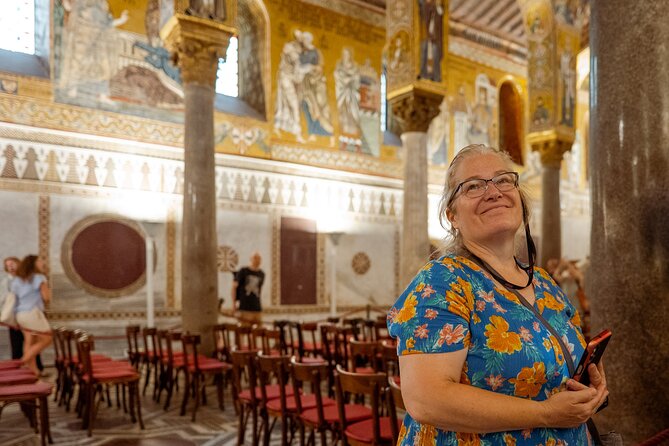
The chapel is described as a blend of Byzantine, Norman, and Fatimid architectural styles—showing the tricultural state of Sicily in the 12th century after Roger I and Robert Guiscard conquered the island. That’s a lot of names for one room, but the payoff is that you start noticing the styles as you’re guided through the space.
This is also where your day tends to peak. One of the standout moments from the experience is the way the guide explains what makes the Palatine Chapel unique—so it doesn’t become just a “look and move” stop. It’s a slow-down moment, the part that turns the history into something you can see.
If I’m being practical, here’s what you should do: take a few minutes to look before you take photos. The chapel’s value comes from seeing the mix clearly, not from snapping quickly and moving on.
Tickets and admission here are included, which is a big part of the tour’s value.
Price and value: what you actually pay for
The price is listed at $97.55 per person for a 5 hours 30 minutes experience in English. What makes it feel like solid value is that the tour includes tickets and a guided visit to the Palazzo dei Normanni complex (and the Palatine Chapel as part of that visit).
What’s not included is the Teatro Massimo ticket (€12 per person). Everything else on the route is free at the listed stops: San Domenico, La Vucciria, Piazza Pretoria, Quattro Canti, and Palermo Cathedral.
So your real cost decision is basically: do you want the Teatro Massimo interior? If yes, budget the extra €12. If no, you still get a full package of major sights plus the ticketed palace visit.
Also, because the group size is limited to 20 travelers, you should feel less like you’re part of a moving crowd and more like you’re following real explanations.
Who should book this tour?
This is a great match if you:
- Want a structured walk through Palermo’s main monuments without spending hours planning.
- Care about the “why” behind the buildings, especially the Norman Palace and Palatine Chapel.
- Prefer a morning route and a manageable walking day.
It may be less ideal if you:
- Want lots of free time to wander at your own pace at each stop.
- Have low interest in churches and formal architecture (you’ll still see them, but the value is in learning the connections).
Should you book? My practical decision guide
If you’re in Palermo for a limited time, booking makes sense. The reason is simple: the tour brings you to the key sights with a guide, and it includes the ticketed visit to the Norman Palace complex—where the Palatine Chapel is the standout payoff.
I’d book this if you’re the type who likes to understand what you’re looking at, not just photograph it. I’d hold off if you’re trying to keep strict costs and also skip Teatro Massimo tickets. In that case, you might prefer a DIY route for the free piazzas and churches, then pay separately for only what you truly want.
FAQ
FAQ
How long is the Palermo walking tour?
It lasts about 5 hours 30 minutes.
What language is the tour offered in?
The tour is offered in English.
Is the visit to Palazzo dei Normanni included in the price?
Yes. Tickets and a guided visit to the Palazzo dei Normanni complex are included.
Do I need to pay extra for Teatro Massimo?
Yes. Teatro Massimo entry is not included, and the ticket is €12.00 per person.
Which stops on the route have free admission?
San Domenico, La Vucciria, Piazza Pretoria, Quattro Canti, and Palermo Cathedral are listed as free.
Where do we meet the tour guide?
The meeting point is Towns of Italy, Tourist Hub & Cooking School, Palermo Via Volturno, 44, 90138 Palermo PA, Italy.
What time does the tour start?
The tour starts at 9:00 am.
How big is the group?
The tour has a maximum of 20 travelers.
Is free cancellation available?
Yes. You can cancel up to 24 hours in advance for a full refund.
More Tour Reviews in Sicily

More Palermo Palaces and Chapels
More Palermo, Start to Finish
Just added: the newest Sicily tours in our notebook
- Etna / Taormina★ 5.0 · 3 reviews
- Bikes★ 5.0 · 3 reviews
- Taormina shore tour – for small group cruise passengers★ 5.0 · 3 reviews
- Vegan Cooking Class in Catania with Lunch and Dinner★ 5.0 · 3 reviews
- Make & Taste Sicilian Desserts in Palermo – Learn Cannoli & More★ 5.0 · 3 reviews
- Sicilian Villages & Ricotta Tasting – including Lunch from Cefalu★ 4.0 · 3 reviews
Palermo City Tours, compared.
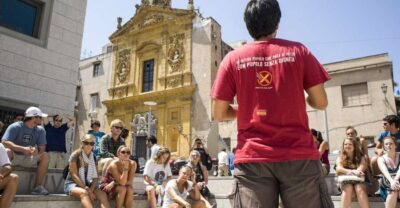 ★ 4.8Palermo: NO Mafia Walking TourFrom $402,431 reviews
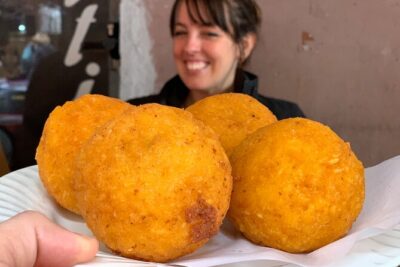 ★ 5.0Palermo Original Street Food Walking Tour by StreatyFrom $832,105 reviews
 ★ 4.2Segesta, Erice and Salt Pans Full-Day Excursion from PalermoFrom $821,791 reviews
 ★ 4.5Palermo: Teatro Massimo Opera House Guided TourFrom $141,573 reviews
 ★ 4.9Palermo: Street Food and History Walking TourFrom $571,486 reviews
 ★ 4.2From Palermo: Monreale and Cefalù Half-Day TripFrom $711,354 reviews
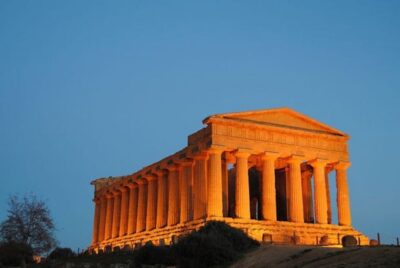 ★ 4.2Palermo: Agrigento and the Valley of the Temples Day TourFrom $771,240 reviews
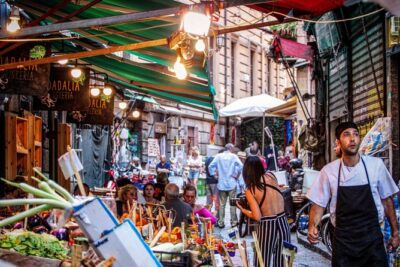 ★ 5.0Palermo No Mafia walking tour: discover the Anti-mafia culture in SicilyFrom $391,011 reviews
Browse the lists this tour appears in