
Reviewed · PALERMO LANDMARKS & MONUMENTS
Palatine Chapel: Private Walking Tour & Sicilian Lunch
Palermo rewards the curious walker, and this route hits the highlights fast. I like how it ties Arabic neighborhoods to the big-name sights, especially the Palatine Chapel. I also love that you finish with a real Sicilian lunch, not a sad tourist plate. One consideration: entry to the Palatine Chapel and Theater Massimo isn’t included, so you’ll want to budget for tickets and plan what you wear for religious sites.
This is a half-day, private walking tour designed for Palermo’s shape: narrow streets, quick turns, and that layered Arab-Norman look. It starts at Piazza Verdi, then you’ll move through main squares, church-lined corridors, and old quarters where the city still feels lived-in.
Expect a tight, satisfying 4 hours with stops that connect. You’ll also need to be practical with clothing: the religious sites require clothing that covers your body, and the tour operator notes they can’t control extraordinary closures of churches or Massimo Theater.
In This Review
- Key things you’ll love about this Palermo tour
- Getting Oriented in Palermo: Politeama Square to Ruggero VII Street
- Theater Massimo: Why the biggest stage in Europe deserves a guided stop
- Via Maqueda and Candelai: Palermo’s commercial street and its nightlife pulse
- Quattro Canti and the Cathedral area: the city divided into four parts
- Royal Palace grounds and the Palatine Chapel: Arab and Norman art in one stop
- Hidden Arab corners: St. Clare, the Martorana domes, and the Square of Shame
- Vucciria market time and Saint Dominic Square shopping breaks
- Sicilian lunch in a 16th-century Spanish building: what you’ll eat
- Price and what you’re really paying for in a private 4-hour tour
- Who this tour suits best (and who should consider something else)
- Should you book this Palermo Palatine Chapel + Sicilian lunch tour?
- FAQ
- How long is the Palermo walking tour?
- What does the tour price include?
- Are tickets and audio guide included for the Palatine Chapel?
- Is entry to Theater Massimo included?
- Where does the tour start and end?
- Is this tour suitable for wheelchair users?
Key things you’ll love about this Palermo tour
- Arabic-influenced streets: you’ll see how the city’s old neighborhoods still shape the walk
- Palatine Chapel at the Royal Palace: Arab and Norman art in one of Sicily’s top monuments
- Theater Massimo focus: a guided walk that gives context to Europe’s largest theater
- Quattro Canti and Via Maqueda: the city’s geometry and commerce, not just photos
- Vucciria market time: shop-and-look energy before lunch
- Sicilian buffet lunch: panelle, sfincione, anelletti al forno, caponata, cassatelle, plus wine and dessert
Palermo's palaces and chapels, up close
- Palermo: Teatro Massimo Opera House Guided Tour
★ 4.5 · 1,573 reviews - From Palermo: Monreale and Cefalù Half-Day Trip
★ 4.2 · 1,354 reviews - Palermo: Mondello, Capo Gallo Reserve Boat Tour, and Snack
★ 4.9 · 694 reviews - Palermo: Norman Palace and Palatine Chapel Tour with Tickets
★ 4.7 · 298 reviews
Getting Oriented in Palermo: Politeama Square to Ruggero VII Street
Palermo can feel like a puzzle at first. This tour starts by crossing Piazza Politeama, the main square where the big city avenues meet. It’s a smart first move because it gives you a “map in your head” before you start threading through smaller lanes.
Then you’ll continue along Ruggero VII Street, described as the lounge of Palermo. That’s exactly the point: this stretch helps you understand how locals move through the city. You’re not just looking at buildings; you’re getting the rhythm of where people linger and pass by.
You’ll also pass by the Church of St. Lucia on the way toward Theater Massimo. That small “in-between” stop matters because Palermo is all about transitions—big landmarks show up after you’ve already picked up the city’s details.
Theater Massimo: Why the biggest stage in Europe deserves a guided stop
The highlight on many Palermo lists is Teatro Massimo, the largest theater in Europe. But the value here is not just checking it off. With a guide, you’ll get the context that makes the building click—what it represents, and how it fits into the city’s identity.
This tour has you reach Theater Massimo after Politeama and Ruggero VII. That ordering works. You’re already primed by the street views and church stops, so when you arrive at the theater, it feels like a major cultural shift instead of a random detour.
One practical note: entry to Theater Massimo is not included. Still, you can plan around a guided look and the time on the outside or through areas that your tour can access. If you want to go deeper inside, figure that out ahead of time so you’re not rushing at the door.
Via Maqueda and Candelai: Palermo’s commercial street and its nightlife pulse
After the theater, you’ll head along Via Maqueda, an ancient commercial street lined with churches and historic buildings. This is one of those places where a guided walk changes everything. The street isn’t just pretty—it shows how the city operated day to day, what drew people in, and why religious architecture keeps showing up near commerce.
Then you’ll move toward Candelai, described as at the heart of Palermo’s nightlife. Even if you’re not there after dark, the area has a distinct energy. I like having that contrast during the day: you see the neighborhood structure without needing to wait for evening.
It’s also a good moment to understand Palermo’s street logic. One minute you’re walking along grand facades, the next you’re turning toward smaller spaces. That’s the city in miniature—easy to photograph, easier to understand when someone points out how the city’s form affects where everything sits.
Quattro Canti and the Cathedral area: the city divided into four parts
Next comes Quattro Canti, meaning four corners. It divides the city exactly into four parts, and it’s one of those visual anchors that helps you stop getting lost in Palermo. When you see it explained, it stops being just an intersection and becomes a reference point for everything you’ll notice next.
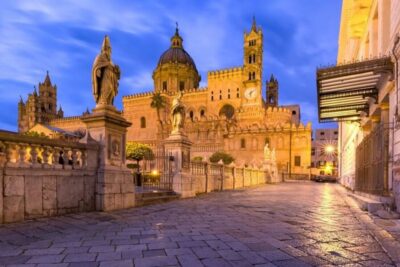
From there, you’ll visit St. Joseph of theatine and tour the iconic Cathedral of Palermo. Churches can be hit-or-miss on walking tours—either you get a quick peek or you get something that actually adds meaning. Here, the walk rhythm makes those church stops feel integrated, not tacked on.
Also, religious sites in Palermo usually come with stricter clothing expectations than museums. Bring a light layer and plan to cover up, even if it’s warm. You’ll thank yourself when you’re standing still for photos and the line moves slowly.
A few we would gladly point a friend toward in Palermo
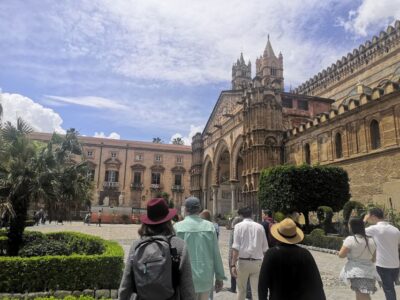
Royal Palace grounds and the Palatine Chapel: Arab and Norman art in one stop
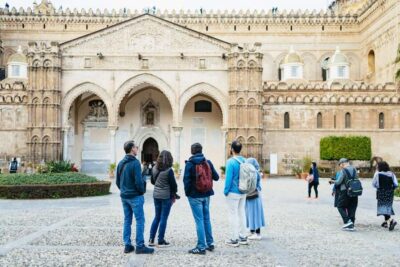
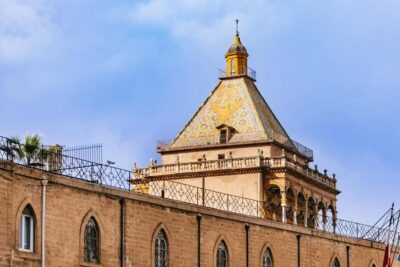
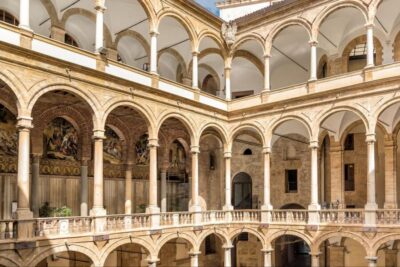
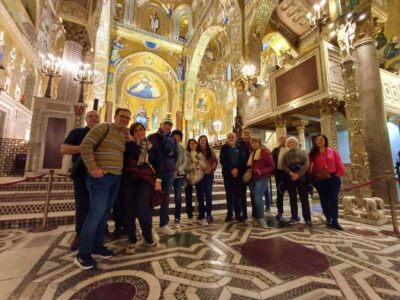
After the cathedral area, you’ll reach the Royal Palace complex and its most famous treasure: the Palatine Chapel. This is where the tour delivers real artistic payoff. The Palatine Chapel is known for its blend of Arab and Norman art, and having it as the major monument stop makes the rest of the walk feel purposeful.
Important: Palatine Chapel entry ticket and audio guide are not included. The good part is that the activity notes you can skip the ticket line, which helps when you want your time inside to match your plans outside.
What I like about pairing the chapel with a guided approach is that it helps you look at details instead of just admiring the overall look. You won’t just walk in and stare. You’ll know what to focus on—so your photos end up matching what you actually learned.
Hidden Arab corners: St. Clare, the Martorana domes, and the Square of Shame
Palermo’s Arab influence is not always obvious at street level. That’s why this tour includes hidden-feeling neighborhoods tucked among narrow lanes. You’ll spend time seeing old Arab quarters, including the community of St. Clare.
You’ll also encounter the Church of the Martorana, including its red Arabic-style domes. That dome detail is one of those visual clues that makes Palermo feel like a crossroads city. It’s also a reminder that Sicily’s culture wasn’t shaped by one power alone.
Then there’s the Square of Shame, where you’ll see nude statues. It’s a striking stop, and it’s exactly the sort of thing that benefits from a guide. It’s not about shock value; it’s about understanding the artwork and the way the city talks about power, myth, and public display in stone.
This sequence can feel slightly unexpected, but that’s part of the charm. If you like seeing the city’s layers, you’ll appreciate these side moments more than you might expect.
Vucciria market time and Saint Dominic Square shopping breaks
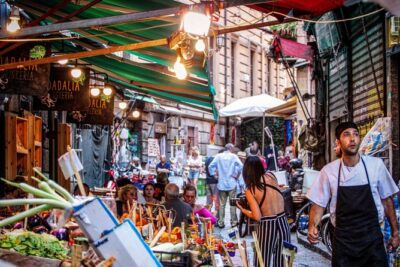
Before lunch, you’ll shop around the historic Vucciria market and Saint Dominic Square. This is where the walking tour turns from monuments into daily life.
Vucciria is a place where you can browse and absorb without needing to buy much. I like having a shopping window late in the walk because your senses are fully awake, but you’re not rushing right after you arrive in Palermo. You’ve already seen the big landmarks. Now you can experience what locals do—looking for produce, snacks, and small treats.
One practical tip: wear comfortable shoes. Palermo streets are narrow, uneven in spots, and full of quick changes in surface. Even a short break for market browsing doesn’t change the fact that you’re still walking.
Sicilian lunch in a 16th-century Spanish building: what you’ll eat
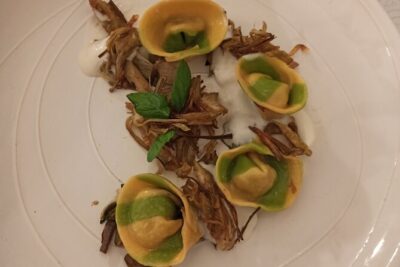
Lunch is a major part of the value here, because it’s traditional and planned into the schedule. You’ll eat inside a 16th-century Spanish building, and the lunch is a Sicilian buffet with several classics.
Here’s what’s listed on the menu:
- panelle
- sfincione
- anelletti al forno
- caponata
- cassatelle
- a Sicilian wine
- dessert of almond biscuits and mocha espresso
I like that list because it gives you variety. You’re not stuck eating one flavor all afternoon. You can sample fried street-style bites (like panelle), savory baked pasta (anelletti al forno), and the well-known caponata flavors that people often associate with Sicilian cuisine.
The wine and the mocha espresso dessert turn lunch into a proper reset, not just fuel. If you’re the type who wants to eat what you’re learning about, this timing works well: you’ll have seen Arab-Norman Palermo, then you’ll taste Sicilian dishes in the same half-day format.
Price and what you’re really paying for in a private 4-hour tour
At $192.58 per person for about 4 hours, this isn’t a budget “group bus” tour. The value comes from three things that matter in real life: a private walking format, a guided route that connects neighborhoods to monuments, and lunch included.
But you should also be clear about what’s not included. Palatine Chapel entry ticket and audio guide are not included, and Theater Massimo entry is not included. So part of the “all-in” cost depends on what you add at those sights.
Still, the tour does include skip-the-ticket-line support and a guide in multiple languages (Italian, English, French, Spanish, Russian, German). For many visitors, that’s worth real money: you save time, you get context, and you don’t spend your limited Sicily hours trying to figure out the best sequence alone.
If you’re traveling as a couple or small group and you want a structured, efficient day without giving up lunch, this price can make sense.
Who this tour suits best (and who should consider something else)
This works best for you if you:
- want Palermo’s big sights plus the smaller Arab-influence details
- like guided context rather than a self-guided checklist
- want lunch built in, with a real Sicilian menu and wine
- prefer a private group format for flexibility and comfort
It may not be the best fit if you need wheelchair access, because it’s listed as not suitable for wheelchair users. Also, if you strongly want guaranteed full interior access to Theater Massimo or timed chapel entry, remember those entries aren’t included here and closures can happen.
One more practical point: churches and religious sites require clothing that covers your body. Plan your outfit for that, even on a warm day.
Should you book this Palermo Palatine Chapel + Sicilian lunch tour?
I’d book this if your goal is a focused half-day where Palermo’s layers connect: Arabic neighborhood structure, major monuments like the Palatine Chapel, and a guided visit that helps you look at details instead of just passing through. The lunch is also a legitimate upside, with a full Sicilian buffet that doesn’t feel like an afterthought.
I’d think twice if you’re trying to keep the day as close to all-inclusive as possible, because chapel and theater entry aren’t included. But if you’re comfortable adding those tickets and you want a smooth walking route with lunch already taken care of, this tour is a strong match for a first or second visit to Palermo.
FAQ
How long is the Palermo walking tour?
The tour lasts 4 hours.
What does the tour price include?
It includes a guided walking tour and a traditional Sicilian lunch.
Are tickets and audio guide included for the Palatine Chapel?
No. Palatine Chapel entry tickets and the audio guide are not included.
Is entry to Theater Massimo included?
No. Entry to Theater Massimo is not included.
Where does the tour start and end?
It starts at Piazza Verdi at the stairs of the Theatre, and the tour ends back at the meeting point.
Is this tour suitable for wheelchair users?
No. The tour is not suitable for wheelchair users.
More Tours in Palermo
More Tour Reviews in Palermo
More Palermo Palaces and Chapels
Just added: the newest Palermo tours in our notebook
- Private Transfer from/to Trapani★ 5.0 · 3 reviews
- Private Tour from Palermo to Monreale, Santa Rosalia and Mondello★ 5.0 · 3 reviews
- Palermo: Cannolo & Cassata MasterClass★ 5.0 · 3 reviews
- Camporeale: Sallier de La Tour Wine Discovery Tour★ 4.6 · 3 reviews
- Sicily … A Love of a Lifetime★ 4.5 · 3 reviews
- Sicilian Cooking Class in Palermo – Private Option★ 5.0 · 3 reviews
Palermo Landmarks & Monuments, compared.
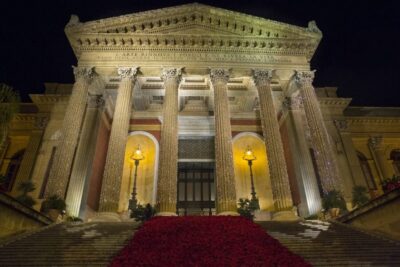 ★ 4.5Palermo: Teatro Massimo Opera House Guided TourFrom $141,573 reviews
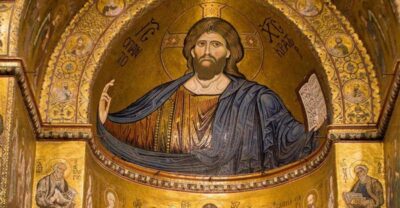 ★ 4.2From Palermo: Monreale and Cefalù Half-Day TripFrom $711,354 reviews
 ★ 4.9Palermo: Mondello, Capo Gallo Reserve Boat Tour, and SnackFrom $106694 reviews
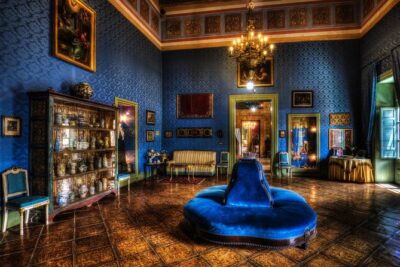 ★ 5.0Palazzo Conte FedericoFrom $18650 reviews
 ★ 4.7Palermo: Norman Palace and Palatine Chapel Tour with TicketsFrom $82298 reviews
 ★ 4.8Palermo: Cappella Palatina and Palazzo dei Normanni TourFrom $45214 reviews
 ★ 5.0In the province of Palermo Sicilian Cooking Class near CefaluFrom $120203 reviews
 ★ 4.8Tour Cappella Palatina e palazzo Reale: patrimonio UnescoFrom $14183 reviews
Browse the lists this tour appears in