
Night in Ortigia tells a better story. This guided evening walk makes Syracuse feel calm and readable, with the sea breeze and historic sights lit up for an easier first pass. I especially like the Apollo-to-Duomo route and how the tour brings the streets to life with archaeological context from Italo Giordano.
The big trade-off is time. It’s about 2 hours, so you won’t linger long enough for deep museum-style study—this is for getting oriented fast and learning the key threads behind the place.
In This Review
- Key things to know before you go
- Why Ortigia at night is the smart way to see Syracuse
- Meeting at the Temple of Apollo, then finishing at Fonte Aretusa
- Stop 1: Ortigia’s historic core in evening light
- The Temple of Apollo: Greek stone from the early 6th century BC
- Learning in Giudecca: the Jewish community of Syracuse and what changed
- Piazza Duomo: Syracuse’s evocative square with a thousand-year story
- Why the guide matters: Italo Giordano’s approach
- Price and value: what $212.93 per group really buys you
- Timing, weather, and what to expect from a 2-hour night walk
- Who should book this tour (and who might pass)
- Should you book Ortigia by Night with Italo Giordano?
- FAQ
- FAQ
- How long is the Ortigia by night guided tour?
- What’s the starting point of the tour?
- Where does the tour end?
- Is the tour offered in English?
- Is this a private tour?
- Do I need to pay for admission during the tour?
- How do I get the ticket?
- When will I receive confirmation after booking?
- What is the cancellation policy?
- What happens if the weather is poor?
- Is service animal access allowed?
Key things to know before you go
- Sea-breeze timing: Night cools things down and makes Ortigia’s center easier to enjoy.
- Archaeology-led guide: Italo Giordano, an archeologo (archaeologist), leads the storytelling.
- A focused route: You’ll move from the Temple of Apollo area through Ortigia to Fonte Aretusa.
- Giudecca storytelling in narrow alleys: The tour highlights the Jewish quarter’s role and 1492 expulsion.
- Syracuse’s anchor square: Piazza Duomo is framed as a one-thousand-year gathering point.
- Private group experience: Up to 15 people, with the option of a quieter feel than large public groups.
Deeper into Ortigia and old Syracuse
- Syracuse: Tour of Ortigia Island & Caves with Local Skipper
★ 4.7 · 1,060 reviews - Tour of the island of Ortigia and exploration of sea caves with baths.
★ 5.0 · 668 reviews - Boat tour of Ortigia Island and sea caves
★ 5.0 · 407 reviews - Siracusa Boat excursion island of ortigia and sea caves
★ 5.0 · 147 reviews
Why Ortigia at night is the smart way to see Syracuse
Ortigia is small enough to explore on foot, but big enough to feel like a maze if you don’t know what you’re looking at. Going at night is a practical upgrade. The evenings in Syracuse tend to feel cooler than midday, and the sea air makes the walking portion more comfortable.
You also get a different kind of “read” on the buildings. Daylight shows shapes; night lighting changes the mood and helps you notice contrasts—ancient stone beside later walls, broad squares beside tight lanes. This tour leans into that, so the sights feel connected instead of like random stops.
The format is also ideal if you want history without getting stuck. In two hours, you can cover key points—Greek, Jewish, and civic—without the day turning into a checklist you rush through.
Meeting at the Temple of Apollo, then finishing at Fonte Aretusa
The tour starts at the Temple of Apollo area in Syracuse (96100). That’s a strong opening because it sets the chronological tone right away: you begin with one of the best-known Greek landmarks in Ortigia.
You end near Fonte Aretusa, which gives the walk a natural finish at a symbolic point tied to the island’s identity. In practical terms, that end location matters because it helps you keep moving after the tour—dinner, a relaxed stroll, or just finding your bearings without doubling back.
This is also a private tour/activity for your group only (up to 15). That usually means fewer distractions and more direct interaction with the guide.
Stop 1: Ortigia’s historic core in evening light
The heart of the experience is the night walk through Ortigia, the islet district that corresponds to one of Syracuse’s neighborhoods. The tour frames Ortigia as a living historic center, and night timing helps you notice details you might miss in heat and glare.
One of the best parts of this approach is pacing. Instead of racing between far-flung attractions, you focus on how Ortigia works as a neighborhood: sea breeze, street scale, and that mix of old structures and community spaces. It’s exactly the kind of setting where a guided explanation makes everything click.
A minor consideration: evening light is beautiful, but it can also make photos harder. If you’re shooting with a phone, be ready for lower-light conditions and keep your expectations realistic.
The Temple of Apollo: Greek stone from the early 6th century BC
The Temple of Apollo is described as one of the oldest examples of Greek stone temples, built at the beginning of the 6th century BC. Even if you only know a little Greek architecture, starting here gives you an anchor point for the rest of the walk.
Here’s how I’d treat this stop: don’t just look for the big idea. Look for the weight of the stone and the sense that this wasn’t built as a quick structure—it was meant to last. Your guide’s context should help you understand why Greek Syracuse left such a visible mark here.
This stop also sets up a useful takeaway. Ortigia isn’t one layer of history—it’s overlapping chapters. Apollo represents an early chapter, and later stops connect to the city’s evolving identity.
A few we would gladly point a friend toward in Sicily


Learning in Giudecca: the Jewish community of Syracuse and what changed
One of the most meaningful segments is the walk through the area connected with Giudecca, the district of Ortigia where Syracuse’s Jewish community lived. The tour emphasizes that it wasn’t a ghetto, but a neighborhood integrated into the island’s society.
It also gives you a bigger Mediterranean perspective. The Jewish community of Syracuse is described as one of the largest in the Mediterranean basin, and that scale helps you understand why the story matters beyond local trivia. Then the tour brings in the turning point: Jews were expelled in 1492, and they never returned to live in Ortigia.
What I like about this kind of stop is the way it uses the streets themselves. Narrow alleys aren’t just pretty—they act like a map for understanding where people lived, moved, and built community. If you’re the type who likes history tied to place, you’ll probably find this part the most memorable.
A gentle note for planning your mindset: this is a story with real loss and forced change. It’s worth approaching it respectfully and with patience for the emotional weight of the details.
Piazza Duomo: Syracuse’s evocative square with a thousand-year story
Next comes Piazza Duomo, described as one of the most evocative and beautiful squares in Italy, containing about a thousand years of history. Squares like this are more than postcard backgrounds—they’re where political power, public life, and religious identity all shake hands over time.
This stop works best when you slow down for a moment. Stand back, take in the space, and let your guide’s explanation connect the square to what came before and after. The tour’s overall logic becomes clearer here: Greek beginnings, later community life, and then the civic center that shaped public identity.
Even if you don’t count yourself as a square enthusiast, Piazza Duomo usually wins people over because it’s where the island feels most readable. It’s the place where the walk stops being just movement and starts feeling like a full picture.
Why the guide matters: Italo Giordano’s approach
The experience is led by Italo Giordano, listed as an archeologo e tour guide. That matters because the tour doesn’t just point at sights—it connects them to why they were built, why communities formed, and how the city changed over centuries.
From the tone of the feedback, the strongest praise centers on his friendliness and passion. People highlight that he’s very approachable and goes out of his way to help, including giving a restaurant recommendation after the tour. That kind of practical follow-through can seriously improve your night—especially if you’re trying to eat without wandering around hungry and stressed.
If you’re someone who likes asking questions, the private format helps. With a small group (up to 15), you’re less likely to be stuck listening from the back row.
Price and value: what $212.93 per group really buys you
The price is $212.93 per group for up to 15 people, for about 2 hours in English. At first glance, it can look high if you think per person. But the structure is per group, and that changes the math.
If you’re booking as a couple or small group, you’re essentially paying for a private guided walk with an archaeology-led narrative. If you’re traveling with friends, it becomes easier to justify because the cost is shared.
You’re also getting a tight itinerary with several major historical anchors:
- Greek-era context around the Temple of Apollo
- A focused story about Giudecca and the Jewish community
- Piazza Duomo as the civic center
On top of that, the tour lists free admission for what’s included. That’s not nothing—night tours sometimes bundle sights where you still have to pay separately.
One practical consideration: this is a tour built around walking and listening. If you want time to linger at each stop, you may feel a bit rushed. If you want a guided storyline that gets you oriented quickly, the time feels right.
Timing, weather, and what to expect from a 2-hour night walk
This tour works best when the weather cooperates. It’s marked as requiring good weather, and if it’s canceled for poor conditions, you’ll be offered a different date or a full refund.
In warm months, the night walk is part of the appeal. The evening sea breeze is specifically mentioned as making the historic center more enjoyable. That’s a classic reason this style of tour works better than a daytime crawl.
Plan for a short walk with stops rather than a long sit-down experience. You’ll want to show up ready to move—bring water if you tend to get thirsty, and think in terms of comfortable, practical evening attire.
Who should book this tour (and who might pass)
This is a great fit if:
- you’re visiting Syracuse/Ortigia for the first time and want a quick, guided introduction
- you like history that is explained through real places, not just facts on a sign
- you want a cooler evening alternative to daytime sightseeing
- you prefer a smaller group experience with direct guide interaction
You might choose something else if:
- you want long time at a single landmark (this tour is designed for coverage and connection)
- you’re expecting a museum-style program with extended indoor viewing
Also, the tour notes that most travelers can participate, and it allows service animals. It’s near public transportation, which helps if you’re combining it with dinner plans.
Should you book Ortigia by Night with Italo Giordano?
If you want an easy win in Ortigia—history, key landmarks, and a night atmosphere without overheating—this tour is an excellent booking choice. The route makes sense: start at the Temple of Apollo, walk through Ortigia, learn the story of Giudecca, and end near Fonte Aretusa with Piazza Duomo as the civic highlight.
I’d book it when you’re fresh and ready to walk, ideally on a night when the weather looks stable. And if you care about the human side of touring—being guided by someone friendly and genuinely enthusiastic—this one has the right energy.
FAQ
FAQ
How long is the Ortigia by night guided tour?
It runs for about 2 hours (approx.).
What’s the starting point of the tour?
The tour starts at the Temple of Apollo in 96100 Syracuse.
Where does the tour end?
It ends at Fonte Aretusa in 96100 Siracusa SR, Italy.
Is the tour offered in English?
Yes, it is offered in English.
Is this a private tour?
Yes. It’s private, meaning only your group participates. The group size is up to 15.
Do I need to pay for admission during the tour?
The experience lists admission ticket free.
How do I get the ticket?
You get a mobile ticket.
When will I receive confirmation after booking?
Confirmation is received within 48 hours of booking, subject to availability.
What is the cancellation policy?
Cancellation is free if you cancel up to 24 hours in advance for a full refund.
What happens if the weather is poor?
The experience requires good weather. If it’s canceled due to poor weather, you’ll be offered a different date or a full refund.
Is service animal access allowed?
Yes. Service animals are allowed.
More Tours in Sicily





More Tour Reviews in Sicily

More of Syracuse and Ortigia

Just added: the newest Sicily tours in our notebook
- Etna / Taormina★ 5.0 · 3 reviews
- Bikes★ 5.0 · 3 reviews
- Taormina shore tour – for small group cruise passengers★ 5.0 · 3 reviews
- Vegan Cooking Class in Catania with Lunch and Dinner★ 5.0 · 3 reviews
- Make & Taste Sicilian Desserts in Palermo – Learn Cannoli & More★ 5.0 · 3 reviews
- Sicilian Villages & Ricotta Tasting – including Lunch from Cefalu★ 4.0 · 3 reviews
Syracuse & Ortigia, compared.
 ★ 4.7Syracuse: Tour of Ortigia Island & Caves with Local SkipperFrom $231,060 reviews
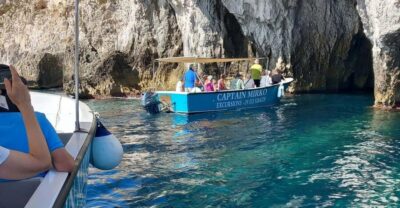 ★ 4.7Syracuse: Boat Tour with Captain Mirko, Snorkeling & CavesFrom $35746 reviews
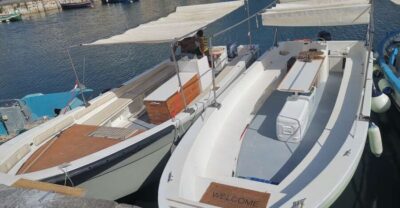 ★ 4.7Siracusa: Ortigia Boat Tour with Marine Grotto & SnorkelingFrom $47726 reviews
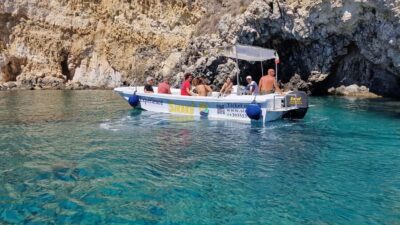 ★ 4.8Siracusa: Ortigia & Sea Caves Boat Tour w/ Prosecco & FruitFrom $35723 reviews
 ★ 5.0Tour of the island of Ortigia and exploration of sea caves with baths.From $24668 reviews
 ★ 4.7Syracuse: Ortigia Island & Sea Cave Boat Tour with ProseccoFrom $23418 reviews
 ★ 5.0Boat tour of Ortigia Island and sea cavesFrom $24407 reviews
 ★ 4.6Catania: Syracuse, Ortigia, and Noto Tour with BrunchFrom $112404 reviews
Browse the lists this tour appears in