
Reviewed · SYRACUSE & ORTIGIA
Group guided tour of the archaeological park of Neapolis
Siracusa’s ruins feel personal, not museum-y. In about 90 minutes, you get a guided walk through Neapolis with stops at major Greek and Roman sites, plus the legendary Ear of Dionysius. I especially love how the guide ties stories to what you can actually see, and I also like the radio setup that keeps everyone following along. One thing to consider: the Greek theater is often covered during spring and summer shows, so you may see only part of it.
This is a small-group tour (max 15 people) run by Hermes Sicily Tourist guides group, and it’s offered in English with a mobile ticket. Guides like Federica and Eva earned repeat praise for clear explanations and for keeping the pace smooth even when crowds spike.
In This Review
- Key Highlights You’ll Care About
- A 90-Minute Sweep Through Siracusa’s Neapolis
- Where to Meet (And How to Avoid the Ticket-Entrance Confusion)
- Stop 1: Parco Archeologico della Neapolis Start-Up Orientation
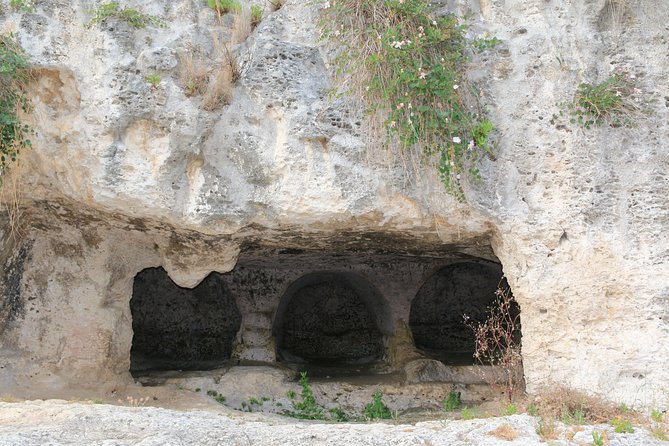
- Stop 2: Ear of Dionysius (The Legendary Cave)
- Stop 3: Teatro Greco and the Spring/Summer Visibility Twist
- Stop 4: Ara di Ierone (A Monument with Serious Presence)
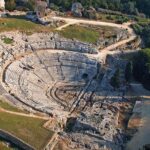
- Stop 5: Syracuse Roman Amphitheater
- Stop 6: Latomia del Paradiso (Quarry Gardens + Panoramic Walk)
- Guides, Radio Setup, and How the Tour Stays Understandable
- Price and Value: What $26.43 Really Buys
- Who This Neapolis Tour Fits Best
- Should You Book This Guided Tour?
- FAQ
- How long is the Neapolis guided tour?
- Is the tour offered in English?
- Are the entrance tickets included?
- What’s included besides the guide?
- Where do we meet for the tour?
- Is the Greek theater fully visible during shows?
- Is the group size small?
- Can I get a full refund if plans change?
- Is it accessible for most people and can I bring a service animal?
Key Highlights You’ll Care About
- Radio guide included so you can keep up even across wider gaps between monuments
- Up to 15 people means fewer bottlenecks and more room for questions
- Legend + architecture stops: Ear of Dionysius, Greek theater, Ara di Ierone, Roman amphitheater
- Panoramic walk at Latomia del Paradiso through gardens in an ancient stone quarry
- English tour with mobile ticket convenience
- Spring/summer theater coverage can limit how much the Greek theater is visible
Deeper into Ortigia and old Syracuse
- Syracuse: Tour of Ortigia Island & Caves with Local Skipper
★ 4.7 · 1,060 reviews - Tour of the island of Ortigia and exploration of sea caves with baths.
★ 5.0 · 668 reviews - Boat tour of Ortigia Island and sea caves
★ 5.0 · 407 reviews - Siracusa Boat excursion island of ortigia and sea caves
★ 5.0 · 147 reviews
A 90-Minute Sweep Through Siracusa’s Neapolis
If you’re short on time in Siracusa, this tour is built for you. You start at the archaeological park of Neapolis and move through a sequence of the big-name structures people come to see, without turning it into a slow slog.
What makes it work is the structure: you’re not just walking past stones. You’ll get a historical introduction to the ancient city at the start, then short guided stops that explain what you’re looking at. The whole experience is designed to be understandable in real time, which matters when you’re surrounded by multiple layers of Greek and Roman building.
At $26.43 per person for roughly 1 hour 30 minutes, it’s also a practical way to get context fast. The tradeoff is that the entrance ticket to the park and monuments is not included unless you choose a tour+ticket option, so you’ll want to plan that part ahead.
Where to Meet (And How to Avoid the Ticket-Entrance Confusion)
Meet at Largo Anfiteatro, 2, 96100 Siracusa. The biggest practical tip here: arrive a little early and get your bearings before the group starts moving. Some people run into a mismatch between the street meeting point and the ticket area nearby, so showing up early keeps things stress-free.
You’ll also want to think about lines. Since the park entry isn’t automatically included, I recommend grabbing what you need before you join the group. One simple strategy: get there early, buy any required entry in advance, then meet your guide and keep the day rolling.
Also, plan around crowd flow. One of the strongest pieces of feedback from real guides on this kind of route is that they know how to keep moving when cruise crowds swell. With a small group size, you’re less likely to get swallowed by the busiest moments.
Stop 1: Parco Archeologico della Neapolis Start-Up Orientation
The tour begins right at the entrance of the archaeological park of Neapolis. Expect a short meet-and-greet plus a historical introduction meant to orient you before you start scanning ruins.
This start matters more than it sounds. Neapolis covers a lot of ground, and Greek and Roman elements sit close together. A good opening explanation helps you make sense of where you are and why all these structures belong to the same story of the city.
At this point, admission is usually not included as part of the tour itself, so you’ll likely need to have your park entry sorted. The timing here is also efficient—about 5 minutes of introduction—so you can get to the high-interest sites without wasting the hour.
Stop 2: Ear of Dionysius (The Legendary Cave)
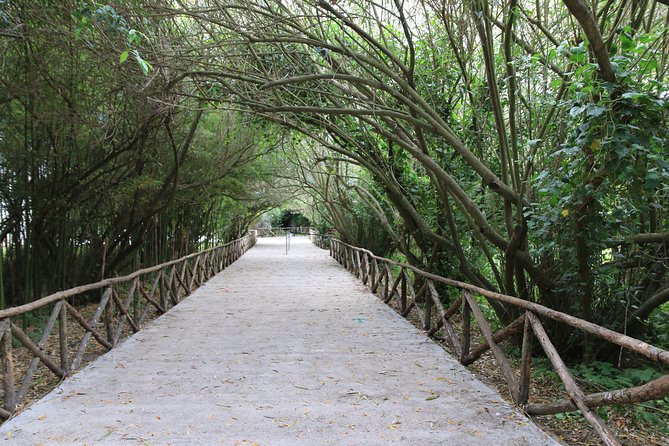
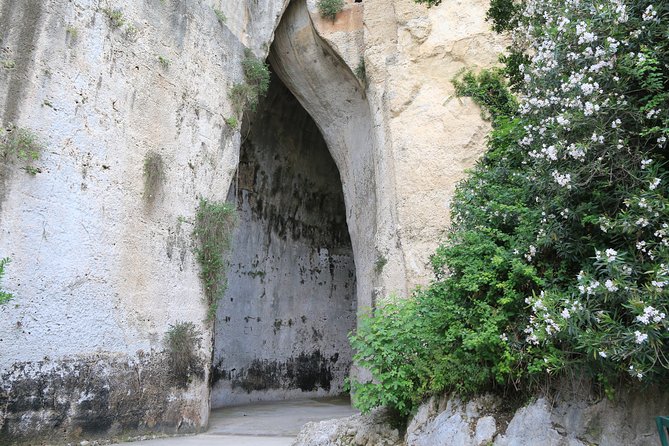
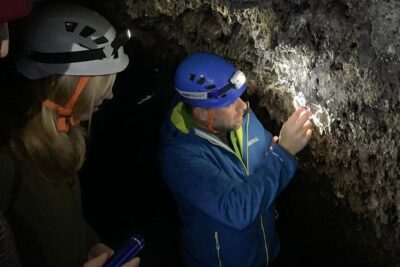
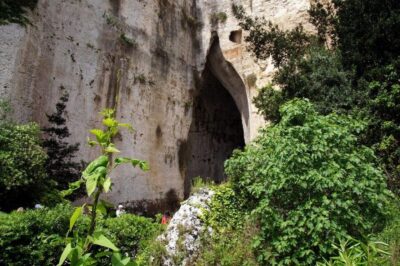
Next up is the Ear of Dionysius, a visit to the famous cave with a legend attached to it. Even if you’ve heard the story before, the real value is what the guide does with it: they connect the legend to what you’re seeing in the space itself.
The stop is about 15 minutes, which is just enough time to experience the setting without feeling rushed. It’s also a nice contrast against the brighter, open-air monuments you’ll see later. Think of it as your “pause and focus” moment during a compact tour.
If you like mythology plus physical place—how a story fits inside actual architecture—this is often the part people remember most.
A few we would gladly point a friend toward in Sicily



Stop 3: Teatro Greco and the Spring/Summer Visibility Twist
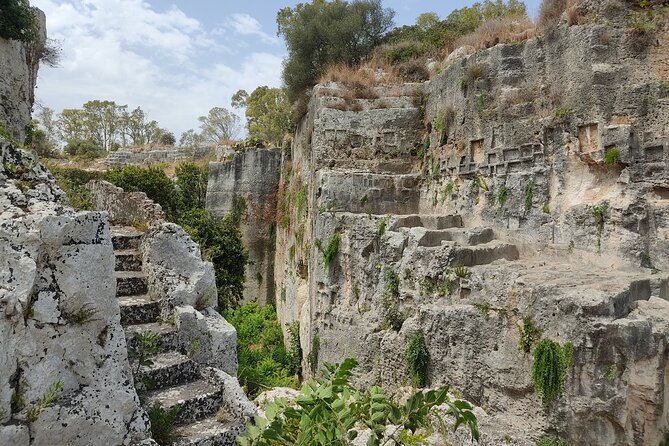
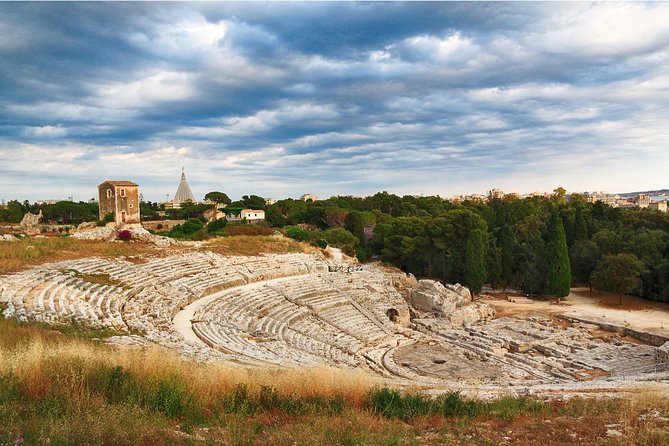
Then you move to the Greek theater. Your guide explains the archaeological details and talks about the history and how the theater was used.
This stop runs about 30 minutes, which is a meaningful chunk in a tour that totals around 90 minutes. It’s long enough to ask questions, notice design features, and hear the explanation in context.
One important heads-up: during the period of shows (usually spring and summer), the Greek theater is covered and only partially visible. That doesn’t make the stop pointless—it still sets the scene and helps you understand the site—but your photo expectations should be flexible.
If you’re traveling during peak show months and you really want full views, you might prefer choosing a timing or alternative day when coverage is less likely.
Stop 4: Ara di Ierone (A Monument with Serious Presence)
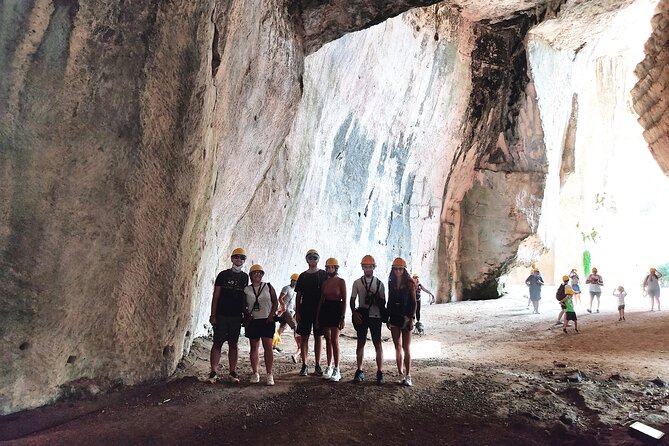
After the theater, you’ll visit the Ara di Ierone, with a guided walk that focuses on the history of the monument. This stop is shorter—about 10 minutes—so you’re not stuck standing around.
What I like about including a monument like this is that it breaks up the rhythm. After open-air theater views and the cave’s enclosed feel, Ara di Ierone gives you a different kind of “read” of ancient space—more about the monument’s role and meaning than just its layout.
Even with the short time, a guide-led explanation helps you avoid the common problem of staring at something impressive but not knowing what you’re looking at.
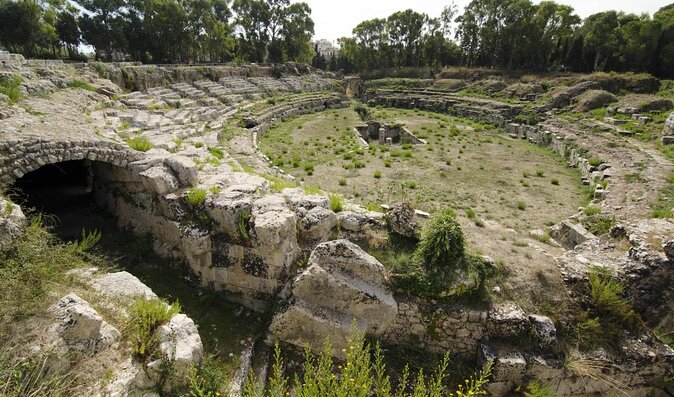
Stop 5: Syracuse Roman Amphitheater
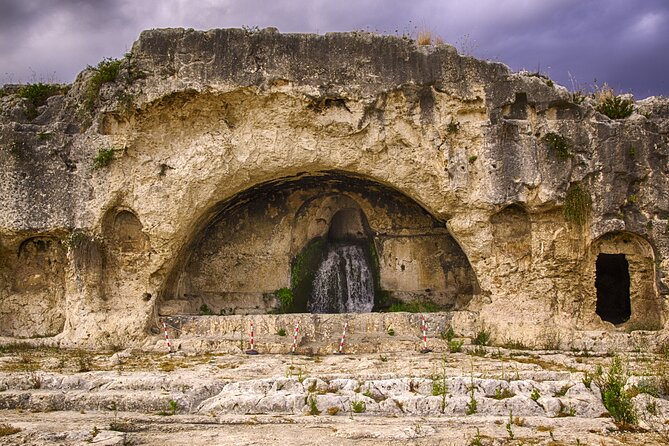
Next comes the Syracuse Roman Amphitheater, where you get a guided visit. The Roman period layer is part of what makes Neapolis so rewarding: you see how different eras shaped public space.
This stop is about 20 minutes, which is a comfortable amount of time in a busy schedule. It’s long enough to catch the guide’s talking points and look around from your spot, but short enough to keep energy up for the final walk.
Stop 6: Latomia del Paradiso (Quarry Gardens + Panoramic Walk)
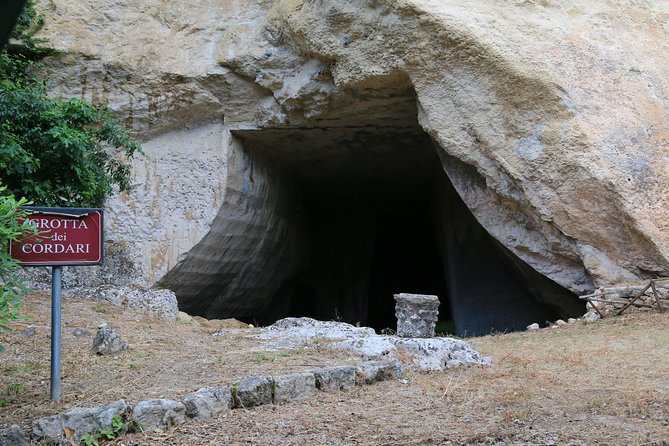
Finish with Latomia del Paradiso, a panoramic and guided walk through the gardens of an ancient stone quarry. This is a slower, more scenic ending compared with the structured monument stops.
The guide’s walk matters here because the quarry setting can be visually striking on its own, but you’ll get more out of it with context. Plus, this kind of stop gives your feet a breather before the tour ends back at the meeting point.
You’ll likely also enjoy the small details that guides sometimes point out—like plants and trees—since some guides have been praised for connecting the site to what’s growing and changing today. One additional note from past visitors: an Igor Mitoraj sculpture display has been mentioned as worth seeing if it’s on during your visit.
Guides, Radio Setup, and How the Tour Stays Understandable
This tour includes a radio guide, which is a big quality-of-life factor in archaeological parks. When you’re moving between stops, it’s easy for sound to get swallowed by distance and noise. With the radio, you’re far more likely to actually follow the guide’s explanations instead of playing guessing games.
The tour is offered in English, and many people appreciate the clarity of the guides. Names that came up strongly in feedback include Federica, Eva, Sebastiano, and Gaetano—all described as friendly, easy to follow, and good at answering questions.
A small group of up to 15 people also helps. You’re not competing for attention, and you can hear the guide without constantly craning your neck.
Price and Value: What $26.43 Really Buys
On paper, $26.43 for a guided 90-minute tour sounds straightforward. The real question is value—especially because entrance tickets are not included for stops, unless you pick the tour+ticket option.
Here’s why it still can be good value:
- You’re paying for a guide to turn scattered ruins into a coherent story
- The radio guide is included, which reduces frustration during the walk
- You’re covering multiple major sites in one go, saving time and decision-making
The main cost consideration is that you may need to add admission separately. If you’d otherwise wander the park on your own, you’re basically buying time and clarity. If you like being told where to look and what’s meaningful, the math often works out.
If you’re the type who loves self-guided exploring, you might compare the cost of a guide plus entry versus doing it all independently. But if you want context and smoother pacing, this tour fits.
Who This Neapolis Tour Fits Best
This tour is a strong fit if you want:
- A one-session overview of Neapolis without overplanning
- Greek and Roman sites grouped into an efficient route
- English explanations with a radio guide
It’s also ideal for people who don’t want to get stuck decoding ruins alone. The itinerary is structured so each stop has a purpose, and the pace stays manageable for a small group.
If you’re traveling with kids, the tour format can work well because it’s broken into digestible segments and focuses on legends and recognizable structures. If you’re very sensitive to covered views at the Greek theater, check your travel season and expectations.
Should You Book This Guided Tour?
Yes, I think it’s worth booking if you want a guided orientation and a compact route through the major Neapolis landmarks. The radio guide and the small group size do real work here, not just on paper.
If you’re trying to minimize extra costs, make sure you understand whether you’re selecting the option that includes entry tickets. And if you’re visiting in spring or summer, go in knowing the Greek theater may be only partially visible due to shows.
Also, arrive early and plan to handle tickets ahead of time so you don’t waste your tour window.
FAQ
How long is the Neapolis guided tour?
The tour lasts about 1 hour 30 minutes.
Is the tour offered in English?
Yes. The tour is offered in English.
Are the entrance tickets included?
Admission is not included in the price (except if you choose a tour + ticket option). Some stops note free admission, but the entrance ticket is generally separate.
What’s included besides the guide?
The tour includes a radio guide so you can hear the explanations even when you’re farther from the guide.
Where do we meet for the tour?
You meet at Largo Anfiteatro, 2, 96100 Siracusa SR, Italy. The tour ends back at the meeting point.
Is the Greek theater fully visible during shows?
No. During the period of shows (usually spring and summer), the Greek theater is covered and only partially visible.
Is the group size small?
Yes. This activity has a maximum of 15 travelers.
Can I get a full refund if plans change?
Yes. You can cancel for free up to 24 hours before the experience start time for a full refund. If canceled less than 24 hours before, the amount paid isn’t refunded.
Is it accessible for most people and can I bring a service animal?
Service animals are allowed, and the tour notes that most travelers can participate. It’s also near public transportation.
If you’d like, tell me your travel month and whether you’re visiting during show season, and I’ll suggest the best expectations for the Greek theater stop.
More Tours in Sicily





More Tour Reviews in Sicily


More of Syracuse and Ortigia

Just added: the newest Sicily tours in our notebook
- Etna / Taormina★ 5.0 · 3 reviews
- Bikes★ 5.0 · 3 reviews
- Taormina shore tour – for small group cruise passengers★ 5.0 · 3 reviews
- Vegan Cooking Class in Catania with Lunch and Dinner★ 5.0 · 3 reviews
- Make & Taste Sicilian Desserts in Palermo – Learn Cannoli & More★ 5.0 · 3 reviews
- Sicilian Villages & Ricotta Tasting – including Lunch from Cefalu★ 4.0 · 3 reviews
Syracuse & Ortigia, compared.
 ★ 4.7Syracuse: Tour of Ortigia Island & Caves with Local SkipperFrom $231,060 reviews
 ★ 4.7Syracuse: Boat Tour with Captain Mirko, Snorkeling & CavesFrom $35746 reviews
 ★ 4.7Siracusa: Ortigia Boat Tour with Marine Grotto & SnorkelingFrom $47726 reviews
 ★ 4.8Siracusa: Ortigia & Sea Caves Boat Tour w/ Prosecco & FruitFrom $35723 reviews
 ★ 5.0Tour of the island of Ortigia and exploration of sea caves with baths.From $24668 reviews
 ★ 4.7Syracuse: Ortigia Island & Sea Cave Boat Tour with ProseccoFrom $23418 reviews
 ★ 5.0Boat tour of Ortigia Island and sea cavesFrom $24407 reviews
 ★ 4.6Catania: Syracuse, Ortigia, and Noto Tour with BrunchFrom $112404 reviews
Browse the lists this tour appears in