
Reviewed · MOUNT ETNA TOURS & SUMMIT
Excursion on the summit craters of Etna, with cable car and 4×4 bus
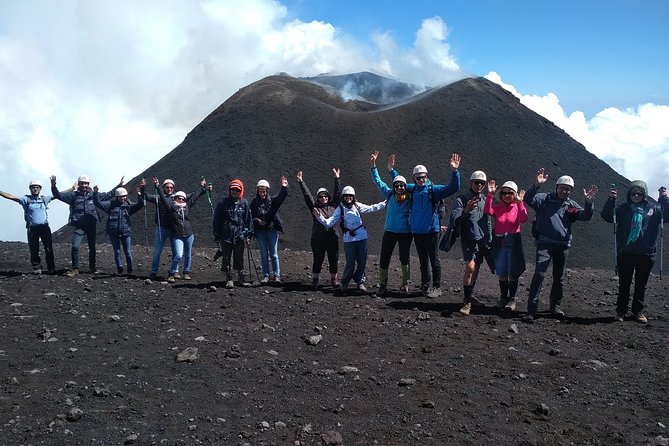
Etna is loud, even when you’re quiet. This excursion turns Sicily’s biggest volcano into a guided, step-by-step adventure: cable car to 2,500 meters, 4×4 minibuses higher up, then a trek toward the summit around 3,340 m. I especially like the professional alpine and volcanological guides (authorized for active volcano work), and you’ll also get the chance to see four active craters with constant fumaroles and dramatic steam-and-ash puffs, weather permitting.
The one real consideration is that conditions can make or break the experience. High winds and low visibility are common on the top end, and on some days the on-trail explanation may feel more Italian-leaning than you’d expect even though the tour is offered in English.
In This Review
- Key Highlights You’ll Feel Immediately
- Etna’s summit craters: what you’re really going to witness
- From Rifugio Sapienza (1,900 m) to the 4×4 start: the ride that sets your day
- The trekking push toward ~3,340 m: lunar terrain, fresh lava, and real-time views
- Valle del Bove and the crater time: why the route feels purposeful
- The descent: sandy footing, fun momentum, and newer eruption craters
- Guides, language, and group pace: what to expect on the human side
- What to wear: helmets, windbreakers, and the reality of wet gear
- Price and value: $168.58 for transport, summit access, and professional guidance
- Weather reality on Etna: wind can change the whole mood
- Who should book this Etna summit crater trek (and who should not)
- Quick FAQ: the details you’ll want before you go
- FAQ
- How long is the excursion on Etna?
- Where does the tour start and what time is it?
- Do I get to use public transport to reach the start?
- What’s included in the ticket price?
- Is lunch included?
- Do you offer pickup?
- Is this tour safe for people with heart problems?
- What happens if the tour is canceled due to weather?
- Should you book Etna Summit Craters with cable car and 4×4?
Key Highlights You’ll Feel Immediately
- Cable car to 2,500 m cuts the hardest start and keeps the day moving smoothly.
- 4×4 minibuses to about 2,800 m get you closer before your trek begins.
- A guided push to ~3,340 m lets you experience active craters up close.
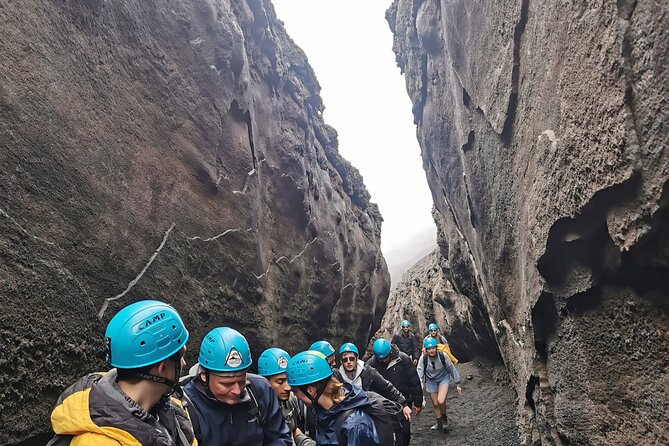
- Helmets mandatory from 2,900 m as you enter the highest-risk zone.
- Sandy descent on recent terrain makes the return feel more like controlled walking than slipping and sliding.
- Small group size (max 15) helps you keep your bearings and stick to the pace.
More ways up the volcano from Sicily
- Etna Morning Trip
★ 4.5 · 1,241 reviews - Mt. Etna nature and flavors half day Tour from Catania
★ 5.0 · 545 reviews - Etna excursion 3000 meters with 4×4 cable car and Trekking
★ 4.5 · 504 reviews - Mount Etna Adventurous Hiking Tour with Equipment
★ 4.5 · 439 reviews
Etna’s summit craters: what you’re really going to witness
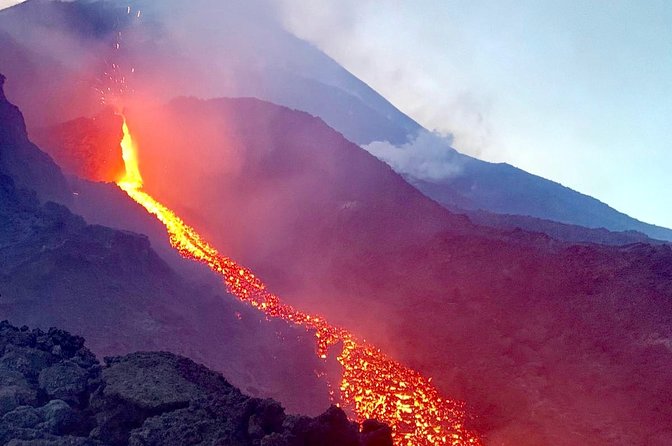
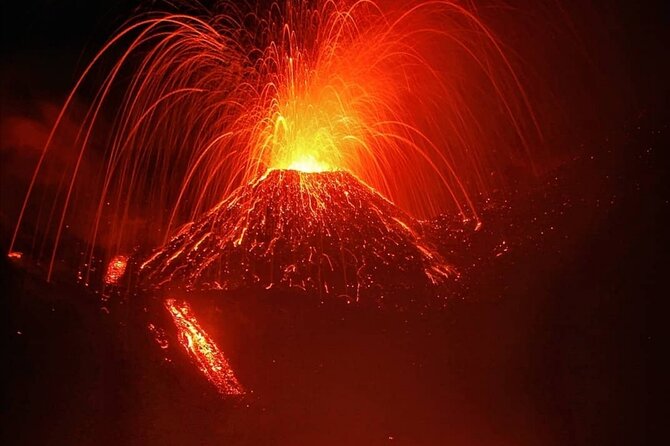
What makes Etna special isn’t just the altitude. It’s the fact that it’s active while you’re there. At the top, you’re not looking at a silent mountain model. You’re watching vents work: fumaroles, frequent explosions, and those sudden puffs of ash and steam that can feel startling when you’re standing close.
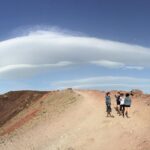
You’ll spend time in the crater area at roughly 3,340 meters, which changes the whole experience. The air is thinner, the light gets sharper, and the ground turns into that stark, almost lunar terrain that looks otherworldly but is very real. If you’ve been to volcano viewpoints that feel like you’re watching from far away, this one feels more like being inside the story—still guided, still safe, but not distant.
The other important part: you’re doing this with guides who are there for active volcano conditions. That matters for pacing, gear reminders, and how they read the mountain when weather shifts. You don’t just get a hike. You get a plan, and that plan is built for Etna.
From Rifugio Sapienza (1,900 m) to the 4×4 start: the ride that sets your day
Your day begins around 1,900 meters in the Rifugio Sapienza area (Nicolosi Nord, near Nicolosi). The start is practical: you’re already high, so you’re not fighting that first brutal climb on day one.
Next comes the cable car to about 2,500 meters. This is a huge quality-of-life factor. It gets you up fast, and it means your energy goes into the trek and the crater time, not into an exhausting prelude.
Then the itinerary switches from “gentle ascent” to “volcano access.” You’ll transfer to specialized off-road minibuses (a 4×4-style ride) that take you up to about 2,800 meters. This segment is where the day starts to feel like an excursion, not just a viewpoint visit. Expect the ride to be bumpy in the way that’s typical of rugged volcanic terrain.
The value here is balance. You get enough transport to make the summit achievable, but not so much that the day feels like a bus tour. If you want Etna’s drama without turning it into a legs-only suffering contest, this is the right mix.
The trekking push toward ~3,340 m: lunar terrain, fresh lava, and real-time views
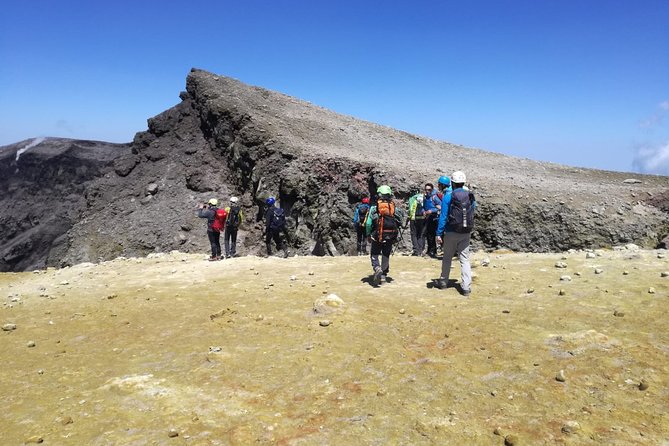
Once you reach around 2,800 meters, the trekking begins. This is the part you’ll feel in your legs, but it’s also the part that makes the trip memorable.
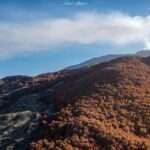
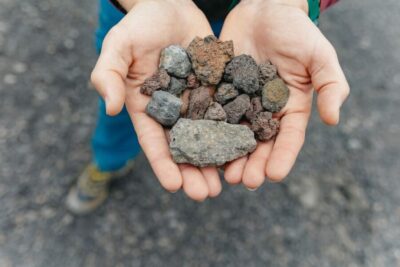
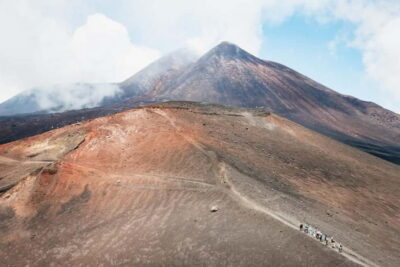
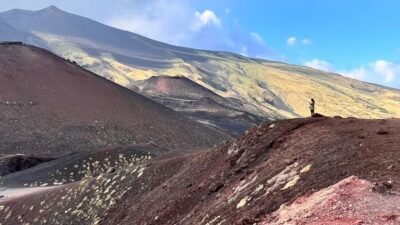
The route goes through very recent lava—with the last noted lava flows mentioned as falling in January 2024. That detail matters because the ground changes depending on how fresh the surface is: you may walk across darker rock fields, sandy patches, and areas that look almost scoured clean. Add in the wind exposure at altitude and the terrain really does begin to look and feel like a different planet.
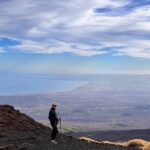
You’ll also be walking across areas with what you can think of as “panorama breaks.” Even if the top end is cloudy or foggy, the mid-high sections tend to offer sweeping views when visibility is decent. On clear stretches, you’ll see why Etna is famous: the scale is huge and the crater zone feels close enough to be personal.
At the summit area, the star is the active crater spectacle. You’re there to admire a group of active vents (the tour specifically calls out four active craters) where fumaroles and explosions keep happening. When you get those ash-and-steam puffs, it’s not a museum effect. It’s the real thing.
Valle del Bove and the crater time: why the route feels purposeful
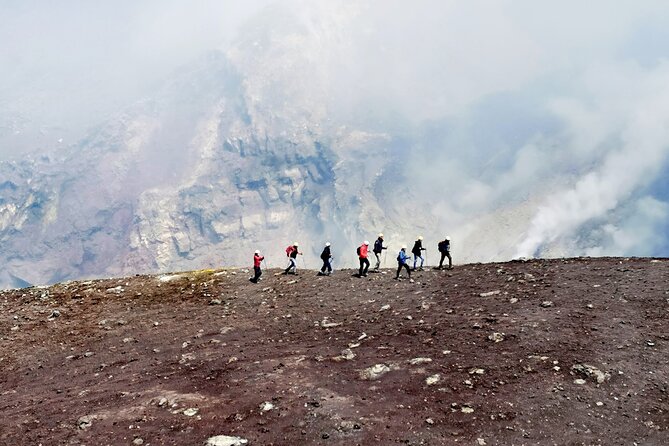
One of the named stops is Valle Del Bove. This matters because it’s not just a random pause. Valle del Bove is a recognizable feature of Etna’s volcanic structure, and the scenery there helps you understand what you’re walking into. You’ll often see the valley shape and the scale of volcanic formations in a way you can’t from a flat viewing platform.
Then comes the summit crater segment, where the day becomes sensory. It’s not only visual. It’s also about how the mountain “behaves” in the moment—steam, ash puffs, and the constant signs of activity.
This kind of guided timing is a big part of the experience value. Your guides (the authorized volcanology team) help you get to the right zones while it’s still safe and still realistic, and they keep the group together in a place where it would be easy to lose your bearings if you were on your own.
If there’s a downside, it’s that this type of crater viewing depends on conditions. When wind and visibility drop, the summit time can become more about staying focused and safe than about photographing the perfect panorama.
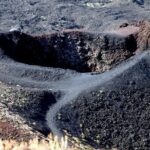
Rougher roads on Etna, taken by 4x4
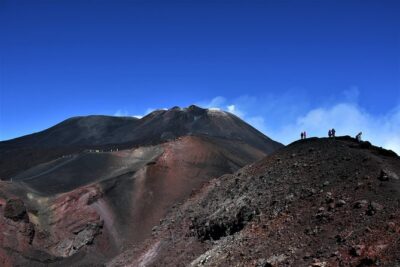
The descent: sandy footing, fun momentum, and newer eruption craters
The return isn’t just “walk back the way you came.” You descend primarily on sandy surface, and the tour frames it as easier and more fun than you might expect for a mountain descent.
That’s exactly how it tends to feel on volcano terrain when conditions are right: sandy ground can look intimidating, but when it’s stable it gives you a predictable step. It can also make the pace feel smoother because your footing slides slightly instead of catching like rocky scree.
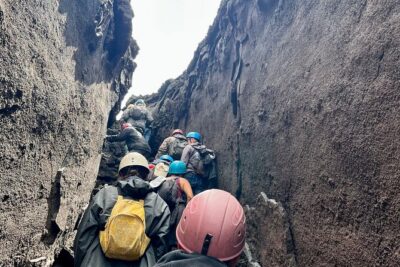
Along the way, you pass through volcanic points of interest, including craters tied to the 2002/2003 eruptions. That’s a nice detail because it gives the descent a narrative. You’re not just leaving the summit zone; you’re moving through the mountain’s recent changes, layer by layer.
By the time you reach around 2,500 meters, you’ll shift back to the cable car for the ride down to your starting area. That cable car finale helps the day close cleanly. You don’t end with an extra long grind if your legs are starting to complain.
Guides, language, and group pace: what to expect on the human side
This is a small group excursion, capped at 15 travelers, and that size changes the whole vibe. In a group like this, you’re more likely to ask a question, listen closely to instructions, and not get separated by crowd chaos.
The guides are described as alpine and volcanological professionals authorized to accompany people on active volcanoes. That’s reassuring on the safety side and also on the practical side: they understand what the mountain is likely to do and how to manage exposure at altitude.
One caution from experience patterns: English explanations may not always be as detailed as you hope. Even if the tour is offered in English, some teams can lean Italian-heavy depending on the day and the guide lineup. If you want maximum learning, come with a few basics in mind—like the meaning of fumaroles and why wind direction matters—so you still get value even when translation is thinner.
That said, even with limited language, the mountain itself keeps you engaged. You’ll still have plenty to watch and plenty to learn just from what’s happening in front of you.
What to wear: helmets, windbreakers, and the reality of wet gear
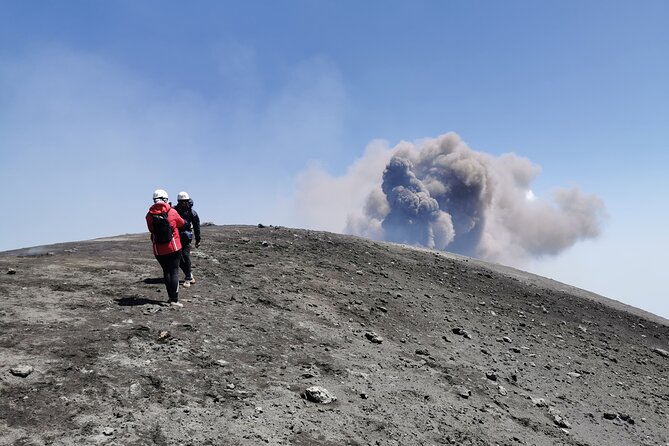
At altitude, clothing stops being comfort and starts being survival. The tour specifically notes recommended hiking day shoes and windbreakers. Treat that as the minimum, not the ideal.
Also note the helmet rule: a protective helmet is mandatory from 2,900 meters. That means your head and neck will be in “gear mode” during the final approach and summit time. Plan your layers so you can manage helmet fit without feeling squeezed or overheated.
Footwear matters most for stability. You’ll be walking on volcanic terrain, including sandy sections. That’s where poor tread or worn soles turn your day into stress.
If the weather turns wet, be ready for gear to feel uncomfortable. One of the issues flagged in feedback is that provided clothing can arrive damp after prior rain. Even if the tour supplies gear options like trekking poles on request, I’d still count on the day having wind and occasional dampness.
Practical packing advice based on how Etna behaves:
- Bring layers you can ventilate quickly in wind
- Use a windproof outer layer
- Wear shoes with reliable grip
- Consider bringing your own dry spare socks if you run cold
- If you need trekking poles, request them ahead
Price and value: $168.58 for transport, summit access, and professional guidance
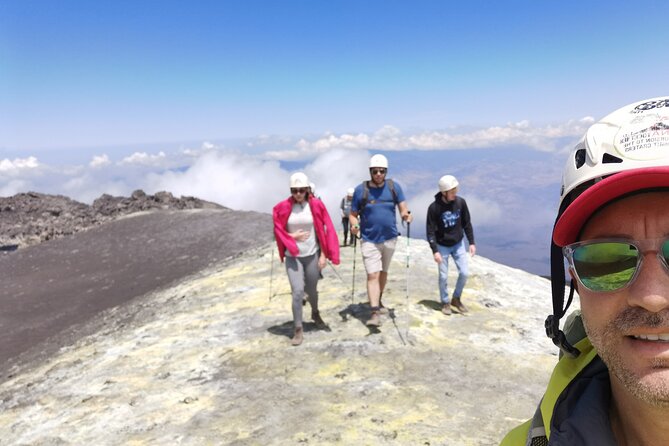
At $168.58 per person, this isn’t a cheap outing—but it’s also not just a casual hike. The price is doing real work.
You’re paying for:
- Return cable car ticket
- Return 4×4 minibus ticket (the high-altitude jump)
- Alpine/volcanological guide support
- Helmet provisions where required
- Trekking poles on request
- Insurance
- Mobile ticket access
And you’re gaining the structure that makes a high-altitude summit visit realistic. Without the cable car and the off-road minibuses, a trek to the 3,000-plus zone would be far more demanding and far less comfortable to manage.
What you do not get is lunch. You can buy something to eat directly at the meeting point before leaving. That’s a smart setup for hikers, because it reduces time wasted on finding food once you’re committed uphill.
Net: this price makes sense if you want access, safety, and guidance. It’s best value for travelers who want Etna up close but don’t want to plan the transport logistics themselves.
Weather reality on Etna: wind can change the whole mood
The tour explicitly depends on good weather. If conditions are poor, the experience can be canceled and you’ll be offered a different date or a full refund.
Even with good weather, don’t assume the top will feel calm. Feedback points to strong wind and low visibility on some summit moments. When you hit that combination, the day shifts from sightseeing to process: listen, follow instructions, keep warm, and focus on safety rather than lingering for photos.
This is also why the guide team matters. They’ll decide how to manage your time and movement based on what the mountain is doing in real-time.
If you’re the type who gets grumpy when plans aren’t photo-perfect, build in a little flexibility. Etna doesn’t negotiate. Your best attitude is calm curiosity.
Who should book this Etna summit crater trek (and who should not)
This excursion is for people with moderate physical fitness. It’s not described as a beginner scramble, but it is built around a structured itinerary: transport up, then a trekking segment, then a guided descent.
That said, it has a firm exclusion: it’s absolutely forbidden for anyone with cardiovascular problems. Don’t treat that as a suggestion. If you’re in that category, skip this experience.
You’ll likely love it if you:
- Want active volcano viewing up close, not just from a distance
- Prefer guided structure over self-planning
- Like hiking but appreciate that you won’t spend the whole day climbing
You might think twice if you:
- Get unsettled by wind and sudden visibility changes
- Have sensitive mobility needs for sandy terrain
- Expect long, detailed English storytelling the whole way
Quick FAQ: the details you’ll want before you go
FAQ
How long is the excursion on Etna?
The duration is about 5 hours 30 minutes.
Where does the tour start and what time is it?
It starts at 9:00 am. The meeting point is in Nicolosi (CT), near Monte Gebel Di Mariangela Carbonaro, Contrada Cantoniera, Nicolosi.
Do I get to use public transport to reach the start?
The meeting point is listed as near public transportation.
What’s included in the ticket price?
Your ticket includes the return cable car ticket, the 4×4 minibus ticket, an alpine/volcanological guide, trekking poles on request, a protective helmet when required, insurance, and recommended equipment (hiking day shoes and windbreakers).
Is lunch included?
No. Lunch isn’t included, but you can buy something to eat directly at the meeting point before the excursion leaves.
Do you offer pickup?
Pickup is offered as an extra service for an additional cost of 30 euros per person (roundtrip accommodation pickup).
Is this tour safe for people with heart problems?
The tour is absolutely forbidden for anyone suffering from cardiovascular problems.
What happens if the tour is canceled due to weather?
If it’s canceled due to poor weather, you’ll be offered a different date or a full refund.
Should you book Etna Summit Craters with cable car and 4×4?
If you want real access to active summit craters with guides who are qualified for active volcano terrain, this is a strong choice. The combination of cable car, then 4×4 minibuses, then a guided trek means you spend your effort on the crater experience, not on struggling uphill logistics.
I’d book it if you can handle altitude, don’t have cardiovascular risk factors, and you’re okay with the idea that wind and visibility may limit the view at the top. Bring wind protection seriously, plan for helmets above 2,900 m, and eat before you go since lunch isn’t included.
Skip it if you’re hoping for calm, predictable conditions and a long, perfectly translated talk throughout the route. Etna can be dramatic, and on that kind of day, the best “experience” is staying steady, listening to the guides, and letting the volcano show you what it wants to show you.
More Tour Reviews in Sicily
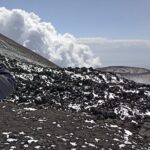
Etna by 4x4, a Few More
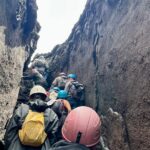
More Etna Summit Treks We Have Walked
Just added: the newest Sicily tours in our notebook
- Etna / Taormina★ 5.0 · 3 reviews
- Bikes★ 5.0 · 3 reviews
- Taormina shore tour – for small group cruise passengers★ 5.0 · 3 reviews
- Vegan Cooking Class in Catania with Lunch and Dinner★ 5.0 · 3 reviews
- Make & Taste Sicilian Desserts in Palermo – Learn Cannoli & More★ 5.0 · 3 reviews
- Sicilian Villages & Ricotta Tasting – including Lunch from Cefalu★ 4.0 · 3 reviews
Mount Etna Tours & Summit, compared.
 ★ 4.8Catania: Mount Etna Morning or Sunset Day Trip with TastingFrom $704,028 reviews
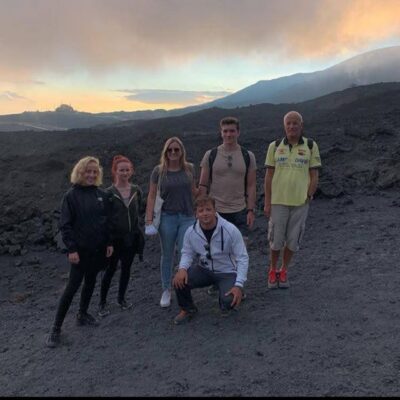 ★ 4.8Catania: Sunset Jeep Tour of Mount Etna and Lava Flow CavesFrom $712,113 reviews
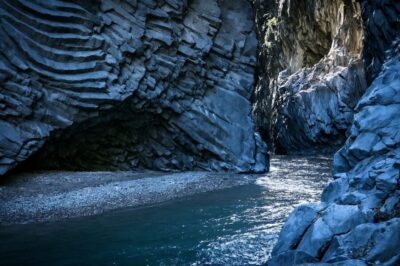 ★ 4.8Etna and Alcantara Gorges Full-Day Tour with LunchFrom $1051,766 reviews
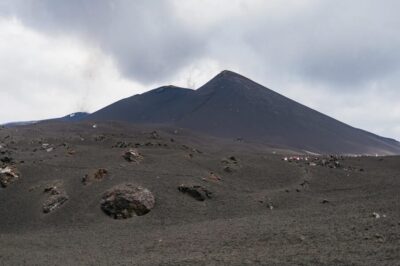 ★ 4.7Etna: summit craters trekking with volcano guide 3350mtFrom $771,712 reviews
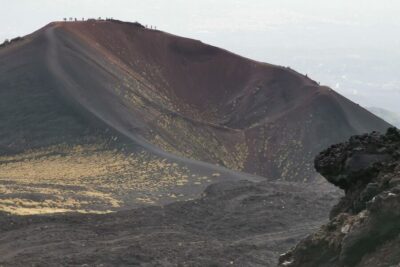 ★ 4.9Catania: Mount Etna Trekking Tour Beyond the Tourist TrailsFrom $811,596 reviews
 ★ 4.8Mount Etna: Guided Trek 3,000 Meters to the SummitFrom $1131,407 reviews
 ★ 4.8Catania: Etna Sunset Tour with Pickup and Drop-offFrom $711,348 reviews
 ★ 4.8Etna Sunset Tour: Volcano trek, Cave & tasting from CataniaFrom $701,290 reviews
Browse the lists this tour appears in