
Reviewed · MOUNT ETNA TOURS & SUMMIT
Etna Hard Tour
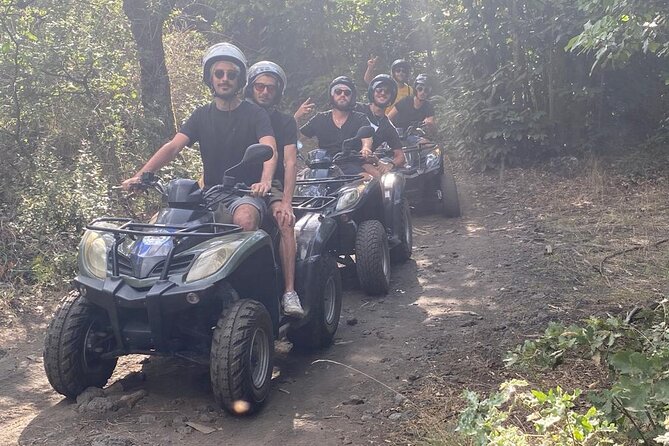
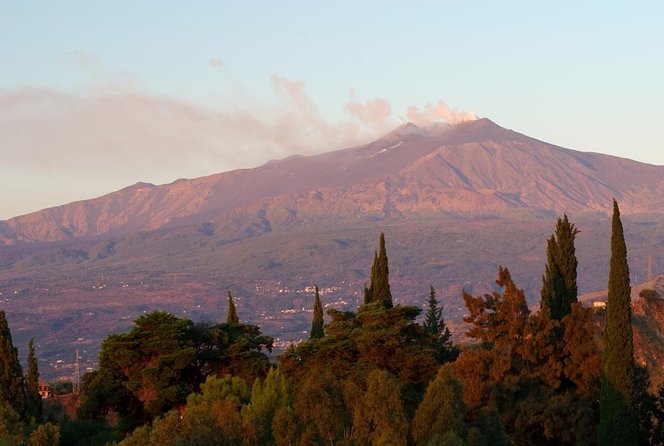
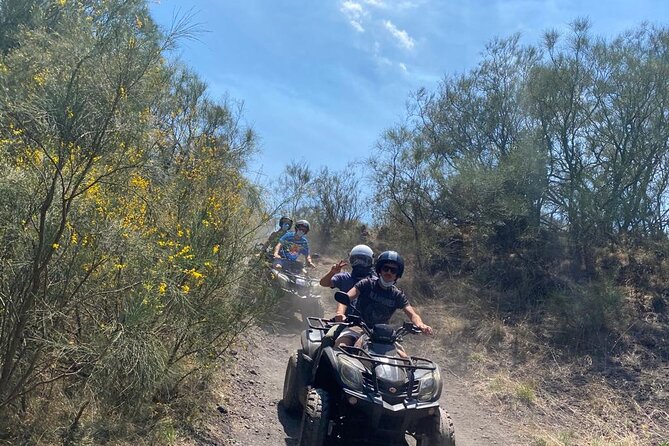
Etna Hard Tour is what happens when you trade paved viewpoints for real volcanic terrain. You meet your guide in Pedara and spend about four hours bouncing over dirt and lava features on a quad, from lower slopes up toward the crater area.
What I like most is the ride plan: it’s 80% off-road, so you actually get movement that matches Etna’s rough, broken ground. I also like that the experience builds in altitude step-by-step, topping out around 2000 meters to reach silvestri craters and the 2001 lava flow area before heading back down.
One thing to keep in mind: this is not a casual sit-and-look outing. The tour calls for a strong physical fitness level, and the guides prioritize safety, including correcting unsafe behavior.
In This Review
- Quick hits: what makes this Etna quad ride different
- Where the tour starts: Pedara’s meeting point and the ride vibe
- The first phase up Mount Etna: training, lava cave, and the Bove Valley
- Stop 1: lava flow cave and early lava terrain
- The Bove Valley: where Etna’s scale becomes obvious
- The big altitude segment: 2000 meters, silvestri craters, and the 2001 flow
- Coming back down: the 850-meter finish and why the last leg matters
- Safety and guide style: what to expect when the rules kick in
- Fitness level and who this tour fits best
- Price and value: is $324 per group worth it?
- Weather reality on Etna: why timing can change the feel
- Reviews: what stands out in the signal
- Should you book the Etna Hard Tour?
- FAQ
- How long is the Etna Hard Tour?
- How big is the group?
- Where does the tour start and end?
- What language is the tour offered in?
- Is admission included?
- What’s the cancellation policy?
Quick hits: what makes this Etna quad ride different
- A briefing before you start so you learn how to use the quad properly
- 80% off-road route with real dirt-road riding, not just short scenic spurts
- Multiple volcanic stops including a lava flow cave and several crater areas
- A big altitude push up to about 2000 meters, then a descent back to around 850 meters
- Small group size (max 10), which helps the ride stay controlled
- Fuel surcharge included, with the activity ending back at the meeting point
More ways up the volcano from Sicily
- Etna Morning Trip
★ 4.5 · 1,241 reviews - Mt. Etna nature and flavors half day Tour from Catania
★ 5.0 · 545 reviews - Etna excursion 3000 meters with 4×4 cable car and Trekking
★ 4.5 · 504 reviews - Mount Etna Adventurous Hiking Tour with Equipment
★ 4.5 · 439 reviews
Where the tour starts: Pedara’s meeting point and the ride vibe
You’ll meet at Via Martiri di Cefalonia, 95030 Pedara CT, Italy, and the tour ends back at the same spot. That matters more than you’d think. When you’re riding off-road, you want a clean start-and-finish that doesn’t turn into extra transfers.
The tour is offered in English, uses a mobile ticket, and is set up for a small group: up to 10 travelers. In practice, that usually means you spend less time waiting around and more time on the route, which is the whole point of a hard quad experience.
Also note the pacing: the activity is around 4 hours (approx.). With an Etna ride, that’s a sweet spot—long enough to feel like you’ve left the ordinary, short enough that you’re not still riding when your attention starts to fade.
The first phase up Mount Etna: training, lava cave, and the Bove Valley
The tour starts with you meeting a quad driver / nature guide at the starting point. Before you go anywhere wild, the guide explains how to use the quad correctly. This is a big deal for two reasons. First, it helps you ride with control on uneven volcanic ground. Second, it keeps the group moving safely when you’re on mixed surfaces.
Then you head out to the first set of Etna features.
Stop 1: lava flow cave and early lava terrain
Early on, you’ll visit a lava flow cave and then see a lava flow. Even if you’ve never thought about how lava cools and cracks, these stops tend to make the volcano feel tangible. You’re not just looking at a cone—you’re seeing forms created by moving rock and shifting terrain.
The value here is timing. Coming early, you’re fresh, your attention is high, and the guide can connect what you’re seeing to the way the landscape was shaped.
A drawback? If you’re hoping the experience starts with maximum throttle and minimal talk, you might find the early structure (briefing, guided stops) sets the tone as more educational than purely adrenaline.
The Bove Valley: where Etna’s scale becomes obvious
Next, you’ll move toward the Bove Valley. This is the kind of area that can make Etna’s scale feel real fast—because the ground doesn’t just change color or texture. It changes character. It’s less like a nature trail and more like a world built out of broken, re-formed stone.
This is also where the off-road ratio starts to pay off. Since the tour is designed around 20% on road and 80% off road, you’re riding through the terrain rather than viewing it from behind a fence or a bus window.
The big altitude segment: 2000 meters, silvestri craters, and the 2001 flow
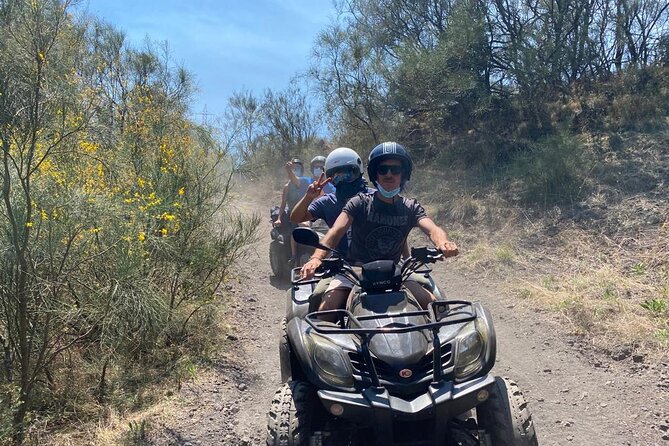
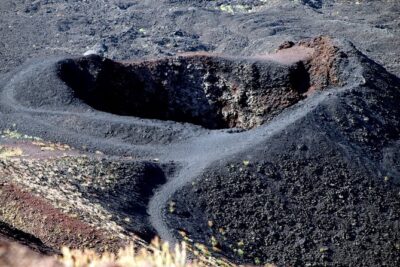
The center of the tour is the push up to about 2000 meters. At that point, you’ll visit the silvestri craters, side craters, and the area connected to the 2001 flow.
This is the moment where the ride stops feeling like an off-road joyride and starts feeling like a real Etna route. Craters and flow areas are the “why” of the whole experience. You’re seeing volcanic features that shaped the present surface.
Also, the tour doesn’t treat this as a single lookout. It’s multiple crater areas plus the 2001 flow context. That matters because Etna is not one single “thing.” It’s a system—so seeing more than one type of volcanic feature helps you connect the dots in your head.
Then comes the descent.
Coming back down: the 850-meter finish and why the last leg matters
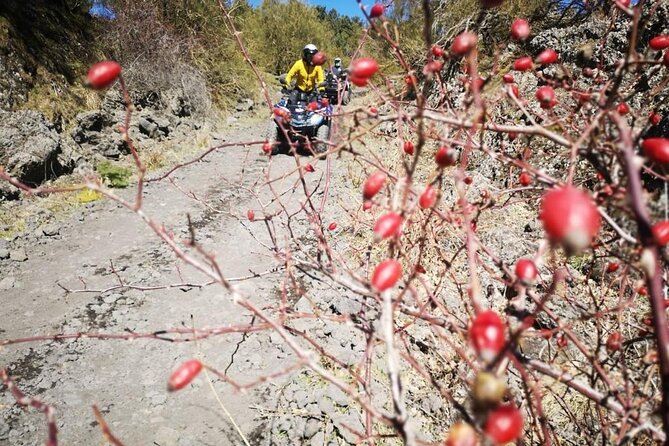
After the higher stops, you descend to the starting area between the road and the last piece of dirt road, down at about 850 meters. This segment is where hard tours often make or break the experience. When you go from higher, rougher ground down to the meeting area, you feel the change in terrain and how quickly conditions can shift.
If you booked hoping for nonstop action the whole time, remember: the tour has a designed flow—caves and craters aren’t quick photo stops. They’re part of the ride structure. That’s also why the total duration is about 4 hours instead of something shorter that can feel rushed.
Safety and guide style: what to expect when the rules kick in
Here’s the honest part: quad tours on volcano terrain aren’t the place for improvising seating or ignoring instructions. The tour’s setup includes a quad use explanation at the start, and the guide’s role continues during the ride.
One review flagged that the guides can be firm when it comes to safety, including corrections that affect where people place themselves during the ride. If you’re traveling with kids or you’re thinking about doing anything unusual with seating or positioning, don’t. The tour is designed around what’s safe and legal for the quad setup, not around personal preference.
That firm, corrective energy can feel disappointing if you expected a laid-back adventure. But it’s also what makes a group ride work when the route is partly off-road and the terrain is unpredictable.
Fitness level and who this tour fits best
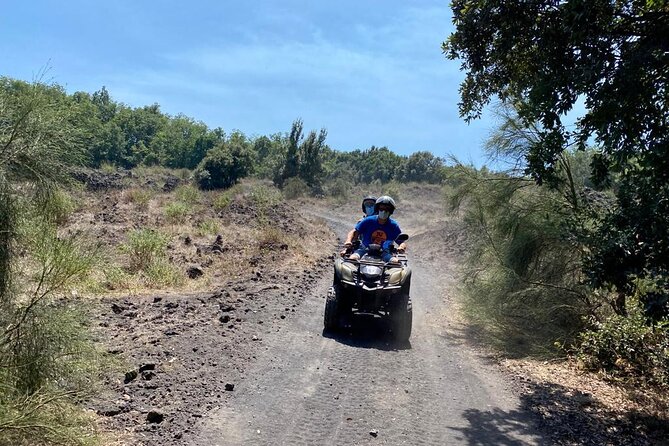
The tour specifically notes that you should have a strong physical fitness level. That’s not just marketing language. Off-road quad riding can mean physical effort even when you’re not hiking. You’re reacting to uneven surfaces, maintaining balance, and spending time on a moving machine through rougher terrain.
So this is a better match for people who:
- Feel comfortable riding and staying alert for a full approx. 4 hours
- Want an active, terrain-focused Etna experience rather than a short “see the crater” detour
- Prefer a small group feel over large-tour crowds (again, max 10)
If you’re looking for something easy, mostly paved, and low-effort, this hard-style ride probably isn’t your best choice. And if your idea of fun is mostly sitting and watching, the off-road percentage (80%) will likely feel like more work than you expected.
Price and value: is $324 per group worth it?
The price is $324.06 per group (up to 2) for a roughly 4-hour experience in English. That means the best value happens when you can share the group spot with someone. If you go as two people, you’re splitting the group cost, which turns the ride into a more reasonable per-person outing.
Is it expensive? Yes, it’s not a bargain. But you’re paying for a combination that’s hard to recreate on your own:
- A guided route across multiple volcanic features (cave, lava flow, valley, craters, flow area)
- A structured quad experience with an on-site explanation of quad use
- Small-group operation (max 10 travelers) that supports actually getting around instead of spending time waiting
Also, the tour notes that admission ticket is free. That helps keep the experience from turning into a patchwork of extra entrance fees once you’re already on Etna.
Bottom line on value: if you want the volcano closer and you’re comfortable with the hard/physical side, you’re paying for access and routing—not just for the quad. If you mainly want views from a distance, there are likely cheaper ways to see Etna. But this isn’t that kind of tour.
Weather reality on Etna: why timing can change the feel
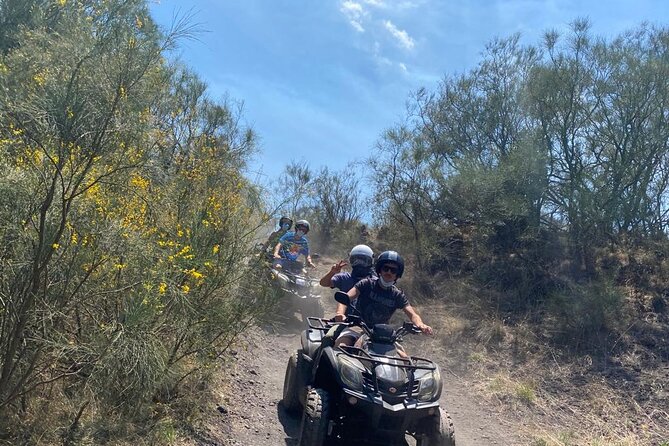
Mount Etna can change mood fast. One piece of feedback pointed out that weather is hard to control in the mountains and that conditions can shift quickly. The practical takeaway is simple: treat this like an outdoor adventure where the exact feel of the ride can depend on what the mountains are doing.
That doesn’t automatically mean the tour won’t run. It does mean you should avoid assuming perfect conditions. If rain, cloud, or wind show up, you’re still going to be riding off-road terrain designed for those environments, but the atmosphere may not be the same as a sunny day.
Reviews: what stands out in the signal
With a 4.9 rating and 95% recommended, the strong pattern is clear: people like how close they get to Etna’s terrain and how the guide connects the ride to the ground under your wheels. Off-road fun is a recurring theme—especially when the guide explains what you’re actually seeing.
At the same time, there’s a cautionary note. One critical review complained about feeling that the most exciting parts weren’t delivered on the timeline they expected and about a brief stop at a winery-related area. The operator response also said the tasting or cellar visit was optional and not part of the quad tour itself. Whatever the exact label, the takeaway for you is to be clear about what’s included in your specific departure and what’s an extra along the way.
Should you book the Etna Hard Tour?
Book it if you want an active, off-road Etna route and you’re prepared for a small-group ride that prioritizes safety. This is best for people who like learning while moving—lava cave, lava flow, Bove Valley, and the crater/flow area around silvestri and the 2001 flow zone sounds like your kind of Etna day.
Skip it (or choose a gentler option) if you want an easygoing experience that feels mostly like sightseeing. This tour’s 80% off-road plan and the stated need for strong physical fitness make it a harder choice by design.
And if you’re sensitive to strict safety rules, adjust your expectations now. Guides may correct how you sit and how you handle safety instructions. For most people, that’s a good trade. For some, it feels too controlling. Decide which you prefer before you go.
FAQ
How long is the Etna Hard Tour?
It runs for about 4 hours.
How big is the group?
The tour has a maximum of 10 travelers.
Where does the tour start and end?
It starts at Via Martiri di Cefalonia, 95030 Pedara CT, Italy and ends back at the same meeting point.
What language is the tour offered in?
The tour is offered in English.
Is admission included?
The activity notes that admission ticket is free.
What’s the cancellation policy?
You can cancel up to 24 hours in advance for a full refund. If you cancel less than 24 hours before the start time, the amount paid is not refunded.
If you tell me your travel month and whether you’re going as one or two people, I can help you think through whether the timing and group cost make sense for your exact trip.
More Tours in Sicily


More Tour Reviews in Sicily
More Etna Summit Treks We Have Walked
Just added: the newest Sicily tours in our notebook
- Etna / Taormina★ 5.0 · 3 reviews
- Bikes★ 5.0 · 3 reviews
- Taormina shore tour – for small group cruise passengers★ 5.0 · 3 reviews
- Vegan Cooking Class in Catania with Lunch and Dinner★ 5.0 · 3 reviews
- Make & Taste Sicilian Desserts in Palermo – Learn Cannoli & More★ 5.0 · 3 reviews
- Sicilian Villages & Ricotta Tasting – including Lunch from Cefalu★ 4.0 · 3 reviews
Mount Etna Tours & Summit, compared.
 ★ 4.8Catania: Mount Etna Morning or Sunset Day Trip with TastingFrom $704,028 reviews
 ★ 4.8Catania: Sunset Jeep Tour of Mount Etna and Lava Flow CavesFrom $712,113 reviews
 ★ 4.8Etna and Alcantara Gorges Full-Day Tour with LunchFrom $1051,766 reviews
 ★ 4.7Etna: summit craters trekking with volcano guide 3350mtFrom $771,712 reviews
 ★ 4.9Catania: Mount Etna Trekking Tour Beyond the Tourist TrailsFrom $811,596 reviews
 ★ 4.8Mount Etna: Guided Trek 3,000 Meters to the SummitFrom $1131,407 reviews
 ★ 4.8Catania: Etna Sunset Tour with Pickup and Drop-offFrom $711,348 reviews
 ★ 4.8Etna Sunset Tour: Volcano trek, Cave & tasting from CataniaFrom $701,290 reviews