
Reviewed · SYRACUSE & ORTIGIA
Classical Syracuse – Half day guided tour
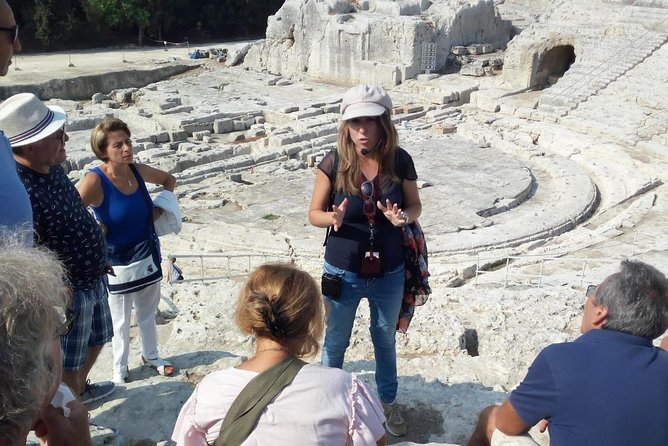
Syracuse packs a lot in 3.5 hours. You’ll get a guide walking point-to-point through Neapolis and then into Ortigia, so you don’t waste time guessing routes or missing key sights.
I especially like how the tour mixes major ruins with city highlights: the Greek Theater and Ear of Dionysius in the park, then Temple of Apollo, the Cathedral, and Fonte Aretusa in Ortigia.
One thing to think about: admission tickets are not included, so you’ll want to budget extra at the sites, and the tour depends on good weather.
In This Review
- Key Highlights You’ll Care About
- Neapolis and Ortigia in One Half Day That Actually Feels Doable
- Price and Group Size: Where This Works Best
- Private Tour Setup (and What That Changes)
- Walking Through Neapolis: UNESCO Ancient Sights With a Built-In Route
- Greek Theater: A Classic First Impression
- Latomie del Paradiso and the Ear of Dionysius
- Ara of Hieron II and the Roman Amphitheater
- Transfer on Foot to Papyrus Corner
- Papyrus Corner Oasis and Small Zoo: The Break Your Legs Will Thank You For
- Ortigia’s Historic Center: Temple to Cathedral to Caravaggio Canvas
- Temple of Apollo as Your Starting Anchor
- The Cathedral and the Santa Lucia alla Badia Church
- Fonte Aretusa: Ending Where Syracuse Likes to Chill
- How Long It Takes, How It Feels, and What to Wear
- Tickets, Food, and Transfers: What You Need to Plan for
- What the Tour Provider and Reviews Signal About Real Value
- Who Should Book Classical Syracuse?
- Should You Book This Tour?
- FAQ
- How much does the Classical Syracuse half-day guided tour cost?
- How long is the tour?
- Is this tour private?
- Where does the tour start?
- Where does the tour end?
- What areas of Syracuse are covered?
- What’s included in the price?
- What is not included?
- Does the tour use a mobile ticket?
- What are the options if the weather is poor or plans change?
Key Highlights You’ll Care About
- Neapolis UNESCO site access with a guided walk through the main ancient stops
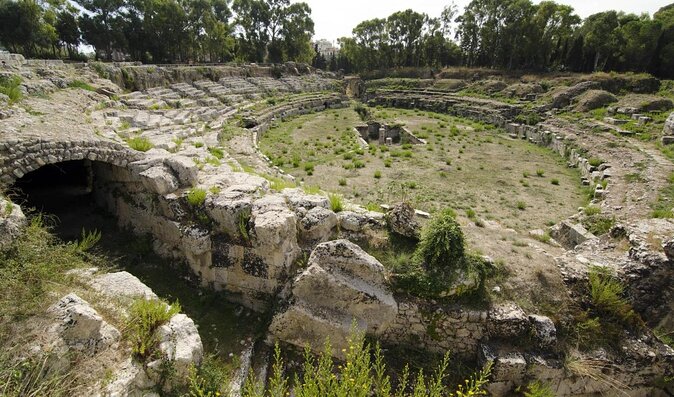
- A focused set of famous landmarks: Greek Theater, Ear of Dionysius, Ara of Hieron II, Roman Amphitheater
- Papyrus Corner visit with the Oasis and Small Zoo included
- Ortigia in one hour: Temple of Apollo, Cathedral, Santa Lucia alla Badia, and Fonte Aretusa
- Mobile ticket and a private setup (just your group up to 15)
- End at Arethusa Spring so the walk naturally finishes at one of Syracuse’s best-known spots
Deeper into Ortigia and old Syracuse
- Syracuse: Tour of Ortigia Island & Caves with Local Skipper
★ 4.7 · 1,060 reviews - Tour of the island of Ortigia and exploration of sea caves with baths.
★ 5.0 · 668 reviews - Boat tour of Ortigia Island and sea caves
★ 5.0 · 407 reviews - Siracusa Boat excursion island of ortigia and sea caves
★ 5.0 · 147 reviews
Neapolis and Ortigia in One Half Day That Actually Feels Doable
This is the kind of Syracuse tour that makes sense when you’re on a tight schedule. In one guided run—about 3 hours 30 minutes—you cover both sides of what makes Syracuse special: the big ancient park on land, then the historic island core across town.
You’ll move with a guide always at your side, which matters here. Neapolis is spread out, and Ortigia rewards people who know where to stand and what to look for. This tour is built for that exact problem.
Also, the meeting and ending points are well chosen. You start at the Neapolis Archaeological Park entrance area, then you finish at Arethusa Spring (Largo Aretusa)—a smooth ending rather than a random drop-off.
Price and Group Size: Where This Works Best
The listed price is $238.17 per group (up to 15 people). That means your real per-person cost depends on whether your group fills up.
If you have a smaller group, you’re paying closer to the full group price. If you’re traveling with friends or family and can fill more seats, the value gets much better fast. Either way, the value comes from having a guide cover two areas instead of you piecing things together alone.
One more practical note: the average booking lead time is 26 days in advance. If your dates are popular, it’s smart to lock it in sooner rather than later.
Private Tour Setup (and What That Changes)
This is a private tour/activity, meaning only your group participates. That’s a real difference from the big mixed tours that move like a conveyor belt. It also makes timing and pacing more flexible for your group size.
You’ll also get a mobile ticket, which helps if your travel day is already a mess of transfers and tickets. No printer required.
Finally, service animals are allowed, and the tour is listed as near public transportation. That’s handy if you’re not renting a car for every day in Sicily.
Walking Through Neapolis: UNESCO Ancient Sights With a Built-In Route
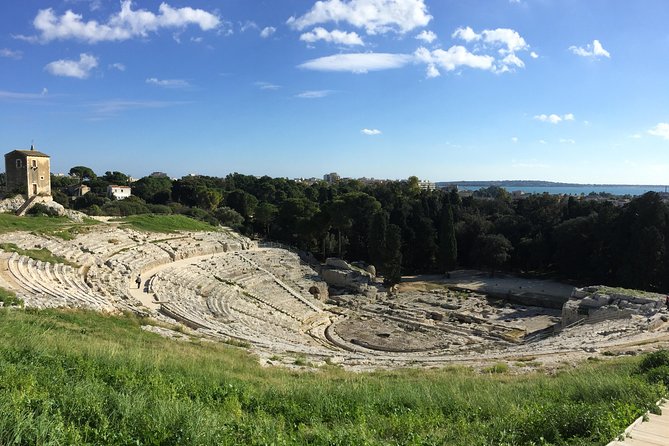
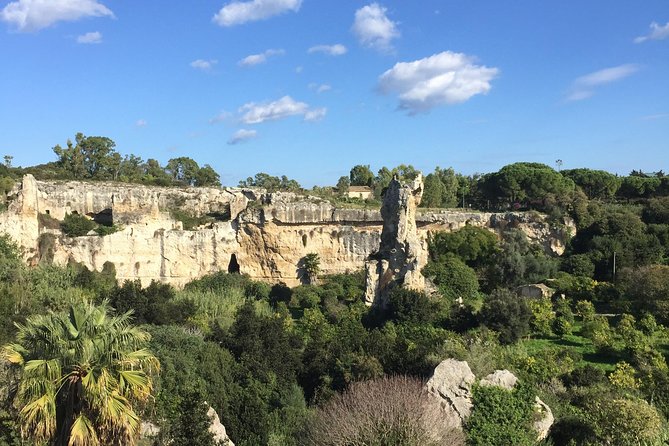
Neapolis is the part of Syracuse that feels like you stepped into another era. This tour gets you into the Parco Archeologico della Neapolis, a UNESCO site declared in 2005, with a guided visit that points you toward the major stops in a logical order.
You’ll spend about 2 hours at Neapolis. Admission tickets are not included, but you do get guided time on the key features in the park, plus the transfer on foot to the Papyrus Corner afterward.
The route hits the major Greek and Roman layers without feeling like a checklist. The guide’s job here is to keep the flow moving so you’re not wandering between landmarks with no context.
A few we would gladly point a friend toward in Sicily


Greek Theater: A Classic First Impression
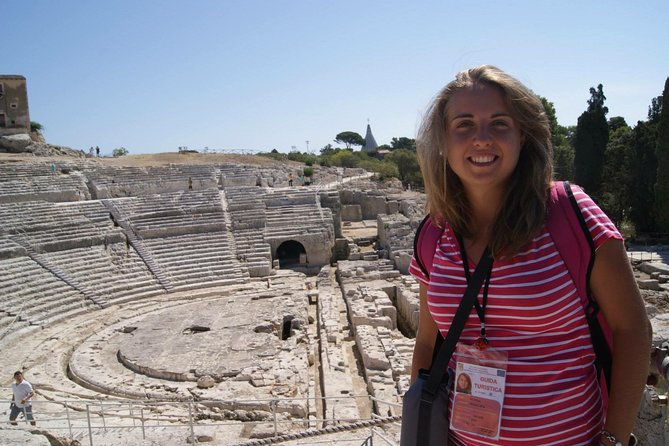
The tour includes the Greek Theater. Even if you’re not a “theater person,” this is the kind of landmark where a guide helps you see the scale and layout faster.
In practical terms, it’s also a strong starting anchor. From there, you can orient yourself mentally for the rest of the park.
Latomie del Paradiso and the Ear of Dionysius
You’ll also visit Latomie del Paradiso and the Ear of Dionysius. These are very specific stops that people often want to see, but they’re not always easy to connect into a smooth walking plan without local help.
With a guide, you get the advantage of not just seeing the sights, but understanding why they’re grouped together in the park. That turns a few separate points into one coherent experience.
Ara of Hieron II and the Roman Amphitheater
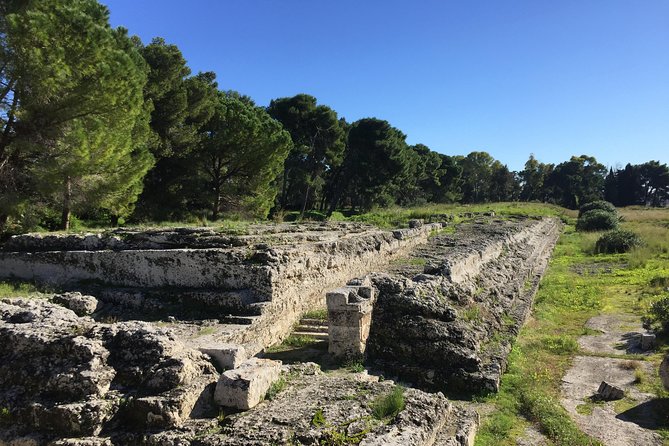
Next up are the Ara of Hieron II and the Roman Amphitheater. This is where Neapolis shows its time layering: Greek foundations, then Roman use and influence.
A guide is useful here because you can compare what you’re seeing without needing to research on the fly. You’ll likely notice how the park’s design changes as you move between eras.
Transfer on Foot to Papyrus Corner
After the core ancient stops, you’ll transfer on foot to the Papyrus Corner. This is a good time to switch gears: the park is intense with stone and history, and Papyrus Corner adds something calmer and more unusual.
You’ll then get a guided tour of the Oasis and Small Zoo area. The Papyrus Corner piece is listed as included, so you’re not scrambling to figure out which parts cost extra during this half day.
Papyrus Corner Oasis and Small Zoo: The Break Your Legs Will Thank You For
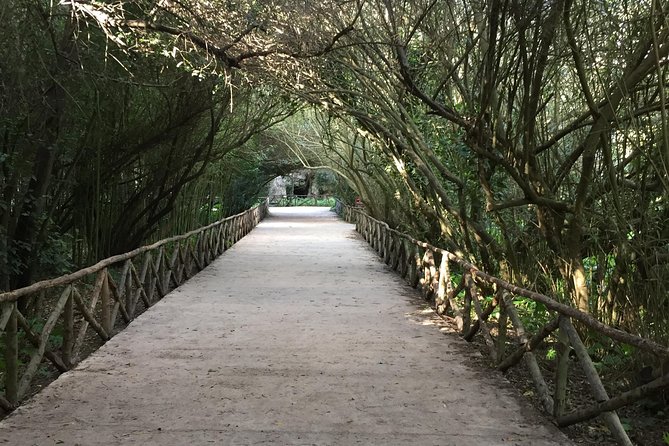
Not every ancient-tour itinerary includes a change of pace. Here, the Papyrus Oasis and Small Zoo give you a real reset after Neapolis.
Even if you’re not traveling with kids, it’s a nice contrast. One minute you’re in a major archaeological setting, the next you’re in a more relaxed, green-feeling stop that makes the whole morning feel less exhausting.
This is also a smart place for photos that don’t look like every other “ruins shot.” You get a different texture, different lighting, and a break from the stone-heavy landscape.
Because it’s included, it’s one less thing you have to decide while you’re already managing your schedule.
Ortigia’s Historic Center: Temple to Cathedral to Caravaggio Canvas
After Neapolis, you’ll shift to Ortigia for about 1 hour. Ortigia is Syracuse’s historic center, and this tour focuses on the most recognizable anchors so you can get oriented fast even if it’s your first time on the island.
This segment is ideal if you don’t have time for a long wandering day. Instead, you get a guided walk through the highlights, and you can decide what you want to revisit on your own afterward.
Temple of Apollo as Your Starting Anchor
The tour starts at the Temple of Apollo. Starting there helps you connect Ortigia to its ancient roots. Even if you’re short on time, it gives you a strong first reference point.
A good guide makes the walk easier. You’re more likely to notice details because you’re not guessing where to turn next.
The Cathedral and the Santa Lucia alla Badia Church
From there, you’ll visit the Cathedral and Santa Lucia alla Badia, which includes a Caravaggio canvas.
The practical value of this stop is that it’s concentrated. In one hour, you touch both the big civic center feeling (Cathedral) and the art-focused church highlight (Santa Lucia alla Badia). If art is part of your travel reason, this is a worthwhile way to include it without stretching your schedule.
Fonte Aretusa: Ending Where Syracuse Likes to Chill
Finally, you’ll reach Fonte Aretusa—and the tour ends at Arethusa Spring. This is the kind of finish that feels natural. You’re not just exiting a site; you’re ending at a place people associate with Syracuse’s identity.
It’s also a great moment to slow down after walking. Take a breather. If you still have energy, you’ll usually find it easy to keep exploring Ortigia on your own after the guide leaves you at Largo Aretusa.
How Long It Takes, How It Feels, and What to Wear
The total duration is listed at approximately 3 hours 30 minutes. You’ll spend about 2 hours in Neapolis, then about 1 hour in Ortigia, with walking between the segments.
Because there’s transfer on foot within the day, comfortable shoes matter. Even if you don’t consider yourself a “walking tour” person, this is still a lot of feet-on-stone and feet-on-sidewalk.
Also, the tour requires good weather. If conditions are poor, the provider can cancel and offer a different date or a full refund. That doesn’t make the experience wrong; it just means you should check your day’s forecast.
Tickets, Food, and Transfers: What You Need to Plan for
This tour includes the guide and the Papyrus Oasis, but admission tickets are not included. Food is also not included.
So think of it as a guided route that helps you make choices and follow the right path, not a package that covers everything from start to finish.
Because food isn’t included, you’ll want to have a snack plan. For a half-day like this, it’s often easiest to eat before you go, or keep something small for after you finish at Arethusa Spring.
Transfers are listed as not included. That said, the Neapolis-to-Papyrus Corner movement is specifically noted as on foot, which is part of the plan. What’s not covered is a separate transportation service between major areas on a bus or taxi schedule.
What the Tour Provider and Reviews Signal About Real Value
The experience is provided by Serena Guida turistica Siracusa. It’s also listed with strong overall performance: 4.9 rating from 52 reviews and 98% recommended.
That kind of rating usually points to two things you’ll care about on a half-day tour: smooth guidance and a route that feels worth your limited time. In this case, the structure makes sense—Neapolis first for the big ancient stops, then Ortigia for the walkable highlights and a satisfying ending at Fonte Aretusa.
One consideration you should keep in mind: there is at least one negative report about a no-show for a tour date. It’s not something you should panic about, but it is a good reminder to arrive early, confirm the meeting point, and keep an eye on your day’s communications so you can fix problems quickly if they happen.
Who Should Book Classical Syracuse?
This tour fits best if you want a guided hit of ancient Syracuse plus Ortigia’s historic center without losing half your day to logistics.
It’s a good choice if:
- You’re short on time and need an organized route across both Neapolis and Ortigia
- You like seeing major landmarks with context from a guide
- You want the Papyrus Oasis as a calmer break from ruins
- You’re traveling with a group up to 15 and can share the group price
It may feel less ideal if:
- You hate walking and want minimal foot movement
- You want a long, slow exploration of either Neapolis or Ortigia by itself
- You’d rather have total control over every stop without a set route
Should You Book This Tour?
Yes, I think it’s a strong book if your goal is efficient, guided coverage. The combination of Neapolis UNESCO-site highlights and Ortigia’s most recognizable landmarks, plus the Papyrus Corner break, is exactly the kind of half-day plan that helps you get your bearings fast.
Just budget for admission tickets since they’re not included, and be flexible with weather. If you can align the day with good forecast conditions and wear comfortable shoes, you’ll finish the tour with a clear mental map of Syracuse—then you can keep exploring from Arethusa Spring.
FAQ
How much does the Classical Syracuse half-day guided tour cost?
It costs $238.17 per group, up to 15 people.
How long is the tour?
The duration is approximately 3 hours 30 minutes.
Is this tour private?
Yes. Only your group participates.
Where does the tour start?
The start point is Neapolis Archaeological Park, Via Luigi Bernabò Brea, 14, 96100 Siracusa SR, Italy.
Where does the tour end?
The tour ends at Arethusa Spring, Largo Aretusa, 96100 Siracusa SR, Italy.
What areas of Syracuse are covered?
You’ll visit the Parco Archeologico della Neapolis and the historic center on Ortigia.
What’s included in the price?
The tour includes a tour guide, Papyrus Oasis, and a travel agent.
What is not included?
Food, tickets, and transfer are not included. Admission tickets are also not included.
Does the tour use a mobile ticket?
Yes, it’s listed as using a mobile ticket.
What are the options if the weather is poor or plans change?
The tour requires good weather. If it’s canceled due to poor weather, you’ll be offered a different date or a full refund. There is free cancellation up to 24 hours in advance for a full refund.
More Tours in Sicily





More Tour Reviews in Sicily


More of Syracuse and Ortigia

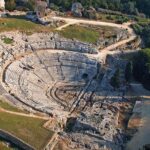
Just added: the newest Sicily tours in our notebook
- Etna / Taormina★ 5.0 · 3 reviews
- Bikes★ 5.0 · 3 reviews
- Taormina shore tour – for small group cruise passengers★ 5.0 · 3 reviews
- Vegan Cooking Class in Catania with Lunch and Dinner★ 5.0 · 3 reviews
- Make & Taste Sicilian Desserts in Palermo – Learn Cannoli & More★ 5.0 · 3 reviews
- Sicilian Villages & Ricotta Tasting – including Lunch from Cefalu★ 4.0 · 3 reviews
Syracuse & Ortigia, compared.
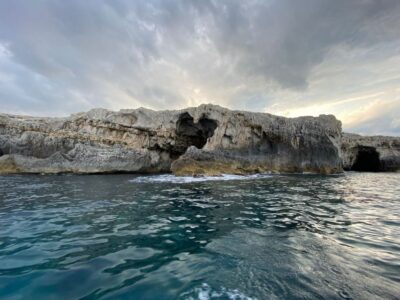 ★ 4.7Syracuse: Tour of Ortigia Island & Caves with Local SkipperFrom $231,060 reviews
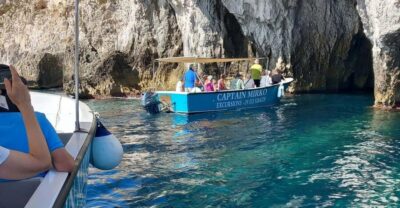 ★ 4.7Syracuse: Boat Tour with Captain Mirko, Snorkeling & CavesFrom $35746 reviews
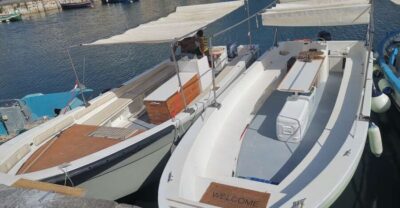 ★ 4.7Siracusa: Ortigia Boat Tour with Marine Grotto & SnorkelingFrom $47726 reviews
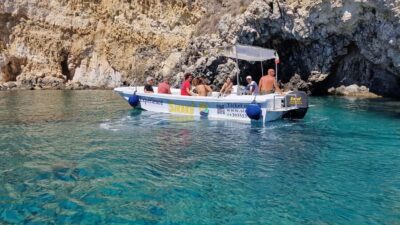 ★ 4.8Siracusa: Ortigia & Sea Caves Boat Tour w/ Prosecco & FruitFrom $35723 reviews
 ★ 5.0Tour of the island of Ortigia and exploration of sea caves with baths.From $24668 reviews
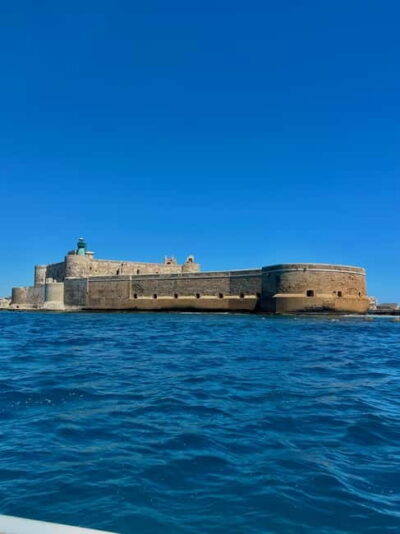 ★ 4.7Syracuse: Ortigia Island & Sea Cave Boat Tour with ProseccoFrom $23418 reviews
 ★ 5.0Boat tour of Ortigia Island and sea cavesFrom $24407 reviews
 ★ 4.6Catania: Syracuse, Ortigia, and Noto Tour with BrunchFrom $112404 reviews
Browse the lists this tour appears in