
Reviewed · SYRACUSE & ORTIGIA
Classical Ortigia Guided Group Tour
A two-hour walk can tell the Ortigia story. This guided loop in Syracuse keeps things moving, with free stops at major landmarks and extra context that makes familiar facades feel less random. I especially like the way the guide links the Greek roots to the later Baroque look at Syracuse Cathedral, and how the pace leaves breathing room for photos and wandering. One thing to consider: the cathedral interior is optional, so your final cost depends on whether you want to go inside.
Another reason I like this tour is the small-group feel, capped at 20 people, plus radio receivers if the group is larger. You’ll get a clear, stop-by-stop route without feeling dragged, and you’ll end near the waterfront neighborhood of Giudecca. The one drawback I’d flag is the weather: the experience requires good conditions, so plan to be flexible if schedules shift.
You meet at the Temple of Apollo, then you wind through alleys and squares that explain how Ortigia evolved—Greek city, medieval district, then the dramatic church-and-sea atmosphere you see today.
In This Review
- Key things that make this tour work
- Entering Ortigia Fast: Why This 2-Hour Loop Makes Sense
- Starting at the Apollonion: Temple of Apollo (Tempio di Apollo)
- Palazzo Montalto and the Spirduta Alleys: Medieval Syracuse by Foot
- Piazza Archimede and the Fontana di Diana
- Piazza Duomo: The Heartbeat Moment in Syracuse
- Syracuse Cathedral: Baroque Over Ancient Greek Temple
- Chiesa di Santa Lucia alla Badia and Caravaggio’s Painting
- Fonte Aretusa: Papyrus Plants and the Myth by the Sea
- Lungomare di Levante to Cala Rossa: A Walk Toward the Waterline
- Ending in Giudecca: Fish Bar La Via Della Giudecca and the Old Jewish Quarter
- Price and Value: What $30.12 Buys You in Real Terms
- Who This Tour Fits Best
- The Guide Factor: Why Eva’s Style Lands Well
- Quick Practical Notes Before You Go
- Should You Book This Classical Ortigia Guided Group Tour?
- FAQ
- How long is the Classical Ortigia guided group tour?
- What language is the tour offered in?
- Is the cathedral interior included in the price?
- What’s included with the tour?
- Where does the tour start and end?
- What happens if weather is bad or the tour can’t run?
Key things that make this tour work
- Small-group pace (max 20): enough guidance without feeling packed in.
- Radio receivers if needed: you’ll hear the story even when streets get noisy.
- Baroque-on-Greek architecture at Syracuse Cathedral: a major wow moment outside, with optional inside.
- Sea-myth payoff at Fonte Aretusa: papyrus plants and legend right near the center.
- Good wrap-up in Giudecca: you finish by crossing the ancient Jewish quarter toward a local fish bar area.
Deeper into Ortigia and old Syracuse
- Syracuse: Tour of Ortigia Island & Caves with Local Skipper
★ 4.7 · 1,060 reviews - Tour of the island of Ortigia and exploration of sea caves with baths.
★ 5.0 · 668 reviews - Boat tour of Ortigia Island and sea caves
★ 5.0 · 407 reviews - Siracusa Boat excursion island of ortigia and sea caves
★ 5.0 · 147 reviews
Entering Ortigia Fast: Why This 2-Hour Loop Makes Sense
Ortigia rewards slow walking. But most people don’t have a whole afternoon on their first Syracuse day. This tour hits the sweet spot: long enough to connect the dots, short enough that you don’t feel like you’re sprinting between sights.
You’re in central Ortigia on mostly walkable streets, with short stops at each highlight. Many segments are designed for quick orientation—just enough time to look up, take a photo, and get the historical why behind what you’re seeing.
At about two hours, it’s also a smart “first day” move. You leave with a mental map of where the big landmarks sit, which makes the rest of your self-guided exploring easier.
Starting at the Apollonion: Temple of Apollo (Tempio di Apollo)
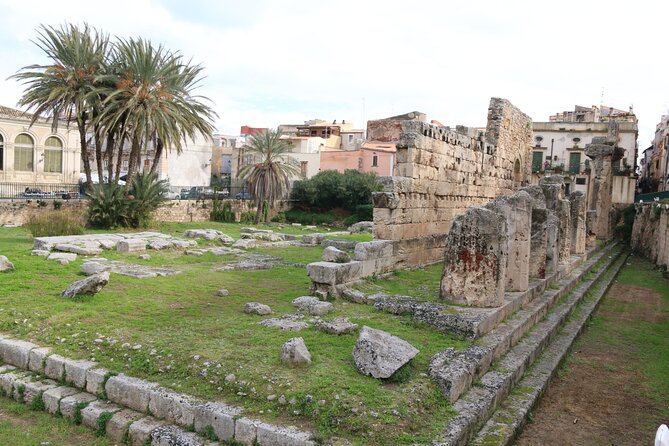
Your tour begins at the Temple of Apollo (Apollonion). Even if you’ve seen photos of Syracuse before, this is a great place to start because it anchors the story in the Greek city before everything else layered on top.
The guide frames the temple as a starting point for Ortigia’s origins. You’ll hear what the site represents and why the temple was dedicated to the god of light. That “light” idea does more than sound poetic. It helps you understand why these ancient spaces were tied to symbolism, not just stone.
Practical tip: arrive a couple of minutes early so you can settle before the group gathers and the guide starts talking. In this part of town, the streets can be a little confusing if you’re on your first visit.
Palazzo Montalto and the Spirduta Alleys: Medieval Syracuse by Foot
Next comes a different mood: narrow lanes, old district names, and a sense that you’re slipping into the quieter corners of Ortigia. You’ll move through the alleys around Palazzo Montalto and the area described as the ancient Spirduta district.
This stop matters because it breaks the usual “only famous monuments” pattern. You’re not just collecting postcards. You’re getting an urban feeling—how people moved, lived, and told stories in medieval Syracuse.
The guide connects the location to local legends and what makes Palazzo Montalto historically interesting. Even if you don’t hang around long at the building itself, the surrounding streets give you a sense of scale and texture. It’s the kind of stop that helps later when you’re wandering on your own and suddenly you recognize the street layout.
Time stays short here—around 10 minutes—so it doesn’t drag.
Piazza Archimede and the Fontana di Diana
From the lanes, you pop back into open space at Piazza Archimede, where you’ll see the Fontana di Diana. This is the sort of landmark that can be easy to miss if you’re walking fast. With a guide, it becomes a reference point: fountain in the square, plus the buildings that shape what you see around it.
The guide focuses on the fountain’s neoclassical character and points out the surrounding architecture. You’ll also get a sense of why this plaza functions as a crossroads—where sightlines and movement converge.
If you like taking photos, this is a good moment to slow down for a minute. Look for angles where the fountain sits against the building fronts rather than just from the sidewalk edge.
A few we would gladly point a friend toward in Sicily


Piazza Duomo: The Heartbeat Moment in Syracuse
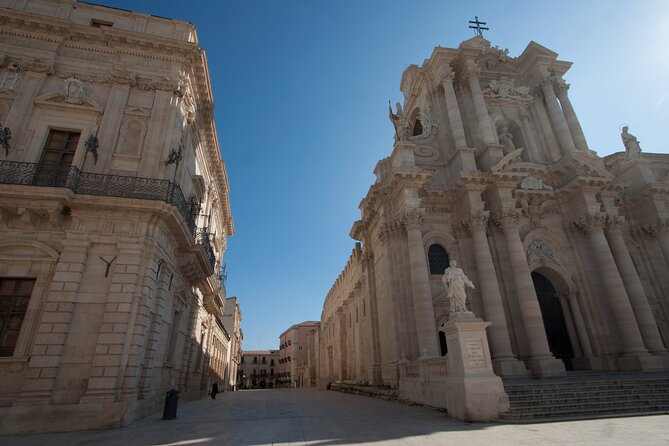
Then comes Piazza Duomo—big, dramatic, and clearly the “center” of the action. The tour has you admire the sumptuous square and the buildings that surround it, described as the beating heart of Syracuse.
This is one of those places where you can understand the power of a public square in 30 seconds. People gather here because it’s visually commanding and practically useful. As soon as you arrive, you feel the gravitational pull.
The guide gives you what you need to look intelligently: not just what to photograph, but what to notice about the way the square relates to the religious and civic structures around it.
Even if you’ve seen cathedral squares in other Italian cities, Syracuse’s mix of layers is the hook.
Syracuse Cathedral: Baroque Over Ancient Greek Temple
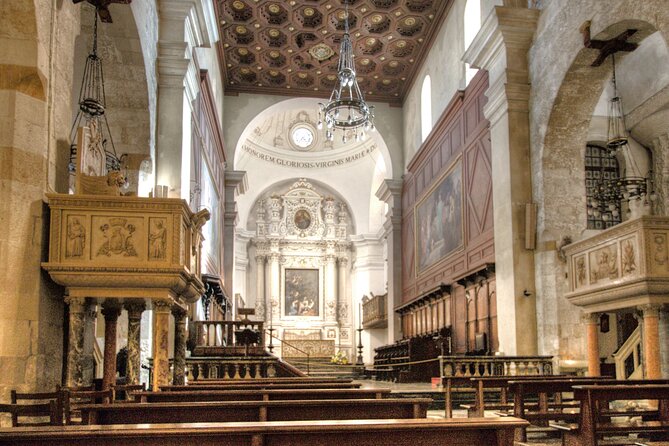
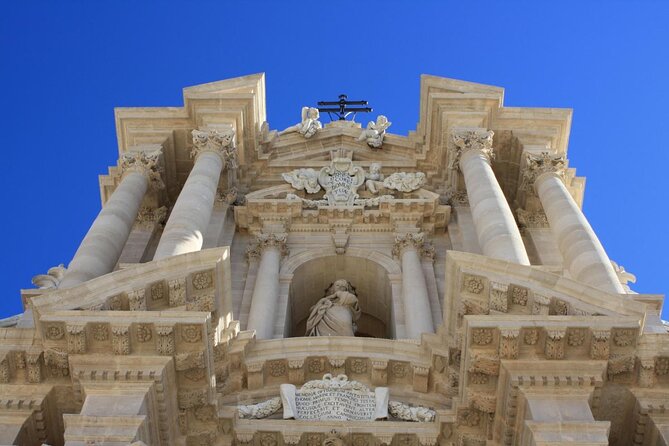
Next is Syracuse Cathedral, where the real wow is the architectural layering. This church is presented as a Baroque-style cathedral built on an ancient Greek temple.
That idea changes how you look. You’re not just seeing a church facade. You’re seeing centuries of reuse and reinvention—Greek foundations transformed into a later statement of faith and power. It explains why parts of the building can feel both “old” and “dramatic” at the same time.
The optional interior visit is where your choice comes in. If there are no religious functions, you can visit inside, but the entrance ticket is not included (listed as 2 Euros per person). If you prefer not to go in, you get a short break for a coffee stop.
Two smart moves:
- Decide early whether you want the interior. If yes, be ready to pay the extra small fee when you’re there.
- If no, use the break well. This is a good time to hydrate and reset so the rest of the walk feels pleasant.
Chiesa di Santa Lucia alla Badia and Caravaggio’s Painting
You then head to Chiesa di Santa Lucia alla Badia. This stop is short, but it’s packed with meaning because the guide ties it to an important religious holiday in Syracuse and highlights the church’s most important painting by Caravaggio.
You don’t need to be a Baroque art nerd to enjoy this moment. The point is context. Once you know what the painting represents and why the holiday matters locally, the church becomes more than a stop on a route. It feels like part of a living tradition.
Time here is about 15 minutes, so you’ll have enough to see the exterior and learn the story without feeling stuck in place.
Fonte Aretusa: Papyrus Plants and the Myth by the Sea
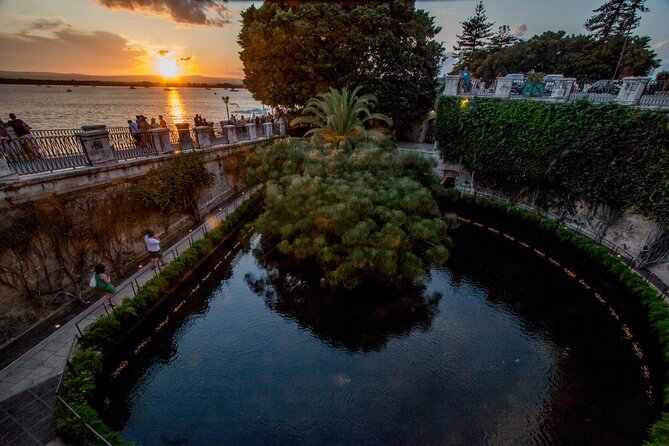
From Piazza Duomo, you move toward the water to Fonte Aretusa, described as a legendary spring where you can admire papyrus plants and learn the romantic myth tied to this spot.
This is one of the most emotionally satisfying stops on the tour because it shifts from stone and squares to a mix of sea air and legend. You’re still in the historic center, but the atmosphere changes. It feels quieter, more open.
The guide’s myth explanation is the difference-maker here. Instead of treating the spring as a scenic photo spot, you understand why people have linked it to stories for ages.
Practical tip: if you’re sensitive to sun, this is a good stop to grab shade if available. You’ll often be outside longer than you expect, especially at the sea edge.
Lungomare di Levante to Cala Rossa: A Walk Toward the Waterline
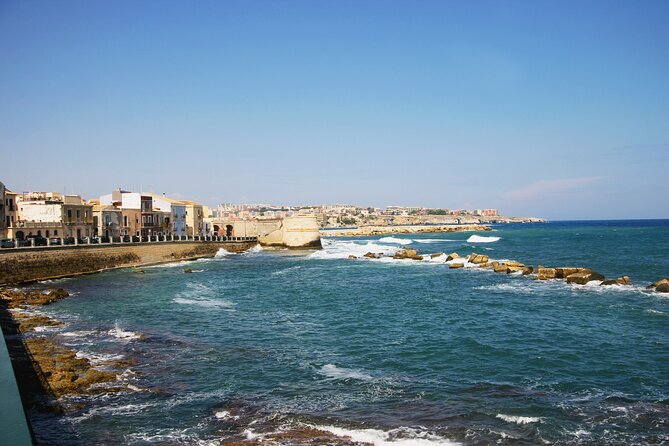
Next comes Lungomare di Levante Ortigia, a promenade that takes you across the island toward the eastern side. You’ll also pass by the small beach of Cala Rossa.
This segment gives you a breather after the denser architecture stops. The key value is perspective: from the promenade, you see Ortigia’s relationship to the sea more clearly than you do from the squares.
Time stays around 10 minutes, so don’t expect a full beach break. Think of it as a “feel the coastline” moment that helps your later independent wandering. If you want longer time at the water, you’ll have a better plan after the tour ends.
Ending in Giudecca: Fish Bar La Via Della Giudecca and the Old Jewish Quarter
The tour finishes by crossing into Giudecca, described as the ancient Jewish quarter of Syracuse. You end near Fish bar La Via Della Giudecca, which is a practical payoff.
Why this ending works: it places you somewhere that’s both historic and useful. After a guided walk, it’s nice when the final stop doesn’t feel like you’re dropped into nowhere. You can keep exploring, grab a bite nearby, or head back toward the sights you want to revisit.
The time at the end is about 20 minutes, giving you room to slow down and land the trip. And because Giudecca is part of the larger story of Ortigia’s history, the wrap-up feels cohesive rather than random.
Price and Value: What $30.12 Buys You in Real Terms
At $30.12 per person for roughly two hours, this tour is good value for two reasons.
First, most stops are effectively “no extra charge” moments. The tour lists admission tickets as free at every stop except the optional cathedral interior. The cathedral ticket is small—2 Euros—so you can choose it without breaking your budget.
Second, you’re paying for interpretation. You’re not just seeing Temple of Apollo, Piazza Duomo, or Aretusa. You’re getting the link between Greek origins, later Baroque church power, and the sea myth that gives the waterfront meaning. That kind of context is what turns “I saw it” into “I understood what I saw.”
A small note on pacing: this is a guided group tour, so you’ll spend more time listening than you would if you were totally solo. Still, the time at each stop is short enough that you don’t lose the day.
Who This Tour Fits Best
This is a strong match if you want:
- A first visit orientation to Ortigia’s top sights.
- A route that’s compact but not rushed.
- A guide who can connect architecture, religion, and myth into one walk.
It’s also ideal for people who don’t want to plan their own loop across multiple squares and neighborhoods. The tour does that work for you.
If you already know Syracuse deeply and want long museum-level time, you might feel the stops are brief. In that case, you could still use it to get your bearings, then switch to self-guided time where you care most.
The Guide Factor: Why Eva’s Style Lands Well
One detail that shows up clearly in the feedback is the guide style. Eva is highlighted for being engaging and for giving an in-depth historical perspective of Ortigia’s key sights. That matters because Ortigia can look like a string of pretty scenes if you don’t have someone explaining what you’re actually looking at.
A good guide doesn’t just name places. They tell you what to notice. Here, that shows up through the way the story flows from Apollo to the cathedral’s Greek foundation to the water myths at Aretusa.
If you care about context, you’re in the right place.
Quick Practical Notes Before You Go
A few things to keep in mind so you get the best experience:
- The tour is in English.
- You’ll receive a mobile ticket.
- Group size is limited to 20 travelers.
- You’ll use radio receivers if the group is larger, so you can hear without craning your neck.
- Service animals are allowed, and it’s near public transportation.
And one more real-world point: the tour requires good weather. If the schedule changes due to poor conditions, you’ll be offered another date or a full refund.
Should You Book This Classical Ortigia Guided Group Tour?
I’d book it if you want a high-value, easy-to-follow introduction to Syracuse’s most important Ortigia sights without spending hours mapping your own route.
It’s especially worth it if you like architecture with explanations, you want the story behind Piazza Duomo and Syracuse Cathedral’s layered origins, and you want the myth-and-water moment at Fonte Aretusa without trying to piece it together on your own.
Skip it only if you’re looking for long, unstructured time at one or two sites. This tour is built as a focused walk, not a slow linger.
If you’re short on time in Ortigia, this tour is one of the cleanest ways to see the essentials and understand why they matter.
FAQ
How long is the Classical Ortigia guided group tour?
It lasts about 2 hours.
What language is the tour offered in?
The tour is offered in English.
Is the cathedral interior included in the price?
The cathedral interior visit is optional. The entrance ticket is not included and is listed as 2 Euros per person.
What’s included with the tour?
You get radio guide receivers in case of a large group. A mobile ticket is also provided.
Where does the tour start and end?
It starts at the Temple of Apollo (Apollonion) in Syracuse and ends at Piazza Archimede in Syracuse.
What happens if weather is bad or the tour can’t run?
The tour requires good weather. If it’s canceled due to poor weather, you’ll be offered a different date or a full refund. If the minimum number of travelers isn’t met, you’ll also be offered a different date/experience or a full refund.
More Tours in Sicily





More Tour Reviews in Sicily

More of Syracuse and Ortigia
Just added: the newest Sicily tours in our notebook
- Etna / Taormina★ 5.0 · 3 reviews
- Bikes★ 5.0 · 3 reviews
- Taormina shore tour – for small group cruise passengers★ 5.0 · 3 reviews
- Vegan Cooking Class in Catania with Lunch and Dinner★ 5.0 · 3 reviews
- Make & Taste Sicilian Desserts in Palermo – Learn Cannoli & More★ 5.0 · 3 reviews
- Sicilian Villages & Ricotta Tasting – including Lunch from Cefalu★ 4.0 · 3 reviews
Syracuse & Ortigia, compared.
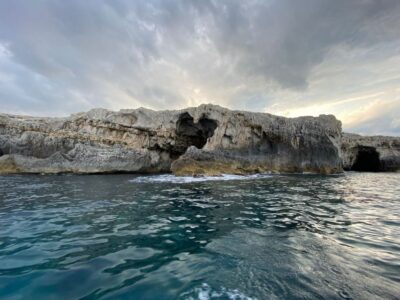 ★ 4.7Syracuse: Tour of Ortigia Island & Caves with Local SkipperFrom $231,060 reviews
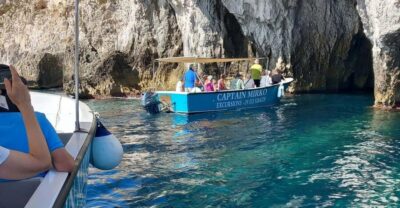 ★ 4.7Syracuse: Boat Tour with Captain Mirko, Snorkeling & CavesFrom $35746 reviews
 ★ 4.7Siracusa: Ortigia Boat Tour with Marine Grotto & SnorkelingFrom $47726 reviews
 ★ 4.8Siracusa: Ortigia & Sea Caves Boat Tour w/ Prosecco & FruitFrom $35723 reviews
 ★ 5.0Tour of the island of Ortigia and exploration of sea caves with baths.From $24668 reviews
 ★ 4.7Syracuse: Ortigia Island & Sea Cave Boat Tour with ProseccoFrom $23418 reviews
 ★ 5.0Boat tour of Ortigia Island and sea cavesFrom $24407 reviews
 ★ 4.6Catania: Syracuse, Ortigia, and Noto Tour with BrunchFrom $112404 reviews
Browse the lists this tour appears in