
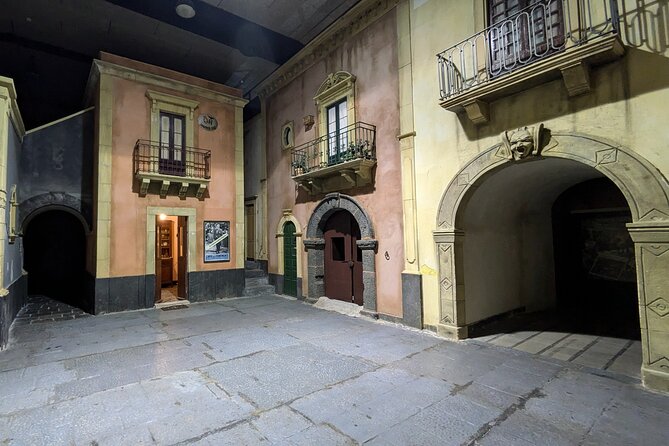
Reviewed · CATANIA TOURS
CATANIA 1943: Husky operation
World War II lands softly in Catania. This 3-hour, English tour connects Operation Husky to real places you can see, from the Allied Landing museum through wartime memorial stops. I love how the museum doesn’t just list dates—it gives you a clear reconstruction of what happened around Simeto, including Operation Fustian, in a way you can actually follow.
The guide matters here. With Oreste leading, the story stays sharp, personal, and practical, and I especially liked the extra help when someone in the group needed easier transport between parts of the tour. One consideration: it’s part museum time and part walking through outdoor ruins and memorial areas, so bring footwear you trust and expect a steady pace for a few short stretches.
In This Review
- Key highlights to know before you go
- Operation Husky in real Catania: where the war still shows
- Museo Storico dello Sbarco: your 2-hour start with Simeto in focus
- When Rome becomes wartime shelter: the amphitheater stop
- Sant’Euplio ruins: short stop, heavy meaning
- Piazza del Duomo: a prayer altar for peace after the war
- Your guide experience: what Oreste brings to the day
- Price and value: what $94.68 buys you in Catania
- Who should book this tour
- Practical tips to make the most of it
- Should you book CATANIA 1943: Husky operation?
- FAQ
- How long is the CATANIA 1943: Husky operation tour?
- What does the tour cost?
- Is the tour offered in English?
- Where does the tour start and end?
- What are the opening hours for the experience?
- Is this a private tour?
- What’s included in admission/tickets?
- Can I cancel for free?
- Are service animals allowed and is it near public transportation?
Key highlights to know before you go
- Operation Husky and Operation Fustian explained with detailed context
- Museo Storico dello Sbarco in Sicilia 1943 as your launchpad into WWII Sicily
- Roman Amphitheater used as an air raid shelter during WWII
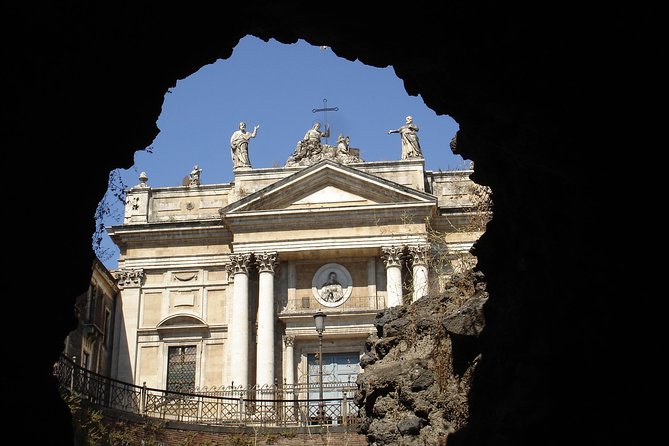
- Sant’Euplio church ruins showing visible bombing damage tied to Catania’s identity
- Piazza del Duomo ending with a peace-focused prayer altar linked to the wartime period
- Private group format with a guide who can adjust pacing for your needs
What else Catania has going on
- Mt. Etna nature and flavors half day Tour from Catania
★ 5.0 · 545 reviews - From Catania: Mt. Etna, Wine and Alcantara Tour
★ 4.8 · 370 reviews - Etna Morning Tour (starting from Catania)
★ 5.0 · 362 reviews - Underground Catania
★ 5.0 · 302 reviews
Operation Husky in real Catania: where the war still shows
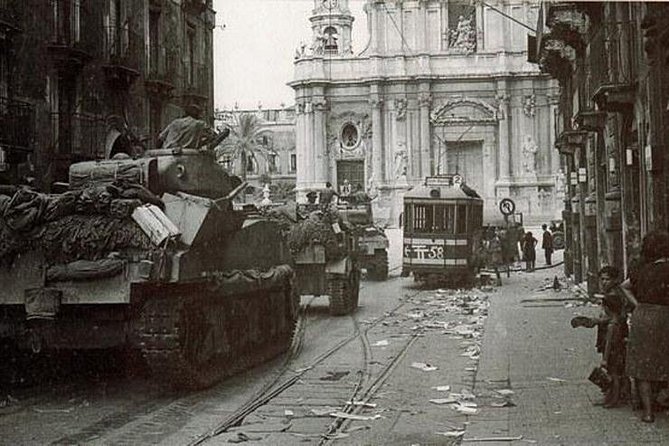
If you’ve ever wanted WWII history that feels less like a textbook and more like a city lesson, this is a strong choice. Catania has Roman bones, church remains, and a Cathedral square that long predates the 1940s. What this tour does well is connect those layers to Operation Husky—the Allied landing in Sicily—and the fighting that followed.
You start with the biggest, most structured part: museum time that frames the conflict. Then you shift outside, where the story gains texture. You’ll move from a place built to explain the war to places where the war left physical marks—bomb damage that has become memory, and memory that has become civic space.
The result is a route that helps you understand not only what happened, but also how Catania carried it afterward.
Museo Storico dello Sbarco: your 2-hour start with Simeto in focus
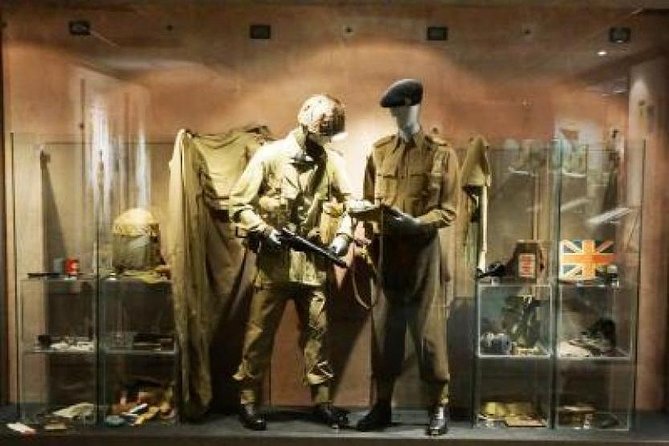
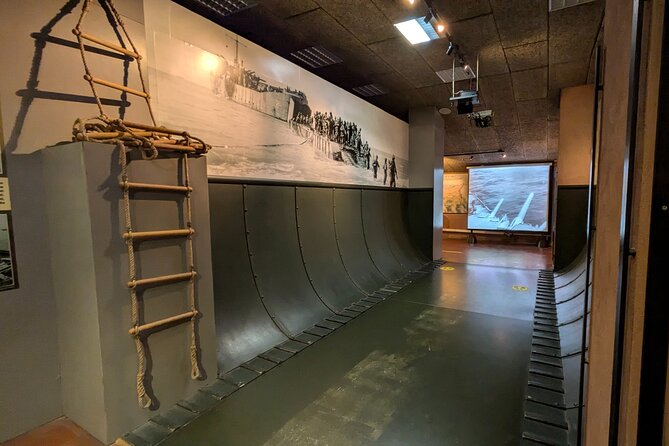
The tour begins at the Museo Storico dello Sbarco in Sicilia 1943 at Piazzale Rocco Chinnici. Plan to spend about 2 hours here. Admission is included, and that matters because this isn’t a quick glance. It’s the kind of museum visit that helps you get the “map in your head” before you walk the city.
This is where you get the focused explanation of Operation Husky—especially Operation Fustian and the battle of Simeto. The big win is clarity. When you walk into a museum like this, it would be easy for WWII to feel huge and tangled. Instead, you get a guided story that ties events to location and outcome, so you can follow along without needing to be a military-history expert first.
I also like the way the museum doesn’t treat Catania like a background. The information and reconstruction make the experience feel grounded in what Sicily went through and how it affected real people, not just armies.
Practical tip: give yourself time to read as you go. Even with a guide leading the pacing, you’ll learn more if you pause for a moment at key displays before you move onward.
When Rome becomes wartime shelter: the amphitheater stop
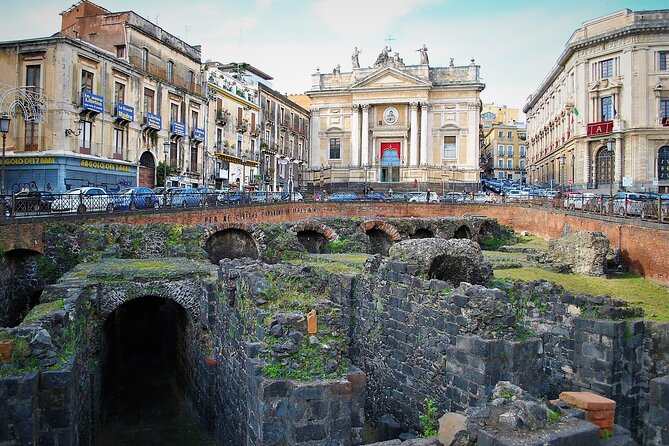
After the museum, the route heads to the Roman Amphitheater of Catania. You’ll spend about 30 minutes here, and admission is included.
Here’s the twist that makes this stop memorable: this Roman monument wasn’t just left standing like an untouched relic. During the Second World War, it was used as an air raid shelter. That’s a powerful idea to sit with. You’re looking at an ancient structure, but it carries a second life—one shaped by sudden danger, fear, and the need for safety.
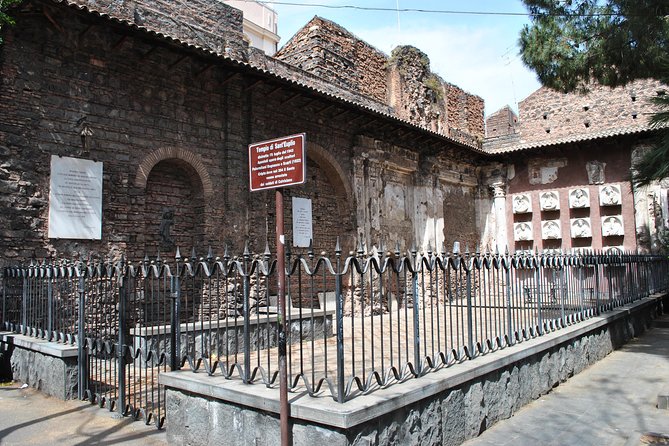
In the same square, you can still see remains tied to the city’s wartime tragedies, including the remains of the church of Sant’Euplio, bombed on April 16, 1943. That site has become a symbol and memorial for victims of war and persecution.
What I appreciate is that this stop isn’t trying to shock you. It helps you see how the city re-used its landmarks under pressure, and how those landmarks later became part of public memory.
Wear comfortable shoes. The amphitheater area is outdoors, and you’ll likely be on uneven surfaces around historic stone.
Sant’Euplio ruins: short stop, heavy meaning
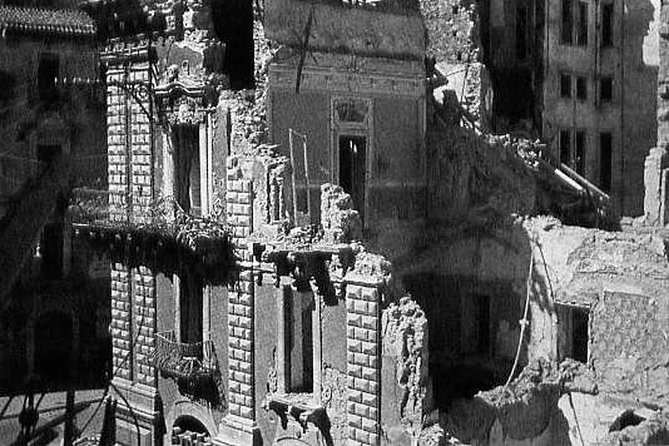
Next comes Via Sant’Euplio, a quick 10-minute visit where the focus stays on the ruins and what they show. Admission is free for this part.
The key point here is that the ancient church of Sant’Euplio, the patron saint of Catania, still shows signs of bombings from July 1943. Seeing damage like this in a living city is different from reading about it in a book. It becomes physical evidence, and it forces you to pay attention to the scale of disruption.
This stop is short by design. It’s meant to land the emotional weight of the route without turning the tour into a long string of somber scenes. If you start the day at the museum’s more structured explanation, this is where the story becomes immediate.
If you tend to get overwhelmed at darker memorial sites, you can still keep your control here: just take your time for a minute, then let the group pacing carry you forward.

Piazza del Duomo: a prayer altar for peace after the war
The tour finishes in Piazza del Duomo, with about 15 minutes in this heart-of-Catania setting. This part is also free to enter.
In the Cathedral square, you pause among the traces of the city’s long timeline—centuries of people moving through this space. Then the tour brings it back to the 1940s through an altar marked with signs of the bombings. After the war, it became a place of prayer for peace.
This ending works because it isn’t just a grim stop. It closes the loop: the war caused damage, but Catania also transformed those reminders into space for reflection and hope. That shift—from destruction to prayer—feels like the “why it matters” part of the whole experience.
You’ll probably want a moment here to look around the square on your own terms after your guide’s explanation. Let the contrast sink in: ancient city center energy, paired with a very modern kind of memory.
Your guide experience: what Oreste brings to the day
This tour’s quality isn’t only in the sites. It’s in the delivery. In the group I heard about, Oreste stood out for being professional, kind, and accommodating, especially for someone in the group who needed easier movement between parts of the tour.
That’s a practical advantage. A history tour can sometimes feel rigid—fixed stop times no matter what. Here, the human element matters. If you or someone in your group has mobility limits, it’s worth knowing that your guide can make adjustments within reason, including helping with easier transport between sections when possible.
Also, the tour keeps the WWII context tied to Sicily’s impact, so you’re not just learning names of operations. You’re learning what those operations meant for the place people lived in.
If you prefer guided storytelling that stays organized and not overly technical, this fits that style.
Price and value: what $94.68 buys you in Catania
At $94.68 per person for about 3 hours, this is a mid-range price point for a focused city experience. I think it’s fair mainly because you get three things aligned:
- Time in two paid-entry areas
Museum entry and the amphitheater entry are included, while the Sant’Euplio and Duomo portions are free. That means you’re not paying twice for the biggest parts.
- An English-speaking guide
You’re not left to decode everything on your own, especially at a museum full of wartime details and reconstructions.
- A narrative route, not random sightseeing
The stops connect logically—museum context first, then visible reminders in the city, then a peace-focused conclusion.
One caveat: if you’re not interested in WWII and Operation Husky specifics, you may find the tour heavy. But if you want a serious, location-based understanding, the price starts to feel like a bargain compared to trying to piece together the same story using only signage and your own research.
Who should book this tour
This is a great match if you:
- Want WWII history tied to specific Catania locations
- Appreciate guided explanations with a clear storyline (Simeto and Operation Fustian get attention)
- Prefer a shorter, structured experience rather than an all-day wander
It may be less ideal if you:
- Want a purely scenic tour with minimal somber content
- Don’t enjoy museums or structured indoor learning
- Have very limited mobility, since a good chunk of time is still spent in museums and outdoor memorial areas (even though the tour includes built-in stops that aren’t excessively long)
Practical tips to make the most of it
Here’s how I’d set yourself up for an easy experience.
Start strong at the museum. Arrive ready to focus for the first two hours. If you try to “save your energy” for later, you’ll miss the frame that makes the outdoor stops click.
Bring water and wear reliable shoes. You’ll be outside at the amphitheater, around memorial remains, and in the Cathedral square. Even short segments can feel long on uneven stone.
Use the mobile ticket. If you’re traveling light, this helps. It also means you won’t waste time hunting for a paper pass.
Plan for a private-group feel. This is a private tour/activity, so only your group participates. That usually means fewer crowds and a better chance to ask questions without feeling rushed.
Meet at the correct endpoints. You’ll start at the museum (Piazzale Rocco Chinnici) and end at the Roman Amphitheater (P.zza Stesicoro). If you like to plot your walk back to your hotel, use these as anchors.
Should you book CATANIA 1943: Husky operation?
I’d book it if you want a WWII tour that connects the war to Catania in a way you can feel under your feet—first through museum reconstructions and then through real-world damage that has been turned into memorial space. The Operation Husky / Operation Fustian focus is specific, and the route makes that specificity meaningful instead of abstract.
I’d think twice only if you’re looking for a light, scenic afternoon. This is a history-and-memory walk, and the emotional tone follows you from the museum to the ruins and prayer altar.
If you like guided clarity, and especially if you value a guide who can help with pacing (as Oreste did in one group), this is a solid way to spend three hours in Catania.
FAQ
How long is the CATANIA 1943: Husky operation tour?
It’s approximately 3 hours.
What does the tour cost?
The price is $94.68 per person.
Is the tour offered in English?
Yes, it’s offered in English.
Where does the tour start and end?
It starts at Museo Storico dello Sbarco in Sicilia 1943 (Piazzale Rocco Chinnici, 95129 Catania CT, Italy) and ends at the Roman Amphitheater of Catania (P.zza Stesicoro, 95124 Catania CT, Italy).
What are the opening hours for the experience?
It runs Tuesday to Sunday, 10:00 AM to 1:00 PM.
Is this a private tour?
Yes. It’s a private tour/activity, and only your group will participate.
What’s included in admission/tickets?
Admission is included for the Museo Storico dello Sbarco in Sicilia 1943 and the Anfiteatro Romano. The Via Sant’Euplio and the Piazza del Duomo parts are listed as free.
Can I cancel for free?
Yes. You can cancel up to 24 hours in advance for a full refund.
Are service animals allowed and is it near public transportation?
Yes. Service animals are allowed, and it’s near public transportation.
More Tour Reviews in Sicily





Keep Exploring Catania





Just added: the newest Sicily tours in our notebook
- Etna / Taormina★ 5.0 · 3 reviews
- Bikes★ 5.0 · 3 reviews
- Taormina shore tour – for small group cruise passengers★ 5.0 · 3 reviews
- Vegan Cooking Class in Catania with Lunch and Dinner★ 5.0 · 3 reviews
- Make & Taste Sicilian Desserts in Palermo – Learn Cannoli & More★ 5.0 · 3 reviews
- Sicilian Villages & Ricotta Tasting – including Lunch from Cefalu★ 4.0 · 3 reviews
Catania Tours, compared.
 ★ 4.8Catania: Mount Etna Morning or Sunset Day Trip with TastingFrom $704,028 reviews
 ★ 4.8Catania: Sunset Jeep Tour of Mount Etna and Lava Flow CavesFrom $712,113 reviews
 ★ 4.9Catania: Mount Etna Trekking Tour Beyond the Tourist TrailsFrom $811,596 reviews
 ★ 4.8Catania: Etna Sunset Tour with Pickup and Drop-offFrom $711,348 reviews
 ★ 4.8Etna Sunset Tour: Volcano trek, Cave & tasting from CataniaFrom $701,290 reviews
 ★ 4.8Catania: Etna Morning Excursion with Tasting and PickupFrom $711,224 reviews
 ★ 5.0Mt. Etna and Taormina village full day tour from CataniaFrom $1181,155 reviews
 ★ 4.9Catania: Amazing Etna Morning Tour with Pickup and Drop-OffFrom $81799 reviews