
Reviewed · SICILIAN STREET FOOD TOURS
Arancino Making – 2 Hours to Learn how made Real Sicilian Arancino!
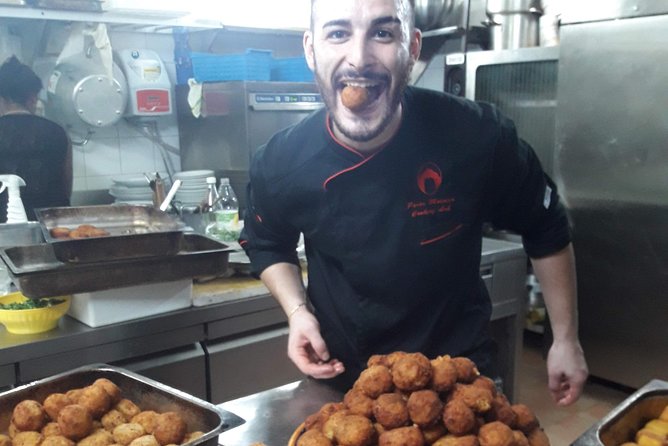
Making arancino feels like a small magic trick. This chef-led class in Taormina turns the biggest challenge—getting the rice, stuffing, and shape right—into a doable, step-by-step skill you can actually repeat at home. You also finish with fresh arancini you made, plus a proper restaurant-style sit-down.
I especially love the hands-on pace. The chef walks you through the work in order, from rice to stuffing to frying, so you’re not just watching food happen. I also like the small-group feel, where you get real attention while you assemble your arancini.
One consideration: you’ll be working outside, and Sicily can come with wasps. In practice they didn’t become a problem for the group, but it’s still smart to keep it in mind if stings are a concern for you.
In This Review
- Key Takeaways
- A Chef-Led Arancino Class That Turns Cooking Into Skill
- Porta Messina in Taormina: Timing, Location, and the Set-Up
- The Real Work: Rice, Filling, Shaping, and Finishing Steps
- Outside Cooking, Wasps, and How to Plan Sensibly
- Frying While You Sit: Wine, Restaurant-Style Tasting, and the End Credits
- Dietary Needs: The Dairy-Free and Vegan-Friendly Approach
- Learning Outcomes You’ll Actually Use at Home
- Price and Value: Is $96.11 Worth It?
- Who Should Book This Arancino Class (and Who Might Skip)
- Should You Book Arancino Making at Porta Messina?
- FAQ
- Where does the Arancino making class take place?
- How long is the class?
- What time does it start?
- What language is the class offered in?
- How much does it cost?
- Is the class limited to a small group?
- Can dietary needs be accommodated?
Key Takeaways
- Chef-led, step-by-step technique that focuses on the practical moves that make arancini work
- Small-group attention so you’re not stuck guessing during shaping
- You taste what you make, with the frying finished while you sit down and relax
- Dietary flexibility, including a reported dairy-free/vegan approach that swaps Parmesan using pistachio flour
- A friendly, organized vibe guided by Luca, with extra Sicilian treats at the end
More street-food crawls around Sicily
- Etna: Wine Tasting and Food Tour
★ 4.7 · 201 reviews - Markets and monuments: walking tour and street food in Palermo
★ 5.0 · 159 reviews - Gastronomic Street Food Tour of Catania
★ 4.5 · 154 reviews - Cannoli Cooking Class in Taormina
★ 5.0 · 139 reviews
A Chef-Led Arancino Class That Turns Cooking Into Skill
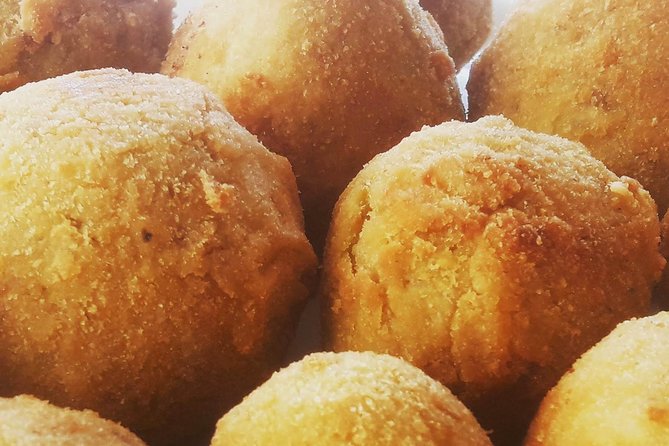
Arancino-making has a reputation for being tricky because it’s not just cooking—it’s form. The rice base needs to be cooked and handled the right way, the filling has to be added without breaking the structure, and then the final frying has to land for that classic crisp outside.
What I like about this class is that it treats arancini like fine art with clear steps. You learn the technique instead of getting a vague “mix and hope” lesson. That’s exactly what turns a fun evening into something you can repeat when you’re back home.
There’s also a social rhythm to it. You’re not rushing out after assembling balls; you sit down for the finishing part, eat what’s fresh, and keep the night going with wine.
Porta Messina in Taormina: Timing, Location, and the Set-Up
The class happens at Porta Messina Restaurant Cooking Class in Taormina (start point: Largo giove serapide, 4, 98039 Taormina ME, Italy). It starts at 6:30 pm and runs about 2 hours, then you return to the same meeting point.
That timing matters. Evening is often when the energy in Taormina feels best—still lively, but not as brutally hot as midday. And since arancini are meant to be eaten fresh, the schedule also supports that: you assemble, then frying and tasting happen as part of the flow.
You should also know the group size is capped (maximum 40 travelers). In practice, the vibe you want for technique classes is closer to “small-group” than “big tour bus,” and this one is designed to be manageable.
The Real Work: Rice, Filling, Shaping, and Finishing Steps
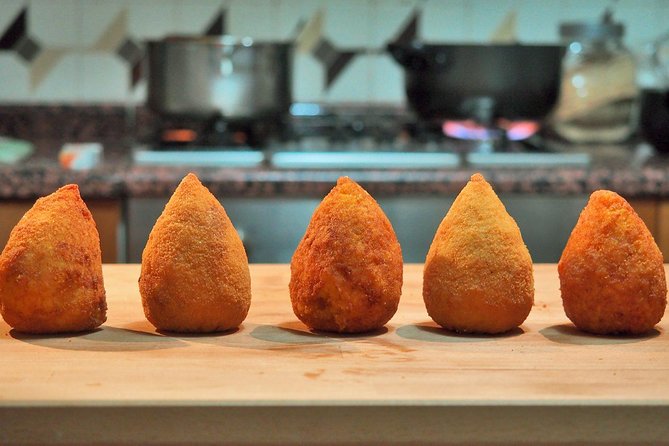
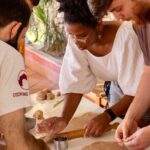
You’ll go from start to finish, and that’s where the value lives. The chef teaches the basics of making traditional Sicilian arancino—starting with cooking the rice, then moving into stuffing, then shaping, and finally frying.
Rice is the foundation, and the class helps you treat it like a foundation, not a side dish. You learn how to handle the mixture so it stays cohesive enough to shape. That’s the difference between an arancino that holds together and one that falls apart the moment it hits the fryer.
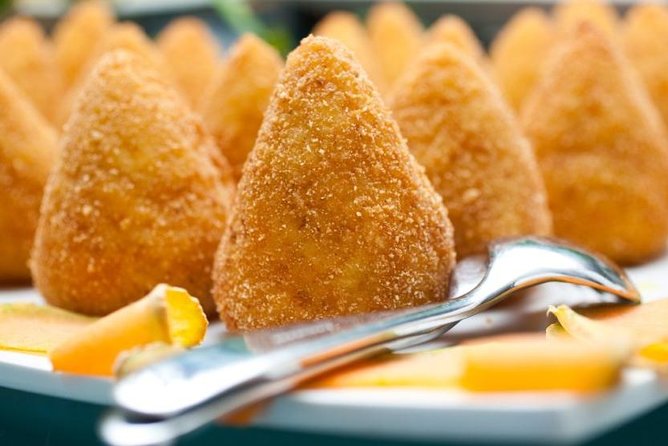
Next comes stuffing—where people often get stuck at home. Here, the chef guides the process so you can add filling without making a mess or tearing the outside. You also learn how the arancino should look once it’s properly sealed. That visual cue helps you feel confident even before frying begins.
In one reported experience, people were surprised by how much they actually produced. The class format allowed participants to make 3+ arancini each, with at least one group member making several themselves. So even though it’s a short class, you’re not just making one symbolic bite—you’re working enough to learn the technique.
Outside Cooking, Wasps, and How to Plan Sensibly
The arancini are made outside, and that’s an important reality check if you’re sensitive to stings. Sicily can have wasps around, especially during food prep.
What matters for you: in at least one class, the wasps didn’t turn into an ordeal. There were small moments where they took bites of food while people were working, but the group still stayed comfortable and the experience continued normally.
If stinging is a genuine concern, don’t ignore it. Bring it up ahead of time when you book, and plan for the fact that your hands will be busy near food for part of the session.
A few we would gladly point a friend toward in Sicily



Frying While You Sit: Wine, Restaurant-Style Tasting, and the End Credits
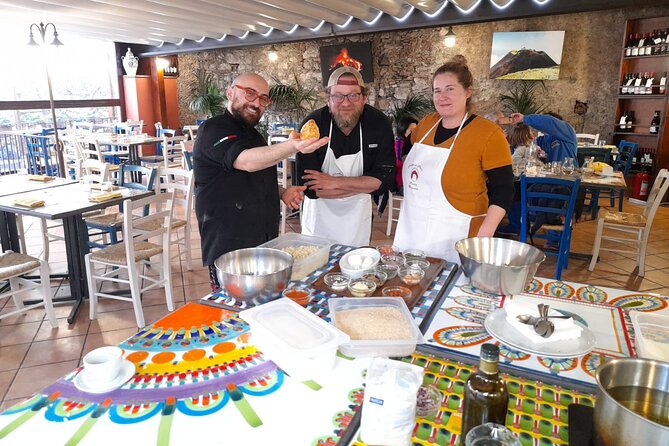
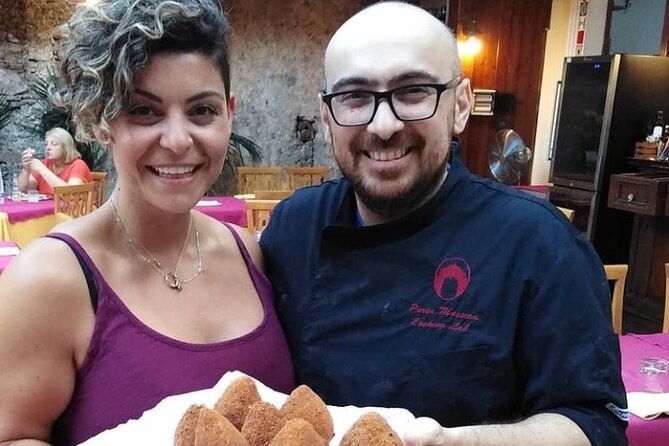
The best part of short cooking lessons is when the kitchen work finishes and you get to actually enjoy your results. After assembling your arancini, the guide fries them while you sit at a table with the rest of the class.
This part of the experience is surprisingly pleasant. You can relax instead of standing over hot oil. In one reported evening, the group drank wine, ate the arancini from the restaurant, and took a breather once the frying was under way.
Then there’s a finishing touch: the guide brought special Sicilian treats at the end. Those little extras are often what make a “food class” feel like a night out instead of a chore.
If you love seeing how professionals manage timing, this is also a great moment. The process moves so you don’t end up waiting too long, and the tasting comes while everything is still at its best.
Dietary Needs: The Dairy-Free and Vegan-Friendly Approach
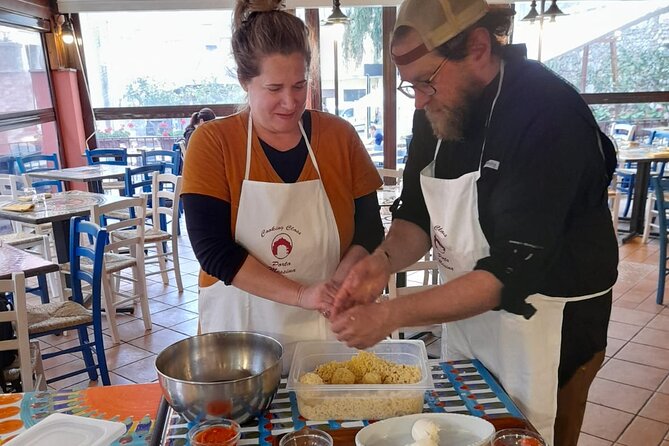
I love that this class can be adapted for real dietary needs, not just a token swap. One review described a participant with a severe dairy allergy and explained that street-style arancini would not work. Here, the approach was accommodating and included a fully vegan option.
The key detail: the standard technique uses Parmesan in the rice mixture. For the dairy-free participant, the kitchen substituted pistachio flour instead of Parmesan. That kind of swap matters because it keeps the rice mixture functional for shaping, not just “removes a cheese and hopes.”
The same experience also included extra thought during filling. When arancini were assembled, the guide (named Luca) brought mushrooms and tomatoes from the kitchen so the dairy-free guest still got something special to enjoy.
If you have food allergies or strict preferences, this is the kind of class you want to consider. And if you’re booking, it’s smart to message your needs clearly so the team can plan the right substitutes.
Learning Outcomes You’ll Actually Use at Home
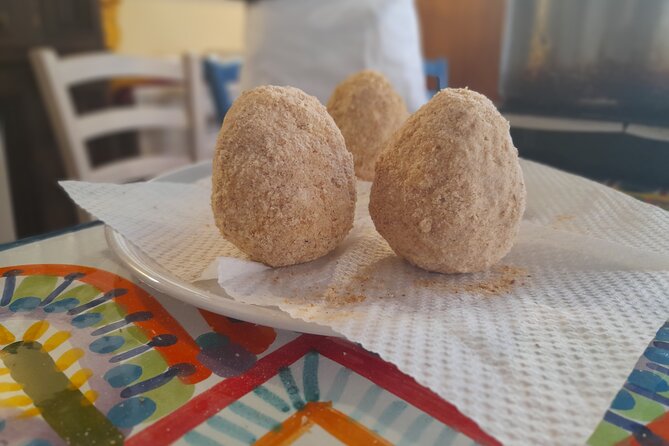
This isn’t a class that only teaches you what to do once. It’s built to help you understand why each step matters.
When you cook the rice base correctly, your arancino holds its shape. When you stuff properly, you get filling inside without leaks or broken shells. When you seal and fry with the right care, the outside becomes crisp while the inside stays satisfying.
The technique-focused instruction is also what makes it worth paying for. If you’ve ever tried to follow arancini recipes without the hands-on coaching, you know how easy it is to end up with rice balls that don’t behave. Here, a chef guides you through the key moves, so you can learn faster and avoid the common failures.
And because you eat what you made during the final stretch, it locks in the lesson. You get feedback in the most delicious way possible: you can taste how the technique lands.
Price and Value: Is $96.11 Worth It?
At $96.11 per person, this class isn’t a budget activity. But it’s also not priced like a generic tour where you watch and leave.
You’re paying for multiple things at once:
- Chef-led step-by-step instruction (not just a demo)
- Ingredients and the whole workflow, including shaping and frying
- Tasting of freshly made arancini as part of the restaurant-style experience
- A wine moment during the sit-down part (based on the described experience)
- The chance to make several arancini yourself (in at least one reported case, 3+ per person)
For me, the value case comes down to this: you leave with learned technique and real confidence. A 2-hour cooking lesson that actually gets you producing multiple results—while someone handles the hot frying stage—often costs less than you’d pay for repeated trial-and-error meals at home.
Also, if you’re traveling with family, couples, or a mixed group, the “everyone gets hands-on” format typically plays well. You’re not stuck entertaining picky eaters with only one small sample.
Who Should Book This Arancino Class (and Who Might Skip)
This class is a good fit if you want:
- Real Sicilian arancino technique, not a vague cooking show
- A chef-guided experience where you can ask questions
- A dinner-time activity that ends with you eating the results
- Dietary adaptability, especially if you need dairy-free or vegan-friendly planning
It’s also a strong option for people who like tactile learning. Shaping and stuffing are learn-by-doing tasks, and the format gives you enough time to practice.
I’d think twice if you’re very uncomfortable with outdoor food prep in an area where wasps may appear. It sounds manageable based on reported experiences, but it’s still outdoors, and you’ll be working close to food.
And if you’re looking for a long cultural walkthrough of Sicily’s history, this isn’t that kind of evening. The focus is technique and the finished plate.
Should You Book Arancino Making at Porta Messina?
Book it if you want a short, skill-focused evening that ends with fresh arancini and a relaxed restaurant rhythm. This is the kind of activity that feels worth it because you learn the steps, you make multiple pieces, and you get to taste them right away.
Skip it only if outdoor work near food is a dealbreaker for you, or if you’re expecting a purely indoor, hands-off tasting event. Otherwise, this is a smart choice for Taormina: you’ll leave with both a full belly and a kitchen skill you can use again.
FAQ
Where does the Arancino making class take place?
It meets at Largo giove serapide, 4, 98039 Taormina ME, Italy, and the experience ends back at the meeting point.
How long is the class?
The class duration is about 2 hours.
What time does it start?
The start time is 6:30 pm.
What language is the class offered in?
The class is offered in English.
How much does it cost?
The price is $96.11 per person.
Is the class limited to a small group?
Yes. It has a maximum of 40 travelers, and it’s described as a small-group cooking class.
Can dietary needs be accommodated?
The class can accommodate at least some dietary needs. One described experience included a dairy allergy with a fully vegan option, using pistachio flour instead of Parmesan in the rice mixture.
More 2-Hour Experiences in Sicily





More Tour Reviews in Sicily






More Sicilian Street-Food Crawls


Just added: the newest Sicily tours in our notebook
- Etna / Taormina★ 5.0 · 3 reviews
- Bikes★ 5.0 · 3 reviews
- Taormina shore tour – for small group cruise passengers★ 5.0 · 3 reviews
- Vegan Cooking Class in Catania with Lunch and Dinner★ 5.0 · 3 reviews
- Make & Taste Sicilian Desserts in Palermo – Learn Cannoli & More★ 5.0 · 3 reviews
- Sicilian Villages & Ricotta Tasting – including Lunch from Cefalu★ 4.0 · 3 reviews
Sicilian Street Food Tours, compared.
 ★ 5.0Palermo Original Street Food Walking Tour by StreatyFrom $832,105 reviews
 ★ 4.9Palermo: Street Food and History Walking TourFrom $571,486 reviews
 ★ 5.0Palermo Sicilian Street Food Tour: Small Group by Do Eat BetterFrom $53920 reviews
 ★ 4.9Palermo: Street Food Walking Tour with Local Guide & TastingFrom $52632 reviews
 ★ 5.0Palermo Walking Tour and Street FoodFrom $48617 reviews
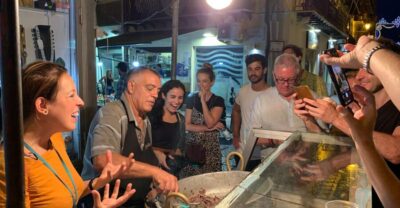 ★ 4.8Palermo: Small Group Night Street Food TourFrom $81589 reviews
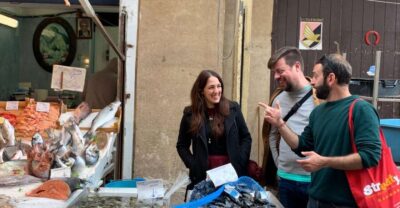 ★ 4.9Palermo: Street Food and Local Market Tasting TourFrom $81540 reviews
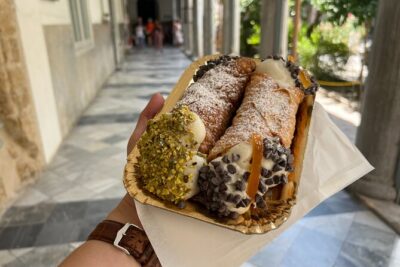 ★ 5.0Palermo Food Tour: 10+ Tastings of Arancini, Cannoli, Wine & MoreFrom $91521 reviews
Browse the lists this tour appears in